Get in Touch with TCPEL

TC Series · Industrial Drum Chipper Line
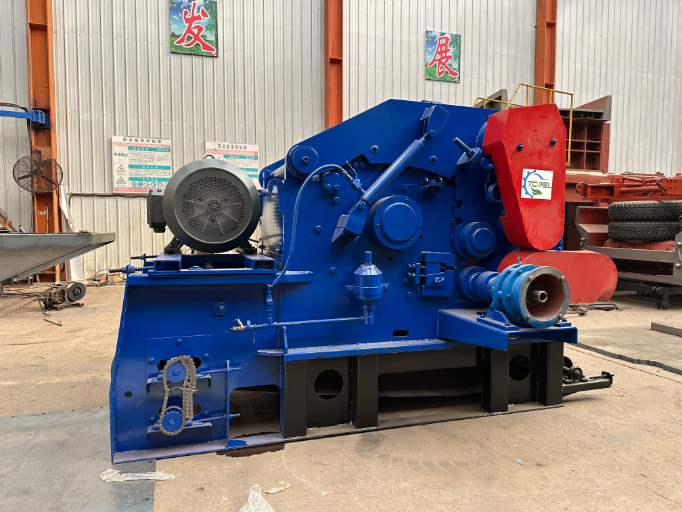
Drum Wood Chipper — 8-Model TC Series for Biomass, Pulp & Board
Engineered by
TCPEL
P45S · ISO 17225-4 compliant
The 3 t/h to 60 t/h, 55–710 kW, 30–50 mm uniform chip output industrial drum wood chipper line, available in 8 models. Designed for biomass pellet line, pulp mill, and particleboard plant customers.
8models
TC216 → TC2116
60t/h
Peak Capacity
60+
Countries Served
TC Series · Drum Chipper
Chip Output
30 – 50 mm · P45S
01 / Specification Overview
TCPEL TC Series at a Glance
Verified Parameters
01
Model Count
8TC216 → TC2116
02
Capacity Range
3 – 60tonnes / hour
03
Main Motor
55 – 710kilowatt
04
Max Log Diameter
230 – 600millimetre
05
Chip Size Output
30 – 50mm · P45S · ISO 17225-4
06
Export Reach
60+countries worldwide
Process Engineering · Drum Wood Chipper
Why Wood Chipping Matters — The Process Bottleneck Behind Pellet & Pulp Output
Whether you need a biomass pellet line, pulp mill, or particleboard plant, your incoming raw material — log / sapling / bark / wood scrap etc. — arrive in sizes downstream hammer mill / digester cannot handle directly. An industrial drum wood chipper per head at the start of your line reduces logs / saplings / branches / wood scrap to an identical 30–50 mm chip — the size class anticipated by your downstream process equipment.
When chip size is not tightly controlled, pinch points move around the line.
Three failure modes that propagate through the whole feedstock chain.
FIG 01. / Process Pinch Points

01
Hammer Mill Infeed
Oversized chips bridge a hammer mill infeed.
02
Digester
Undersized fines clog the digester.
03
Knife Life
Irregular chip geometry limits knife life throughout the whole feedstock chain.
Hour-by-hour throughput of your biomass or paper products plant therefore is not a mere byproduct of equipment selection, but directly correlates with this single variable: how large is the drum wood chipper.
Lineup Coverage
Our 8-model lineup is designed so that all chips flow into your process both reliably and consistently.
No matter whether your target capacity is as small as 3 t/h, or as large as 60 t/h, the maximum chip size remains at 30–50 mm.
— Lineup —
8
Models
Production-grade range
— Capacity —
3–60
t / h
Small to high-output plants
— Chip Size —
30–50
mm chip
Held across all 8 models
Below is the technical datasheet with the 8-model lineup, the decision guide for which type of chipper — drum or disc — is best suited to your bulk raw material, three real-world installation references, and the most common questions we get from buyers prior to purchase.
01 / Below
Technical Datasheet — 8-Model Lineup
02 / Below
Decision Guide: Drum Vs. Disc Chipper For Your Bulk Raw Material
03 / Below
Three Real-World Installation References
04 / Below
Pre-Purchase FAQ — The Most Common Buyer Questions
Validate Before You Buy
→ Send Your Wood Sample For Trial Chipping
02 / Technical Specifications & Matrix
TCPEL TC Series — 8 Models, 3 t/h to 60 t/h Capacity
Looking for a fast recommendation based on your target hourly throughput?
Filter by capacity
All Models 8
3 – 10 t/h 3
12 – 30 t/h 3
30 – 60 t/h 2
Showing 8 of 8 models
| Model | Main Motor (kW) | Feeding Size (mm) | Max Log Dia. (mm) | Rotor Dia. (mm) | Knife Speed (rpm) | Flying Knives | Capacity (t/h) |
|---|---|---|---|---|---|---|---|
| TC216 | 55 | 230×540 | 230 | 600 | 550 | 2 | 3 – 5 |
| TC217 | 75 | 230×700 | 230 | 600 | 590 | 2 | 5 – 7 |
| TC218 | 110 | 350×700 | 300 | 800 | 540 | 2 | 6 – 10 |
| TC2110 | 160 / 185 | 450×1000 | 400 | 1000 | 530 | 2×3 | 12 – 15 |
| TC2113 | 200 / 220 | 450×700 | 400 | 1300 | 420 | 3 | 16 – 20 |
| TC2113D | 250 | 450×1000 | 450 | 1300 | 420 | 2×3 | 20 – 30 |
| TC4113 | 315 / 450 | 450×1300 | 450 | 1300 | 355 | 2×3 | 35 – 50 |
| TC2116 | 400 / 600 / 710 | 750×1200 | 600 | 1600 | 350 | 4×3 | 30 – 60 |
Engineering Note
All eight models in this lineup are scaled such that one parameter: main motor size, log diameter, or rotor diameter, scales with the others to fit your application. For example, a 600 mm (24″), 55 kW drum on the TC216 operates on a lower tip speed 550 rpm, and a 1600 mm (64″), 710 kW drum on the TC2116 on a lower-tip speed 350 rpm, because for biomass customers, chip quality (uniformity, shape, edge quality) and knife life run better at lower tip-speed when we move up to larger drum diameters. Chip-size output remains unchanged at 30–50 mm.
03 / Recommendation Matrix
TCPEL Wood-to-Chip Capacity Map
All values from tcpel TC Series technical datasheet.
TC216
3 – 5t/h
Plant TypePilot pellet line, R&D, compact installation
TC217
5 – 7t/h
Plant TypeSmall commercial
TC218
6 – 10t/h
Plant TypeMid commercial
TC2110
12 – 15t/h
Plant TypeIndustrial pellet plant
TC2113
16 – 20t/h
Plant TypeIndustrial pellet / pulp
TC2113D
20 – 30t/h
Plant TypeLarge pulp / particleboard
TC4113
35 – 50t/h
Plant TypeMajor industrial
TC2116
30 – 60t/h
Plant TypeWhole-tree, 60+ t/h plants
Select log diameter and main motor for your business based on your target exact hourly throughput.
TCPEL Engineering Team
We intentionally maintain chip-size specification at 30–50 mm across our 8-model lineup. When scaling throughput from a 5 t/h pilot line to a 30 t/h industrial plant, the rest of the process chain— hammer mill, dryer inlet, pellet die—remains unchanged in geometry. Only the capacity number changes.
TCPEL Engineering Team · Equipment Design
Spec Sheet · PDF Download
All 8 models, one technical reference document.
- Full kW · rpm · rotor Ø matrix
- Recommended plant-type mapping
- Chip-size output verified to ISO 17225-4
Equipment Selection · Drum vs Disc
Drum vs Disc Wood Chipper — Why Drum Wins for Whole-Tree and High-Volume
The correct answer to the drum-vs-disc question for biomass material almost always is: drum. Disk chippers spin a steel flywheel with knives around the edge, while drum chippers rotate horizontally with knives along the cylinder's length. The differences in how they are built dictate the feedstock types each kind can process without problems.
How They're Built Dictates What They Can Handle
Rotor geometry, not horsepower, is what determines whether your chipper holds a tight chip-length window when feedstock and throughput climb.
Drum Chipper
Recommended

Rotates horizontally with knives along the cylinder's length. Uniform geometry along the rotor produces a consistent 30–50 mm output across the TC Series even at 60 t/h.
Disc Chipper
Limited Scope
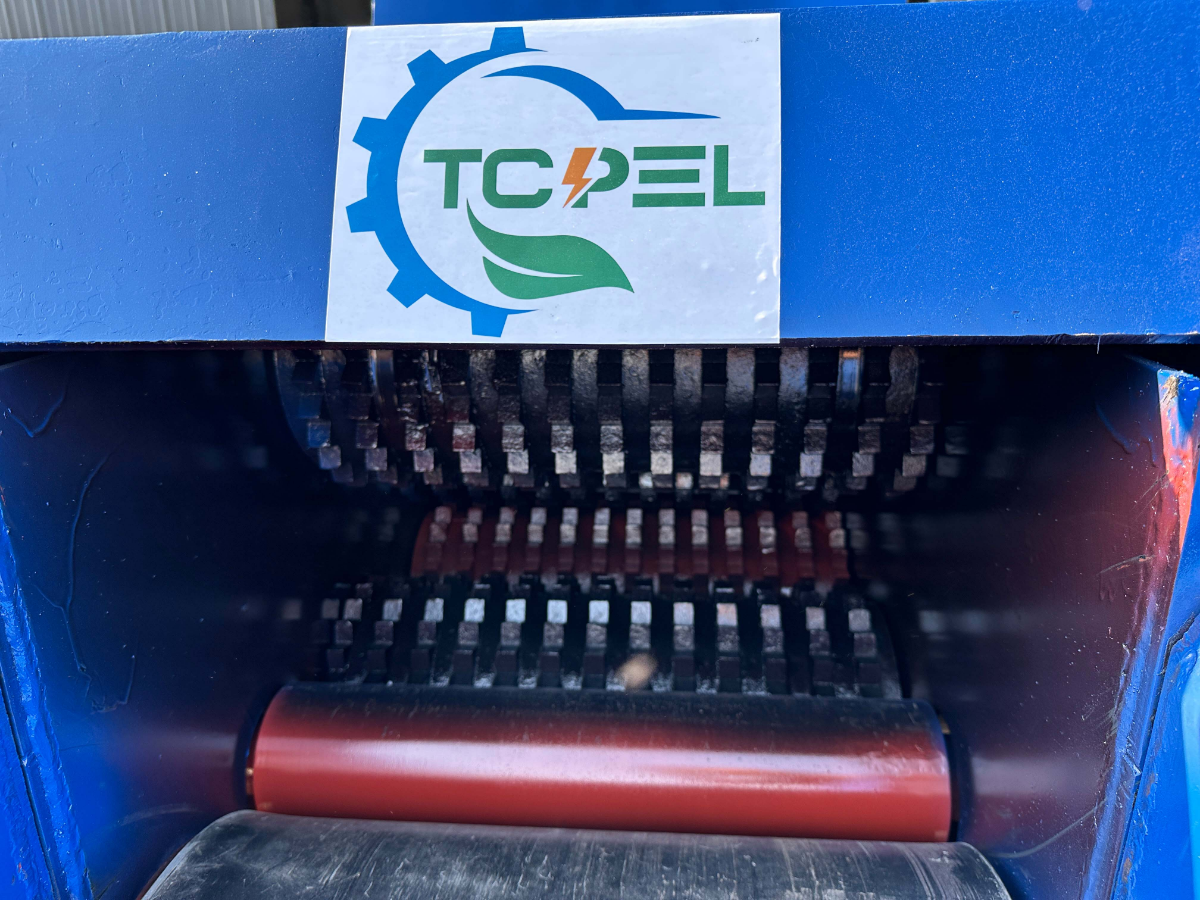
Spins a steel flywheel with knives around the edge. Knife-anvil gap varies as the disc face turns relative to the feed — producing a broader chip-length distribution at high feed rates.
Chip-Size Drift — Where It Bites
Where chip-size drift becomes an issue: a downstream hammer mill rated 30-50 mm input would choke on 70 mm slivers. Disc chippers, particularly at high feed rates, produce a broader chip-length distribution due to the variation in knife-anvil gap as the disc face turns relative to the feed. Drum chippers, with uniform geometry along the rotor length, are able to produce a consistent 30-50 mm output across the TC Series even at 60 t/h.
The Decision Matrix — Seven Factors That Separate the Two Designs
Drum (TCPEL TC)
Disc (Industry Avg)
Decision Factor
— RECOMMENDED —
Drum Chipper (TCPEL TC)
— BENCHMARK —
Disc Chipper (Industry Average)
Max log diameter handled
230 – 600 mm across 8 models
Typically 200 – 500 mm
Chip-length uniformity
30 – 50 mm window held across all capacity points
Wider distribution at high feed rates
Throughput ceiling
Up to 60 t/h (TC2116)
Generally lower for whole-tree input
Whole-tree / branch-laden feed
Designed for it (large throat opening, gravity feed)
Knife life suffers on irregular feed
Knife replacement cycle
2 flying knives per drum on TC216–TC218; up to 4×3 on TC2116
Disc face knives, smaller batch per change
Best fit
Pellet line, pulp mill, particleboard, whole tree chipper duty
Smaller branches, brush, landscaping
Maintenance interval
Knife rotation 200–400 operating hours depending on wood waste type and feedstock cleanliness
Disc face knife maintenance more frequent on hardwood
For biomass pellet production in particular, drum geometry combined with a consistent rotor speed (350–590 rpm through the TC Series) is what gives consistent ISO 17225-4 P45S-class chip — your pellet press feedstock specification.
Compliance Class
ISO 17225-4
P45S
P45S
Pellet Press Feedstock Spec
Comparing Drum vs Disc For A Specific Feedstock?
→ WhatsApp our application engineer for a side-by-side recommendation
04 / Application Scenarios
Three Application Scenarios — Pellet Line, Pulp Mill, Particleboard
The three main plant types into which the TC Series chipper ships vary in their constraints — chip-size variance, moisture-tolerance, throughput capacity — and consequently the model-selection reasoning also varies.
01
Biomass Pellet Production Line
02
Pulp & Paper Mill
03
Particleboard / MDF
01
Scenario 01 · Pellet Line
Biomass Pellet Production Line
The drum chipper is head of a 6-stage pellet line: chipper, hammer mill, rotary dryer, pellet machine, cooler, packer. By engineering the entire chain the TCPEL ensures your chipper output specification matches your downstream hammer mill input specification – so there's no risk of integration delays.
For a typical 3–5 t/h pellet plant the TC216 or TC217 is the chipper of choice. Industrial pulp mills from 12–30 t/h range from the TC2110, to the TC2113, and to the TC2113D, with a matching biomass pellet machine supplied downstream by TCPEL.
6-Stage Process Chain
01
Chipper
02
Hammer Mill
03
Rotary Dryer
04
Pellet Machine
05
Cooler
06
Packer
Recommended Models
3 – 5 t/h
TC216
TC217
12 – 30 t/h
TC2110
TC2113
TC2113D
02
Scenario 02 · Pulp Mill
Pulp & Paper Mill
Pulp mills require chips to be uniform. Out-of-spec chips cause lost digester yield and selectivity. The TC Series 30–50 mm chip window matches the P45S ISO 17225-4 size class used by most kraft and chemi-thermo mechanical pulp mills.
For high volumes, the TC4113 (35–50 t/h) and TC2116 (30–60 t/h) process whole-log input volumes to match the capacity of industrial digesters and maintain the proper chip specification.
Chip-Size Specification Window
0 mm
P45S · ISO 17225-4
100 mm
30 – 50 mm
0102030405060708090100
Within Spec
Matches kraft & chemi-thermo mechanical pulp standards
Recommended Models · High Volume
35 – 50 t/h
TC4113
30 – 60 t/h
TC2116
03
Scenario 03 · Particleboard
Particleboard / MDF
Particleboard mills prefer a slightly wider range of chip length than pulp mills and enjoy advantages of greater throughput at the expense of reduced kW/tonne. The typical fits for the lower capacity equipment is the TC2113D, and for the higher capacity equipment the TC4113, with capacity points scaled to the downstream panel press.
In addition to wood feedstocks, the TC Series smokescreen accepts stems of cotton stalks, bamboo, and non-wood fiber sources. This continues to expand the particleboard manufacturer's addressable feedstock base in markets where logs are unavailable. Benefits over a generic disc-style or drum style wood chipper running mixed feed are most pronounced on this scenario.
Multi-Feedstock Capability
Wood Feedstock
Cotton Stalks
Bamboo Stems
Non-Wood Fiber
Mixed-Feed Capable
Recommended Models
Lower cap.
TC2113D
Higher cap.
TC4113
Global Operational Footprint
↑ See Capacity Map above
↓ See FAQ below
The most frequent operational query we've received from our sales-specific websites in the 60+ countries where we've shipped to — including the markets below — is which model fits an hourly target. Our capacity map illustrates this in relation to log diameter and motor power, while our FAQ below keeps it simple.
Shipped To
Germany
Finland
Russia
New Zealand
South Korea
Pakistan
India
Bangladesh
Vietnam
Malaysia
Turkey
+ 49 more markets
Advanced Drum Wood Chipper Engineering Tools
Drum Chip Size Compatibility Checker
https://tcpel.net/drum-chipper/drum-wood-chipper/drum-chip-size-compatibility-checker/
Wood-to-Chip Throughput Calculator
https://tcpel.net/drum-chipper/drum-wood-chipper/wood-to-chip-throughput-calculator/
Drum vs Disc Wood Chipper Decision Tool
https://tcpel.net/drum-chipper/drum-wood-chipper/drum-vs-disc-wood-chipper-decision-tool/
Knowledge Base · Pre-Purchase
Frequently Asked Questions
An infeed roller pulls the log into the machine and pushes it against the rotating drum which carries a series of flying knives the length of it. When passing through the curved end of the drums the knives cut the wood as it moves at a set angle to the bottom stationary knife. This action generates a series of chips length controlled at the end of the cycle by an auto run disc control. Chips then deposit on a discharge belt or chute until exiting the machine. Each TC Series unit uses a hydraulic auto-fed hopper, with a gravity assisted discharge layout — as opposed to similar PTO driven hand fed units as mentioned throughout the dealership, which are designed to be mounted to a tractor for landscaping purposes. Periodic servicing goes into flying knife honing and bottom knife gap calibration, etc.
Drum, in virtually all biomass situations. Drum geometry maintains chip size uniformity at high feed rates, takes larger log diameters, and is better with whole-tree input. Disc chippers are better with smaller diameter limbs and landscaping though show a wider distribution of chip length at high throughput in the industrial situation. Full decision factors appears in the comparison matrix above.
Across the TC Series, log diameter handling spans 230 mm maximum log diameter (TC216, TC217) up to 600 mm (TC2116). For mid-range capacities, i.e. 400-450 mm, which represents most of the industrial feedstocks like pulp and pellets, the feed-size opening goes from 230540 mm on the TC216, up to 7501200 mm on the Tci616.
YES— and TCPEL has the complete line. TCPEL delivers a single-vendor 6-stage chain to a TCPEL hammer mill (six chamber), rotary dryer, pellet machine, cooler and packer. Since the chip size output is standardized at 30-50 mm from all 8 chipper series, the wear rate and the hammer mill input spec downstream is the same no matter which capacities you choose.
Knife-speed (rotor rpm) varies from 350 rpm on the largest TC2116 (1600 mm rotor) to 590 rpm on the small-frame TC217 (600 mm rotor). Larger drums spin slower to maintain the blade tip-speed and consequently the chip-quality operation in the same engineering window. It is tap-speed that is the relevant chip-quality variable not current rpm.
Between 30-50 mm on all 8 TC Series models. Compact dimensions hold the (60 x 80 mm) chip window similar to the ISO 17225-4 P45S size class — the most popular input spec for industrial pellet presses, most kraft pulp digesters… — and the same chip window for 3 t/h to 60 t/h capacity is by design, so that every downstream element (hammer mill, drier, pellet die) remains identical, no matter what the chipper model.
Still Have A Question Not Listed Above?
→ Talk to a TCPEL application engineer about your feedstock