Get in Touch with TCPEL

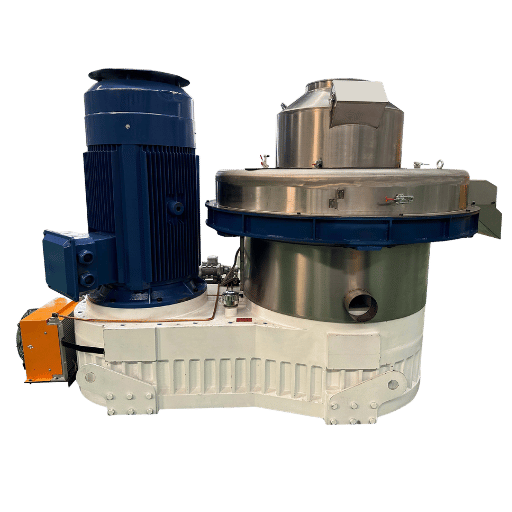
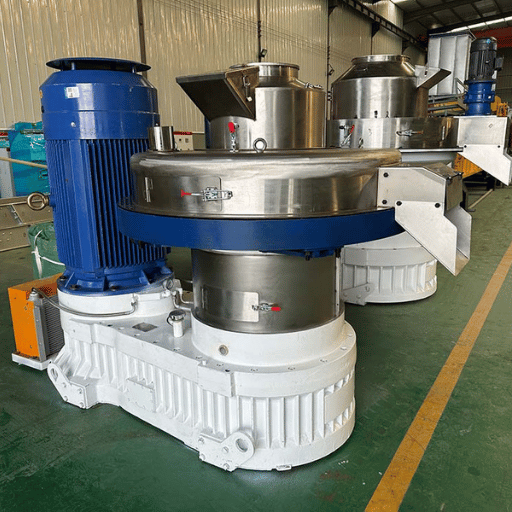
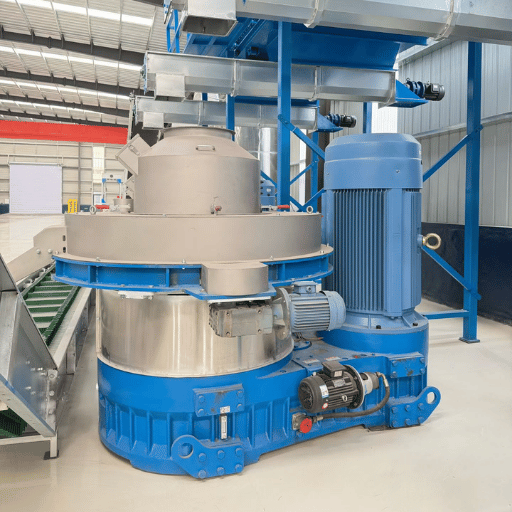
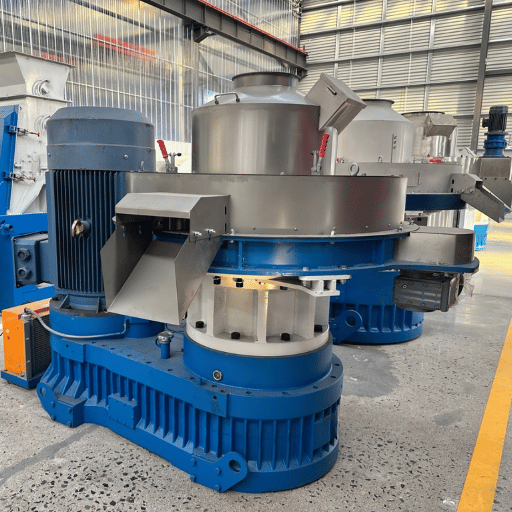
Vertical Ring Die Pellet Mill
Vertical Ring Die Pellet Mill | TCPEL 1-4 t/h Industrial Biomass Pelletizer
Public priced industrial vertical ring die pellet mill for sale with 1000-1500h die service life, 6 models from 90 kW to 280 kW, FOB Qingdao $16,300-$42,200. Exported to 60+ countries since 2020.
- 1-4 t/h Capacity Range
- 90-280 kW Main Motor Power
- 1000-1500h Ring Die Service Life
- 6/8/10/12mm Pellet Diameters
- 60+ Export Countries
- $16,300+ FOB Qingdao From
1-4 t/h
Capacity Range
90-280 kW
Main Motor
1000-1500h
Die Service Life
60+
Export Countries
Industrial Pellet Production Bottlenecks — How TCPEL Vertical Ring Die Solves Them
Vertical ring die pelletizer is a industrial heavy duty shape that uses a fixed vertical ring die that compresses extrusion of the biomass material from a set of rotating rollers into high density wood and biomass fuel pellets, at the industrial scale. Vertical orientation provides gravity assisted feeding and centrifugal force to uniformly partition the woods into die punch holes, rather than formation of blockages that can stop the whole pelletizer during 24/7 running schedules.
Common Production Challenges in Biomass Plants
Three production bottlenecks are common complaints among industrial boiler fuel measurement every pellet line builder section forum and procurement report:
Bottleneck 1 — Ring die inconsistency.
Industry maintenance reports identify ring die wear as the dominant variable behind erratic pellet quality, not the mill body itself. When dies degrade unevenly, output density drops below ENplus thresholds and downtime stacks up.
Bottleneck 2 — Moisture management.
Erratic pellet mill blockages most commonly originate from condensate separation problems and feedstock moisture outside the 10-15% sweet spot. Without an automatic alarm system tracking oil pressure, operators discover the problem after the die is already damaged.
Bottleneck 3 — TCO opacity.
Most ring die pellet mill suppliers quote opaque pricing and undisclosed die replacement frequency, making total cost of ownership impossible to model before purchase.
The TCPEL Technical Resolution
Our TCPEL vertical ring die pellet mill targets these bottlenecks directly. The 20CrMnTi alloy steel ring die delivers 1000-1500 hours of service life per set, validated against published wear-resistance studies of carburized 20CrMnTi versus 20Cr and 4Cr13 alloys. A built-in cooling system combined with an independent cooling motor stabilizes the pelletizing chamber, while the automatic alarm system detects oil pressure variance and predicts maintenance windows before downtime.
Most significantly TCPEL provides FOB Qingdao pricing—verifiably by 2025 the only Chinese vertical ring die device,’—plus 30/70 T/T transparent gain access to terms plus a registered international export record to over 60 nations covering Germany, Finland, Russia, South Korea, Vietnam, Malaysia, Turkey, India, Bangladesh, Pakistan, New Zealand.
Whether you are building a new biomass pellet making line, upgrading an existing wood pellet mill operation, or replacing an aging machine, the TCZL vertical ring die wood pellet mill is engineered for that mid-tier industrial slot. Our vertical ring die wood pellet configuration handles the pellet forming process under high pressure, with energy consumption per ton documented openly so your engineering team can model power costs against alternative wood pellet machine options before issuing a purchase order.
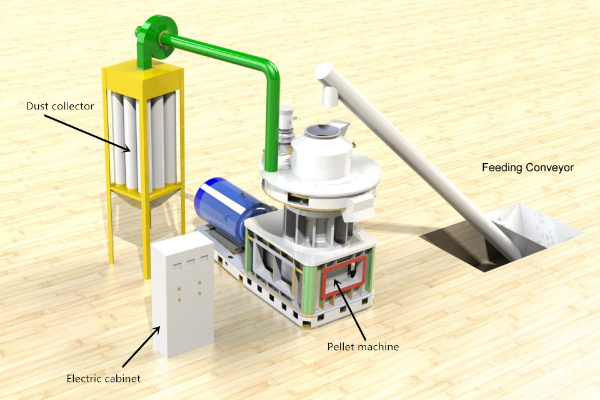
TCPEL Vertical Ring Die Pellet Mill Lineup — 6 Models, 1-4 t/h Capacity EN · PROC
The TCZL series covers the full mid-tier industrial range with six dedicated vertical ring die pellet machine configurations. Each model uses the same casting body design (heat-treated for stress relief), special design motor and reducer transmission, automatic lubrication system, and cost-saving gear oil setup — differentiated by main motor power, ring die diameter, and continuous capacity rating.
Complete TCZL Series Specifications
| Model | Capacity (t/h) | Main Motor | Pellet Diameter | Machine Size (mm) | Weight (t) | FOB Qingdao |
|---|---|---|---|---|---|---|
| TCZL560 | 1.0-1.5 | 90 kW | 6/8/10/12mm | 2630×1300×2300 | 4.8 | $16,300 |
| TCZL560A | 1.5-2.0 | 132 kW | 6/8/10/12mm | 2700×1300×2300 | 5.5 | $19,200 |
| TCZL700 | 2.0-2.5 | 160 kW | 6/8/10/12mm | 2900×1300×2400 | 6.8 | $24,600 |
| TCZL850 | 2.5-3.0 | 220 kW | 6/8/10/12mm | 3300×1400×3100 | 8.8 | $37,800 |
| TCZL850A | 3.5 | 250 kW | 6/8/10/12mm | 3500×1500×3100 | 10.5 | $39,800 |
| TCZL850B | 4.0 | 280 kW | 6/8/10/12mm | 3500×1500×3100 | 11.0 | $42,200 |
Commercial Terms
All prices FOB Qingdao, China. Payment: 30% T/T after contract signing, 70% T/T balance before shipment. Pellets length customized by customer choice.
TCZL Selection Decision Framework
Start by selecting your forecasted growth in fuel processing capacity for biomass pellets, then account those laterally against your planned operation hours. This template for daily pellet output shows which of the TCZL models best fits your expectations, assuming a standard 16 hour shift size of 250 days/year.
| Daily Output Target | Annual (250 days) | Recommended Model | Power Draw | Recommended Use |
|---|---|---|---|---|
| 16-24 t/day | ~5,000 t | TCZL560 / 560A | 90-132 kW | Entry-level commercial biomass pellet plant |
| 32-40 t/day | ~9,000 t | TCZL700 | 160 kW | Mid-scale wood pellet plant; multi-feedstock processing |
| 40-48 t/day | ~12,000 t | TCZL850 | 220 kW | Industrial-scale biomass pellet production with hard biomass material |
| 56 t/day | ~14,000 t | TCZL850A | 250 kW | Continuous 24-hour pellet production line, multi-shift |
| 64 t/day | ~16,000 t | TCZL850B | 280 kW | Large-scale biomass pellet production, eucalyptus and palm fiber |
Capacity-Material-Power 3D Selection Matrix (TCPEL Authority Hook)
Different raw materials call for varying compression ratios, die hole geometries, and motor headroom. The matrix below indicates compatibility ratings for the six most common kinds of biomass fed into pellet mills from a 60-country export base operated by TCPEL.
| Feedstock | TCZL560 (90kW) | TCZL560A (132kW) | TCZL700 (160kW) | TCZL850 (220kW) | TCZL850A (250kW) | TCZL850B (280kW) |
|---|---|---|---|---|---|---|
| Sawdust / wood shavings | Optimal | Optimal | Optimal | Optimal | Optimal | Optimal |
| Hardwood (eucalyptus, poplar, beech) | Marginal | Suitable | Optimal | Optimal | Optimal | Optimal |
| EFB (Empty Fruit Bunch) / palm fiber | Marginal | Marginal | Suitable | Optimal | Optimal | Optimal |
| Olive waste / fruit shells | Suitable | Optimal | Optimal | Optimal | Optimal | Optimal |
| Crop straw / wheat straw | Optimal | Optimal | Optimal | Suitable | Suitable | Suitable |
| Bamboo / rice husk / peanut husk | Optimal | Optimal | Optimal | Optimal | Optimal | Optimal |
Feedstock Processing Guide
Excellent: achieved at rated capacity; Okay: compensated (80-95% rated); Marginal: feasible (rational die reduction; 60-75% rated). Prefeed preparation equipment (hammer mill & rotary dryer) should be speced when arriving feedstock is above 18% moisture or above 5 mm particle size.
Vertical vs Horizontal vs Flat Die Pellet Mill — Honest Data-Driven Comparison
A common plus point making vertical ring die designs popular in pellet mill marketing is that they boast lower power consumption than their horizontal counterparts. Our own engineers take a different view, and we verify industry-wide results showing our view to be correct— all the better for those who buy a pig in a poke then face unexpected power bills. Real differences between vertical ring die pellet mills, horizontal ring die pellet mills, and flat die pellet mills come down to throughput, footprint, material handling, and replacement cost, not raw efficiency. Here is the comparison your procurement team actually wants.
Core Dimensions Comparison Matrix
| Dimension | Vertical Ring Die (TCZL) | Horizontal Ring Die | Flat Die Pellet Mill |
|---|---|---|---|
| Capacity range | 1-4 t/h (mid-industrial sweet spot) | 3-30+ t/h (large industrial) | 0.1-1 t/h (small to medium) |
| Pelletizing pressure | High (centrifugal + die fixed) | High (rollers fixed, die rotates) | Medium (rollers over flat die) |
| Power per ton (relative) | 1.05-1.10x baseline | 1.00x baseline | 0.85-0.95x (lower output offsets) |
| Material flow | Gravity-assisted vertical feed | Sideways forced feed (more conditioning) | Top-down to flat die surface |
| Heat dissipation | Excellent (open vertical chamber) | Moderate (enclosed body) | Limited (small chamber) |
| Footprint per t/h | Compact (3.3 m² per 1 t/h) | Larger (5-8 m² per 1 t/h) | Smallest absolute (low capacity) |
| Best feedstock | Multi-material, hard biomass | Single high-volume feedstock | Soft biomass, animal feed |
| Die replacement cost | Single ring die, $1,800-2,500 | Larger ring die, $3,000-5,000 | Flat die, $400-800 |
| Typical buyer | Mid-tier biomass pellet plant | Large-scale wood pellet plant | Farm, startup, on-site fuel |
TCPEL Engineering R&D Notes
“We chose vertical for the TCZL series because the centrifugal feeding pattern handles palm fiber and hardwood without the bridging problems horizontal ring dies hit on irregular feedstocks. A slight energy premium per ton, around 5 to 10 percent, is the trade-off our customers running mixed biomass actually want. Buyers running a single high-volume feedstock like clean softwood sawdust at over 8 t/h should look at horizontal instead, and we will tell them so.”
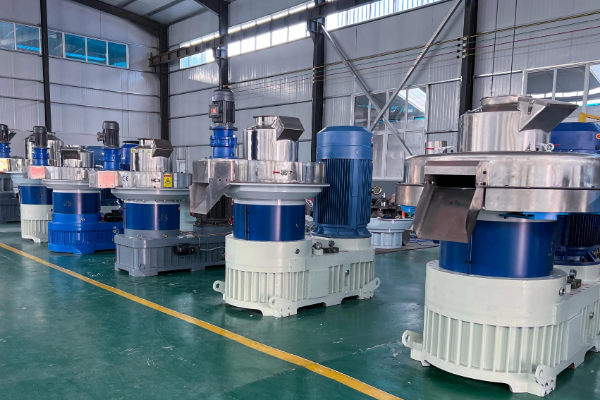
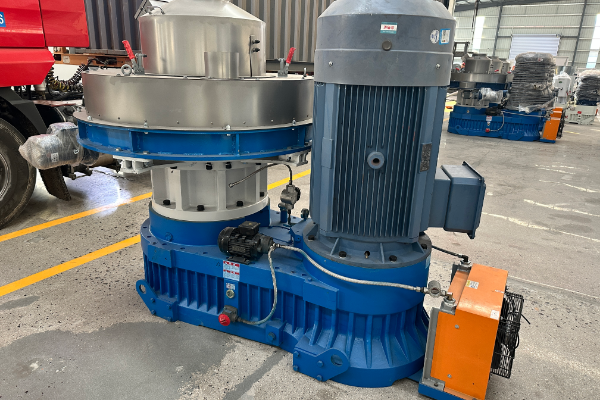
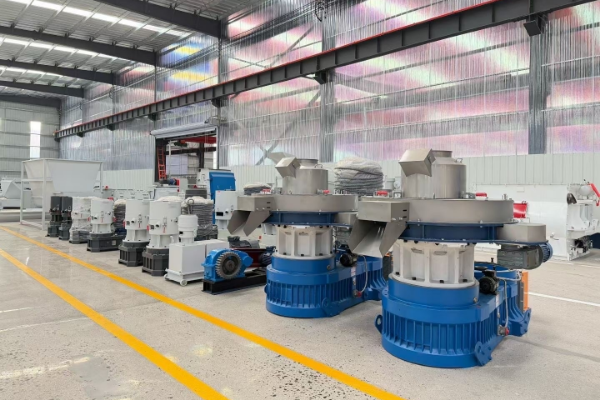
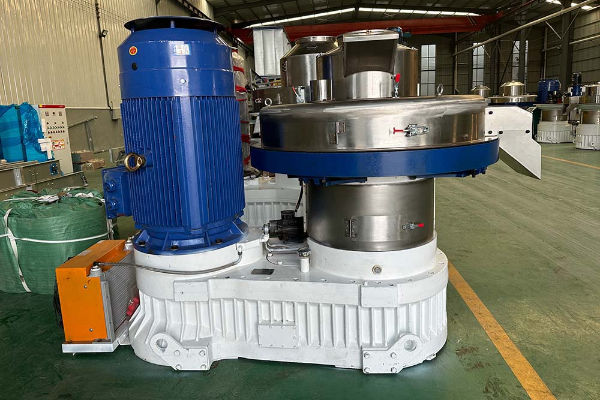
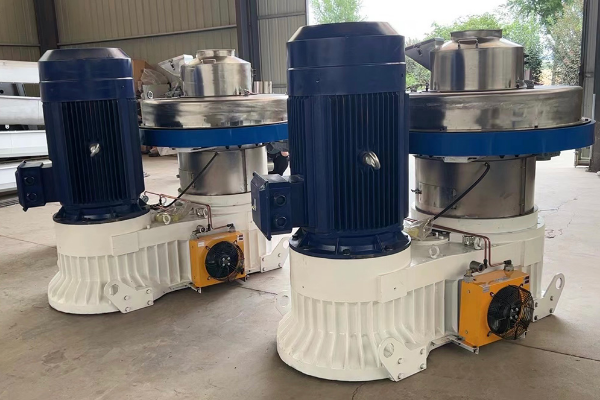
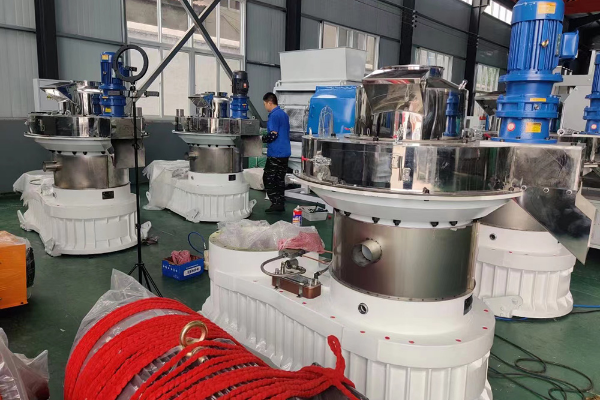
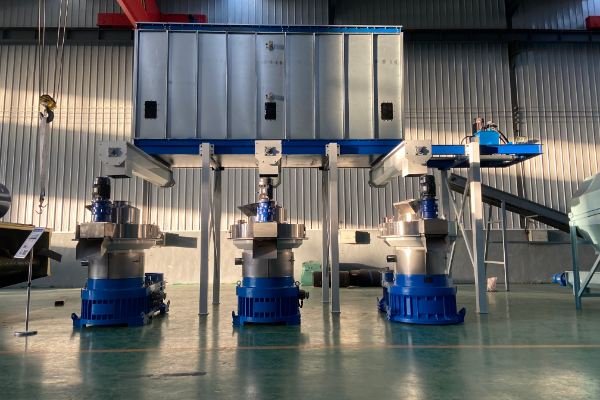
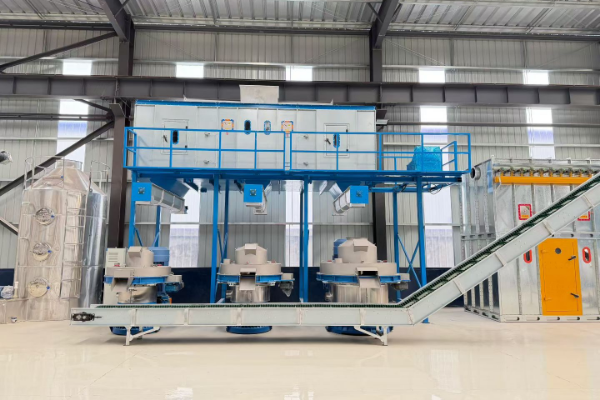
Vertical Ring Die Pellet Mill Factory
Premium Manufacturing Gallery
Customer Outcomes — 60+ Countries Including Germany, Finland, Russia, South Korea
Since founding in 2020, TCPEL pellet machines have been deployed across 60+ countries, with named export markets including Germany, Finland, Russia, New Zealand, South Korea, Pakistan, India, Bangladesh, Vietnam, Malaysia, and Turkey. Our installation base spans biomass pellet production plants, wood processing facilities, fertilizer plants, MSW (municipal solid waste) processing units, and biomass power station fuel processing lines.
That geographic mix is intentional. According to USDA Foreign Agricultural Service reporting, EU wood pellet consumption declined for the first time since 2015 across 2023-2024 due to mild winter weather, high pellet inventory carryover, and lower power prices — while EIA data showed US pellet exports grew 3% even as domestic sales fell 14% in 2024 (average price $195.37 per metric ton). A 60-country export footprint is no longer a vanity metric; it is how a vertical ring die pellet mill manufacturer survives single-region demand swings.
~5,000 t/year
Annual capacity at 16-hour daily operation
Calculated: 1.25 t/h average × 16 h/day × 250 working days. Excludes scheduled maintenance and ring die changeover (typically 90-day intervals at 16 h/day operation).
ROI Modeling for the TCZL560 Entry Model
TCZL560 economics example:
- ■ Equipment investment: $16,300 FOB Qingdao
- ■ Baseline operating cost: ~$25/ton (labor $10 + energy $10 + maintenance and die amortization ~$5)
- ■ US 2024 wood pellet average price: $195.37/ton
- ■ Conservative international reference price: $180/ton
- ■ Gross margin (excluding feedstock): ($180 − $25) × 5,000 = $775,000/year
- ■ Equipment payback: under 4-6 weeks of full-capacity operation, depending on feedstock cost
Per Ton Model (USD)
Reference Price
Operating Cost
Gross Margin
Another assumption is this ROI model does not include feedstock acquisition cost as this takes away the bulk of the actual net margin. Plants crushing in-house wood waste or sawmill using further sawdust at open-market prices of $50-80/ton will still generally net $70-100/ton. Field-deployed operators at TCZL in Vietnam and Malaysia have said equipment cost is recovered as early as Q1 after ramp-up to full capacity though true payback also depends on local feedstock procurement and energy markets- we suggest trial run your own local feedstock and energy assumptions before going forward.
Engineering Standards, Ring Die Materials, And After-Sales Service
Our TCZL vertical ring die pellet mill is engineered to produce graded wood pellets that align with ISO 17225-2:2021 industrial-class specifications (Property classes I1 and I2 for industrial use), and accommodate compatible feedstock requirements for non-industrial classes A1 and A2. Pellet quality output depends on raw material composition, moisture content, compression ratio, and downstream pellet cooler performance — the mill itself is one variable among several in achieving certified pellet output.
Ring Die Material Selection — Why 20CrMnTi Alloy Steel
That ring die uses 20CrMnTi alloy steel (German engineering standard, equivalent to ASTM 8617 in chemistry), heat-treated and surface carburized to a hardness of 58-62 HRC. Published wear-characteristic studies on flat die and ring die pelletizing show 20CrMnTi delivers significantly higher wear resistance compared to 20Cr (lower-grade alternative) and 4Cr13 (martensitic stainless steel sometimes substituted for cost reasons). In the same comparative testing under glycyrrhiza wear conditions, 20CrMnTi showed substantially lower oxidation degradation than the alternatives.
That material choice translates to a documented service life of 1000-1500 hours per ring die in TCPEL’s installation base, depending on feedstock abrasiveness. Soft sawdust and bamboo dust extend service life toward the high end of that range, while hard hardwood and palm fiber wear dies faster. We replace ring dies as standard spare parts on a planned 90-day cycle for 16-hour daily operation.
ISO 17225-2:2021
Output pellets compatible with graded wood pellet I1/I2 industrial classes
20CrMnTi Steel
Carburized 58-62 HRC, German alloy standard
CE Compliance
Available for European export shipments on request
After-Sales Service Commitments
Spare parts inventory: ring dies, press rollers, bearings, oil pump components, gearbox assembly — all stocked at the Jinan factory and shipped within 7 working days of confirmed order. Operator training is included on FOB shipments and covers material preparation (10-15% moisture content), die compression ratio adjustment, lubrication system monitoring, and the automatic alarm system that detects oil pressure variance. Customer documentation is maintained in our service archive for the lifetime of the equipment, supporting warranty claims and parts orders without re-establishing context each time.
CE / MD Equipment Certificates
Procurement Guide — Public FOB Pricing, 30/70 T/T Terms, Qingdao Shipment
Most ring die pellet mill suppliers publish unclear prices that can only be revealed after an inquiry. By contrast, every model of the TCZL series published prices (FOB Qingdao), payment profile, destination port, and lead time on this page. We publish all this data because procurement operations modeling a biomass pellet plant investment cannot rely on a blank TCO calculation.
Pricing Factors and What’s Included
Published FOB Qingdao prices ($16,300 to $42,200) cover the complete vertical ring die pellet mill assembly: main motor and special-design reducer, casting body with heat treatment, die fixed plus rollers rotating chamber, automatic lubrication system, independent cooling motor, automatic alarm system for oil pressure monitoring, and the standard ring die set sized for your specified pellet diameter (6, 8, 10, or 12 mm).
Pricing scales with main motor power (90 kW to 280 kW) and rated capacity, not with feature gating — every TCZL model includes the same operational features. Optional add-ons quoted separately include additional ring die sets at sized intervals, pellet cooler integration, and conveyor system tie-ins for full pellet production line builds.
What to Verify Before Issuing a Purchase Order
1
Procurement green feedstock material fact sheet with moisture and particle size scale after any pre-processing services—this helps us advise on pellet diameter and compression ratio.
2
Annual green feedstock production target with operating hours—this determines the nominal TCZL model number.
3
Destination port and approximate customs handling time frame—this determines scheduling for shipping.
4
Site-installed power type and voltage—this helps us specify the proper main motor cable cord set (default 380V 50Hz, available 460V 60Hz).
Payment, Shipment, and Lead Time
Payment terms
30% T/T after order confirmation, 70% T/T balance before shipment
Port of shipment
Qingdao Port, China (FOB Incoterms)
Production lead time
30-45 working days from 30% T/T receipt, depending on model and queue
Container loading
TCZL560 / 560A: 1 × 40 ft HQ container; TCZL850 / 850A / 850B: 1 × 40 ft HQ + auxiliary container for spare dies
Spare parts shipment
Standard 90-day ring die replacement set included; extended sets quoted on request
Quoted accuracy window
FOB prices held for 30 days from quote date; valid against current Qingdao bunker fuel and steel raw material indices
TCZL Vertical Ring Die Pellet Mill Selection Calculator
Enter your daily production target, operating hours, and primary feedstock. The tool returns the recommended TCZL model with FOB Qingdao pricing and pre-processing equipment notes. Logic mirrors the 6-model Capacity-Material-Power matrix on the Pillar page.
Step 1 — Production Inputs
Enter your production parameters and click Calculate to see the recommended TCZL model.
6-Model Capacity-Material-Power Reference Matrix
Compatibility ratings across the 6 TCZL models and the 6 most common biomass feedstocks. Optimal: full rated capacity. Suitable: 80-95%. Marginal: 60-75% with shorter compression ratio.
| Feedstock | TCZL560 90kW |
TCZL560A 132kW |
TCZL700 160kW |
TCZL850 220kW |
TCZL850A 250kW |
TCZL850B 280kW |
|---|---|---|---|---|---|---|
| Sawdust / wood shavings | Optimal | Optimal | Optimal | Optimal | Optimal | Optimal |
| Hardwood (eucalyptus, poplar) | Marginal | Suitable | Optimal | Optimal | Optimal | Optimal |
| EFB / palm fiber | Marginal | Marginal | Suitable | Optimal | Optimal | Optimal |
| Olive waste / fruit shells | Suitable | Optimal | Optimal | Optimal | Optimal | Optimal |
| Crop straw / wheat straw | Optimal | Optimal | Optimal | Suitable | Suitable | Suitable |
| Bamboo / rice husk | Optimal | Optimal | Optimal | Optimal | Optimal | Optimal |
Ready to Select Your TCZL Vertical Ring Die Pellet Mill?
Provide your annual target capacity, primary feedstock, and desired market destination; our application engineering team responds with a model recommendation, full quotation and schedule for direct shipment within one business day.
Vertical Ring Die Pellet Mill FAQs All Roles
What’s the difference between vertical and horizontal ring die pellet mills?
Vertical ring die pellet mills feed feedstock vertically with the ring die components mounted suspended above (fixed movement) and the rollers inside turning (rotating) around the die; horizontal ring die pellet mills feed more traditionally 180 degrees sideways, with the radially ring die rotating and the inside rollers resting stable. Vertical ring die manufactures are better at efficient multi-type feedstock utilizing (hardwood, palm fiber and EFB) and and more compact footprint (1-4 t/h); horizontal models are better at scale and larger capacity ( 8 t/h and up). Vertical mills require marginally higher power input per ton (5-10%)compared to horizontal machines at similar tonnage—the tradeoff offers better feedstock flexibility and simplified die chamber maintenance.
What materials can the TCPEL vertical ring die pellet mill process?
The TCZL series processes wood (sawdust, wood shavings, wood chips, branches, bark), agricultural waste (rice husk, sunflower husk, peanut husk, crop straw, wheat straw), forest residue (eucalyptus, poplar, beech, bamboo), palm processing byproducts (EFB, palm fiber, palm shell), and other biomass materials including olive waste and fruit shells. Optimal moisture content for raw materials is 10-15%; feedstock above 18% moisture should pass through a rotary dryer first, and material above 5 mm particle size should be ground in a hammer mill before pelletizing.
What is the ring die service life?
Ring dies in the category of TCPEL, at 20CrMnTi alloy steel + surface carburizer treatment (58-62 HRC), deliver 1000-1500 hours per set of dies under typical industrial wood pellet production duty cycle. Feedstocks with high moisture (sawdust, bamboo dust) give closer to 1500 hours; leaner feeds (eucalyptus, palm fiber) closer to 1000 hours. Schedule ring die replacement on a 90-day cycle for 16 hours/day industrial plants, keep one spare set on-site per machine.
What is the production capacity range across the six TCZL models?
The TCZL series spans 1-4 tons per hour. TCZL560 (90 kW) handles 1.0-1.5 t/h, TCZL560A (132 kW) at 1.5-2.0 t/h, TCZL700 (160 kW) at 2.0-2.5 t/h, TCZL850 (220 kW) at 2.5-3.0 t/h, TCZL850A (250 kW) at 3.5 t/h, and TCZL850B (280 kW) at 4.0 t/h. Real output sits at the lower end of each range when processing hard biomass (palm fiber, hardwood) and at the upper end on softer feedstocks (sawdust, rice husk).
How does TCPEL compare to flat die pellet mill alternatives?
Flat die pellet machines suit small-scale operations under 1 t/h, animal feed pellet production, and on-site fuel for small farms or workshops. The TCZL vertical ring die pellet mill targets industrial pellet production at 1-4 t/h with the durability profile required for continuous 24-hour operation, denser pellet output suitable for ISO 17225-2 industrial classes, and a longer ring die service life relative to flat die alternatives. For industrial biomass pellet production businesses, the upfront price difference is recovered within the first 2-3 months of full-capacity operation.
What pellet sizes can the machine produce?
All six of the models produce pellets in the 6 mm, 8 mm, 10 mm, or 12 mm diameter size class, produced by the selection of ring die model at time of order. 6 mm and 8 mm are most common for household or small commercial heating (coeval with ENplus pellet standards), 10 mm and 12 mm for industrial boilers, biomass power stations and specific end-uses. Pellet length can be defined externally by the cutting device.
What after-sales support is provided?
Spare parts (ring dies, press rollers, bearings, oil pump parts, gearbox elements) are stocked at our Jinan factory and shipped within 7 working days of order confirmation. Customer training is provided free of charge on FOB shipments. Customer legal documents (manuals, quality certificates, logbooks) are stored by us in our service archive for the duration of the mill ownership, supporting warranty claims, parts orders and operating issues without re-establishing context each time. Technical questions can be answered via WhatsApp by members of our engineering team within one working day.
What is the FOB price and payment terms?
FOB Qingdao prices range from $16,300 (TCZL560, 1.0-1.5 t/h, 90 kW) to $42,200 (TCZL850B, 4.0 t/h, 280 kW). All six models are publicly priced — we are the only Chinese vertical ring die pellet mill manufacturer publishing FOB pricing transparently. Payment structure: 30% T/T deposit after order confirmation, 70% T/T balance before shipment. Production lead time runs 30-45 working days from deposit receipt. Shipment from Qingdao Port covers a single 40 ft HQ container for the smaller models and a primary container plus auxiliary container for spare dies on the larger TCZL850 series.