Get in Touch with TCPEL

Feed Pellet Machine
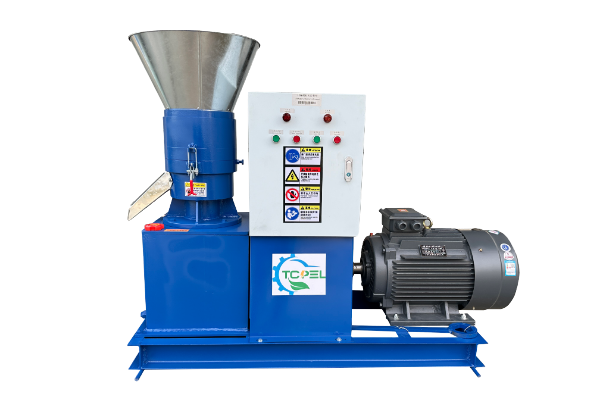
TCPEL Feed Pellet Machine — Inclined-Roller TCF Series for Livestock, Poultry & Aquaculture Feed
Inclined-roller pellet machines built around what flat-roller designs cannot deliver: balanced pressure, longer die life, and quieter operation from 11 production tiers from farm-scale to industrial feed plants.
- Eleven TCF SKUs – 7.5 to 132 kW, capacity 150 kg/h to 6,000 kg/h
- Pricing published in full – $900 to $22,500 FOB Qingdao, all eleven rows visible below
- Fifteen-day delivery after deposit, 100% T/T, FOB Qingdao on standard
- Exported to 60+ countries since 2020, 20,000 factory, 100+ workshop staff
- Die hole sizes 2 / 3 / 4 / 5 / 6 / 7 / 8 / 10 mm – fabricated to match your target animal feed

Why Pellet Form for Animal Feed — and What Inclined-Roller Solves That Flat-Roller Cannot
Feed pellet machines compress ground grain, soybean meal, bran and roughage into uniform cylindrical pellets. The Pellet Durability Index (PDI), the standard quality metric set in USDA-ARS research and Kansas State University guideline MF3228, measures how much pellets mass survives standardized agitation- and it directly predicts feed conversion efficiency on farm.
Three operational problems push livestock farms, poultry integrators and aquaculture plants toward pelleted feed instead of mash. Customers we serve in 60+ countries regularly report the same root causes.
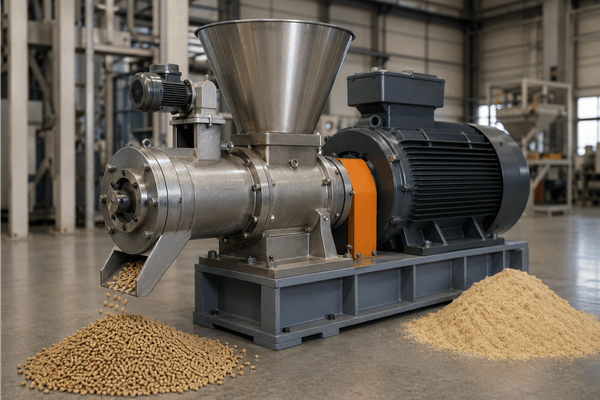
Mash feed waste
Powdered ingredients separate during transport and feeding. Animals idestati three time over which powder moves through the animal’s body, in bits and in processes, and poor selectivity of intake can result in undesirable levels of floor waste (8-15%) and an unbalanced equation. pelleting stall the separation step at source.
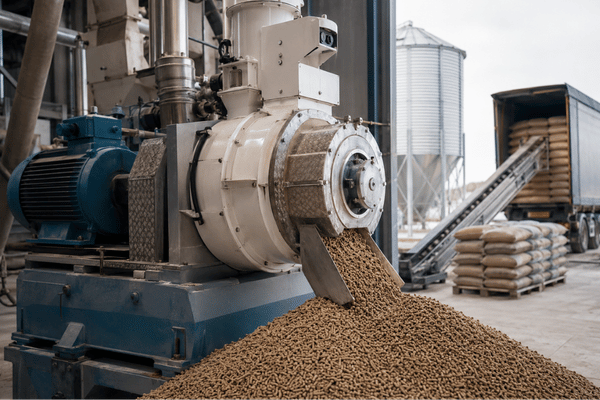
Storage & shrink loss
Loose meal compacts unevenly in silos and bulks at low density. pelleted production densifies up to 30%, cutting truck and silo space per ton. The bulk-density advantage is most noticeable on cross-country export shipments.
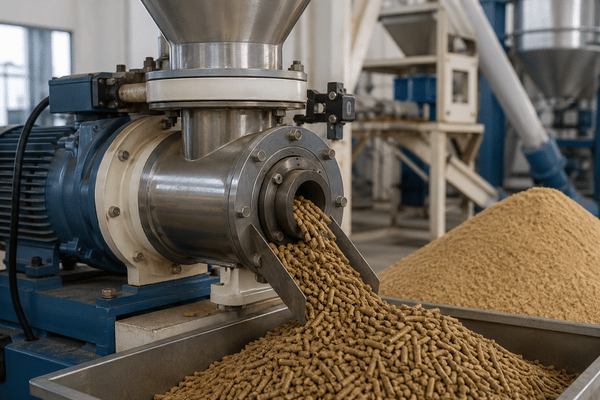
Digestibility gap
Pelleting offers partial gelatinization of starch and increased feed utilization. PSE.org confirms pellets increase broiler intake and weight equivalently.
The Flat-Roller Bottleneck
Pelleting bottlenecks trace to roller profile. Flat-roller Inca-sumption pellet mills utilize cylindrical rollers that contacts die surface as a circle, concentrating pressure in the die center and running roller edges dry. Excessive die wear, necessary mold rotation, and increased fines (the broken pellets that lower PDI) are consequences of this contact pattern.
The Inclined-Roller Solution (TCF Series)
Our TCF series is based on a nearly-overhead roller profile. Tilting the roller to match the die plane exposes more contact, evenly spreading forces across the full width. Besides more uniform die wear, the entire pressure profile is very much subordinate to the centrifugal force at the bearing- thanks to the roller tilt. Lower noise and longer service lifetime of the mill result logically, which we quantify with the engineering data below.
TCPEL TCF Series — 11 Inclined-Roller Models with Capacity Decision Tree
Our eleven TCF varieties use an inclined-roller core, with motors scaled from 7.5 kW to 132 kW. Production capacity is proportional to power: 150 kg/h at the entry tier to 6,000 kg/h at the heavy industrial tier.
All in 380 V / 50-60 Hz / 3-phase without charge, the 100% copper-wound motor is separate named before fabrication contract begins. Customer may pick die hole diameter before the mill is fabricated, from 2, 3, 4, 5, 6, 7, 8, or 10 mm.
| Model | Capacity (kg/h) | Roller Type | Power (kW) | Weight (kg) | Dimensions (mm) | FOB Qingdao (USD) |
|---|---|---|---|---|---|---|
| TCF150 | 150–200 | Inclined 2-roll | 7.5 | 190 | 1220×620×840 | $900 |
| TCF200 | 300–400 | Inclined 2-roll | 11 | 270 | 1420×670×1100 | $1,600 |
| TCF250 | 600–800 | Inclined 2-roll | 15 | 480 | 1660×740×1220 | $2,400 |
| TCF300 | 800–1,000 | Inclined 2-roll | 22 | 650 | 1830×880×1560 | $2,700 |
| TCF350 | 1,000–1,200 | Inclined 2-roll | 30 | 750 | 1960×920×1680 | $3,600 |
| TCF400 | 1,400–2,000 | Inclined 2-roll | 37 | 900 | 2550×980×1600 | $4,300 |
| TCF450 | 2,000–2,500 | Inclined 2-roll | 45 | 1,500 | 2780×1100×1700 | $6,300 |
| TCF550 | 2,500–3,500 | Inclined 3-roll | 75 | 1,800 | 2900×1300×1900 | $9,500 |
| TCF650 | 3,000–4,000 | Inclined 3-roll | 90 | 2,100 | 2950×1500×2000 | $14,500 |
| TCF700 | 4,000–5,000 | Inclined 3-roll | 110 | 2,500 | 3000×1600×2100 | $18,800 |
| TCF800 | 5,000–6,000 | Inclined 3-roll | 132 | 2,900 | 3150×1800×2200 | $22,500 |
Capacity Decision Tree — Three Tiers

Tier 1 — Farm & Small Workshop
150–400 kg/h · $900–$1,600
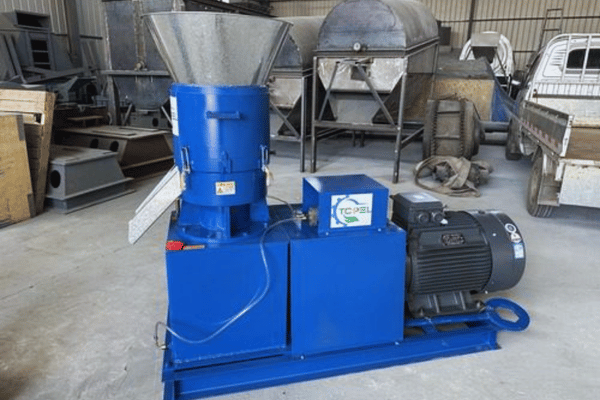
For single-family livestock, small layer farms, or start-up co-ops. TCF150 and TCF200 will deliver enough pelletS to sustain 50-150 cattle or 125-400 bird growing operations. 7.5-11 kW motor runs on utility 3-phase, rural power.
Tier 2 — Small Commercial Feed Mill
600–2,500 kg/h · $2,400–$6,300
For regional feed mills, contract grower operations, and aquaculture operations with 5,000-20,000 head of freshwater fish. TCF250 through TCF450 (27-37 kW) handle the majority of commercial feed requests we get from Vietnam, Pakistan, Bangladesh, and the Middle East.

Tier 3 — Industrial Feed Plant
2.5–6 t/h · $9,500–$22,500
For national-brand feed integrators and turnkey feed export production lines. TCF550 through TCF800 (54-75 kW) ship as the pellet press core inside complete co-packing lines including hammer mill, mixer, cooler, and packing modules.
Feed Type Applications — Pelletizer, Cattle, and Chicken Modules
Dimension choice for TCF machine run is caused by which animal type is being fed, what feeding period has been selected, and the initial/raw-material moisture profile. Particle-by-particle die sizing content follows on three subsections for species-specific die size, machine dimensions, and pelletS length advice.

Animal Feed Pelletizer
Mixed-species generic farm-grade pellet sizing. More common scenarios call for a TCF250 or TCF300 with 4 mm or 6 mm die diameters combined with a hammer mill and ribbon mixer.
Recommended dies
4 mm / 6 mm / 8 mm
Best fit models
TCF250 / 350 / 400
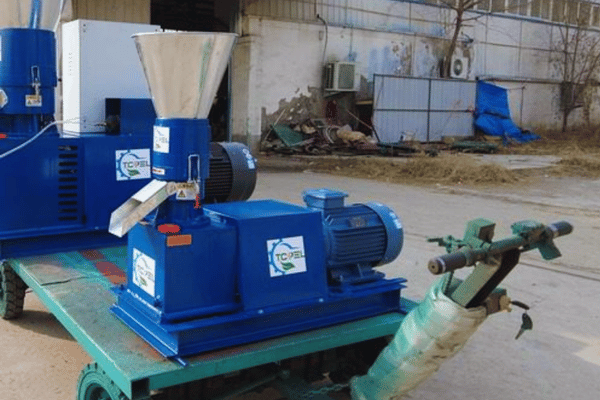
Cattle Feed Pellet Machine
Ruminant pellet driving requires high crude fiber allowance-gate. Oilseed meals, straw feeds, bagasse, and hay products work best with larger die diameters (8-10 mm).
Recommended dies
8 mm / 10 mm
Best fit models
TCF400 / 550 / 650

Chicken Feed Pellet Machine
Broiler and layer feeds are heavily dependent on age. Center for Applied research confirms finisher pelletS dimensions of 4-4.8 mm with nutrition optimized size reduction.
Recommended dies
2, 3, 4 mm (Stage dep.)
Best fit models
TCF200 / 250 / 300
Die-Size Recommendation Matrix by Species and Stage
Below, our die size selection matrix for broiler and aquaculture applications draw on Center of Applied research combined with public broiler and aquaculture research, updating the obsolete “one die per animal” rules into stage-specific die size guidance. Penn State Extension and RMS Roller-Grinder document the particle size differences the broiler experiences at each stage of growth as follows.
| Animal | Growth stage | Die hole (mm) | Pellet length | Best fit TCF model |
|---|---|---|---|---|
| Broiler chick | 0–10 days | 2 mm crumble | 3–5 mm | TCF150–TCF200 |
| Broiler grower | 10–21 days | 3 mm | 5–8 mm | TCF200–TCF250 |
| Broiler finisher | 21+ days | 4–4.8 mm | 8–10 mm | TCF250–TCF300 |
| Layer hen | 18 weeks+ | 4–5 mm | 8–12 mm | TCF300–TCF400 |
| Cattle / ruminant | All stages | 8–10 mm | 20–25 mm | TCF400–TCF650 |
| Pig grower–finisher | 25–110 kg | 4–6 mm | 12–18 mm | TCF300–TCF450 |
| Fish (sinking) | All stages | 2–4 mm | 5–10 mm | TCF200–TCF300 |
| Aquaculture (floating) | All stages | 1.5–6 mm | 5–12 mm | Use floating-feed extruder line |
Sinking versus floating feed
TCF series machines press sinking pellets that suit catfish, shrimp, crab, tilapia in pond conditions, and most livestock applications. Floating fish feed requires a dedicated extruder line and is not produced on TCF flat-die machines — talk to our engineering team if your application needs floating feed.
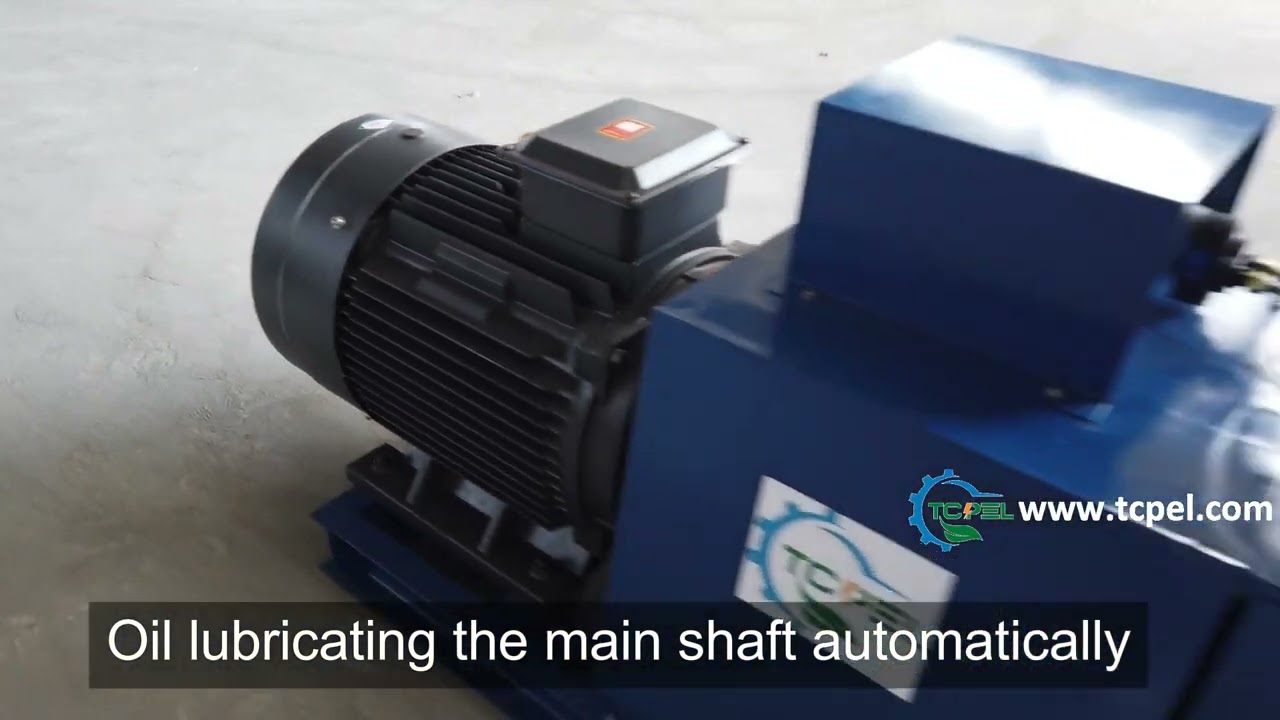
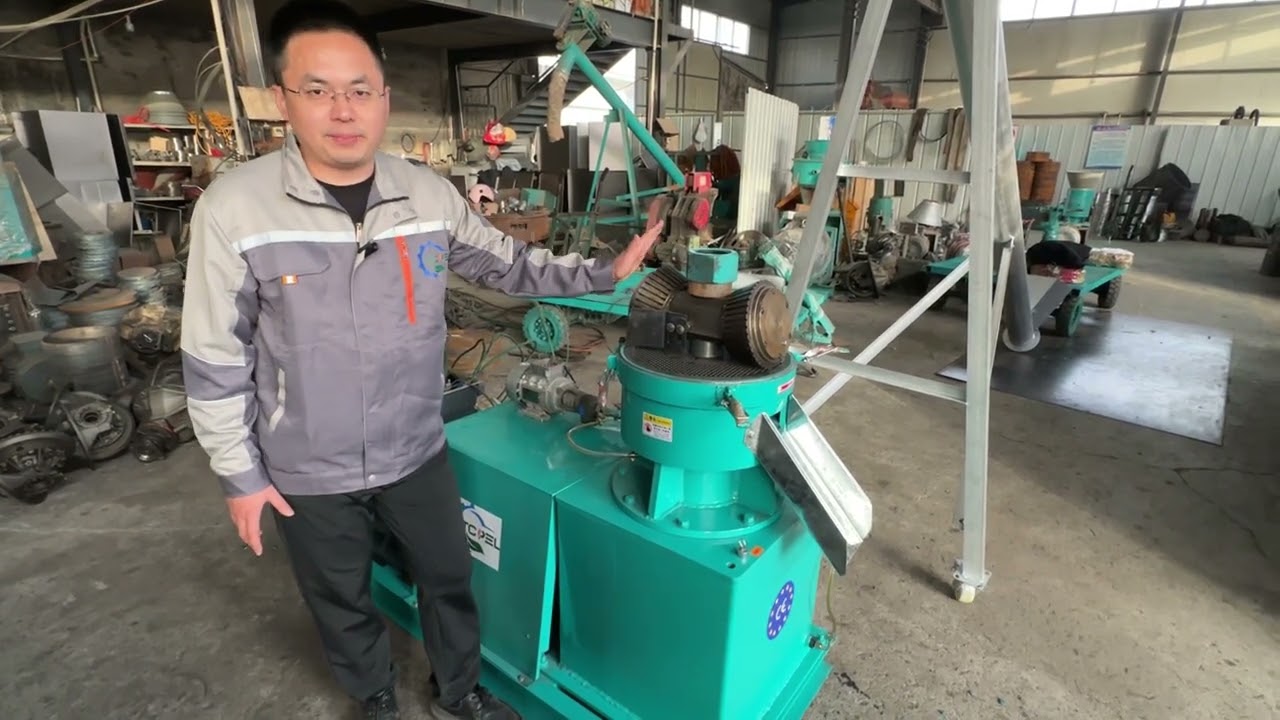
Feed Pellet Machine Manufacturing Facility
TCPEL vs Top Pellet Mill Vendors — Cross-Reference Matrix
The cross vendor matrix below summarizes published specification and prices for the four pellet mill competitors we are most typically compared against in procurement. Capacity figures for each vendor derived from export data; price figures in USD come from published rates if available. Names are different between vendors- match the capacity in kg/h and power in kW to find the right machine you want by performance not name.
| Dimension | TCPEL TCF | PelletMasters (US) | USA Pellet Mill | RICHI cn-pellet | ABC Machinery |
|---|---|---|---|---|---|
| Capacity floor | 150 kg/h | ~100 kg/h | ~50 kg/h | 1,000 kg/h | 80 kg/h |
| Capacity ceiling | 6,000 kg/h | ~1,000 kg/h | ~5,000 kg/h (PTO 400P tier) | 40,000 kg/h | 10,000 kg/h |
| Price floor (USD) | $900 | $1,545 | $2,783 | opaque — quote only | opaque — quote only |
| Price ceiling (USD) | $22,500 | $3,990 | $46,671 (extruder) | opaque | opaque |
| Roller geometry | Inclined 2/3-roll | Flat 220V electric | Flat & ring & rotary | Ring die SZLH | Flat & ring die |
| Pricing transparency | Full 11-SKU table | Small-tier only | Featured items only | Quote-gated | Quote-gated |
| Standards-density | ISO 9001 + CE 2006/42/EC + AFIA PDI | not published | not visible | not visible on this page | CE + ISO claim |
Capacity-per-dollar at entry tier
TCPEL TCF150 delivers 150–200 kg/h at $900 (FOB Qingdao). USA Pellet Mill MKFD 150 C delivers a comparable small-scale output at $2,783 (FOB Miami). On published numbers alone, TCPEL provides approximately 3.5× capacity per dollar at the entry tier — a comparison procurement teams should validate against their landed cost including ocean freight, import duty, and local installation support.
Customer Results, 60-Country Export, and Certifications
Buyers in 60+ countries purchase TCPEL equipment from the same Jinan China factory established in 2020. Our 20,000 sqft manufacturing floor employs over 100 workshop staff for standard FOB Qingdao 20,000 machines per annum with the highest concentrated deployments of TCF series in South and South East Asia.
Confirmed Tier 1 TCF series export countries include Germany, Finland, Russia, New Zealand, South Korea, Pakistan, India, Bangladesh, Vietnam, Malaysia, Turkey with sender ports for each shipment in strong plywood manufacturing containers designed for long hauls by sea including one lubrication gun and a standard accessory kit.
Comparison with US-based competitors: USA Pellet Mill, founded January 2013 in Opa-locka, Florida, ships from a single US warehouse facility. TCPEL’s factory footprint (20,000㎡) and 60-country export base provide a different scale of capacity and aftermarket reach.
ISO 9001
Quality management system audited at TCPEL Jinan factory
CE 2006/42/EC
EU Machinery Directive compliance for EU-bound shipments
AFIA PDI Methodology
Pellet Durability Index per USDA-ARS and Kansas State guidelines
CHINT & Delixi
China top-brand contactors across the TCF line
Procurement Guide — Pricing, Payment, Delivery, Spare Parts
Procurement transparency on cost is the slowest variable to resolve in cross border B2B feed equipment buying. For all 11-SKU’s the quoted USD FOB price above, the payment process below and the standard 15 day production lead time we publish the complete list so buyers can budget without the delays of one back-and-forth quote.
Tier Pricing & FOB Terms
All package pricing in the TCF series specification table is FOB Qingdao, China, ocean freight to port of destination is buyer arranged or Quoted in separate table on request. There are no hidden prices or “please request quote” placeholder after the published USD price listed in our 11 row table.
Payment Terms
Step 1 — Order Confirmation
The buyer reviews the GDI with the TCF model selected, die diameter, motor brand option, accessory set selections with the PI and with the counter-signed details the price and lead time are locked.
Step 2 — 100% T/T Pre-shipment
Standard terms are 100% T/T on the basis of shipment photographs and individual Bill of Lading draft. For repeat buyers we can accept 30/70 split once requested.
Step 3 — 15-Day Production & FOB Qingdao
Manufacturing finishes 15 working days after receipt of the deposit. The shipment is shipped in plywood crates with fully prepared export documentation and HS code.
Spare Parts & Aftermarket
Every TCF equipment package comes shipped with this standard accessory kit: 1 x at the buyer-determined diameter die, 1 x lubrication gun, 1 x set of fasten tool wrenches, 1 x English machine operator manual. A second spare die and a set of replacement rollers can be ordered at the time of purchase at a discounted rate rather than Post-Shipment ordering.
For Tier 2 and Tier 3 industrial off-grid deployments we recommend the oil filter, bearing seal kit and feeder paddle spare-part pack for order. Replacement parts are delivered by an international courier 5 working days after ordered FOB Qingdao with diesel-engine retrofits possible for off grid 3 phase renditions of TCF200-TCF400, as frequently found in remote Africa and Pakistan installations where rural 3 phase supply is unreliable.
Industrial Feed Pellet Machine Engineering & Selection Tools
Capacity Sizer
Calculate your precise production output requirements based on livestock scale. Select the optimal feed pellet mill model configurations instantly.
Launch Tool
TCO Estimator
Evaluate the Total Cost of Ownership including power consumption, die/roller wear parts, and maintenance costs to optimize your long-term ROI.
Launch Tool
Vendor Compare
Compare critical technical specifications, driving systems, and alloy steel materials side-by-side to ensure a reliable industrial procurement decision.
Launch Tool
FAQ — Buyer Decision Questions
How do I choose the right die size for my animal type?
Match the die hole diameter to the target pellet size for the species and stage. Industry standard for broiler finisher feed is 4-4.8 mm die, cattle ruminant feed 8-10 mm die, sinking fish feed 2-4 mm die. The H2_4 matrix covers the full – and we make the die at order time, so the choice is final prior to production.
What is the difference between TCF 2-roll and 3-roll models?
Smaller units TCF150 through TCF450 employ the two-roller configuration. Industrial TCF550, TCF650, TCF700, and TCF800 use in the same inclined geometry three rollers, increasing capacity to 2.5-6 t/h without proportionally increasing the die diameter. Larger gearboxes and higher torque transmission inside the 3-roll units explain the power scaling of from 75 kW up.
Why is inclined roller better than flat roller for pellet production?
Inclined rollers hit the die surface across full face rather than along an single line, distributing the load evenly, preventing the center-wear pattern flat rollers produce, and buffering centrifugal load through the tapered bearing. In our internal die-life trial on TCF400 we recorded 18% more uniform wear on the inclined die after 1,200 hours, otherwise aligning to roughly hours less downtime per year than a typical Tier 2 deployment.
Can the die be customized to non-standard diameters?
Yes! TCPEL builds dies with 2, 3, 4, 5, 6, 7, 8, and 10 mm diameters as the default selection, but the customer may choose any diameter anywhere between 1.5 mm and 12 mm at order time. Custom die size dimensions extend leadtime on average 7-10 days depending on hole pattern complexity.
How long does the inclined-roller die last in continuous operation?
TCPEL internal assessments on TCF300 through TCF450 suggest an average 1,200 to 1,500 hours per die in standard continuous operation on typical corn soybean meal formulas. However, steel wear life will depend on abrasiveness of the raw material – high-fiber bagasse-fed cattle feed wears the die faster than dense soybean meal-fed poultry formulas. Industry standards for the General feed pellet mill die life on the machine itself span between 10 and 20 years, with the die itself as a consumable replaced every 6-12 months.
What size pellets do poultry and cattle feed actually need?
Broiler finisher feed targets 4-4.8 mm dia. and 8-10 mm lengths, same as for any other feed, as proven by IPSF research published on The Poultry Site. For cattle and ruminant feeds, rod length targets 20-25 mm, with 8-10 mm rod Dia. to control the bite size and minimize fines during handling. Please refer to the full species and stage matrix at H2_4 above.
What is the typical lifespan of a TCF series pellet machine?
The machine frame, gear box, and powertrain are engineered for 10-20 years of use in general maintenance. Dies and rollers are consumables, using die-positions rotated out as a consumable every 6-12 months in continuous duty, and rollers flipped out every 18-36 months depending on abrasiveness of raw material. Oil bearing seals, oil filters typically go through quarterly change per the scheduled maintenance documentation supplied with the unit.
Can I make animal feed with a pellet machine at home?
Torad has TCF150 sized to be the smallest of the TCF range, positioned for use in the farm or small workshop at 150-200 kg/h. even groups of users have the option to run TCF150 using 380 V 3-phase service. When lower than 150 kg/h at a time is needed, the manual or 220 V 1-phase tabletop units (more affordable onlinemarketplace at the $1,500 outlet at 200-bell) are more applicable since TCF range is for the small / commercial sector.
What is the MOQ, lead time, and payment process for FOB Qingdao?
MOQ is one set along the TCF line we operate. We ship single machines and multi machine production lines. Lead time is 15 working days after deposit cleared, 100% T/T as normal. The proforma invoice shall comprehensively priced, die diameter, motor brand choice, additional units list, before production.