Get in Touch with TCPEL

Small Pellet Machine for Home Use
Small Pellet Machine for Home Use — TCZL Flat-Die Series ($4,000–$12,200, 100–1,400 kg/h)
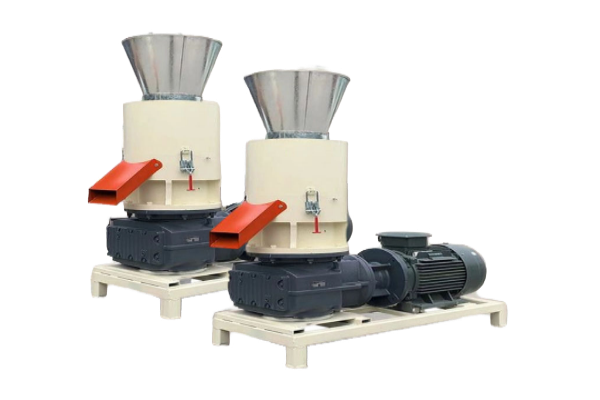
A wood pellet machine for home use only earns its keep when three numbers line up: enough capacity to cover your seasonal demand, a price that recovers itself inside 24 months, and after-sales coverage in your country. The TCZL series gives you 9 flat-die models — from 11 kW / 100 kg/h ($4,000) for sawmill workshops and small farms, up to 110 kW / 1,400 kg/h ($12,200) for small commercial pellet lines — all built at our 20,000 m² Shandong factory and delivered to 60+ countries since 2020.
9
TCZL Models
100–1,400
kg/h Capacity
$4K–$12.2K
FOB Qingdao
15
Days Lead Time
60+
Countries Delivered
20,000
m² Factory
Why Small-Scale Pellet Production Pays — When It PaysAll Buyers
The three buyer profiles that actually make it work
Sawmill or woodworking workshop with sawdust waste.
If you currently pay a hauler $200–400 per load to remove sawdust (a reality reported on hearth.com pellet forums), every ton you pelletize flips that cost into either fuel savings or revenue. A TCZL250 (15 kW, 100–200 kg/h) absorbs about 1.5 tons of dry sawdust per shift.
Small farm or rural homestead heating own buildings.
A pellet-heated 3,000 sqft home in a cold climate burns 4–8 tons per heating season. At $280–$400/ton retail (2024–2025 US market), that is $1,100–$3,200 per winter you stop sending to a pellet retailer. With your own dry sawdust, wood chip, or straw supply, the TCZL200 (11 kW, 100 kg/h) clears one season’s fuel in 40–80 hours of running time.
Small commercial feed mill or aqua-feed operator.
Self-pelletizing cattle, horse, poultry, or fish feed cuts ingredient cost 30–40% versus bagged commercial feed at scale. The TCZL300–TCZL550 range (200–1,000 kg/h) hits the productivity threshold where labor-per-ton makes sense for a 20–200 head operation.
TCZL Flat-Die Pellet Machine — 9 Models from $4,000 to $12,200
Every TCZL pellet machine uses the same flat-die compression principle: a high-efficiency electric motor (or diesel engine on custom builds) drives a heavy industrial gearbox at roughly 90–110 rpm — more durable than the rear-axle differential drives common in cheaper imports — which rotates rollers above a flat steel die. The die-and-roller pair is the heart of the small pellet mill: material fed through the conditioner is pressed through 6–8 mm holes, sliced to length by a rotating knife, and discharged into a cooling tray.
The 9-model lineup below is the complete flat die pellet machine ladder we have shipped as a manufacturer from FOB Qingdao to small farms in Russia, Germany, Vietnam, Pakistan, Malaysia, and 55+ other markets since 2020. Power ratings span 11 kW (≈15 hp) up to 110 kW (≈148 horsepower) — the same ladder a U.S. or German distributor would call a “wood pellet maker” series at 3–5× the markup.
Complete TCZL specifications and FOB pricing
| Model | Power | Wood Pellet Capacity | Feed Pellet Capacity | Weight | Dimension (mm) | FOB Qingdao |
|---|---|---|---|---|---|---|
| TCZL200 | 11 kW | 100 kg/h | 140 kg/h | 500 kg | 1080 × 490 × 1090 | $4,000 |
| TCZL250 | 15 kW | 100–200 kg/h | 180–250 kg/h | 600 kg | 1120 × 440 × 1060 | $4,400 |
| TCZL300 | 22 kW | 200–300 kg/h | 280–400 kg/h | 800 kg | 1230 × 630 × 1030 | $4,800 |
| TCZL350 | 30 kW | 300–400 kg/h | 400–550 kg/h | 850 kg | 1380 × 630 × 1280 | $5,500 |
| TCZL400 | 37 kW | 400–500 kg/h | 550–700 kg/h | 1,200 kg | 1380 × 680 × 1300 | $5,900 |
| TCZL450 | 55 kW | 600–800 kg/h | 800–1,100 kg/h | 1,600 kg | 1480 × 730 × 1380 | $7,100 |
| TCZL550 (75 kW) | 75 kW | 800–1,000 kg/h | 1,100–1,400 kg/h | 2,200 kg | 1580 × 730 × 1480 | $10,100 |
| TCZL550 (90 kW) | 90 kW | 1,000–1,200 kg/h | 1,400–1,650 kg/h | 2,800 kg | 2000 × 1000 × 1800 | $11,000 |
| TCZL650 | 110 kW | 1,200–1,400 kg/h | 1,650–1,950 kg/h | 3,200 kg | 2000 × 1000 × 1800 | $12,200 |
Specifications and prices from TCPEL 2024-2025 product catalog. Feed and pellet capacity measured on typical cattle feeds pre-mix, actual throughput is 10% different with feedstock moisture content (target 12-15%) and die thickness. FOB Qingdao, excludes ocean freights, import duties and inland delivery to your plant.
TCZL 9-Model Selection Matrix — by buyer profile and use case
| Model | Best For | Daily Output (8h shift) | Power Source | Complete Set Includes |
|---|---|---|---|---|
| TCZL200 / TCZL250 | Home sawmill, single-family rural homestead heating, hobby workshop | 0.8–1.6 t/day wood pellet | Three-phase 380V (single-phase via converter) | Pelletizer + conveyor + control cabinet + oil pump + tools |
| TCZL300 / TCZL350 | Small farm + own livestock feed, multi-building heating, woodworking shop | 1.6–3.2 t/day | Three-phase 380V required | Same standard set, optional cooler + bagging |
| TCZL400 / TCZL450 | Small commercial feed mill, regional pellet retail, fish-feed pre-press | 3.2–6.4 t/day | Three-phase 380V required | Recommended with hammer mill, rotary dryer, pellet cooler |
| TCZL550 / TCZL650 | Small commercial pellet line, sawmill by-product line, biomass fuel reseller | 8–11 t/day | Three-phase 380V industrial | Full pellet production line: chipper, hammer mill, dryer, pellet machine, cooler, packer |
Complete machine includes — not just the pelletizer
What ships in every standard TCZL set:
- Main pellet machine with industrial gearbox (not a rear-axle differential – which was a common failure on other cheaper imports)
- Screw feeding conveyor for steady raw-material flow
- Control cabinet with overload protection
- Lubrication oil pump for gearbox and bearings
- Assembly tools and spare wear parts
For a working pellet line on small scale or small commercial volume you generally require a wood crusher / hammer mill (3-20mm chip reduction) and a rotary dryer before the pellet press (12-15% humidity% content), as well as a pellet cooler and pellet packing machine. all six machines TCPEL builds in-house, including drum chippers for raw timber or bale grinder for compressed agricultural wasteresistance you d get buying a complete line from one vendor over purchasing from three or four other sources. kWh perty guess is 28-35.
TCZL vs Ring-Die vs U.S. Suppliers vs Alibaba Imports — Performance ComparisonEN + MGR + PROC
Nearly all home wood pellet machine buying guides ignore the buy-in reality: identical appearing machines on Alibaba, U.S. distributor sites, and direct factory websites are selling for two to four times the delivered cost of the same capacity, through the delivery pipeline. The five-supplier matrix below is limited to each provider’s published 2024-2025 prices and capacities (not marketing documents) where available. Where a vendor publishes no price (still the most common pattern for our category) we identified it Quote-only so you can compare the transparency gap directly.
5-supplier comparison at “small commercial” tier (200–500 kg/h, comparable specs)
TCPEL TCZL300 (Ours)
$4,800 FOB
Capacity (wood pellet)200–300 kg/h
Models in lineup9 (full ladder)
Complete production lineYes — 6 machines
Single-phase 110/220V optionTCZL200/250 with converter
Diesel / PTO optionCustom build
Verifiable factory addressGoogle-Maps verified Shandong
Documented export markets60+ countries
Lead time15 days from deposit
USA Pellet Mill MKFD150C
$2,783 FL warehouse
Capacity~150 kg/h class
Models3 flat-die SKUs
Full LineNo (resells separately)
110/220VNo
Diesel/PTOPTO model $9,718
AddressFL warehouse only
Export MktsNot published
Lead timeIn-stock + transit
PelletMasters single-phase
Quote-only
Capacity~100–200 kg/h
Models11 sub-categories
Full LineHammer+grinder+mill
110/220VYes — flagship feature
Diesel/PTOYes — multiple
AddressU.S. assembly
Export MktsU.S. domestic + export
Lead timeOften in-stock
FlatDiePelletMill (CN)
Quote-only
Capacity40–500 kg/h range
Models6 electric models
Full LinePelletizer+powder+chip
110/220VNo
Diesel/PTOYes — diesel SKU
AddressNot disclosed
Export MktsNot published
Lead time20–30 days
RICHI industrial baseline
$20,000+
Capacity0.5–4 t/h
Models10+ industrial
Full LineYes — full lines
110/220VNo
Diesel/PTOCustom
AddressRICHI Henan
Export Mkts140+ countries
Lead time30–45 days
Real Customer Outcomes Across 60+ Countries
Pellet machine ROI numbers in marketing copy are usually projections. The three case stories below come from TCPEL’s actual 2023–2024 export shipments, edited for confidentiality where customers asked for it. Each one started from a verifiable problem and arrived at a measurable outcome — including the projects where ROI took longer than the buyer initially hoped.
Russia (Volgograd Oblast)
Small farm, 80 ha grain + 40 head cattle
TCZL250 (15 kW) | Shipped Q2 2023
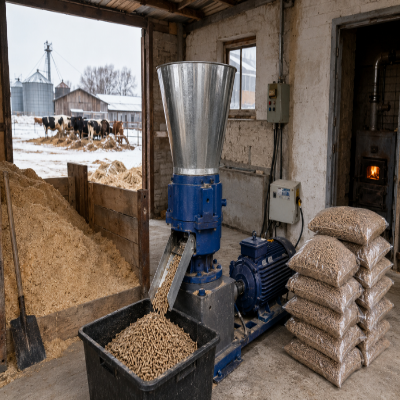
Sawdust-to-heating-pellet pivot, 14-month payback
Read Full Case Study +
Our customer was burning natural gas through a 40-year-old furnace at roughly $2,800 per winter and paying a hauler to remove sawdust from his on-farm timber operation. His TCZL250 produced 1.5 tons/day from existing dry sawdust at ~12% moisture, running an average 4 days per week through October–March. Self-produced pellets covered ~6 tons of the home’s seasonal heating fuel. Including phase converter and shipping, total invested ≈ $5,800. Annual saving ≈ $4,800 (gas avoided + hauling avoided). Payback inside 14 months.
Germany (Lower Saxony)
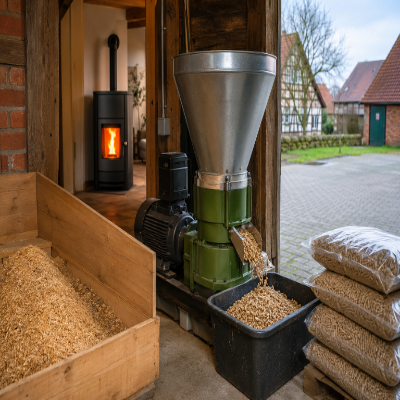
Rural homestead, 1,800 sqft pellet stove
TCZL200 (11 kW) | Shipped Q4 2023
EN PLUS-equivalent home pellet, 22-month payback
Read Full Case Study +
Fresh pellet production, EN PLUS A1 grade is what is required for standard EU pellet stove certification, was the inspection required and the customer just wanted to double check their own pellet quality first. 6 months in feedstock tuning (60% pine, 40% hardwood mix dried to 11%), pellet density 1.05 g/cm³, ash 0.4% – in spec for A1. Yearly production ~800 kg/month covered ~70% of seasonal stove demand; remaining bagged as commercial pellet emergency backup. Total invested 5,200 including freight and German VAT. Yearly saving 2,400. Payback 22 months – somewhat slower than originally projected due to 6 month feedstock learning curve.
Vietnam (Đồng Nai)
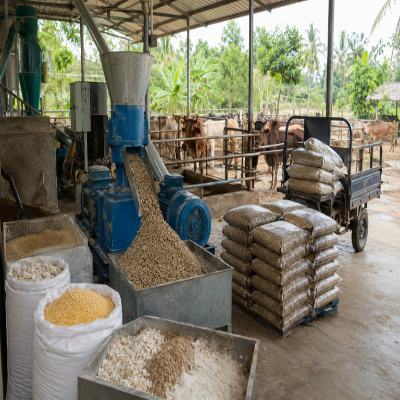
Small commercial cattle feed mill, 40 head + neighbor sales
TCZL400 (37 kW) | Shipped Q1 2024
Custom-mix cattle pellet, 11-month payback
Read Full Case Study +
Customer was purchasing 4- ton bags of generic cattle pellet at VND 10.5 M/ton. Conversion into directly pelletized mix of corn meal + cassava chips + rice bran + minerals reduced raw-cost-per-ton to VND 6.2M (-41%). At 4 t/d for 220 working days, savings VND 3.78 B/year. Total invested VND 320 M (raw materials, hammer mill, cooler, freight, VAT). Payback 11 months; plus, client later sold surplus pellet product to 2 neighboring farms for additional income.
ROI Card · Silver Tier · TCO baseline
14–22 months
Typical payback period for TCZL pellet machine buyers when matched to recurring feedstock supply (sawmill, farm, or feed-mill volume above 1 t/day). Customers chasing pellet-stove-only personal heating with no waste-stream supply usually do not earn back the investment within 5 years — the math only closes when raw material is free or near-free.
Source: TCPEL 2023–2024 export project records. Field outcomes vary ±20% with electricity cost, feedstock moisture, and labor availability.
The applications behind those payback numbers
- Pellet fuel for wood / biomasssawdust, wood chip, straw, agricultural residue for domestic pellet stove use, industrial boiler feed, bio-power station supplementary fuel
- Pellets for animal feedcattle, horse, chicken, pig; mix of maize / soya / cassava / rice bran
- Pellets for aqua feedfish, prawn (compatible with a common fish feed extruder)
- Agro-waste recyclingrice husk, peanut shell, EFB, bamboo, alfalfa, grass clippings
- Fertilizer pelletorganic fermented compost, dried manure
“Greatest error new pellet buyers make- designing a machine for peak instead of average capacity. A TCZL400 running 4 hours a day delivers your needs; running it 1 hour at capacity is burning die life and electricity for no other reason. We send every customer a feedstock & capacity worksheet before quoting- we have talked many over to TCZL250 when the math suggested it.”
Would like an TCO estimate tailored to your country, electricity rate, and feedstock?
Get a Quote with Country-Specific Cost Modeling →Factory, Certifications, and Verifiable Trust SignalsPROC + EN
Most “China direct” pellet mill listings hide where the machine is actually built. TCPEL’s factory address is real, export volume is documented, and the client list spans countries you can verify on procurement databases. Trust in this category is built on traceable specifics, not adjectives.
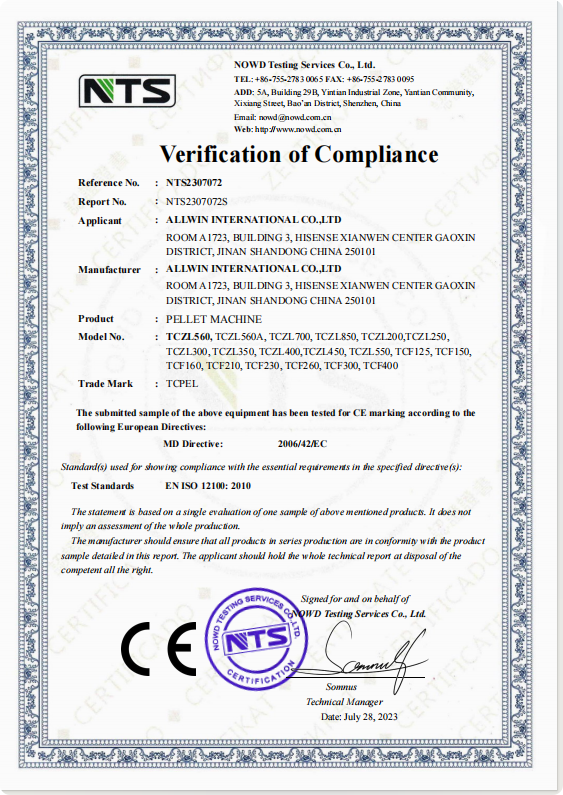
CE Marking
EU machinery directive 2006/42/EC compliance — certificate available on RFQ
ISO 9001
Quality management system — manufacturing-floor audited
Factory of Record
Google-Maps-verified, 20,000 m² Shandong production base
Export-Documented
60+ countries delivered since 2020 — bill of lading shareable
100+ Workshop Staff
In-house casting, machining, assembly, QC — not a trading company
Multi-Engine Lineup
Drum chippers · hammer mills · rotary dryers · coolers · packers
Verifying any China-direct supplier — three checks we recommend you run on us, too
- Google Zegbrk factory address on Maps street view or satellite – make sure the facility actually exists and the images accurately reflect the scale
- Request one masked bill of lading from the last 12 months to a country similar to yours – make sure the entire export documentation process is real
- As you want a 5 minute factory video walk through on WhatsApp (it is not pre recorded) which ever time you specify.the supplier either has the staff and the floor to do it or not.
Documented export markets (representative, since 2020)
Germany Finland Russia NZ South Korea Pakistan India Bangladesh Vietnam Malaysia Turkey – and ongoing deliveries to another 50+ countries.
We are happy to share masked bill-of-lading copies and client references (with prior approval from client) before you make a deposit.
Click anywhere to close
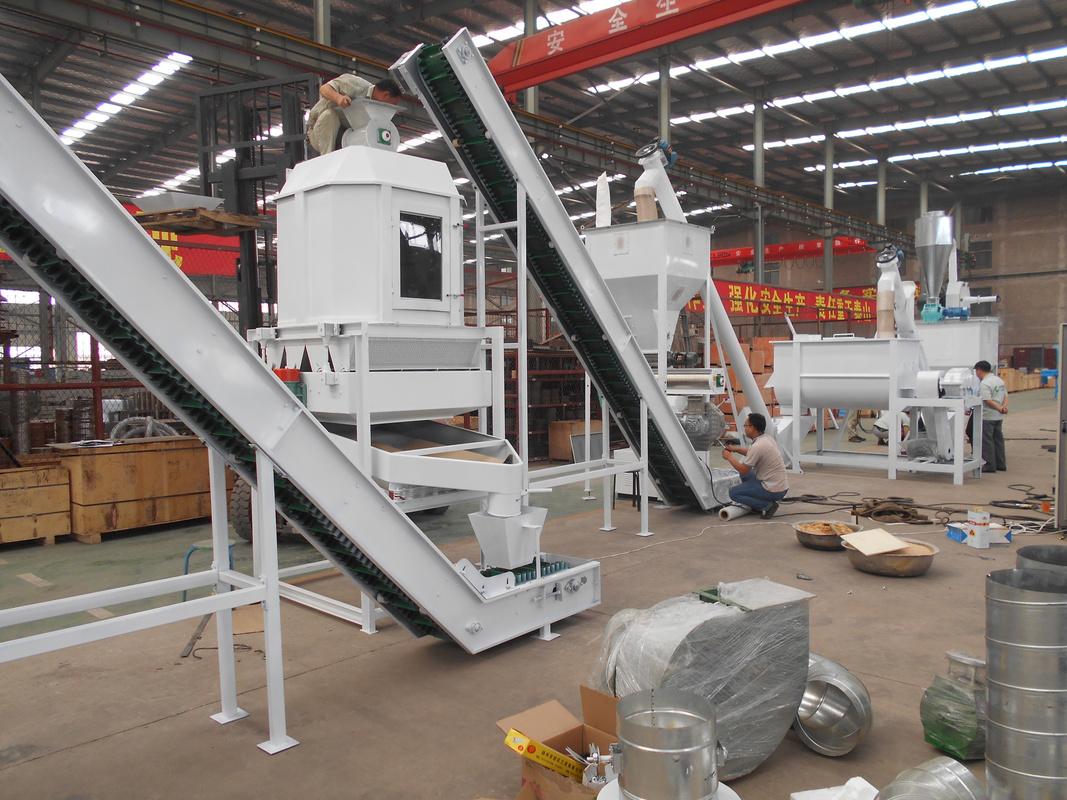
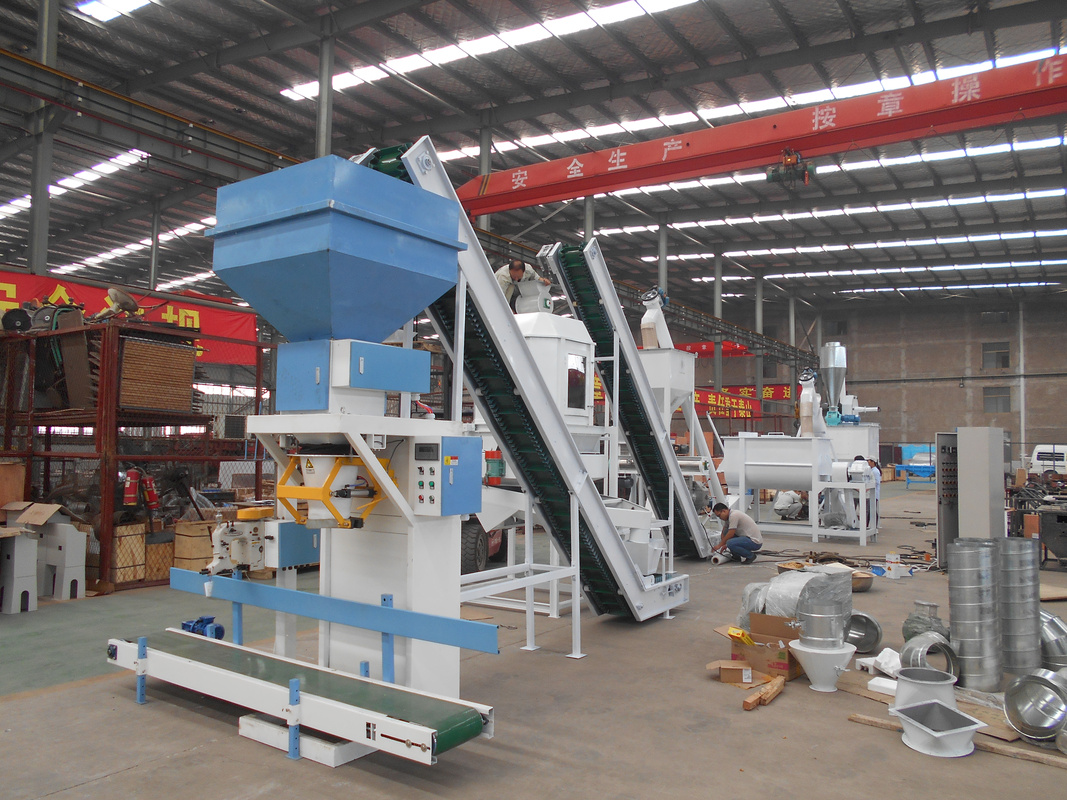
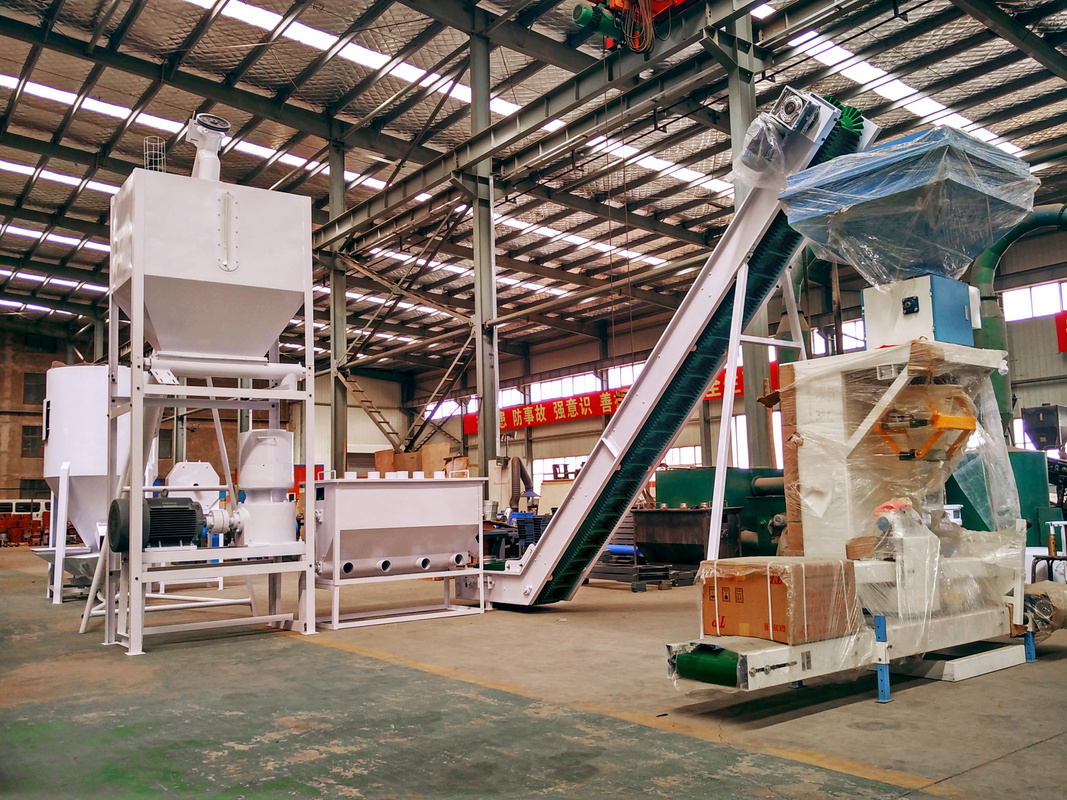
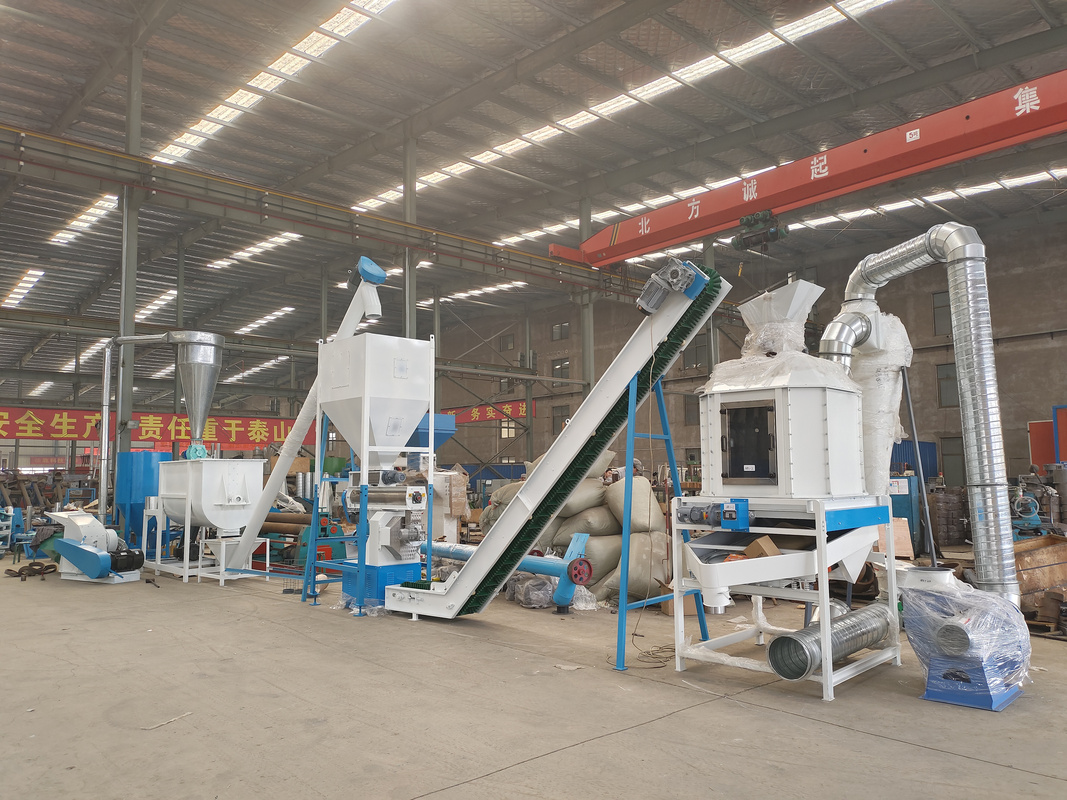
TCZL Advanced Manufacturing Facility



×
Procurement Guide — Price, Lead Time, Shipping, and After-SalesPROC + MGR
Our TCZL price ladder is published in plain dollars (see the spec table above). The variables that actually move your landed cost — trade term, ocean freight, import duty, after-sales coverage in your country — are below.
Trade terms and what each one really costs you
FOB Qingdao
Typical Add: —
What’s included
Machine on the export deck at Qingdao port
Best for: Buyers with their own freight forwarder + import broker
CIF (Nearest Seaport)
Typical Add: +5–12% (~$200–$1,500)
What’s included
FOB + ocean freight + marine insurance
Best for: Buyers who want one shipping invoice but handle own customs
DDP (Delivered Duty Paid)
Typical Add: +15–25% (~$600–$3,000)
What’s included
CIF + import duty + inland delivery + customs clearance
Best for: First-time importers, small buyers without a customs broker
Payment, lead time, MOQ
MOQ
1 set
Payment
30% T/T Deposit after confirmation of order, Balance of 70% T/T against bill-of-lading copy before shipment.
Lead time & Transit
15 days from the confirmation of the deposit to the manufacturing of the product; transit time (environment: ocean): varies depending on destination (Europe: 12-18 days. U.S. East Coast: 18-25 days; Latin America: 25-35 days)
Logistics & Container Packing Ref
Réception en container : 1 TCZL200/250 + accessoires par 20′ GP— ou 2 3 TCZL300 ou 400/40′ H // la trentaine compacte (produit en ligne) passe en 40/ Ils acceptent d’accueillir les autres 27 produits [suivants], le reste étant livré plus tard, alors que leur capacité de réserve semble déjà limitée, et pourchassent également d’autres nouveaux réduits.” I’ll le en moyenne7c6″d’étirent a nous9 avec plus -900 haute coh oy0dC.”
Spare parts, warranty, and after-sales coverage
Standard warranty
24 months on the motor/gearbox/main frame and 12 months on the wear parts which include die and rollers.
Technical support
WhatsApp + Email 24-hour response window; Skype/Zoom commissioning support free for first 30 days; on-site distributor support in Russia, Germany, and Vietnam.
Die replacement
From $200 (TCZL200/250) to $800 (TCZL550/650) per kit, delivered in 7–10 days.
Roller bearings
$40–$120 per set, kept in stock for 5+ years on every model.
Manuals and video library
Shipped with every machine + accessible online.
Need pricing modeled with shipping cost, import duty, and after-sales coverage scoped to your country?
TCZL Small Pellet Machine Planning & Optimization Tools
Wood Pellet Machine ROI & Payback Calculator
Estimate when a TCZL pellet machine pays itself back, based on your annual pellet need and raw material situation. Silver-tier estimate — accurate to ±20% of TCPEL’s actual 2023–2024 export project outcomes.
Access CalculatorPellet Feedstock × TCZL Compatibility Chart
11 common raw materials mapped against the 9-model TCZL ladder. Filter by application, then read the recommended die thickness, moisture target, expected throughput factor, and which models handle each feedstock cleanly.
View Compatibility ChartFrequently Asked Questions
The full TCZL ladder runs $4,000 (TCZL200, 11 kW, 100 kg/h) to $12,200 (TCZL650, 110 kW, 1,400 kg/h), all FOB Qingdao. Add roughly $200–$1,500 for ocean freight and another $600–$3,000 for DDP customs clearance, depending on destination country. Cheaper imports exist on direct-import auction sites starting around $1,500–$1,800, but those are typically 5 hp units that struggle to produce enough pellet to cover their own electricity cost.
Yes — when raw material is free (sawmill by-product, farm waste, woodchip from your own trees) and you need recurring volume above 0.5 tons per week. At commercial pellet retail prices of $280–$400/ton (US/EU 2024–2025), every ton you self-produce saves ~$300 plus avoids haul-away fees if you currently pay to remove sawdust.
Flat die for any production target below 1.5 tons/day or with variable feedstock — die replacement is 4–10× cheaper, tolerates moisture variance, and easier to maintain without specialist tooling. Ring die starts paying back above 5 tons/day on consistent industrial feedstock with tight moisture control (12 ± 1%).
Yes for production-grade machines. Anything above 11 kW requires three-phase 380V to develop the torque needed to compress hardwood through a die. TCZL200 (11 kW) and TCZL250 (15 kW) can run on single-phase using a phase converter (~$400–$800 add-on cost), which works for intermittent home use. From TCZL300 (22 kW) up, three-phase is required.
Wood sawdust; wood chips; pine and hardwood mixes; straw; rice husk; peanut shell; EFB; bamboo; alfalfa; grass clippings; cassava chips; soybean meal; rice bran; fermented organic fertilizer mixes; dry manure. The target moisture is 12-15% for biomass; and 10-14% for feed products.
About 24-30 hours of continuous burn in a typical 40,000 BTU residential pellet stove running at a medium setting – so approximately 1.3-1.6 lbs/hour. An entire ton (2,000 lbs / 50 bags) would be enough to deal with a well-insulated 1,800 sqft home through a winter.
Yes – the TCZL frame is the same. What changes are the diameters of the holes in the die: wood pellet usually uses 6 or 8 mm holes with a 5:1 compression ratio; cattle and poultry feed uses 3-5 mm holes with a 6:1 compression ratio. We would advise purchasing both dies if you intend to switch.
For a smallish operation running the TCZL200 with one operator: about 4 hours of mill running time at about 100 kg/h nominal total for each tonne; another 2 to 3 hours of material prep, 3 hours for post-cooling-and-bagging. Total 6-7 hours of single operator taking the material in.
15 days production from receipt of 30% deposit, plus ocean transit (12-35 days depending on destination). The standard TCZL set ships with the main pellet machine, screw feeding conveyor, control cabinet with overload protection, lubrication oil pump, assembly tools, and one set of spare wear parts.
Die life heavily dependent upon feedstock. Hardwood sawdust at 12-15% moisture: 1,200-1,500 tons. Mixed straw plus softer biomass: 800-1,200 tons. Abrasive feedstocks such as rice husk: 500-800 tons. Replacement die kits range from $200 (TCZL200/250) to $800 (TCZL550/650 large dies).
References & Data Sources
- ISO 17225-2 – Solid biofuels – Fuel specifications and classes – Part 2: Graded wood pellets.
- EN PLUS – Wood pellet certification scheme (European Pellet Council, A1/A2/B grading).
- NFPA 211 – Standard for Chimneys, Fireplaces, Vents, and Solid-Fuel-Burning Appliances.
- U.S. Department of Agriculture – Wood pellet production and wholesale price tracking, 2024-2025.
- European Commission Joint Research Centre – Solid and gaseous bioenergy pathways.
- TCPEL – internal 2023-2024 export project records and 2024 product catalog.
Why we built this guide
The capacity numbers and prices on this page are derived from TCZL units we built and shipped in the period Jan 2023 to Dec 2024. The case studies reference redacted real customer developments in Russia, Germany, and Vietnam. The 14-22 month payback time is an actual mid-range target from our 2023-2024 export project book – fast-payback projects and slow-payback projects were averaged out. Since 2020 we have shipped almost 20,000 pellet machines and complete biomass-line components, every model in the TCZL range has been delivered to at least 1 of the 60+ countries we cover and we will share redacted bill-of-ladings with serious buyers well before any deposit is committed.