Get in Touch with TCPEL
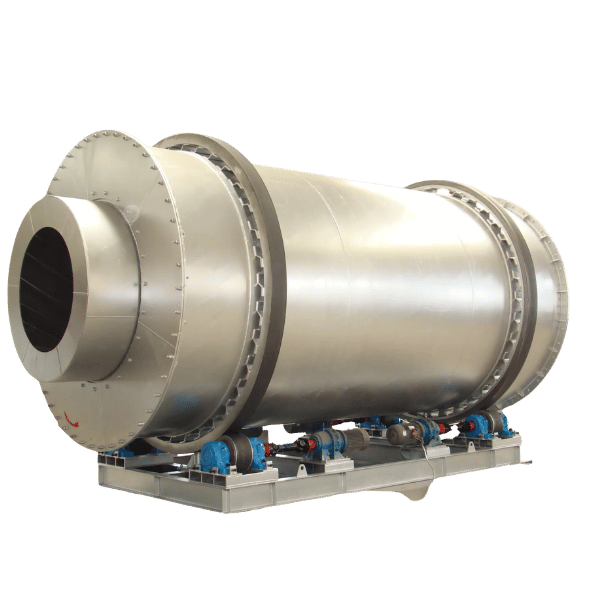
TCPEL Triple Pass Rotary Dryer — Biomass Drying System (1-6 T/H Capacity)
Industrial rotary drum dryer built specifically for pellet mills. Has six models capable of lowering sawdust and wood chip moisture from 50% to 15% in a single pass through – thus eliminating the need for a separate predryer.
Founded 2020
ISO 9001:2015
Exports to 60+ countries
Factory: 20,000 m², Shandong
CE Marked (Machinery Directive 2006/42/EC)
Why Wet Biomass Costs Pellet Plants Profit — And How a Triple-Pass Dryer Fixes It
The triple pass rotary dryer eliminates the free moisture after dewatering. It is a complex device consisting of three concentric drums receiving the hot air and hot-gas mixture from one central supply. The rotary dryer continuously dries the biomass when it is delivered in load at the first end and also continuously delivers the dried biomass in the second end, for pelletizing. Sawdust and wood chips entering at 50% moisture cannot be compressed into stable pellets as the press dies jam, the ash content increases and the pellet quality index does not pass ISO 17225 grades.
Drying accounts for the bulk of all operational costs in any biomass pellet manufacturing operation. Wet biomass and energy for drying can account for some 10-15% of the total receipts of the biomass plant – the single highest variable cost aside from buying in the raw fiber. If a system is selected on price and operated inefficiently, the EBITDA margin of any profitable biomass plant can be wiped out.

The Three Pain Points We Hear From Pellet Producers
High moisture, high thermal cost.
Drying 1 kg of water from biomass requires roughly 3.2–3.6 MJ of thermal energy, according to peer-reviewed indirect-dryer studies. Pelletizing at 50 % inlet moisture, it takes ~ 410 kg water per wet ton of feed.
Footprint constraints.
Single-pass dryers at equivalent throughput occupy roughly 2.8 to 3.3 times the floor area of a triple-pass machine, since the triple-pass nests three cylinders inside one shell. Most pelletizing and fabrication shops cannot give up that footprint.
Inconsistent final moisture.
If outlet moisture varies more than ±2%, the press die compression curve drifts and pellet density goes off-spec. Produces are rejected or the press is run at lower speed to compensate.
TCSG series addresses these three problems with a co-axial three-pass drum, an integrated cyclone separator and dust collector, and a fan sized for the evaporation load of each model. Outcome: a 50% to 15% moisture reduction in one pass, on a footprint that fits inside most existing pellet-plant buildings without structural retrofitting.
If you are evaluating dryers for heavy mineral ore, foundry sand above 40 mm particle size, or specialty pharmaceutical drying, a single-pass or indirect dryer will usually serve you better. See Triple Pass vs Single Pass for the honest selection logic.
TCPEL TCSG Series — 6 Models from 1 T/H to 6 T/H
Rotary Drum Dryer Specifications — TCSG10 through TCSG60
The TCSG series with six throughput tiers. All models share the same triple-pass dryer drum design within a load range for their rated evaporation load. Customers usually size the dryer for the downstream pellet press to have a 15-20% reserve capacity to handle moisture spikes in feedstock.
| Model | Capacity (T/H) | Water Evap (kg/h) | Drum (mm) | Fan (kW) | Total Power (kW) |
|---|---|---|---|---|---|
| TCSG10 | 1 | 700 | Φ2000×5840 | 15 | 32 |
| TCSG20 | 2 | 1,400 | Φ2300×7340 | 22 | 42 |
| TCSG30 | 3 | 2,100 | Φ2400×10460 | 45 | 70 |
| TCSG40 | 4 | 2,800 | Φ2800×10460 | 55 | 80 |
| TCSG50 | 5 | 3,500 | Φ2950×12420 | 75 | 109 |
| TCSG60 | 6 | 4,200 | Φ3300×12420 | 90 | 124 |
Every TCSG configuration ships with feed screw conveyor, feed kiln head, four tug-bearing-shaft sets, two cyclone separators, one dust-collector silo, discharge kiln tail, air-lock rotary valves, wind pipes, and a complete electric cabinet. Base specification supports 50% inlet moisture and 15% outlet moisture across the full lineup.
Decision Matrix — Matching Material to Model
| Feedstock | Typical Particle Size | Recommended Tier | Notes |
|---|---|---|---|
| Wood sawdust | <10 mm | TCSG10–TCSG60 | Ideal feed; full capacity |
| Wood chips | 10–25 mm | TCSG20–TCSG60 | Pre-screen recommended |
| Alfalfa / agricultural residue | <30 mm | TCSG10–TCSG50 | Check dust class |
| Rice husk, peanut shell | <15 mm | TCSG20–TCSG60 | High silica → cyclone wear monitor |
| Bagasse / sugarcane fiber | 10–40 mm | TCSG30–TCSG60 | Light density → verify retention |
| Particles > 40 mm | — | Not recommended | Use single-pass dryer or pre-shred to <40 mm. |
TCSG10 / TCSG20
Compact biomass dryer for small wood-pillerts workshops and pilot flows.
- 1–2 T/H output
- 32–42 kW total power
- Floor: ~8×16 m
- Lead time: 35–45 days
TCSG30 / TCSG40
Mid-Range rotary drum dryer for established pellet producer requiring increase in capacity.
- 3–4 T/H output
- 70–80 kW total power
- Floor: ~10×20 m
- Lead time: 45–55 days
TCSG50 / TCSG60
Industrial-scale triple pass dryer for export-oriented pellet manufacturing lines.
- 5–6 T/H output
- 109–124 kW total power
- Floor: ~10×24 m
- Lead time: 55–65 days
Onsite Installation and Commissioning
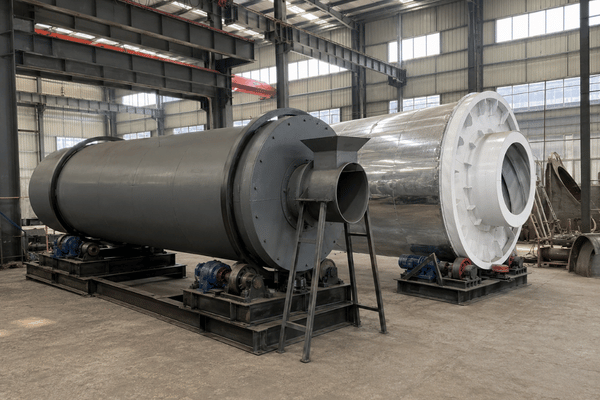
TCPEL ships every dryer as pre-assembled modules: drum body, support frame, cyclone stack, dust collector, fan plenum, and control cabinet. Our onsite crew unpacks, places foundations, connects ducting and electrical, then commissions TCSG10 to TCSG40 in 7 to 10 working days and TCSG50/TCSG60 in 10 to 14 working days. We offer 1 supervising engineer on site during commissioning along with a remote technical support line.
Need a model recommendation for your specific feedstock?
Send us your material spec and target throughput →Triple Pass vs Single Pass Rotary Dryer — Honest Comparison
Industrial Rotary Dryer Selection: When Triple-Pass Wins, When Single-Pass Wins
The dryer-industry debate about triple-pass versus single-pass machines is authentic, and the most vociferous tend to support polarized positions. FEECO International, a frequently-cited pro-single-pass operator, describes shorter run-times, greater clogging perils, and higher fan-generated energy consumption as downsides of triple-pass machines. Those isues might hold up for some applications—and be speed bump to others.
The truthful answer will vary based on 3 factors: First, your feed particle size, second, the range that moisture predominates in, and third, your actual floor area available. Below is a comparison of measurable dimensions with no fancy marketing adjectives.
| Dimension | Triple-Pass | Single-Pass |
|---|---|---|
| Floor footprint per T/H | ~3–4 m² per T/H | ~9–12 m² per T/H |
| Drum length | 30–35% of equivalent single-pass | Baseline (100%) |
| Service life (drum shell) | ~8–12 years typical | ~15–25 years typical |
| ID fan power (per kg/h water) | Higher (pneumatic conveying) | Lower (gravity assist) |
| Maximum particle size | <40 mm | Up to 150 mm with custom flights |
| Capital cost (per T/H) | Lower (single drum shell) | Higher (over sized shell + foundation) |
| Ideal feedstock | Light, high-moisture biomass: sawdust, wood chips, alfalfa, bagasse | Heavy, abrasive, large-particle: sand, ore, slag |
When Triple-Pass Wins
Choose triple-pass if all four are true:
- Feedstock is light biomass (sawdust, wood chips, agricultural residue)
- Particle size less than 40mm (should be even less than that if pre-shredder is used)
- Inlet moisture is above target (40-55%) outlet is under target at 12-18%
- Limited plant floor area (urban, retrofitted building, or modular design)
This is exactly this kind of profile you will find on most of the wood-pellet & biomass-pellet production companies—that is why TCPEL was dedicated to this specific market segment with the TCSG series.
When Single-Pass Wins
Choose single-pass instead if any are true:
- Feedstock particle size is greater than 40 mm. Pre-shredding of the feedstock is not cost-effective and is available off-site
- It has an abrasive material (sand, slag, mineral ore) which may be required to have 20+ years of drum life…
- Unconstrained floor area whereas capital cost is replaced by longevity
- Drying duty is an intermittent duty while clogging recovery time is of key importance.
For any of those applications, contact us anyway – although we are not known for our single pass dryers, we manufacture them and will not ignore your request, we will tell you the truth.
Energy & ROI — What Drying 1 Ton of Biomass Actually Costs
Drying is the most significantvariable variable cost in a biomass pellet plant. It is the area where the margins can be best improved. Known samples of peer-reviewed research report indirect biomass dryer mid-range thermal energy consumption of 3.2-3.6MJ/kgH2O for wood-based feed-stocks. Direct rotary dryers, such as the TCSG series, operate at the lower part of this range when properly optimised and fired with biomass waste heat.
Energy Demand by Model (Thermal + Electrical)
Below is the typical energy envelope for each TCSG model drying wood sawdust from 50% to 15% moisture. Thermal demand uses the MDPI benchmark of 3.4 MJ per kg water evaporated (mid-band). Electrical demand sums the installed motor power.
| Model | Water Evap (kg/h) | Thermal (MJ/h) | Electrical (kW) | Electricity per ton dry product |
|---|---|---|---|---|
| TCSG10 | 700 | ~2,380 | 32 | ~32 kWh/ton |
| TCSG20 | 1,400 | ~4,760 | 42 | ~21 kWh/ton |
| TCSG30 | 2,100 | ~7,140 | 70 | ~23 kWh/ton |
| TCSG40 | 2,800 | ~9,520 | 80 | ~20 kWh/ton |
| TCSG50 | 3,500 | ~11,900 | 109 | ~22 kWh/ton |
| TCSG60 | 4,200 | ~14,280 | 124 | ~21 kWh/ton |
Industry financial models and pellet plant operators have identified that drying energy generally comprises 10-15% of pellet plant revenue. Proper operation of the dryer by pre-sorting feed, pre-measuring moisture and running at proper feed rates will generally result in the dryer siting closer to that 10% mark, while over sizing or operating intermittently will sit closer to 15%.
Payback Framework — Three Levers That Drive It
A true payback calculation needs to include plant-specific revenues, electricity pricing structures and sales price for pellets. Rather than publishing one big life-of-project number for every market, we think most of our pellet plant customers use this model.
Throughput.
bigger models mean lower kWh-per-ton values (TCSG40 @≈ 20 kWh/ton versus TCSG10 @≈ 32 kWh/ton). Capital cost premium of one step-up in model size range is typically economically survivable within 18-30 months of operation with >6,000 hours a year operation.
Heat source.
Pellets plants that fire their dryer with waste biomass derived heat (fines, bark, off-spec pellet) rather than NG or coal, cut their effective drying energy costs 60-85 percent with typical fuel cost differentials.
Demand variance control.
moisture probes in feedstock combined with a closed-loop discharge moisture measurement can significantly reduce over-drying losses. Industry directives suggest a reduction of 2-4 perfentage points in over-drying yields 5-10% savings in overall drying energy.
Industry-wide, wood pellet plant operators have reported a payback on total project costs of 15-30 months, with the dryer component generally having a 10-20 month payback when correctly configured.
Three Pellet-Plant Configurations (Anonymised)
Southeast Asia
Wood Sawdust
Model:
TCSG40
Feedstock:
Mixed hardwood sawdust,
48% inlet moisture
48% inlet moisture
Operating:
16 h/day, 280 days/year
Outcome: 19,000+ tons dry product per year, supplying a regional pellet trader.
South Asia
Agricultural Residue
Model:
TCSG30
Feedstock:
Rice husk + sawdust blend,
42% inlet moisture
42% inlet moisture
Operating:
20 h/day, 320 days/year
Outcome: 18,000+ tons dry, feeding a 2.5 T/H pellet press line.
Eastern Europe
Bagasse
Model:
TCSG60
Feedstock:
Sugarcane bagasse,
52% inlet moisture
52% inlet moisture
Operating:
22 h/day, 300 days/year
Outcome: 28,000+ tons dry, exporting to EU pellet market.
Want a payback estimate for your plant?
Send your operating hours and electricity rate →Quality, Certifications & Global Footprint
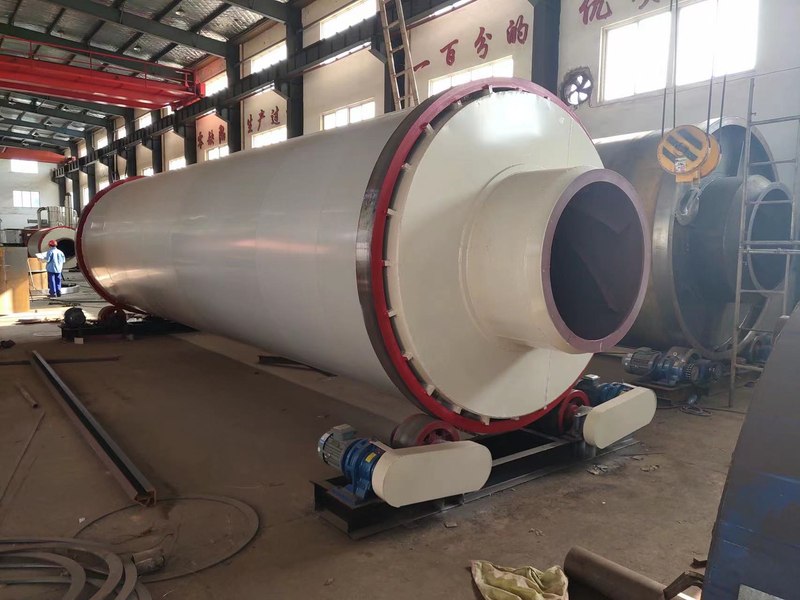
TCPEL is a professional industrial dryer manufacturer operating from a 20,000 sq m plant in Zhangqiu District, Jinan, Shandong Province, China. Our facility employs an excess of 100 highly skilled workers in our workshop, with dedicated station for welding manufacturing, machining for shafts and drum flanges, and a pneumatic assembly for drum-shelled that are 3.3m, 7.2m, 12.4m, 20 m in diameter. All TCSG is shop-tested before transportation.
CE
Machinery Directive
2006/42/EC
2006/42/EC
ISO 9001
Quality Management
:2015
:2015
60+
Export
Countries
Countries
100+
Workshop
Staff
Staff
20,000 m²
Factory Floor
Area
Area
5 yrs+
Operating
since 2020
since 2020
MD Certificate NTS2307069S
MD Certificate NTS2307070S
MD Certificate NTS2307071S
MD Certificate NTS2307072S
MD Certificate NTS2307073S
MD Certificate NTS2307074S
Where TCSG Dryers Are Operating
Our primary export markets include Germany, Finland, Russia, New Zealand, South Korea, India, Bangladesh, Vietnam, Malaysia, Turkey and more than 50 other counties across the region. The typical market installation pattern for the product is a mid-tier biomass pellet mill to regional fuel and bedding distributors.
Dryer Safety — What We Build In
Biomass dryer fires & explosions are caused by too much oxygen and too many fines. All TCSG units come with sealed feed and discharge air-locks, a high-efficiency cyclone separator, and a dust-collector silo for reduced fugitive dust. For wet biomass in regulated markets (US, EU), adding a spark detection-and-suppression system is standard practice; we work with the customer-selected safety vendor during start-up.
Quality Control — Three Hard Gates Before Shipment
Raw materials inbound check
We have weld inspection process to ensure that drum shell steel is for grade and thickness, bolts and spindles are accompanied by mill test certificates to accompany order documentation.
Acceptance inspection
We apply visual inspection and dielectric dye-penetrant to critical weld seams. Concurrently; drumshell trueness measured by laser then re-measured after stress relief.
Testing before shipping
When a drum is complete, our team spins the drum in our shop, running the fans, the air-lock and the electrical controls. We log vibration levels as well as record amperage if all motors.
Procurement Guide — Pricing, Lead Time, Payment & After-Sales
Rotary Drum Dryer Price Range by Capacity
TCPEL ships direct from the factory, providing pricing consistency across markets. Cost of final delivery depends on model, optional features (PLC level, dust-collection sizing), packing for sea freight, and local port. The following table shows the typical ex-works investment for each model in 2026 USD.
| Model | Capacity | Approx. Ex-Works Range (USD) | Typical Inclusions |
|---|---|---|---|
| TCSG10 | 1 T/H | $30,000 – $50,000 | Standard configuration |
| TCSG20 | 2 T/H | $45,000 – $70,000 | Standard + upgraded fan |
| TCSG30 | 3 T/H | $65,000 – $95,000 | Standard + larger cyclone |
| TCSG40 | 4 T/H | $85,000 – $130,000 | Standard + extended drum life kit |
| TCSG50 | 5 T/H | $115,000 – $175,000 | Heavy-duty drive train |
| TCSG60 | 6 T/H | $150,000 – $220,000 | Heavy-duty + automated controls |
Investment for the three model options in 2026USD.
Lead Time
- TCSG10 / TCSG20: 35–45 days from deposit to ex-works
- TCSG30 / TCSG40: 45–55 days from deposit to ex-works
- TCSG50 / TCSG60: 55–65 days from deposit to ex-works
This cost range is driven by three decision points: fan choice (standard or high-efficiency), automation level (manual or PLC with HMI), and dust-collection sizing for the customer’s emission requirements. Please send us the feedstock specification and emission target for a precise quotation, with a binding quote in one business day.
Payment Terms
Cost of shipping to the destination port by sea freight varies from 18 to 55 days. We work with the buyer’s forwarder or can arrange shipping ourselves on FOB Qingdao, CIF, or DAP terms.
Standard: 30% T/T deposit at order, 70% T/T balance after successful pre-shipment inspection
For orders exceeding USD 100,000, we accept Irrevocable Letter of Credit (LC) at sight.
After-Sales Commitment
Repeat customers (third order and beyond) can negotiate Open Account (OA) payment terms.
Warranty
12-month mechanical parts warranty from date of commissioning. 24-month warranty on electric cabinet, excluding consumables.
Spare parts
We guarantee a lifetime supply of spare parts; common wear parts (bearings, seal kits, lifting flight repair plates) are shipped within 7-14 days of order placement.
Remote support
Engineering support via email and WhatsApp, with a one-business-day response time.
On-site service
Worldwide availability on a per-trip expense basis; travel and accommodations paid for by buyer.
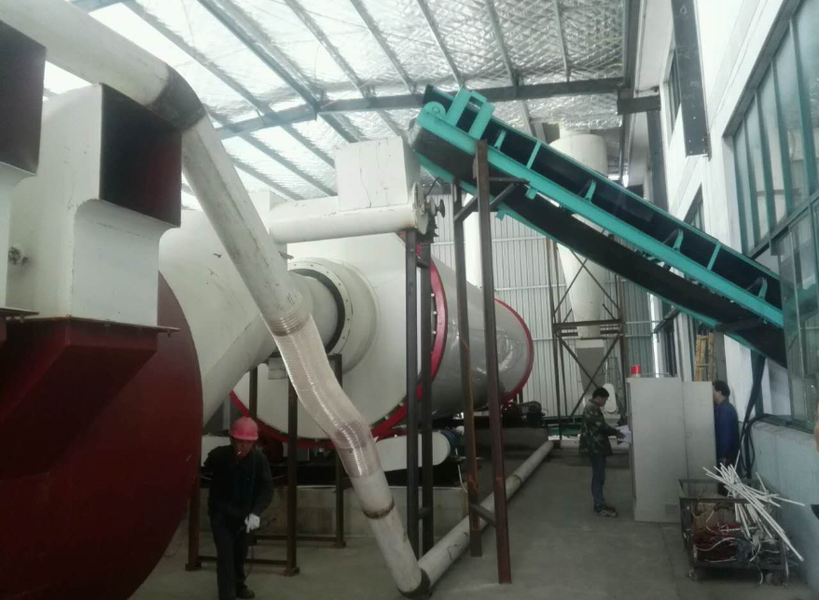
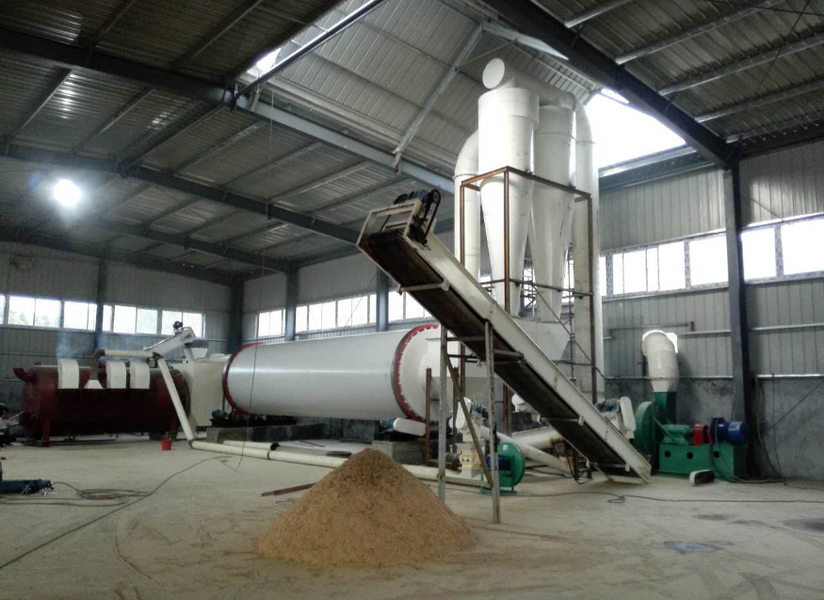
TCPEL Manufacturing Facility & Workshop Gallery



×
![Enlarged View]()
Engineering & Decision Tools
Leverage our specialized calculators and decision matrices to determine the optimal rotary dryer configuration, estimate energy costs, and ensure maximum ROI for your biomass facility.
Biomass Dryer Sizing Calculator
Input your raw material type, target throughput, and inlet/outlet moisture levels to calculate the exact drum capacity and evaporation load required for your plant.
Launch Calculator
Biomass Dryer Energy Cost Estimator
Project your thermal and electrical energy consumption based on local utility rates. Compare costs between different heat sources to maximize EBITDA margins.
Estimate Costs
Single Pass vs Triple Pass Decision Tool
Not sure which architecture suits your facility? Evaluate your feedstock constraints, floor footprint limits, and abrasiveness to determine the ideal dryer format.
Start Evaluation
Frequently Asked Questions
What is a triple pass rotary dryer?
Minimum order quantity: one unit. No pre-stock piling of finished generic dryers – each TCSG ships configured to the buyer’s feedstock and emission profile.
What materials can it dry, and at what moisture range?
A triple pass rotary dryer consists of three nested concentric drum cylinders (the second has a smaller diameter than the first, the third has a smaller diameter than the second). Raw wet biomass enters the innermost drum; hot gas strips moisture from the biomass in the first pass, then it passes outward to the middle then outer pass to ensure even moisture reduction to the target outlet level. With approximately half the floor space of a single drum dryer it accomplishes the residence time of a long single pass machine.
How does it compare to single-pass dryers?
Triple-pass dryers are cost-efficient for light biomass with feedstock particle size below 40 mm. Single-pass dryers usually offer longer drum-shell life, larger-particle tolerance, and lower fan energy at equivalent capacity. If your feedstock contains sand, grit, or abrasive minerals, or particle size exceeds 40 mm, a single-pass machine is the right call.
How much does a TCSG triple pass dryer cost?
Approximate ex-works investment runs from USD30,000 for the TCSG10 (1T/H) to USD220,000 for the TCSG60 (6T/H). Accuracy is subject to fan selection, automation level and dust-collection sizing, and the full pricing table is above—send us your feedstock spec and we will return a binding quote within one business day.
What is the typical delivery lead time?
Note that production runs 35-65 days from deposit depending on size. Sea freight adds 18-55 depending on destination port. For a buyer depositing in early Q1, we normally supply a SE Asian port end-Q1 and European/north American port mid-Q2.
Can you customize the capacity beyond TCSG60 (6 T/H)?
Yes—as of 2026 we engineer twin-drum layouts for projects over 6T/H (two TCSG60s sharing common feed and discharge systems) or engineer custom drum bodies up to 380014000mm. Lead time on custom builds is 75-90 days. Send us the intended throughput and feedstock and we will price both.
What’s the energy consumption per ton of biomass?
Electrical power demands range in the 20-32 kWh/ton of dry product band for the TCSG series; the largest units tend toward the low end with scale economies. Thermal demand is extremely consistent at about 3.4MJ per kilogram of water evaporated; for example, remove 50-15% moisture in a TCSG40 sized to sawdust expect around 9,500MJ/h of thermal loads (see energy table above for details on individual models).
What certifications does TCPEL hold, and do you ship globally?
where required we ship machinery with CE markings (Machinery Directive 2006/42/EC) and hold ISO 9001:2015 quality management systems certification. We have shipped to 60+ countries, including in the EU (Germany, Finland), most of the CIS (Russia), South Asia (India, Pakistan, Bangladesh), SE Asia (Vietnam, Malaysia), and the Asia-Pacific (New Zealand, South Korea). Any country-specific safety or import standards (UL US, AS Australia etc.) are available on request as part of the project quotation.