Get in Touch with TCPEL
Precision Engineering
Industrial Wood Crusher Machines for Biomass, Pellet & Pallet Recycling
Built for pellet mills, biomass plants and pallet recyclers — not consumer yard tools. Trusted by buyers in 60+ countries since 2020.
Capacity
100 kg/h – 4 t/h
Output
3–5 mm sawdust
Models
4 (hammer-mill + chipper)
Power
11–160 kW · electric or diesel
Export
60+ countries · CE-targeted
Factory
20,000 m² · Jinan, China

Wood Waste Costs You Money — Until You Crush It
Industrial wood crusher machines turn the largest line item on most sawmill, pallet recycler and biomass plant P&Ls — waste haul-away — into pelletisable feedstock with measurable resale value. Untreated wood waste typically costs $35–80 per ton in tipping fees, plus inbound trucking, while shredded sawdust at 3–5 mm sells into the pellet market at $90–140 per ton (regional ranges, 2024–2025 trade data).
Pellet plant operators who scaled badly know the cost of the wrong machine. Canadian Biomass Magazine ranks the six recurring failure modes as feedstock procurement, plant design, equipment choice, process flow, operations method, and transportation — and equipment choice is the only one you can lock in before commissioning.

Four questions every wood-waste buyer must answer (Pallet Enterprise checklist):
What are the thickness and dimensions of the inbound waste?
Does it contain metal, nails, or fasteners?
How contaminated is the feedstock (paint, glue, sand)?
What throughput (kg/h or t/h) keeps your downstream press fed?
What an industrial wood crusher actually is
An industrial wood crusher — also called a wood shredder, wood grinder, or hammer mill in different regional catalogues — is a rotor-based machine that reduces logs, branches, pallets, agricultural stalks and biomass into 3–5 mm sawdust or 10–50 mm chip. Shredded output is pellet-ready, briquette-ready, or boiler-ready.
Unlike consumer wood chippers built for occasional yard cleanup, an industrial wood crusher is engineered for continuous t/h-scale throughput, fastener-tolerance, and variable feedstock moisture.
Feedstock types and downstream products
TCPEL crushers process the full common feedstock matrix used by pellet plants, sawmills and pallet recyclers. On the input side, hardwood (oak, beech, maple) and softwood (pine, fir, spruce) both run at rated capacity once dried into the 8–18% moisture window. Mixed scrap wood — sawmill offcuts, MDF/OSB edge trim, plywood cut-offs, veneer rejects, dismantled pallets, and chipboard rejects — all feed the same rotor with appropriate screen selection. Agricultural residues such as corn stalks, cotton stalks, rice straw, bamboo, and palm-oil empty fruit bunch (EFB) are processed by the same crusher line with feeder adjustments.
Downstream products fall into four use clusters. Premium output — clean 3–5 mm sawdust at 8–15% moisture — feeds wood-pellet presses and charcoal briquette lines. Secondary output is sold as animal bedding (horse, dairy, poultry), as boiler fuel for in-house heat plants, or as mulch for landscape and agricultural applications. Each downstream market sets a different particle-size and moisture-content target, which determines the screen pack we ship with each unit.
TCPEL’s range answers each of the four checklist questions with a specific model, a specific kW rating, and a specific output size — published below, not buried behind a quote form.
TCPEL Wood Crusher Range — 4 Models for Every Capacity
Our four-model line covers small remote sites up to multi-ton pellet production lines. Every unit ships with TCPEL’s standard rotor balancing, screen-change tooling, and an English operator manual. Sizing recommendations follow the buyer-decision priorities published by the U.S. Pallet Enterprise checklist and the RICHI Machinery 20–30 t/h plant baseline (3–25 t/h hammer-mill stage at 30–160 kW).
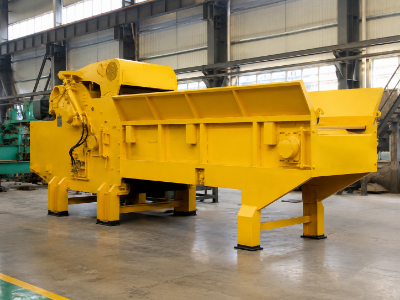
Electric Wood Crusher (main line)
300 – 4,000 kg/h · 15–55 kW · output 3–5 mm
This workhorse drives most wood-pellet plants and charcoal-briquette lines. Its water-drop crushing chamber lifts useful throughput roughly 25% over rectangular hammer-mill chambers operating at the same kW class.
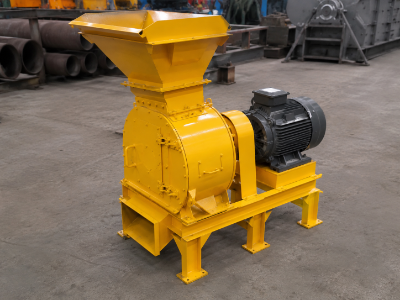
Electric Wood Hammer Mill
100 – 1,000 kg/h · 11–45 kW · output 1–3 mm
Fine-grind unit for animal-feed pelleting, mushroom substrate, and small biomass operations that need a finer particle distribution than the main crusher delivers.
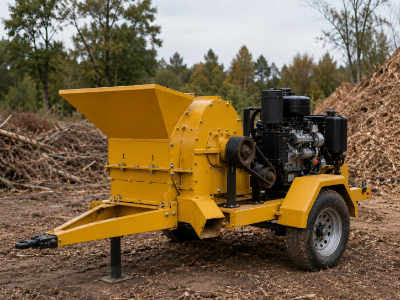
Diesel Wood Hammer Mill
200 – 1,100 kg/h · 22 HP diesel · portable
The off-grid model. Built for forest-edge operations, remote agricultural waste sites, and customers in markets with unstable three-phase supply. Trailer-ready chassis available.
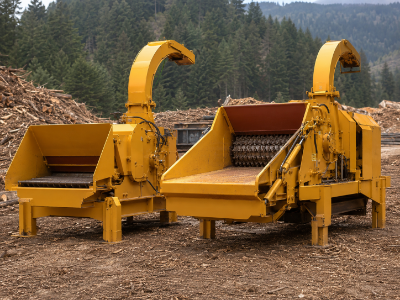
Disc Chipper & Drum Chipper
0.8 – 25 t/h · 22–160 kW · output 10–50 mm chip
Disc chippers are the lighter unit for clean logs in the paper-grade chip market; drum chippers handle dirtier feedstock including branches and pallet stringers. Both pair with the Electric Wood Crusher as a two-stage line when feedstock arrives as logs rather than offcuts.
Decision Matrix — pick the model from your throughput and feedstock
| Model | Capacity | Power | Output Size | Best For |
|---|---|---|---|---|
| Electric Wood Crusher | 300 kg/h – 4 t/h | 15 – 55 kW | 3 – 5 mm | Main-stage for 0.5–4 t/h pellet plants |
| Electric Wood Hammer Mill | 100 kg/h – 1 t/h | 11 – 45 kW | 1 – 3 mm | Fine-grind animal feed / mushroom substrate |
| Diesel Wood Hammer Mill | 200 – 1,100 kg/h | 22 HP diesel | 3 – 8 mm | Off-grid / remote agricultural sites |
| Disc & Drum Wood Chipper | 0.8 – 25 t/h | 22 – 160 kW | 10 – 50 mm | Whole-log pre-shredding before pelleting |
Each model integrates with TCPEL’s complete pellet line — chipper → crusher → dryer → pellet press → cooler → packing — connected by screw conveyors, vibratory feeders, and pneumatic conveyor systems where the layout demands it. That one-stop scope is the difference between a hammer-mill vendor and a plant builder, and it matters when the procurement question shifts from “which crusher?” to “who owns the integration risk?”
Single-shaft vs double-shaft — when to ask for which
Most TCPEL wood crusher models use a single-shaft rotor with hammer-mill geometry, which is the right architecture for clean offcuts, sawdust generation, and pellet-feed preparation.
For bulky, irregular, or fastener-heavy waste — railway sleepers, demolition timber, large pallet stacks — a double-shaft (twin-shaft) shredder is the better primary unit because it shears rather than impacts, tolerating tramp metal and oversized inputs. The two architectures complement each other: a double-shaft shredder feeds a single-shaft crusher in lines that handle mixed waste streams.
Specialised sub-models
For specific feedstock challenges, TCPEL builds three sub-page models that branch from this main wood crusher range:
- Pallet stringers with embedded nails — see our specialised pallet crusher with magnetic separator.
- Bulky, irregular construction-grade timber and stumps — the twin-shaft shredder for bulky waste handles material the main crusher would jam on.
- Compressed hay, straw and forage bales for feed pelleting — the dedicated hay bale grinder for forage processing.
How TCPEL Compares — Throughput, Power and 2-Year TCO
Pellet-plant veterans warn newcomers that initial price is the wrong number to compare. Meelko's industry framing puts it bluntly: "every hour your machine is down for repairs is an hour of lost revenue." The relevant comparison is total cost of ownership across at least two years, accounting for spare parts, downtime, and service-call distance.
The table below puts TCPEL on the same axes as the two most-cited Western brands in this category — WEIMA (Germany) and Vecoplan (USA/Germany).
"We tested over a dozen rotor balancing patterns before settling on the water-drop chamber for the main wood crusher line. It was the only one that delivered the 25% throughput uplift without spiking bearing temperature past our 70 °C threshold on continuous duty."
| Brand | Capacity Range | Output Size | Power | Price (FOB) | Made in | Lead Time |
|---|---|---|---|---|---|---|
| TCPEL | 100 kg/h – 4 t/h | 3 – 5 mm | 11 – 55 kW | $1.5K – 25K | China | 15 – 30 days |
| WEIMA WL series | t/h scale | varied | varied | $80K – 200K | Germany | 90 – 150 days |
| Vecoplan VAZ/VTH | t/h scale | varied | varied | $90K – 250K | USA / DE | 100 – 180 days |
| Generic China B2B | 100 kg/h – 4 t/h | 3 – 5 mm | similar | similar | China | similar |
Premium German and US shredders carry a 40–80× price premium for what field reports typically describe as a 25–35% throughput advantage and roughly 1.5–2× longer service life. TCPEL targets the cost-conscious pellet operator who needs reliable t/h output at a USD-per-kg-h ratio roughly ten times lower than the premium imports — without going so far down-market that warranty and spare-parts logistics collapse.
2-Year TCO comparison — TCPEL vs WEIMA (1.5 t/h pellet plant)
| Cost Line | TCPEL E-WC | WEIMA WL 15 |
|---|---|---|
| Capital outlay (FOB) | ~$18,000 | ~$150,000 |
| Spare parts / year (typical) | ~$1,200 | ~$3,500 |
| Engineer site-visit / year | Remote video included | ~$4,000 (1 trip) |
| Downtime contingency / year | ~$1,500 | ~$2,000 |
| 2-year total | ~$22,400 | ~$163,000 |
TCO figures use industry-average maintenance and service-call estimates, not customer-specific contracts. Request a TCPEL TCO worksheet for your feedstock and utility costs to produce a site-specific number.
Visualized: 2-Year Total Cost Exposure
Ready to see how TCPEL stacks against your current quote?
Request a custom comparison →From Sawdust to Profit — Where TCPEL Crushers Go to Work
Wood-pellet investment economics typically settle around a payback period of 12–24 months for a 1–1.5 t/h biomass pellet operation, depending on feedstock-cost stability and pellet market price. Vietnam's wood-pellet output has been expanding year-on-year per Argus Media's reporting, and India's biomass council estimates a national daily capacity gap of several thousand tonnes — both markets where TCPEL has shipped units in the past two years.
Wood Pellet Plants
Output 3–5 mm sawdust feeds directly into ring-die pellet presses. TCPEL units sit between the dryer and the pellet press in standard 1–4 t/h lines.
Charcoal Briquette Production
Pre-carbonisation size reduction. Sawdust at 3 mm and 8–12% moisture content produces high-density briquettes without binders.
Animal Feed Manufacturing
Fine-grind hammer mill grinds corn stalks, EFB, and forage into feed-pellet feedstock at 1–3 mm output for layer-ration applications.
MDF / OSB Manufacturers
Edge-trim and offcut recycling. Closed-loop on-site reduction cuts haul-away cost and re-enters fibre into the composite line.
Sawmills & Woodworking Shops
Joinery, cabinet, and woodworking facilities convert sawmill scrap into in-house boiler fuel for kiln drying, or sell sawdust as animal bedding to nearby horse and dairy operations.
Landscaping & Mulch Producers
Coarse-chip output from the drum chipper goes directly to landscape mulch markets. Colour-blending happens downstream; the crusher's job is consistent particle dimension.
Across these markets the output finds four downstream uses that determine which screen pack we ship: pellet feedstock (3–5 mm), animal bedding (3–10 mm depending on species), boiler fuel for on-site heat (10–25 mm), and decorative or agricultural mulch (10–50 mm chip). Knowing the destination before ordering is the single decision that most affects the configured price.
Typical project profile
A representative 1.5 t/h electric wood crusher pairs with a 12-ton/day pellet line. Under stable feedstock pricing and a pellet sale price in the $110–140 per ton range, payback windows of 12–24 months are typical for this class of operation. Site conditions, downstream press selection, and labour cost drive the actual number, which we model in the TCPEL TCO worksheet on request.
Export track record
TCPEL units have shipped to operators in:
Want a quote sized to your annual feedstock tonnage?
Get a quote based on your volume →Certifications and Standards — Built for Export
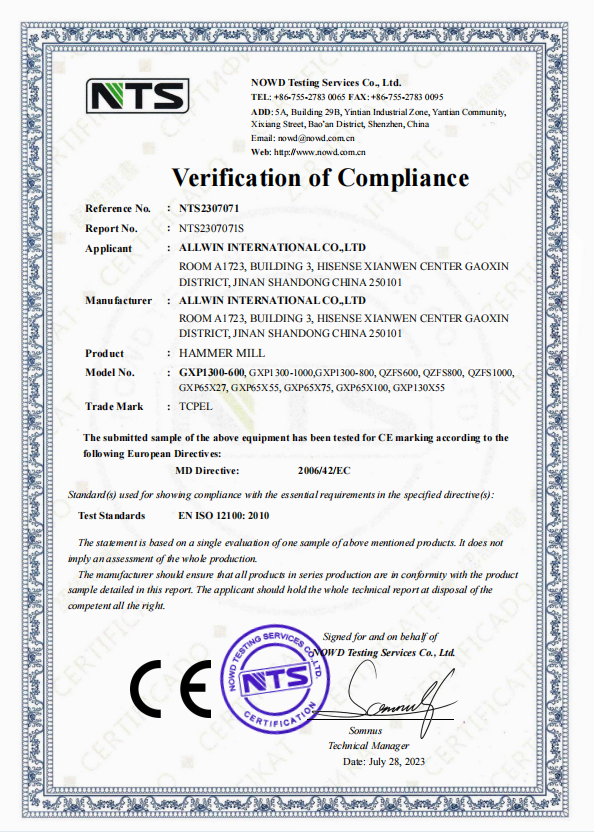
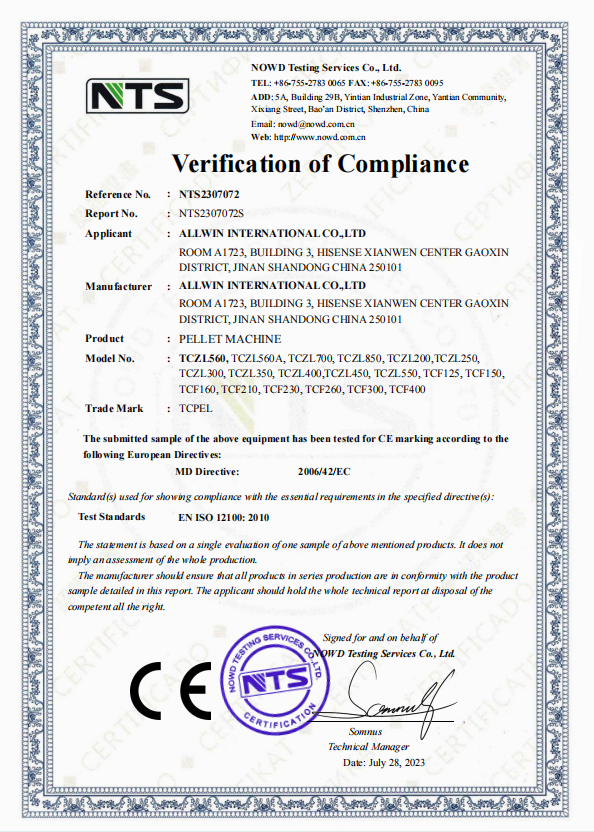
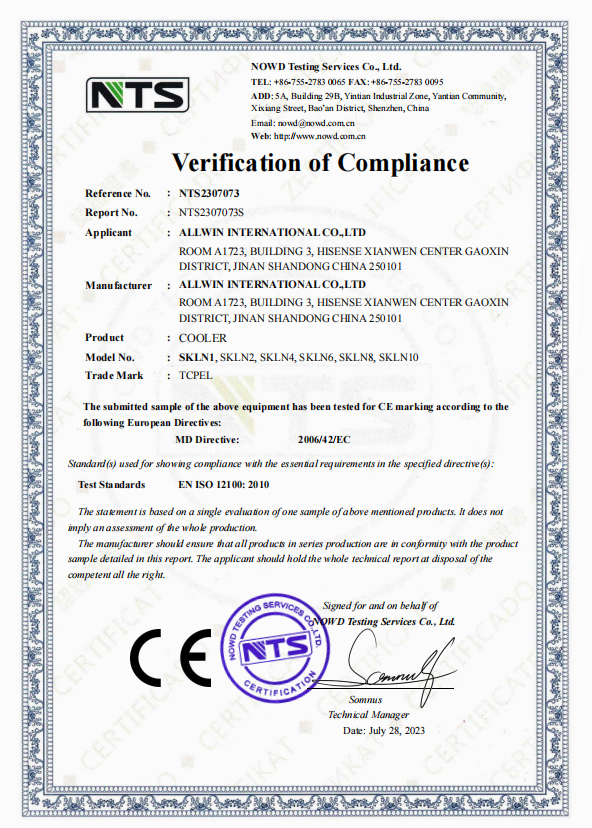
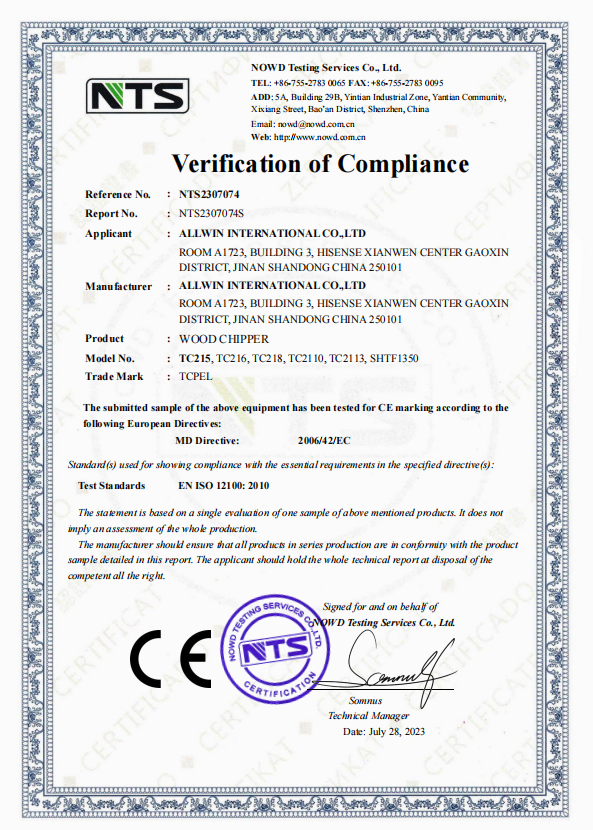
International procurement teams check three things before a wood-crusher PO clears: machine-safety standard compliance, electrical-equipment certification, and the supplier's quality-management framework. TCPEL builds its certification stack around the standards that EU, North American, and Commonwealth buyers ask for by name.
ISO
ISO 9001:2015
Quality Management
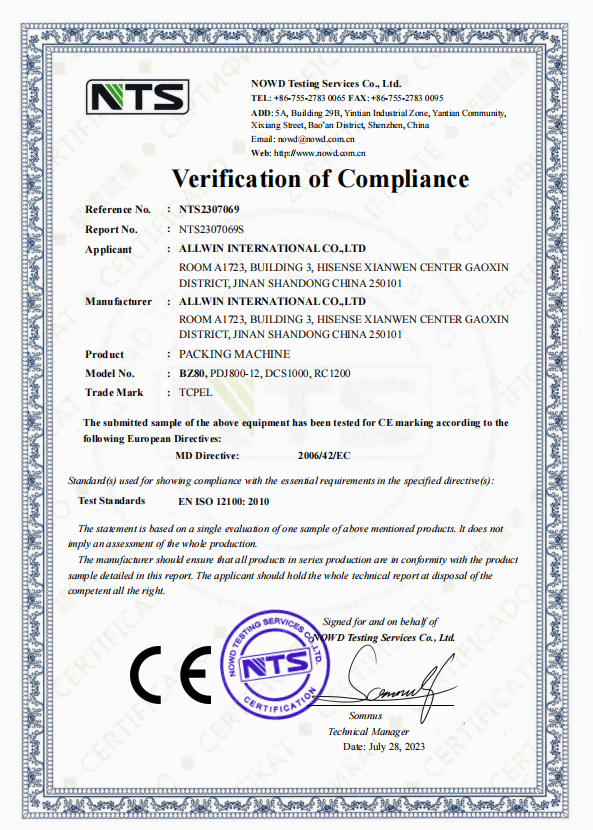
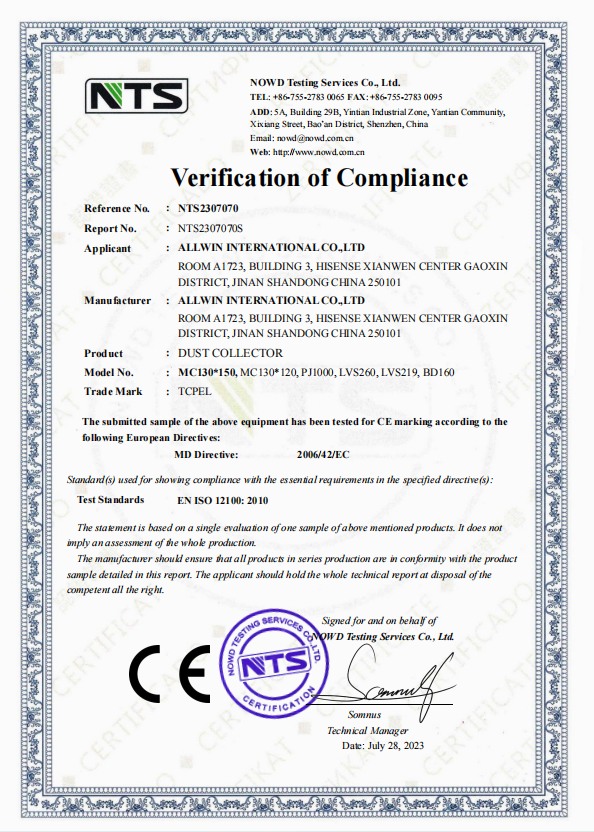
CE
CE Compliance
EU machinery directive (target on export models)
12100
ISO 12100:2010
Machinery risk assessment
60204
EN 60204-1
Electrical safety of machines
US OSHA Safety Compliance Reference
For US-bound shipments, TCPEL pre-shredders are designed with reference to the OSHA Safety and Health Information Bulletin on wood chipper hazards (SHIB 04-2008), which targets the "caught-in" and "struck-by" failure modes that drove most historical chipper injuries. Relevant guardrails — interlocked feed hopper, e-stop within 600 mm of operator station, and reverse-feed control — are standard on the export configuration of every TCPEL crusher.
×
Buying a Wood Crusher — Pricing, Lead Time and After-Sales
Most wood-crusher landing pages refuse to publish a price. We publish ranges because procurement teams cannot move a project through internal approval on "request a quote." Three tiers below correspond to capacity classes, not specific models — final pricing depends on motor selection, screen pack, and shipping terms.
Indicative FOB pricing (USD)
Small Hammer Mill
$1,500 – $3,500
100 kg/h class · single-phase or three-phase · for pilot or animal-feed lines.
Mid Wood Crusher
$5,500 – $9,800
1 t/h class · the most-shipped configuration · matched to a 12 t/day pellet line.
Large Wood Crusher
$14,000 – $25,000
4 t/h class · 55 kW main motor · for industrial pellet plants and pallet recyclers.
Manufacturing Lead Time
7 – 14 days
Rush order, small models in stock
15 – 30 days
Standard production lead time
45 – 60 days
Complete pellet line build
MOQ, payment and packaging
MOQ
1 unit on any model.
Payment
T/T 30% deposit + 70% before shipment, or L/C at sight.
Container loading
Small hammer mill — 4–6 units per 20'GP. Mid crusher — 2–3 units per 40'HQ. Complete pellet line — 2–3 × 40'HQ with full packing list and lashing diagrams.
Spare parts
Lifetime supply, DHL/FedEx express on emergency wear parts.
After-sales coverage
TCPEL ships every unit with 12-month main-machine warranty and lifetime spare-parts supply. Remote technical support runs via WhatsApp and WeChat, with engineers on call across Asia-Pacific business hours. Overseas engineer dispatch is available on a travel-cost basis.
Buyers visiting our 20,000 m² Jinan factory receive a visa invitation letter on request — the procurement teams who arrive in person typically close on a different SKU than the one they specified before the visit, and the comparison is usually worth the trip.
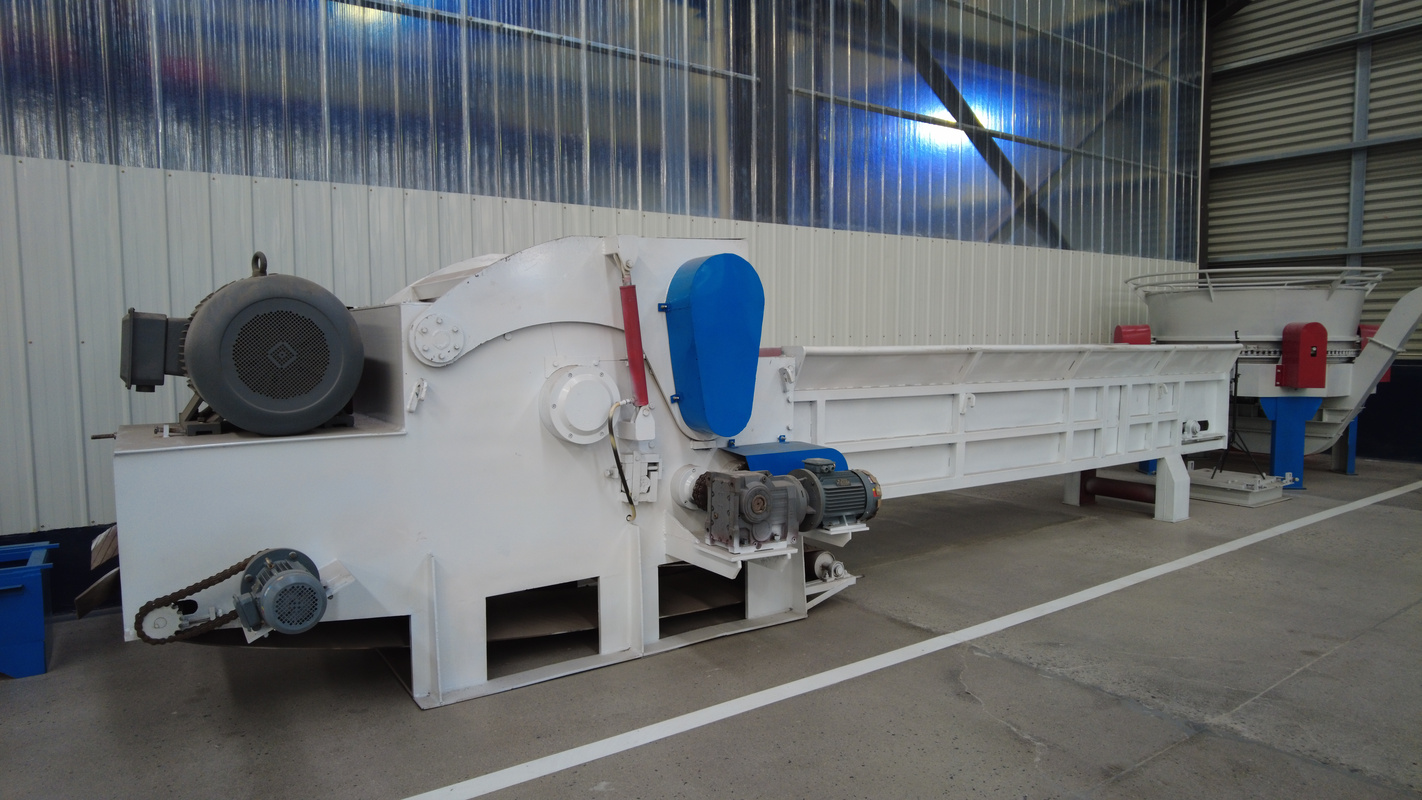
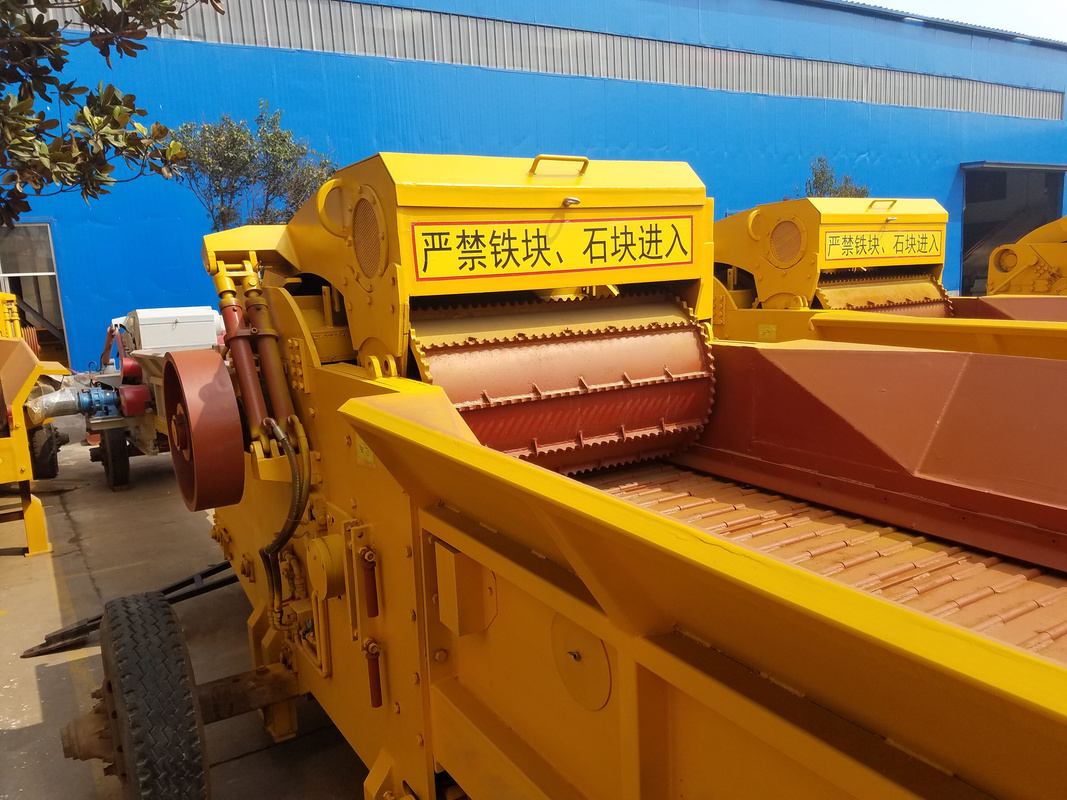
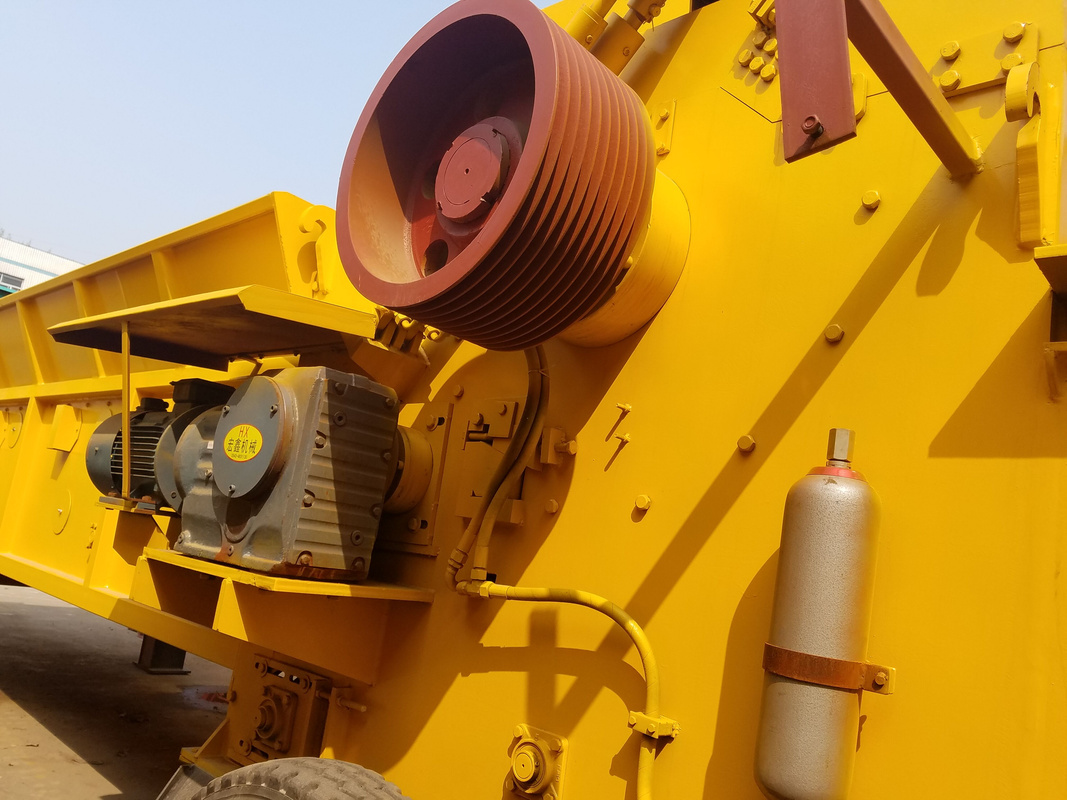
Wood Crusher Manufacturing Facilities
Take a closer look at our state-of-the-art manufacturing plant. We implement strict quality control and advanced engineering processes to ensure our Wood Crushers deliver peak performance and durability for enterprise solutions.


×
![Wood Crusher Expanded View]()
Engineering Calculation & Selection Tools
Access our suite of industrial planning tools to determine accurate machine specifications, forecast lifecycle expenses, and align screen-pack configurations with your target downstream market.
Wood Crusher Sizing Calculator
Input your target throughput and operating profile to instantly generate a recommended TCPEL machine model, required motor rating, and baseline capacity tier.
Open Calculator
2-Year TCO Comparison Calculator
Evaluate the total cost of ownership. Compare TCPEL's capital outlay, spare parts, and expected downtime contingencies directly against premium European equivalents.
Calculate TCO
Application → Model & Screen-Pack Matcher
Select your desired end product and moisture window to instantly pinpoint the specific machine configuration and screen-pack perforation required for your line.
Launch Matcher
Frequently Asked Questions
Q1 What is the difference between a wood crusher, a wood chipper, and a hammer mill?
A wood chipper cuts logs and branches into 10–50 mm chips using disc or drum blades — first-stage size reduction. A wood crusher (hammer-mill class) takes those chips down to 3–5 mm sawdust suitable for pelleting. A hammer mill is the rotor mechanism inside most industrial wood crushers; "wood crusher" and "wood hammer mill" are used interchangeably in industry catalogues for fine-grind machines.
Q2 What capacity wood crusher do I need for a 1-ton-per-hour pellet plant?
Plan the crusher one tier above your pellet press throughput to avoid bottlenecks. A 1 t/h pellet line should pair with a 1.5–2 t/h crusher to absorb feed-rate variation and downtime on the press side. TCPEL's Electric Wood Crusher in the 1.5 t/h configuration is the most-shipped match for this scale.
Q3 Can a TCPEL wood crusher process pallets with embedded nails?
The dedicated pallet crusher is engineered for nailed and stapled pallets — it routes through a magnetic separator that captures fasteners before the main rotor. The general-purpose wood crusher will tolerate occasional small fasteners but is not the right choice for high-volume pallet streams.
Q4 What output particle size do I need for biomass pelleting?
Pellet-die research consistently lands the optimum at 3 mm or finer for sawdust pellets, with a moisture content of 8–15% depending on feedstock. TCPEL's main Electric Wood Crusher delivers 3–5 mm direct to the pellet press; for layer-feed pellets you may want the finer 1–3 mm output from the Electric Wood Hammer Mill.
Q5 How much does a TCPEL industrial wood crusher cost?
FOB ranges sit in three tiers: small hammer mill $1,500–3,500, mid wood crusher $5,500–9,800, large wood crusher $14,000–25,000. The actual quote depends on motor rating, screen selection, voltage/frequency, and Incoterm. Contact us for a configured quote based on your feedstock and target throughput.
Q6 What is the lead time from order to shipment from China to the US or Europe?
Production lead time is 15–30 working days for standard models; small in-stock models can ship in 7–14 days. Add 25–40 days ocean freight to US East/West Coast or to North-European ports. Air freight is available for sub-100 kg spare parts.
Q7 Does TCPEL provide installation and operator training?
Every shipment includes an English operator manual and a remote commissioning protocol over video call. Onsite installation and operator training are available on a travel-cost basis — typical engineer deployment is three to five days for a standalone unit, longer for an integrated pellet line.
Q8 What is the warranty period and after-sales support coverage?
Main machine warranty is 12 months from shipment date, with lifetime spare-parts supply at published list prices. Remote video support is included for the life of the equipment; physical engineer dispatch and on-call response are quoted per visit.