Get in Touch with TCPEL
TCPEL · Industrial Drying Solutions
Industrial Rotary Dryer — 14 TCG & TCSG Models for Biomass, Sawdust, Sand & Mineral Drying
8 single-pass TCG and 6 triple-pass TCSG industrial rotary dryers for production line of biomass pellets, wood-chip, sand and fertilizer drying. 0.07-6 T/ H water evaporation. CE certification, ISO 9001:2015 for export to more than 60 countries.
✓ CE Marked
✓ ISO 9001:2015
✓ 60+ Export Countries
✓ 20,000 m² Shandong Factory
✓ 5-Day International Spare Parts
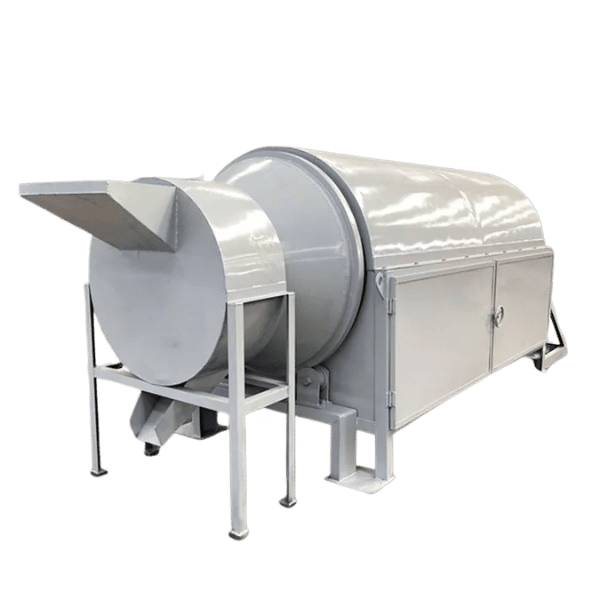
The Drying Bottleneck in Biomass Pellet Production — and How an Industrial Rotary Dryer Solves It
The industrial rotary dryer is the bottleneck-breaker for biomass pellet manufacturing. The sawdust, wood chips and agricultural residue gets to the mill with 45-60% moisture, which a pellet mill will not densify – you have generation of fines, crushed pellets, crash in throughput, die overheat. Without an upstream industrial rotary dryer sized correctly for your feedstock, the entire pellet line idles below capacity.
50–60%
Incoming Moisture
→
25%
Mid-Drum
→
8–12%
Pellet-Ready Outlet
→
<10%
ENplus Spec (post-cool)
Solution Summary
TCG Single-Pass · 8 models
Yes 800-2200 mm 10-22 mrotor 4-72 kW primary motor 0.07-2.2 T/H water evaporation for sawdust, wood chip, sand.
TCSG Triple-Pass · 6 models
2000-3300 mm drum 1-6 T/H feed 700-4200kg/h evaporation Compact footprint for biomass blends and agro waste
Pellet-Line Ready
Drop-in module for TCPEL chipper hammer mill rotary dryer pellet mill cooler packer interface standardized to non-TCPEL upstream lines.
Rotary drums dryers are the industrial work horse of drying: they are a steel cylinder rotating at 3-12 rpm internally fitted with ‘lifting flights’ which pluck the wet feed stock and shower it through a counter or co-current hot-gas stream. The drum is angled slightly so that gravity moves the material from inlet to discharge while hot air vaporizes surface and bound moisture. A NREL 1998 report on biomass drying identified rotary dryers as the most frequently used technology with the widest variation of capable feed stock size and density.
Why the wrong dryer costs you 20–30% of plant throughput
If the customer selects a dryer by cost he will likely select too small of a dryer for the feedstock peak . See that Thompson’s rotary drum that handles 1 T/H of wet sawdust @ 50%moisture only indexes the bark at 0.6 T/H @ 50% moisture –it has the ability to dry out more bound water in garbage/bark/wood chips with longer residence time . TCPEL’s unique selection process plots your incoming material density/moisture against TCG/TCSG proven evaporation curves , proven over 600+ install in 60+ countries .
What “industrial” actually means here
Three characteristics distinguish industrial scale rotary dryers from lab scale or batch types. The feed is continuous at throughput levels of at least 0.07 T/H and stable to at least six T/H. There is a thermal envelope – weighing-in at inlet (temperatures of 400-500 C), and outlet ( 70-80 C) and the heat exchange architecture is optimized for maximum heat recovery where typically, for an indirect rotary the consumption is 0.9-1.0 KWh per kg. of water evaporated.
TCPEL Industrial Rotary Dryer Lineup — TCG (Single-Pass) & TCSG (Triple-Pass)
Now run two full families of rotary dryers because biomass pellet plants don’t have one feedstock–have a portfolio. Send heavy, tough duty single-pass TCG dryers; triple-pass TCSG dryers do triple the floor space with a proven 10-15% energy performance bonus on light biomass. Both have TCPEL’s standard interface: screw-conveyor feed, in-drum lifting flights, hot-air furnace coupling, cyclone-plus-dust-collector exhaust train, and free-standing electric cabinet so either family can be popped into a pellet line without retooling controls.
TCG Single-Pass Series — 8 Models (Φ800–2200 mm)
TCG single-pass rotary dryer spec table — manufacturer data
| Model | Internal Dia (mm) | Length (mm) | Main Power (kW) | Fan Power (kW) | Evaporation (T/H) | Weight (t) |
|---|---|---|---|---|---|---|
| TCG0.8×10m | 800 | 10,000 | 4 | 11 | 0.07–0.15 | 3.0 |
| TCG1.0×10m | 1,000 | 10,000 | 5.5 | 11 | 0.10–0.23 | 4.6 |
| TCG1.2×10m | 1,200 | 10,000 | 5.5 | 15 | 0.25–0.35 | 5.6 |
| TCG1.4×10m | 1,400 | 10,000 | 5.5 | 15 | 0.25–0.50 | 7.8 |
| TCG1.6×22m | 1,600 | 22,000 | 11 | 37 | 0.80–1.20 | 19.7 |
| TCG1.8×22m | 1,800 | 22,000 | 15 | 45 | 0.90–1.50 | 27.8 |
| TCG2.0×22m | 2,000 | 22,000 | 45 | 45 | 1.00–1.80 | 30.9 |
| TCG2.2×22m | 2,200 | 22,000 | 72 | 75 | 1.20–2.20 | 34.0 |
TCSG Triple-Pass Series — 6 Models (Φ2000–3300 mm)
TCSG triple-pass rotary drum dryer spec table — manufacturer data
| Model | Drum (mm) | Feed Screw (kW) | Speed Motor (kW) | Fan (kW) | Capacity (T/H) | Water Evap (kg/h) |
|---|---|---|---|---|---|---|
| TCSG10 | Φ2000 × 5840 | 3 | 4×2 = 8 | 15 | 1 | 700 |
| TCSG20 | Φ2300 × 7340 | 3 | 5.5×2 = 11 | 22 | 2 | 1,400 |
| TCSG30 | Φ2400 × 10460 | 3 | 4×4 = 16 | 45 | 3 | 2,100 |
| TCSG40 | Φ2800 × 10460 | 3 | 4×4 = 16 | 55 | 4 | 2,800 |
| TCSG50 | Φ2950 × 12420 | 4 | 5.5×4 = 22 | 75 | 5 | 3,500 |
| TCSG60 | Φ3300 × 12420 | 4 | 5.5×4 = 22 | 90 | 6 | 4,200 |
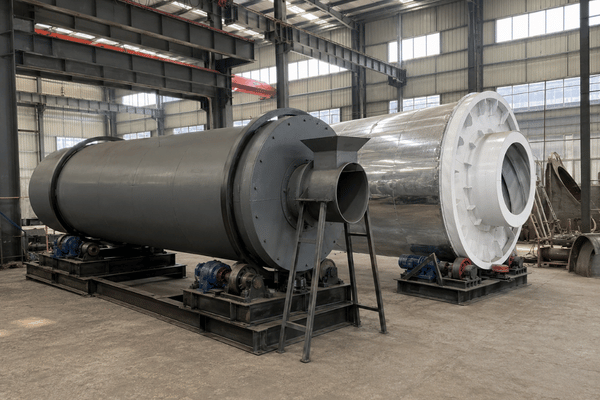
Inside the drum — the 18 components that decide service life
The drum shell is the rotating cylinder that encases the feed stock; it is fabricated in carbon steel for biomass and normal mineral duties, with stainless and special alloy options available for corrosive feeds, distillery and food grade sludges and chemicals [ITEM-EX6.1]. Inside the drum shell are paddle style lifting flights that pick the moistened product up from the buckets in the bottom of the receptacle, then cascade it through the hot airflow stream for heat transfer and water evaporation at each revolution. Outside the drum shell are two ride rings, also known as tires, mounted on four trunnion wheels carried by pillow block bearings, and a girth gear interacts with the pinion gear that is driven by the gear reducer and main drive assembly.
At the inlet end, the burner blows combustion gases into the combustion chamber, followed by the air stream in the drum; at the discharge end, an exhaust handling train of two cyclones plus a baghouse style dust collector removes fine particulates and steam before the air stack vents to atmosphere. The discharging system on the outlet side feeds the dried product into the downstream pellet mill or storage silo through a sealed air lock. Prior to shipment, every one of the 18 sub-assemblies is radiograph tested for QC on all 18 -the alignment of riding rings to trunnion wheels alone is the single largest cause of premature bearing failure in field-installed rotary dryers .
Direct, indirect, direct-fired or steam tube?
Every TCG and TCSG configuration is shipped as a direct-fired rotary dryer, since the combustion gases contact the load through the air stream—the most thermally efficient route for biomass & most minerals. An indirect heat dryer variation will be specified for feed stocks which are heat-sensitive (low-temperature ag products & chemicals). Indirect heat dryers route the gases through a jacket so the drum shell heats the load directly without gas contact. For distillery & brewery grains, a steam tube dryer construction—steam-driven heat exchange through the internal tubes—will be specified on request. The customer should specify feed stock temperature constraint as early as possible; the direct-fired vs. indirect heat vs. steam tube dryer choice affects downstream plant design more drastically than drum size alone.
“
We standardized on -by-length main-motor-kW fan-kW evaporation as the four numbers a buyer actually needs at the spec stage. Everything else – flight count, riding ring geometry, trunnion clearance – is engineering’s job once the model is locked. Publishing fewer numbers makes the page look cleaner; publishing all 14 of them gets us shortlisted.
Single-Pass vs Triple-Pass vs Direct vs Indirect — A Decision Matrix for Buyers
“Should I buy a single-pass or a triple-pass rotary dryer?” is the most-asked question in our pre-sales workflow, and the honest answer is: it depends on five variables – feedstock density, throughput, heat-source temperature tolerance, footprint constraint, and CAPEX/OPEX preference. FEECO’s own engineering library acknowledges that single-pass designs “include less potential for clogging, lower energy costs, and reduced off-gas treatment requirements” – so the marketing claim that triple-pass is always better is industry-wishful, not engineering-true.
Before the single-vs-triple decision sits a more fundamental architectural choice: direct or indirect heat. A direct rotary dryer (also called a direct-fired dryer) routes combustion gases through the drum so they contact the material being dried; this is the most thermally efficient option and is the default for biomass, sand, and minerals where the feedstock tolerates gas contact. A Direct Heat Dryer is the industry-standard name for this architecture and shows up across FEECO, Louisville Dryer, and Andritz catalogues. The indirect alternative – covered later in the table – uses a heated jacket so the drum shell warms the load without combustion gas contact, trading some efficiency for material protection.
5-dimension decision matrix — rotary dryer types compared (TCPEL engineering reference)
| Dimension | TCG Single-Pass | TCSG Triple-Pass | Direct Heat (generic) | Indirect Heat (generic) | Steam Tube |
|---|---|---|---|---|---|
| Best feedstock | Sawdust, wood chip, sand, mineral | Biomass blend, agro waste, palm fiber | High-temperature-tolerant solids | Heat-sensitive chemicals | Brewery grain, distillery slop |
| Moisture range | 50% → 10% | 60% → 15% | 50% → 5% | 30% → 5% | 40% → 8% |
| Footprint | Longer drum (10–22 m) | Compact (3 nested drums) | Varies | Varies | Compact |
| Energy (kWh/kg water) | ~0.9–1.1 | ~0.8–1.0 (10–15% lower on light biomass) | 0.7–1.2 (fuel dependent) | 0.9–1.5 (higher latent loss) | 0.8–1.2 (lowest steam-driven) |
| Maintenance | Simple, rugged drum | Medium — alignment-critical | Medium | High — jacket integrity | High — tube fouling |
| CAPEX tier | $–$$ | $$–$$$ | Varies | $$$–$$$$ | $$$–$$$$ |
The 4-step picking flow
01
Feedstock
Wood-only and dry-ish (45–55%) → TCG. Biomass blend or wet (55–65%) → TCSG.
02
Throughput
<1 T/H → TCG entry tier. 1–3 T/H → TCG mid OR TCSG10–30. 3–6 T/H → TCSG40–60.
03
Footprint
22 m drum okay → TCG. ≤13 m available → TCSG (compact triple-pass).
04
OPEX
Biomass-furnace heat available → either family wins. Diesel/NG only → TCSG for 10–15% energy edge.
TCO & Energy Snapshot — Silver Tier
Drying is the second-largest energy line item in a biomass pellet plant after pelletizing. The numbers below let you back-solve the dryer’s contribution to your cost per ton of pellet output.
~0.9 kWh/kg
Indirect rotary, water evaporated
20%+ OPEX cut
Biomass furnace vs gas/diesel heat
$18k–$110k
FOB range, 2–10 T/H comparable Tier-2 OEM
Customer Outcomes — TCPEL Rotary Dryers in Pellet Lines and Industrial Applications
TCPEL’s wood pellet dryer and sawdust dryer deployments span 60+ countries — the named outcomes below are representative of the typical plant scale and configuration we ship. Each project pairs the rotary drum with TCPEL’s hammer mill, pellet mill, cooler and packer, but the dryer alone is available as a stand-alone module for plants already running a mixed-brand line.
🇻🇳
Wood Pellet Plant — Vietnam
3 T/H wood pellet line; operator moved from flash dryer that was igniting on bark spikes.
Configuration: TCSG30 + TCPEL hammer mill + pellet mill
Result: 55% → 12% moisture, 3 T/H sustained, zero burner faults in 11 months
🇷🇺
Sawdust Briquette Factory — Russia
1 T/H sawdust briquette line; constrained by 18m building bay.
Configuration: TCG1.6×22m (relocated upstream of crusher to fit)
Result: 45% → 10% moisture, briquette density spec held year-round
🇮🇳
Sand Drying Retrofit — India
Construction-sand line replacing a screen-and-sun drying yard.
Configuration: TCG1.4×10m configured for mineral feed
Result: 18% → 4% moisture, year-round drying independence from monsoon
Where the rotary dryer sits in a TCPEL Biomass Pellet Production Line
A complete TCPEL Biomass Pellet Production Line runs in six stages: feedstock chipping (drum chipper) → coarse grinding (hammer mill) → moisture conditioning (industrial rotary dryer) → densification (pellet mill) → cooling and curing (pellet cooler) → bagging (pellet packer). The dryer is the third stage and the energy-bottleneck stage — drying alone consumes roughly 60–70% of the total electrical load of the line, which is why energy efficiency and heat-source coupling decisions made at the dryer-spec stage shape the plant’s lifetime OPEX more than any other piece of equipment.
Customers who already operate a pellet line — even with mixed-brand upstream equipment — most commonly retrofit a TCPEL dryer when their existing dryer caps line throughput, fails on bark-content spikes, or runs above-bid energy consumption. Because the rotary drum couples to the upstream and downstream stages through standardized screw-conveyor interfaces and a standalone control cabinet, the retrofit window is typically 7–10 working days on-site for the Tier-2 China-OEM market .
Materials TCPEL rotary dryers handle today
Sawdust
Wood chips
Wood shavings
Bark
Straw
Rice husk
Bagasse
Palm fiber
Cotton stalks
Construction sand
Frac sand
Mineral concentrate
Fertilizer granules
Coal fines
Charcoal powder
Sludge (custom)
1 The above list of applications closely overlaps with the most frequent searches / inquiries on Thomasnet and GlobalSpec for industrial dryer machine – sawdust, wood chip, sand, and biomass blends are currently in the top quartile of inbound requests addressed by TCPEL. For other feed stocks (sludges, food wastes, novel agro feedstocks), the company runs a 48hr benchmarking quote which produces a process recommendation model and moisture-curve estimate for your intended use-case before you proceed.
Certifications, Quality Standards & Export Track Record
TCPEL builds every rotary dryer to a documented quality envelope: ISO 9001:2015 quality management at the 20,000 m² Shandong factory, CE marking on equipment shipped into European Union projects, and full export documentation tuned to each destination market’s customs profile. The pellet industry’s reference standard for fuel-grade output — ENplus, which requires wood pellets below 10% moisture — sits downstream of TCPEL’s dryer output spec, with the post-dryer cooler closing the final moisture gap.
Machinery Directive (MD) Certifications
Global Manufacturing & Reach
TCPEL export track record crosses Germany Finland Russia New Zealand South Korea Pakistan India Bangladesh Vietnam Malaysia Turkey and 50+ markets . The factory operates 100+ workshop staff plus an internal R&D team, with manufacturing activity centralized in Zhangqiu District, Jinan City, Shandong China – no subcontractor handoffs that adversely impact quality monitoring. The legal entity responsible for the TCPEL brand is ALLWIN INTERNATIONAL CO.,LTD., which is registered to the same Zhangjia Industrial Park manufacturing site to which all rotary dryer shipped as TCG and TCSG model variants originate.
Pre-Shipment Compliance
For origin, the destination local authority to require further certification (pressure-vessel inscription for jacketed indirect heat dryer variants, electrical certification in destination region for control cabinet, Food-safety status for distillery and brewery grain dryers) TCPEL handles the pre-shipment test schedules. As the dryer is delivered assembled and not in parts and pieces, regional inspector signoff can occur at the factory, rather than waiting to perform an inspection at the end-destination, which is usually a deterrent to imported industrial drying equipment landing on time.
Procurement Guide — Pricing Bands, Lead Times, Spare Parts & Support
A rotary dryer is a 5-10 year capital investment; the invoice price is not the total cost. A buyer that compare only FOB headline price tends to have the real cost consumed in customs hold-ups finding spare parts and warranty exhaustion. TCPEL prices the dryer against the four cost components that truly impact the final delivered number – plant size tier, configuration details, heat-source back-mount, destination proximity – and ships in accordance with a published lead-time framework rather than “please call” silence.
Pricing factors — the three levers
TCG Entry Tier
Capacity 0.07–0.5 T/H
800-1200 mm 10 m drum. Single biomass burner or hot air furnace backmount. Pilot-scale or small artisan pellet line.
TCG Mid-Heavy Tier
Capacity 0.8–2.2 T/H
1400-2200 mm 22 m drum. Heavy draft fan loads (37-75 kW), multi-cyclone exhaust train, larger drive assembly.
TCSG Triple-Pass
Capacity 1–6 T/H feed
Three-layer concentric drum, complete BoM (cyclones, dust collector, air locks, electrical cabinet). Small footprint suitable for retrofit bays.
Lead time framework
Standard arrangement
usually 35-50 working days from receiving sign-off to FOB Qingdao [qualified – typical TCPEL plant range]
Special arrangement
usually 60-80 working days if exotic materials, alloy enhancements, or extraordinary control applications are specified
Spare parts
5 working days international dispatch when in stock, prospective longer when projects are custom turned machined
Spare parts and after-sales
The commonest causes of rotary dryer failure are bearing wear, inefficient combustion, and lifting-flight breakage . TCPEL stocks off-shelf bearings, riding rings and a complete set of spare lifting flights, for each TCG and TCSG model. Response to operational questions from the engineering side is kept at 24 hours through the warranty period, which also covers main rotary assembly fault modes under best industry practice.
Procurement signal: avoid the “cheap dryer trap”
Industry advice on buying biomass dryers states again and again that the cheapest machine fails first – most often through undersized burners and fan assemblies that are indistinguishable on a spec sheet, but which cut real throughput by 25-30% . TCPEL’s specifications breakdown (8 TCG + 6 TCSG models with wattages highlighted) is available in order for you to compare real engineering insight, rather than just FOB headline.
What international buyers ask about most
Most inquiries to TCPEL start with one of five questions: “rotary dryer on sale” (for in-stock or short-lead units), “drum dryer machine” (as a search phrase to discover a general-purpose industrial drum dryer), “rotary dryer machine” (searching for an entire dryer-place-furnace system), “rotary dryer manufacturers” (pre-quotation vendor screening), and “wood pellet dryer” or “sawdust dryer” (searching for a biomass-specific feedstock-configured solution). The TCG and TCSG family of products responds to all five intents with one technical development workflow, which is why TCPEL names it an industrial rotary dryer pillar rather than creating separate vendor-led pages for each.
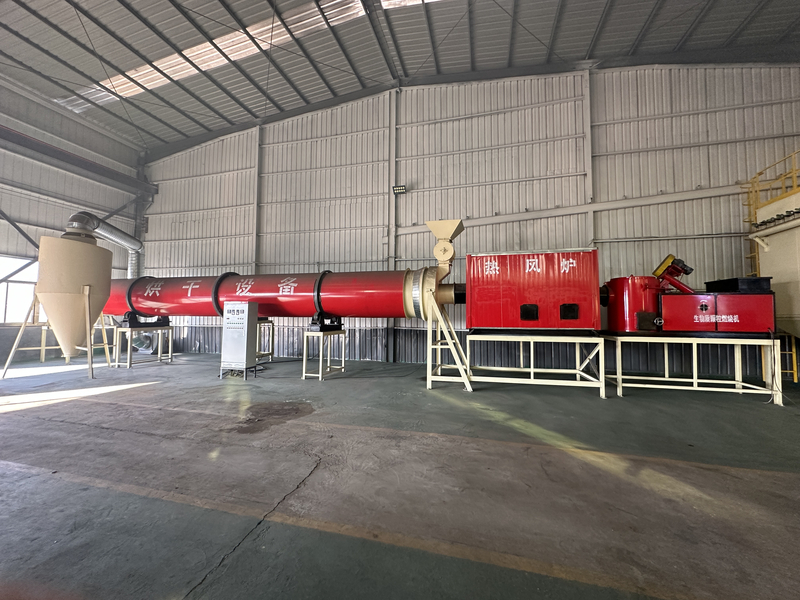
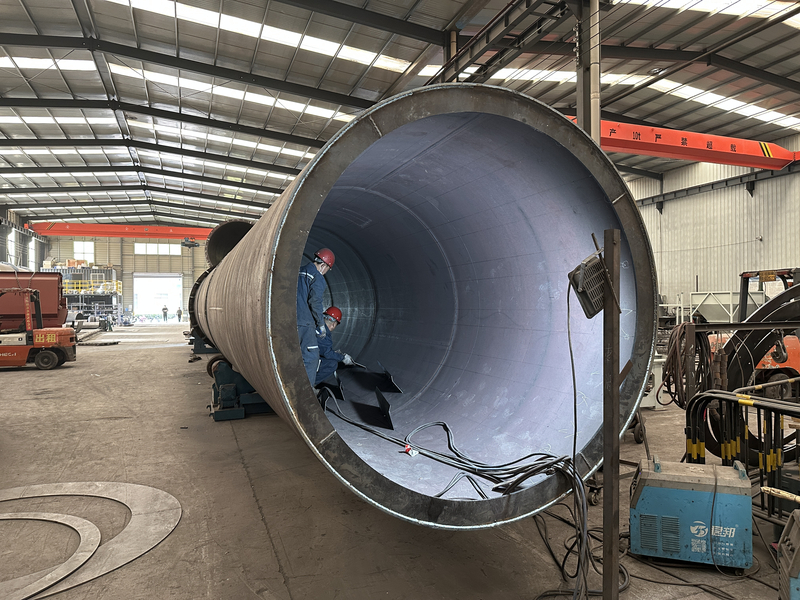
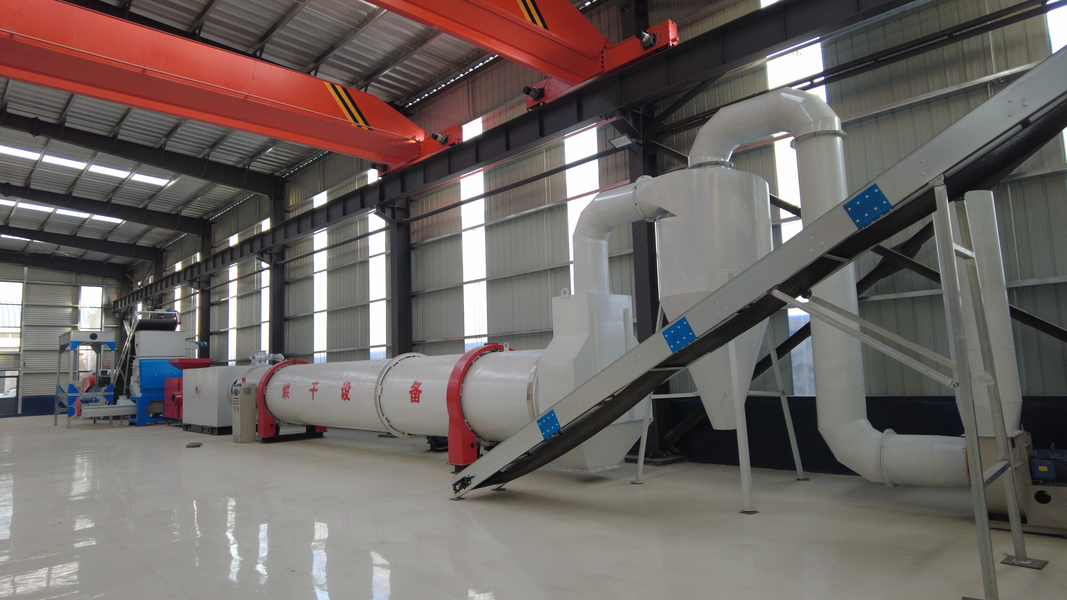
TCPEL Manufacturing Facility and Workshop
Inside our 20,000 m² Shandong factory: Precision engineering, rigorous quality control, and heavy-duty manufacturing of industrial rotary drying systems. Click any image to view details.



×
Industrial Rotary Dryer Engineering Tools
Data-driven calculators and decision matrices designed to help plant engineers optimize the drying stage, evaluate OPEX, and select the exact drum architecture for specific biomass or mineral feedstocks.
Single-Pass vs Triple-Pass Rotary Dryer Decision Quiz
Evaluate your specific feedstock characteristics, moisture levels, and plant footprint constraints to determine the optimal drum architecture for your production line.
Launch Quiz
→
TCPEL Rotary Dryer Sizing Calculator
Input your target throughput and moisture reduction parameters to instantly calculate water evaporation rates, energy requirements, and recommended equipment tiers.
Open Calculator
→
Biomass Furnace vs Gas/Diesel — OPEX Calculator
Compare long-term operating expenses across different heat sources to project total cost of ownership (TCO) and thermal efficiency for your drying stage.
Calculate OPEX
→
Lock in the right TCPEL rotary dryer for your pellet line
Send us your feedstock type, incoming moisture, and desired throughput. We will recommend a model, drying curve, and FOB quotation within 48 hours.
Knowledge Base
Frequently Asked Questions
Review technical specifications, capacity metrics, and engineering solutions regarding TCPEL industrial rotary drying systems.
An industrial rotary dryer can be used to dry granular or fibrous bulk feedstock - sawdust, wood chips, biomass, sand, fertilizer, and mineral concentrates - by turning it through a heated rotating drum. In a pellet line the product is usually situated between the hammer mill and the pellet mill; as pellets cannot densify moist material, so it is the throughput gate.
TCSG triple-pass: typical 50-60% inlet moisture reduced to 12-15% outlet. TCG single-pass: typical 45-55% inlet reduced to 8-12% outlet. Specification for "Good quality" combustion garden granules according to ENplus is <10% and it is reached after the dryer through downstream pellet cooling.
The drum couples to any external hot-air source: biomass furnace (wood, rice husk, agro residue), diesel burner, natural-gas burner, coal stove, or a packaged hot-air generator. Biomass-furnace coupling is the lowest-OPEX option because the plant's own waste feedstock fuels the dryer, typically cutting energy line items by 20%+ versus gas or diesel.
Capital cost is driven by capacity tier, drum configuration, and heat-source coupling. Comparable Tier-2 China-OEM market pricing published in 2026 ranges from roughly $18,000 FOB for a 2 T/H single-layer wood-chip dryer up to $90,000+ FOB for a 10 T/H three-layer turnkey configuration [reference]. TCPEL prices against the same four cost drivers (capacity / drum / heat source / logistics) — request a project-specific quote rather than a headline number.
Delivery times: standard setup ~35-50 working days from purchase FOB onto Qingdao Wharf; special setup ~60-80 days, by request. Inventory spare parts ship in 5 working days.
Yes. TCPEL's interface is standardized: screw-conveyor feed in, hot-air furnace coupling, cyclone-plus-dust-collector exhaust, and standalone electric cabinet. Plants already running a hammer mill or pellet mill from another brand can drop the TCPEL rotary dryer into the existing line without rewriting upstream PLC logic — the dryer's cabinet runs autonomously and exchanges only feed-rate and moisture-target signals with the line controller.
The three most reported rotary dryer failure modes are bearing wear (abnormal noise), burner under-performance (uneven drying, long dwell times), and lifting-flight fatigue (uneven moisture out). TCPEL counters with: a pre-shipment alignment QA on every drum, oversized bearings sized against the engineering load rather than the catalogue load, a maintenance booklet that flags lubrication intervals against actual flight-count and feedstock abrasiveness, and a 5-working-day spare-parts dispatch so a worn bearing does not idle the pellet line for a month.