Get in Touch with TCPEL


If you have ever tried to settle a wood crusher vs wood shredder debate with a supplier, you have probably noticed the words slide around.
One factory’s “wood crusher” is another’s hammer mill; a “shredder” can mean a delicate garden mulcher or a two-tonne steel rotor that eats nailed pallets for breakfast. This guide cuts through the naming and compares the four machines that actually do industrial wood size reduction — chipper, crusher, shredder, and hammer mill — so you can match the right one to your feedstock, output size, and downstream use.
At a Glance: Four Machines, Four Jobs
| Machine | What it does | Typical output |
|---|---|---|
| Chipper | Slices clean logs/branches with sharp knives | Uniform chips ~20–50 mm |
| Wood crusher (disc/hammer) | Crushes branches + offcuts to small particles in one pass | Chips/sawdust ~3–20 mm |
| Shredder (single/double-shaft) | Low-speed tearing of mixed, dirty, nailed waste | Coarse, irregular shred |
| Hammer mill | Impact grinding of pre-reduced wood through a screen | Fine, screen-sized <1–5 mm |
Crusher, Shredder, Chipper, Hammer Mill: What Each Machine Actually Does

The confusion is not your fault — it is built into the names. In Chinese-OEM catalogs, a “wood crusher” is usually a disc- or hammer-style grinder that turns branches and offcuts into 3–20 mm chips or sawdust in a single pass. In North American biomass and recycling yards, operators rarely say “crusher” at all; they say chipper, grinder, hog, tub grinder, or hammer mill, and they mean specific things by each. Add the mining sense of “crusher” (rock reduction) and you have three industries using one word three ways. The USDA Forest Service draws the cleanest dividing line: a chipper makes uniform chips, while grinders (hogs, tub grinders, hammer mills) tear or pound wood into a less uniform product.
⚠️ The Crusher–Shredder Terminology Trap
When a vendor quotes you a “wood crusher,” ask for two numbers before anything else: input diameter and output particle size in mm. Those two figures tell you whether you are looking at a coarse reducer (chipper/shredder) or a fine grinder (crusher/hammer mill) — regardless of the label on the brochure.
Here is the cleanest way to file the five machines you will actually meet, arranged on one axis from coarse to fine. We call it the Wood Size-Reduction Spectrum:
The Wood Size-Reduction Spectrum (coarse → fine)
- Hog / tub grinder / horizontal grinder — bulky, dirty, oversized: stumps, root balls, demolition wood. Coarsest.
- Shredder — mixed/contaminated waste, pallets with nails. Coarse, irregular.
- Chipper — clean logs and branches. Uniform mid-size chips.
- Wood crusher (disc/hammer) — branches/offcuts straight to small chips & sawdust.
- Hammer mill — fine grinding of pre-reduced material for pellets. Finest.
How They Break Wood Down: Cutting vs Tearing vs Impact
Output size is not arbitrary — it falls straight out of the cutting principle, so understanding the mechanism tells you what each machine can and cannot produce.
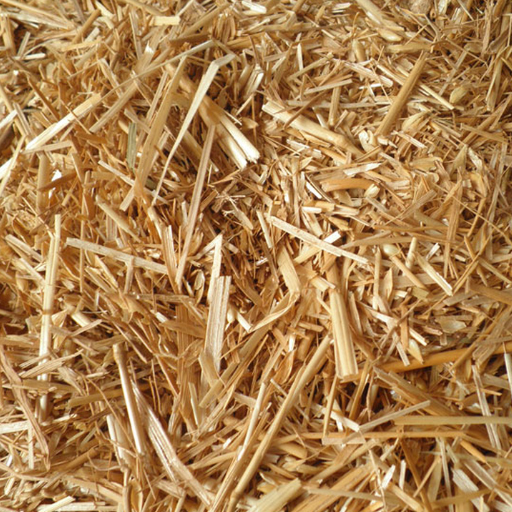
A chipper uses two to four sharp knives on a high-speed disc or drum to slice wood across the grain, which is why it produces clean, uniform chips from solid wood. Because the cut is a clean slice rather than a tear, the chips hold a consistent geometry — and that consistency is exactly what boiler feeders and chip exporters pay for.
A shredder works the opposite way: a low-speed, high-torque shaft (or two interlocking shafts) tears material apart. That brute force handles the mixed and contaminated waste a chipper would choke on, at the cost of an irregular, fibrous output. A hammer mill takes a third path — swinging hammers smash material by impact and drive it against a perforated screen, so the screen, not the operator, sets the final particle size, a mechanism described in granted patents such as USPTO US 8,342,435 B2.
The “wood crusher” sold by most Asian biomass-equipment makers is a disc or hammer design that sits between a chipper and a hammer mill: coarse enough to take a 70–250 mm branch, fine enough to drop 3–20 mm particles out the bottom.
Wood Crusher vs Wood Shredder vs Wood Chipper: Side-by-Side Comparison
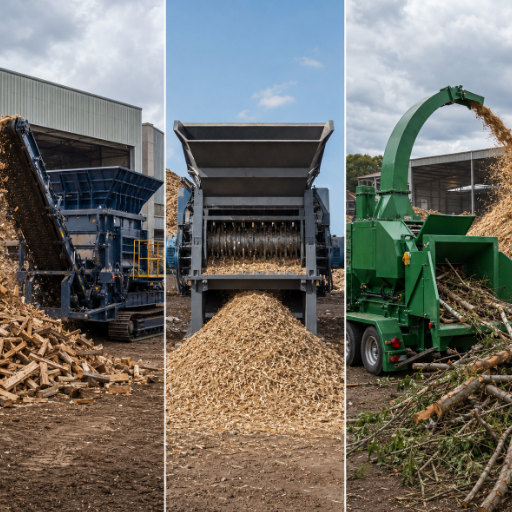
The table below brings the whole comparison into one view. Figures are typical industry ranges drawn from manufacturer specifications across several biomass-equipment suppliers; treat them as planning bands, not guarantees for a specific model. The underlying size-reduction sequence — coarse cutting through to fine impact grinding — follows the feedstock-preparation chain documented by US DOE/NREL.
| Factor | Chipper | Wood crusher | Shredder | Hammer mill |
|---|---|---|---|---|
| Typical input | Clean logs, branches | Branches, offcuts 70–250 mm Ø | Mixed/dirty waste, pallets | Pre-reduced chips/sawdust |
| Output size | ~20–50 mm chips | 3–20 mm (fine 3–5 mm) | Coarse, irregular | <1–5 mm (screen-set) |
| Action | High-speed cut | Disc/hammer crush | Low-speed tear | Impact + screen |
| Tolerates nails/contamination | No | Limited | Yes (with magnet) | No (clean feed only) |
| Best downstream use | Boiler chips, mulch, export | Pellet/briquette feed, bedding | RDF, recycling, volume reduction | Pellet-grade fines |
For very large or dirty material — stumps, root balls, land-clearing debris — North American operators add a fifth category: the hog, tub grinder, or horizontal grinder, which pulverizes bulky mixed wood with carbide-tipped hammers before any finer machine touches it.
Output Particle Size and What You Can Make With It
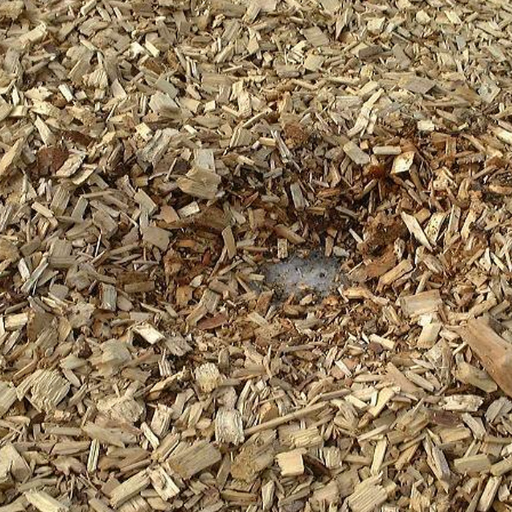
Pick the machine by the output you need, not the other way around. This is the Output-to-Application Map:
- ✔20–50 mm chips → boiler fuel, landscaping mulch, chip export (chipper)
- ✔3–20 mm chips/sawdust → particleboard, compost, animal bedding (crusher)
- ✔3–6 mm → the sweet spot for pellet feedstock (see the note below)
- ✔<2 mm fines → only where the pellet die or process specifically needs it (hammer mill)
Here is the counter-intuitive part most equipment pages skip: finer is not automatically better. Research in Fuel found that a feedstock fraction rich in 3.15–6.30 mm particles delivered the highest pellet durability and lowest CO emissions, and that grinding pine below roughly 8 mm did not necessarily improve pellet quality. Grinding finer also gets expensive fast — specific energy climbs steeply as median particle size drops below about 100 µm. For most wood-pellet lines the target is a controlled 3–6 mm fraction, not “as fine as the machine will go.” US DOE/NREL biomass cofiring guidance points the same way for combustion feed: roughly ≤6 mm at under 25% moisture, not progressively finer.
When a Wood Crusher Is the Right Choice
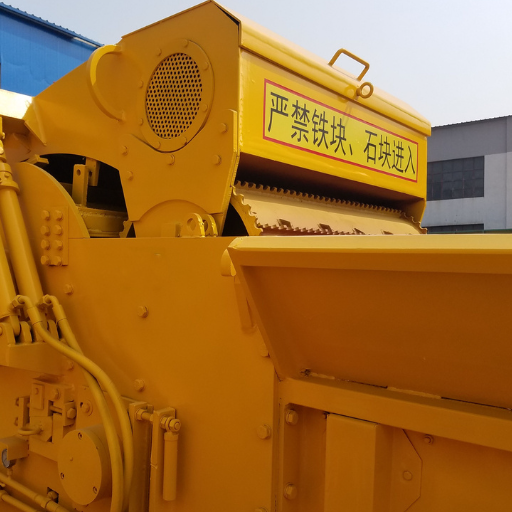
A disc- or hammer-type wood crusher is the workhorse of small-to-mid biomass operations because it collapses two steps into one: it takes a 70–250 mm branch or a pile of sawmill offcuts and drops 3–20 mm chips or sawdust straight out, typically at 0.3–6 tonnes per hour on 7.5–45 kW motors. That makes it the natural front end when your end product is pellets, briquettes, charcoal feedstock, or animal bedding and your incoming wood is reasonably clean.
✔ Advantages
- One-pass branch-to-sawdust reduction
- Fine output ready for pelletizing
- Compact, lower capital than a chipper + mill pair
⚠ Limitations
- Not for nailed/contaminated wood
- Throughput well below an industrial chipper
- Blade/screen wear rises with dirty or wet feed
If this is your situation, the industrial wood crusher range is the page to start from, and for woody bales there is a dedicated bale grinder variant.
When a Wood Shredder Wins: Contaminated and Mixed Waste
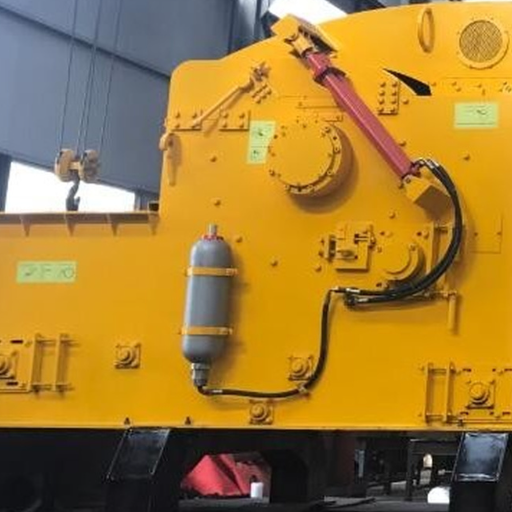
The moment your feedstock stops being clean, the decision flips to a shredder. A low-speed, high-torque single- or double-shaft shredder is built to tear through mixed waste, and — with an in-line magnetic separator — it can process pallets and demolition wood that still contain nails, screws, and brackets.
Why this matters is best told by the people who learned it the hard way. On a trade forum for arborists, experienced operators are blunt: “Pallets will destroy your blades and your anvil.” One recycling yard described chipping pallets without sorting first — the nails chewed the knives, scarred the anvil, downtime spiked, and the finished chips came out full of metal. A shredder or a tub grinder with carbide-tipped hammers simply pulverizes the same material and lets a magnet pull the steel out afterward.
“Nails would take chunks out of the knives — and once they get dull, the chipper feeds slower and chips much worse. For used lumber we run it through the shredder and pull the steel with a magnet.”
For nailed pallets specifically, the right TCPEL machines are the double-shaft shredder and the pallet crusher.
When a Wood Chipper Makes Sense: Clean Branches and Uniform Chips
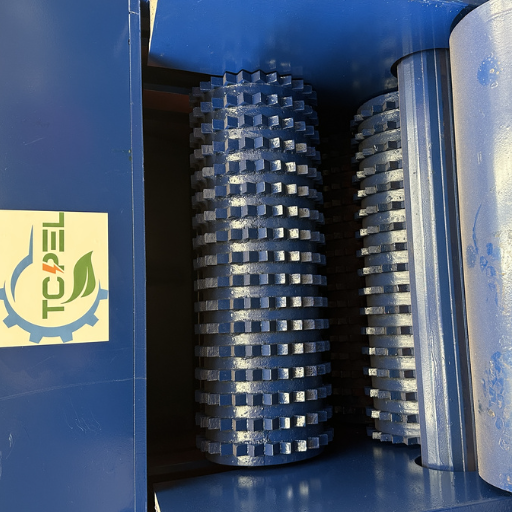
When your input is clean logs and branches and your customer wants consistent chips, the chipper is unbeaten. The USDA Forest Service equipment catalog draws the line clearly: chippers differ from grinders by producing uniform chips, the chip size is controlled by knife setting and feed rate, and chipper output feeds markets from pulp to hog fuel to pellets.
Industrial drum and disc chippers run at high throughput — roughly 5–30 t/h for a drum unit on medium-to-large logs, available with electric-motor or diesel-engine drives — but they demand a clean diet. No nails, minimal dirt, and reasonably straight stock, because grit and metal dull the chipping blades fast. A drum chipper is the typical choice for forestry and sawmill residue headed for biomass boilers or board mills.
Where the Hammer Mill Fits: Fine Grinding for Pellet Production

Here is the question that trips up most first-time pellet buyers: if a crusher already makes sawdust, why would I also need a hammer mill? Because no single machine economically spans a whole log down to pellet-grade powder. The US Department of Energy’s feedstock work notes that particles larger than about two inches are sent through a hammer mill for further size reduction, and granted patents treat that grinding step as a separate stage from the pellet press (for example, USPTO US 2014/0259895 A1).
Most wood-pellet lines therefore run in sequence: chipper or crusher → dryer → hammer mill → pellet mill → cooler.
Two engineering realities decide the economics of that hammer-mill stage:
📐 Engineering Note — screen size drives your power bill
Peer-reviewed grinding data shows specific energy input rising from 1.4 kWh/t with a 25.1 mm screen to 25 kWh/t with a 3.2 mm screen on the same pine chips — a roughly 18× jump just from chasing a finer particle.
Feedstock matters too: hammermilling woody material can range from about 19.7 kWh/t for pine bark up to 85–119 kWh/t for poplar and pine chips. Spec the largest screen that still hits your pellet-grade target.
⚠️ Engineering Note — fine wood dust is a combustible-dust hazard
OSHA classifies wood dust as a combustible dust, and very fine dust from grinding and pellet-feed prep is especially hazardous. Any hammer-mill or fine-grinding installation needs dust collection, ignition-source control, and explosion-venting designed in from the start — not added later. This is a procurement requirement, not an afterthought.
Moisture is the other lever. The DOE notes that hammermilling dry feedstock takes less energy and causes less wear, and that drying may be unnecessary below roughly 10–15% moisture. That is why a rotary dryer usually sits ahead of the hammer mill, and why the whole sequence is best bought as a matched pelleting line rather than as parts.
Pallet and Wood-Waste Recycling: Which Machine for Which Stream

Recycling buyers face a different problem from pellet producers: the feedstock is whatever scrap wood and scrap lumber shows up on the tipping floor. Machine choice here is half about size reduction and half about feedstock qualification — what the wood legally is determines what you are allowed to make from it. The U.
S. EPA’s wood-waste data treats pallet recycling primarily as chipping for mulch or bedding and explicitly excludes wood that is combusted as fuel, and under EPA 40 CFR Part 241 clean cellulosic biomass, untreated pallets, treated wood, and co-mingled C&D debris are classified differently for combustion. Sort before you size.
Use this Material × Machine Compatibility Grid as a starting point:
| Material / waste stream | Chipper | Crusher | Shredder | Hammer mill | Hog/tub grinder |
|---|---|---|---|---|---|
| Clean logs | ✔ | ✔ | ⚠ | ✘ | ⚠ |
| Branches/brush | ✔ | ✔ | ✔ | ✘ | ✔ |
| Sawmill offcuts | ⚠ | ✔ | ✔ | ✔ (post-crush) | ⚠ |
| Used pallets (nails) | ✘ | ✘ | ✔ (+magnet) | ✘ | ✔ |
| Stumps/root balls | ✘ | ✘ | ⚠ | ✘ | ✔ |
| Bark & leaves | ⚠ | ✔ | ✔ | ✔ | ✔ |
| Green / wet logs (>30% MC) | ✔ | ⚠ | ✔ | ✘ (dry first) | ✔ |
| Treated / painted wood | ✘ | ✘ | ⚠ (energy recovery only) | ✘ | ⚠ |
| Bamboo / cane (fibrous) | ⚠ | ✔ | ✔ | ✔ | ⚠ |
How to Choose: The 4-Question Wood Machine Selector
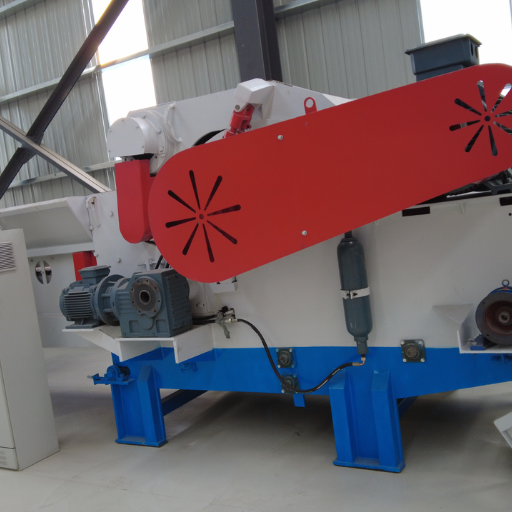
You can shortcut almost every comparison above by answering four questions in order. We call it the 4-Question Wood Machine Selector:
- What is the input — and is it clean? Nails, dirt, or co-mingled C&D → shredder or hog/tub grinder. Clean wood → chipper or crusher.
- What output size do you need (mm)? 20–50 mm chips → chipper. 3–20 mm → crusher. Pellet-grade 3–6 mm → crusher + hammer mill.
- What throughput (t/h)? Match capacity to your real annual tonnage with headroom — undersizing kills uptime; oversizing wastes capital and energy.
- What is the downstream use? Pellets/briquettes → fine line with a dryer ahead of the hammer mill. Mulch/boiler → chips. RDF/volume reduction → shred.
On cost and procurement: ask any supplier for output size in mm, rated throughput at your moisture level, installed motor power, and the wear-part schedule for blades and screens before you compare quotes — and confirm whether the price is for a machine or a matched line. If you want a configuration sized to your feedstock and target output, the wood crusher line page is the place to send your specs.
Industry Outlook: Biomass Energy and Wood-Waste Recycling
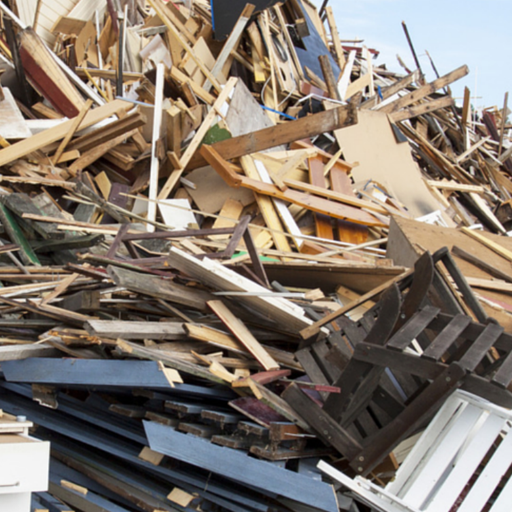
Demand for wood size-reduction equipment is riding two structural trends. On the energy side, market-research estimates of the global wood-pellet market vary widely by scope — from roughly $8 billion to the high-teens of billions of dollars in the mid-2020s — but they converge on mid-single-digit annual growth (about 6% CAGR) into the 2030s, with the pellet-machine equipment segment tracking the same trend, both driven by decarbonization mandates and coal phase-outs.
On the waste side, the US EPA is pushing federal agencies toward a 75% construction-and-demolition diversion rate by 2030, which keeps more wood out of landfills and into recycling and energy streams.
The notable equipment shift is toward electric direct drives. Vecoplan, for instance, presented a direct-drive biomass chipper at LIGNA 2025 and reports energy savings of up to 40% versus conventional electromechanical drives — a manufacturer figure rather than an independently benchmarked one, so weigh it accordingly. The practical takeaway for a buyer in 2026 is unchanged by the hype: size your machine for the output your pellet or boiler spec actually needs, not for the headline tonnes-per-hour on the brochure.
Frequently Asked Questions
Q: What is the difference between a wood crusher and a wood shredder?
Show the answer
A wood crusher is a disc- or hammer-style grinder that reduces clean branches and offcuts to small 3–20 mm chips or sawdust in one pass, making it ideal feedstock prep for pellets, briquettes, or bedding. A wood shredder uses a low-speed, high-torque shaft to tear apart mixed and contaminated waste — including nailed pallets when paired with a magnet — and produces a coarser, irregular output destined for recycling or refuse-derived fuel. In short: crush clean wood for fine output, shred dirty wood for volume reduction.
Q: What machine turns wood into sawdust?
See the answer
A disc- or hammer-type wood crusher produces fine 3–5 mm sawdust directly from branches and offcuts. For even finer, screen-controlled output used in wood-pellet production, a hammer mill grinds the pre-reduced material to under 3 mm. The US DOE notes that wood particles larger than about two inches are typically routed through a hammer mill for this further size reduction before pelletizing.
Q: What is the output chip size of a wood crusher?
Read the answer
Most industrial wood crushers produce particles in the 3–20 mm range, with fine-output models targeting 3–5 mm sawdust. The exact size is set by the screen or sieve fitted to the machine, so the same crusher can produce different grades by swapping screens. For wood pellets, research suggests a 3–6 mm fraction gives the best pellet durability — finer is not automatically better.
Q: Can one machine produce different wood chip sizes?
Open answer
Yes — on crushers and hammer mills the output size is governed by an interchangeable screen, so changing screens changes the particle grade. Chippers adjust chip length via knife setting and feed rate instead.
Q: What materials can’t go into a wood chipper?
Reveal answer
Anything with metal — nailed pallets, fencing, wire-bound wood — plus rocks, dirt-caked roots, and stumps. They dull or chip the knives and can throw dangerous projectiles. Use a shredder or grinder with magnetic separation instead.
Q: How much wood can a wood crusher process per hour?
Show the answer
Typical disc/hammer wood crushers run about 0.3–6 tonnes per hour depending on model, motor power (commonly 7.5–45 kW), feedstock, and moisture. Industrial chippers handle far more — 5–30 t/h — but only on clean wood.
Q: Is a wood chipper worth it for a business vs a crusher?
See the answer
It depends on your output. If you sell or burn uniform chips from clean wood, a chipper’s higher throughput pays off. If your end product is pellets, briquettes, or bedding, a wood crusher that drops straight to 3–20 mm — feeding a hammer mill for the final pellet grade — is usually the more economical front end. Match the machine to the product, not the brochure tonnage.
About This Comparison
TCPEL (ALLWIN International) manufactures the full biomass size-reduction and pelleting chain — drum chippers, wood crushers, hammer mills, shredders, rotary dryers, and pellet lines — and exports to more than 60 countries. The particle-size and energy figures here are drawn from US DOE/NREL feedstock work, USDA Forest Service equipment data, peer-reviewed grinding studies, and ISO 17225-2 pellet specifications; equipment ranges reflect typical industry specifications and should be confirmed against a quoted model.
References & Sources
- Biomass Cofiring in Coal-Fired Boilers — US NREL/DOE
- Chippers — Equipment Catalog — USDA Forest Service
- Size-Reduction Energy for Grinding Pine Wood Chips in a Hammer Mill — OSTI / US DOE
- Facts and Figures about Materials, Waste and Recycling — US EPA
- ISO 17827-1:2024 / ISO 17225-2 Solid Biofuels — Graded Wood Pellets — ISO
- US 2014/0259895 A1 — Mobile Pelletizing System — USPTO