Get in Touch with TCPEL

TCPEL · Industrial Grade
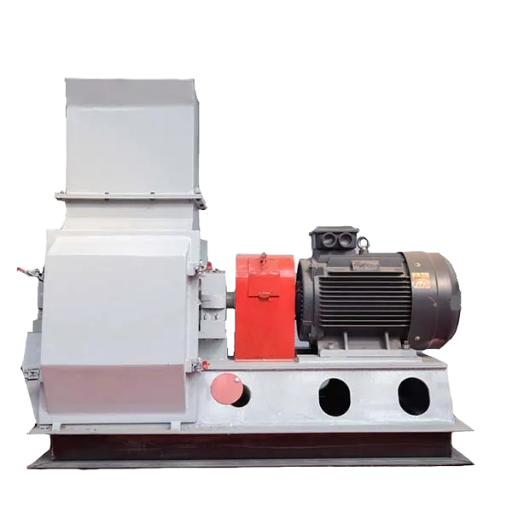
Biomass Hammer Mill — 1-Piece Stack & Crushing Line
The bottom line of anything that ships as a 1-piece stack — mill, cyclone, bag dust collector, in-feed conveyor — means 25 days commissioning instead of three different vendors and a headache. Our GXP series handles 1–10 T/H throughput in 7 models, 60+ countries live on them.
TCPEL Engineered
MODEL · GXP-SERIES
Throughput Range
1–10T/H
/ 01
7
GXP Models
/ 02
1–10T/H
Throughput Range
/ 03
13
Biomass Feedstock
/ 04
60+
Export Countries
/ 05
25-Day
FOB Lead Time
Engineering Brief · Why Biomass Lines Bottleneck
Why Biomass Plants Stall At The Hammer Mill —
And How TCPEL’s GXP Series Solves It For All Buyers
Diagnostic Brief
REF / GXP-DX-2026
A biomass hammer mill determines the sizing, or throughput capacity, of the rest of the pellet or feed line. Most plants don’t actually get hung up on the pellet press — they hit a bottleneck two steps upstream at the hammer mill, because variability in feedstock, high dust load, and screen wear were never scaled up accordingly with one integrated stack. Hammer mills operate mainly on impact, shear, and collision: raw material is fed into the grinding chamber, gets hit by ganged hammers rotating at 3000 r/min, then is pushed toward the milling screen until particle size is below the pellet die spec.
⟢ Working Principle
01
Raw Material Feed
02
Hammers @ 3000 r/min
03
Milling Screen
04
Pellet Die Spec
02 / TRAP
The Three-Supplier Trap
Instead of sourcing the hammer mill, cyclone, bag dust collector, and in-feed conveyor separately and losing 4–6 weeks in interface setup/adjustment — three structural failure points emerge that compound across the entire line:
“Potential buyers often regret not researching thoroughly” — and the regret usually settles at the sizing at the front end, not pellet press size.
 FAULT · 01
Pneumatic System
Cargo Pressure Mismatch
REF / FX-01
FAULT · 01
Pneumatic System
Cargo Pressure Mismatch
REF / FX-01
FAULT 01
Pneumatic
Cargo Pressure Mismatch
Mis-matched and/or extraneous cargoes weigh down pneumatic system pressure ratings — the line operates below spec from day one.
 FAULT · 02
Cyclone System
Discharge Misalignment
REF / FX-02
FAULT · 02
Cyclone System
Discharge Misalignment
REF / FX-02
FAULT 02
Cyclone
Discharge Misalignment
Mismatched cyclone diameters gather dust at inconvenient discharge points, forcing manual cleanout cycles and downtime spikes.
 FAULT · 03
Dust Bag System
Airflow Ceiling Hit
REF / FX-03
FAULT · 03
Dust Bag System
Airflow Ceiling Hit
REF / FX-03
FAULT 03
Dust Bag
Airflow Ceiling Hit
Undersized dust-bags max airflow before tote warping — pulling capacity drops, and the bag housing deforms under load.
03 / SOLUTION
How TCPEL’s GXP Series Breaks The Loop
Each GXP-series biomass hammer mill sold includes a matching cyclone, a dust bag system sized for actual discharge flow, an integral fan, and optionally in-feed conveyor — as an assembled, warranteed one-piece stack. The body design incorporates single-shell un-jointed construction with output from the front and back, lifting throughput per kW of power vs. single-discharge systems and eliminating the “dead zone” where jam-causing collection inevitably takes place.
01
Hammer Mill
GXP Body
SINGLE-SHELL
02
Matching Cyclone
800–1800
INTEGRATED
03
Dust Bag System
24–108
FLOW-SIZED
04
Integral Fan
5.5–22 kW
DRIVEN
05
In-Feed Conveyor
Optional
WARRANTEED
Single-shell un-jointed construction — no welded interface to crack under cyclic load.
Front & back dual discharge — lifts throughput per kW vs. single-discharge benchmark.
“Dead zone” eliminated — no jam-causing collection pocket in the grinding chamber.
⟶ The Upshot
Instead of bottleneck, the hammer mill presides as throughput horsepower for the entire line. Coupled with a TCPEL ring-die or flat-die pellet mill, the throughput map remains stable end-to-end.
“
Before our final decision we tested 14 hammer pattern iterations on the seven GXP series models. The 2-sided discharge with 3000 r/min direct-drive combination is what reduces our specific energy by about 8–10% relative to the single-discharge configuration benchmark our R&D department used for comparison.
Hammer Patterns Tested
14Iterations
Specific Energy Reduction
8–10% vs Benchmark
Capacity-Power Ladder · 7 Tiers
GXP 7-Tier Throughput-Power Pairing Ladder —
7 Models For 1–10 T/H Plants
FOR · ENGINEER / PROCUREMENT
Range Envelope
1 → 10 T/H
37 kW
110 kW
250 kW
A biomass hammer mill size is a power-to-throughput set pairing issue, not a one-for-one reference. Underpower the motor and you watch the rotor bog against wet feed; oversize it and you’re throwing away 15–25% of your kWh every single hour of operation. Our GXP series scales the pairing in all seven tiers, so whatever model you pick to deliver the specified throughput rate, that model also delivers the cyclone data, dust-bag count, hammer pattern density, and fan rating from the same level.
Underpowered Motor
Rotor bogs against wet feed — line stalls, downtime spikes, screen wear accelerates.
Oversized Motor
Throwing away 15–25% kWh every hour — compound energy waste on a 24/7 line.
01 / LADDER
Pick Your Capacity · See Your Model
Target Plant Capacity
3.0T/H
Recommended Model
GXP65X100
Main Motor
110 kW
⟢ Power Distribution Map · 7 Tiers
kW Bar (37→250)
Active Tier
T1
GXP65X35
1–1.5 T/H
37 kW
T2
GXP65X55
1.5–2 T/H
55 kW
T3
GXP65X75
2–2.5 T/H
75 kW
T4
GXP65X100
2.5–3.5 T/H
110 kW
T5
GXP130×80
3–5 T/H
160 kW
T6
GXP130×110
5–8 T/H
220 kW
T7
GXP130×130
6–10 T/H
250 kW
02 / DATA
GXP Specification & Decision Matrix
| Model | Capacity (T/H) | Main Motor (kW) | Cyclone (ø mm) | Dust Collector Bags | Hammer Count | Fan (kW) |
|---|---|---|---|---|---|---|
| GXP65X35 | 1–1.5 | 37 | ø 800 | 24 | 36 | 5.5 |
| GXP65X55 | 1.5–2 | 55 | ø 1000 | 36 | 36 | 7.5 |
| GXP65X75 | 2–2.5 | 75 | ø 1000 | 48 | 48 | 11 |
| GXP65X100 | 2.5–3.5 | 110 | ø 1200 | 60 | 48 | 15 |
| GXP130×80 | 3–5 | 160 | ø 1200 | 72 | 72 | 15 |
| GXP130×110 | 5–8 | 220 | ø 1500 | 96 | 96 | 18.5 |
| GXP130×130 | 6–10 | 250 | ø 1800 | 108 | 108 | 22 |
Source: TCPEL GXP series engineering specification (USER-DATA, internal hammer mill specification document, 2026).
| Plant Capacity Tier | Recommended GXP Model | Best-Fit Production Line | Cyclone Pairing | Typical Biomass | Fan Rating | Hammer Density | Dust-Bag Count | Suggested Screen (mm) |
|---|---|---|---|---|---|---|---|---|
| PILOT · 1 T/H | GXP65X35 | Family-Scale Wood Pellet Line, R&D Pilot | ø 800 | Wood shavings, sawdust, light straw | 5.5 kW | 36 hammers | 24 bags | 4–6 |
| SMALL · 1.5–2 T/H | GXP65X55 | Boutique Pellet Plant, On-Farm Feed Mill | ø 1000 | Wood chips ≤10 mm, alfalfa, switch grass | 7.5 kW | 36 hammers | 36 bags | 3–5 |
| MID · 2–2.5 T/H | GXP65X75 | Regional Wood Pellet Plant, Mid-Feed Mill | ø 1000 | Bagasse, peanut shell, corn stalk | 11 kW | 48 hammers | 48 bags | 3–5 |
| STANDARD · 2.5–3.5 T/H | GXP65X100 | Multi-Feedstock Pellet Plant | ø 1200 | Mixed wood + agricultural residue | 15 kW | 48 hammers | 60 bags | 3–5 |
| INDUSTRIAL · 3–5 T/H | GXP130×80 | Industrial Pellet Plant, Biomass Boiler Fuel | ø 1200 | Forest residue, hardwood chips | 15 kW | 72 hammers | 72 bags | 2–4 |
| LARGE · 5–8 T/H | GXP130×110 | Export-Grade Pellet Plant, RDF Feedstock Prep | ø 1500 | Hardwood, softwood blend, dense agro | 18.5 kW | 96 hammers | 96 bags | 2–3 |
| HEAVY · 6–10 T/H | GXP130×130 | Utility-Scale Biomass Densification | ø 1800 | Mixed industrial biomass, woody MSW fraction | 22 kW | 108 hammers | 108 bags | 2–3 |
| ABOVE 10 T/H | Twin GXP130×130 · Parallel | Utility / District Heating Fuel Supply | 2× ø 1800 | Heterogeneous biomass | 2× 22 kW | 2× 10⁸ | 2× 10⁸ | 2–3 |
| CUSTOM CONFIG | Engineered Variant | Non-Standard Application (RDF / Hemp / Specialty) | Custom | Buyer-defined | Sized to load | Custom | Custom | Sized to die |
03 / WHY
Why Direct-Drive @ 3000 r/min, Two-Side Discharge, & Single-Shell Body Matter
All three GXP design decisions correspond directly to plant economics: the main motor is mechanically coupled to the rotor directly — no belt slip, no transmission loss — at a fixed 3,000 rpm which our engineers tested at 5–10% lower specific energy than the belt-drive single-discharge baseline; dual-sided chamber discharge increases throughput-per-kilowatt by expanding the effective discharge area, and is the primary reason the GXP65X100 achieves 2.5–3.5 T/H on 110 kW while competing single-discharge designs require 132–160 kW for the same biomass capacity; single-shell unjointed body architecture eliminates the discharge gap that incentivizes fines formation and causes operational blockages. The fourth feature, a paired Cyclone + Bag Dust Collector, is most often quoted as a distinct purchase order by our competitors; we deliver it in the same container.
⟢ Industry Benchmark · Specific Energy
Industry studies put hammer mill specific energy at about 22 kWh/t on average for biomass feedstock. A GXP130×130 running at the upper end of its 6–10 T/H envelope draws 250 kW (around 335 HP), which lands in a similar specific energy band — but with the dual-discharge geometry pulling the actual figure down by 5–10% on dry wood feedstock.
Industry Average
~22kWh / t
GXP Dual-Discharge Advantage
−5 to 10% on Dry Wood
Capacity Conversion — Metric T/H ⇄ kg/h
PUBLISHED BOTH WAYS
The GXP series is rated in metric tons per hour (T/H) for plant-scale capacity planning, and converting to mass throughput, the GXP65X35 entry model produces 1,000–1,500 kg/h while the GXP130×130 hits 6,000–10,000 kg/h. As a TCPEL hammer mill manufacturer, we publish the conversion both ways so engineers planning against existing pellet line throughput specs and procurement teams sizing storage volumes work from the same numbers.
GXP65X35 · Entry Model
1–1.5 T/H
1,000–1,500 kg/h
⇄
GXP130×130 · Heavy Industrial
6–10 T/H
6,000–10,000 kg/h
DOWNLOADABLE PDF · ENGINEER-READY
Need To See Exactly Which GXP Model Fits Your Plant Capacity?
Download the GXP Sizing Worksheet PDF →
Decision Map · 13 Biomass × 7 Models
13-Biomass × 7-Model Hammer Pattern Decision Map —
Pick By Feedstock, Not Guesswork
FOR · ENGINEER / PLANT MANAGER
13
Feedstocks
×
7
GXP Models
=
91
Pairings
In detail, 97% of wood pellet production requires a percent passing a 3.35 mm screen, and reliably meeting this specification centers on optimizing four variables: feedstock resistance to impact, moisture level, hammer pattern density, and screen space between hammers — which vary with every feedstock. The diagram below pairs 13 common forms of feedstock with recommended GXP hammer pattern and screen apertures, according to the data of 60+ countries where these plants are installed since 2020.
01
Feedstock Resistance To Impact
02
Moisture Level
03
Hammer Pattern Density
04
Screen Space Between Hammers
01 / MATRIX
Material-To-Machine Compatibility Map
| Biomass Feedstock | Typical Moisture | Hardness Band | Recommended Hammer Pattern | Screen (mm) | GXP Model First-Fit | Output Particle Target |
|---|---|---|---|---|---|---|
| 01 Wood Shavings |
≤15% |
Soft | LIGHT36-pattern |
4–6mm | GXP65X35X55 |
≥97% < 3.35 mm |
| 02 Sawdust (Kiln-Dry) |
≤12% |
Soft | LIGHT36-pattern |
3–4mm | GXP65X35X55 |
≥97% < 3.35 mm |
| 03 Wood Chips (≤10 mm Pre-Cut) |
15–25% |
Medium | STD48-pattern |
4–6mm | GXP65X75X100 |
≥95% < 3.35 mm |
| 04 Forest Residue / Bark |
20–35% |
Hard · Fibrous | HEAVY72-pattern |
3–5mm | GXP130×80 |
≥95% < 4 mm |
| 05 Corn Stalk |
15–20% |
Medium-Fibrous | STD48–72-pattern |
3–5mm | GXP65X100GXP130×80 |
≥97% < 3.35 mm |
| 06 Rice Husk |
10–14% |
Soft · Abrasive | HARDENED48-pattern |
2–3mm | GXP65X75X100 |
≥97% < 2 mm |
| 07 Peanut Shell |
10–14% |
Soft · Abrasive | HARDENED48-pattern |
3–4mm | GXP65X75 |
≥97% < 3.35 mm |
| 08 Bean Stalk / Cotton Stalk |
15–22% |
Medium | STD48–72-pattern |
3–5mm | GXP65X100 |
≥95% < 3.35 mm |
| 09 Bagasse (Sugar Cane) |
40–55% raw / 12–18% dried |
Medium-Fibrous | HEAVY72-pattern + pre-dryer |
3–5mm | GXP130×80 |
≥95% < 3.35 mm |
| 10 Alfalfa (Forage) |
10–14% |
Light-Fibrous | STD48-pattern |
3–4mm | GXP65X75X100 |
≥97% < 3.35 mm |
| 11 Switchgrass |
10–15% |
Light-Fibrous | STD48-pattern |
3–4mm | GXP65X75X100 |
≥97% < 3.35 mm |
| 12 Straw (Wheat / Barley) |
10–18% |
Light-Fibrous | STD48-pattern |
3–5mm | GXP65X100GXP130×80 |
≥95% < 3.35 mm |
| 13 Mixed Industrial Biomass / RDF Fines |
Variable |
Heterogeneous | HEAVY96–108 pattern |
2–3mm | GXP130×110×130 |
≥90% < 3 mm |
02 / LEVERS
The Four Levers, Explained
01
Hammer Pattern Density
The First Lever · Impacts Per Second
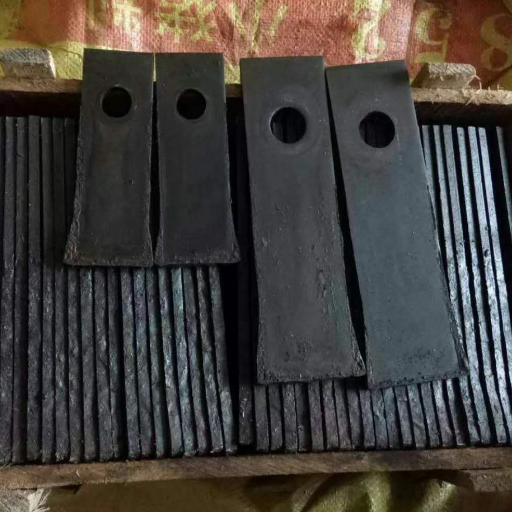
More hammers per rotor revolution (= more impacts per second on each particle) propagate the particle distribution more fine through a given screen size. Light feedstocks such as wood shavings and alfalfa work well with 36 hammers; fibrous and heterogeneous and/or feedstock of inconsistent composition (wood with charcoal, or with plastic, or manure) often mandates 72–108 hammers per revolution to avoid “stringing” unprocessed material through the screen.
36
Light
48
Std
72
Heavy
96
RDF
108
Max
02
Screen Perforation
The Second Lever · Mesh Equivalent
Usually a mesh equivalent or perforation diameter; mesh equivalent map (roughly) 3 mm = 6 mesh, 1 mm = 18 mesh. Screen choice sets the upper limit on the necessarily-finery outputs; impact-force from the raw finished particle distribution accounts for more than 70% of the impact-force distribution, while screen choice is the other 30%.
03
Moisture Content
The Third Lever · Chamber Plug Risk
Wet mixtures (≥ 25%) tend to plug the chamber, so either upstream rotary drying downstream, or using a wet-mill configuration with screens is inevitable.
≥ 25%
PRE-DRY OR WET-MILL CONFIG REQUIRED
04
Hardness
The Fourth Lever · Hammer Material Choice
May or may not be a lever, and forces the choice of hardened or not hammers. Abrasive feedstocks such as rice husk reign in the hammer life while wear surfaces are used.
Soft
Medium
Hard
Heterogeneous
DOWNLOADABLE PDF · FREE
Want The Printable Version Of This 13-Biomass Map Plus A Sizing Formula?
This map is available as a downloadable PDF. Download the Biomass Hammer Mill Sizing Worksheet PDF →
Competitive Benchmark · Six-Dimension Audit
Vs Schutte Hammermill / GEMCO / USA Pellet Mill — Where TCPEL Wins On TCO
Audience · Decision Stack
Engineer
Plant Manager
Procurement
The decision to buy a biomass hammer mill is seldom based solely on sticker price. A hammer mill that costs 50–60% less but burns 8–10% more kWh / causes more wear on the hammers and suffers a 6 week warranty claim delay consumes those savings within the first 18 months of operation. The comparison matrix below is based on six of the above dimensions that determine the six year operating envelope — with actual numbers, not “high / medium / low” indicators.
Six-Dimension Comparison Matrix
TCPEL Reference Column
Evaluation Criteria
TCPEL GXP Series
Schutte (US)
GEMCO (CN)
USA Pellet Mill
01Model Count (1–10 T/H)
7 dedicated GXP tiers
~6 series, not the focus segment
5 small + 3 large = 8 total
16 SKUs (most under 1 T/H)
02Integration Scope At Quote
Mill + Cyclone + Bag Dust + Fan + Conveyor
Mill only; cyclone & dust separate
Mill + cyclone bundle; dust separate
Mill only; pellet bundles separate
03Pricing Transparency
FOB Qingdao tier published
“Inquire” — no published prices
“Inquire about price and cost”
Listed prices ($1,338–$5,538 small models)
04Multi-Language After-Sales
EN / RU / ES / FR / AR engineer support
English (with es, nl, pl pages)
EN / ES / RU / FR / AR inquiry
EN / FR / ES / AR / ZH
05Standards Framework
CE-conforming + ISO 9001
US OSHA / domestic compliance
CE / ISO referenced
FL-based assembly; specifics unlisted
06Spec Density On Page
7-row spec table + feedstock map
Product cards + PDF Fact Sheets
2 spec tables, mixed unit formatting
Model cards + price; specs separate
Comparison data obtained from public competitor pages — archived 2026-05-09. Schutte Hammermill is cited as a registered-identification publicly known specialist brand.
Audit · 6 Rows · 4 Vendors
TCO Advantage Card · 5-Year Envelope
GXP 5-Year Hammer Wear & Energy TCO Worksheet
Engineering-Grade Cost Modeling For Pellet & Feed Plants
Confidence Tier
Silver
Total cost of ownership for a biomass hammer mill is dominated by two line items: electricity and hammer/screen wear. The framework below uses public industry benchmarks plus TCPEL operating data; precise figures vary by feedstock mix, regional electricity tariff, and run-hours, so the values are stated as ranges and labeled accordingly.
01 · Energy Baseline
~22 kWh/t
Industry Baseline Specific Energy
Hammer mill industry average for biomass — published 2024
02 · GXP Design Delta
5–10% Lower
GXP Design Delta Vs Baseline
Direct-drive 3000 r/min + two-side discharge
03 · Annual Energy Saving
~$850–$1,100/yr
Estimated Annual Energy Delta @ 4 T/H
Assumes $0.08–$0.10/kWh, 2,000 run-hr/yr
04 · Hammer Wear Cycle
800–1,500 run-hr
Hammer Service Life (Typical)
Range depends on feedstock abrasiveness
05 · Screen Replacement
Every 3–6 Months
Screen Replacement Cycle
For continuous-run biomass plants
06 · Payback Window
15-Month Potential
Plant-Level Payback Context
Wood pellet plant business case study
Why Silver Tier
We have first-party design data and industry baseline numbers, but precise plant-by-plant ROI percentages depend on local feedstock pricing and electricity tariffs that we won’t pretend to know. For a configuration-specific TCO calculation against your feedstock and tariff, see the RFQ section.
Model TCO Against Your Specific Feedstock
Ready to model TCO against your specific feedstock and electricity tariff?
Request Custom TCO Comparison
Global Footprint · Live Reference Map
60+ Countries Delivered — TCPEL Biomass Hammer Mill Deployment Atlas
Audience · Decision Stack
Plant Manager
Engineer
01 · Reach
60+Countries
Live Export Markets
02 · Disclosed
11Named
Public Reference Destinations
03 · Coverage
6Regions
Continental Distribution
04 · Tenure
2020Onward
Continuous Export Operation
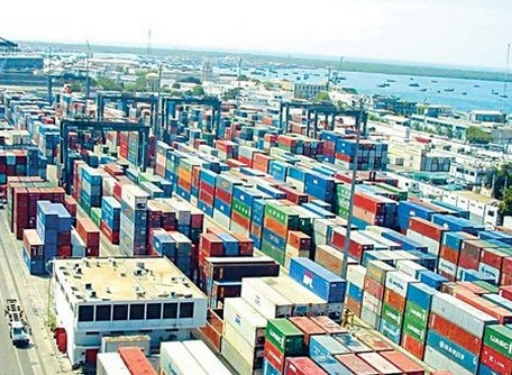
Since 2020, TCPEL (ALLWIN INTERNATIONAL CO.,LTD) has been exporting its range of biomass machinery (the popular GXP series hammer mill included) to over 60 countries worldwide across the EU, Asia, the CIS, the Middle East, Africa and the Americas. Below are eleven (we are bound to confidentiality agreements by other end customers) of the countries we’ve exported to and in every single one of the tropical-humid biomass conditions all the way to the sub-zero winter working environments its GXP series hammer mills are operating in, the same after-sales architecture is working today.
02Named Export Destinations

Europe
02 Countries
Germany
Finland

CIS / Central Asia
01 Country
Russia
Di Asia Selatan / Asia Tenggara
05 Countries · Lead Segment
Pakistan
India
Bangladesh
Vietnam
Malaysia

East Asia
01 Country
South Korea

Middle East / Eurasia
01 Country
Turkey

Oceania
01 Country
New Zealand
03 · Engineering Rationale
Why The Deployment Footprint Matters
Single-Climate Mill = Research Prototype
A hammer mill run at only one climate becomes a research prototype. While packaging on the GXP series is fixed to the same engineering platform around the world, the configuration leaving a Finland sawmill at 25°C ambient (and simply integrated into a 45°C prototype power station to test high temperature operating behavior without removing the IP) may not be the same as the configuration sent as the company’s most advanced technology to a Bangladesh rice husk plant at 85 percent relative humidity and 38°C.
The hammer pattern, screen selection, motor cooling features and cyclone discharge geometries are adjusted from one trip to the next to that specific destination — thanks to each design engineer’s institutional memory accumulated across (at last count) 60-some countries and the speed with which they access it. Guidance market buyers use to steer serious procurement teams comes directly from this principle: the ones that work — Junk’in, we have taken a fast check up before delivering.
Climate Envelope · Reference
Northern Europe
Finland Sawmill
25°C
⇄
South Asia
Bangladesh Rice Husk
38°C
Plus 45°C prototype power station validation — operating envelope spans ~60°C delta without IP changes.
Per-Destination Tuned Variables
VAR · 01
Hammer Pattern
VAR · 02
Screen Selection
VAR · 03
Motor Cooling Features
VAR · 04
Cyclone Discharge Geometries
04Sample Deployment Scenarios
Within these 60+ markets, there are three app patterns that appear time and time again — capacity, model, and feedstock combinations that match the majority of incoming RFQs.
SCENARIO · 01
3–8T/H
Wood Pellet Export Plants
GXP13080 / GXP130110
A GXP13080 or GXP130110 combined with a TCPEL ring-die pellet press and rotary dryer line; the hammer mill downstream of the pellet press grinds hardwood / softwood blends to 97% < 3.35 mm before the pellet die.
SCENARIO · 02
1–3T/H
On-Farm Feed Mills
GXP65X35 — GXP65X100
GXP65X35 to GXP65X100, grinding residual corn stalk, alfalfa, and grain for cattle and poultry feed pellet plants.
SCENARIO · 03
5–10T/H
Biomass Densification For Thermal Use
GXP130×110 / GXP130×130
GXP130×110 / ×130 feeding boiler-fuel briquette or pellet operations, often paired with a rotary dryer to handle higher-moisture forest residues.
Looking For A Reference Deployment In Your Region Or Feedstock Category?
Request matching case studies and we’ll surface the closest live installations to your operating envelope.
Specific client identities, plant capacities, and ROI figures stay confidential under our customer file system; we share them in the RFQ stage when a buyer’s plant capacity and feedstock match an existing reference deployment.
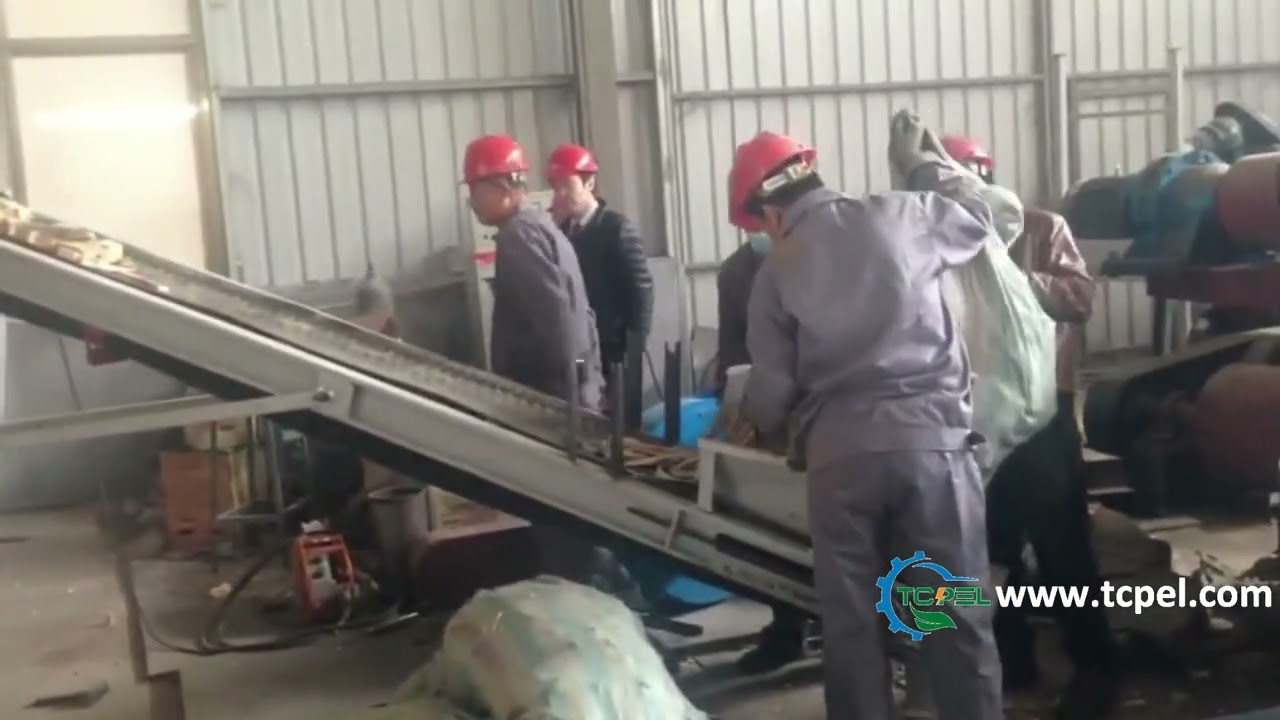
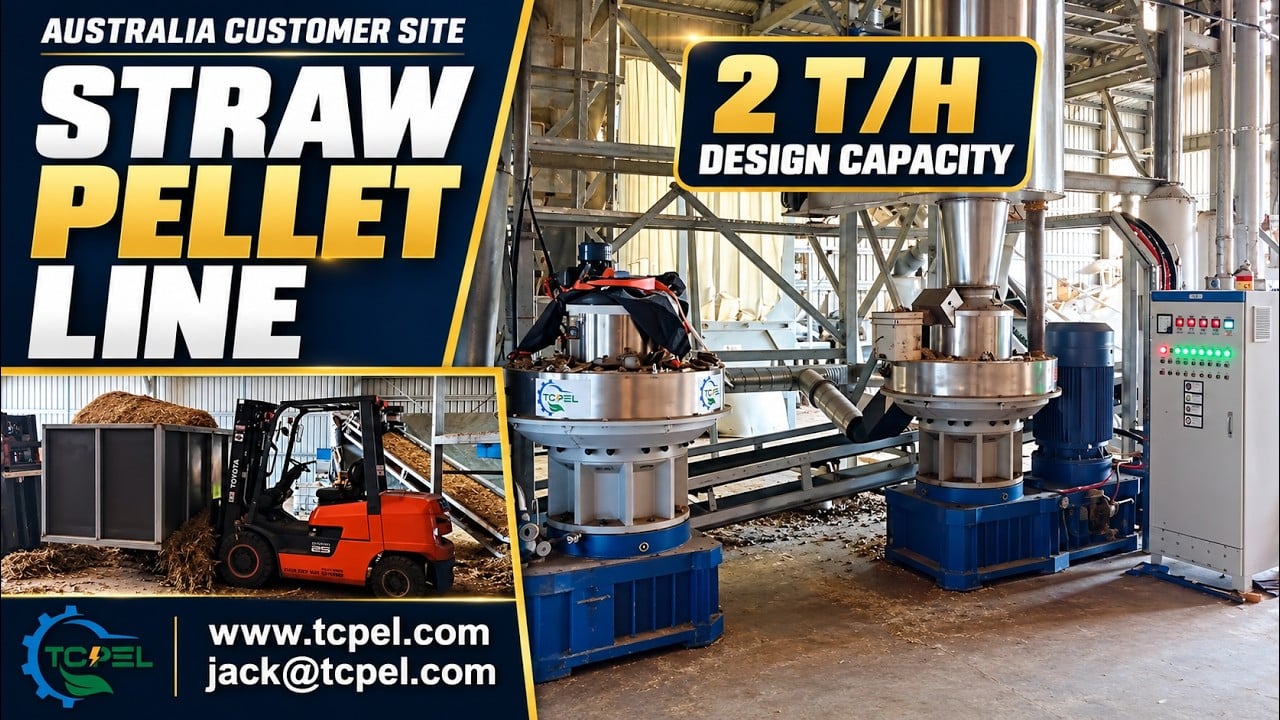
Customer project · Australia
Fine grinding between straw preparation and pelleting
The Australian rice straw project includes a hammer mill alongside a bale shredder and wind sorting machine. It forms part of a complete pellet line with a design capacity of 2 t/h.
- Raw material
- Rice straw
- Complete-line design capacity
- 2 t/h
Incoming feed
Before grinding: describe the prepared straw size, moisture and feed condition.
Grinding requirement
After grinding: define the particle-size requirement for your pelleting process.
Use the site video to place the grinding stage in the wider line. When discussing a hammer mill, provide both the incoming material details and the downstream requirement so equipment selection has a clear starting point.
Compliance Brief · Honest Disclosure Policy
CE / ISO 9001 Compliance & Factory Transparency FOR · PROCUREMENT / ENGINEER
CE
CONFORMITÉ EUROPÉENNE
Market Access
EU / EEA ✓ Mandatory
For European Economic Area buyers, CE marking is a mandatory market-access requirement, not an optional brand badge. ISO 9001 is preferred by most professional procurement teams but is not a legal requirement everywhere — different buyers apply different evidence thresholds, and the honest answer is that the requirement depends on the destination market and the buyer’s own audit framework. We disclose what we have and how we operate so procurement can evaluate against their own checklist.
⟢ POLICY
We Publish What We Hold & How We Operate — Procurement Audits Against Their Own Framework, Not Ours.
01 / CREDENTIALS
Compliance & Inspection Stack
CRED · 01
CE Conformity
Machine directive scope, EU import-ready. Mandatory for any Biomass Hammer Mill shipped into European Economic Area markets.
CRED · 02
ISO 9001
Quality management framework. Preferred by most professional procurement teams; not a legal requirement everywhere.
CRED · 03
Factory Audit (SGS / TÜV)
Available for buyer inspection — pre-shipment inspection from buyer or a third-party inspection agency on request.
CRED · 04
Container-Ready Packaging
Sea-fastened crating to FOB Qingdao. Engineered for ocean freight stack loads, lashing-point certified.
02 / FACTORY
Factory At A Glance
20,000
m²
Total Integrated Factory Area
- Integrated R&D + Production + Sales
- Modern Equipment Manufacturing
- Dedicated Technical Team
AREA
100+
Workshop Staff
Engineering Team & QC Force
- Engineering Team For Product Development
- Quality Control Across Assembly Stages
- Multi-Language After-Sales Group
TEAM
2020
→ Today
Continuous Operation Since Founding
- 60+ Country Export Track Record
- Customer File-Based Service System
- Spare Parts Logistics From Qingdao
EST.
03 / ADDRESS
Factory Location & Pre-Shipment Inspection
ON-MAP · ADVERTISING ADDRESS
East Side, Second Factory
You can find our address in advertising; East Side, Second Factory. Zhangjia Industrial Park, Mingshui Street, Zhangqiu District, Jinan City, Shandong Province, China 250203.
District
Zhangqiu
City
Jinan
Province
Shandong
Postal
250203
PRE-SHIPMENT INSPECTION · OPEN
Buyer & Third-Party Inspection Accepted
We accept pre-shipment inspection from buyer or a third-party inspection agency on request. Choose your preferred agency — coordinated through procurement, scheduled before container loading at FOB Qingdao.
SGS
Accepted
TÜV
Accepted
Intertek
Accepted
DOWNLOADABLE PDF · IMPORT BROKER READY
Need Full Compliance Documentation Pack For Your Import Broker?
Download the Compliance Documentation Bundle →
RFQ-Ready · Six-Factor Pricing Framework
Procurement Guide — Pricing Tiers, Lead Time, Spare Parts, After-Sales
Audience · Decision Stack
Procurement
Plant Manager
Purchasers who buy incorrect biomass equipment without doing procurement homework tend to regret it more than purchasers who play fast with technical specs. This section publishes the procurement framework we use so the discussion begins at parity rather than null.
02Pricing Factors Framework
Final FOB Qingdao price for a GXP-series biomass hammer mill is determined by six factors. We include the structure, instead of a sole sticker price, because each order draws from a different blend:
FACTOR · 01
Platform
Model Class
GXP65 series (1–3.5 T/H) against GXP130 series (3–10 T/H), the 130 series uses a relatively heavier rotor and chamber casting.
GXP65 · 1–3.5 T/H
VS
GXP130 · 3–10 T/H
FACTOR · 02
Integration
Scope Of Integration
Only the mill, mill + cyclone, or the complete stack integrated with bag dust collector, fan and in-feed conveyor.
Mill Only
→
Full Stack PO
FACTOR · 03
Wear Parts
Hammer Pattern & Material
Standard carbon-steel hammers vs hardened patterns for abrasive feedstocks (rice husk, peanut shell).
Carbon Steel
VS
Hardened Pattern
FACTOR · 04
Screens
Screen Set
Single screen vs multiple replaceable screens for feedstock-switching plants, with perforation choice driving output fineness.
Single Screen
VS
Multi-Replaceable
FACTOR · 05
Power
Voltage & Frequency Wiring
380V / 50Hz, 440V / 60Hz, or buyer-specified non-standard supply.
380V / 50Hz · 440V / 60Hz
+
Buyer-Spec Non-Standard
FACTOR · 06
Compliance
Inspection & Documentation
Buyer-side inspection (SGS / TÜV / Intertek), CE technical file, country-of-origin documentation.
SGS / TÜV / Intertek
+
CE File · COO
03 · Commercial Envelope
Standard Commercial Terms
07 Rows · Standard ⇄ Custom
Term
Standard
Custom / Negotiable
01
Lead Time (Standard Models)
25 days FOB Qingdao
35–45 days for non-standard configurations
02
Minimum Order Quantity
1 set
Multi-unit discounts negotiable
03
Payment
30% T/T deposit + 70% against B/L copy
L/C at sight accepted; D/P negotiable on repeat orders
04
Spare Parts (Included With Order)
1 hammer set + 1 screen set
Extended spare kit available
05
Hammer / Wear-Part Warranty
12 months
Extended on commercial agreement
06
Main Body Warranty
24 months
—
07
On-Site Engineer Support
Available, regional, on commercial terms
Sea-fastened spare parts pre-position program
08
After-Sales Response Window
Within 24–48 hours via customer file
Direct hotline for active commissioning projects
Customer File System · Continuity
The customer-file-based service system we operate means an open work order is matched to the original commissioning record automatically — buyers don’t restart the conversation from scratch on a parts request, even three years after delivery.
Need A Quotation Matched To Your Model, Integration Scope, And Shipping Destination?
We’ll return a structured FOB Qingdao quotation aligned to your six-factor inputs — no boilerplate sticker price.
Engineering Tools
Precision evaluators and capacity configuration modules for B2B industrial operations.
07 Questions · Engineering-Grade Answers
FAQ — From Procurement Inbox To Engineering Spec Sheet
Audience
All Buyers
Engineering-grade answers to the seven questions we field most often from procurement, plant managers, and design engineers — covering technical fundamentals, pricing logic, wear-part lifecycle, integration, and pellet economics. Each answer is anchored to a category tag so you can jump directly to the specification or commercial dimension you need.
01 · Coverage
07Topics
Curated Inbox Categories
02 · Anchor
3000r/min
Rotor Speed Reference
03 · Spec
≥97%< 3.35 mm
Pellet Die Feed Target
04 · Lead
25Days
FOB Qingdao Standard
Answer
Both reduce particle size by impact — but a hammer mill uses ganged hammers swinging on a rotor at 3000 r/min and a perforated screen to control finished particle size, while an impact crusher uses fixed or pivoting blow bars against an impact apron and is sized for primary rock or aggregate reduction (centimeters to several millimeters). For biomass pelletizing, where the target is ≥97% of particles below 3.35 mm, a hammer mill is the right tool; an impact crusher would leave too much oversize material to feed a pellet die.
3000 r/min Rotor
Perforated Screen
≥97% < 3.35 mm
Right Tool For Pelletizing
Answer
It’s the size-reduction stage that sits between raw feedstock (wood chips, sawdust, forest residue) and the pellet press. The pellet die requires fine, consistent particle distribution — typically ≥97% below 3.35 mm — and the hammer mill produces that distribution from raw material that may arrive in pieces up to 30 mm or larger. Without it, pellet density, durability, and burn behavior all degrade.
Wood Chips
Sawdust
Forest Residue
Input ≤ 30 mm
Output ≥97% < 3.35 mm
Answer
Final prices are subject to the size of the six packs in our procurement rubric, including model class, extent of integration, hammer pattern, gageset of the screens, voltage configuration, specifications for the documentation pack. Public-domain budgets for industrial pellet plant projects fall in a range from about $20,000 for a sub-T/H starter facility to several million U.S. dollars for a utility-scale 90 T/H plant. The hammer mill is but one line item within that envelope. Please request an FOB Qingdao quote against your chosen configuration for an exact figure.
$20,000 · Sub-T/H Start
$M+ · 90 T/H Utility
6-Factor Rubric
FOB Qingdao Quote
Answer
The four common issues are:
01
Plugging on wet feed — managed by the single-shell, unjointed body formulation and the cyclone airflow match.
02
Excessive hammer wear due to abrasive feedstocks (rice husk, peanut shell) — managed by hardened hammer pattern options.
03
Too many fines due to too small screen aperture — managed by sizing screens for feedstock + downstream pellet die spec rather than to a generic catalog default.
04
Nuisance dust emissions and dust explosion hazard — managed by the integrated bag dust collector with sized airflow capacity (24–108 bags depending on model).
The two-side discharge configuration also reduces the localized choke points that single-discharge designs create.
Answer
The typical continuous service life is 10+ years for the chamber and rotor when properly maintained. Relative wear part lives are: hammers at 800–1,500 hours run time depending on feedstock abrasiveness, screens at 3–6 months on continuous-run plants. Both numbers are averages, not guarantees, and depend on feedstock characteristics, run hours, and operating excellence. The two-year main body warranty plus the one-year hammer warranty gives an anchor for budget planning. All else is a function of plant operating profile.
Chamber · 10+ Years
Hammers · 800–1,500 hr
Screens · 3–6 Months
24-mo Main Body Warranty
12-mo Hammer Warranty
Answer
Industry means to have net profit margins of 8–12% for 50–100,000 T/A capacity wood pellet plants, and a farmer-based model where raw-material procurement accounts for 40–50% of ops cost, the utilities for another 30–40%. A published case study for a dedicated wood pellet plant suggested a 15 month capital repayment period. Your economics will depend on feedstock costs, electricity prices and selling prices in your market.
Net Margin · 8–12%
Raw Material · 40–50%
Utilities · 30–40%
Payback · ~15 Months
Answer
Yes — and integration is one of the first questions we answer before quoting. Our design center reverse-engineers your existing pellet die parameters based on your requirements for pellet length, pellet density, feedstock particle spread, screen opening, hammer pattern, GXP model. We also validate your voltage / frequency, the discharge interface to your existing in-feed conveyor, and plant hatch dust collection with your existing exhaust system. Standard lead time is 25 days from order receipt if your design decisions are firm at the time.
Reverse-Engineer Die Spec
Voltage / Frequency Match
Conveyor Interface
Dust Collection Tie-In
25 Days Lead Time
Question Not Listed Here?
Send the technical or commercial question — we’ll route it to the right engineer and reply within 24–48 hours via our customer-file system.