Get in Touch with TCPEL

Wood · Sawdust · Agro-Waste
Biomass Pellet Production Line For Wood, Sawdust And Agro-Waste
A biomass pellet production line was based upon the feedstock you exist with. Immediately before a quote is crafted, TCPEL performs a series of balances on chipping, grinding, sterilizing, pelletizing, cool and pack systems.
Request A Quote
Ref. TCPEL-BPL-2024Full Process / Engineered To Order
Feedstock Coverage
WOOD / SAWDUST / AGRO
Specification Matrix · 06 Engineering Parameters
Source — TCPEL Internal Reference Data
01
3–60t/h
Drum chipper capacity range for primary sizing
02
50%→15%
Triple-pass dryer reference moisture path
03
1–6t/h
Triple-pass dryer model range
04
0.5–10t/h
Counterflow cooler capacity range
05
15–50kg
BZ80 packing machine bag weight
06
±0.2%
Packing accuracy stated in TCPEL data
Your Pellet Line Is Only As Strong As Its Weakest Process Stage
A pellet mill rating is not the same as sellable packed pellet output. Wet sawdust, oversized chips, undersized cooling or slow bagging can slow down the entire plant.
Engineering Logic
READ TEXT DESCRIPTION
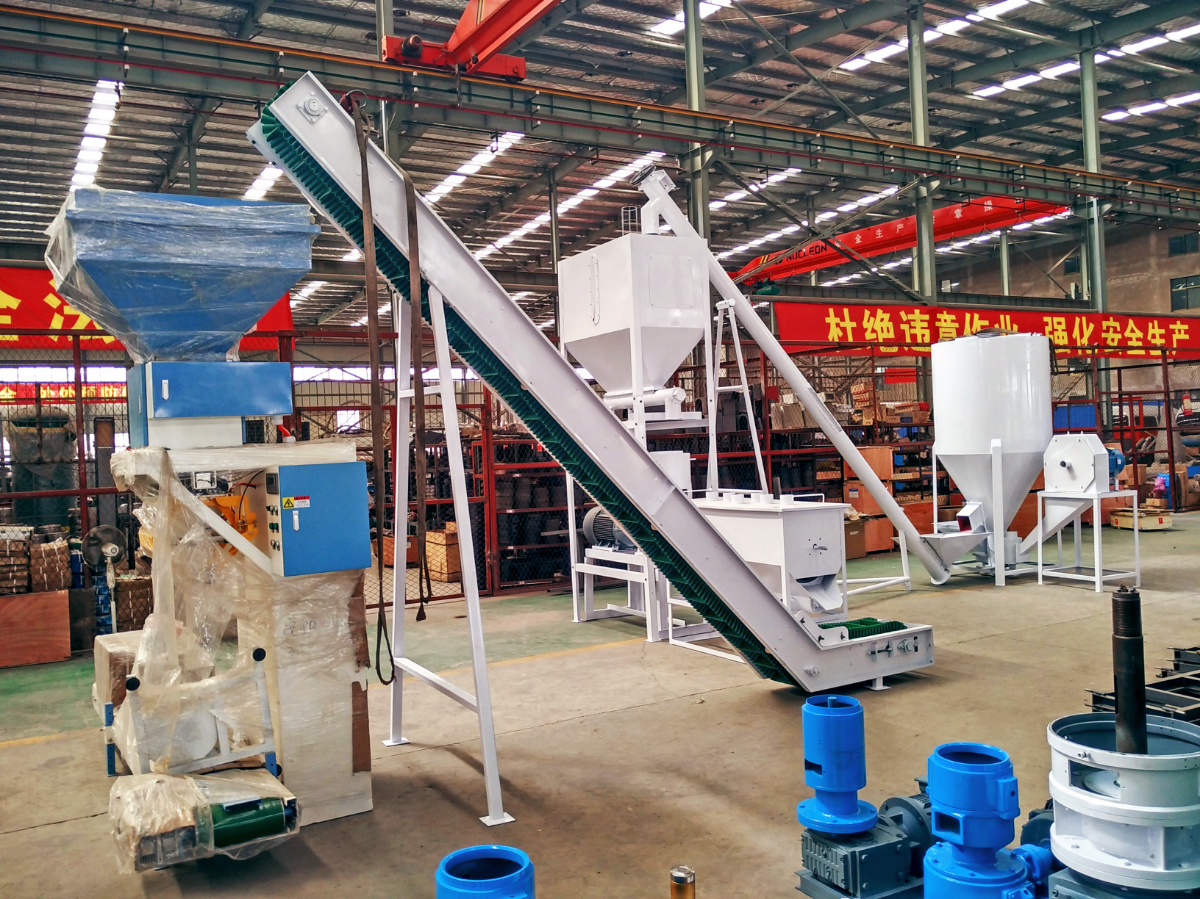
Start with the raw material, then test the downstream process. Logs and branches may need drum chipping; wood chips and fibrous crop residues usually need hammer milling. If the feedstock is wet, drying must come before the pellet machine. After the die, pellets are hot and soft, so cooling, screening and the pellet packing machine must be sized as part of the wood pellet plant, not added as afterthoughts. Pellet manufacture is a linked sequence of grinding, moisture control, extrusion, cooling and packaging.
Linked Process Sequence
05 / Stages
01
GrindingDrum chipping / hammer milling by feedstock
Size
02
Moisture ControlPre-press drying for wet feedstock
Dry
03
ExtrusionPellet mill — die formation
Form
04
Cooling & ScreeningCounterflow cooler + fines screening
Cool
05
PackagingPellet packing machine — sized as core stage
Pack
Sequence Integrity
Output = MIN(Stage 01 … 05)
Reference Rule
TCPEL Capacity Chain Rule
R-01
Sellable output of a biomass pellet production line is constrained by the weakest matched stage: raw material sizing, moisture removal, pellet mill capacity, cooling, screening and packing. A 4 t/h pellet mill does not automatically create a 4 t/h packed-pellet plant. Raw material sizing is one of the first capacity checks in a wood pellet production line.
Sizing
Moisture
Pellet Mill
Cooling
Screening
Packing
Biomass Pellet Production Line Flow: From Raw Material To Packed Pellets
Line layout changes with the feedstock form. Sawdust, wood chips, logs, rice husk, straw and EFB do not enter the same process path.
Core Process Chain · 01 → 06
Material In → Packed Pellets Out
01
Stage · Intake
Receive And Size
Logs and branches move through a drum chipper. Chipper data from TCPEL covers 3-60 t/h models and 30-50 mm chip output.
02
Stage · Grinding
Grind For The Die
Hammer milling brings material toward a pellet-mill particle target. Penn State notes that standard pellet mills generally need biomass ground to no more than 3 mm.
03
Stage · Drying
Dry And Balance
Wet feedstock can shift the whole quote. Triple-pass dryer data covers 1-6 t/h reference models from 50% initial moisture to 15% final moisture.
04
Stage · Pelletizing
Pelletize
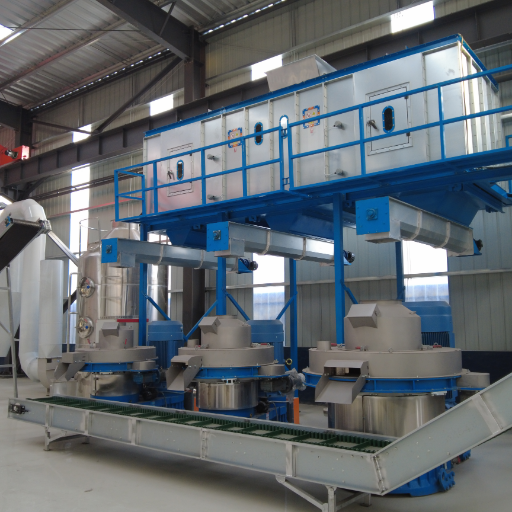
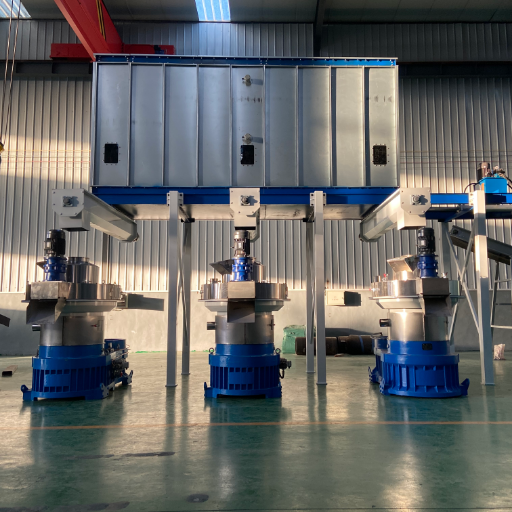
Vertical ring die pellet machines in the TCZL560-TCZL850B range cover 1-4 t/h pelletizing-stage output with 6/8/10/12 mm pellet diameters.
05
Stage · Cooling
Cool And Stabilize
Pellets leave the die hot and soft; Penn State gives about 150 °C at die exit. Cooler sheets specify outlet pellets at no more than ambient + 5 °C.
06
Stage · Packing
Screen And Pack
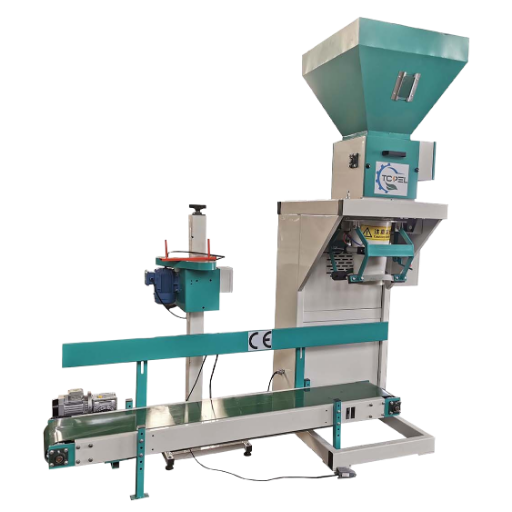
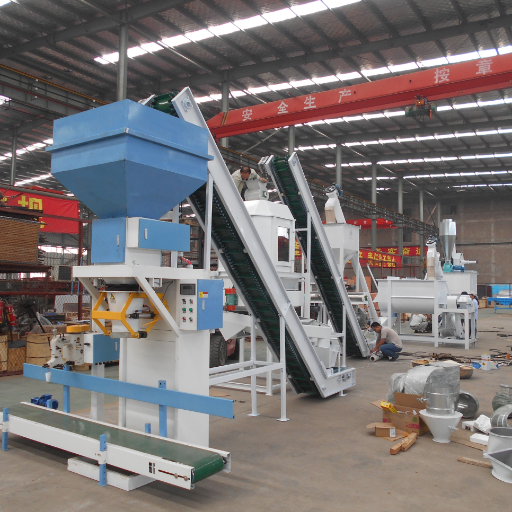
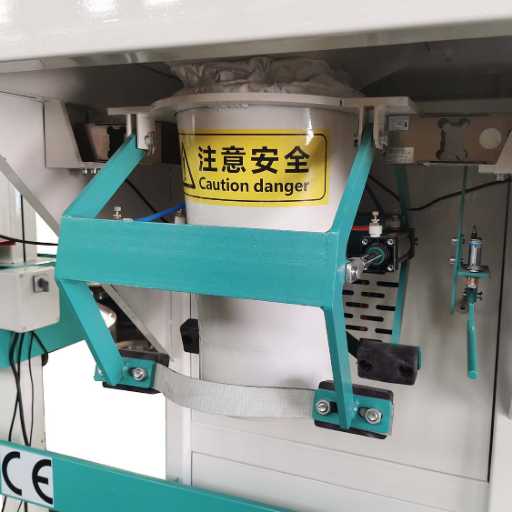
BZ80 packing machine handles 15-50 kg bags at 200-300 bags/h, with stated weighing accuracy of ±0.2%.
Auxiliary & Site Readiness · 07 → 08
Pre-Order Engineering Checks
07
Aux · Dust Control
Plan Dust Control
Hammer mill and cooling sections can require cyclone, bag filter and dust-collection choices. Related system data includes cyclone and bag dust collector options.
08
Aux · Site Utilities
Match Site Utilities
Electrical demand, heat source, compressed air, foundation and operator access should be checked before the final equipment list is frozen.
Pre-Quotation Brief
Send raw material photos, moisture data and target output before quotation. It reduces guesswork and shortens the layout discussion.
Customer project · Australia
Inside the Australian rice straw pellet line
This Australian customer project has a design capacity of 2 t/h for rice straw. The equipment covers straw preparation, pellet production, cooling and jumbo bag packing.
- Raw material
- Rice straw
- Complete-line design capacity
- 2 t/h
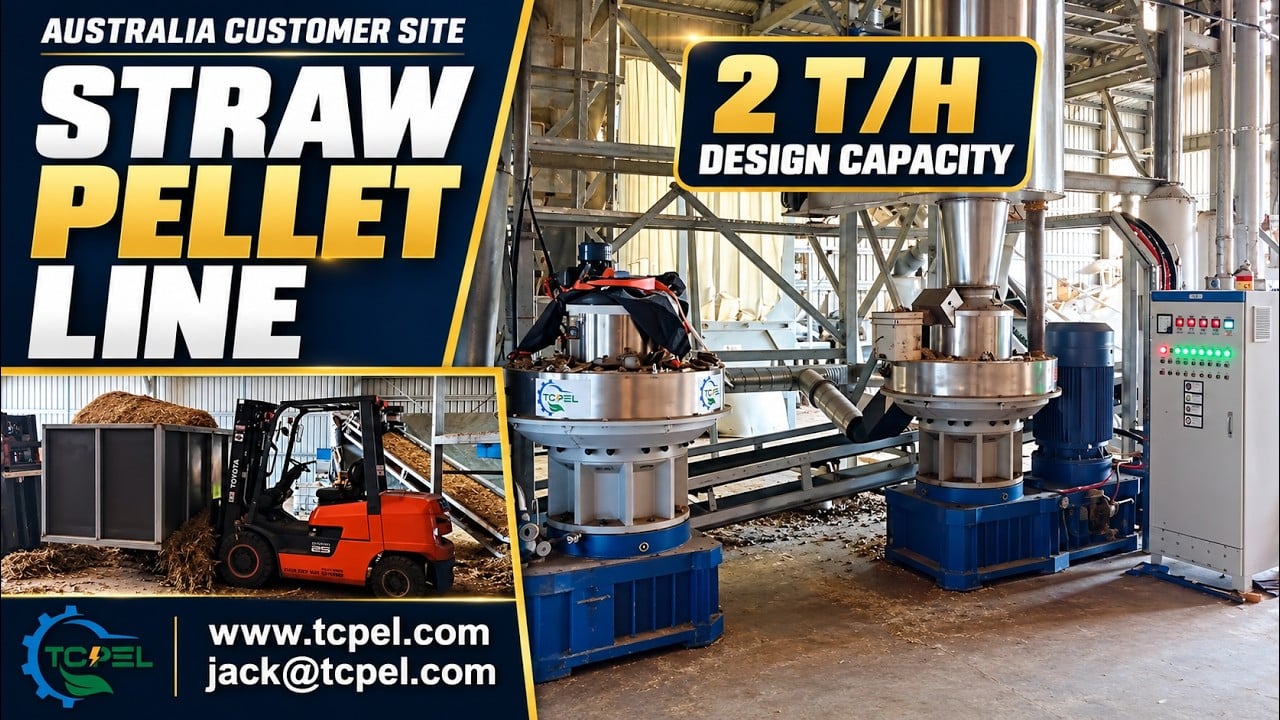
Equipment included
- Bale shredder
- Wind sorting machine
- Hammer mill
- Pellet machine
- Pellet cooler
- Jumbo bag packing machine
Explore the equipment included in this project, then consider how a biomass line could fit your site. Before selecting equipment, share the condition of your straw, the space available and how you plan to handle the packed pellets.
TCPEL Capacity Chain Matrix For 1-4 T/H Pelletizing Projects
Use this table as a buyer-side verification tool. Do not only ask which pellet machine fits the target output; check whether every upstream and downstream stage can follow the plant goal. This is an important index when you compare a biomass pellet machine, a wood pellet machine or a complete pelletizing line.
Process Verification Matrix · 06 Stages × 03 Decision Axes
TCPEL Engineering Reference
[ 01 ] Stage
[ 02 ] TCPEL Equipment Data
[ 03 ] Buyer Decision
[ 04 ] Bottleneck To Check
STAGE / 01
Chipping
3-60 t/h drum chippers, 30-50 mm chip size
Q
Is primary size reduction needed?
Log diameter
Feed speed
Chip size before hammer milling
STAGE / 02
Grinding
3000 r/min hammer mill rotor speed; direct motor-rotor connection
Q
Can material reach the die particle target?
Screen selection
Dust collection
Fibrous crop residues
STAGE / 03
Drying
1-6 t/h triple-pass dryer models, 700-4200 kg/h water evaporation
Q
Is raw material above the pelletizing moisture window?
Initial moisture
Heat source
Daily production hours
STAGE / 04
Pelletizing
TCZL560-TCZL850B, 1-4 t/h ring die pellet machine stage
Q
Which model matches target output and material?
Die diameter
Motor power
Wear parts
Feedstock blend
STAGE / 05
Cooling
SKLN1.2-SKLN6, 0.5-10 t/h counterflow cooler range
Q
Does cooling match pellet mill discharge?
Pellet temperature
Moisture drop
Storage stability
STAGE / 06
Packing
BZ80, 15-50 kg bags, 200-300 bags/h
Q
Which bag size and market format are needed?
Bagging rate
Warehouse flow
Compressed air supply
Cross-Reference Benchmarks · External & Service-Life Rules
Penn State / University Extension
Power DemandREF / 01
50-100kW/tph
Pelletizer electrical demand rule of thumb from Penn State. This excludes other equipment.
Setup CostREF / 02
$70k-$250k/tph
University extension setup-cost rule of thumb. It is not a TCPEL selling price.
Die Service LifeREF / 03
1000-1500h
Pellet die replacement interval cited by Penn State; TCPEL ring dies state the same service-life range.
Pellet Quality Control: Moisture, Particle Size, Cooling And Bagging Accuracy
A purchaser placing pellets into heating, bedding or industrial-fuel markets should consider the end user. Pellets that powder, sweat or carry too many fines can create complaints long after the equipment has shipped.
Quality Variable Matrix · 07 Reference Axes
Penn State / PFI / ISO / TCPEL Data
01
VAR · 01
Quality Variable
Particle Size
Reference / Penn State
Penn State states standard pellet mills generally require biomass ground to no more than 3 mm.
Line Design Response
Confirm chipper, hammer mill and screen path before the pellet mill quote.
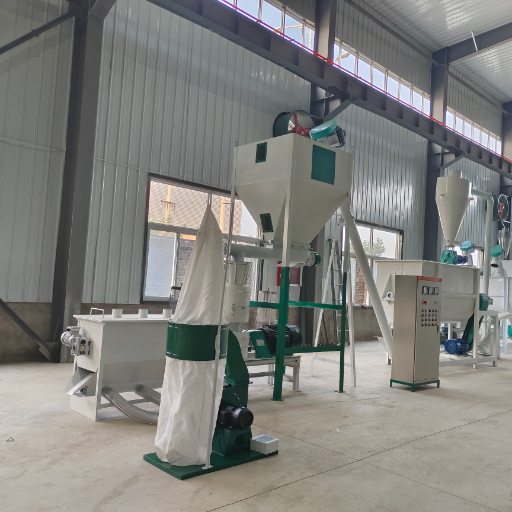
02
VAR · 02
Quality Variable
Wood Feedstock Moisture
Reference / Penn State
Penn State gives wood feedstock moisture at or near 15% before pelleting.
Line Design Response
Use dryer sizing, hot-air source and residence time to protect pellet formation.
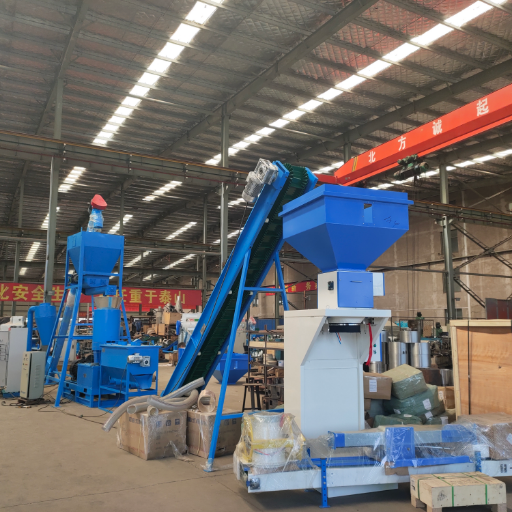
03
VAR · 03
Quality Variable
Final Pellet Moisture
Reference / Penn State
Penn State gives final pellet moisture no higher than 8%.
Line Design Response
Cooling and storage design matter; do not skip the counterflow cooler.
04
VAR · 04
Quality Variable
Cooling Temperature
Reference / TCPEL Data
TCPEL cooler data states outlet pellets should be no higher than ambient + 5 °C.
Line Design Response
Match cooler model to pellet mill output and local ambient conditions.
05
VAR · 05
Quality Variable
Bagging Accuracy
Reference / TCPEL Data
BZ80 packing machine accuracy is stated as ±0.2%.
Line Design Response
Protect retail bag weight, warehouse counting and distributor acceptance.
06
VAR · 06
Quality Variable
Fuel-Market Grading
Reference / PFI Standards
PFI Standards Program uses third-party inspection and lab testing for PFI Graded Fuel producers.
Line Design Response
Check target market fuel standard early if pellets will be sold for heating use.
07
VAR · 07
Quality Variable
International Reference Name
Reference / ISO 17225-2
ISO 17225-2 is a wood pellet quality reference name that may appear in export discussions.
Line Design Response
Confirm the buyer’s target market standard or certification program before promising a grade.
Engineering Note
Engineering Note
N-01
Moisture is often mistaken for a pellet mill problem, but the die cannot solve a poor drying window. If the dryer is undersized or the incoming sawdust moisture changes by season, the pelletizing stage can move between weak pellets, die blocking and unstable actual capacity.
Dryer Sizing
Seasonal Moisture
Weak Pellets
Die Blocking
Unstable Capacity
Factory, Verification And After-Sales Signals For International Buyers
For a new supplier website, trust has to be earned quickly. Factory facts, model accuracy, scoped verification wording and a traceable service route have to do the heavy lifting.
Factory Profile · 04 Verified Facts
TCPEL · Allwin International Co., Ltd
Fact / 01Established
Since 2020
Pellet machine manufacturer in China
Fact / 02Facility
20,000m²
Factory area in Zhangqiu District, Jinan
Fact / 03Workforce
100+Staff
Workshop team stated in company intro
Fact / 04Export Reach
60+Markets
Export countries and regions stated by TCPEL
MD Certificate
Packing Machine
MD Certificate
Dust Collector
MD Certificate
Hammer Mill
MD Certificate
Pellet Machine
MD Certificate
Cooler
MD Certificate
Wood Chipper
MD Certificate
Packing Machine
MD Certificate
Dust Collector
MD Certificate
Hammer Mill
MD Certificate
Pellet Machine
MD Certificate
Cooler
MD Certificate
Wood Chipper
Verification Scope
DOC / V-01
CE / MD Verification & Compliance Reference
CE/MD verification records are available for main machinery, including packing machine, dust collector, hammer mill, pellet machine, cooler and wood chipper options. The references made are to MD Directive 2006/42/EC and EN ISO 12100:2010. The final scope of compliance still depends on model, electrical specification and project plan.
Packing Machine
Dust Collector
Hammer Mill
Pellet Machine
Cooler
Wood Chipper
Address & Service
DOC / V-02
Company Location & Service Route
Company AddressCN · Shandong
East Side, Second Factory, Zhangjia Industrial Park, Mingshui Street, Zhangqiu District, Jinan City, Shandong Province, China 250203
Service support relies on customer data, an after-sales team and a project-specific response file.
Pre-Order Verification
Ask TCPEL for certificate files that match the machines in your line before order confirmation.
Biomass Pellet Production Line Price: What Changes Your Quote
A quote for a wood pellet production line is not merely a pellet machine price. Dryer load, material path, cooling, packing, power supply and spare-part planning can all change the final scope.
Industry Benchmark
$70k–$250kper ton-per-hour capacity
Source — Penn State Industry Guideline
Penn State provides an industry guideline for approximate setup cost of USD 70,000-250,000 per ton-per-hour capacity. It also cautions that the lowest-cost equipment can create long-term repair and quality issues. That public data should be treated as a market reference only. A TCPEL offer should be calculated from your raw material and target output, not from a generic online range.
Market Reference
Not A TCPEL Price
Raw Material Driven
Target-Output Driven
Scope Input Matrix · 07 Variables That Move The Quote
Buyer-Side Pre-Quotation Checklist
[ 01 ] No.
[ 02 ] Input Needed
[ 03 ] Why It Changes The Quote
01
Input · Material
Raw Material Form
Logs, chips, sawdust, straw, rice husk and EFB need different pre-treatment paths.
02
Input · Moisture
Measured Moisture
Dryer size and heat source may drive a large share of line cost.
03
Input · Output
Target Output
Hourly output, shift length and annual production change every stage selection.
04
Input · Pellet Spec
Pellet Diameter
TCPEL ring die pellet machines can produce 6 / 8 / 10 / 12 mm pellets.
05
Input · End Of Line
Cooling And Packing Format
Bulk storage, 15-50 kg bags, conveyor flow and warehouse plan change the end of the line.
06
Input · Site
Power And Site Layout
Motor power, compressed air, foundation and dust-collection route affect installation planning.
07
Input · Maintenance
Spare Parts Plan
Ring die, roller, screen and wear-part inventory should be planned before shipment.
Biomass Pellet Production Line Engineering Tools
FAQ About Biomass Pellet Production Lines
Total Questions
08 / 08
Engineering Q&A Index · Capacity · Material · Drying · Diameter · Die · Quote · CE/MD · Cooling & Packing
TCPEL Reference
Q.01
What Capacity Biomass Pellet Production Line Can TCPEL Configure?
Answer · Capacity Chain
For this line family, vertical ring die pellet machines cover 1-4 t/h at the pelletizing stage. Final packed-line output still has to be matched against dryer evaporation, cooler size, bagging rate, dust collection and shift schedule. That is why capacity should be checked as a chain, not as a single-machine number. In a wet-sawdust project, the dryer can hold back output long before the pellet mill reaches its rated load.
Q.02
What Raw Materials Can Be Used In A TCPEL Biomass Pellet Line?
Answer · Feedstock Scope
Common feedstocks include wood logs, branches, chips, sawdust, rice husk, straw, EFB and other biomass residues. Material form sets the equipment path. Logs may start at the drum chipper; sawdust may move closer to drying and pelletizing; fibrous crop residues may need more grinding and moisture testing before a stable quote is possible.
Q.03
Do I Need A Rotary Dryer In My Wood Pellet Production Line?
Answer · Drying Logic
If your raw material is above the pelletizing moisture range, yes, drying should be reviewed. Penn State gives wood feedstock moisture at or near 15% before pelleting, while TCPEL triple-pass dryer models are specified around a 50% to 15% reference moisture path. Dry sawdust may need a smaller drying section or no dryer at all; wet chips often change the whole line.
Q.04
What Pellet Diameter Can The Line Produce?
Answer · Die Output Range
The available pellet diameter list includes 6 mm, 8 mm, 10 mm and 12 mm. Share the target market before the die is selected so the pellet diameter, packing format and quality target can be checked together.
Q.05
How Do I Choose Between Flat Die And Ring Die Pellet Machines?
Answer · Die Selection
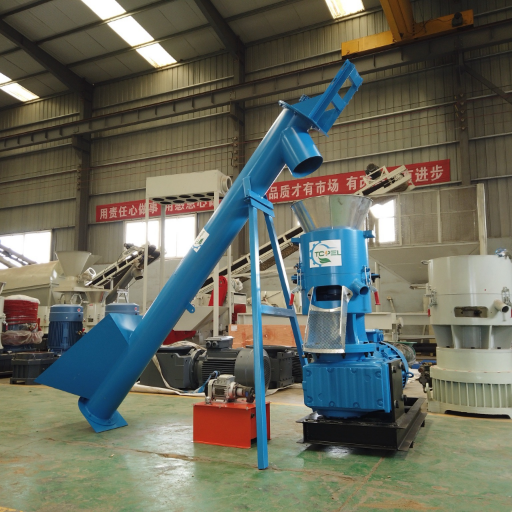
Use flat die machines for smaller output, starter budgets and feedstock trials. Flat die models cover 100 kg/h to 1400 kg/h. Choose vertical ring die machines when the goal is steadier commercial output in the 1-4 t/h pelletizing-stage range. A cleaner answer comes after TCPEL sees your material, moisture and daily output target.
Q.06
What Information Is Needed For A Production Line Quotation?
Answer · Quotation Inputs
Send raw material photos, current size, moisture test result, target output, pellet diameter, local voltage, site size, fuel or heat source, bag weight and target market. Missing data means more assumptions.
Q.07
Are CE/MD Documents Available For TCPEL Pellet Line Equipment?
Answer · Compliance Scope
Yes, user-provided files include CE/MD verification documents for key machines such as pellet machine, hammer mill, cooler, packing machine, dust collector and wood chipper. Use scoped wording: the documents apply to listed machines and models; a complete project should still be checked against its final electrical and mechanical scope. For an import file, ask for the certificate that matches the exact model on the proforma invoice, not only a sample certificate from the same product category.
Q.08
Can TCPEL Supply Cooling And Packing Equipment With The Pellet Machine?
Answer · End-Of-Line Scope
Yes. Product data includes counterflow pellet coolers from 0.5-10 t/h and a BZ80 packing machine for 15-50 kg bags at 200-300 bags per hour. Those sections affect final pellet stability, bag weight control, warehouse flow and truck loading. A buyer planning retail fuel bags should discuss bag size, sewing method, conveyor height, dust collection and finished-pallet handling at the same time as the pellet mill.