Get in Touch with TCPEL

Last updated: October 2026
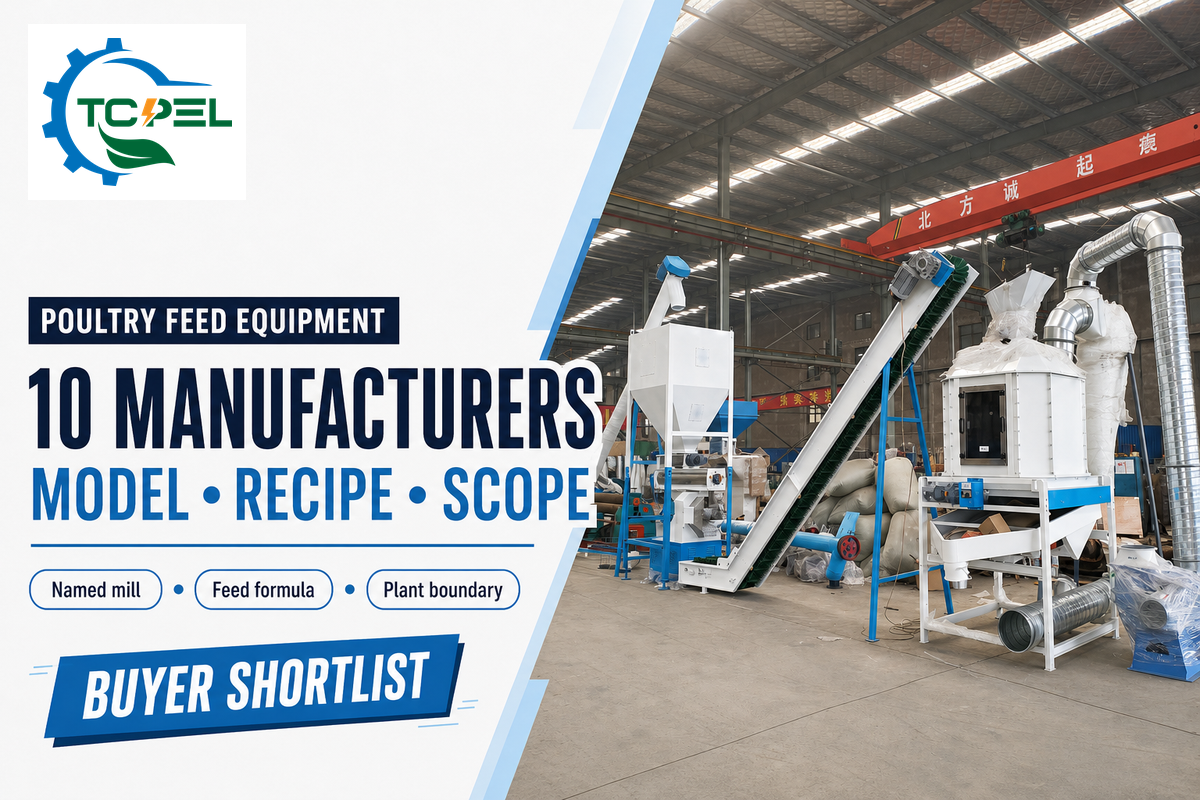
Among the top chicken feed pellet machine manufacturers, the best fit depends on the job: TCPEL publishes a broad small-to-mid TCF model ladder; FAMSUN and RICHI name poultry mills; CPM, Van Aarsen and Ottevanger address larger feed plants. The ten makers below are grouped by documented product or project fit. A published rating is a starting point for a trial, not a promise of saleable output on your recipe.
Short answer: Shortlist a maker only after matching a named poultry model or poultry plant reference to your feed formula, required good-pellet rate, and quoted equipment boundary. The company comparison and request list below help turn ten names into comparable bids.
Quick Picks
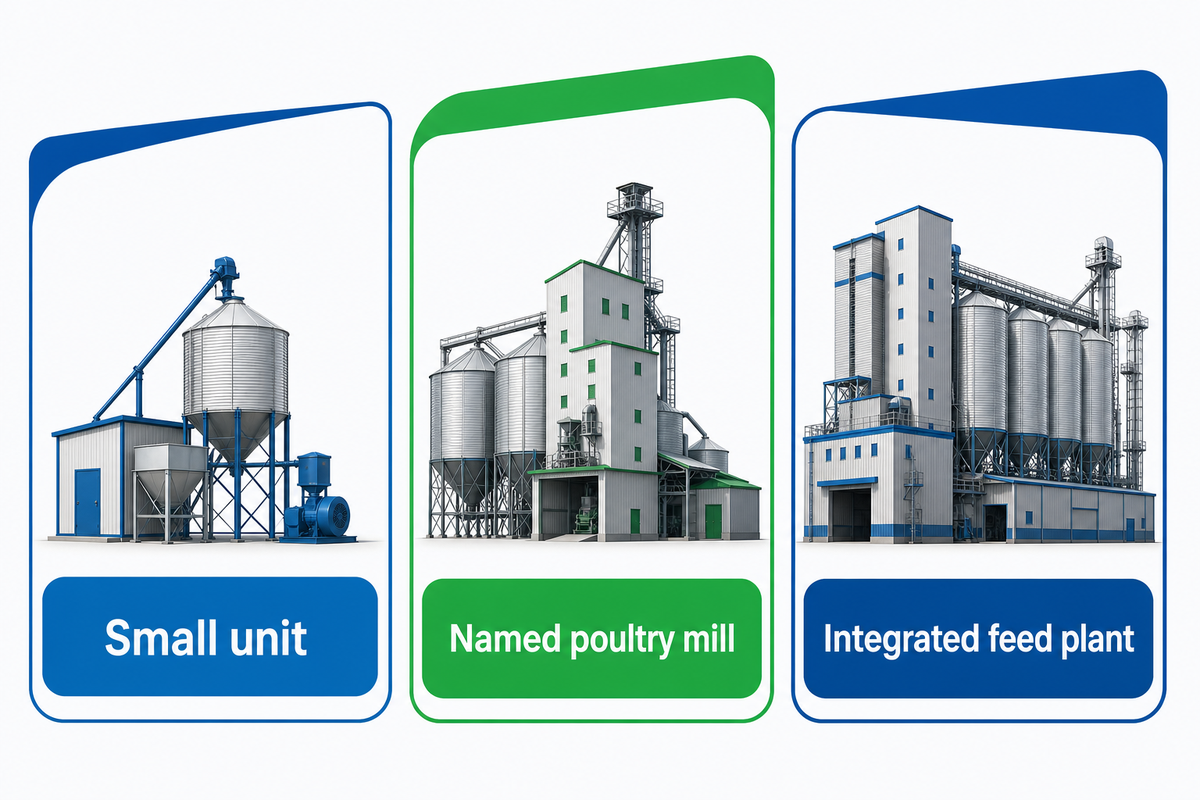
- TCPEL suits buyers seeking a published 150–6,000 kg/h chicken-feed model ladder.
- FAMSUN offers a named pig-and-poultry pellet mill.
- RICHI Machinery gives buyers named SZLH chicken-feed models to compare.
- CPM documents an industrial broiler-feed press family.
- Van Aarsen documents a large poultry mill installation.
- Ottevanger Milling Engineers documents complete poultry-feed line engineering.
Disclosure: This guide is published by TCPEL. We list ourselves first because this is our website, not because we claim to be the market leader. The other 9 manufacturers are grouped by what they’re best for, in no particular order within each group.
How We Selected These Chicken Feed Pellet Machine Manufacturers
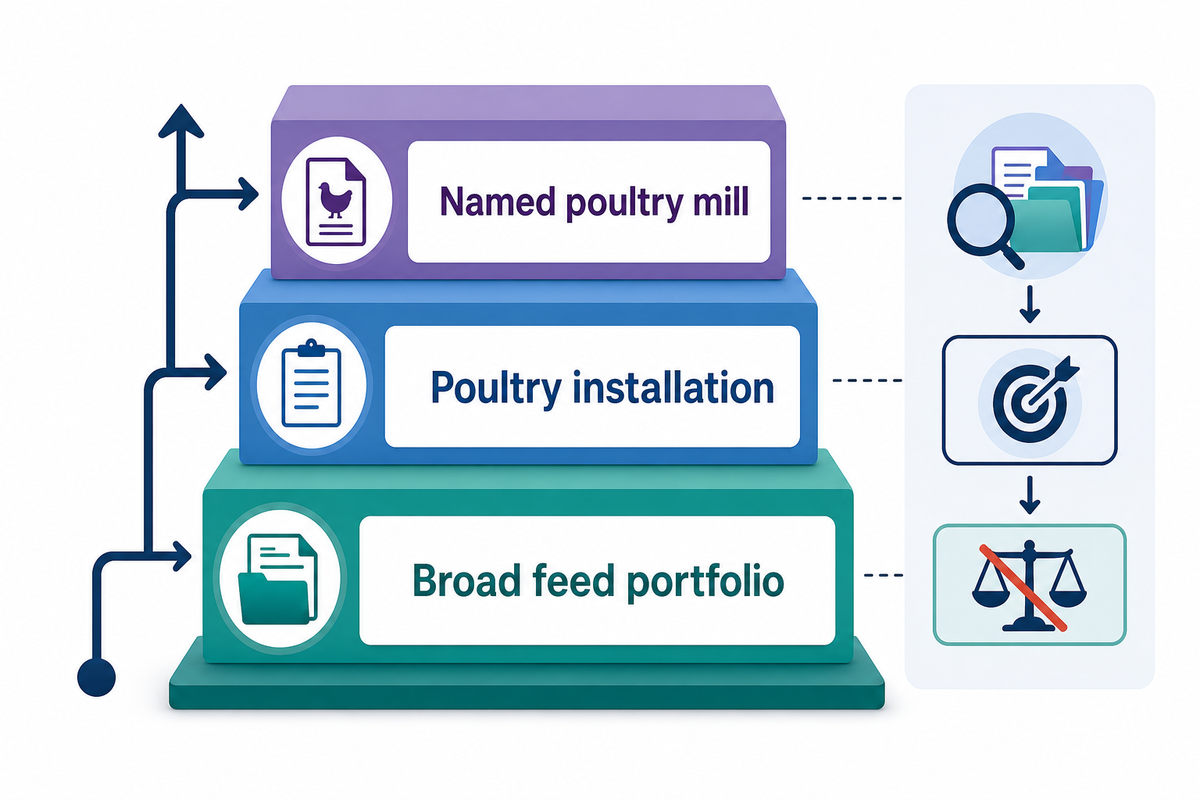
Each company has a current official site that identifies its product or plant role. We placed the strongest poultry evidence with a named chicken or poultry pellet mill, followed by a documented poultry-feed installation; a broad animal-feed portfolio is a different, weaker signal. Company information was verified against official product, About and project pages in October 2026. Trading companies without a verifiable manufacturing role, sourcing platforms, directories and lists without a real product were excluded.
This is a buyer-fit list, not a league table of market share or independently tested performance. A maker’s model table shows what it offers. A project case tells where its equipment or engineering has been used. Neither tells you what rate your plant will get. Neither gives your plant a guaranteed rate until the supplier tests your formula and states the boundary of supply. We checked headquarters and founding years against company pages, if available. But, we didn’t assign a parent group’s founding date to a younger division.
Ten places can’t show every credible firm. AMANDUS KAHL also publishes feed-pelleting material that mentions poultry, and SALMATEC documents presses at the Rothkötter Boizenburg facility discussed below. They’re useful additional bids when their design or service network fits your plant. We retained a mix of individually specified presses and companies that engineer complete lines so buyers can compare both procurement routes. For a wider category view, see the animal-feed pelletizer comparison across feed applications. The shortlist records one practical constraint for every featured maker; a gap in a public page should lead to a sharper request for proposal, not an invented negative rating.
The Poultry Manufacturer Evidence Ladder gives the table a reading key. Level 1 is a named chicken or poultry pellet mill on a maker’s own site. Level 2 is a poultry-feed installation and the scope of the machine or line can be determined. Level 3 is a wider range of animal-feed, with a documented poultry application but a chicken-only catalog model is missing. Mechanical quality of a supplier at a given level can’t be inferred from this evidence. A Level 3 supplier may engineer a better solution to your problem than a Level 1 supplier, if both are tested on the same terms.
Quick Picks by Plant Size and Procurement Scope
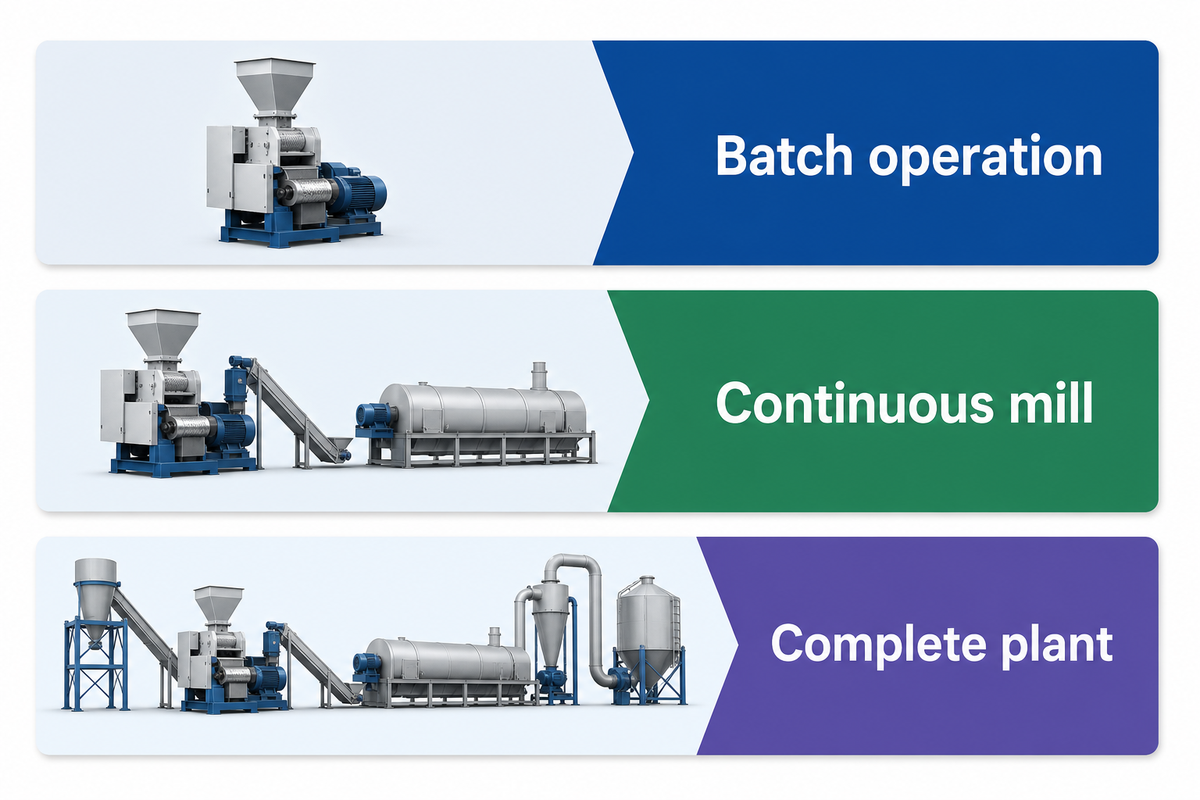
A small feed operation and a plant running several shifts should send different briefs. For a farm or small commercial unit, begin with the tonnes of finished feed needed per day, the hours available for production, and whether the machine must start and stop between batches. TCPEL’s published TCF ladder begins at 150–200 kg/h, which makes it a candidate for a smaller brief. That figure is the manufacturer’s listed machine range. It says nothing yet about fines after cooling, ingredient variation, or a fully installed line.
A continuous commercial mill usually needs a ring-die press with matched feeder, conditioner, cooler and screen, plus reliable wear parts. FAMSUN’s K Series, RICHI’s SZLH models, Bühler’s Kubex family, CPM’s 9000 Series and Zhengchang’s SZLH range are starting points for different versions of that request. If the buyer wants a plant rather than a press, Van Aarsen, Ottevanger, ANDRITZ Feed & Biofuel and Yemmak can be evaluated for wider process engineering. Don’t assume every firm sells the same package merely because the website uses the word turnkey.
A second split is the bird and feed stage. Broiler starter and grower pellets, layer feed and crumbles may require different die holes, conditioning and post-pellet handling. A supplier should quote for mash and target form rather than a generic poultry feed. A model that ran 20 tonnes per hour on one published project may run differently when ingredient moisture, oil addition, particle size or acceptable fines change. Define those parameters before requesting a price quotation.
Comparison Table: Poultry Evidence, Products, and Buying Limits
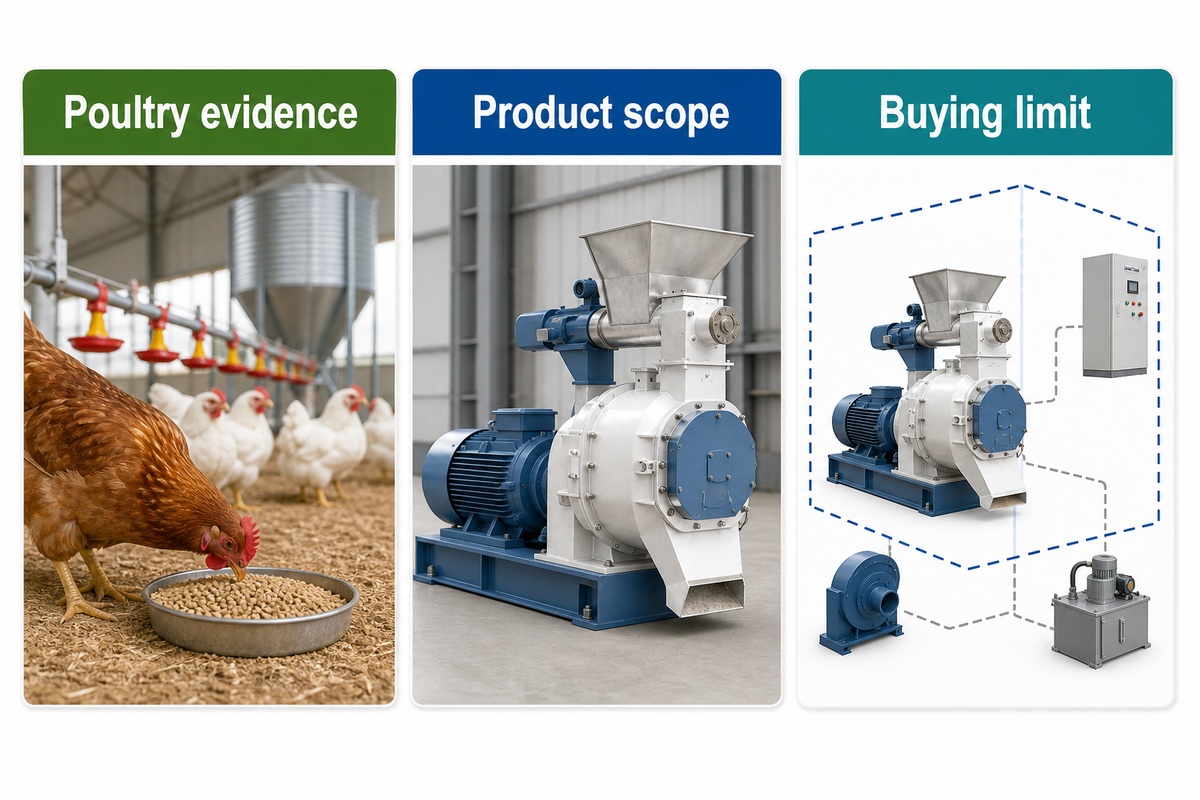
The table is a navigation aid, not a test report. “Best for” refers to the buyer scenario that justifies approaching the company. Published outputs are shown with their equipment boundary in the company cards. A plant line’s rated throughput, a catalog press range and annual design capacity must never be placed on the same performance scale. Every official website below is shown as plain text so the comparison remains easy to scan.
| No. | Company Name | Headquarters | Founded Year | Best For | Brief Introduction | Poultry-feed product evidence | Key Advantages | Potential Disadvantages | Official Website |
|---|---|---|---|---|---|---|---|---|---|
| 1 | TCPEL | Jinan, China | 2020 | Small-to-mid chicken-feed model choice | ALLWIN INTERNATIONAL CO., LTD pellet machinery brand | TCF chicken page; 11 models | Visible model and die choices | Standalone range ends at 6 t/h | https://tcpel.net/ |
| 2 | FAMSUN | Yangzhou, China | Not stated for current entity | K Series poultry mill | Feed equipment maker | Pig and Poultry Pellet Mill page | Poultry-specific product wording | K Series pellet mill is not a complete feed line | https://en.famsun.com/ |
| 3 | RICHI Machinery | Zhengzhou, China | 1995 | Commercial SZLH selection | Pellet machinery and feed-line maker | Dedicated chicken-feed machine page | Named model ladder | Press needs upstream equipment | https://www.richimachinery.com/ |
| 4 | Zhengchang | Liyang, China | 1918 group roots | Industrial SZLH choices | Ring-die and feed-plant equipment group | SZLH700 livestock/poultry listing | Whole-plant scope available | SZLH press needs separate full-line equipment scope | https://en.zhengchang.com/ |
| 5 | ANDRITZ Feed & Biofuel | Esbjerg, Denmark | Division year not stated | Broad industrial press family | Feed-process machinery division | Poultry process application material | FeedMax plus system scope | FeedMax G mill order is not complete plant scope | https://www.andritz.com/feed-and-biofuel-en |
| 6 | Bühler Group | Uzwil, Switzerland | 1860 | Kubex configurations | Industrial feed-process group | Kubex 3 names poultry feed | Different drive choices | Catalog mill is not whole line | https://www.buhlergroup.com/ |
| 7 | CPM | Blaine, USA | 1883 roots | High-capacity broiler feed | Pellet mill manufacturer | 9000 Series names turkey/broiler feeds | Named 9036/9042/9046 family | Line scope quoted separately | https://onecpm.com/ |
| 8 | Van Aarsen | Panheel, Netherlands | 1949 | Integrated poultry plant | Feed mill machinery and engineering | Interpec uses CU900 Dynamic | Named poultry installation | Industrial 60 t/h plant, not a small standalone press | https://vanaarsen.com/ |
| 9 | Ottevanger Milling Engineers | Moerkapelle, Netherlands | 1909 | Complete poultry-feed line | Plant integrator and machine maker | Rothkötter: two 22 t/h lines | Detailed line case | Press OEM differs in cited plant | https://www.ottevanger.com/ |
| 10 | Yemmak | Bandırma, Türkiye | 1965 | Turnkey feed facilities | Feed-machine and plant manufacturer | P/PM mills and poultry process pages | Machine-to-line offering | P Series mill excludes turnkey plant scope | https://www.yemmak.com/ |
Read the evidence column before the rating column. A named poultry machine is more relevant, yet still carries the maker’s published test assumptions. A project reference is more relevant for system scope and less relevant for predicting the feed formula. For an acceptance test, compare net good pellets after the agreed screen, not kilograms pushed through a die. The test recipe, sampling position, operating hours and equipment boundary should also be cited in the same row as the quoted throughput figure.
Chicken Feed Pellet Machine Manufacturers: Model-Specific Shortlists
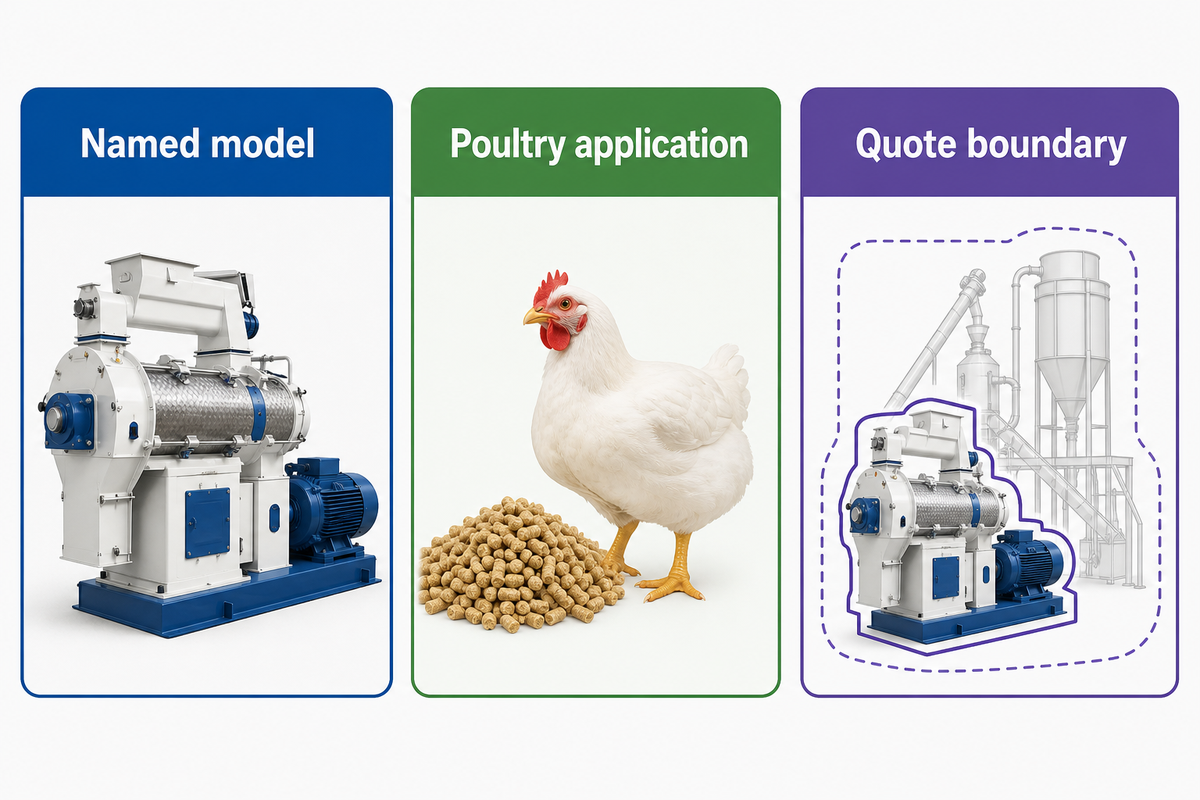
The first group starts with a published chicken or poultry machine and moves toward larger SZLH choices. Product names help a purchasing team request specific drawings, power requirements and die specifications. They do not remove the need for a formula trial. “According to the manufacturer” indicates a published company claim; stated applications don’t indicate a third party capacity test. Competitor websites are shown as text to keep the focus on the comparison.
1. TCPEL: Best for a published 150–6,000 kg/h chicken-feed model ladder
Headquarters: Jinan, Shandong, China · Founded: 2020 · Type: pellet-machine manufacturer operating under ALLWIN INTERNATIONAL CO., LTD.
Official website: https://tcpel.net/
Main products: TCF150–TCF800 feed pellet machines for broiler and layer feed; related hammer mills, coolers and production-line equipment.
Capabilities / notable work: TCPEL publishes 11 TCF model rows, beginning with 150–200 kg/h for TCF150 and reaching 5,000–6,000 kg/h for TCF800. The page lists selectable die holes from 2 to 10 mm and a feed pellet mill CE document numbered NTS2307072S.
TCPEL’s table puts motor ratings, dimensions and FOB Qingdao prices beside output ranges, helping a small commercial buyer identify a candidate before requesting a proposal for the exact die, bird stage and downstream cooling or crumbling setup. Ask for a comparable-mash trial that declares where good finished-feed output is measured. The published standalone TCF range ends at a stated 6,000 kg/h, so more press capacity or a raw-material-to-bagged-feed line requires a separate engineered quote. The TCPEL chicken feed pellet machine range shows the specifications behind that model selection.
2. FAMSUN: Best for a named pig-and-poultry pellet mill
Headquarters: Yangzhou, Jiangsu, China · Founded: not stated for the current FAMSUN entity · Type: feed equipment manufacturer.
Official website: https://en.famsun.com/
Main products: K Series Pig and Poultry Pellet Mill and integrated feed equipment.
Capabilities / notable work: the K Series page expressly names conventional poultry feed and describes ordinary and thermal conditioner options.
FAMSUN’s K Series page directly names poultry feed and discusses chamber design, material distribution and conditioning, making it a specific commercial press candidate. Its K Series is a pellet mill with ordinary and thermal conditioner options; it does not by itself define a complete feed line.
3. RICHI Machinery: Best for comparing commercial SZLH chicken-feed models
Headquarters: Zhengzhou, China · Founded: 1995, according to its website · Type: pellet machinery and feed-line manufacturer.
Official website: https://www.richimachinery.com/
Main products: chicken feed pellet machines in the SZLH250–SZLH768 model family; feed grinding, mixing, cooling and packing equipment.
Capabilities / notable work: its dedicated chicken-feed page describes broiler, layer, duck and turkey applications and identifies SZLH250 among the models.
RICHI’s chicken-feed page lets a buyer compare named SZLH ring-die sizes while requesting the matching feeder and conditioner. A plant replacing a mash-only process should identify where the existing grinder, mixer and conveyors hand off to the new equipment, since upstream shortages can starve a larger press. A standalone SZLH machine doesn’t make finished feed from raw ingredients, so quote grinding, mixing, controls and commissioning as distinct responsibilities. Test the proposed model on the intended formula and pellet diameter instead of treating its published capacity as fixed across bird stages.
4. Zhengchang: Best for industrial SZLH choices within a feed-plant brief
Headquarters: Liyang, Jiangsu, China · Founded: the group’s history traces to 1918 · Type: ring-die pellet mill and feed-plant equipment group.
Official website: https://en.zhengchang.com/
Main products: SZLH ring-die pellet mills and broader feed-production equipment.
Capabilities / notable work: official product listings include poultry-feed applications and models including SZLH700; the group site refers to CE and ISO9000 at group level.
Zhengchang fits an industrial plant brief where the engineering team needs a named SZLH model, die diameter, motor, conditioner and controls quoted together. Its SZLH catalog spans different machines and scales, so a group-wide listing of pellet presses needs a separate scope for grinding, mixing, cooling and controls in a feed plant bid.
Industrial Pellet Mills and Complete Poultry Feed Lines
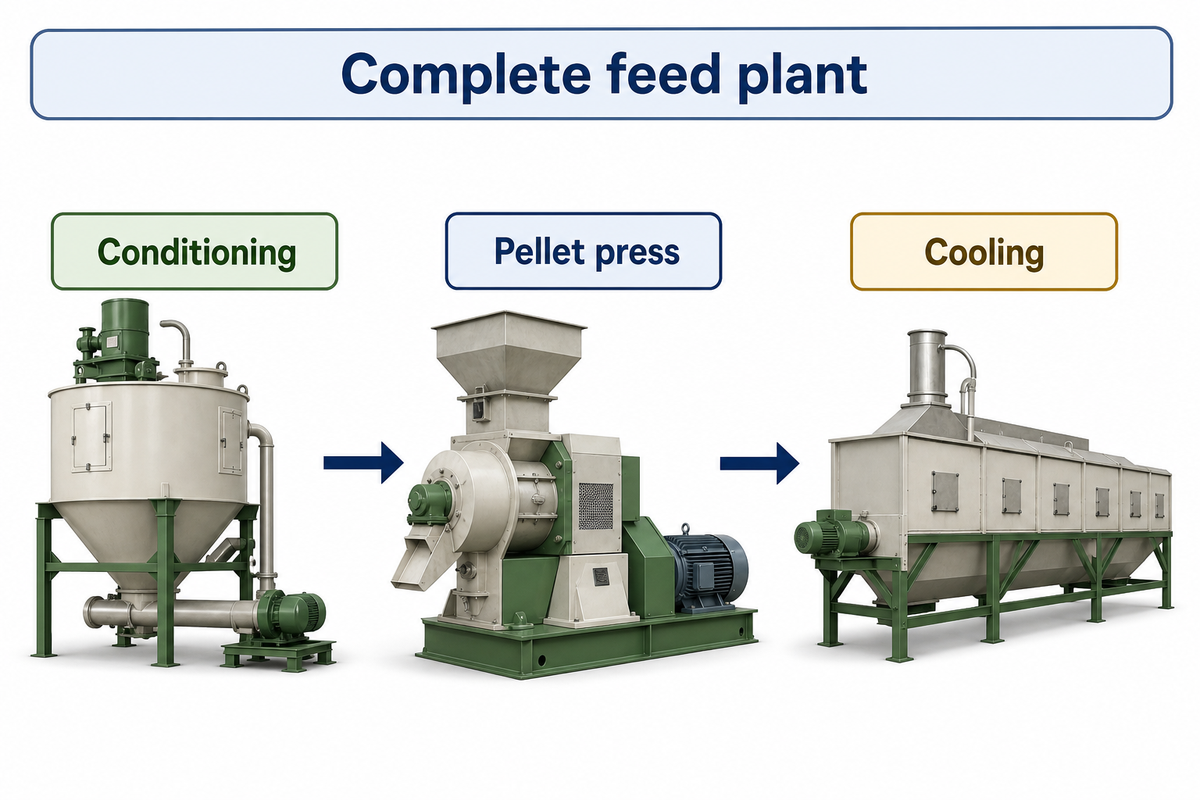
The next six suppliers cover bigger machines or larger plant-wide requests. Evidence ranges from the poultry named mill family to a documented whole-line project. What a buyer can reasonably infer from a published rating changes with the example.
5. ANDRITZ Feed & Biofuel: Best for a broad industrial press and line discussion
Headquarters: Esbjerg, Denmark, for the Feed & Biofuel division · Founded: no division founding year stated · Type: feed-process machinery division of ANDRITZ Group.
Official website: https://www.andritz.com/feed-and-biofuel-en
Main products: FeedMax G and Sprout pellet mill families, plus feed-production systems.
Capabilities / notable work: the official portfolio covers compact modular mills and wider feed-line solutions; separate company material discusses poultry processing.
ANDRITZ merits an industrial bid when one engineering team must discuss the press and surrounding process, but FeedMax and Sprout are distinct families with different specifications. Those separate families cover broad animal-feed duty, but a FeedMax G mill fits into a feed plant and does not include the plant’s upstream and downstream equipment.
6. Bühler Group: Best for comparing Kubex industrial configurations
Headquarters: Uzwil, Switzerland · Founded: 1860 · Type: industrial processing-equipment manufacturer.
Official website: https://www.buhlergroup.com/
Main products: Kubex 3, Kubex 5 and Kubex T 7 pellet mills.
Capabilities / notable work: the Kubex 3 portfolio entry specifically names poultry feed; the wider family offers differing drive configurations.
Bühler gives an established plant several Kubex configurations to compare once the recipe, pellet size and annual operating hours are known. Request a named model and identify which motor, die, feeder, conditioner and safety controls the offer includes. A Kubex mill page isn’t a turnkey line quote, so establish separate grinding, mixing, cooling and packing scope together with factory and site acceptance targets.
7. CPM: Best for a named large broiler-feed pellet mill family
Headquarters: Blaine, Minnesota, USA · Founded: 1883 roots · Type: pellet-mill and process-equipment manufacturer.
Official website: https://onecpm.com/
Main products: 9000 Series pellet mills, including the 9036-9, 9042-12 and 9046 models.
Capabilities / notable work: CPM expressly markets the 9000 Series for high-capacity integrated swine, turkey and broiler feeds.
CPM’s official 9000 Series page directly names broiler and turkey feeds, giving a large plant a named family for its first model discussion. Ask for the specific 9036-9, 9042-12 or 9046 configuration, with die, motor load, conditioned-mash rate and test formula written beside any capacity claim. The 9000 Series is a press family rather than an installed plant, so ingredient intake, grinding, mixing, steam, cooling, crumbling, dust handling and controls need a separate priced boundary.
8. Van Aarsen: Best for a documented integrated broiler-feed plant
Headquarters: Panheel, Netherlands · Founded: 1949 · Type: feed-mill machinery maker and plant engineer.
Official website: https://vanaarsen.com/
Main products: C600, CU Basic, CU Dynamic and CU1200 Titan pellet mills, with integrated feed-mill equipment.
Capabilities / notable work: Van Aarsen’s Interpec San Marcos poultry-feed reference describes two CU900 Dynamic mills, each rated up to 30 tons/hour in that installation.
Van Aarsen’s Interpec reference ties a named CU900 Dynamic mill to a wider poultry plant, making intake, batching, hygiene, cooling and controls legitimate questions for a similar bid. The cited project is a 60-ton-per-hour plant designed for future expansion, an industrial reference rather than a small standalone press purchase. Ask how a broiler line keeps feed types separate after recipe changes and who trains operators on that procedure.
9. Ottevanger Milling Engineers: Best for complete poultry-line integration
Headquarters: Moerkapelle, Netherlands · Founded: 1909 · Type: feed-mill equipment maker and line integrator.
Official website: https://www.ottevanger.com/
Main products: Progress Pellet Mill family and integrated poultry-feed plant equipment.
Capabilities / notable work: its Rothkötter Boizenburg reference describes two pelleting lines rated 22 t/h each, covering conditioning, pelleting, cooling, crumbling, sieving and coating.
Ottevanger’s Rothkötter case gives a rare process boundary from conditioning through coating, useful when a buyer needs both pellets and crumbles. The two 22 t/h figures describe pelleting lines, while the annual plant design capacity is a separate site figure rather than the continuous rate of one press. Ottevanger documents line integration at Rothkötter’s Boizenburg facility, while SALMATEC separately identifies four Maxima 840 presses there.
10. Yemmak: Best for a turnkey poultry-feed facility discussion
Headquarters: Bandırma, Balıkesir, Türkiye · Founded: 1965 · Type: feed-machinery maker and turnkey plant builder.
Official website: https://www.yemmak.com/
Main products: P and PM Series pellet mills and feed-plant systems.
Capabilities / notable work: Yemmak describes both machine production and feed-facility engineering; its pellet mill page discusses poultry-feed use.
Yemmak can quote machine supply alongside plant engineering, so ask for an equipment list from ingredient intake through dispatch that distinguishes starter crumbles, grower pellets and any layer ration. Its P and PM Series span broad feed applications, while a turnkey plant is a separately engineered supply scope rather than a catalog press alone.
How to Choose a Poultry Pellet Mill Beyond Rated Tonnes per Hour
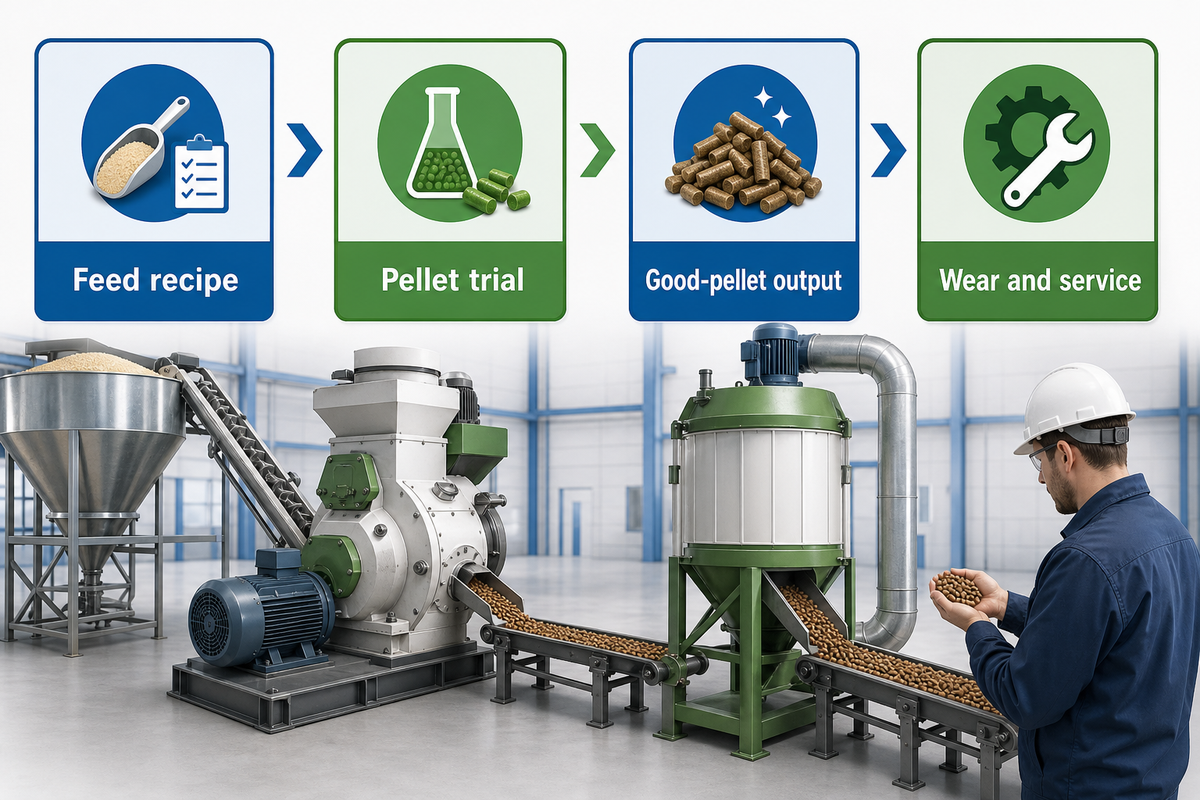
Consider the demand side first. Feed manufacturers can’t make meaningful selection from “chicken feed, 5 tonnes per hour” alone. Feed manufacturers will need the actual formula or a representative ingredient breakdown, expected bulk density and moisture of the feed, desired pellet size, age or production stage of the birds, or whether starter feed will be crumbled and the level of fines in the finished product. This information will help in deciding die choice, conditioning and cooling duty and crumbling duty. If the recipe changes seasonally, have the manufacturer identify the most difficult formulation and use that in the design of the machine.
Next, state the expected annual demand in terms of scheduled operating hours. For example, a plant needing 24,000 tonnes of finished feed over 4,000 planned production hours needs 6 tonnes per hour of net good feed before allowing for maintenance, changeovers or rework. That value is used for planning and not for rating suppliers. A nominal 6 t/h press might fail the target after cooler losses and downtime; conversely, buying a much larger press without steady mash supply may reduce utilization. Ask each vendor for a line balance showing input mash rate, press discharge, cooled output, screened good product and recycle.
Compare energy on the same boundary. What gets measured and reported as a kWh-per-tonne number varies from supplier to supplier. Get both suppliers to disclose measurement points, test duration and the formula they have used. Also get them to disclose expected die life and wear parts, spare die and rollers cost, expected operating hours, change over time, lead time, and local service availability. A lower quoted price on a press can be offset by a short expected die life or extended unplanned downtime.
Ultimately, obtain a written acceptance protocol from both suppliers. It should identify the feed formula, target moisture, pellet diameter, required tonnes of good product per hour, accepted fines, electrical and steam consumption, length of test run, and what remedies will be taken if performance is unsatisfactory. Keep a sample or agreed lab method for pellet durability. A video of a pelletizer working on an unknown mash can’t take the place of this protocol. Name the contracting party, equipment manufacturer and commissioning party in the protocol where multiple companies are involved in the project.
A comparable supplier brief in practice
Consider a mill planning to supply broiler starter and grower feed from the same building. An effective inquiry mentions the planned finished-feed tonnage per year, the operating days and shifts, the ingredient formula for each feed, the target pellet diameter, the starter crumble fraction, and the permitted fines at packing. It describes which equipment already exists and marks the physical handoff from that equipment to the proposed package. It shows the site’s electrical supply, available steam pressure and space for a cooler and/or dust collector. Without this information, two vendors can each quote a “five-tonne machine” for different projects.
For the starter campaign, tell the vendors whether the acceptability test is conducted on intact pellets before the crumbler or on screened crumbles after the crumbler. For the grower campaign, ask for net cooled pellets after fines separation. Tell the vendors how long each campaign should run continuously. State how the vendors should report start-up scrap, downtime and recipe changeover. This makes pellet production evidence comparable. The quote can show one guaranteed good-product rate for each recipe, or point out where the vendor will only estimate because a trial hasn’t been done.
A small buyer may find a flat die feed pellet maker as well as a ring-die press. The mechanism, maintenance access and scale differ; neither type is automatically better without the intended animal feed pellet specification and actual duty cycle. Ask a seller of either design for a video or witnessed run on representative mash, a die and roller replacement estimate, and the power consumed over a stated batch. For a higher-volume animal feed pellet mill, request a process drawing and throughput balance covering upstream mixing through finished bags. A feed making machine that’s easily purchased may still require separate equipment to mix, cool and screen the feed to make it ready for sale. These considerations move the discussion to feed pellet production that can be accepted at the plant.
The brief should state how claims will be verified. Factory testing affirms the built package under factory utilities; a site test verifies the package in use with local steam, operators and feed ingredients. Keep instrument calibration, weighbridge or scale method, sampling interval and lab procedure in the test attachment. A buyer who wants a particular pellet quality should define the measurement method rather than leave “high quality” to interpretation. Ask for a test report template before signing, so every supplier returns the same measurements and the purchasing team does not have to reconstruct them from different brochures.
Five checks that make competing offers comparable
- For machine identity, put the named model, die size and motor on the cover sheet. A generic pellet making machine quote cannot be compared fairly with a fully specified ring-die package. For a larger feed pellet mill machine, identify the feeder and conditioner type as well.
- For product boundary, specify whether the target is pellet feed at press discharge, cooled pellets or screened crumbles. Pellets making up the accepted batch should be weighed after the last agreed screen, with the recycle stream reported separately.
- List process equipment by seller and capacity, including the mixing machine, grinder machine and cooling machine. A feed pelletizer can meet its motor rating while the upstream mixer or downstream cooler becomes the bottleneck.
- The feed recipe and target feed quality should be provided along with the proposed die speed and feed rate. Which settings are adjustable should be stated. A model sold for livestock and poultry still needs a test on that recipe to be chicken-specific.
- For plant output, state the production capacity as tonnes of accepted product per scheduled hour, not only press discharge. A pellet plant bid should state downtime, automation and labor assumptions behind the production efficiency.
These checks also establish the supplier’s obligations during acceptance, namely, to provide evidence of the precise machine and line boundaries as described in the quotation. If making feed in-house is occurring for the first time, the same importance should be given to the maintenance instructions and spare parts, as is given to the motor rating. Service and support may determine whether a small-scale operation can recover promptly from a worn die or roller. For poultry farmers producing only a few batches each week, an oversized machine with difficult cleanout may add work without improving the feed delivered to birds.
Selecting the right animal feed pellet machine is ultimately a judgment about the buyer’s flock, recipe and operating team. In animal husbandry, a batch missed during a breakdown has an immediate effect on the feeding schedule, so ask the vendor for realistic spares lead times and the local service route. The machine category alone can’t help a poultry operator to decide whether the die, cooler and crumbler will deliver the required feed consistency.
Standalone Mill or Complete Chicken Feed Production Line?
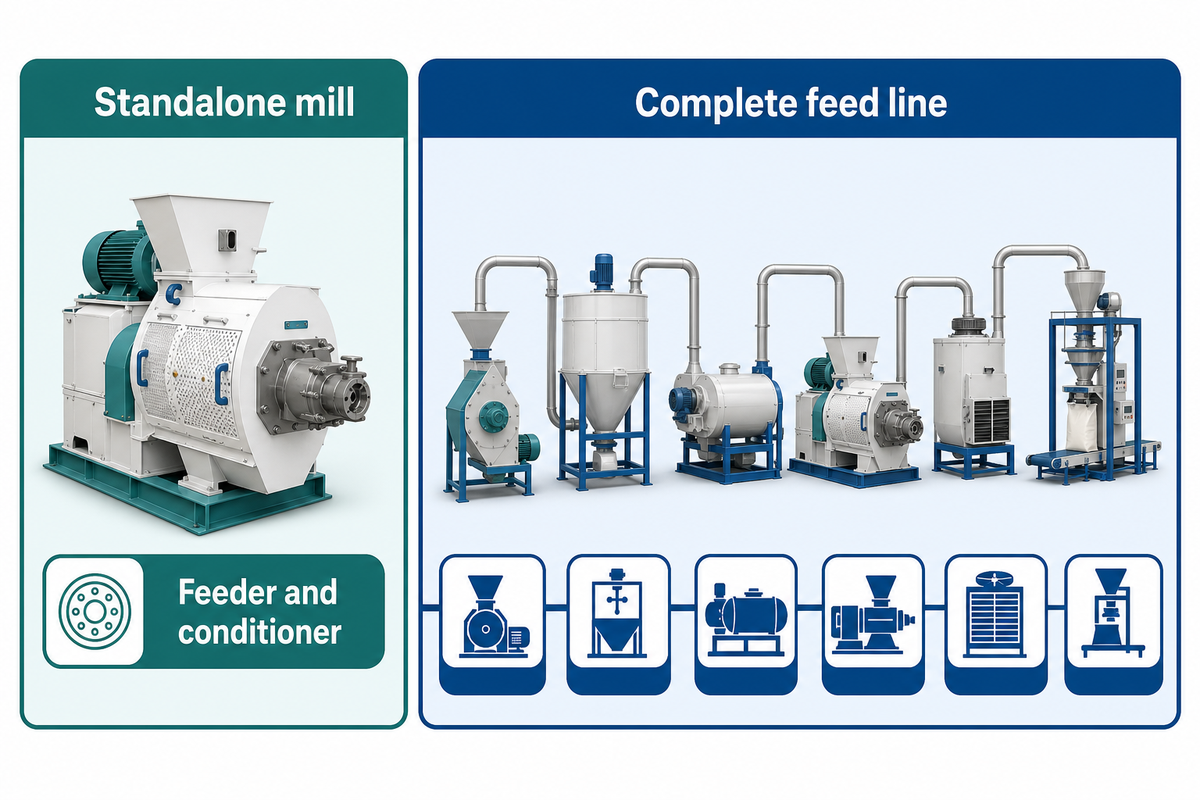
A standalone pellet mill takes prepared mash and compresses it through a die. Even a package that includes feeder and conditioner may still require separate steam generation, post-pellet cooling, screening and controls. A complete chicken feed production line can extend from raw-material receiving and storage through grinding, batching, mixing, conditioning, pelleting, cooling, crumbling, coating, packing and dust collection. Vendors don’t all include the same stations under the phrase “complete line,” so the equipment list must be part of the quote. The feed pellet machine guide explains the equipment components in more detail.
A farm that purchases mixed mash, may only require the press package, and downstream cooling. A feed mill that receives grain and protein ingredients requires reliable upstream grinding and mixing. A crumbler and classification screen may be critical to make broiler starter, while for layer ration pelleting may not be the required final form at all. A proposed line should show a process flow diagram of the feed system, identifying various bypasses and recycle streams, and showing product paths for each feed type, and points of cleanout. Omissions in the process are made visible prior to purchase.
Integration projects add another risk: who takes responsibility if individually specified machines don’t meet overall throughput? Put the answer in the contract. Ottevanger’s Rothkötter case shows why the distinction matters: Ottevanger documented the overall pelleting lines, while SALMATEC separately identified the presses used at that site. A single plant can be a sound reference for more than one company without making those companies the same manufacturer. Ask for both the original equipment maker’s model documentation and the integrator’s plant acceptance record.
Price, Running Cost, and Factory Acceptance Evidence
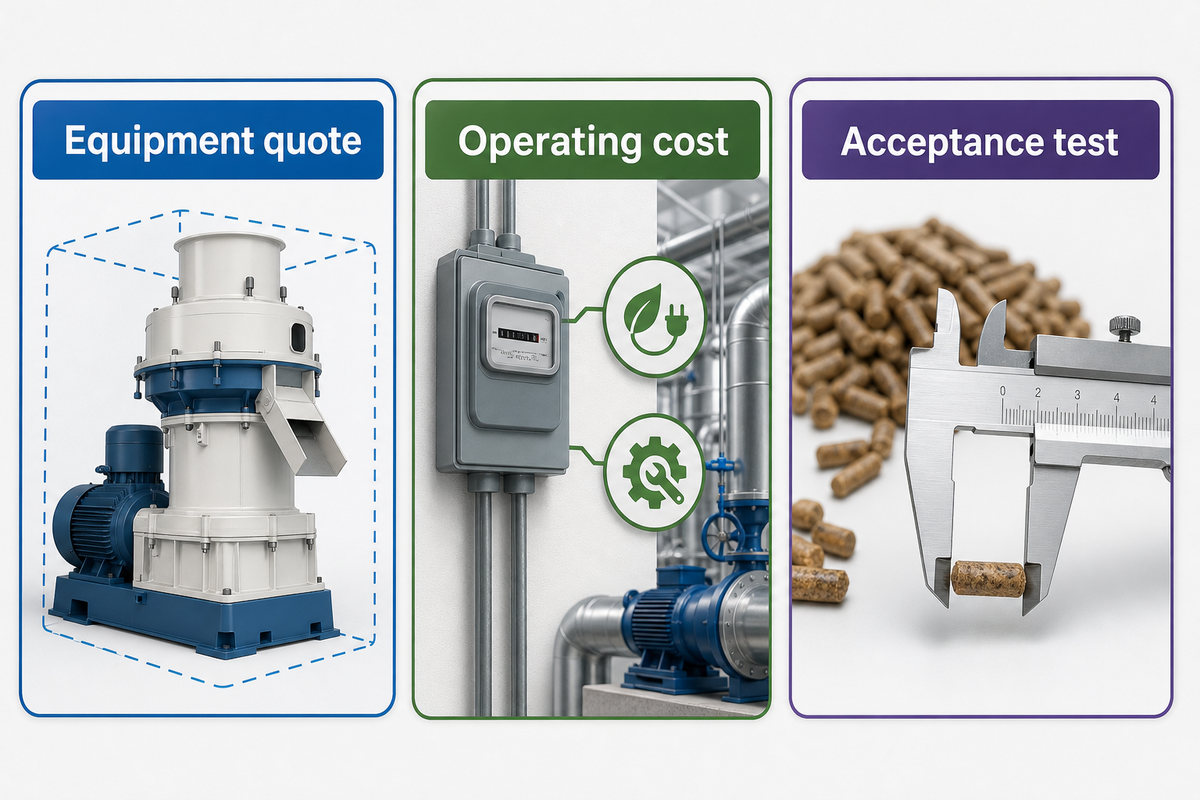
Published machine prices can help identify an initial budget range, but they rarely describe an installed poultry-feed system. TCPEL displays model-level information for its TCF range; use any displayed price as a starting quote and confirm the date and included equipment. Larger makers often require a project-specific quotation. Ask for two separate figures: the equipment price with a detailed bill of supply, and the delivered, installed, commissioned project cost at your site. Neither figure is useful without the responsibility and test boundaries.
When comparing cross-border offers, identify the delivery term and named place. Under FOB, for example, seller and buyer responsibilities change at the agreed shipping point; the quoted machine price does not itself cover freight, import charges, installation or a working plant. The U.S. International Trade Administration’s Incoterms guide explains why the chosen term belongs in the contract. The supplier should additionally disclose commissioning and start-up costs, spares, tooling and roller sets, utilities, electrical and civil works.
The operating cost should be evaluated based on cost per tonne of accepted feed and not only electricity per tonne of press discharge, for example. Other costs to be considered include steam and water where relevant, dies and rollers, maintenance, rejects and rework and planned downtime. If a maker claims lower energy, ask for the measurement boundary and a like-for-like trial. Factory acceptance can test the machine package before shipment; site acceptance verifies the complete installation under actual utilities and feed materials. Agree who supplies ingredients and measurement equipment at each stage. A useful final quote joins the specification, process flow diagram, utility schedule, spare-parts list, warranty scope and acceptance protocol into one signed set.
Compare operating cost over the machine lifecycle
Costs for Feed processing increase when a press uses more steam, creates more fines or requires more frequent die changes. A higher purchase price for high-quality machinery may be supported by measurable uptime, but that phrase alone doesn’t prove the result. Request an estimate for energy use per accepted tonne and clarify whether that includes the press, conditioner, cooler and conveyors. Also request expected wear part costs for lifecycle, and use the same assumed annual operating hours for each bid. A vendor should back up any claim of a design that will boost profitability by sharing the feed price, labor, and rejects and downtime assumptions that support the calculation.
There are other areas where similar looking offers may have essential differences. High temperature operation can help or harm the intended feed depending on the formula and process, so ask for the proposed time and temperature range rather than a generic heat claim. As such, requesting a range of time and temperature would likely be more beneficial than a claim of heat. The supplier should explain how a change to moisture or oil addition affects the ability to produce pellets with the agreed fines and durability. For a new line, require a technician to demonstrate the settings with the buyer’s operators and leave a record of the achieved feed quality. After-sales service should specify response time, training, replacement-part stock and the route for ordering an urgent die or roller.
Frequently Asked Questions
Who makes chicken feed pellet machines?
TCPEL, FAMSUN, RICHI, Zhengchang, ANDRITZ Feed & Biofuel, Bühler, CPM, Van Aarsen, Ottevanger and Yemmak all publish relevant chicken or poultry feed machinery or plant evidence. They serve different project sizes and supply boundaries. The first question is whether you need a named pellet press, a press with conditioning and cooling, or a complete feed plant. Match that answer to the company cards before treating the list as a purchase shortlist.
How much does a poultry feed pellet machine cost?
There’s no reliable single price for the category. Different equipment and services are provided in quotes for a standalone machine, a commercial ring-die press package, and a complete poultry-feed line. Published model prices are a starting point, but ask each supplier for a current, detailed quotation for the exact machine, dies, conditioner and spare parts, delivery term, and installation and commissioning. Be sure to evaluate total, installed, and running costs for the same expected annual output.
Which machine suits a small commercial poultry farm?
Begin with daily feed demand, available production hours and whether the farm already has mixed mash. TCPEL’s published TCF range includes smaller chicken-feed models, making it one candidate for that brief. The right model still depends on pellet size, ingredient formula, desired good-product rate and the need for cooling or crumbling. Ask for a trial on your mash and a written scope instead of choosing by the highest catalog kg/h figure.
What differs between a pellet mill and a complete production line?
The pellet mill forms prepared mash into pellets. A complete line can include ingredient receiving, grinding, batching, mixing, conditioning, cooling, screening, crumbling, coating and packing. Suppliers determine the meaning of “complete” line differently, so a process flow diagram and bill of supply are necessary. The difference in interpretations affects price, utility requirements, and acceptance tests and who’s responsible for the finished feed output.
Which companies document poultry installations?
Van Aarsen publishes the Interpec San Marcos poultry-feed project with two named CU900 Dynamic mills. Ottevanger documents the Rothkötter Boizenburg poultry-feed lines, including conditioning through coating; SALMATEC separately identifies presses at that site. A project reference is evidence of a company’s role at one installation, not a universal performance guarantee. Request a reference with a similar recipe, plant size and supply boundary to yours.
What proof should a buyer request from a manufacturer?
A dossier including the exact model datasheet, equipment and responsibility list, process flow diagram, utility schedule, relevant poultry reference, spare-parts plan and a trial report using your formula should be provided. Conduct a Factory or Site Acceptance Test on net good feed, fines, energy and run duration. For any certificate claim, verify the legal entity, certificate number, scope and validity. Keep claims from the maker, claims from a plant integrator and independent test evidence in separate columns.
Make the Shortlist Match the Feed, Not Just the Nameplate
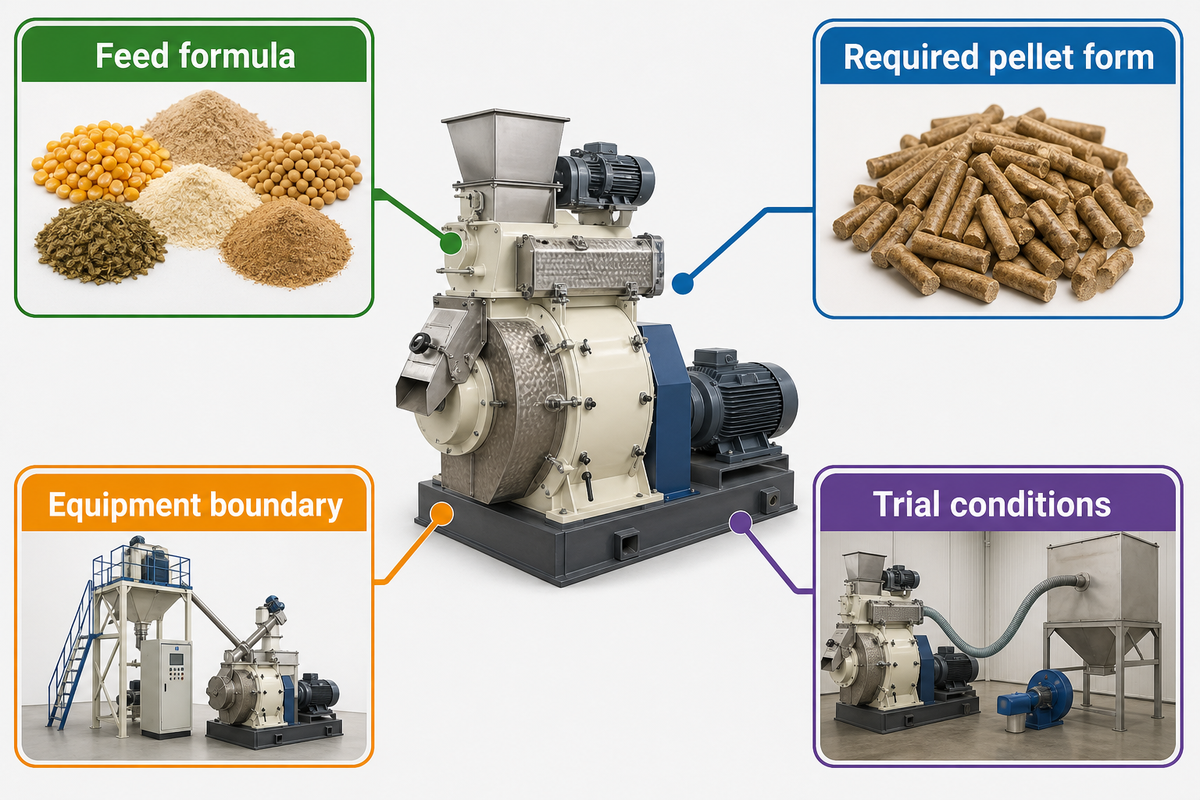
The most useful result of this comparison is a two- or three-supplier request that each vendor can answer on the same terms. State the chicken feed formula, feed stage, pellet diameter, planned hours, required net good-product rate, and where the supplier’s responsibility begins and ends. Ask each maker for a named model and a written trial protocol. Compare the evidence, spares and the project cost. This method gives a smaller buyer and an industrial plant different, defensible shortlists from the same ten manufacturers.
For a small-to-mid-capacity brief, review TCPEL’s chicken-feed model range and send the recipe and output target to the team. We can identify the candidate TCF model and clarify what the quoted package includes. You can also read about TCPEL and the company behind your quotation before requesting a proposal.
Request a chicken-feed machine quote
Source and review note: Company and product facts in the ten cards were cross-checked against the maker’s official About, product or project pages in October 2026. This comparison doesn’t reflect results of independent factory testing. Where a project cited in this comparison employs different machine manufacturers and plant integrators, their roles in the project are stated separately.
References & Sources
- U.S. International Trade Administration, Know Your Incoterms delivery-term and buyer/seller responsibility context for comparing cross-border quotations.