Get in Touch with TCPEL
Top Industrial Rotary Dryer Manufacturers: 10 Global Picks for 2026

By CYH · Last updated: October 2026
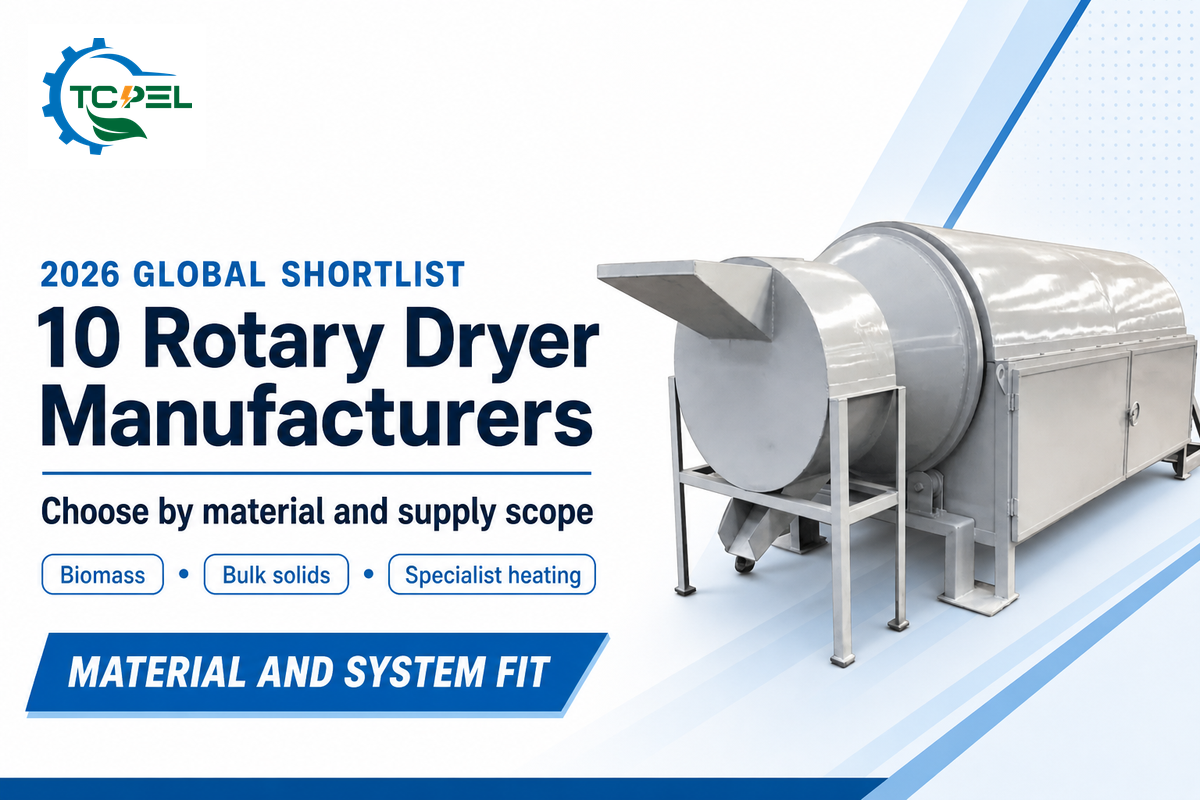
The top industrial rotary dryer manufacturers to shortlist include TCPEL for biomass pellet-line integration, ANDRITZ Vandenbroek for multi-pass biomass and alternative-fuel drying, FEECO for custom bulk-solids systems, and Louisville Dryer Company for specialist indirect heating. The ten companies below cover different materials and supply scopes, so the right choice starts with your process.
Quick Picks
- Best for biomass pellet-line integration: TCPEL.
- Best for multi-pass biomass and alternative fuels: ANDRITZ Vandenbroek.
- Best for direct-heat triple-pass dehydration: Baker-Rullman.
- Best for custom mineral and fertilizer drying: FEECO International.
- Best for specialist alloy and indirect-heating projects: Louisville Dryer Company.
Disclosure: This guide is published by TCPEL. We list ourselves first because this is our website, not because we claim to be the market leader. The other 9 manufacturers are grouped by what they’re best for, in no particular order within each group.
How We Selected These Industrial Rotary Dryer Manufacturers
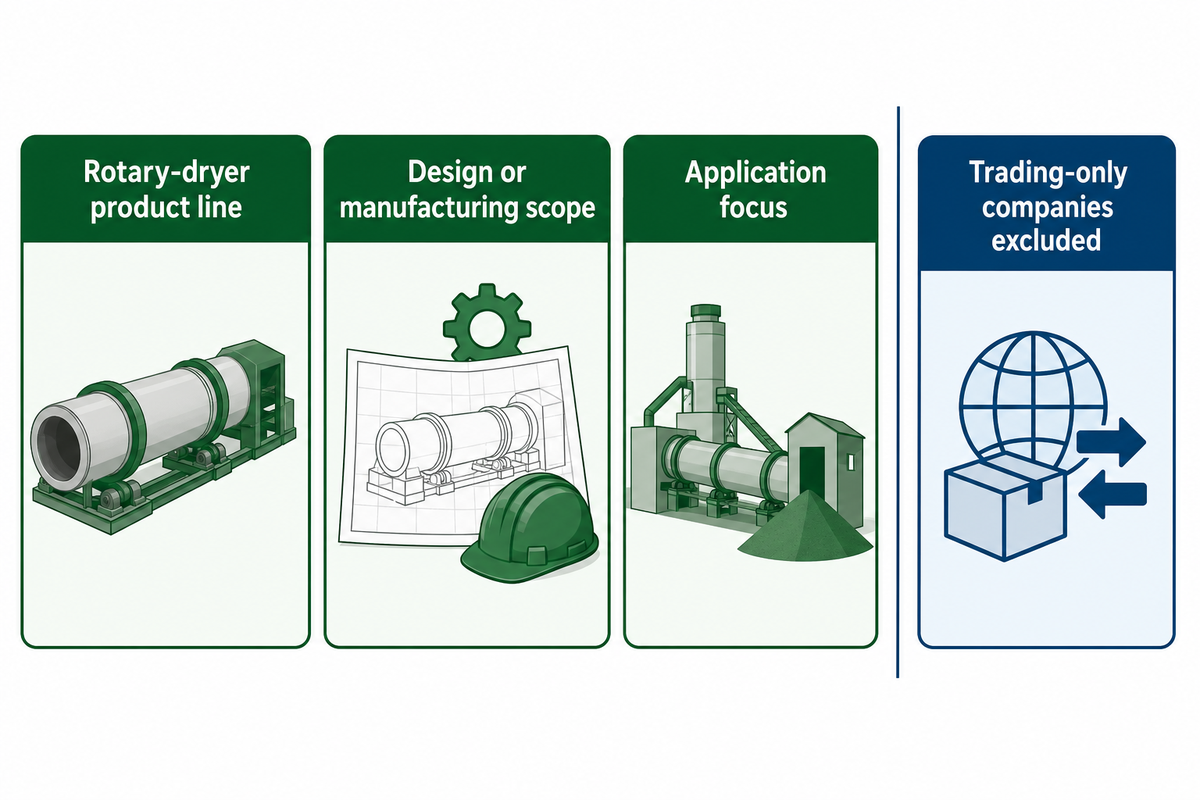
We identified manufacturers with a discernible rotary-dryer product line, explicit design or manufacturing descriptions, and sufficient company information to indicate application focus. Company information was verified against manufacturer’s official websites and public sources in October 2026. Trading-only companies, sourcing platforms, directories, component-only manufacturers, and companies without a rotary-drum offering were excluded.
The shortlist spans China, continental Europe and the United States. Several companies supply international projects, but a headquarters address doesn’t describe every factory, service office or export market. Each entry identifies the company or technology group being compared. ANDRITZ and its Vandenbroek technology are counted once; Büttner and the current Siempelkamp Energy & Drying Solutions business also occupy one place.
Three practical differences stand out: the material being dried, the means by which heat reaches the material, and the equipment surrounding the drum. One equipment manufacturer specializing in biomass and pellet systems, for example, would be a good fit for one project, while a supplier experienced in mineral-processing flowsheets could fit another. Comparisons like these are a lot more useful than comparing headline capacities.
Histories of the companies should also be consistent. A company with an 1800s founding date clearly has a long industrial history, but that date doesn’t indicate that the company’s current dryer design has operated since that founding date in the 1800s. The comparison is to distinguish a company’s or brand’s industrial heritage from the current operational identity. For companies whose founding year in the reviewed company pages wasn’t disclosed, the table states that explicitly rather than substituting an unrelated date.
This is a short list of ten manufacturers rather than a complete list of all qualified manufacturers. Other engineering firms may fit a given location or feedstock. The goal is to provide a buyer with a handful of trustworthy paths to initiate a technical discussion in the areas of integrated biomass equipment, direct-heat drying, heavy bulk-solids drying, and specialist thermal processing.
Industrial Rotary Dryer Manufacturers Compared
The Rotary Dryer Manufacturer Fit Map classifies companies by the purchasing problem that their published equipment solves. Consider the application and purchasing-boundary columns jointly. A compact triple-pass system and a large custom mineral dryer may both be industrial rotary dryers, but they’re usually not in the same purchasing category.
| No. | Company Name | Headquarters | Founded Year | Best For | Brief Introduction | Dryer Technology | Application | Key Advantages | Potential Disadvantages | Official Website |
|---|---|---|---|---|---|---|---|---|---|---|
| 1 | TCPEL | Jinan, China | 2020 | Integrated biomass pellet projects | Biomass and feed-pellet machinery manufacturer | TCG single-pass; TCSG triple-pass | Biomass and feed pellets | Fourteen models and pellet-line equipment | Direct-fired; indirect and steam-tube arrangements specified separately | https://tcpel.net/ |
| 2 | ANDRITZ Vandenbroek | Graz, Austria | 1852, group heritage | Biomass, RDF and alternative fuels | Global technology group | MPS multi-pass design | Biomass, MSW and RDF | More than 500 installations stated | 3–35 tons of water evaporation per hour | https://www.andritz.com/ |
| 3 | Baker-Rullman | Watertown, USA | 1980 | Direct-heat agricultural and biomass dehydration | Engineering, design and fabrication manufacturer | Triple-pass concentric cylinders | Agriculture, food waste, biomass | Drum and auxiliary-system supply | Process gases contact the material | https://baker-rullman.com/ |
| 4 | Büttner / Siempelkamp | Krefeld, Germany | 1874, brand heritage | Wood and pellet plants with heat integration | Complete-plant supplier for heat generation and drying | Direct drying; indirect tube-bundle systems | Wood and biomass pellets | Heat generation and drying integration | Direct and indirect options require utility matching | https://www.buettner-energy-dryer.com/ |
| 5 | FEECO International | Green Bay, USA | 1951 | Minerals, fertilizers, biosolids and chemicals | Family-run industrial process-equipment manufacturer | Direct and indirect rotary drum dryers | Minerals, fertilizer, biosolids | Material-specific design and process controls | Engineering-led rather than catalogue selection | https://feeco.com/ |
| 6 | Allgaier Process Technology | Uhingen, Germany | Not publicly disclosed | Abrasive solids and combined processing | Industrial process-technology manufacturer | Mozer single-shell, double-shell and triple-shell drum dryers | Minerals, recycling and sand | Drying with cooling or cleaning | Delicate products may need another technology | https://www.allgaier-process-technology.com/ |
| 7 | Metso | Espoo, Finland | Not publicly disclosed | Integrated mineral and aggregate plants | Minerals-processing and metals-refining technology company | Rotary dryers and coolers | Minerals, aggregates and metals | Controls, dust collection and handling scope | Hot gas stream mixes with the product | https://www.metso.com/ |
| 8 | FLS | Copenhagen, Denmark | 1882, company heritage | Large mineral and ore flowsheets | Full-flowsheet technology and service supplier to the mining industry | FT-series dryers; flue gas recirculation | Minerals and ores | Standalone or mill-integrated arrangements | Mineral-project focus rather than standard pellet packages | https://fls.com/ |
| 9 | Louisville Dryer Company | Louisville, USA | Not publicly disclosed | Alloy construction and specialist indirect heating | Custom industrial rotary-dryer manufacturer | Custom alloy construction; steam-tube and indirect heat | Specialist bulk solids | Custom materials and fabrication controls | Application engineering precedes equipment selection | https://louisvilledryer.com/ |
| 10 | Heyl Patterson Thermal Processing | Carnegie, USA | 1874, brand heritage | Test-led complex thermal processing | Thermal-processing equipment manufacturer and CPEG subsidiary | Direct, indirect and waste-heat firing | Sludge, chemicals and biomass | Pilot-scale testing and flight design | Representative-material testing adds a design step | https://www.hpprocess.com/ |
Dates describe the company or brand history stated in official sources. ANDRITZ’s 1852 group history is separate from Vandenbroek’s MPS history since 1948. Büttner’s 1874 heritage belongs to the brand now presented through Siempelkamp Energy & Drying Solutions. Heyl Patterson’s 1874 heritage is separate from CPEG’s creation in 2016.
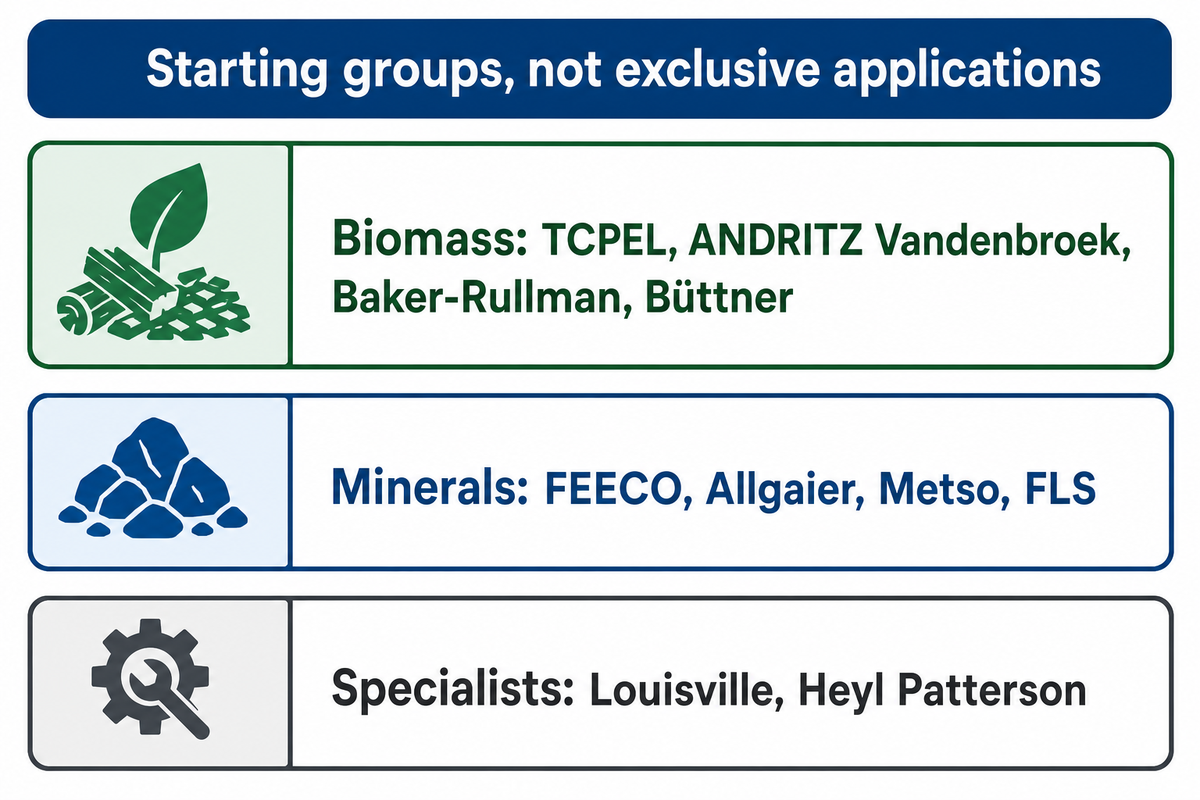
Start a biomass shortlist with TCPEL, ANDRITZ Vandenbroek, Baker-Rullman and Büttner. For mineral or fertilizer drying, compare FEECO, Allgaier, Metso and FLS. Louisville and Heyl Patterson provide additional routes when indirect heating, material construction or pilot testing defines the project. Several manufacturers cross these boundaries, so the groups describe a useful starting point rather than exclusive application rights.
The main technology label should never be in lieu of a process description. Triple-pass describes the material flow while direct and indirect describe heat flow. As such, one dryer can be both triple-pass and direct heated. Likewise, a manufacturer of a rotary kiln can also be a dryer manufacturer, but a kiln’s reaction duty isn’t the same as removing process moisture. Different equipment can’t be lumped together and used in the early shortlisting process.
Rotary Drum Dryers for Biomass and Pellet-Line Projects
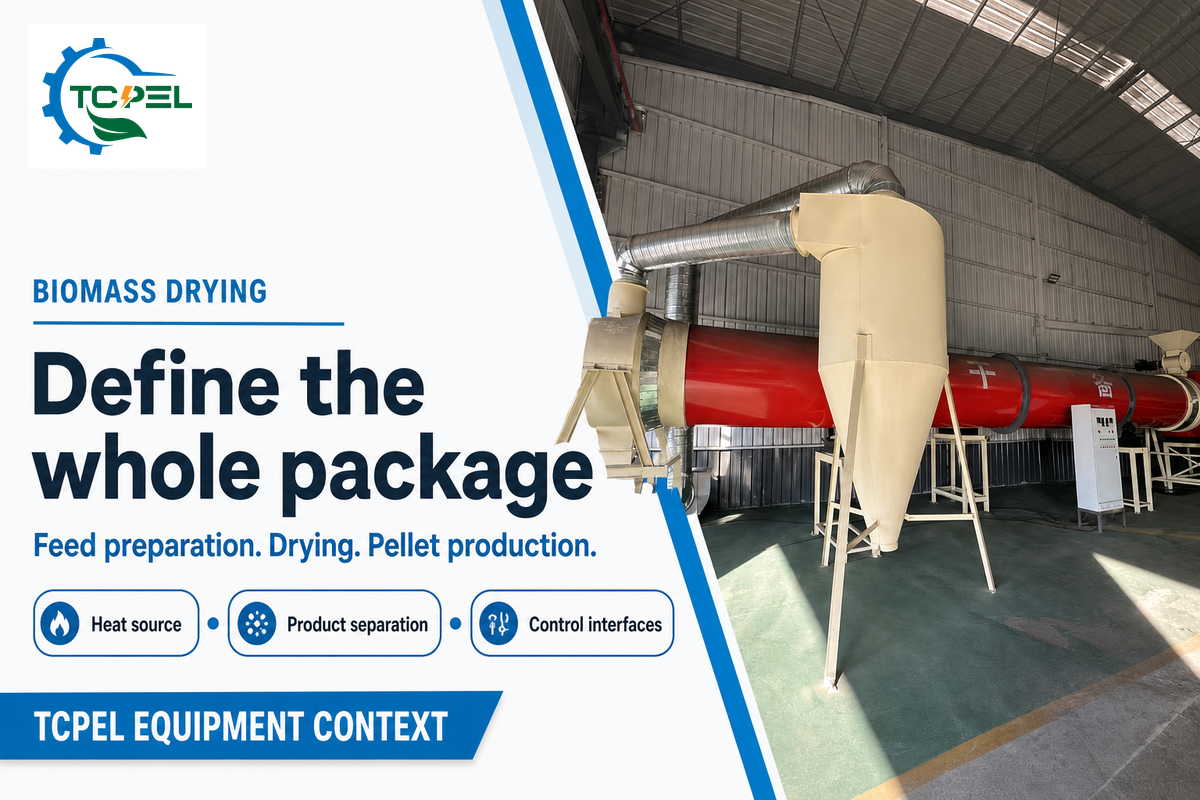
Biomass projects need a dryer that fits the upstream feed preparation and the downstream pellet or fuel specification. TCPEL, ANDRITZ Vandenbroek, Baker-Rullman and Büttner each publish equipment for this broad application area. Their differences include pass arrangement, heat integration, auxiliary equipment and the scale of the surrounding plant.
1. TCPEL: Best for integrated biomass pellet-line projects
Headquarters: Zhangqiu, Jinan, Shandong, China · Founded: 2020 · Type: Biomass and feed-pellet machinery manufacturer, operated by ALLWIN INTERNATIONAL CO., LTD.
Official website: https://tcpel.net/
Main products: TCG single-pass and TCSG triple-pass industrial rotary dryers, pellet mills, chippers, hammer mills, coolers and complete pellet lines.
Capabilities / notable work: Its industrial-dryer page lists 14 TCG and TCSG models, lifting flights, hot-air integration, heat-source options and cyclone or dust-collector arrangements; the page also states CE certification and ISO 9001:2015.
TCPEL suits buyers who want the dryer discussed alongside pellet-line machinery rather than purchased as an isolated drum. Separate TCG and TCSG tables make the single-pass versus triple-pass conversation concrete, with published motor and fan information to support layout and utility planning. The broader machinery range provides a route to discussing interfaces between feed preparation, drying and pellet production. The listed TCG and TCSG configurations use direct-fired gas contact; material requiring separation from combustion gases needs a separately specified indirect or steam-tube arrangement.
2. ANDRITZ Vandenbroek: Best for multi-pass biomass and alternative-fuel drying
Headquarters: Graz, Austria, ANDRITZ Group · Founded: 1852 group heritage; Vandenbroek MPS history since 1948 · Type: Global technology group and multi-pass drying technology supplier.
Official website: https://www.andritz.com/
Main products: Vandenbroek MPS multi-pass drum dryers for biomass, agricultural materials, municipal solid waste and refuse-derived fuel.
Capabilities / notable work: According to its website, more than 500 MPS dryers have been installed since 1948; the published range includes 3–35 tons of water evaporation per hour.
ANDRITZ presents controlled outlet moisture and flexible drying time as features of the MPS arrangement. That combination makes it a useful candidate for projects where alternative-fuel preparation sits within a larger processing plant and service organisation. A published Spanish alfalfa reference describes 15 tons of dry product per hour, which is a specific installation example rather than the definition of the whole product range. The published MPS range is 3–35 tons of water evaporation per hour, making the required evaporation duty an initial screen for this product range.
3. Baker-Rullman: Best for direct-heat triple-pass dehydration
Headquarters: Watertown, Wisconsin, USA · Founded: 1980 · Type: Engineering, design and fabrication manufacturer.
Official website: https://baker-rullman.com/
Main products: Triple-pass rotary drum dryers, dehydration systems, modular steel bins, hoppers and supporting steelwork.
Capabilities / notable work: Three interlocked concentric cylinders establish the triple-pass path; its website reports hundreds of dehydration systems operating in more than 50 countries and almost every US state.
Baker-Rullman’s offer extends beyond the drum to burners, furnaces, cyclones, fans, ductwork, conveyors and airlocks. For a buyer assembling agricultural, food-waste or biomass dehydration equipment, that scope puts several process interfaces into one engineering discussion. The company describes flights that shower wet material through concurrent hot gases, with the concentric-cylinder arrangement providing the material path. Direct gas contact is the relevant buying boundary: a product that can’t contact combustion gases needs a different heating arrangement, rather than an assumption that every triple-pass dehydration system is suitable.
4. Büttner / Siempelkamp: Best for wood drying with heat integration
Headquarters: Krefeld, Germany · Founded: Büttner brand heritage dates to 1874 · Type: Industrial energy and drying systems business, now Siempelkamp Energy & Drying Solutions GmbH.
Official website: https://www.buettner-energy-dryer.com/
Main products: Directly heated drum dryers, indirectly heated tube-bundle systems, heat-generation equipment and exhaust-air cleaning systems.
Capabilities / notable work: Siempelkamp reported an order for four directly heated 4.2 × 24 R drum dryers for Highland Pellets in Pine Bluff, Arkansas, replacing eight dryers that hadn’t achieved the planned capacity.
Büttner’s range brings heat generation into the dryer discussion, including multi-fuel burners and the use of flue or exhaust gases. Its indirect offer uses steam, hot water or thermal oil, which gives a wood-processing plant a different route when existing utilities shape the project. The Highland Pellets reference provides a concrete example of the brand’s pellet-sector work without establishing a universal replacement ratio. Direct and indirect heating are distinct system choices: the available heat source and the required gas-to-material separation determine which arrangement belongs in the quotation.
For biomass procurement, compare the package boundary before comparing the shell dimensions. Feed preparation may sit in a separate contract, while the dryer vendor may or may not include the furnace, product separation and exhaust equipment. A complete pellet-line discussion should also identify who controls the feed rate entering the dryer and who accepts the dried material at discharge. Those interfaces affect how the equipment is commissioned and how a moisture complaint is investigated.
Pass count is one part of that discussion. A triple-pass layout routes material through concentric sections, whereas a single-pass design uses one principal drum path. Neither description, by itself, establishes lower fuel consumption, better product quality or the correct residence time for every feedstock. Use the manufacturer’s proposed material and heat balance to compare the offered designs on the same inlet and outlet conditions.
Custom Rotary Drying Systems for Minerals and Bulk Solids
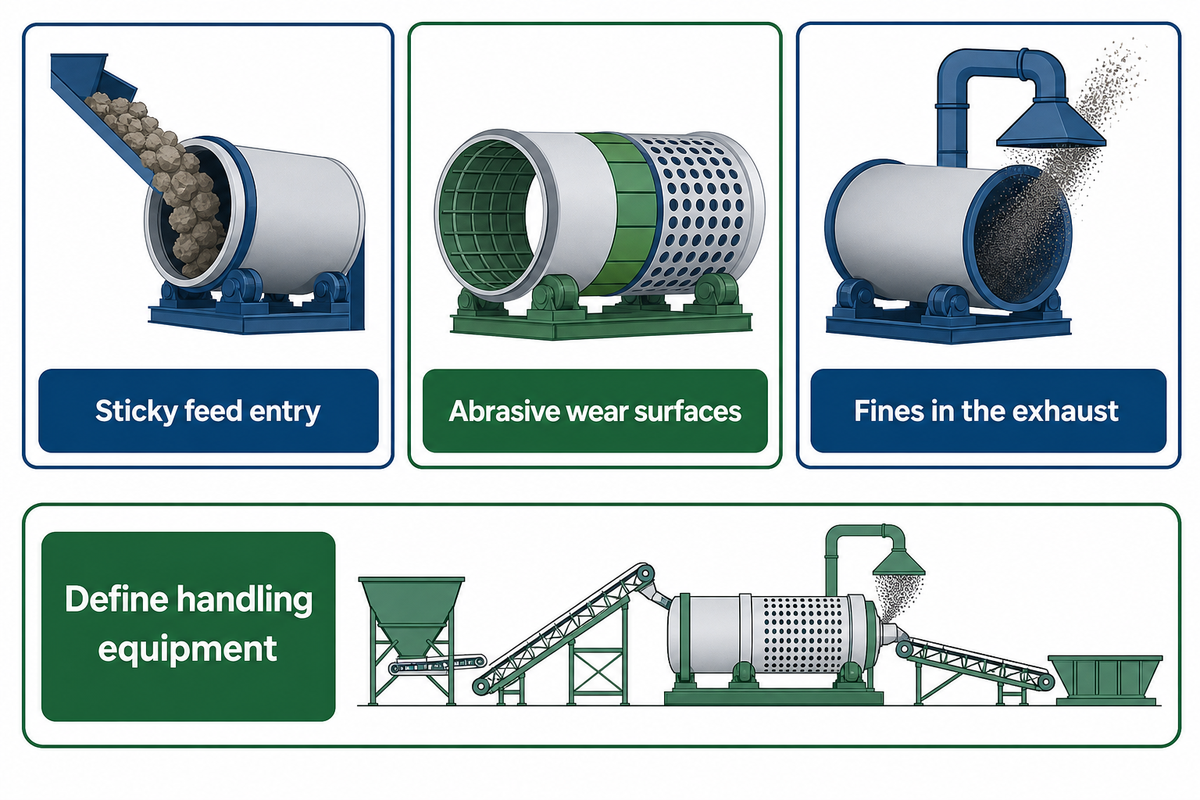
Minerals and bulk solids place different demands on dryer construction and process integration. FEECO, Allgaier, Metso and FLS publish rotary drying equipment for these applications, with choices covering abrasion, combined processing, gas handling and larger plant flowsheets. Their offers make the material specification a central part of the selection.
5. FEECO International: Best for custom mineral and fertilizer drying systems
Headquarters: Green Bay, Wisconsin, USA · Founded: 1951 company heritage · Type: Family-run custom process-equipment manufacturer.
Official website: https://feeco.com/
Main products: Direct and indirect rotary drum dryers, complete drying systems and supporting bulk-solids equipment.
Capabilities / notable work: Co-current or counter-current designs, custom flights and residence times, with Rockwell Automation controls available for monitoring feed rate, fuel use, gas sampling, pressures and temperatures; FEECO states it can meet requirements necessary for CE marking equipment.
FEECO offers a material-specific route for minerals, fertilizers, biosolids and chemicals. Process monitoring is a useful part of its published scope because it gives operators a way to trend operating conditions instead of judging performance only from the final moisture reading. The manufacturer’s sizing table carries a granular-fertilizer basis of 60 lb/ft³ and up to 10% moisture removal, so those figures belong to that stated basis. Custom engineering precedes equipment selection; a catalogue dimension or fertilizer-based table shouldn’t be treated as a ready-made rating for unrelated biomass or mineral feeds.
6. Allgaier Process Technology: Best for abrasive solids and combined processing
Headquarters: Uhingen, Germany · Founded: Not publicly disclosed · Type: Process-technology manufacturer within STAFAG International GmbH, SIEBTECHNIK TEMA Group.
Official website: https://www.allgaier-process-technology.com/
Main products: Mozer single-shell, double-shell and triple-shell drum dryers, combined drying/cooling systems and drying/cleaning equipment.
Capabilities / notable work: Wear-resistant linings and two- or three-pass arrangements; its Dry Cleaning Drum RTT combines recycled-glass drying and cleaning while removing labels and organic residues.
Allgaier is a useful shortlist entry when drying must share a machine with another processing task. The published Mozer range covers minerals, sand, slag, ore, coal and fertilizers, while the recycled-glass reference shows why the combined-processing option matters to some recycling plants. Double-shell arrangements can combine drying and cooling, which changes the downstream equipment discussion. Allgaier also identifies a clear product boundary: mechanical lifting and direct burner or combustion-gas contact can adversely affect delicate or temperature-sensitive material, so those products may call for another technology.
7. Metso: Best for dryer and cooler integration in mineral plants
Headquarters: Espoo, Finland · Founded: Not publicly disclosed · Type: Minerals-processing and metals-refining technology company.
Official website: https://www.metso.com/
Main products: Rotary dryers and coolers, with associated mineral-processing equipment and plant services.
Capabilities / notable work: Specially designed lifters and low gas velocity address particulate carryover; complete-system scope can include PLC controls, dust collection, conveying, exhaust handling, heat exchange and fuel delivery.
Metso’s published offer is relevant to buyers who need the dryer connected to a broader mineral or aggregate process. A plant-level equipment discussion can include the solids path and the exhaust path alongside the rotating shell, which helps define responsibility for interfaces. Its website lists ISO 9001, ISO 14001 and ISO 45001 certification for key units, describing management systems rather than a product certificate for every dryer. The published rotary arrangement mixes the product with the process-gas stream, so a duty requiring gas–material separation needs a different heat-transfer arrangement.
8. FLS: Best for large mineral and ore drying flowsheets
Headquarters: Copenhagen, Denmark · Founded: 1882 company heritage · Type: Mining technology and service supplier, FLSmidth & Co. A/S.
Official website: https://fls.com/
Main products: FT-series rotary dryers, pyroprocessing equipment and mining flowsheet technology.
Capabilities / notable work: Standard dryer diameters from 3 m to 6 m, application-specific internals, standalone or mill-integrated systems, and flue gas recirculation; its published heat-system options include hydrogen firing.
FLS belongs on a mineral-processing shortlist when dryer duty has to fit the surrounding mining flowsheet. Flue gas recirculation provides a route to reusing heat, while the standalone and mill-integrated options create different equipment boundaries for the same project team to compare. The official product page describes fuel flexibility as a system option rather than an automatic feature of every installation. Its FT-series offer centres on mineral and ore projects, so a buyer seeking a standard biomass pellet-line package should start with a different application group.
Bulk-solids projects benefit from a clear distinction between drying duty and material handling duty. Removing water doesn’t establish how a sticky feed enters the equipment, how abrasive particles affect selected wear surfaces, or how fines leave with the exhaust stream. A dryer offer that names the feed conditions and the supplied handling equipment is easier to compare than one that gives only a drum size and installed motor power.
Combined processing also changes the comparison. Allgaier’s drying-and-cleaning glass equipment solves a different task from a standalone sand dryer. Metso’s dryer/cooler scope and FLS’s mill integration likewise move the boundary beyond one thermal machine. The buyer should decide whether the project needs a separate dry-product discharge, a cooled product, or a directly connected downstream process before requesting otherwise similar-looking quotations.
Indirect Rotary Dryers and Specialist Thermal Processing
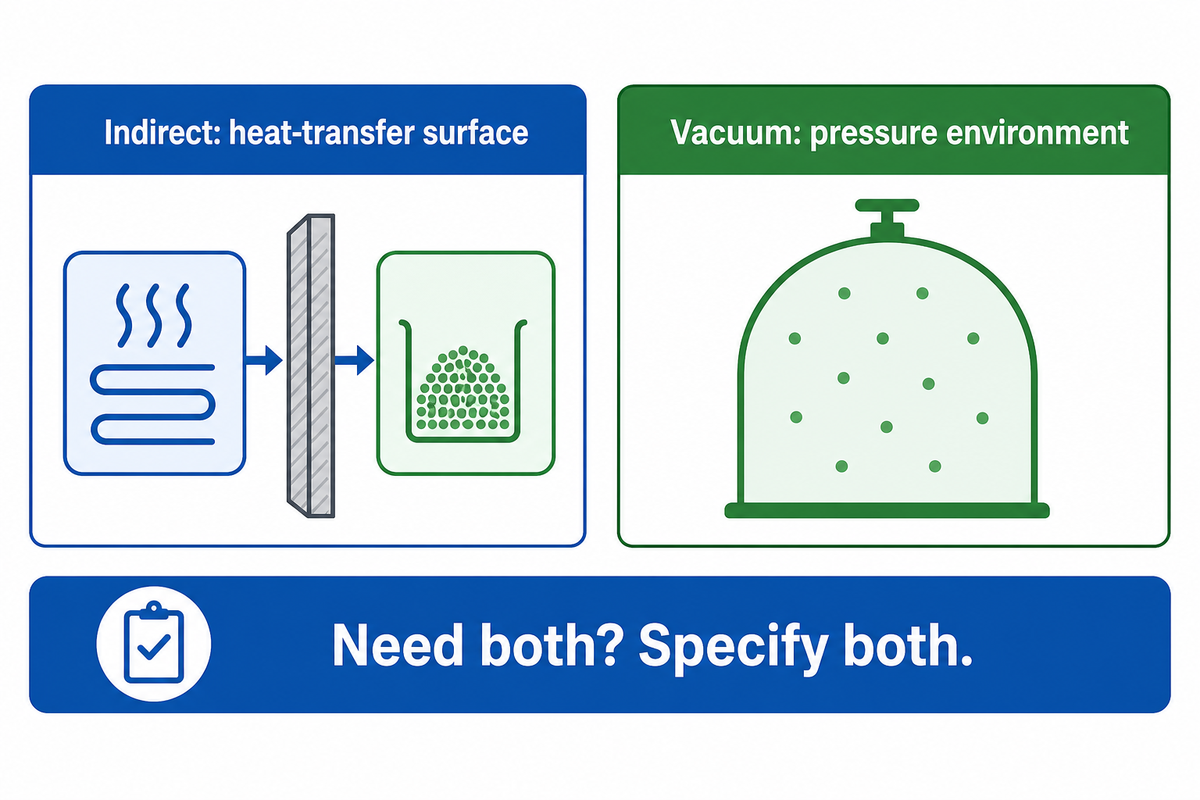
Specialist rotary drying starts with the required heat-transfer arrangement and construction materials. Louisville Dryer Company and Heyl Patterson publish options for direct, indirect and application-specific thermal processing. These manufacturers are useful candidates when ordinary hot-gas contact, standard shell materials or a simple catalogue selection don’t fit the process.
9. Louisville Dryer Company: Best for specialist alloy and indirect-heating projects
Headquarters: Louisville, Kentucky, USA · Founded: Not publicly disclosed · Type: Custom industrial rotary-dryer manufacturer with in-house testing and fabrication.
Official website: https://louisvilledryer.com/
Main products: Custom direct and indirect rotary dryers, steam-tube dryers, coolers and related thermal-processing equipment.
Capabilities / notable work: Carbon steel, stainless steel and alloy construction; its manufacturing page describes written quality plans, non-destructive testing of shell welds and 100% Positive Material Identification for high-carbon/nickel alloys.
Louisville’s offer suits projects where temperature, pressure conditions or corrosion requirements influence construction. Scaled dryer testing provides a route to developing the process before committing to the final unit, while the fabrication information gives a buyer specific quality-control topics to discuss. According to its website, facility authorisations include ASME and National Board scopes S, U and R, covering the stated boiler, pressure-vessel and repair activities. The procurement boundary is the custom development route: material and duty information must precede the final design rather than being added after a standard machine has already been selected.
10. Heyl Patterson Thermal Processing: Best for test-led complex bulk-solids drying
Headquarters: Carnegie, Pennsylvania, USA · Founded: 1874 brand heritage · Type: Thermal-processing equipment manufacturer and subsidiary of CPEG, created in 2016 as an employee-owned company.
Official website: https://www.hpprocess.com/
Main products: Rotary dryers and coolers using direct firing, indirect steam heating or waste heat for minerals, biomass, fertilizers, sludge and chemicals.
Capabilities / notable work: Material-specific lifting flights and retention-time design; CPEG’s test lab is described as a 15,000-square-foot pilot-scale facility for multistep and multistage testing.
Heyl Patterson gives buyers a test-led route when the material behaviour needs to be established before final equipment selection. Published firing options include natural gas, LPG, fuel oil and coal, alongside indirect and waste-heat arrangements. The range allows the thermal discussion to start with the available plant energy source and the material’s response to processing. Application-specific flight development and pilot testing add a representative-material testing step to the buying process, so that work belongs in the project plan before the final dryer configuration is agreed.
An indirect rotary dryer and a rotary vacuum dryer shouldn’t be treated as interchangeable labels. Indirect heating separates the heating medium from the material through a heat-transfer surface; vacuum operation describes the pressure environment. A project requiring both needs an explicitly offered configuration. The manufacturers in this guide are compared for their documented rotary-drum capabilities, rather than assuming that every business supplies every form of thermal equipment.
Specialist construction deserves the same precision. Stainless steel is a material family, not a complete corrosion specification. The proposed alloy, contact surfaces and fabrication scope should match the material and operating conditions. Published manufacturing quality controls are useful starting points for a technical conversation, but their scope must remain attached to the actual company, facility and equipment being ordered.
How to Choose an Industrial Rotary Dryer Manufacturer
Choose the manufacturer by considering the material, moisture duty and scope of the supply before looking at prices. A relevant query gives every shortlisted manufacturer the same feed specification and describes surrounding equipment. The following eight steps help turn a long manufacturer list into a set of comparable offers.
Define the material that will actually enter the dryer
Start with the feed to the process, not the saleable product. Sawdust can be lumpy and have small fragments of other materials. A mineral feed can have fines that can be abrasive. Give the expected range and the operating conditions, and define which of the conditions the performance quoted covers.
Mention important properties for drying and conveying, e.g., particle size distribution, bulk density, moisture content, stickiness, abrasiveness and temperature limitations. Describe any seasonal or other variations that may occur with the feed within a production line. A lab sample can be used to support testing, but it must be representative of the feed envelope that the project expects to process.
Feed names should be specific enough to distinguish different industrial applications. River sand and a fine sand dryer enquiry involve different preparation questions from a sludge dryer project. Coal slime has another feed character again: a coal slime dryer or raw coal dryer enquiry should identify the actual material rather than assuming that all coal drying equipment processes the same feed. These descriptions help an engineering team establish whether its rotary equipment belongs on the shortlist.
Dryer terminology also separates technologies. A fluidized bed suspends particles in a gas stream; a disc dryer uses a different contact and heat-transfer arrangement from a rotating drum. Neither belongs in a rotary comparison merely because it removes moisture. Ask the supplier to identify the proposed technology when reviewing drying machine equipment for a new process.
Put every capacity on the same moisture basis
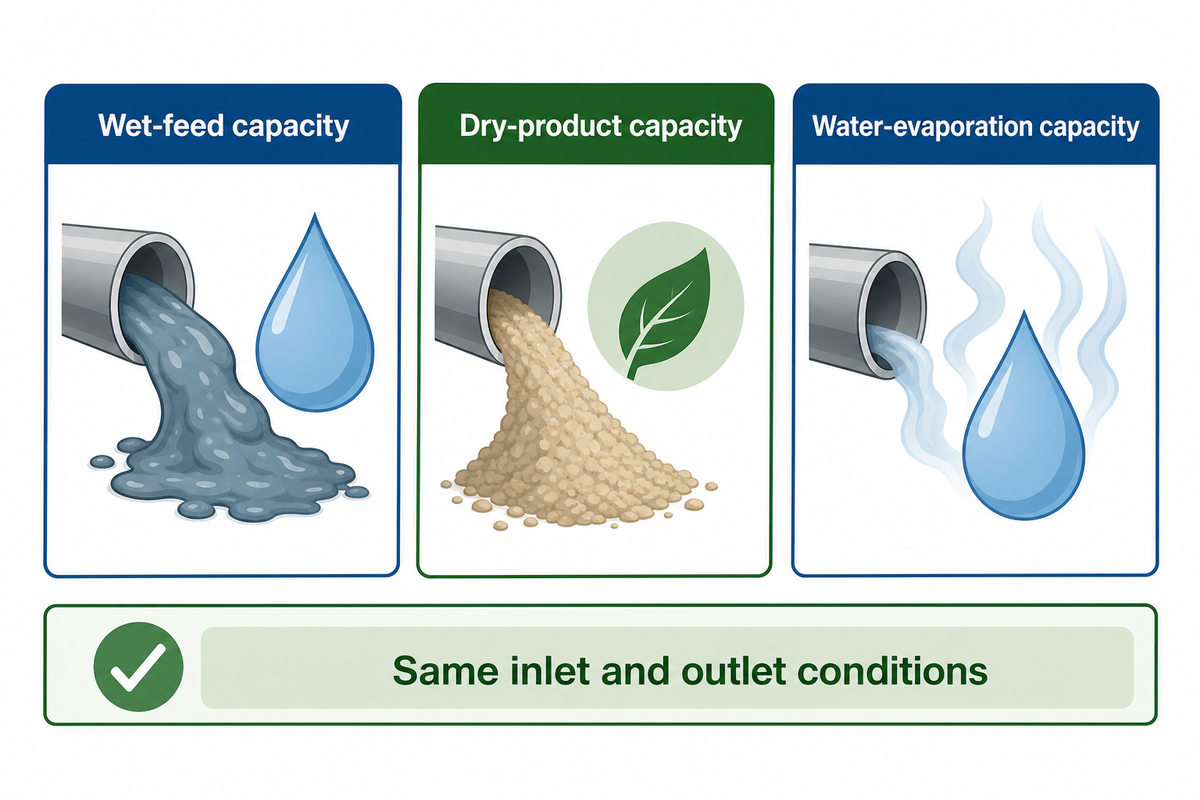
When quoting wet-feed capacity, dry-product capacity or water-evaporation capacity, all three quantities may be indicated with the same t/h notation. Quotes should stipulate whether moisture is reported on a wet or dry basis and tie the capacity figures to the proposed inlet and outlet conditions.
That distinction matters throughout this shortlist. ANDRITZ publishes an MPS evaporation range and a separate dry-product reference. FEECO attaches a stated granular-fertilizer basis to its sizing information. TCPEL’s public model page contains capacity labels that need resolution in project sizing. Comparing the largest number from each page would discard the conditions that make those numbers meaningful.
When citing a design to process a normal (average) feed, the impact on the equipment at the extremes of the feed range should be indicated. The manufacturer and customer must agree to a definition of the outlet product, sampling point and performance criteria prior to the commencement of commercial negotiations.
Select heat transfer before selecting pass count
There are two principal heating arrangements for the material. The first is direct heating in which the hot gas comes directly in contact with the material being heated. Indirect heating is accomplished by conveying heat through a surface, for example by means of a tube or other surface. The required separation should be explained at the beginning of an inquiry so that a manufacturer can design the correct heat arrangement.
Single-pass and triple-pass describe the material path through the drum. They don’t establish an automatic efficiency winner. Compare the proposed retention time, gas arrangement, access and cleaning provisions for the actual material. TCPEL’s single-pass versus triple-pass rotary dryer configuration tool can help organise the initial discussion, while the final selection should follow the proposed process duty.
Draw the supply boundary around the whole drying system
Identify the required feed equipment, heat source, furnace or combustion chamber, dryer, discharge equipment, product separation, dust collection, fans, ductwork, controls, and other equipment. The boundary should show what’s included, what’s provided by others, and interconnections. Differing purchases could be a low drum-only price and a complete, turn-key, installed system price.
For the machinery to process biomass, interfaces to size reduction and pellet production machinery need to be included. For mineral processing plants, the scope may need to include a mill, cooler, or a more complete material processing line. Utility connections and control signals should be included as well. The goal is to propose a package that will have a defined and integrated place in the new plant, rather than to quote a number of unrelated, and possibly irresolvable, interconnections, among a group of machinery.
Use controls and product quality as comparison topics
Ask how the proposed system measures the operating conditions needed to control drying. Feed rate, gas temperatures, pressure and fuel use are useful topics because a final moisture result alone doesn’t explain why performance changed. FEECO’s published Rockwell Automation options illustrate the kind of process monitoring that can form part of a custom offer.
Agree on the elements of the product quality criteria that are applicable to the downstream process. Moisture content is very important, but other considerations may include type of particle damage, temperature at discharge and fines carryover, depending on the feed in question. Don’t accept an undefined promise of effective drying. Describe the product state and condition that’s measurable and explain how it relates to the equipment and tests proposed.
Check certificates against the ordered scope
Request the current documents for the legal entity, manufacturing location and equipment scope in the offer. ISO 9001:2015 concerns a quality-management system; it does not provide a universal product-performance guarantee. A CE statement also needs to correspond to the equipment and documentation supplied for the project.
The company cards preserve these distinctions. TCPEL’s dryer page states CE and ISO 9001:2015; FEECO describes the ability to meet requirements for CE marking; Metso lists management-system certification for key units; Louisville describes particular ASME and National Board authorisations. None of those statements should be transferred to another manufacturer’s machine or expanded beyond the stated scope.
Make testing part of the schedule when the application needs it
Testing is especially useful when material behaviour drives the final design. Louisville and Heyl Patterson describe test facilities, while custom equipment suppliers may use application data to establish flights, residence time and construction. Identify the required sample, the test objective and the decision that follows the results.
A test program should address a buying concern. It could verify if the material can be conveyed and dried as proposed, or assist in defining the final process equipment arrangement. Program tests to evaluate critical process requirements and equipment performance in an early stage of the project. If testing is left for the end, the process equipment specification may be undefined when a commercial decision is made.
Equipment manufacturing and engineering design are related responsibilities, but the offer should identify who performs each one. A customized dryer may be designed by one business and fabricated by another. Buyers comparing rotary dryer manufacturers in China with overseas alternatives should follow that responsibility chain through the actual offer, including manufacturing and sales, rather than inferring it from the office address.
The same distinction applies to an import and export business or trading company. Sales of drying equipment can form part of its offer, but the contracting party should name the equipment manufacturer and the party responsible for service. An equipment company handling mechanical and electrical equipment may coordinate a useful package; the buyer still needs the design and manufacturing responsibilities in writing.
Plant installation can involve specialized equipment repair and separate construction engineering design work. Identify those services in the package instead of assuming that an industrial equipment quotation includes them. Foundation design and installation interfaces should be assigned before delivery, especially when machinery equipment connects to an existing production line.
Application references should match the proposed process. Food processing, metal products and specialized machinery for agriculture cover very different duties, even when the same group sells equipment across those sectors. Research and development experience becomes useful to the buyer when it supports a particular test plan or material-specific design, rather than appearing only as a general company description.
Specialized equipment for agricultural processing should be assessed against the actual feed and required final product. A reference from one agricultural material is useful context, but the offer must still describe how the proposed dryer handles the material entering this plant.
Compare service and the commercial package on an equal basis
Define the documents and equipment spares provided for the process equipment and identify the training and commissioning support provided. Who will attend the start-up of the process equipment, and what tasks will the buyer perform locally? These concerns pertain to the purchase of equipment and systems and answers become clearer when proposals are made in an offer.
For preliminary sizing, TCPEL’s industrial rotary dryer sizing calculator helps structure the moisture-duty inputs. Bring the same inputs to every shortlisted manufacturer. The tool provides a starting point for enquiry preparation; the manufacturer’s material and energy balance establishes the quoted design duty.
What is the price range for rotary dryers offered by manufacturers?
The manufacturers evaluated in this review don’t give project-ready prices for the 10 systems covered in this guide. To compare prices, a uniform scope must be specified; i.e. feed condition, evaporation duty, heat source, drum construction, auxiliary equipment and service requirements. A drum-only price can’t be considered the price of the complete drying installation.
In a comparison of prices, the cost of installation and interfacing the plant with other equipment must be included. A package offer may include the burner and/or dust collector, but the price may not include the concrete foundations, local duct connections or field installation. The scope of the other offer may include more engineering and controls, and process equipment. The purchaser can’t evaluate a price difference until he defines the scope of the other offer.
Fuel use should also be compared at the same material duty. A lower quoted operating figure is useful only when its feed moisture and final moisture match the competing offer and the heat source is also the same. Ask for the basis of the consumption estimate and the guarantees for the committed performance. That provides a process perspective for the cost discussion without relying on unrelated prices for machines.
What is the minimum order quantity for a rotary dryer?
In this review, the official pages evaluated for this shortlist didn’t set a common minimum order quantity. For a project-scale dryer enquiry, state the number of drying lines and indicate if it’s for a new installation, a replacement or an expansion of the existing plant. The manufacturer then can quote the equipment and engineering scope for the requirement.
The requested information covers more than just unit quantities. A single unit drying line may need additional equipment, controls and commissioning work. On the other hand, a multi-unit drying plant may use common utilities and handling equipment. Defining the complete requirement results in a more useful response than requesting the minimum order quantity.
Frequently Asked Questions
Which rotary dryer manufacturers are best for biomass pellet plants?
TCPEL is a useful first option for an integrated biomass pellet line; ANDRITZ Vandenbroek, Baker-Rullman and Büttner also publish biomass drying capabilities. TCPEL combines TCG and TCSG dryers with pellet machinery, while the other three bring different multi-pass, dehydration or energy-system approaches. Choose the application group first, then compare the actual material duty and supplied equipment. The same supplier won’t be the best fit for every feedstock or plant boundary.
Who is the largest industrial rotary dryer manufacturer in the world?
A single largest manufacturer can’t be established from comparable rotary-dryer sales or installation data in the reviewed sources. ANDRITZ, Metso and FLS are large industrial technology businesses, but total company size doesn’t measure rotary-dryer market share. ANDRITZ’s stated figure of more than 500 MPS installations describes one technology history. Use the shortlist to compare application capability rather than treating a group revenue figure or an unqualified online ranking as proof of dryer leadership.
What is the difference between a rotary dryer manufacturer and a supplier?
A manufacturer constructs the drying equipment, and a supplier may be a trading company, distributor or integrator. Both can participate in a project, but the client should know who owns the design and who’s responsible for fabrication, performance and service. This guide focuses on businesses with a documented rotary-dryer manufacturing or engineering capability. Determining the contracting entity and equipment scope allows the buyer to better understand and evaluate the offers, and each of the technical questions has an obvious owner.
Is a triple-pass rotary dryer always better than a single-pass dryer?
No. Pass count doesn’t necessarily mean three passes of the heating medium through the dryer. System layout and access may vary the best arrangement. Compare the proposed heating method and retention time. Other things being equal, a triple pass label alone does not establish superior fuel use or finished-product quality for every application.
Why do manufacturers publish different t/h capacities?
The figure may represent wet feed, dry product or evaporated water. Duty and properties of the feed and product material as well as the inlet and outlet moisture change the definition of the work. Place each offer on the same basis before making a comparison. Keep an installation reference separate from the manufacturer’s broader product range when comparing capacity.
Which certifications should a rotary dryer buyer ask for?
Request documents appropriate to the ordered machine, legal entity and manufacturing scope. Quality management systems, documents of product conformity and pressure equipment authorisations refer to different things. The relevant documents follow the actual design and destination requirements, thus the certificate discussion in the buying section applies to the offer review.
Choose the Dryer Around the Material and the Supply Scope
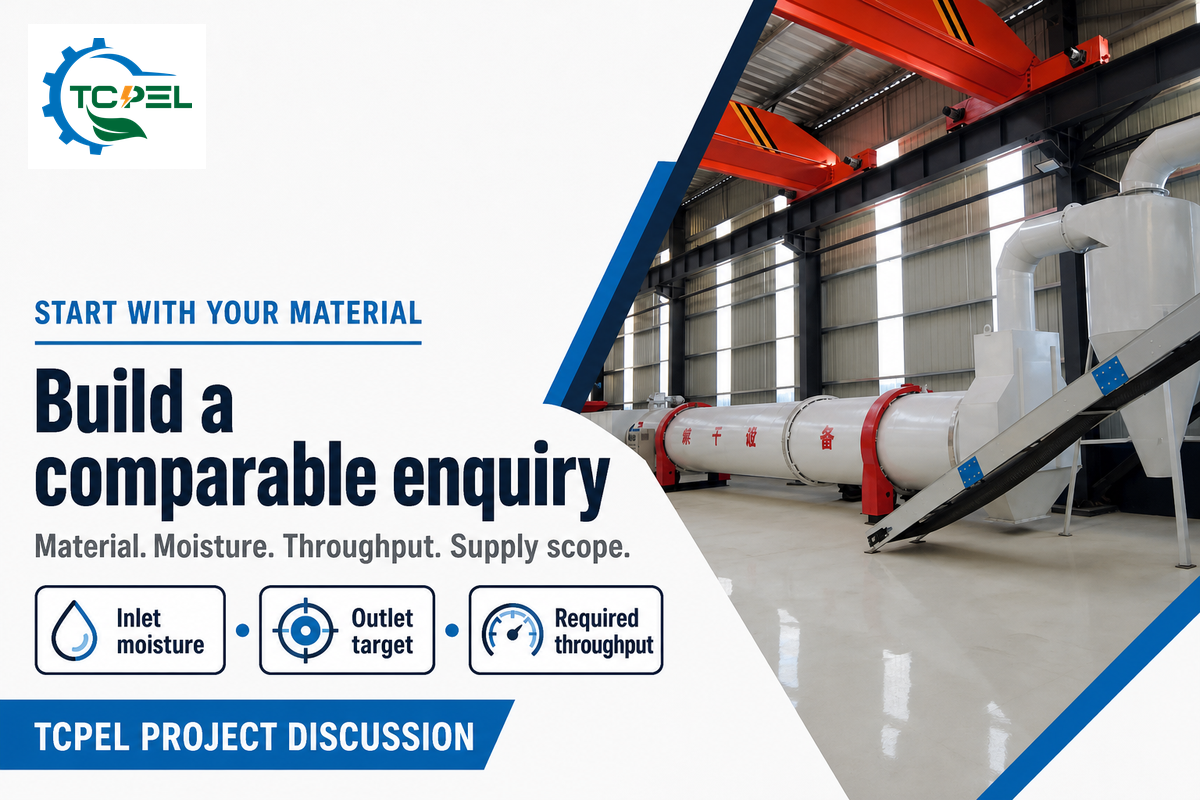
Build a shortlist around the work the dryer must perform. TCPEL provides a route into biomass pellet-line integration; ANDRITZ Vandenbroek and Baker-Rullman offer established multi-pass approaches; Büttner connects energy and drying. FEECO, Allgaier, Metso and FLS broaden the mineral and bulk-solids options, while Louisville and Heyl Patterson add specialist construction and testing routes.
The comparison becomes useful when all manufacturers get the same materials description, moisture basis and equipment boundary. That’s when a list of names transforms into a set of offers to be assessed. The company card helps decide who to get in touch with; the proposed design, test work and supply package, determine what’s to be bought.
At TCPEL, we supply single-pass and triple-pass dryers alongside biomass and feed-pellet machinery. Explore our industrial rotary dryer models and system options, read about TCPEL’s pellet machinery manufacturing business, or review the broader rotary dryer equipment range. Send your material, inlet moisture, target outlet moisture and required throughput through our rotary dryer project enquiry so the discussion starts with the duty your plant needs.
References & Sources
Company profiles draw on official company, product, manufacturing, testing and project pages checked in October 2026. Primary sources include the TCPEL industrial-dryer and About pages; ANDRITZ Vandenbroek MPS documentation; Baker-Rullman’s rotary-drum product page; Büttner drying-system pages and the Siempelkamp Highland Pellets announcement; FEECO’s rotary-dryer and manufacturing-history pages; Allgaier’s Mozer and RTT pages; Metso’s rotary dryer/cooler and management-system pages; FLS’s FT-series and company pages; Louisville’s rotary-dryer and manufacturing pages; and Heyl Patterson’s rotary-equipment and test-lab pages.
[DOC_01]
WHY WE WRITE THIS
TCPEL publishes engineering-led buying guides for biomass, wood, and feed pellet projects. We write for plant owners, procurement teams, project engineers, and distributors who need practical information before selecting pellet machines, dryers, hammer mills, coolers, or a complete production line. Our goal is to explain the real process variables behind pellet production, including raw material size, moisture content, target capacity, pellet diameter, line matching, spare-parts planning, and long-term operating stability.
[DOC_02]
ABOUT OUR BUSINESS
TCPEL is the pellet machinery brand of ALLWIN INTERNATIONAL CO., LTD., a manufacturer based in Zhangqiu District, Jinan, Shandong, China. Established in 2020, the company operates a 20,000-square-meter factory with in-house R&D, production, sales, and after-sales coordination. Its product range covers wood pellet machines, biomass pellet mills, feed pellet machines, drum chippers, wood crushers, hammer mills, rotary dryers, pellet coolers, packing machines, and complete pellet production lines. TCPEL states that it has supplied customers in more than 60 countries and regions.
[DOC_03]
OUR SERVICES
We support buyers from early project evaluation to post-shipment follow-up. This includes raw-material review, capacity matching, machine-list recommendation, complete line configuration, voltage and export-document customization, production and testing, shipping coordination, installation and commissioning assistance, and spare-parts support. Buyers can contact the team by email or WhatsApp and, according to the company’s contact page, typically receive a reply within 12 working hours.
BIOMASS PELLET
WOOD PELLET
FEED PELLET
TURNKEY LINE
CHINA FACTORY
EXPORT SUPPLIER
MANUFACTURER PROFILE // SPECIFICATIONS
NICHE
Biomass, Wood & Feed Pellet Machinery
ROLE
Pellet Machine Manufacturer / Turnkey Pellet Line Supplier
BRAND
TCPEL
COMPANY
ALLWIN INTERNATIONAL CO., LTD.
LOCATION
Zhangqiu District, Jinan, Shandong, China
ESTABLISHED
2020
FACTORY FOOTPRINT
20,000㎡
TEAM
100+ Workshop Staff
PRODUCT SCOPE
Wood Pellet Machines, Biomass Pellet Mills, Feed Pellet Machines, Drum Chippers, Wood Crushers, Hammer Mills, Rotary Dryers, Pellet Coolers, Packing Machines, Complete Pellet Production Lines
LINE CAPACITY RANGE
0.5-20 T/H Complete-Line Throughput Range
EXPORT REACH
60+ Countries and Regions
INQUIRY RESPONSE
Within 12 Working Hours
ADDRESS
East Side, Second Factory, Zhangjia Industrial Park, Mingshui Street, Zhangqiu District, Jinan City, Shandong Province, China 250203
—SYSTEM LOG//ACTION
Start Your Pellet Project
Contact TCPEL engineers for early project evaluation, capacity matching, complete line configuration, and quotation based on your raw materials.
Contact Us ->