Get in Touch with TCPEL

Industrial Feed Pellet Machinery · CE Certified
Chicken Feed Pellet Machine | Animal Feed Pellet Mill — TCPEL
TCPEL Industrial-grade chicken feed pellet machine manufacturing: 11 TL inclined-roller machines from 150 kg/h to 6 ton/h CE Certified to Machinery Directive 2006/42/EC direct from our 20,000sq m factory in Shandong FOB Qingdao transparent pricing from $900 to $22,500 per set.
Capacity Range
150 kg/h – 6 t/h
Export Reach
60+ countries
FOB Price (Qingdao)
$900 – $22,500
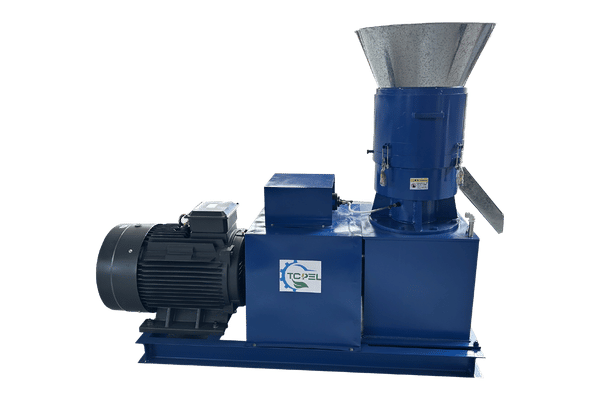
Why Industrial Operations Switch to Pelletized Feed
A chicken feed pellet machine binds mixture ingredients poultry, fish meal and/or fully formulated mash like vitamin premix uniformly into cylindrical pellets between 2 mm and 10 mm in diameter. Pelletized feed minimizes waste, increases digestibility, prolongs storage life and reduces the cost of feed per bird. For commercial or industrial broiler, layer, cattle, fish and other poultry production specializing in 150 kg or more of feed per hour, the primary business decision is no longer to buy or build a feed pellet machine just which and what size according to throughput, raw-material composition and certification.
3 pain points trending commercial pellet buyers in artificial feed to specific farm needs toward industrial feed pellet machines.
1) Raw mash separating in storage as corn meal sinks, fines and powders to rise, sparing wild animal/wild plant etc preferred highly energy-efficient layer ration and saving up to 30% formulate nutrition.
2) Climbing prices of commercial bagged feed put pressure on bracing USDA 42-days target weight broiler margins.
3) High-demand, custom feed formula not commercially available (high-lysine layer feeds, 30%+ crude protein aquafeeds, local formulations for ruminant, etc.) require on-farm formulation and pelletizing.
Pelletized feeds efficiently address these 3 issues simultaneously. Following receipt of cell lengths 95% clumping againder (PDI) optimum production standards in accordance to Kansas State University Feed Production can attain almost pellet mortality inciter (PDI) production standards (PDI) optimally Attain dead penicillin20 hours pellet inclination depressing (PDI) standard production standards (PDI). Increased clumping incidence Reduction directly with stable feed conversion and precise nutrient intake for all financial egg producers. As a result, every commercial integrator from Tyson to Cobb-Vantress maintains internal pellet processing plants. On-top farms with access to each ton or additional daily send pellet production, constantly modify pelletizing process to fresh, functional in-house.
Performance Card · Bronze
What an Industrial-Grade Inclined Roller Pellet Mill Delivers
Field operator testimonials established flat-die pellet mills with hardened die endure 3000 shell-and-core lifespan attaining 5000 hours die usage operating in an unbailed broiler formulation with 14-16% feed water content (Individual test mills give as expected 3000? hours die duration. That much, but no more time. Other dimensions of use depend completely on feedstock abrasiveness, conditing and so on. The design of tree carrier inclining roller with tapered bearing qualities of reduces the abatement common to normal flats rollers; simply a sample run at our plant can best verify specific service-life requirements in your formula., Zegbrk_0004.
TCPEL Feed Pellet Machine Lineup — 11 Industrial Models (150 kg/h – 6 t/h)
The TCPEL TCF series covers eleven industrial models, beginning with the entry-level TCF150 – 7.5 kW, 150-200 kg/h broiler pellet machine for the 5,000-bird farm — through the TCF800, a 132 kW three-roller mill running at 5,000-6,000 kg/h for the integrator-sized layer or cattle feed plant. All models include 380V 50/60Hz three-phase power, automotive-grade double universal-joint shock-absorber transmission, inclined two-roller (TCF150-TCF450) or inclined three-roller (TCF550-TCF800) geometry, and 100% copper-wound brand motors. Die hole diameter can be specified 2, 3, 4, 5, 6, 7, 8, or 10mm at order, providing a single design for broiler starter (2-3mm), layer pellet (3-5mm), cattle pellet (6-10mm), or aqua feed (2-3mm) production.
| Model | Capacity | Roller Type | Power | Voltage | Weight | Dimensions (mm) | FOB Qingdao |
|---|---|---|---|---|---|---|---|
| TCF150 | 150-200 kg/h | Inclined two rollers | 7.5 kW | 380V/3PH | 190 kg | 1220 × 620 × 840 | $900 |
| TCF200 | 300-400 kg/h | Inclined two rollers | 11 kW | 380V/3PH | 270 kg | 1420 × 670 × 1100 | $1,600 |
| TCF250 | 600-800 kg/h | Inclined two rollers | 15 kW | 380V/3PH | 480 kg | 1660 × 740 × 1220 | $2,400 |
| TCF300 | 800-1000 kg/h | Inclined two rollers | 22 kW | 380V/3PH | 650 kg | 1830 × 880 × 1560 | $2,700 |
| TCF350 | 1000-1200 kg/h | Inclined two rollers | 30 kW | 380V/3PH | 750 kg | 1960 × 920 × 1680 | $3,600 |
| TCF400 | 1400-2000 kg/h | Inclined two rollers | 37 kW | 380V/3PH | 900 kg | 2550 × 980 × 1600 | $4,300 |
| TCF450 | 2000-2500 kg/h | Inclined two rollers | 45 kW | 380V/3PH | 1500 kg | 2780 × 1100 × 1700 | $6,300 |
| TCF550 | 2500-3500 kg/h | Inclined three rollers | 75 kW | 380V/3PH | 1800 kg | 2900 × 1300 × 1900 | $9,500 |
| TCF650 | 3000-4000 kg/h | Inclined three rollers | 90 kW | 380V/3PH | 2100 kg | 2950 × 1500 × 2000 | $14,500 |
| TCF700 | 4000-5000 kg/h | Inclined three rollers | 110 kW | 380V/3PH | 2500 kg | 3000 × 1600 × 2100 | $18,800 |
| TCF800 | 5000-6000 kg/h | Inclined three rollers | 132 kW | 380V/3PH | 2900 kg | 3150 × 1800 × 2200 | $22,500 |
All capacities shown are for standard broiler mash (14-16% moisture, 18% fat, 16.5% min crude protein). Pellet diameter can be customized 2/3/4/5/6/7/8/10mm at order. Customer must confirm pellet diameter preference prior to manufacturing.
Decision Matrix — Which TCF Model Matches Your Operation
Backyard / Hobby (1,000 birds or less)
Below TCPEL minimum scale — consider local consumer 3-5 kW mills. Not our target market.
Small commercial farm (5,000-15,000 broilers)
TCF150 ($900) or TCF200 ($1,600) — 150-400 kg/h covers 8-12 hour daily production. Single-shift operation.
Mid-scale farm or feed retailer (50,000 birds)
TCF250 to TCF350 ($2,400-$3,600) — 600-1200 kg/h matches 6-day-per-week production with safety margin.
Large integrator or feed mill (200,000+ birds)
TCF400 to TCF550 ($4,300-$9,500) — 1.4-3.5 t/h capable. Three-roller starts at TCF550 for higher pressure on tougher formulas.
Industrial feed mill (multi-species)
TCF650 to TCF800 ($14,500-$22,500) — 3-6 t/h three-roller with reinforced gearbox. Pairs with TCPEL hammer mill, rotary dryer, cooler, and packing line for turnkey 100,000+ ton/year plants.
⚠ Critical Power Specification
One feature of the TCF series deserves prominent mention: 380V 50/60 Hz three-phase commercial power is requirements for every TCF model. These fully industrial units are built for licensed commercial feed-mill use, integrator-owned plant operation, or farms with three-phase service; no residential 220V single-phase applications are supported. Buyers who currently lack three-phase power should plan for utility upgrade, onsite step-up transformer, or to select a smaller residential-class unit (from a different vendor). This specification is critical because it is what allows the inclined-roller geometry to deliver reliable torque through difficult formulas such as 30%+ crude-protein aqua feed, or high-fiber ruminant pellets.
Interfacing your new pellet mill with a complete multi-stage feedline including hammer mill, rotary dryer, conditioner, cooler, and bagging is our specialty. → Request a complete production-line quotation with line-balance analysis.
6-Dimension Engineering Comparison — TCPEL Inclined Roller vs Conventional Flat Roller
The world-leader in commercial feed-pellet complications was the flat-die mill. And even today, every hidden-cost study – whether from trade publication, OEM, owner, or research institution begins with that inconvenient fact, because flat die-gun failure and uneven die wear are universally shown to be the single most costly feed-mill complication. Your flat-die mill that runs full time at 2,000 hours on broiler mash will eat through dies in 1,500-3,000 hours – and un-practiced operators, using flat die mills, all too often spend half a day clearing severe die plugs that stop an entire feed line.
All the evidence and input from our consultancy work suggests that the best engineering response is to protect die wear holes with an inclined roller geometry specifically designed to counter the type of wear experienced by broiler and cattle fields. Below is a comparison across six critical design dimensions and criteria which a feed mill engineer would evaluate when specifying:
Engineering Dimension
Conventional Flat Roller
TCPEL Inclined Roller
1 Bearing Seal & Lubrication
Standard ball bearing. Feed dust ingress over time degrades grease, accelerates roller-shaft wear, demands manual re-greasing every shift.
Tapered-bearing seal blocks feed-dust ingress. Automatic oil pump (TCF300+) lubricates main shaft and gearbox in operation — no manual re-greasing during production runs.
2 Die-Surface Pressure Distribution
Pressure concentrated at outer die rim. Edge wear progresses 2-3× faster than center, leading to non-uniform pellet density.
Tapered cone roller maintains full-face contact with die surface. Pressure distributed evenly across radial position — uniform die wear, longer effective service life.
3 Centrifugal Force Management
High rotational speed creates centrifugal vibration. Lighter base castings and standard reduction gearboxes amplify shaft deflection over thousands of operating hours.
Inclined geometry counteracts centrifugal force vector. Thickened cast base + enlarged reduction gearbox dampen residual vibration. Smoother long-run operation.
4 Multi-Material Versatility
Optimized for soft feed mash (corn-soy broiler ration). Hard sawdust or high-fiber straw plugs holes and stalls the motor.
Roller-rotates / die-stationary configuration concentrates motor torque at the roller, enabling pelletizing of livestock feed, biomass sawdust, agricultural straw, even certain plastics — without die hole clogging.
5 Die Material & Customization
Generic die steel. Hole diameter often fixed at 6 mm. Replacement dies sourced from third parties at variable quality.
High-strength wear-resistant flat-die steel; hole diameter customer-specified at order from 2 to 10 mm; OEM spare dies match factory tolerances and ship together with the mill.
6 Heat Dissipation & Maintenance Access
Compact housing limits airflow. Frequent thermal-induced shutdowns under continuous load. Adjusting roller-die clearance requires partial disassembly.
Standard oil-fill port, oil dipstick, and dedicated heat-dissipation vents on every model. Large adjusting screw nut with included fasten wrench enables roller-clearance adjustment in under 5 minutes without tooling.
“Our internal testing showed that early flat die wear was due to uneven pressure distribution in a single-ring flat roller. Our response has been to engineer an inclined-roller design that addresses that wear pattern – evenly averaging force across the entire die face for maximum service life on the toughest formulas.”
Two additional engineering points are worth noting since they concern real world dependability through the life of the asset. Electrical parts on all TCF models employ proven Chinese industrial brands CHINT and Delixi, the same brands specified at Foxconn and BYD assembly lines, with organized wire connection looms detailed in service manuals supplied with each unit. Mechanical transmission uses and automotive heavy-duty double universal-joint coupler between motor and gear box similar to shaft architecture of heavy truck driveshafts; this accommodates torque fluctuations in event of foreign object (rare but possible) import during operation without damaging gearbox or motor from impact.
Comparing TCPEL inclined-roller specs against your existing pellet mill on your exact formula?
Send us your feedstock spec sheet for analysisAnimal-Specific Application Matrix — Which TCPEL Model for Your Operation
The TCF design covers the entire commercial animal-feed range from 2-mm broiler-starter pellets to 10-mm cattle feed, 30% crude-protein aquafeeds. Here is the application matrix which our application engineers reference during our sales-bidding process to guide the end-user recommended model – pellet diameter – and compatible upstream and downstream equipment. Use it as guide; your final choice is ultimately dependent upon your knowing your own feed stock moisture, fiber load, and target throughput.
| Animal / Application | Recommended TCF Model | Pellet Ø | Crude Protein Target | Notes |
|---|---|---|---|---|
| Broiler chicken (starter) | TCF150 – TCF300 | 2 – 4 mm | 22-24% | Small pellets reduce gizzard strain; fines <5% target. |
| Broiler chicken (grower/finisher) | TCF200 – TCF350 | 3 – 5 mm | 16.5-20% | NRC minimum 16.5%; 14-16% mash moisture for stable pelletizing. |
| Layer chicken | TCF200 – TCF300 | 3 – 5 mm | 16-18% | Calcium 3.5-4% for shell quality; phosphorus 0.5% min. |
| Cattle / beef feedlot | TCF400 – TCF550 | 6 – 10 mm | 12-14% | Tolerates higher fiber. Reinforced TCF550+ recommended for alfalfa-heavy rations. |
| Poultry farm bulk supply | TCF550 – TCF700 | 3 – 5 mm | Custom formula | Three-roller geometry for 24/7 operation; pairs with cooler + packing line. |
| Aquaculture (fish, shrimp) | TCF250 – TCF400 | 2 – 3 mm | 30-45% | High-protein formulations. For floating fish feed, add upstream extruder; pellet mill alone produces sinking feed. |
| Goat / sheep / ruminant | TCF200 – TCF350 | 4 – 6 mm | 14-16% | Long-fiber raw materials (alfalfa, oat hay) need pre-grinding via TCPEL hammer mill. |
| Biomass / sawdust pellet (non-feed) | TCF250 – TCF450 | 6 – 8 mm | — | Possible on inclined-roller mills; for high-volume wood pelletizing, ring-die mills are typically preferred at industrial scale. |
Broad Feedstock Compatibility
Feedstock compatibility is broad. TCPEL feed pellet machinery presses standard chicken feed pellet formulations built from corn, soybean meal, alfalfa pellets, peas, oats, wheat, barley, and a premix of aragonite, salt, crab meal, flax seed, kelp, fish meal, and cultured yeast — the same ingredient stack the KSU Feed Production reference recipe specifies for nutritionally complete broiler rations.
Critical Moisture Tolerance
One operating factor concerns majority of all quality complaints we hear from customers: feedstock moisture. Feed equipment specialists advise a final product moisture range of 12-18%. Above 18%, the die plugs and pellets are soft and spongy. Below 12%, the binder layer fails to form and pellets disintegrate upon exiting the die. Our TA technicians work closely with each customer to establish their flow moisture within a narrow tolerance during commissioning; for operations running multiples feeds, we recommend a Moisture Meter reading at the conditioner discharge.
Inside TCPEL Factory — 60+ Country Exports & Production Footage
ALLWIN INTERNATIONAL CO.,LTD, the legal corporate entity that owns the TCPEL brand, manufactures pellet machinery since 2020 in a combined 20000 sq-m facility located in Zhangqiu District, Jinan, Shandong Province.
The factory employs over 100 production line workers for in-house research and development, fabrication, assembly, and quality assurance. This product range is only one segment of the portfolio – the manufacture of drum chippers, hammer mills, rotary dryers, pellet coolers, pellet packers, and complete pellet plants means this company can meet global Feed Lines needs in turn-key fashion from just one partner.
Global Install Base
To date TCPEL equipment has been installed in commercial feed plants in more than 60 markets worldwide. This list is limited and reinforces shipments to date with any documented aftersales support:
Something we constantly get asked about from overseas buyers—mostly first time importers—is “would these Chinese factory sourced parts be available for star-long commercial use?” Here’s the blunt truth: a lot of no brand generic parts sold by malls or brokers on cross-border portals can be crummy no-name motors, repurposed gearbox house (scatter on shelf), inferior alloy steel stacks. OEM industrial equipment sourced directly from a reliable factory like TCPEL come with branded parts (CHINT, Delixi), pure-copper operater and take-up motors, automobile-grade backbone joints, and we give a full bill to each requirements for assembly. Every EC12 is packaged in the heavy-duty ply-wood cage for 30-day transit delivery, and “end-user statistics” from each tag associated with installation date, configuration, model number, channel of inquiry—so equipment change orders, techincal inquiries, and care warranty inquiries are associated with an official call-up record rather than some summary “get to us”.
Want a video walkthrough of the specific TCF model you’re considering, before issuing a purchase order?
Request a model-specific factory video tourCE Certified Under EU Machinery Directive 2006/42/EC
All of TCPEL’s ex-operate feed pellet machines are CE-marked under EC Machinery Directive 2006/42/EC. The Machinery Directive sets the health-and-safety requirements that industrial machines must meet in order to be sold on the EU and CE-marking is, according to EUR-Lex, the only mark of conformation with the Directive requirements. For owners outside the EU, CE certifiers act as the default third-party indicator that the machine has undergone one form of independent technical-file review of electrical safety, mechanical guards, emergency-stop, and risk-assessment details.
CE | 2006/42/EC
Feed Pellet Mill
Cert No. NTS2307072S
CE | 2006/42/EC
Hammer Mill
Cert No. NTS2307071S
CE | 2006/42/EC
Pellet Cooler
Cert No. NTS2307073S
CE | 2006/42/EC
Pellet Packing
Cert No. NTS2307069S
CE | 2006/42/EC
Drum Chipper
Cert No. NTS2307074S
CE | 2006/42/EC
Dust Collector
Cert No. NTS2307070SEngineering Performance Standard
The CE is the beginning, not the end. The machine’s design also supports the Pellet Durability Index (PDI) specifications employed by the commercial feed industry – commercial customers seeking 95% PDI (per Kansas State University Feed Production guidelines) can ask to view our internal PDI results for sample formulations during a quotation.
Procurement Guide — FOB Pricing, Lead Time, Spare Parts & Shipping
TCPEL uses a transparent FOB Qingdao pricing structure. All TCF series model line up has a published USD price (refer to the lineup table (above)) with all prices payable 100% T/T upon confirming the order with all manufacturing completed and goods on the dock within 15 working days of receipt of full payment. Minimum order quantity will be 1 set – we will not set multi-piece minimum orders to the first time buyer who wants to choose a sub-2 ton/h mill for its based testing. The simplest reason would be that a prospective buyer who is evaluating a sub-2 ton/h mill should not have to fleet purchase just to test the quality of build, while the prospective buyer who is scaling up would have already known the quality from the first unit prior to placing a multi-line purchase.
Payment Terms
100% T/T when confirming order. Bank:ZHEJIANG E-COMMERCE BANK CO. LTD, Hangzhou. SWIFT: ZHECCNBBXXX. Beneficiary: ALLWIN INTERNATIONAL CO.,LTD. Complete bank details and a proforma invoice will be issued when RFQ has been accepted.
Lead Time
15 working days upon receipt of T/T. The above period is for design, production, in-house QC inspection, packing and preparing to ready ship to Qingdao port. Sea-freight from Qingdao port is optional, shall be arranged by buyer or quotes provided upon request.
Packaging
Heavy plywood crating engineered for 30-day ocean shipment. Internal bracing protects gearbox, motor flange, and roller assembly from impact during port handling. Documentation pack included inside crate.
Pellet Diameter Customization
Buyer orders die hole diameter at time of order: 2 3 4 5 6 7 8 or 10 mm. 6 mm default if not specified. Multi-die orders welcome -we ship up to four interchangeable dies with the mill at incremental cost, so that one machine can cover broiler, layer, cattle and aqua formula.
Spare Die Policy
Spare dies and roller sets in stock at our Shandong plant and shipped same-week on receipt of funds. Dies are factory-tolerance matched to your particular TCF model – third-party dies of uncertain grade are found to be a number one reason for premature wear and we strongly suggest OEM replacements.
After-Sales Support
Every shipment is recorded in our customer database with model, configuration, install date and direct technical contact channel (WhatsApp/email/phone). Spare Part orders, formula tuning advice, and warranty claims are loaded to your file, not a generic helpdesk queue.
Two Unique Sourcing Scenarios
Two sourcing scenarios require unique advice. If you are shopping a complete pellet plant – hammer mill for grinding, conditioner for steam tempering, pellet mill, cooler, sifter and packaging system – ask for a turnkey line proposal. We size each final sub-assembly for stable throughput, shipment from a single OEM and Commissioning as one project not five separated packets.
If you are simply installing or upgrading a pump in an authorized existing line, send us the present line layout, feedstock type and throughput planning target – we will advise the nearest-fit TCF model and recommend die size or roller configuration change if it helps.
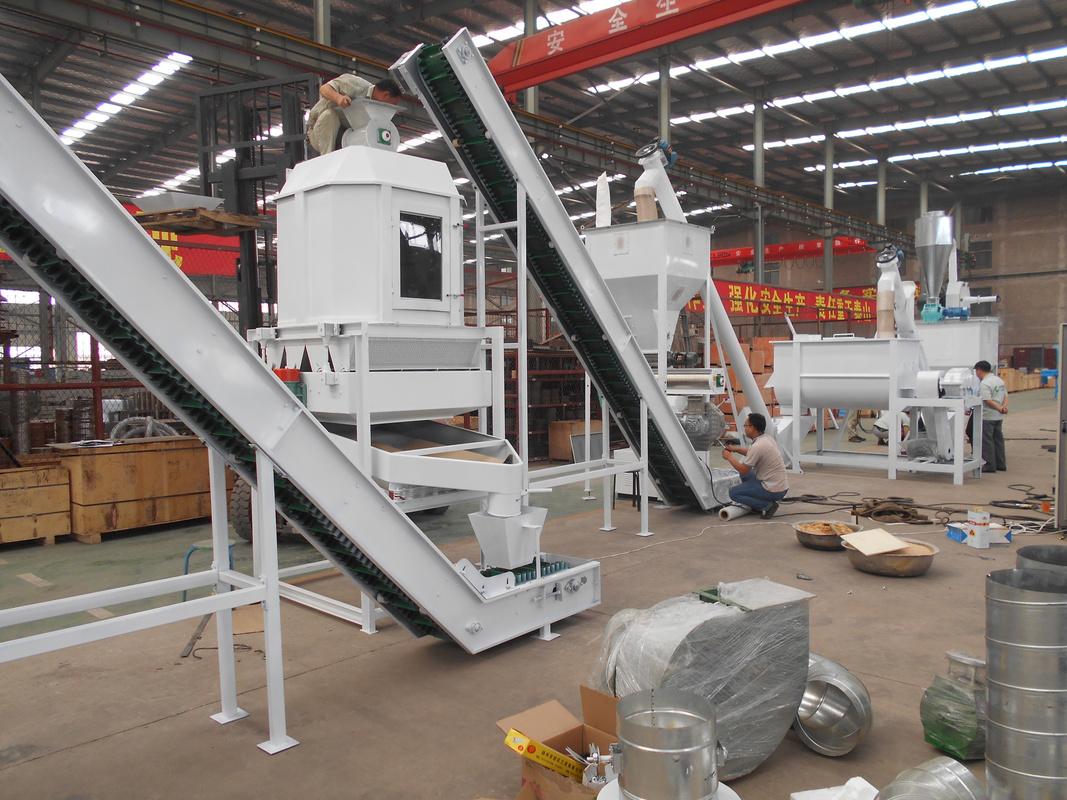
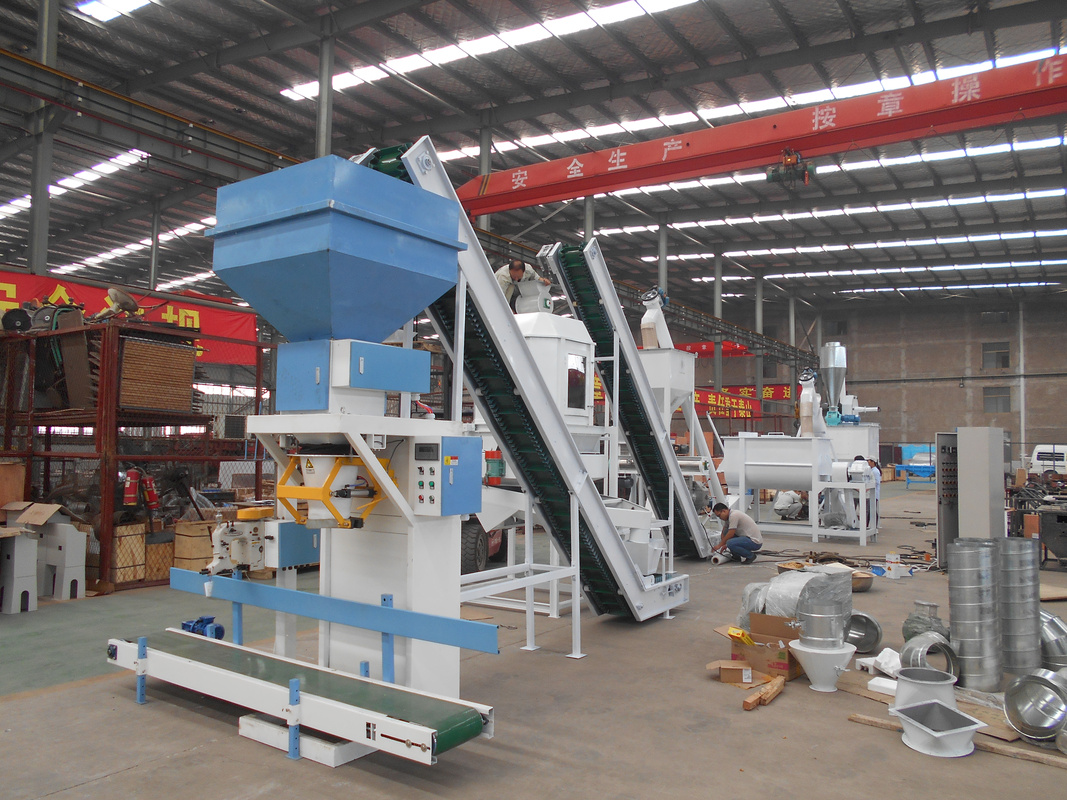
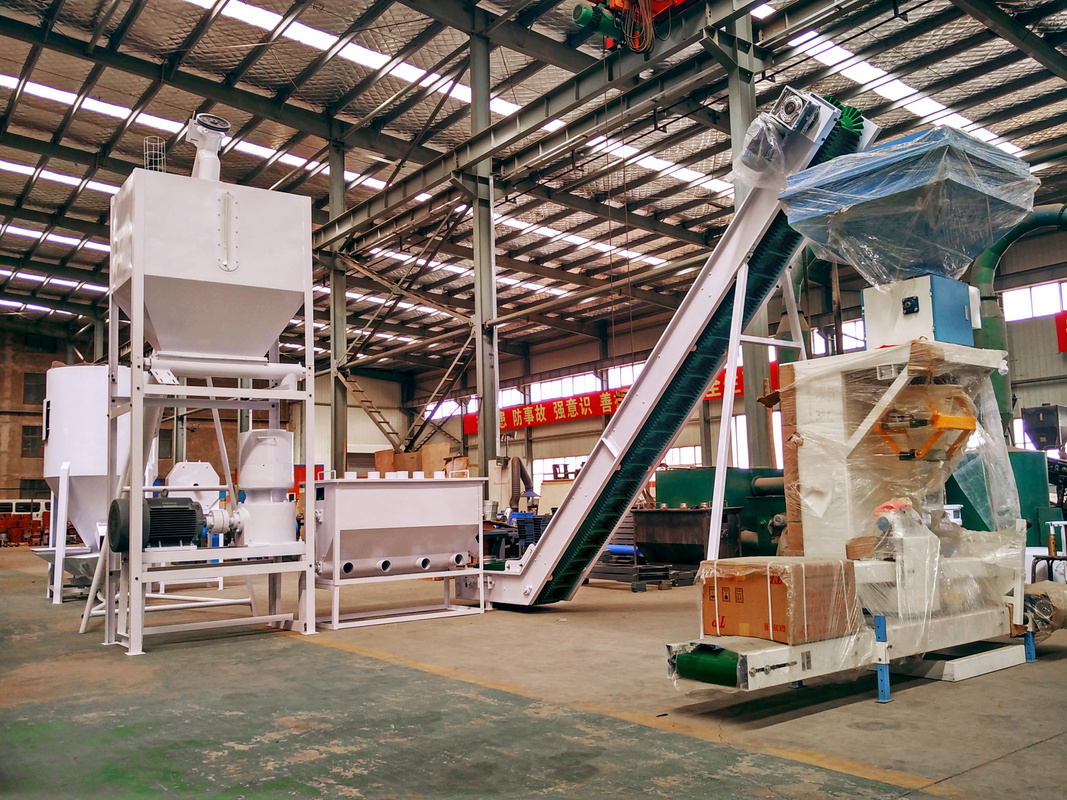
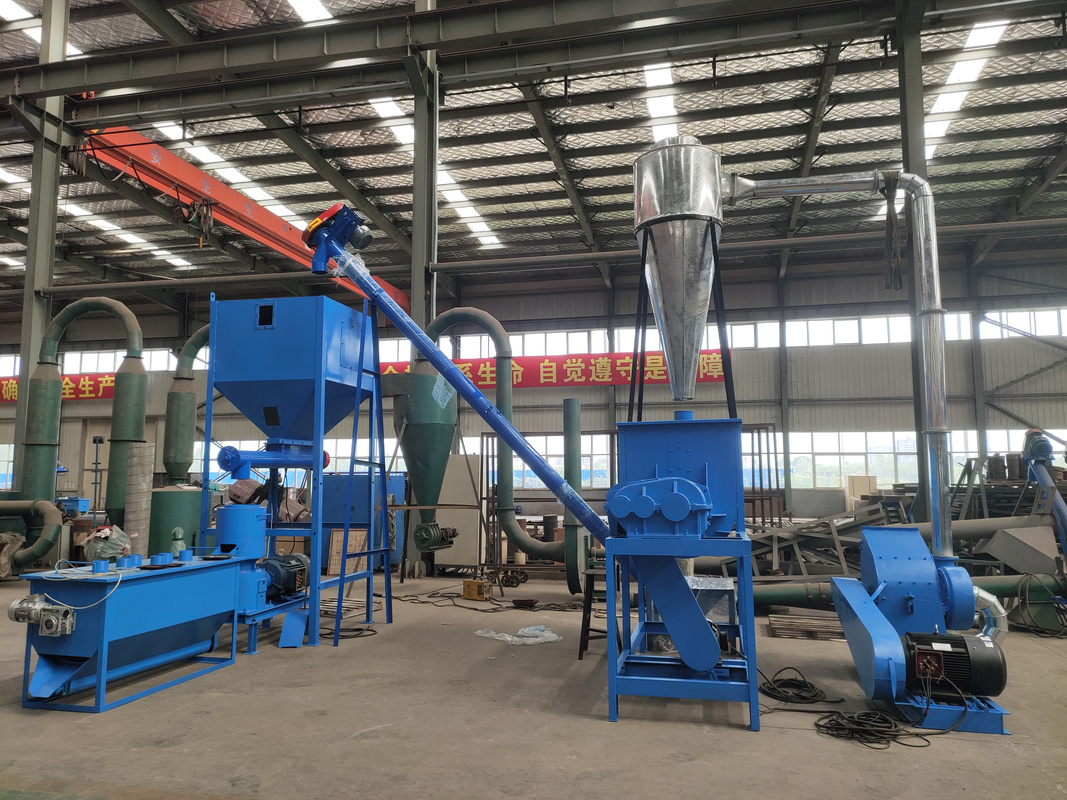
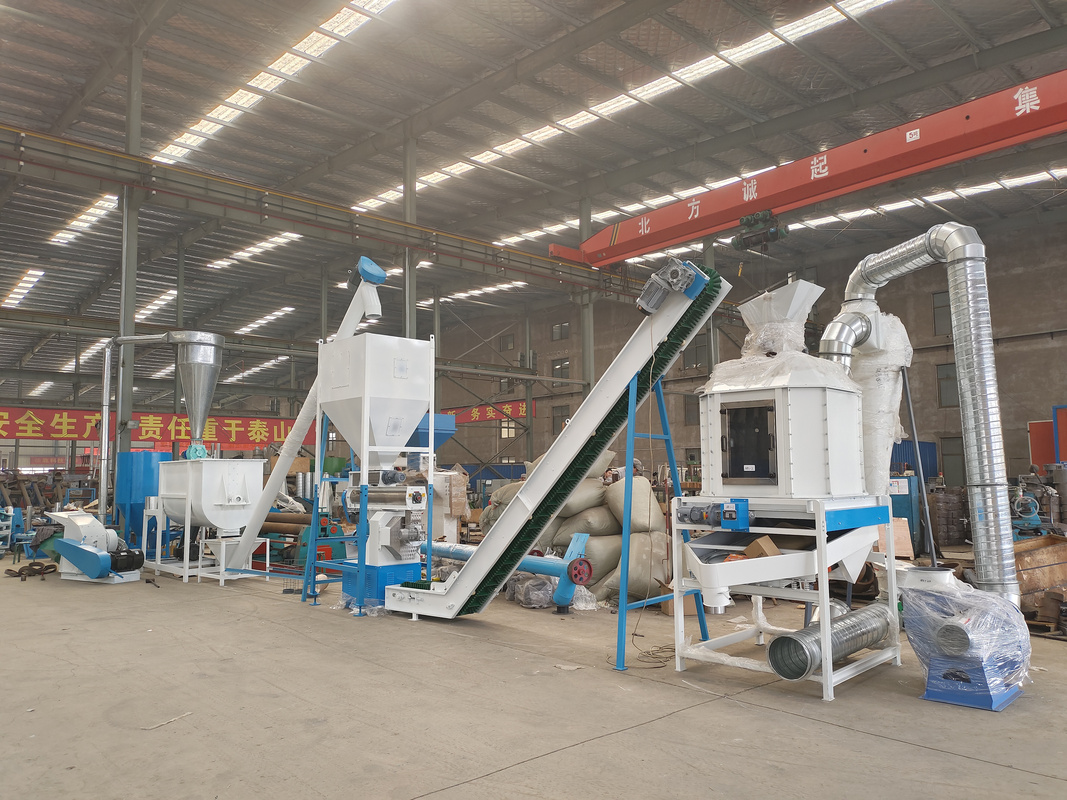
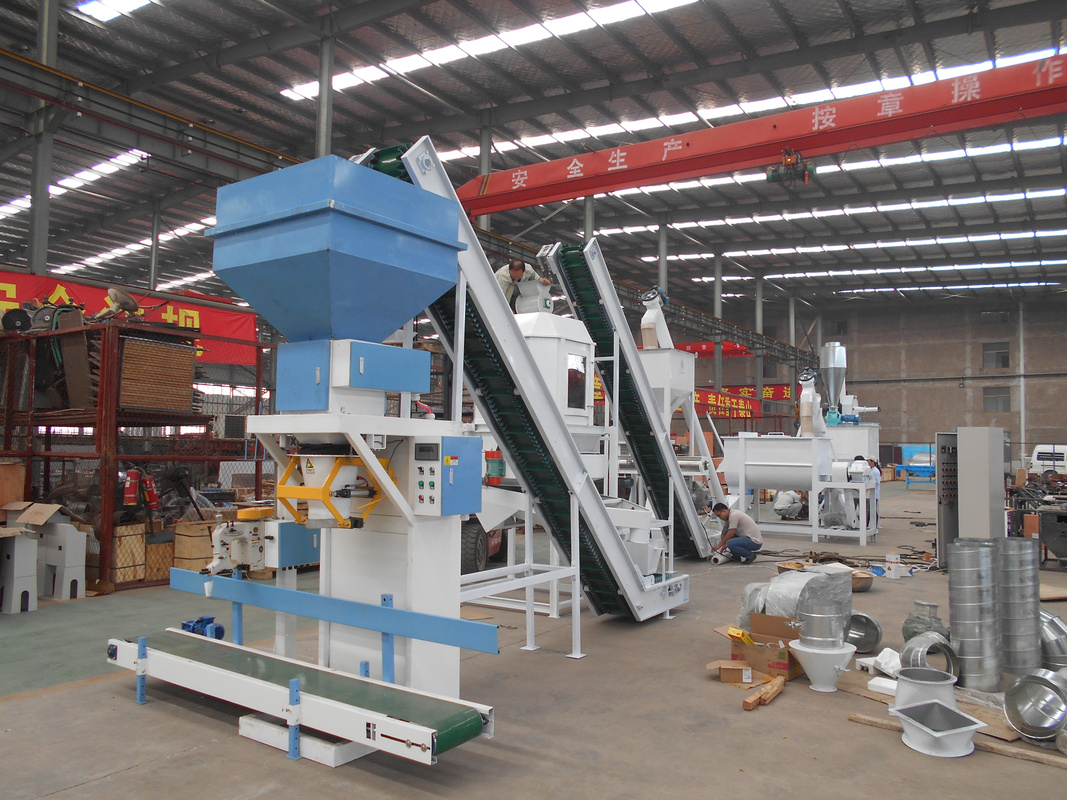
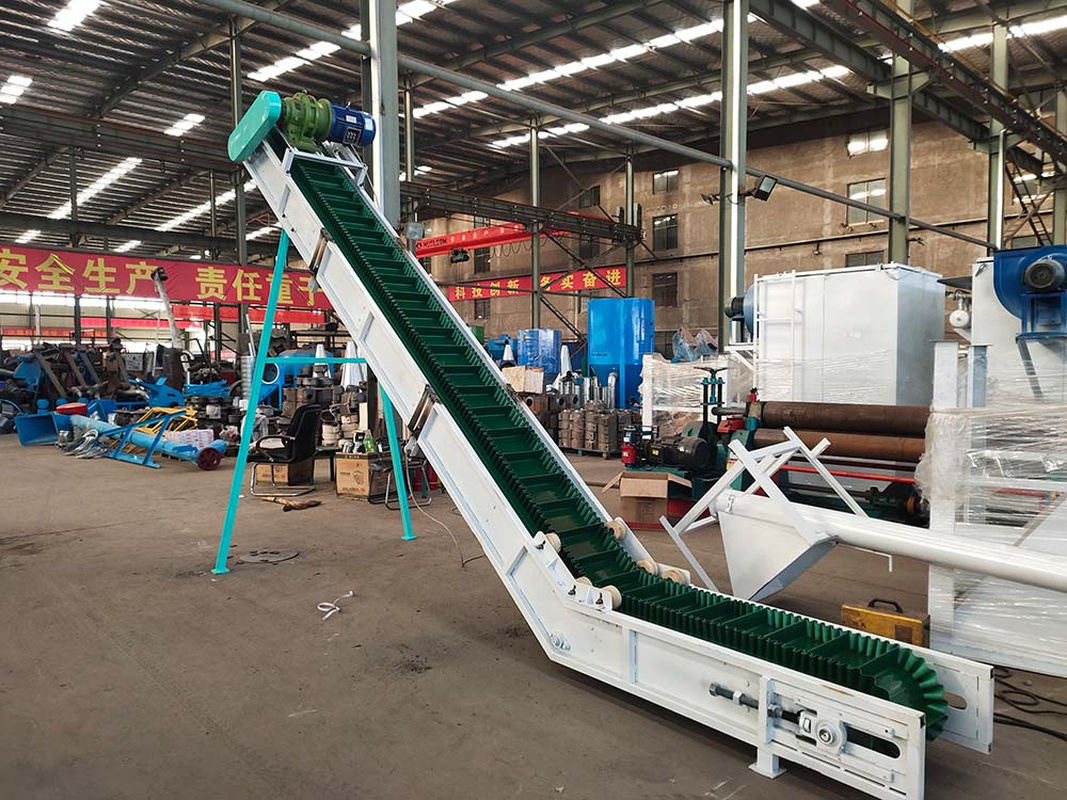
TCPEL Manufacturing & Assembly Center
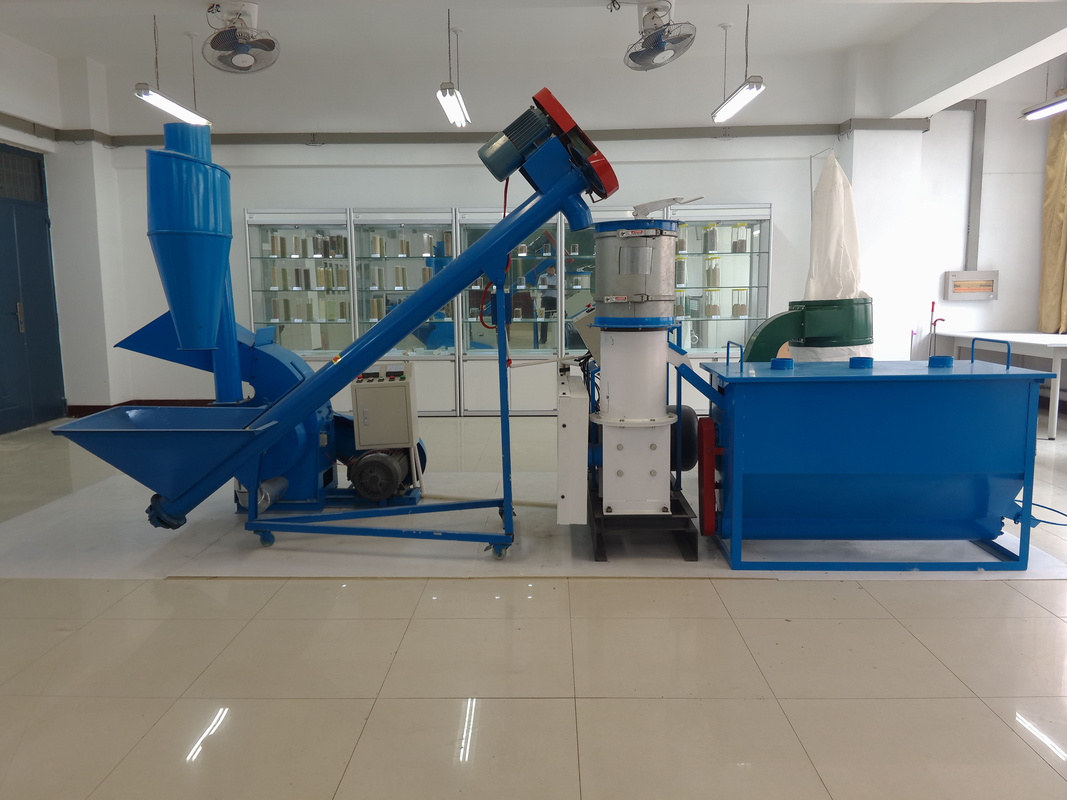
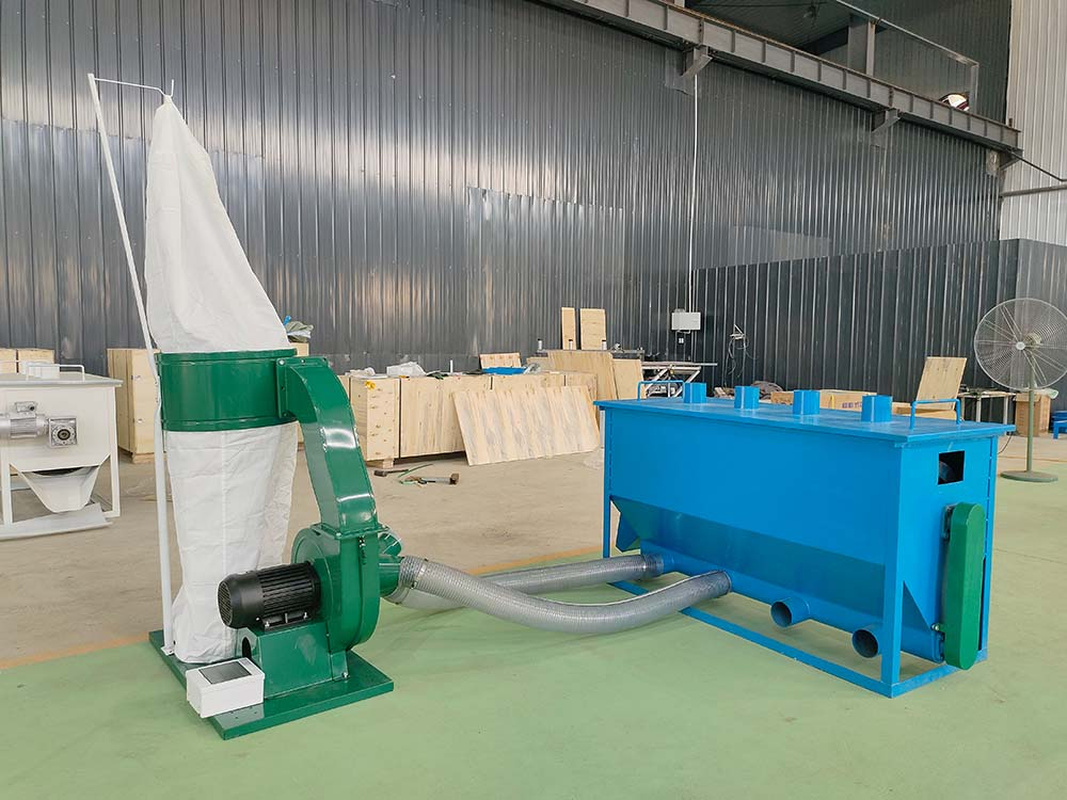
Explore our state-of-the-art 20,000 sq-m production facility. From raw material machining to final assembly and outbound logistics, experience the industrial scale behind every TCPEL feed pellet machine.





Hover edges to pan or swipe on touch screens
Digital Engineering Suite
TCPEL Pellet Production Utilities
Leverage our proprietary calculators and selection matrices to optimize your feed mill planning, calculate capacities, and verify pellet durability standards.
Feed Pellet Machine Capacity Calculator
Determine the ideal TCF model based on your daily output requirements, shift hours, and target animal species. Includes transparent FOB Qingdao pricing.
Launch Calculator →
Pellet Durability Index (PDI) Calculator
Evaluate your pellet quality against Kansas State University Feed Production standards. Input pre/post-test weights to generate instant diagnostic reports.
Launch Calculator →
TCPEL Multi-Model Comparison Tool
Select up to 4 different TCPEL TCF machines to compare side-by-side. Analyze dimensions, power requirements, roller configurations, and pricing in one matrix.
Launch Comparison →
Pellet Diameter Selector — Animal & Growth Stage
Find the optimal pellet die diameter based on animal species and specific growth stages (e.g., broiler starter vs. finisher). Backed by NRC nutrition standards.
Launch Selector →
FAQ — Real Questions from 60+ Country Buyers
Before integrating a new industrial asset into your commercial feedline, complete clarity is required. We have aggregated the most critical engineering, power, and logistics questions addressed by our technical team to international buyers over the past year.
2-3 mm pellets for starter feed (day 0-14), 3-4 mm for grower (day 14-28), and 4-5 mm for finisher (day 28-42). Smaller pellets reduce gizzard strain on young birds and improve early feed conversion ratio (FCR). All TCPEL TCF models accept buyer-specified die diameter at order — 2, 3, 4, 5, 6, 7, 8, or 10 mm — so a single mill can serve all broiler stages with die rotation.
No. Every TCF model requires 380V 50/60Hz three-phase commercial power. This is industrial-grade machinery designed for commercial feed mills, integrator-owned plants, and farms with three-phase service. If your site has only 220V single-phase, you will need either a grid upgrade or a step-up transformer, or you should consider a smaller residential-grade pellet mill from a different vendor. The 380V/3PH spec is what enables consistent torque under industrial-volume formulas.
12-18% moisture is the standard operating window. Above 18% the die plugs; below 12% the binder layer fails. Aim for 14-16% on broiler mash. Install a moisture meter on the conditioner outlet.
Field reports from feed-mill operators typically indicate 3,000-5,000 hours of die service life on standard 14-16% moisture broiler feed using OEM-grade hardened dies (industry average — actual life varies with feedstock abrasiveness, conditioning practice, and roller-clearance maintenance). Die plugging and outer-rim wear are the dominant failure modes. TCPEL’s tapered-bearing inclined-roller design distributes pressure evenly to extend that range; specific service-life expectations for your formula are best confirmed with a sample run at our factory.
All TCPEL TCF models are flat-die mills with inclined-roller geometry. Flat-die mills are the workhorse for small-to-medium commercial production under 6 t/h, are easier to clean, accept a wider range of feedstocks including livestock feed, biomass sawdust, and agricultural straw, and have lower initial cost than ring-die mills of equivalent capacity. Maintenance access is also easier — operators can swap dies, adjust roller-die clearance, and inspect the bearing chamber without specialized tooling. Ring-die mills are typically chosen for above-10 t/h industrial wood-pellet plants where a fixed feedstock profile and 24/7 throughput justify the higher capital cost; the ring-die geometry concentrates pressure differently and is well suited to the consistent fiber loading that wood pellet feedstock provides. For commercial feed under 6 t/h across mixed formulas, flat-die remains the dominant industry standard for good reason.
Heavy plywood crating engineered for 30-day ocean shipment. Internal bracing protects the gearbox flange, motor mount, and roller-die assembly from impact during port handling. Crate includes desiccant packs and a documentation pack with operator manual, electrical schematic, parts list, and CE certificate copy. Crate dimensions and gross weight match the model spec table above plus packaging allowance.
Yes. Spare dies and roller sets are stocked at our Shandong factory and ship same-week on receipt of payment. Dies are factory-tolerance matched to your specific TCF model. We strongly recommend OEM-grade replacement dies — third-party dies of unknown steel grade are a leading cause of premature wear, broken dies, and warranty disputes. Multi-diameter die orders (e.g., 3 mm + 5 mm + 8 mm for a multi-species farm) are commonly bundled at order to give you one mill with three formula options.
Yes. Beyond the TCF feed-pellet machine series, TCPEL manufactures drum chippers, hammer mills, rotary dryers, conditioners, pellet coolers, pellet packing machines, and complete pellet production lines from one factory. Sourcing the full line from a single OEM avoids inter-component throughput mismatch, simplifies commissioning, and consolidates after-sales contact to one service file. For turnkey feed-mill projects above 1 t/h, request a complete production-line quotation rather than a single-machine quote.