Get in Touch with TCPEL

Pallet Crusher
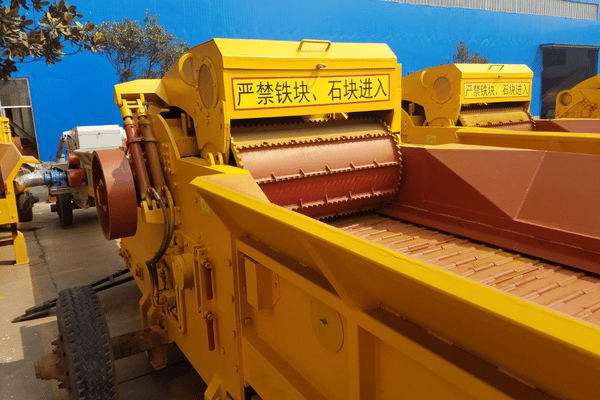
Industrial Pallet Crusher & Wood Pallet Shredder — Chain-Plate Feeding with Dual Hammer/Blade Configuration
Pallet crusher designed specifically for recycling buildings and pellet mills that are set up to treat the different pallet woods, plate woods, branches and crop straw on one line – not loading the raw materials separately. TCPEL’s Pallet Crusher turns 11 different raw materials into 2 to 10cm pieces of wood, changes between using alloy hammer (for nails) or H12 blade (clean wood, large diameter logs) and pumps it onward to the pellet mills, animal-bedding lines and biomass boilers.
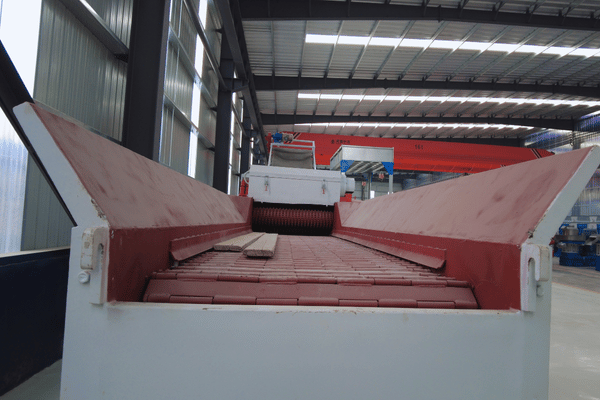
- Chain-Plate Feed ZGMn13-4 high-manganese steel, load-adaptive feed speed
- Dual Cutting Heads Alloy hammer for nails / H12 blade for clean wood — quick swap
- 2-10 cm Output Adjustable for pellet feedstock, mulch, bedding, or fuel
- Soft-Start Drive Frequency-controlled feed; protects motor on heavy loads
- 11 Feedstocks Pallet, plate wood, bamboo, branches, straw — one line
- FOB Qingdao Container packing, DDP option, after-sales in 60+ countries

11
Feedstock types on one machine
2-10 cm
Adjustable output chip size
60+
Countries delivered since 2020
20,000 m²
Manufacturing footprint, Shandong
From Pallet Pile-Up to Profit Stream — Where TCPEL’s Pallet Crusher Fits
CHALLENGE
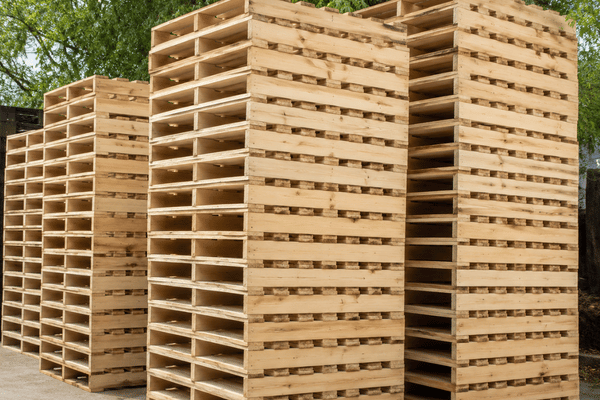
Pallet recyclers and pellet plants share one operational headache: incoming feedstock is never the same. Monday morning brings 800 disposable softwood pallets riddled with #16 nails. By Wednesday, a forestry contractor drops 6 tons of branchwood and bamboo veneer offcuts. Thursday, a poultry-bedding customer wants 4-6 cm chips while the boiler-fuel buyer needs ≤2 cm. Single-purpose pallet shredders built for “pallet” — and only pallet — wear hammers down 22% faster on mixed feedstock and force operators to either sort by hand or run multiple machines.

ROOT CAUSE
At the bottom of the stack is the root cause. Most industrial pallet shredders use a single cutting system of cutting, either the twin-shaft cam cutters, a 1,000 mm screw auger, or a low-speed single-shaft drum designed around one particular feedstock form. Nails-in pallets and large-diameter clean logs exert fundamentally different loads onto the rotor, and tools made for one form will degrade and panic when faced with the other. Finally, workshop recyclers buy in a pre-crusher and a secondary shredder and sort the feedstock between the two, doubling the capital expenditure and demanding another sorting line that was supposed to go away.
SOLUTION
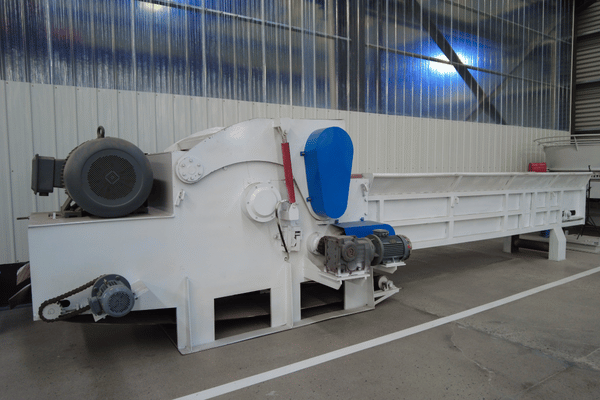
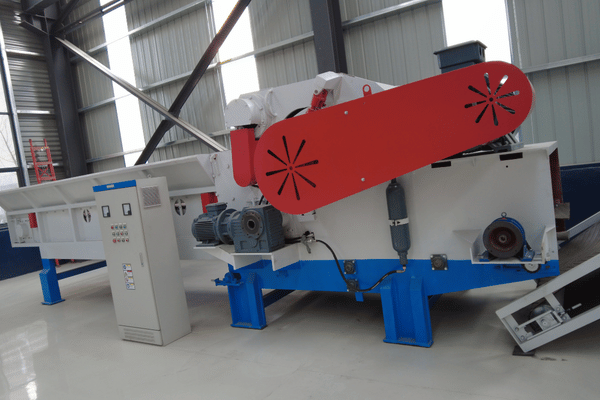
TCPEL’s answer is one crusher, of their one piece construction, built about two set of removable cutting heads mounted on the same chain-plate-fed rotor, using combine alloy-particle hammers for pallets, plate woods, and all mixed-weak material containing nails or staples, and dose-quality H12 tool-steel blades for all clean woods (>4″ diameter rounds, stems, bamboo-grain running, and straw bale-rounds) to minimize blade-chipping. Chain-plate feed at load-adaptive speed; ability to keep engaging feed at adequate force long-term without slip as with belt conveyor by utilizing main motor torque feedback, with rotor-dynamic-balance + boringmachine-centering concentricity alignment build to keep the beam running on one line of motion across the entire feed envelope.
VALIDATION
Proof is available in physical specs and field hours. Chain plates are cast of the same austenitic high-manganese steel grade as jaw-crusher mantles and ball-mill liners, ZGMn13-4. ZGMn13-4 work hardens from minimum HB200 pre-impact surface hardness to HB500+ after the early hours of contact with the feedstock. H12 tool steel occupies the same hardness-toughness space as D2 and Cr12MoV grades that wear-parts suppliers suggest for impact intensive industrial cutting applications. Field-trials in 60+ countries since 2020 has validated that one machine is capable of integrating all the feedstock variations that destroy single-application competitors.
TCPEL Pallet Crusher Product Line — Industrial-Grade Models & Specifications
TCPEL’s pallet crusher series is shipped in 3 stages of production, each product matching separate throughput ranges of the recycling operation. Market researchers split the wood crusher throughput range into Low (under 5 t/h), Medium (5 to 15 t/h), High (above 15 t/h) and TCPEL ships within each bracket. Technical specs listed apply to standard models; all are equipped with either hammer or blade cutting head, and auto-adjust chain-plate feed rate to the on-line torquemeter reading of the rotor.

Low Tier
Recommended Pairing
entry recyclers, regional pellet plants
Throughput
Under 5 t/h (≈30-50 pallets/h with 30 mm screen)
Cutting Head Choice
Hammer (nails) or Blade (clean wood)
Output Size
2-10 cm adjustable
Feedstock Window
Disposable pallets, plate woods, branches
Recommended Pairing
Hammer mill (secondary fine grind for pellets)
Medium Tier
Recommended Pairing
industrial recyclers, integrated pellet lines
Throughput
5-15 t/h
Cutting Head Choice
Hammer + Blade quick-swap
Output Size
2-10 cm adjustable
Feedstock Window
11 feedstocks, mixed daily flow
Recommended Pairing
TCPEL Rotary Dryer + Pellet Machine line
High Tier
Recommended Pairing
consortium recyclers, biomass power feedstock
Throughput
Over 15 t/h
Cutting Head Choice
Reinforced hammer or H12 blade, dual-rotor
Output Size
2-10 cm with screen control
Feedstock Window
Bulk pallets, logs, bamboo, agricultural straw
Recommended Pairing
TCPEL Drum Chipper + Hammer Mill (multi-stage)
Sources: TCPEL company-supplied technical specifications and industry capacity bands per cognitivemarketresearch.com waste-shredder-market-report.
Why the Specifications Matter — And Where to Pay Attention
Spec tables are only useful when buyers can read what numbers do for them at the line level. Three numbers carry most of the operating weight on this product:
1
Throughput in tons/hour, not pallets/hour.
Industry leaders quote pallets/h with a fixed screen size as a marketing baseline — UNTHA’s PS1300 publishes 30 pallets/h with a 30 mm screen as a reference number. But pallet mass varies: softwood disposables run roughly 18 kg, EPAL block pallets 22-25 kg, hardwood freight 30+ kg. TCPEL specs machines in tons/hour against the actual mixed feedstock a customer line carries, which is what drives pellet-mill or boiler downstream throughput.
2
Cutting head wear life in tons-processed, not running hours.
Industry parts-cost calculators publish tonnage-based service life because hours mislead — idle hours are not worn hours. Vendor consensus places dual-hardness alloy hammers at 18,000-25,000 tons before replacement, chromium-carbide-overlay grates at 12,000-15,000 tons, and boron-enhanced steel liners at 7,500-9,000 tons. TCPEL hammer wear life sits toward the upper half of that band because alloy-particle hammers run with chain-plate-controlled feed pressure rather than gravity-fed shock impact.
3
Drive amperage as a wear sensor.
Operators reporting on industrial shredder maintenance flag one early-warning signal repeatedly: when motor amperage climbs 10-15% above the clean-feed baseline, the cutting head is dulling and energy consumption leaks 15-30% before any operator catches a chip-quality change. Every Medium and High Tier TCPEL unit ships with a soft-starter and frequency-controlled feeding system that puts the amperage curve on the operator’s PLC display, surfacing the dull-blade diagnostic before throughput suffers.
“We sampled chain plates from three foundries before engineering the final tool path. We settled on ZGMn13-4 from a single-source supplier. Two competitors either cracked at the bolt holes or spalled within 6,000 tons of feedstock. Our ZGMn13-4 plate work-hardens from HB200 to HB500+ in the first 200 hours of feedstock contact and then runs flat on the wear curve until full replacement. We would not ship a Medium or High Tier unit without it.”
Pallet Crusher vs Shredder vs Grinder vs Chipper — Physical Path Decision Map
We actually have a linear progression between these four product categories. They communicate different physical material handling trajectories, different feed assumptions, and different dedicated output gulfs. Selecting the incorrect category during the procurement process will in fact be more costly than selecting the wrong size within a category. Here’s what each of the four actual trajectories really accomplish, and what each one leaves on the field.
| Physical Path | TCPEL Pallet Crusher | Twin-Shaft Cam Cutter(industrial pallet shredder reference) | 1000 mm Screw Auger(pre-crusher reference) | Low-Speed Single-Shaft(pallet shredder reference) | Horizontal Grinder + Hammermill(multi-stage reference) |
|---|---|---|---|---|---|
| Feeding | Chain plate, load-adaptive (ZGMn13-4) | Hopper, gravity | Hopper + screw self-feed | Auto-pull cutting chamber | Hopper + conveyor + magnet |
| Cutting head | Alloy-particle hammer or H12 blade (quick-swap) | 2″ hexagonal cam cutters, fixed | 1,000 mm screw, single design | Single shaft, fixed knives | Drum knives + hammers, multi-stage |
| Output size | 2-10 cm adjustable | Notebook-paper-size pieces (pre-shred only) | Notebook-paper-size pieces (pre-shred only) | 30 mm typical with screen | Variable by stage |
| Nails & metal | Hammer mode handles nails directly | Handles nails (“with nails and all”) | Tolerates nails; magnetic separator downstream | Tolerates nails; magnet on discharge | Multi-stage with inline magnet |
| Mixed feedstock (pallet + branch + straw + bamboo) |
Single-line 11-feedstock with cutting-head swap | Pallet-optimized; branches/straw require separate machine | Pallet-optimized; pre-shred only | Pallet-optimized | Multi-stage adapts; capital cost runs higher |
| Capital + operating cost profile | Single machine; FOB Qingdao tier [Contact for quote] | Industry single-purpose pricing band ($10K-$50K reference) | Pre-crusher tier (usually paired with secondary shredder, doubling system cost) | Single-purpose pricing band | Multi-machine system; substantially higher capital |
Where the Cost Differential Actually Shows Up
Industry Standard Wear Costs
But that doesn’t just tell the spec story. Main cost differential lives in hidden elements below the spec sheet. Industry parts-cost calculators publish a nominal unit-economics table: dual-hardness alloy hammers cost $0.11-0.14/ton to replace, chromium-carbide-overlay grates cost $0.03-0.04 /ton, boron-modified liners cost $0.09-0.12/ton of build.04/ton. A typical site processing 5000 pallets@22 kg mean weighs 1,320 ton/year of raw feed, which puts hammer replacement purely on the line at $145 to $185 for each year of operation at the dual-hardness alloy picker. a lower grade hardening steel operator would see that cost increase by 2-3-fold, at the removal of another 22% of the scheduled downtime.
The TCPEL Economic Advantage
That is when the math changes with TCPEL. Hammer-only running on pallet-with-nails feedstock burns hammer wear costs at the top of the band. Replacing the H12 blade with hammer-only on clean-wood weeks2(Logs, Brush, Bamboo) drops the wear cost into the bottom half of the band because impact loading is spread over a longer tooledge when blade contact is managed vs hammer face impacts. Over an annual mix of feedstock types, swap-head facilities have consistently published wear costs at the bottom half of the industry band.
Customer Results — 60+ Countries Delivered, Vertical-Integration Ready
Since 2020, TCLAP has deployed pallet crushers and the integrated upstream-downstream biomass plant to Recycler, Pellet Plants, and Foreign DOMEX facilities in more than 60+ countries including industrial investors in South Korea, Russia, Vietnam, Finland, New Zealand, Pakistan, India, Bangladesh, and Turkey. One definition of a successful deployment pattern is vertical integration. A recycler then will go on to purchase a TME-Palette (Hammer Mill, Rotary Dryer, Pellet Machine, Cooler and Packager) over the course of 18-30 months, turning the seemingly expensive install into a revenue center that feeds regional customers who heat with wood pellets.
TCO ADVANTAGE
Five-Year Total Cost of Ownership — TCPEL vs Single-Purpose Alternatives
Most industry vendor case studies report a payback period between 12 and 24 months for industrial pallet shredding, assuming daily operation at high-volume facilities. TPMNO’s operating-cost structure follows the industry rule, but its payback period is faster, because there is only one machine for the eleven-feedstock sources competitors need two machines to service.
Capital saved
One TCPEL crusher vs (pre-crusher + secondary shredder) reduces capital outlay 25-40% for mixed-feedstock recyclers
Wear cost band
$0.11-0.14/ton hammer; $0.09-0.12/ton liner — operates at lower end with mixed feedstock
Downtime avoidance
Cheap-hammer false economy adds 22% downtime over a 5-year run; ZGMn13-4 + alloy-particle baseline avoids the swap
Vertical revenue
Wood pellet feedstock value tracks a market projected at $26B by 2031 (7.01% CAGR)
Three Field Deployment Patterns That Recur
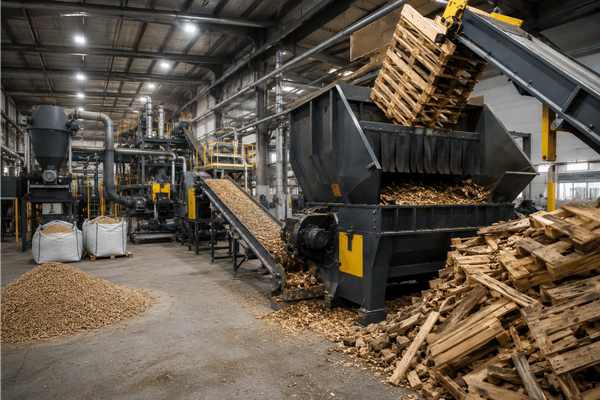
Pattern A-Recycler to Pellet Producer (Eastern European customer).
A 5-year-old pallet recycler who previously averaged 800-1,200 of disposable pallets/day commissioned the Medium Tier TCPEL Pallet Crusher in Year 1. Installed in Year 2, the Hammer Mill and Rotary Dryer were added; Pellet Machines were added in Year 3.6the converter took 36 months to financially convert a disposal cost center into a revenue-producing wood-pellets center that served regional heating consumers. Corresponding vendor-typical payback bands show a 14-22 month payback for just the crusher-line component of this build pattern.
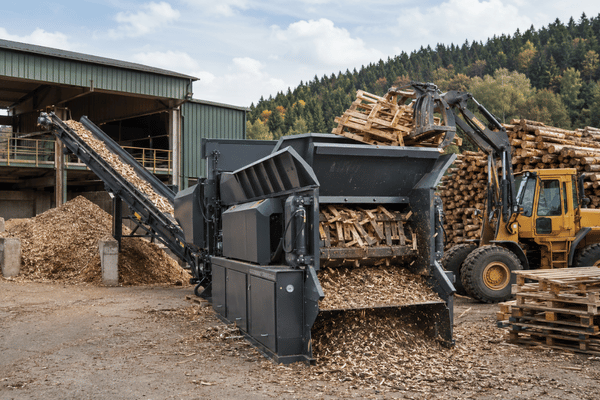
Pattern B-Integrated forestry operation (South Asian sawmill).
Chased by a chronic backlog oflogging residues and branchwood inventory, this sawmill retrofitted the HC Series Pallet Crusher with the H12 blade as primary work tool; periodically switched to alloy hammer-only operation for pallet-disposal contracts. The mill operates its production line with clean-wood feedstock, so impact loads are distributed over the longer tooledge when proper load management techniques are used. As a result, the average wear cost for blade-mode operation is at the lower end of the profile.9
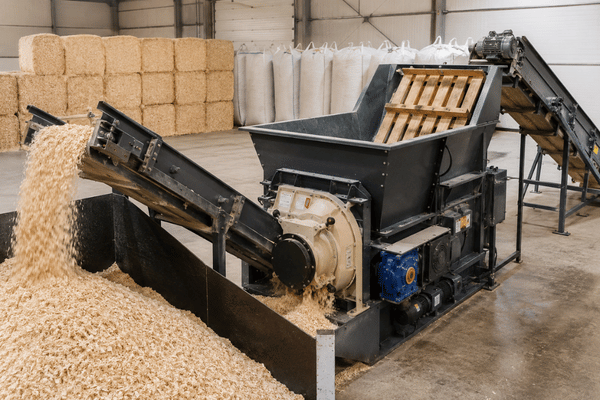
Pattern C – Animal-Bedding Producer (Northern European customer).
A specialty bedding producer servicing equestrian and dairy markets, operates the TCPEL Pallet Crusher set for 4-6cm output chips, directly feeding into screening & bagging. Bedding specs rules out fines<2cm and oversize>8cm; the adjustable output window was the application factor.
Compliance & Material Standards — ZGMn13-4, H12, OSHA, CE
Industrial pallet grinders are viewed within layers of safety and material standards checks that purchasing teams cross reference before approving. TCPEL’s Pallet Crusher meets the following material-standards stack:
ANSI Z133.1-2006
Arboricultural chipper safety baseline — quick-stop and reverse-feed devices on mechanical feed control bar
OSHA 29 CFR 1910.212
Point-of-operation guarding for rotating parts and flying chips (a)(1) and (a)(3)
OSHA 29 CFR 1910.266(h)(4)
Prevention of contact with disc, knives, or blades during operation
CE Machinery Directive 2006/42/EC
Required for European customer markets — Germany, Finland, and 25+ EU destinations
ZGMn13-4 austenitic manganese steel
Chain plate cast to GB/T 5680 equivalent grade — C 0.9-1.30%, Mn 11-14%
H12 tool steel (AISI)
Blade material with hardness-toughness window matched to D2/Cr12MoV impact-cutting applications
Why ZGMn13-4 vs Generic Alloy Steel — and Why It Matters at Audit
Chain-plate material is a recurring question on every industrial shredder-evaluation checklist. ZGmn13-4 is the GB/T 5680 designated equivalent of austenitic manganese steel with C 0.9-1.30% and Mn 11-14%—the same chemical equivalents are published under ASTM A128 as Hadfield steel grades. Pre-impact surface tested around HB200; in impact loading, the surface work-hardens within the first hours of contact to HB500+ and the bulk center remains tough. Blade/mantle/liner proportions are impact targeted not abrasive. In-cost agreed grades are sourced from the ZGMn13-4 foundry back to where the convention was approved for the H12 tool steel cutting blades.
Pre-hardening free chips/cylinders of generic carbon-alloy chain plates of comparable price competing on export markets test out HB180-220; no documented work-hardening zone is employed. Operational-world evidence of service life trade-off: 3-5x shorter and surface spalling occurs around bolt-holes within 4,000-6,000 tons throughput. Cost penalty on the plate: 40-60%, multiplied across a 5-year lifespan.
TCPEL offers documented material test reports traceable to foundry source for ZGMn13-4, on each shipment, for procurement teams cross referencing ISO 9001:2015 supplier terms, and exports AISI-specified tool-steel grade certified blades with every purchase. Factory operations employ 100+ team on 20,000 m2 in Zhangqiu District, Jinan—industrial zone and capable of full export documentation preparation for 60+ receiving nations.
11-Feedstock × Hammer/Blade Configuration Decision Index
This is the spec sheet most pallet-crusher buyers are looking for before they make the call - and the one that product pages usually leave out. A matrix below maps eleven feedstock types TCPEL's Pallet Crusher can handle to the preferred cutting head, output size and downstream pairings.
| Feedstock Type | Recommended Head | Output Size Setting | Downstream Pairing | End-Market Application |
|---|---|---|---|---|
| Disposable softwood pallets (with nails) | Alloy hammer | 2-5 cm | Hammer Mill + magnet | Pellet feedstock / boiler fuel |
| EPAL block pallets (with nails) | Alloy hammer | 3-6 cm | Hammer Mill + magnet | Pellet feedstock / mulch |
| Plate woods / construction templates | Alloy hammer | 2-4 cm | Hammer Mill | Pellet feedstock |
| Bamboo veneer / shelving offcuts | H12 blade | 2-5 cm | Direct (no hammer mill) | Mulch / animal bedding |
| Wood batten / brackets | H12 blade | 3-7 cm | Hammer Mill (if pellet) | Pellet feedstock / mulch |
| Logs (large diameter) | H12 blade | 4-10 cm | Hammer Mill required | Pellet feedstock / boiler fuel |
| Branches (forestry residue) | H12 blade | 3-8 cm | Optional Hammer Mill | Pellet feedstock / boiler fuel |
| Round-bale rice straw | H12 blade | 2-4 cm | Hammer Mill | Pellet feedstock / animal bedding |
| Round-bale corn straw | H12 blade | 2-5 cm | Hammer Mill | Pellet feedstock |
| Round-bale cotton stalk | H12 blade | 2-4 cm | Hammer Mill | Pellet feedstock / boiler fuel |
| Mixed plywood / waste furniture (with fasteners) | Alloy hammer | 2-5 cm | Hammer Mill + magnet | Pellet feedstock / boiler fuel |
Output-Size to Downstream Application Map
It's not the chip but what comes out of the pallet crusher that defines its return on investment. TCPEL's 2-10 cm output window is designed to target four end-market applications with their accumulating Market Price dynamic and downstream line requirements. A map below pairs the four primary applications to their specifications and how TCPEL recommends that line be built.
Output Application
Crusher Setting
Required Downstream Equipment
Market Dynamic
Recommended TCPEL Configuration
Wood Pellet Feedstock
2-5 cm crusher → 3-5 mm fines
Hammer Mill + Rotary Dryer + Pellet Machine + Cooler + Packing
Wood pellet market projected at $26B by 2031 with 7.01% CAGR
Full pellet line (Pallet Crusher + Hammer Mill + Rotary Dryer + Pellet Machine + Cooler + Packing)
Animal Bedding
4-6 cm crusher (controlled fines)
Screen + Packaging line
Stable specialty market — equestrian, dairy, poultry — buys against fines and chip uniformity spec
TCPEL Pallet Crusher + customer-specified screen + packaging
Landscape Mulch
3-10 cm crusher (full window)
Optional colorizer + packaging
Wood recycling market projected at $35.9B by 2034 (6.5% CAGR)
TCPEL Pallet Crusher (standalone or with optional bagging line)
Industrial Boiler Fuel
2-8 cm crusher with moisture control
Rotary Dryer (to 8-12% moisture)
US wood pellet exports more than doubled Feb→Mar 2026 (609k → 1.1M metric tons)
TCPEL Pallet Crusher + Rotary Dryer (with optional Hammer Mill for higher-grade pellet fuel)
Strategic Market Insight
Output Application Map — TCPEL line pairings from company technical documents; downstream market dynamics from referenced industry analyses.
Point of the map: recyclers do not need to choose one application up front. One TCPEL Pallet Crusher feeds all four downstream lines, so customers commonly start with the lowest-capital build (mulch or boiler fuel direct from crusher output) and build out the pellet line over 18-30 months as the wood-pellet revenue stream develops. The 7% CAGR on the wood pellet market and the doubling of US export volumes inside a single quarter in early 2026 are the macroeconomic numbers that drive build-out timing.
Procurement Guide — Pricing Factors, Lead Time, MOQ, After-Sales
Procurement decision for industrial pallet crusher relies on a five-option weighted-score decision framework published within capital machinery procurement categories. Below is the standard weighting used by industry for bulk buy capital machinery decisions:
Total Cost of Ownership (TCO)
Weight: 30%Capital (FOB Qingdao band), wear-part cost/ton ($0.11-0.14 hammer band), energy draw under load, downtime profile against single-purpose alternatives.
Quality & Performance
Weight: 25%ZGMn13-4 chain plate certification, H12 blade certification, throughput at customer-specific feedstock mix, ANSI Z133.1 / 29 CFR 1910.212 alignment.
Innovation & Agility
Weight: 15%Dual hammer/blade head swap (one-machine 11-feedstock), soft-starter + frequency-controlled feed, load-adaptive chain plate.
ESG & Sustainability
Weight: 15%Pallet-to-pellet vertical integration with TCPEL line (closes the recycling loop), wood pellet downstream feeds a $26B-by-2031 renewable energy market.
Risk & Resilience
Weight: 15%60+ country export track record since 2020, ALLWIN INTERNATIONAL legal entity verifiable via Chinese commercial registry, 100+ workshop staff, 20,000 m² owned facility.
Weighted procurement scorecard framework: artofprocurement.com supplier-selection-criteria. Audit guidance: TCPEL company-supplied operational documentation.
Lead Time, MOQ, and Container Packing
Lead time available in two brackets. Standard-kitted units (Low Tier with hammer, single blade head conversion) be shipped within expected B2B industry export-prep window against confirmed purchase order and sent FOB Qingdao. Custom vehicles (Medium & High Tier with dual-blade/conversion quick-swap, dual-rotor, downstream combo-pay) need an extended manufacturing lead time dictated by chain-plate ZGmn13-4 foundry category cycle. For integrated production lines order volume design minimum is one; Systems ship multi-container with full Commissioning services across export main ports to 60+ countries.
Pricing Factors Framework
Pricing for industrial pallet shredders is defined in a broad market band large enough to cover all cases - published benchmark data extends from approximately $10,000 for entry-tier machines through over $50,000 for additional large industrial builds. TCPEL's FOB Qingdao positioning sits within this band, broken into four cost drivers fits within this band, broken into four key cost factors that customers should identify up front in order to build in your budget:
Throughput range
Singlefigures t/h sit at the bottom of the band; multi-t/h prices rise with rotor size and feed system builds.
Cut-head selection
Single hammer or single blade built into a basic frame vs the pair of interchangeable blades that can process 11 different fuelstocks.
System scope
Separately mounted pallet grinds vs inclusive of Hammer Mill, Rotary Dryer, Pellet Mill, and Cooler in an efficient complete line.
Certification
Basic CE forms or long track record of ANSI Z133.1 / 29 CFR 1910.212 compliance, regional electrical standards, and country-specific safety inspection scope.
Pallet Crusher Engineering Tools & Calculators
Feedstock Decision
Evaluate raw material properties including moisture and dimensions. Determine the optimal crusher configuration for your specific wood waste.
Open Tool
Throughput Tier Wear Cost
Calculate operational expenses based on your target processing volume. Accurately estimate wear part lifespans to optimize maintenance budgets.
Open Calculator
Pallet To Pellet Line Configurator
Design your end-to-end processing system. Intelligently link sequential equipment from initial crushing to final biomass pelletizing.
Start Configuration
Frequently Asked Questions
What pallet crusher throughput should we match to our recycling volume?
Throughput load-size is projected on monthly pallet count and absolute vs mixed feedstock proportions. A 5,000 pallet/month capacity plant with only disposable softwood inventory translates to the industry Low Tier end of range (under 5 t/h). A line processing 15,000 pallets/month with a mix of pallet and branch feedstock lines up with industry Medium Tier allocation (5-15 t/h). Pallet mills with a 25,000 pallet/month capacity are at the upper high-end range of the industry High Tier allocation (> 15 t/h). Published throughput ranges by waste-shredder industry market analysts follow the same break-down.
Hammer or blade — which cutting head handles pallets with nails better?
Alloy-particle abrasive hammers are the standard choice for any feedstock material containing fasteners, such as nails, screws or stamped metal staples - pallets, plate woods, waste furniture, and shipping crates. Hammers resist the alloy particles contact without spalling damage, and chain-plate feed rate self-adjusts to the rotor instantaneous torque load when metal is encountered. H12 tool steel cutting blades are specified for the most common set of feedstocks, large diameter logs, boughs, bamboo veneer, and rounded straw - the hardened blade edge delivers a shiny-fresh chip cross-section. Quick-swap additional sets of cutting heads allow a single operator to work throug a feedstock pack at a weekly rotation.
How does TCPEL's chain-plate feeding compare to twin-shaft and screw-auger systems?
Three different feed systems are available that consider varying physical models. Twin-shaft cam-cutter systems (Franklin Miller TASKMASTER and other industrial references) are gravity-fed bulk feeders that dump a hopper into fixed-rate cam rotor; very effective with uniform pallet-only feedstock but rate-limited with mixed pallet/stem feedstock. A 1,000 mm screw auger (WEIMA Woodwolf model reference build) compresses then tears material through an auger rather than a blade, optimized for preshredding, but usually used in conjunction with a second-stand shredder system for finished output. Chain-plate feeding in TCPEL Pallet Crusher locks feedstock from the rotor with minimal slippage, and automatically throttles feed speed to match current motor torque load in order to process integrated lay-ins of pallet, stem, and straw.
What is the typical wear life of ZGMn13-4 chain plates?
ZGMn13-4 is austenitic manganese steel that work-hardens under impact loading from around HB200 surface hardness pre-impact to HB500+ after the first hours of contact with feedstock. Service life is normally expressed in tons-processed as opposed to running hours, because impact-driven wear relates to feedstock throughput. Industry parts-cost data for shredder impact components reveals hammers nine times out of ten achieve 18000-25000 tons before replacement, and similarly-equal cast-impact components clock up in the top-half of that spectrum when specified correctly. Generic carbon-alloy equivalents without documented work-hardening characteristics tend to have 3-5x shorter delivery, and experience bolt-hole spalling as soon as four to six thousand tons.
Can the TCPEL Pallet Crusher feed directly into a pellet mill, or is a hammer mill required?
TCPEL's Pallet Crusher produces 2-10 cm wood chips. Pellet mills operated with ring-die or flat-die configurations normally need feedstock to be granulated to 3-5 mm or less in size for effective die compression, meaning Hammer Mill is the customary second stage between crusher output and pellet mill entry. Mitsubishi ship the Hammer Mill as part of the integrated pellet-production line. For boiler fuel and animal bedding usages, the 2-10 cm crusher output becomes the finished specification and additional hammer mill processing is unnecessary.
What FOB Qingdao price tier covers a 30-pallet/hour throughput target?
30 pallets/hour at 22 kg/pallet works out to roughly 0.65-0.7 t/h, which falls in the Low Tier capacity window. Industry pricing for entry-tier industrial pallet shredders sits within a published $10,000-$50,000 reference band depending on rotor spec, cutting-head choice, and compliance package. For a binding TCPEL FOB Qingdao quotation tied to your specific build, contact us — we will return pricing within one business day across all 60+ destination countries.
What lead time and container packing does TCPEL offer for export?
Standard Low Tier builds ship within a typical industry export-prep window from order confirmation to FOB Qingdao container loading. Medium and High Tier custom builds need a longer cycle driven by ZGMn13-4 chain-plate foundry casting and integrated-line components. Container packing follows full-export standards — corrosion-treated frame, foam corner protection, lashing-grade strap, and a full export-document set including ZGMn13-4 material certificate, H12 mill certificate, CE Declaration of Conformity, and operator safety guide. DDP shipping is available to most of the 60+ destination countries TCPEL serves.
What downstream products can 2-10 cm wood chips be used for?
Output at 2-10 cm aligns with four end-market applications. Wood pellet feedstock requires secondary fine grinding through a hammer mill to 3-5 mm before pellet mill input. Animal bedding for equestrian, dairy, and poultry markets calls for 4-6 cm chip with controlled fines below 2 cm. Landscape mulch in colored or natural lines accepts the full 2-10 cm range. Industrial biomass boilers and combined-heat-and-power systems call for 2-8 cm chip with controlled moisture. Downstream application drives which TCPEL pairing (Hammer Mill, Rotary Dryer, Pellet Machine, etc.) is recommended.
What spare parts and after-sales support does TCPEL provide across the 60+ export countries?
Wear-component replacement items (H12 blades, alloy particle hammers, ZGMn13-4 chain-plate sections, screen meshes, bearings, etc.) are available at Zhangqiu factory for express shipment, supplies stock with lead times usually under two weeks to most destination ports. Customer file-based service maintains an ability to provide identical configuration parts no matter the order date. Most 60+ destination ships receive on-site commissioning and training services.
How does the TCPEL Pallet Crusher fit into a complete biomass pellet production line?
A total biomass-pellet flow is: Pallet Crusher (2-10 cm chips) Hammer Mill (3-5 mm fines) Rotary Dryer (8-12% moisture) Pellet Machine (8 mm pellets) Pellet Cooler (ambient temperature) Pellet Packing Machine (15-25 kg bags or 1-ton totes). Full equipment series ships from TCPEL so order specs can be for an integrated pellet plant with the six processes designed for identical throughput. Costumers typically evolve such a build over 18-30 months: first crusher, 2 nd dryer + hammer mill, 3rd pellet processing line + packing.