Póngase en contacto con TCPEL

Trituradora de pallets
Trituradora industrial de pallets y pallets de madera, con alimentación por placas de cadena y configuración doble de martillos/cuchillas
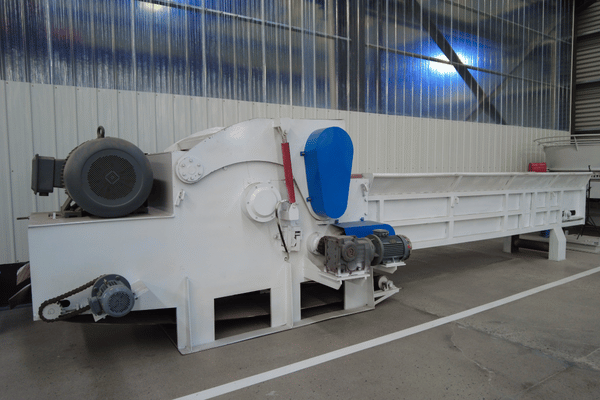
Trituradora de pallets diseñada específicamente para centros de reciclaje y plantas de pellets preparados para procesar en una sola línea distintos tipos de madera de pallets, tableros, ramas y paja de cultivos, sin cargar las materias primas por separado. La trituradora de pallets de TCPEL convierte 11 materias primas diferentes en trozos de madera de 2 a 10 cm, permite alternar entre martillos de aleación (para clavos) y cuchillas H12 (para madera limpia y troncos de gran diámetro), y los transporta hacia las peletizadoras, las líneas de producción de cama para animales y las calderas de biomasa.
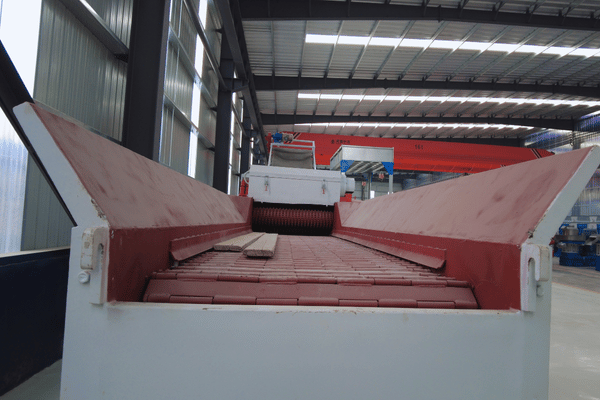
- Alimentación por placas de cadena Acero de alto manganeso ZGMn13-4 y velocidad de alimentación adaptable a la carga
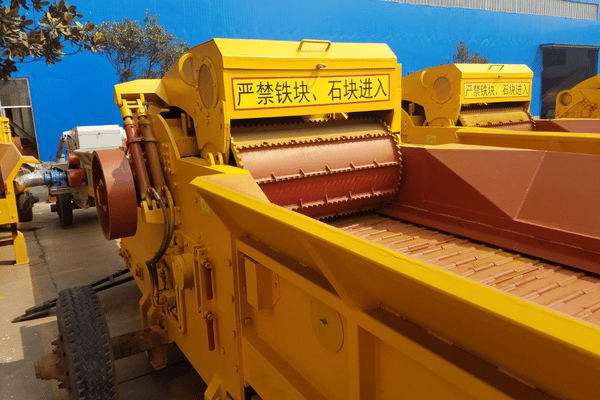
- Cabezales de corte dobles Martillo de aleación para clavos / cuchilla H12 para madera limpia, con cambio rápido
- Capacidad de producción de 2-10 cm Ajustable para materia prima de pellets, mantillo, cama para animales o combustible
- Accionamiento de arranque suave Alimentación controlada por frecuencia; protege el motor con cargas pesadas
- 11 materias primas Pallets, tableros, bambú, ramas y paja en una sola línea
- FOB Qingdao Embalaje en contenedor, opción DDP y servicio posventa en 60+ países

11
Tipos de materia prima en una sola máquina
2-10 cm
Tamaño ajustable de las astillas producidas
60+
Países con entregas desde 2020
20,000 m²
Superficie de fabricación, Shandong
De la acumulación de pallets a una fuente de ganancias: dónde encaja la trituradora de pallets de TCPEL
DESAFÍO
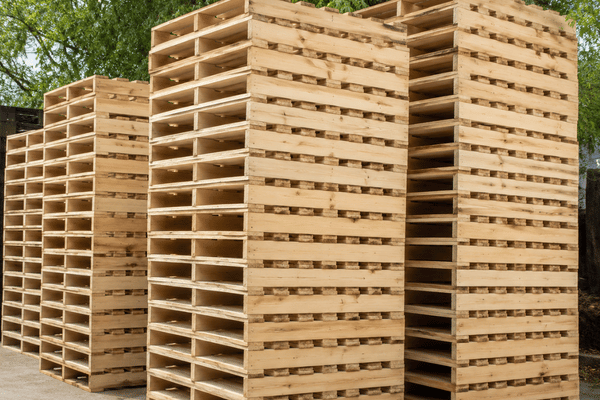
Los recicladores de pallets y las plantas de pellets comparten un mismo problema operativo: la materia prima entrante nunca es igual. El lunes por la mañana llegan 800 pallets desechables de madera blanda repletos de clavos #16. Para el miércoles, un contratista forestal descarga 6 toneladas de madera de ramas y recortes de chapa de bambú. El jueves, un cliente de cama avícola solicita astillas de 4-6 cm, mientras que el comprador de combustible para calderas necesita ≤2 cm. Las trituradoras de pallets de uso específico, fabricadas para «pallets» y nada más, desgastan los martillos un 22% más rápido con materias primas mixtas y obligan a los operadores a clasificarlas manualmente o a utilizar varias máquinas.

CAUSA FUNDAMENTAL
En el fondo del problema se encuentra la causa fundamental. La mayoría de las trituradoras industriales de pallets utilizan un único sistema de corte, ya sean cortadores de leva de doble eje, un tornillo sinfín de 1,000 mm o un tambor de un solo eje y baja velocidad diseñado para una forma específica de materia prima. Los pallets con clavos y los troncos limpios de gran diámetro ejercen cargas radicalmente distintas sobre el rotor, y las herramientas fabricadas para una de estas formas se degradan y pierden estabilidad al enfrentarse a la otra. Finalmente, los talleres de reciclaje terminan comprando una pretrituradora y una trituradora secundaria, y clasifican la materia prima entre ambas, lo que duplica la inversión de capital y exige otra línea de clasificación que supuestamente debía eliminarse.
SOLUCIÓN
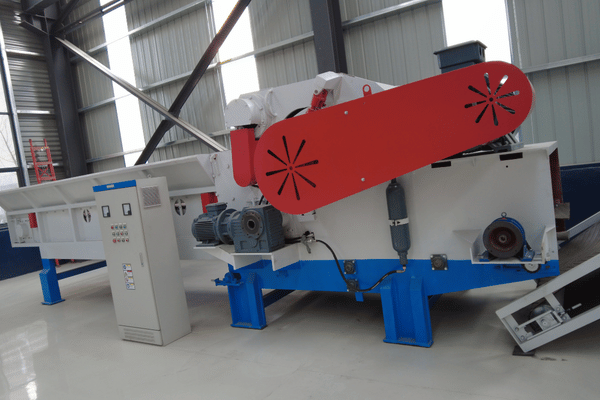
La respuesta de TCPEL es una trituradora de construcción monobloque, diseñada en torno a dos juegos de cabezales de corte desmontables montados sobre el mismo rotor alimentado por placas de cadena, que utiliza martillos combinados con partículas de aleación para pallets, tableros y todo material mixto débil que contenga clavos o grapas, además de cuchillas de acero para herramientas H12 de calidad dosificada para todas las maderas limpias (piezas redondas de >4″ de diámetro, tallos, bambú con veta longitudinal y fardos redondos de paja), a fin de minimizar el astillado de las cuchillas. La alimentación por placas de cadena funciona a una velocidad adaptable a la carga; puede mantener el avance con fuerza suficiente a largo plazo, sin el deslizamiento de un transportador de banda, mediante la retroalimentación del par del motor principal, mientras que el equilibrado dinámico del rotor y la alineación concéntrica centrada con mandrinadora mantienen la viga en una sola trayectoria de movimiento en toda la envolvente de alimentación.
VALIDACIÓN
Las especificaciones físicas y las horas de trabajo en campo aportan las pruebas. Las placas de cadena se funden con el mismo grado de acero austenítico de alto manganeso que los mantos de trituradoras de mandíbulas y los revestimientos de molinos de bolas: ZGMn13-4. ZGMn13-4 se endurece por deformación desde una dureza superficial mínima previa al impacto de HB200 hasta HB500+ tras las primeras horas de contacto con la materia prima. El acero para herramientas H12 ocupa el mismo intervalo de dureza-tenacidad que los grados D2 y Cr12MoV recomendados por los proveedores de piezas de desgaste para aplicaciones industriales de corte sometidas a impactos intensivos. Las pruebas de campo realizadas en 60+ países desde 2020 han confirmado que una sola máquina puede integrar todas las variaciones de materia prima que destruyen a los equipos competidores destinados a una sola aplicación.
Línea de trituradoras de pallets TCPEL: modelos y especificaciones de grado industrial
La serie de trituradoras de pallets de TCPEL se ofrece en 3 niveles de producción, cada uno correspondiente a distintos intervalos de capacidad de procesamiento de la operación de reciclaje. Los investigadores del mercado dividen la capacidad de procesamiento de las trituradoras de madera en baja (menos de 5 t/h), media (de 5 a 15 t/h) y alta (más de 15 t/h), y TCPEL suministra equipos para cada categoría. Las especificaciones técnicas indicadas corresponden a los modelos estándar; todos incorporan un cabezal de corte de martillos o cuchillas y ajustan automáticamente la velocidad de alimentación por placas de cadena según la lectura en línea del medidor de par del rotor.

Nivel bajo
Aplicación recomendada
recicladores principiantes y plantas regionales de pellets
Capacidad de procesamiento
Menos de 5 t/h (≈30-50 pallets/h con criba de 30 mm)
Selección del cabezal de corte
Martillo (clavos) o cuchilla (madera limpia)
Tamaño de salida
Ajustable de 2-10 cm
Intervalo óptimo de materias primas
Pallets desechables, tableros y ramas
Equipo complementario recomendado
Molino de martillos (molienda fina secundaria para pellets)
Nivel medio
Aplicación recomendada
recicladores industriales y líneas integradas de producción de pellets
Capacidad de procesamiento
5-15 t/h
Selección del cabezal de corte
Martillo + cuchilla con cambio rápido
Tamaño de salida
Ajustable de 2-10 cm
Intervalo óptimo de materias primas
11 materias primas y flujo mixto diario
Equipo complementario recomendado
Secador rotativo TCPEL + línea de peletizadoras
Nivel alto
Aplicación recomendada
consorcios de recicladores y materia prima para generación de energía con biomasa
Capacidad de procesamiento
Más de 15 t/h
Selección del cabezal de corte
Martillo reforzado o cuchilla H12, rotor doble
Tamaño de salida
2-10 cm con control mediante criba
Intervalo óptimo de materias primas
Pallets a granel, troncos, bambú y paja agrícola
Equipo complementario recomendado
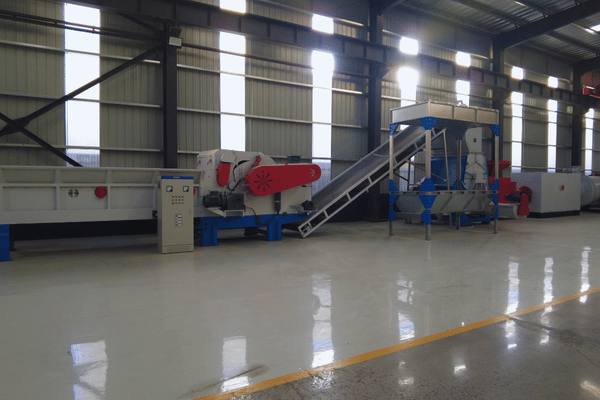
Astilladora de tambor TCPEL + molino de martillos (varias etapas)
Fuentes: especificaciones técnicas proporcionadas por TCPEL e intervalos de capacidad del sector según cognitivemarketresearch.com waste-shredder-market-report.
Por qué importan las especificaciones y dónde prestar atención
Las tablas de especificaciones solo resultan útiles cuando los compradores comprenden lo que las cifras aportan a la línea. Tres cifras concentran la mayor parte de la importancia operativa de este producto:
1
Capacidad de procesamiento en toneladas/hora, no en pallets/hora.
Los líderes del sector indican pallets/h con un tamaño fijo de criba como referencia comercial: el PS1300 de UNTHA publica 30 pallets/h con una criba de 30 mm como cifra de referencia. Sin embargo, la masa de los pallets varía: los desechables de madera blanda pesan aproximadamente 18 kg; los pallets de bloques EPAL, 22-25 kg; y los pallets de carga de madera dura, 30+ kg. TCPEL especifica sus máquinas en toneladas/hora según la materia prima mixta real que procesa la línea del cliente, ya que eso determina la capacidad de procesamiento posterior de la peletizadora o la caldera.
2
Vida útil por desgaste del cabezal de corte en toneladas procesadas, no en horas de funcionamiento.
Las calculadoras de costos de piezas del sector publican la vida útil en función del tonelaje porque las horas inducen a error: las horas de inactividad no son horas de desgaste. El consenso de los proveedores sitúa la vida útil antes del reemplazo de los martillos de aleación de doble dureza en 18,000-25,000 toneladas, la de las parrillas con recubrimiento de carburo de cromo en 12,000-15,000 toneladas y la de los revestimientos de acero enriquecido con boro en 7,500-9,000 toneladas. La vida útil por desgaste de los martillos TCPEL se sitúa en la mitad superior de ese intervalo porque los martillos con partículas de aleación trabajan con una presión de alimentación controlada por placas de cadena, en lugar de recibir impactos bruscos por alimentación gravitacional.
3
Amperaje del accionamiento como sensor de desgaste.
Los operadores que informan sobre el mantenimiento de trituradoras industriales señalan repetidamente una alerta temprana: cuando el amperaje del motor aumenta un 10-15% por encima del valor de referencia con alimentación limpia, el cabezal de corte pierde filo y el consumo de energía se incrementa un 15-30% antes de que el operador detecte cambios en la calidad de las astillas. Cada unidad TCPEL de nivel medio y alto incorpora un arrancador suave y un sistema de alimentación controlado por frecuencia que muestra la curva de amperaje en la pantalla del PLC del operador, lo que permite detectar la pérdida de filo antes de que disminuya la capacidad de procesamiento.
«Tomamos muestras de placas de cadena de tres fundiciones antes de definir la trayectoria final de la herramienta. Elegimos ZGMn13-4 de un proveedor de fuente única. Dos alternativas de la competencia se agrietaron en los orificios de los pernos o sufrieron descascaramiento antes de procesar 6,000 toneladas de materia prima. Nuestra placa ZGMn13-4 se endurece por deformación de HB200 a HB500+ durante las primeras 200 horas de contacto con la materia prima y después mantiene estable la curva de desgaste hasta su reemplazo completo. No enviaríamos una unidad de nivel medio o alto sin ella».
Trituradora de pallets frente a desgarradora, molino y astilladora: mapa de decisión según la trayectoria física
En realidad, existe una progresión lineal entre estas cuatro categorías de productos. Representan distintas trayectorias físicas de manejo de materiales, diferentes supuestos de alimentación y brechas específicas entre sus productos finales. Elegir una categoría incorrecta durante el proceso de compra será, de hecho, más costoso que seleccionar un tamaño equivocado dentro de una categoría. A continuación se explica lo que realmente logra cada una de las cuatro trayectorias y lo que cada una deja sin resolver.
| Trayectoria física | Trituradora de pallets TCPEL | Cortador de leva de doble eje(referencia de trituradora industrial de pallets) | Tornillo sinfín de 1000 mm(referencia de pretrituradora) | Equipo de un solo eje y baja velocidad(referencia de trituradora de pallets) | Molino horizontal + molino de martillos(referencia de varias etapas) |
|---|---|---|---|---|---|
| Alimentación | Placas de cadena, adaptables a la carga (ZGMn13-4) | Tolva, gravedad | Tolva + autoalimentación por tornillo | Cámara de corte con arrastre automático | Tolva + transportador + imán |
| Cabezal de corte | Martillo con partículas de aleación o cuchilla H12 (cambio rápido) | Cortadores de leva hexagonales de 2″, fijos | Tornillo de 1,000 mm, diseño único | Un solo eje, cuchillas fijas | Cuchillas de tambor + martillos, varias etapas |
| Tamaño de salida | Ajustable de 2-10 cm | Trozos del tamaño de una hoja de cuaderno (solo pretrituración) | Trozos del tamaño de una hoja de cuaderno (solo pretrituración) | 30 mm habituales con criba | Variable según la etapa |
| Clavos y metal | El modo de martillos procesa directamente los clavos | Procesa clavos («con clavos y todo») | Tolera clavos; separador magnético posterior en la línea | Tolera clavos; imán en la descarga | Varias etapas con imán en línea |
| Materia prima mixta (pallets + ramas + paja + bambú) |
11 materias primas en una sola línea mediante cambio del cabezal de corte | Optimizada para pallets; las ramas y la paja requieren otra máquina | Optimizada para pallets; solo pretrituración | Optimizada para pallets | El sistema de varias etapas se adapta, pero requiere una mayor inversión de capital |
| Perfil de inversión de capital + costos operativos | Una sola máquina; nivel FOB Qingdao [Solicite cotización] | Intervalo de precios del sector para equipos de uso específico (referencia de $10K-$50K) | Nivel de pretrituradora (normalmente combinada con una trituradora secundaria, lo que duplica el costo del sistema) | Intervalo de precios para equipos de uso específico | Sistema de varias máquinas; inversión de capital considerablemente mayor |
Dónde aparece realmente la diferencia de costos
Costos de desgaste estándar del sector
Pero eso no cuenta toda la historia de las especificaciones. La principal diferencia de costos reside en elementos ocultos bajo la ficha técnica. Las calculadoras de costos de piezas del sector publican una tabla nominal de economía unitaria: reemplazar martillos de aleación de doble dureza cuesta $0.11-0.14/ton; las parrillas con recubrimiento de carburo de cromo cuestan $0.03-0.04 /ton; y los revestimientos modificados con boro cuestan $0.09-0.12/ton de fabricación.04/ton. Una planta típica que procesa 5000 pallets con un peso promedio de 22 kg maneja 1,320 ton/year de materia prima, lo que sitúa el reemplazo anual de martillos de aleación de doble dureza estrictamente en $145 a $185 por cada año de operación. Un operador que utilizara acero endurecido de menor calidad vería aumentar ese costo entre 2-3 veces, además de eliminar otro 22% del tiempo de inactividad programado.
La ventaja económica de TCPEL
Ahí es cuando las cifras cambian con TCPEL. El funcionamiento exclusivo con martillos para procesar pallets con clavos lleva los costos de desgaste de los martillos al extremo superior del intervalo. Sustituir la cuchilla H12 por el funcionamiento exclusivo con martillos durante las semanas2 de madera limpia (troncos, matorrales y bambú) reduce el costo de desgaste hasta la mitad inferior del intervalo, porque la carga de impacto se distribuye sobre un filo más largo cuando se controla el contacto de la cuchilla, en comparación con los impactos sobre la cara del martillo. Con una mezcla anual de tipos de materia prima, las instalaciones con cabezales intercambiables han registrado sistemáticamente costos de desgaste en la mitad inferior del intervalo del sector.
Resultados de clientes: entregas en 60+ países y preparación para la integración vertical
Desde 2020, TCLAP ha instalado trituradoras de pallets y plantas integradas de biomasa con procesos anteriores y posteriores en recicladores, plantas de pellets e instalaciones DOMEX extranjeras de más de 60+ países, incluidos inversionistas industriales de Corea del Sur, Rusia, Vietnam, Finlandia, Nueva Zelanda, Pakistán, India, Bangladés y Turquía. Un patrón de implementación exitoso se define por la integración vertical. Posteriormente, un reciclador compra una TME-Palette (molino de martillos, secador rotativo, peletizadora, enfriador y ensacadora) a lo largo de 18-30 meses, con lo que una instalación aparentemente costosa se convierte en un centro de ingresos que abastece a clientes regionales que utilizan pellets de madera para calefacción.
VENTAJA DE TCO
Costo total de propiedad a cinco años: TCPEL frente a alternativas de uso específico
La mayoría de los casos de estudio de proveedores del sector señalan un periodo de recuperación de la inversión de entre 12 y 24 meses para la trituración industrial de pallets, suponiendo un funcionamiento diario en instalaciones de gran volumen. La estructura de costos operativos de TPMNO sigue la regla del sector, pero su periodo de recuperación de la inversión es más rápido porque solo utiliza una máquina para las once fuentes de materia prima que los competidores necesitan atender con dos máquinas.
Capital ahorrado
Una trituradora TCPEL frente a una (pretrituradora + trituradora secundaria) reduce la inversión de capital un 25-40% para los recicladores de materias primas mixtas
Intervalo de costos de desgaste
$0.11-0.14/ton por martillo; $0.09-0.12/ton por revestimiento: opera en el extremo inferior con materias primas mixtas
Prevención del tiempo de inactividad
La falsa economía de los martillos baratos añade un 22% de tiempo de inactividad durante 5 años; la combinación de ZGMn13-4 + partículas de aleación evita el cambio
Ingresos verticales
El valor de la materia prima para pellets de madera sigue a un mercado proyectado en $26B para 2031 (CAGR del 7.01%)
Tres patrones recurrentes de instalación en campo
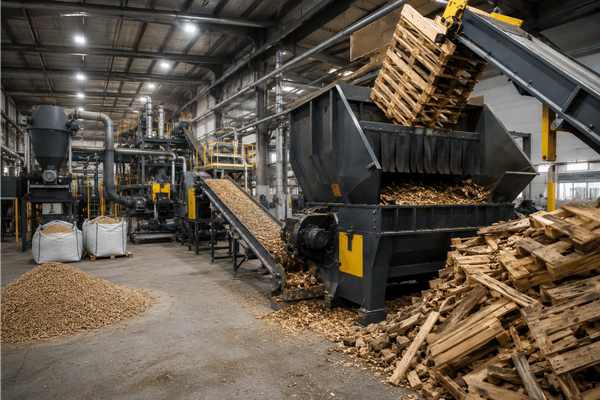
Patrón A: de reciclador a productor de pellets (cliente de Europa Oriental).
Un reciclador de pallets con 5 años de actividad, que anteriormente procesaba un promedio de 800-1,200 pallets desechables/day, puso en marcha la trituradora de pallets TCPEL de nivel medio en el año 1. Tras su instalación, en el año 2 se añadieron el molino de martillos y el secador rotativo; en el año 3.6, el transformador incorporó peletizadoras y tardó 36 meses en convertir financieramente un centro de costos de eliminación en un centro rentable de pellets de madera que atendía a consumidores regionales de calefacción. Los intervalos de recuperación de la inversión habituales entre proveedores indican un periodo de 14-22 meses solo para el componente de la línea de trituración de este patrón de instalación.
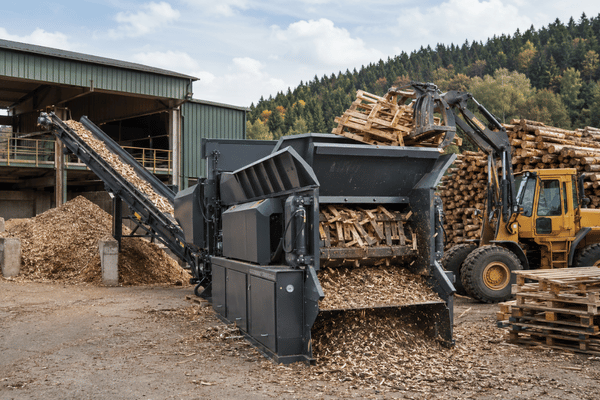
Patrón B: operación forestal integrada (aserradero de Asia del Sur).
Ante una acumulación crónica de residuos forestales y existencias de madera de ramas, este aserradero reacondicionó la trituradora de pallets de la serie HC con la cuchilla H12 como herramienta principal; periódicamente cambiaba al funcionamiento exclusivo con martillos de aleación para contratos de eliminación de pallets. El aserradero opera su línea de producción con materia prima de madera limpia, por lo que las cargas de impacto se distribuyen sobre un filo más largo cuando se aplican técnicas adecuadas de gestión de cargas. Como resultado, el costo medio de desgaste durante el funcionamiento con cuchillas se sitúa en el extremo inferior del perfil.9
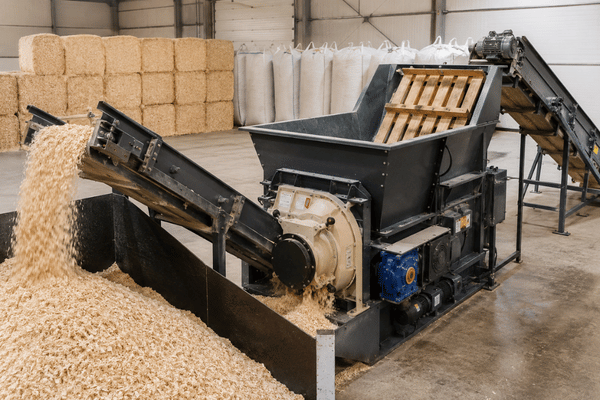
Patrón C: productor de cama para animales (cliente del norte de Europa).
Un productor especializado de material de cama para los mercados ecuestre y lechero utiliza la trituradora de pallets TCPEL configurada para producir astillas de 4-6 cm, que alimenta directamente los procesos de cribado y ensacado. Las especificaciones del material de cama excluyen los finos <2 cm y el material sobredimensionado >8 cm; el intervalo óptimo ajustable del tamaño de salida fue el factor determinante para la aplicación.
Cumplimiento y normas de materiales: ZGMn13-4, H12, OSHA, CE
Las trituradoras industriales de pallets se evalúan mediante varias capas de comprobaciones de seguridad y normas de materiales que los equipos de compras cotejan antes de aprobarlas. La trituradora de pallets de TCPEL cumple el siguiente conjunto de normas de materiales:
ANSI Z133.1-2006
Referencia de seguridad para astilladoras de uso arborícola: dispositivos de parada rápida e inversión de la alimentación en la barra de control de alimentación mecánica
OSHA 29 CFR 1910.212
Protecciones en el punto de operación para piezas giratorias y astillas proyectadas (a)(1) y (a)(3)
OSHA 29 CFR 1910.266(h)(4)
Prevención del contacto con el disco, las cuchillas o las hojas durante el funcionamiento
Directiva de Máquinas CE 2006/42/EC
Obligatoria para los mercados de clientes europeos: Alemania, Finlandia y 25+ destinos de la UE
Acero austenítico al manganeso ZGMn13-4
Placa de cadena fundida conforme al grado equivalente GB/T 5680: C 0.9-1.30%, Mn 11-14%
Acero para herramientas H12 (AISI)
Material de cuchilla con un intervalo de dureza-tenacidad equivalente al de D2/Cr12MoV para aplicaciones de corte por impacto
Por qué ZGMn13-4 en lugar de acero de aleación genérico y por qué importa en una auditoría
El material de las placas de cadena es una pregunta recurrente en todas las listas de evaluación de trituradoras industriales. ZGmn13-4 es el equivalente designado en GB/T 5680 del acero austenítico al manganeso, con C 0.9-1.30% y Mn 11-14%; los mismos equivalentes químicos se publican en ASTM A128 como grados de acero Hadfield. La superficie presenta una dureza aproximada de HB200 antes del impacto; bajo cargas de impacto, se endurece por deformación durante las primeras horas de contacto hasta HB500+, mientras el núcleo conserva su tenacidad. Las proporciones de cuchilla/manto/revestimiento se orientan al impacto, no a la abrasión. Los grados acordados en función del costo se rastrean desde la fundición ZGMn13-4 hasta el lugar donde se aprobó la convención para las cuchillas de acero para herramientas H12.
Las astillas/cilindros sin endurecimiento previo de las placas de cadena genéricas de aleación de carbono y precio comparable que compiten en los mercados de exportación arrojan HB180-220 en las pruebas; no se emplea ninguna zona documentada de endurecimiento por deformación. Evidencia operativa de la reducción de la vida útil: es 3-5 veces menor y se produce descascaramiento superficial alrededor de los orificios de los pernos tras procesar 4,000-6,000 toneladas. Penalización de costo de la placa: 40-60%, multiplicada a lo largo de una vida útil de 5 años.
TCPEL ofrece con cada envío informes documentados de pruebas de materiales para ZGMn13-4, trazables hasta la fundición de origen, destinados a los equipos de compras que cotejan las condiciones de proveedores de ISO 9001:2015, y exporta cuchillas certificadas del grado de acero para herramientas especificado por AISI con cada compra. Las operaciones de la fábrica emplean a un equipo de 100+ personas en 20,000 m2 en el distrito de Zhangqiu, Jinan, una zona industrial con capacidad para preparar toda la documentación de exportación para 60+ países receptores.
Índice de decisión para 11 materias primas × configuración de martillos/cuchillas
Esta es la ficha técnica que la mayoría de los compradores de trituradoras de pallets busca antes de llamar y que las páginas de productos suelen omitir. La matriz siguiente relaciona once tipos de materia prima que la trituradora de pallets de TCPEL puede procesar con el cabezal de corte, el tamaño de salida y los equipos posteriores recomendados.
| Tipo de materia prima | Cabezal recomendado | Ajuste del tamaño de salida | Equipo posterior recomendado | Aplicación en el mercado final |
|---|---|---|---|---|
| Pallets desechables de madera blanda (con clavos) | Martillo de aleación | 2-5 cm | Molino de martillos + imán | Materia prima para pellets / combustible para calderas |
| Pallets de bloques EPAL (con clavos) | Martillo de aleación | 3-6 cm | Molino de martillos + imán | Materia prima para pellets / mantillo |
| Tableros de madera / encofrados de construcción | Martillo de aleación | 2-4 cm | Molino de martillos | Materia prima para pellets |
| Chapa de bambú / recortes de estanterías | Cuchilla H12 | 2-5 cm | Directo (sin molino de martillos) | Mantillo / cama para animales |
| Listones / soportes de madera | Cuchilla H12 | 3-7 cm | Molino de martillos (si se producen pellets) | Materia prima para pellets / mantillo |
| Troncos (gran diámetro) | Cuchilla H12 | 4-10 cm | Se requiere molino de martillos | Materia prima para pellets / combustible para calderas |
| Ramas (residuos forestales) | Cuchilla H12 | 3-8 cm | Molino de martillos opcional | Materia prima para pellets / combustible para calderas |
| Paja de arroz en fardos redondos | Cuchilla H12 | 2-4 cm | Molino de martillos | Materia prima para pellets / cama para animales |
| Paja de maíz en fardos redondos | Cuchilla H12 | 2-5 cm | Molino de martillos | Materia prima para pellets |
| Tallos de algodón en fardos redondos | Cuchilla H12 | 2-4 cm | Molino de martillos | Materia prima para pellets / combustible para calderas |
| Madera contrachapada mixta / muebles de desecho (con sujetadores) | Martillo de aleación | 2-5 cm | Molino de martillos + imán | Materia prima para pellets / combustible para calderas |
Mapa de tamaños de salida y aplicaciones posteriores
No es la astilla, sino lo que sale de la trituradora de pallets, lo que determina el retorno de la inversión. El intervalo óptimo de producción de 2-10 cm de TCPEL está diseñado para atender cuatro aplicaciones de mercado final, con su dinámica acumulativa de precios de mercado y sus requisitos para la línea posterior. El siguiente mapa relaciona las cuatro aplicaciones principales con sus especificaciones y con la configuración de línea que recomienda TCPEL.
Aplicación del producto obtenido
Configuración de la trituradora
Equipos necesarios para la línea posterior
Dinámica del mercado
Configuración recomendada por TCPEL
Materia prima para pellets de madera
Trituración a 2-5 cm → finos de 3-5 mm
Molino de martillos + secador rotativo + peletizadora + enfriador de pellets + ensacado
Se proyecta que el mercado de pellets de madera alcanzará $26B para 2031, con una tasa de crecimiento anual compuesta del 7,01%
Línea completa de producción de pellets (trituradora de pallets + molino de martillos + secador rotativo + peletizadora + enfriador de pellets + ensacado)
Lecho para animales
Trituración a 4-6 cm (finos controlados)
Criba + línea de envasado
Un mercado especializado estable —ecuestre, lechero y avícola— compra según las especificaciones de contenido de finos y uniformidad de las astillas
Trituradora de pallets TCPEL + criba especificada por el cliente + envasado
Mantillo para paisajismo
Trituración a 3-10 cm (intervalo óptimo completo)
Sistema de coloración opcional + envasado
Se proyecta que el mercado del reciclaje de madera alcanzará $35.9B para 2034 (tasa de crecimiento anual compuesta del 6,5%)
Trituradora de pallets TCPEL (independiente o con línea de ensacado opcional)
Combustible para calderas industriales
Trituración a 2-8 cm con control de humedad
Secador rotativo (hasta alcanzar una humedad del 8-12%)
Las exportaciones estadounidenses de pellets de madera aumentaron a más del doble de feb.→mar. de 2026 (609k → 1.1M toneladas métricas)
Trituradora de pallets TCPEL + secador rotativo (con molino de martillos opcional para producir combustible de pellets de mayor calidad)
Perspectiva estratégica del mercado
Mapa de aplicaciones del producto obtenido — combinaciones de líneas TCPEL basadas en documentos técnicos de la empresa; dinámica de los mercados posteriores basada en los análisis sectoriales citados.
Objetivo del mapa: los recicladores no necesitan elegir una sola aplicación desde el principio. Una trituradora de pallets TCPEL abastece las cuatro líneas posteriores, por lo que los clientes suelen comenzar con la configuración que requiere menos capital (mantillo o combustible para calderas directamente del producto de la trituradora) y ampliar la línea de producción de pellets durante 18-30 meses, conforme se desarrolla el flujo de ingresos de los pellets de madera. La tasa de crecimiento anual compuesta del 7% del mercado de pellets de madera y la duplicación de los volúmenes de exportación de Estados Unidos durante un solo trimestre a principios de 2026 son los indicadores macroeconómicos que determinan el momento de la ampliación.
Guía de compra — factores de precio, plazo de entrega, MOQ y servicio posventa
La decisión de compra de una trituradora industrial de pallets se basa en un marco de evaluación ponderada de cinco opciones publicado para las categorías de adquisición de maquinaria de capital. A continuación se muestra la ponderación estándar utilizada en el sector para las decisiones de compra de maquinaria de capital en grandes volúmenes:
Costo total de propiedad (TCO)
Ponderación: 30%Inversión de capital (franja FOB Qingdao), costo de las piezas de desgaste por tonelada (franja de $0.11-0.14 para martillos), consumo energético bajo carga y perfil de tiempo de inactividad frente a alternativas de uso específico.
Calidad y desempeño
Ponderación: 25%Certificación de la placa de cadena ZGMn13-4, certificación de las cuchillas H12, capacidad de procesamiento con la mezcla de materias primas específica del cliente y conformidad con ANSI Z133.1 / 29 CFR 1910.212.
Innovación y agilidad
Ponderación: 15%Intercambio de cabezales de martillos/cuchillas (una máquina para 11 materias primas), arrancador suave + alimentación con control de frecuencia y placa de cadena adaptable a la carga.
ESG y sostenibilidad
Ponderación: 15%Integración vertical de pallets a pellets con una línea TCPEL (cierra el ciclo de reciclaje); los pellets de madera producidos posteriormente abastecen un mercado de energías renovables que alcanzará $26B para 2031.
Riesgo y resiliencia
Ponderación: 15%Trayectoria de exportaciones a 60+ países desde 2020, entidad jurídica ALLWIN INTERNATIONAL verificable en el registro mercantil chino, 100+ empleados de taller e instalaciones propias de 20,000 m².
Marco de evaluación ponderada de compras: artofprocurement.com supplier-selection-criteria. Orientación para auditorías: documentación operativa proporcionada por TCPEL.
Plazo de entrega, MOQ y carga en contenedores
El plazo de entrega está disponible en dos categorías. Las unidades estándar en kit (nivel bajo con martillo y conversión a un solo cabezal de cuchillas) pueden enviarse dentro del plazo habitual del sector B2B para la preparación de exportaciones, contra una orden de compra confirmada y bajo condiciones FOB Qingdao. Los equipos personalizados (niveles medio y alto con dos cuchillas/conversión de cambio rápido, rotor doble y paquete combinado de equipos posteriores) necesitan un plazo de fabricación más largo, determinado por el ciclo de fundición de las placas de cadena ZGmn13-4. Para las líneas de producción integradas, el volumen mínimo de diseño del pedido es uno; los sistemas se envían en varios contenedores con servicios completos de puesta en marcha desde los principales puertos de exportación hacia 60+ países.
Marco de factores de precio
Los precios de las trituradoras industriales de pallets se definen dentro de una franja de mercado lo suficientemente amplia para abarcar todos los casos: los datos comparativos publicados van desde aproximadamente $10,000 para máquinas de nivel básico hasta más de $50,000 para configuraciones industriales grandes adicionales. El posicionamiento FOB Qingdao de TCPEL se encuentra dentro de esta franja, desglosada en cuatro factores de costo, encaja dentro de esta franja, desglosada en cuatro factores clave de costo que los clientes deben identificar desde el principio para incorporarlos a su presupuesto:
Intervalo de capacidad de procesamiento
Las capacidades de un solo dígito en t/h se sitúan en la parte inferior de la franja; los precios de las capacidades de varios t/h aumentan con el tamaño del rotor y la configuración del sistema de alimentación.
Selección del cabezal de corte
Un solo martillo o una sola cuchilla incorporados en un bastidor básico, frente al par de cuchillas intercambiables capaz de procesar 11 materias primas diferentes para combustible.
Alcance del sistema
Trituración de pallets mediante una unidad instalada por separado, frente a una línea completa y eficiente que incluye molino de martillos, secador rotativo, peletizadora y enfriador de pellets.
Certificación
Documentación CE básica o una larga trayectoria de cumplimiento de ANSI Z133.1 / 29 CFR 1910.212, normas eléctricas regionales y requisitos de inspección de seguridad específicos de cada país.
Herramientas y calculadoras de ingeniería para trituradoras de pallets
Selección de la materia prima
Evalúe las propiedades de la materia prima, incluidas la humedad y las dimensiones. Determine la configuración óptima de la trituradora para sus residuos de madera específicos.
Abrir herramienta
Costo de desgaste por nivel de capacidad de procesamiento
Calcule los gastos operativos según su volumen de procesamiento objetivo. Estime con precisión la vida útil de las piezas de desgaste para optimizar los presupuestos de mantenimiento.
Abrir calculadora
Configurador de líneas de pallets a pellets
Diseñe su sistema de procesamiento de principio a fin. Conecte de manera inteligente los equipos consecutivos, desde la trituración inicial hasta la peletización final de la biomasa.
Iniciar configuración
Preguntas frecuentes
¿Qué capacidad de procesamiento de la trituradora de pallets debemos seleccionar para nuestro volumen de reciclaje?
La capacidad de procesamiento necesaria se calcula a partir de la cantidad mensual de pallets y de las proporciones de materia prima exclusiva frente a materia prima mixta. Una planta con capacidad de 5,000 pallets/mes y existencias compuestas únicamente por madera blanda desechable corresponde al extremo inferior del nivel bajo del sector (menos de 5 t/h). Una línea que procesa 15,000 pallets/mes con una mezcla de pallets y ramas corresponde a la asignación de nivel medio del sector (5-15 t/h). Las plantas de pallets con capacidad de 25,000 pallets/mes se sitúan en el extremo superior de la asignación de nivel alto del sector (> 15 t/h). Los intervalos de capacidad de procesamiento publicados por los analistas del mercado de trituradoras de residuos siguen el mismo desglose.
Martillo o cuchilla: ¿qué cabezal de corte procesa mejor los pallets con clavos?
Los martillos abrasivos con partículas de aleación son la opción estándar para cualquier materia prima que contenga elementos de fijación, como clavos, tornillos o grapas metálicas estampadas: pallets, madera en tableros, muebles de desecho y cajas de transporte. Los martillos resisten el contacto con las partículas de aleación sin sufrir daños por desprendimiento, y la velocidad de alimentación de la placa de cadena se ajusta automáticamente a la carga instantánea de par del rotor cuando se encuentra metal. Las cuchillas de corte de acero para herramientas H12 se especifican para el conjunto más común de materias primas, troncos de gran diámetro, ramas, chapa de bambú y paja redondeada; el filo endurecido produce una sección transversal de astilla brillante y recién cortada. Los juegos adicionales de cabezales de corte de cambio rápido permiten que un solo operador procese un lote de materias primas con una rotación semanal.
¿Cómo se compara la alimentación mediante placa de cadena de TCPEL con los sistemas de doble eje y tornillo sinfín?
Hay tres sistemas de alimentación diferentes disponibles para distintas características físicas. Los sistemas de doble eje con cortadores de leva (Franklin Miller TASKMASTER y otras referencias industriales) son alimentadores a granel por gravedad que descargan una tolva en un rotor de levas de velocidad fija; son muy eficaces con materia prima uniforme compuesta solo por pallets, pero su velocidad es limitada con mezclas de pallets y tallos. Un tornillo sinfín de 1,000 mm (configuración de referencia del modelo WEIMA Woodwolf) comprime y después desgarra el material mediante un sinfín en lugar de una cuchilla; está optimizado para la trituración previa, pero suele utilizarse junto con un segundo sistema triturador para obtener el producto final. La alimentación mediante placa de cadena de la trituradora de pallets TCPEL mantiene la materia prima sujeta frente al rotor con un deslizamiento mínimo y regula automáticamente la velocidad de alimentación para adaptarla a la carga de par actual del motor, a fin de procesar cargas combinadas de pallets, tallos y paja.
¿Cuál es la vida útil típica de las placas de cadena ZGMn13-4?
ZGMn13-4 es un acero austenítico al manganeso que se endurece por trabajo bajo cargas de impacto, desde una dureza superficial aproximada de HB200 antes del impacto hasta HB500+ después de las primeras horas de contacto con la materia prima. La vida útil suele expresarse en toneladas procesadas y no en horas de funcionamiento, porque el desgaste causado por impactos está relacionado con la capacidad de procesamiento de la materia prima. Los datos sectoriales sobre el costo de las piezas de impacto de trituradoras revelan que, en nueve de cada diez casos, los martillos alcanzan 18000-25000 toneladas antes de requerir reemplazo, y que los componentes fundidos de impacto equivalentes se sitúan de forma similar en la mitad superior de ese intervalo cuando se especifican correctamente. Los equivalentes genéricos de aleación de carbono sin características documentadas de endurecimiento por trabajo suelen ofrecer una duración 3-5x menor y sufren desprendimientos alrededor de los orificios para pernos tras apenas cuatro a seis mil toneladas.
¿La trituradora de pallets TCPEL puede alimentar directamente una peletizadora o se necesita un molino de martillos?
La trituradora de pallets TCPEL produce astillas de madera de 2-10 cm. Las peletizadoras con configuraciones de matriz anular o matriz plana normalmente necesitan materia prima molida a un tamaño de 3-5 mm o menos para lograr una compresión eficaz en la matriz de peletizado, lo que convierte al molino de martillos en la segunda etapa habitual entre el producto de la trituradora y la entrada de la peletizadora. Mitsubishi suministra el molino de martillos como parte de la línea integrada de producción de pellets. Para aplicaciones de combustible para calderas y lecho para animales, el producto de 2-10 cm de la trituradora constituye la especificación final y no necesita procesamiento adicional en un molino de martillos.
¿Qué nivel de precios FOB Qingdao corresponde a una capacidad objetivo de 30 pallets/hora?
30 pallets/hora a 22 kg/pallet equivalen aproximadamente a 0,65-0,7 t/h, lo que se sitúa en el intervalo óptimo de capacidad del nivel bajo. Los precios del sector para trituradoras industriales de pallets de nivel básico se encuentran dentro de una franja de referencia publicada de $10,000-$50,000, según las especificaciones del rotor, la selección del cabezal de corte y el paquete de cumplimiento normativo. Para recibir una cotización vinculante de TCPEL bajo condiciones FOB Qingdao y adaptada a su configuración específica, contáctenos; le enviaremos los precios en un día hábil para cualquiera de los 60+ países de destino.
¿Qué plazo de entrega y tipo de carga en contenedores ofrece TCPEL para exportación?
Las configuraciones estándar de nivel bajo se envían dentro del plazo habitual del sector para la preparación de exportaciones, desde la confirmación del pedido hasta la carga del contenedor bajo condiciones FOB Qingdao. Las configuraciones personalizadas de niveles medio y alto necesitan un ciclo más largo debido a la fundición de las placas de cadena ZGMn13-4 y a los componentes de la línea integrada. La carga en contenedores cumple todas las normas de exportación: bastidor con tratamiento anticorrosivo, protección de espuma en las esquinas, flejes aptos para sujeción y un juego completo de documentos de exportación que incluye el certificado del material ZGMn13-4, el certificado de laminación H12, la Declaración de Conformidad CE y la guía de seguridad del operador. El envío DDP está disponible para la mayoría de los 60+ países de destino atendidos por TCPEL.
¿Para qué productos posteriores pueden utilizarse las astillas de madera de 2-10 cm?
El producto de 2-10 cm es adecuado para cuatro aplicaciones de mercado final. La materia prima para pellets de madera necesita una molienda fina secundaria en un molino de martillos hasta alcanzar 3-5 mm antes de entrar en la peletizadora. El lecho para los mercados ecuestre, lechero y avícola requiere astillas de 4-6 cm con finos controlados inferiores a 2 cm. Las líneas de mantillo natural o coloreado para paisajismo aceptan el intervalo completo de 2-10 cm. Las calderas industriales de biomasa y los sistemas de cogeneración requieren astillas de 2-8 cm con humedad controlada. La aplicación posterior determina qué combinación de equipos TCPEL (molino de martillos, secador rotativo, peletizadora, etc.) se recomienda.
¿Qué repuestos y asistencia posventa proporciona TCPEL en los 60+ países de exportación?
Los repuestos para componentes de desgaste (cuchillas H12, martillos con partículas de aleación, secciones de placas de cadena ZGMn13-4, mallas de criba, rodamientos, etc.) están disponibles en la fábrica de Zhangqiu para envío urgente, con existencias y plazos de entrega habitualmente inferiores a dos semanas para la mayoría de los puertos de destino. El servicio basado en el expediente de cada cliente permite suministrar piezas de configuración idéntica independientemente de la fecha del pedido. La mayoría de los envíos a los 60+ destinos incluyen servicios de puesta en marcha y capacitación en las instalaciones.
¿Cómo se integra la trituradora de pallets TCPEL en una línea completa de producción de pellets de biomasa?
El flujo completo de producción de pellets de biomasa es: trituradora de pallets (astillas de 2-10 cm); molino de martillos (finos de 3-5 mm); secador rotativo (humedad del 8-12%); peletizadora (pellets de 8 mm); enfriador de pellets (temperatura ambiente); máquina ensacadora de pellets (sacos de 15-25 kg o contenedores flexibles de 1 tonelada). TCPEL suministra la serie completa de equipos, por lo que el pedido puede especificar una planta integrada de pellets cuyos seis procesos estén diseñados para la misma capacidad de procesamiento. Los clientes suelen ampliar esta configuración durante 18-30 meses: primero la trituradora, en 2.º lugar el secador + molino de martillos y en 3.º lugar la línea de procesamiento de pellets + ensacado.
Trending now