Get in Touch with TCPEL

TCSC CONFIGURATION RANGE
For Biomass Pellet Plants & Feed Mills
Industrial Bale Grinder TCPEL TCSC Bale Grinder Series
Quoted TCSC80, TCSC100, TCSC130 and TCSC150 configurations cover 1.5–8 t/h rated capacity and 22–110 kW main motor power. Nominal fibre length is 30–60 mm, with TCSC80 listed at 30–50 mm; final capacity depends on material and operating conditions.
1.5–8 T/H RATED CAPACITY
22–110 kW MAIN MOTOR
UPPER OR BOTTOM DISCHARGE
30–60Nominal fibre length / mm

SYSTEM ARCHITECTURE
Solution Summary · TCPEL TCSC Series
1.5 To 8 T/H
Quoted rated capacityTCSC80 / 100 / 130 / 150
22–110 kW
Three-Phase Motor PowerConfiguration-specific drive arrangement
30–60 mm
Nominal fibre lengthTCSC80 is listed at 30–50 mm
2 Layouts
Discharge optionsUpper and bottom discharge
Bale Preparation for the Next Process
The TCSC series is used for coarse size reduction of straw and similar baled crops, to prepare the material for further processing. Each model is provided with configuration-specific cutting elements. Models are available with an upper or bottom discharge layout. Confirm the required bale format and feeding conditions with the selected configuration.
Addressing Biomass Preparation Bottlenecks
When called upon to run a feed mill or pellet plant there is one chronic issue constantly rearing itself. A newly baled rice straw or wheat straw bale has been baled fresh, and it has a density value of roughly 120-200 kg/m³ due to the sheer pressure of the baler machinery. Meanwhile the organic pelletizer downstream that depends on equipment to shred bales evenly is expecting feedstock that has been successfully defibrated to a size less than 5 mm. As an industrial shredder upstream of the pelletizer, the bale grinder converts bulk raw material into a pellet-line ready format suitable for biofuel and biomass fuel production. Unfortunately, you simply do not have the machinery in place that can yet go directly from the baled states all the way to the pellet die. This is where many small-to-mid pellet projects falter. Hand-cutting the twine, feeding gathered loose straw from trolleys, or purchases of tractor-mounted hay processors, often designed for cattle bedding, prove to be inadequate solutions for continued throughput.

The Four-Step Shear Process Longitudinal Defibration shears longitudinally increased expose substrate enzymes reduced lignin barrier
TCPEL TCSC bale grinder ratchets that process through the gap with a four-step process: intact bale lignin barrier at the intake disc blade defibration shears the straw longitudinally in the direction rather than just chopping the feedstock cross-sectionincreased expose surface area to allow microorganisms to efficiently digest the material in anaerobic digestion or related densification process becomes feasible. In biofuel production and biogas optimum productivity time lines this defibration strategy has been summarized in an IEA Bioenergy paper in which researchers reported that intact stalk fibers and cells present a much smaller substrate for microbial enzymes compared to defibrated material, and thereby reducing biogas generation per feedstock unit. Acting as the up-stream industrial processing step in a biomass energy value chain, the bale grinder converts near-hard-dense straw into the biorefinery-ready substrate for subsequent biomass and biofuel generation .

Process Selection and Configuration Boundaries
Compare the selected machinery with other machines for the project described. The comparison depends on the feedstock, required nominal fibre length, outlet configuration and downstream requirements.
Nominal Fibre Length and Downstream Matching
The quotation lists nominal fibre length rather than a uniform-particle guarantee: 30–50 mm for TCSC80 and 30–60 mm for TCSC100, TCSC130 and TCSC150. Confirm whether the downstream equipment requires further size reduction or screening.

Configuration choice
Match the outlet to the receiving point
Upper discharge
The processed material is discharged from the crushing chamber. The outlet is located in an elevated position, and the final configuration should be specified in the quotation.
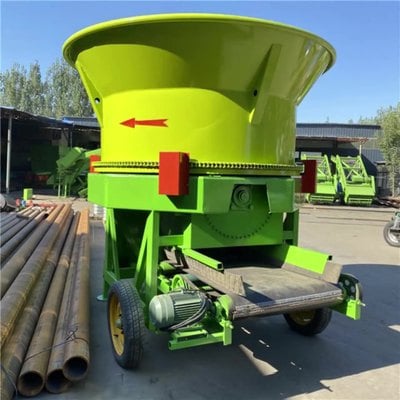
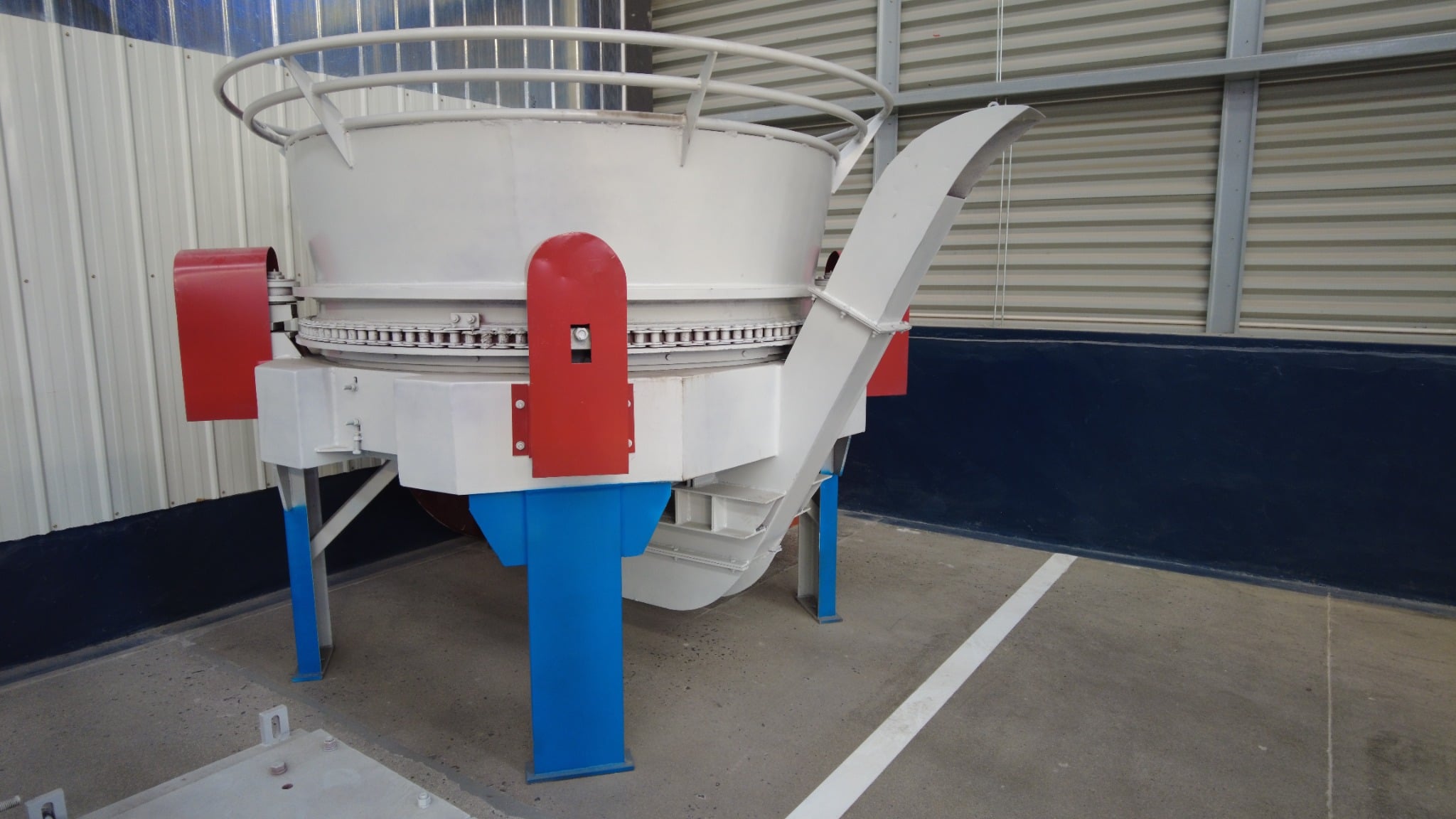
Bottom discharge
The material is discharged from the lowest point of the tub. The illustrated layout shows a conveyor under the tub; conveyor supply and final material transport must be confirmed for the selected configuration.
MODEL RANGE
TCPEL TCSC Series — Four Quoted Model Sizes
The TCSC range includes TCSC80, TCSC100, TCSC130 and TCSC150, each available with upper or bottom discharge. Cutting elements, dimensions, drives and rated capacity differ by configuration.
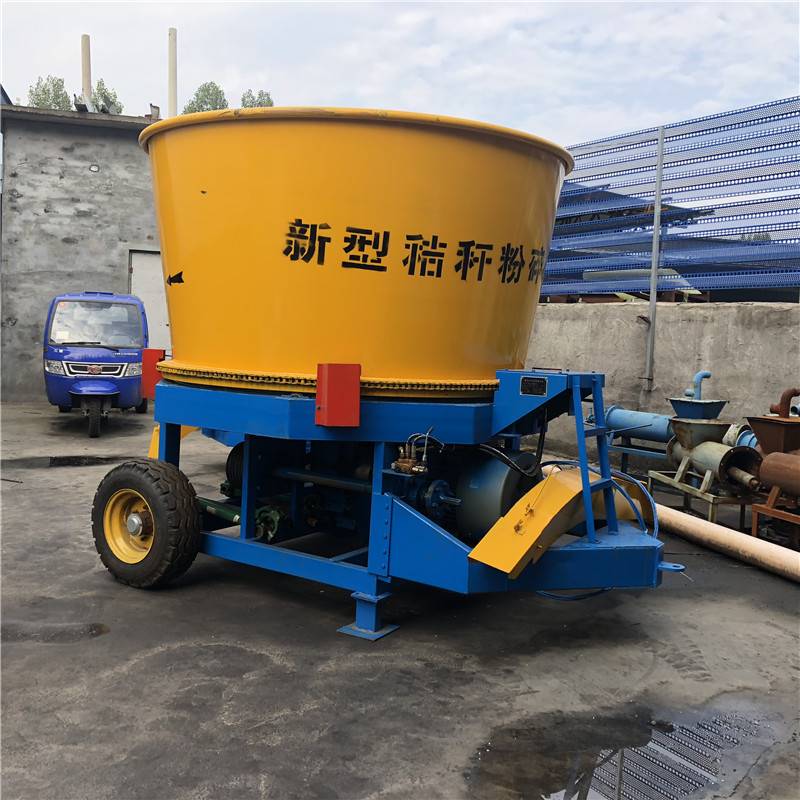
Representative configuration image. Confirm the selected model and supplied equipment in the final quotation.
01
TCSC80
1.5–2.5 t/h
- Main power:22 kW
- Nominal fibre length:30–50 mm
- Discharge:Upper or bottom
02
TCSC100
3–5 t/h
- Main power:55 / 45 kW
- Nominal fibre length:30–60 mm
- Discharge:Upper or bottom
03
TCSC130
4–7 t/h
- Main power:75 / 90 kW
- Nominal fibre length:30–60 mm
- Discharge:Upper or bottom
04
TCSC150
4–8 t/h
- Main power:110 kW
- Nominal fibre length:30–60 mm
- Discharge:Upper or bottom
CONFIGURATION DATA
Eight Quoted Configurations
| Configuration | Main motor | Rated capacity | Nominal fibre length | Dimensions L × W × H | Structural weight |
|---|---|---|---|---|---|
| TCSC80 upper | 22 kW | 1.5–2.5 t/h | 30–50 mm | 3,200 × 2,300 × 1,830 mm | 1,300 kg |
| TCSC80 bottom | 22 kW | 1.5–2.5 t/h | 30–50 mm | 3,200 × 2,300 × 1,830 mm | 1,300 kg |
| TCSC100 upper | 55 kW | 3–5 t/h | 30–60 mm | 3,800 × 2,600 × 2,650 mm | 2,200 kg |
| TCSC100 bottom | 45 kW | 3–5 t/h | 30–60 mm | 3,600 × 2,700 × 2,250 mm | 1,700 kg |
| TCSC130 upper | 75 kW | 4–7 t/h | 30–60 mm | 3,800 × 2,700 × 2,230 mm | 3,000 kg |
| TCSC130 bottom | 90 kW | 4–6 t/h | 30–60 mm | 4,100 × 2,800 × 2,650 mm | 3,400 kg |
| TCSC150 upper | 110 kW | 5–8 t/h | 30–60 mm | 4,000 × 2,800 × 2,600 mm | 3,300 kg |
| TCSC150 bottom | 110 kW | 4–8 t/h | 30–60 mm | 4,600 × 3,000 × 2,700 mm | 4,000 kg |
Rated capacity depends on material and operating conditions. Nominal fibre length is not a guarantee that every output piece will be the same size.
Compare the selected model, discharge layout, material condition, available power and downstream handling equipment with the quotation before final selection.
DISCHARGE
Operating Controls and Discharge
Choose the upper or bottom outlet around the receiving equipment. The quotation identifies the main motor, auxiliary tub drive and starter cabinet by configuration; confirm the final electrical supply, outlet arrangement and accessory scope before installation.
Need help matching a configuration to your material and target throughput?
Machine details
Inside the TCSC configuration
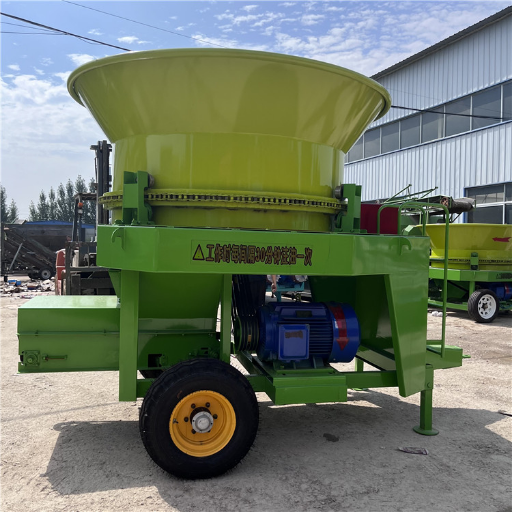
Various components of the machine, i.e. drive system, tub and cutting elements, are shown in the figure. The number of cutting elements is dependent on the model and the arrangement of the discharge.
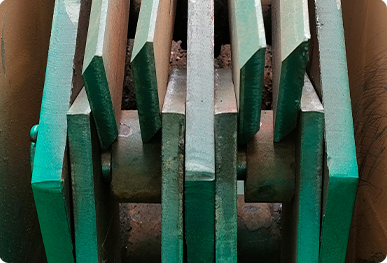
Cutting elements
Blades or hammers are specified by configuration.
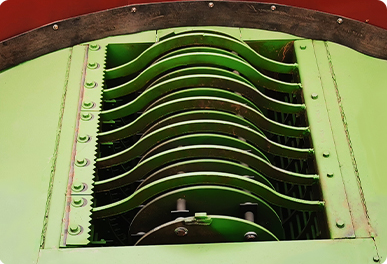
Crushing chamber
Internal guides retain material in the working area.

Tub drive chain
The chain transfers drive to the rotating tub.
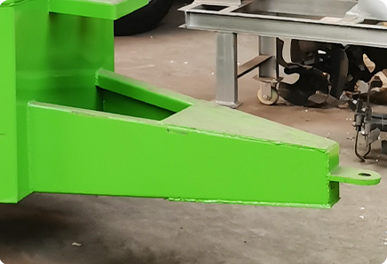
Tow connection
The wheeled arrangement supports positioning within the operating site.
Match Bale-Grinder Capacity to the Next Process
Equipment must be able to grind bales at the rated throughput. Configuration tables cite specific throughput ranges for various models. Realized throughput is dependent on the condition of the processed material.
The bale grinder is a size-reduction unit for bales. The output from a bale grinder is coarse material for further processing. The size of the output from the bale grinder and the capacity of the downstream equipment (conveying equipment, grinding equipment, pelletizing equipment, etc.) should be considered when matching material size and rated capacity to the next stage; bale-grinding capacity does not establish finished-pellet output.
| Configuration | Rated bale capacity | Downstream matching question |
|---|---|---|
| TCSC80 upper / bottom | 1.5–2.5 t/h | Can the receiving equipment accept the nominal 30–50 mm fibre range? |
| TCSC100 upper / bottom | 3–5 t/h | Does the next stage match the selected outlet and available power? |
| TCSC130 upper / bottom | 4–7 / 4–6 t/h | Does conveying match the selected discharge arrangement? |
| TCSC150 upper / bottom | 5–8 / 4–8 t/h | Have site space, electrical supply and downstream capacity been checked? |
Plan the handoff between processes
When requesting a configuration of the TCSC, give the expected service hours, the size of the material to be processed and the equipment that will receive the processed material. This will help ensure that the TCSC is configured for the expected service hours, and that the next process in the User’s plant is in alignment.
SELECTION NOTE: Rated capacity is a quoted equipment range. Confirm material, moisture, bale density and downstream requirements for the final project configuration.
Need to match a TCSC configuration to an existing process line?Request configuration help →
Customer project · Australia
Start with the straw bales you need to process
This Australian rice straw project combines a bale shredder with wind sorting, hammer milling and pellet production equipment. The complete pellet line has a design capacity of 2 t/h.
- Raw material
- Rice straw
- Complete-line design capacity
- 2 t/h
Your incoming bales
- Record bale dimensions and weight.
- Describe how the straw is stored and delivered.
- Share photos of the bales and any binding material.
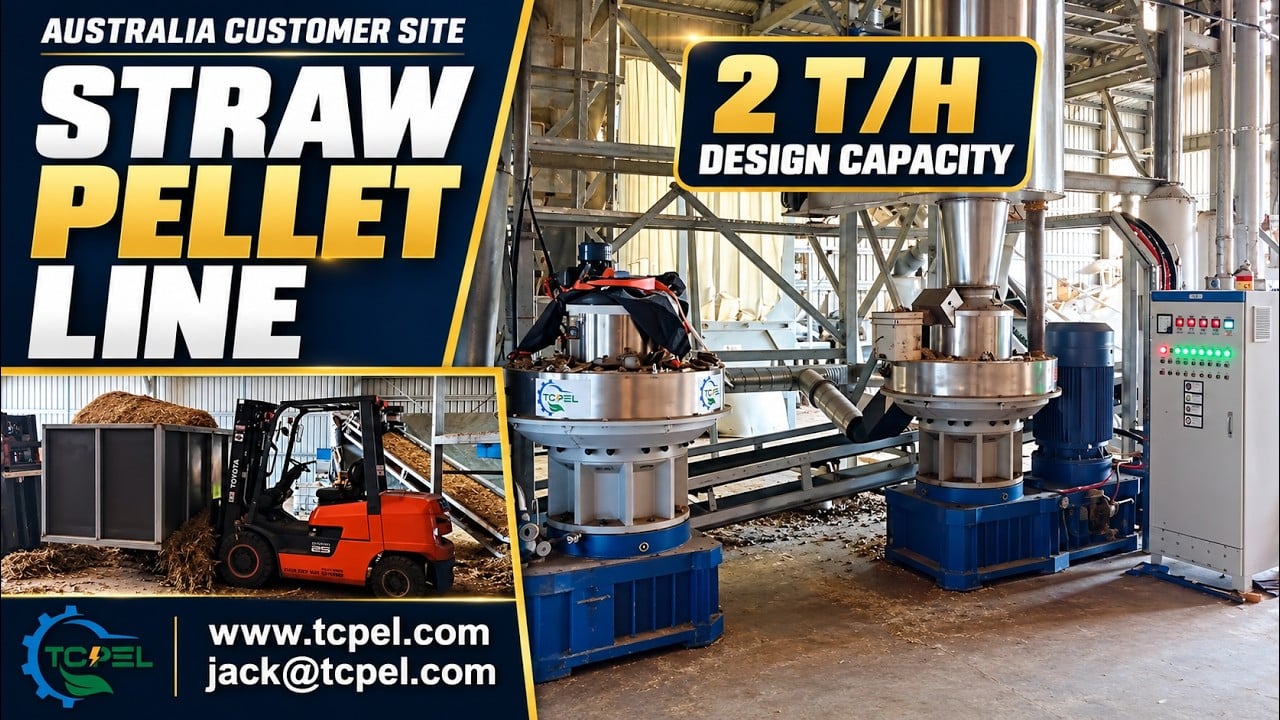
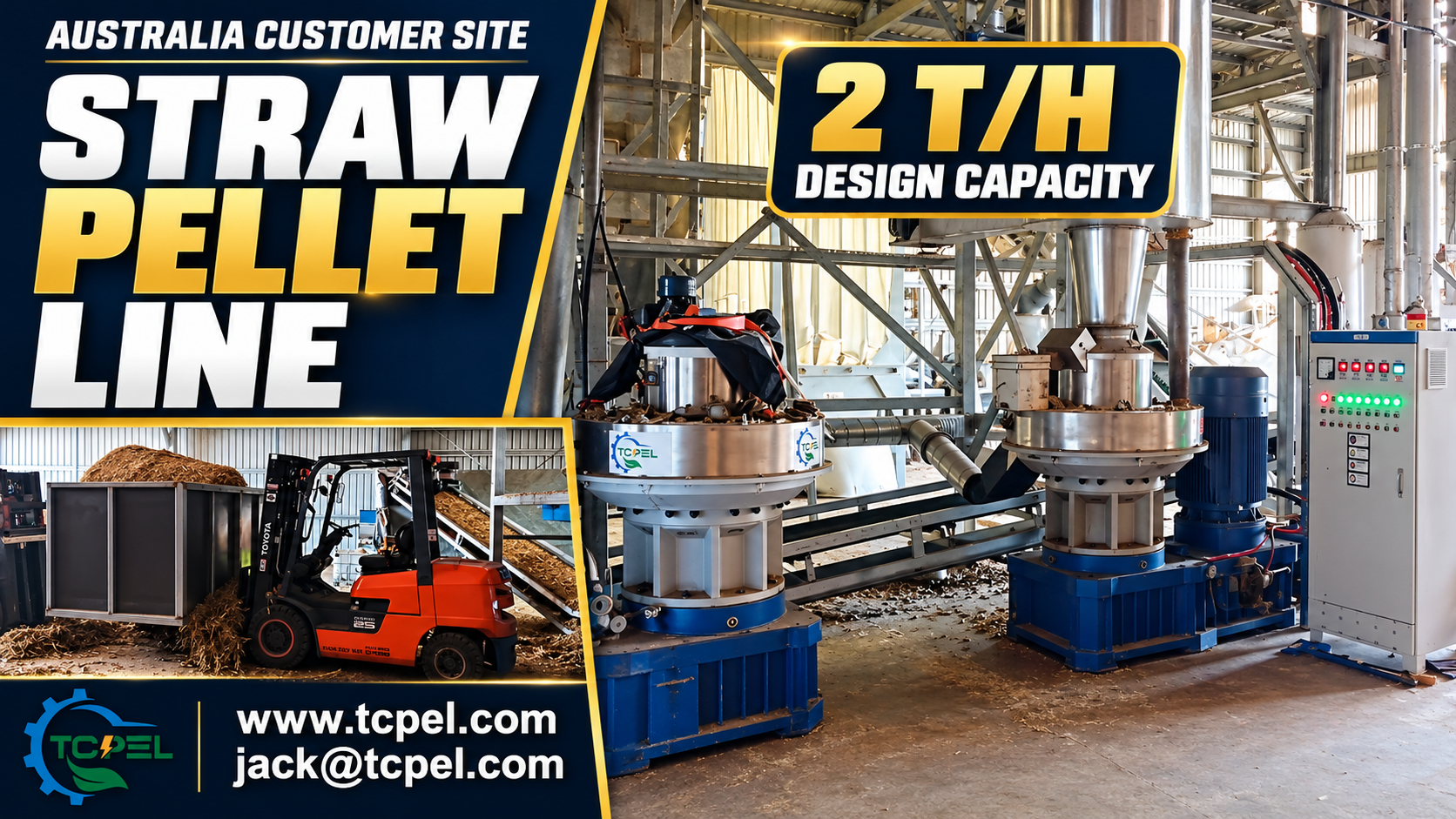
Bale dimensions and handling arrangements matter when planning the feed system. Watch the project video for site context, then discuss the handling space and feeding arrangement available at your own facility.
Choose the Coarse Size-Reduction Stage Around the Process
While evaluating TCSC configurations, consider the next process and equipment in the process. This should include the size of the material, the available power and the type of equipment, as well as the anticipated service hours and discharge arrangement.
Decision point
What to confirm
Feedstock
Straw type, moisture, bale density and contamination.
Configuration
TCSC80, 100, 130 or 150; upper or bottom discharge.
Output boundary
Nominal fibre length: 30–50 mm for TCSC80 and 30–60 mm for the other quoted models.
Next process
Receiving conveyor, storage, further grinding, pelletizing or another specified stage.
Verify with the user what specific level of size-reduction is required, and evaluate the performance of the TCSC configuration with respect to this requirement.
A bale grinder may be positioned in the process to provide a coarse level of size-reduction. The output size of the bale grinder and the next process may determine the level of size-reduction.
Comparing a TCSC configuration with an existing line?
Request sizing help →
TECHNICAL OVERVIEW
Machine Construction & Related Documents
TCSC configurations are composed of a drive assembly, a tub, and a set of configuration-specific cutting elements. Quotes specify configuration components such as knives or hammers, the main motor, tub drive, and starter cabinet. For the TCSC configuration you have selected, consult the related equipment documents and request additional information.
Construction Standards
01
Frame
Welded steel construction sized for continuous 8-hour agricultural operation
02
Cutting Disc
Cutting elements vary by selected configuration
03
Drive Train
Main motor and drive arrangement vary by selected configuration
04
Bearings
Industrial-grade ball/roller bearings for high-load consistency
05
Access
Bolted removable side cover over blades and chamber for maintenance
Reference Documents and Configuration Confirmation
Reference documents
Confirm applicability in the final quotation
Model-specific documents
Request model-specific documentation
Process requirements
Confirm with downstream equipment
Electrical planning
Confirm site supply by configuration
Where TCPEL Bale Grinders Run (Global Activity)
Biomass Pellet
Animal Nutrition
Bioenergy
Ag-Waste Recycling
Organic Fertilizer
Market Waste
Biomass Pellet Manufacturing
Small and mid-sized kilns in Germany, South Korea and Vietnam.
Installation planning
Compare space, weight and power before quotation
Each of the configurations of the equipment is designed for a specific process and user requirements. Dimensions, structural weight, main motor power and tub drive vary by configuration; starter-cabinet ratings are separate from main motor power. Final user requirements, including process specifications and equipment clearances, must be determined in conjunction with the manufacturer.
| Configuration | Dimensions L × W × H (mm) | Structural weight | Main motor | Tub drive | Starter cabinet |
|---|---|---|---|---|---|
| TCSC80 upper | 3,200 × 2,300 × 1,830 | 1,300 kg | 22 kW | 1.5 kW | Star–delta |
| TCSC80 bottom | 3,200 × 2,300 × 1,830 | 1,300 kg | 22 kW | 1.5 kW | Star–delta |
| TCSC100 upper | 3,800 × 2,600 × 2,650 | 2,200 kg | 55 kW | 1.5 kW | 90 kW soft starter |
| TCSC100 bottom | 3,600 × 2,700 × 2,250 | 1,700 kg | 45 kW | 1.5 kW | 75 kW soft starter |
| TCSC130 upper | 3,800 × 2,700 × 2,230 | 3,000 kg | 75 kW | 3 kW | 115 kW soft starter |
| TCSC130 bottom | 4,100 × 2,800 × 2,650 | 3,400 kg | 90 kW | 3 kW | 132 kW soft starter |
| TCSC150 upper | 4,000 × 2,800 × 2,600 | 3,300 kg | 110 kW | Hydraulic | 135 kW autotransformer |
| TCSC150 bottom | 4,600 × 3,000 × 2,700 | 4,000 kg | 110 kW | 3 kW electric | 160 kW soft starter |
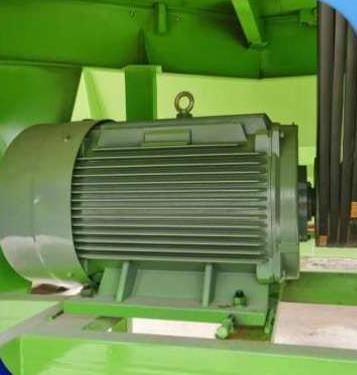
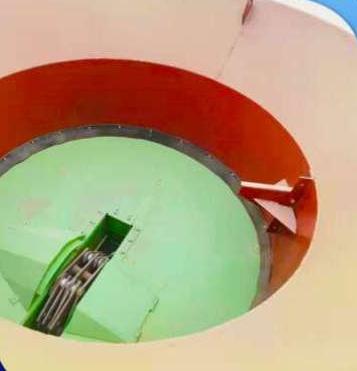
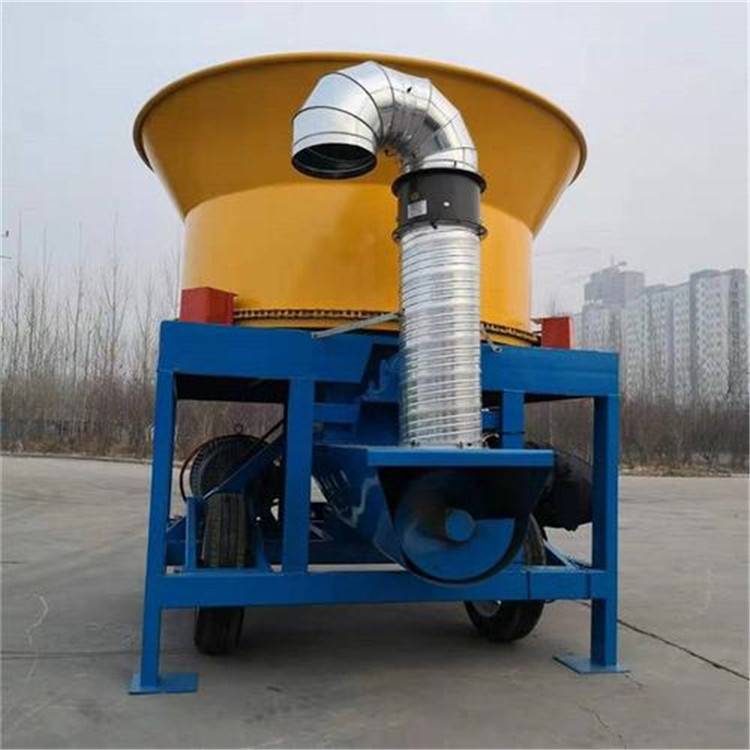
Machine gallery
Representative views of the tub, frame and discharge area
The views shown represent the various options available for the equipment. The final design and configuration of the equipment will be determined in conjunction with the manufacturer.
Quotation
Request a Configuration-Specific TCSC Quotation
There are several options available on the equipment. For a definitive price, delivery time and installation offer, confirm the model and other options with the company.
[ 01 ]
Configuration inputs
Select TCSC80, 100, 130 or 150, upper or bottom discharge, and the electrical arrangement required for the project.
[ 02 ]
Schedule confirmation
Confirm lead time with your selected configuration. Confirm production timing and shipment terms in the configuration-specific quotation.
[ 03 ]
Supply scope
Confirm accessories, conveyor scope, documentation and commercial terms with the final quotation rather than assuming a common package.
[ 04 ]
Site information
Provide voltage, frequency, available space, material handling method and the downstream receiving point for a matched configuration review.
Installation boundary
- Electrical — confirm site supply against the selected main motor and starter cabinet.
- Space — use the quoted machine dimensions as a planning input.
- Foundation — confirm foundation and clearance requirements for the selected configuration.
- Handoff — confirm the discharge and receiving equipment arrangement.
Ready to request a configuration-specific quotation?
Request a TCSC quote
Technical Decision Support
Bale Grinder Selection Tools
CALC.01
Pellet-Plant Capacity Calculator
Streamline your production target by calculating throughput requirements and operational efficiency.
TCO.02
TCO Calculator — TCPEL Disc Crusher Vs Hammer Mill
Analyze long-term operational costs and ROI comparison between different crushing technologies.
SELECT.03
Bale × Crop Compatibility Selector
Selection tools provide preliminary estimates; confirm the result against the configuration table above.
Frequently Asked Questions
The TCSC is used to further reduce bale size of straw and other similar agricultural products. For size reduction of baled straw, the TCSC uses a rotating tub and configuration-specific cutting elements, with an upper or bottom discharge layout.
The quotation lists a nominal fibre length of 30–60 mm for TCSC100, TCSC130 and TCSC150. TCSC80 is listed at 30–50 mm. This is a nominal fibre-length range, not a guarantee that every discharged piece will have the same size.
The quoted rated ranges run from 1.5–2.5 t/h for TCSC80 through 5–8 t/h for TCSC150 upper discharge and 4–8 t/h for TCSC150 bottom discharge. Material, moisture, bale density and operating conditions must be reviewed for the final selection.
No. As determined by the material and the requirements of the downstream process, the TCSC can be used in a size-reduction process. A second grinding or pelletizing unit requires separate confirmation.
The type of material being handled, its moisture content, the required capacity and discharge layout, the available power and other process equipment downstream affect equipment selection. Confirm the delivery schedule, accessories, payment terms and final supply scope in the quotation.
Quotation preparation
Get a matched configuration
01 / Material
Straw type and moisture.
02 / Target capacity
Expected operating throughput.
03 / Discharge
Upper or bottom layout.
04 / Power
Available voltage and frequency.
05 / Downstream
Receiving and next-process equipment.
Bale density and operating conditions affect the rated capacity of the equipment. There are five variables that influence the final design of the equipment. Share these inputs for a preliminary equipment offer.