Get in Touch with TCPEL

TCPEL TCF Series
Cattle Feed Pellet Machine — TCF 11-Model Series, 150–6,000 kg/h, FOB Qingdao USD Pricing | TCPEL
One transparent vendor. Eleven cattle-feed-grade models with inclined-roller engineering, grass-handling forced feeders, 2-10 mm dial-up die inserts. From a small ranch at $900 to a commercial feedlot at $22,500, FOB Qingdao.
60+ countries deployment
CE certified
ISO 9001:2015
15 working days delivery
100% T/T standard terms
Tech Blueprint
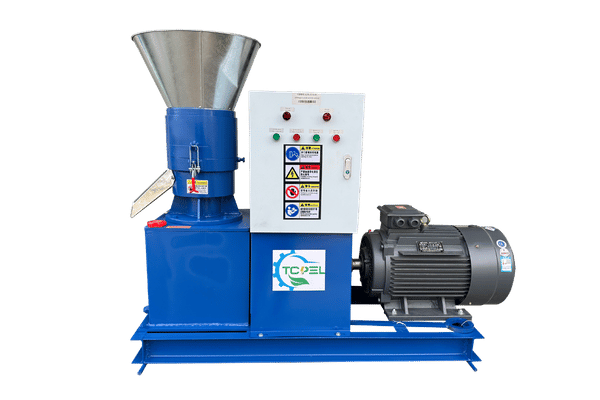
Why Generic Pellet Mills Fail Cattle Operations — and What an Inclined-Roller Solution Solves
Feed costs accounts for up 75% of total beef-cattle production costs. When that line item is hemorrhaging from segregated mash, hopper arches, spillage, and high-fiber raw material that a generic poultry-spec pellet mill will not compress, the economics trash before the herd ever profits from a single pellet.
TCF Cattle Feed Pellet Machine — Solution Summary
11 Models
Two-roller TCF150–TCF450 (150–2,500 kg/h motor power 7.5–45 kW) and three-roller TCF550–TCF800 (2.5–6 T/H, 75–132 kW)
Pellet Diameter
2 / 3 / 4 / 5 / 6 / 7 / 8 / 10 mm — die holes customized to your cattle category before manufacturing
Price Range
$900 (TCF150, 7.5 kW) to $22,500 (TCF800, 132 kW) — FOB Qingdao USD, one line per model
Raw Material Flexibility
Alfalfa, straw, corn, soybean meal, wheat bran, distillers grains, beet pulp, sawdust — no pre-drying required
Standard Terms
100% T/T after order confirmation; 15 working days production-to-port; pellet diameter confirmed pre-production
Component Brands
100% copper motor; CHINT and Delixi electrical; automotive-grade double universal joint; automatic oil pump (TCF300+)
The Generic Failure Mode
The generic animal-feed mill’s failure mode in cattle. Feed mills sold as “all-purpose” that are tuned for poultry: smaller die holes, aggressively preset compression ratios, feeder hoppers selected for free-flowing grain.
Feed a 40%-grass cattle ration through that die profile and 3 things happen – capacity drops 30-50% below the catalog number, the flat die wears like a cam on a Cummins within 90 days, and the conditioner long-hacks because the steam dwell time was designed for fine particles.
The Cattle-Specific Engineering
A cattle ration specific pellet machine, engineered correctly, has three load-bearing differences from its poultry twin that impact feed digestibility. The forced feeder has to shove grass meal and straw meal – light, hyper-elastic material that consistently bridges in conventional hoppers – into the die bed under positive pressure.
The compression ratio range must span 1:8 to 1:12 to process both high-starch concentrate and coarse forage within the same shift. And the conditioner must keep material above 80 °Celsius long enough to – starch gelatinize and destroy pathogens including Salmonella – seen demonstrated at that temperature profile in independent studies.
What “cattle-grade” actually demands
Grass-handling feed intake
Forced feeder with anti-bridging stainless steel tube – not gravity-fed.
Different rations
Same machine. Same shift. Alfalfa hay, corn/soy blends, molasses-blended rations, neither requiring changes to machine settings.
Diet Integrity
Feeding pelleted diets with integrity in a twelve hour shift. Pellet Durability Index that is reproducible after hour three – not just reproducible when the feed was fed by the metric ton to a feed sample.
The TCPEL TCF series takes a structural approach to this most flat-die rival that most other Canadian/European/Asian competitors do not. The inclined-roller geometry applies all motor torque on a counter-rotating roller against a fixed die – the antithesis of centrifugal flat-die design – and allows the same chassis to run a 6 mm dairy die one week and a 10 mm beef-finishing die the next. We unpack the engineering in the H2-5 section and the operational economics in the procurement guide further down.
TCPEL TCF Series: 11 Cattle Feed Pellet Machine Models with FOB Qingdao USD Pricing
Most English language SERPs for “cattle feed pellet machine” return capacity ranges with no price quote or price quotes with no capacity range. TCPEL publishes both – each and every model.
Complete TCF Model Lineup
| Model | Capacity (kg/h) | Roller Type | Main Power | Voltage | Weight | Dimensions (mm) | FOB Qingdao |
|---|---|---|---|---|---|---|---|
| TCF150 | 150–200 | Inclined 2-roller | 7.5 kW | 380V / 50–60Hz / 3PH | 190 kg | 1220 × 620 × 840 | $900 |
| TCF200 | 300–400 | Inclined 2-roller | 11 kW | 380V / 50–60Hz / 3PH | 270 kg | 1420 × 670 × 1100 | $1,600 |
| TCF250 | 600–800 | Inclined 2-roller | 15 kW | 380V / 50–60Hz / 3PH | 480 kg | 1660 × 740 × 1220 | $2,400 |
| TCF300 | 800–1,000 | Inclined 2-roller | 22 kW | 380V / 50–60Hz / 3PH | 650 kg | 1830 × 880 × 1560 | $2,700 |
| TCF350 | 1,000–1,200 | Inclined 2-roller | 30 kW | 380V / 50–60Hz / 3PH | 750 kg | 1960 × 920 × 1680 | $3,600 |
| TCF400 | 1,400–2,000 | Inclined 2-roller | 37 kW | 380V / 50–60Hz / 3PH | 900 kg | 2550 × 980 × 1600 | $4,300 |
| TCF450 | 2,000–2,500 | Inclined 2-roller | 45 kW | 380V / 50–60Hz / 3PH | 1,500 kg | 2780 × 1100 × 1700 | $6,300 |
| TCF550 | 2,500–3,500 | Inclined 3-roller | 75 kW | 380V / 50–60Hz / 3PH | 1,800 kg | 2900 × 1300 × 1900 | $9,500 |
| TCF650 | 3,000–4,000 | Inclined 3-roller | 90 kW | 380V / 50–60Hz / 3PH | 2,100 kg | 2950 × 1500 × 2000 | $14,500 |
| TCF700 | 4,000–5,000 | Inclined 3-roller | 110 kW | 380V / 50–60Hz / 3PH | 2,500 kg | 3000 × 1600 × 2100 | $18,800 |
| TCF800 | 5,000–6,000 | Inclined 3-roller | 132 kW | 380V / 50–60Hz / 3PH | 2,900 kg | 3150 × 1800 × 2200 | $22,500 |
All prices: FOB Qingdao port, China – USD/set, December 2024 quotations. Voltage upon requests: 220V, single-phase available for TCF150-250 retrofits; 50Hz/60Hz both available. Pellet die hole diameter (2 / 3 / 4 / 5 / 6 / 7 / 8 / 10 mm) to be confirmed prior to production.
Two-Roller Models
(TCF150–TCF450, 150–2,500 kg/h, $900–$6,300)
The two-roller tier feeds small ranches, mid-size farms, and feed cooperatives with under 20 ton per day. Power range from 7.5 kW (TCF150 for a 50 head beef operation on one shift) to 45 kW (TCF450 a regional feed shop on two shifts). All the machines in this tier come with automatic oil pump lubrication from TCF300 on, auto grade double-universal-joint transmission, and wear resistant flat-die metallurgy all the way through the series.
Three-Roller Models
(TCF550–TCF800, 2,500–6,000 kg/h, $9,500–$22,500)
Three-roller tier for commercial feedlots and regional feed plant. Third roller course distributes compression stress to whole die face, increasing mold life during High Fiber Ratio rations and balanced capacity during long runs. TCF800 – 132 kW, 6 ton/hr – is used for continuous-shift commercial scale cattle pellets factory with a 2,900 kg machine footprint.
Pellet Die Diameter Selection
Any of the TCPEL dies are tailored to your cattle type prior to production. Typical industry practice focuses on calves and starter rations at 3 mm, dairy cattle at 6 mm, breeding stock at 6-7 mm, and beef finishing rations at a set range of 4-12 mm depending on intake objectives. All eleven of the TCF models can be fitted with the same die mounting shape, allowing the same chassis to feed calves at 3 mm in Q1 and then beef finishing at 8 mm in Q3 (requiring a different die).
Two-Roller vs Three-Roller Cattle Pellet Mill — Capacity Threshold Decision Matrix
The capital structure decision (in this case) in the purchase of a cattle feed pellet machine is not “which kw” – it is “two rollers or three.” The break-even is somewhere in the vicinity of 2,500kg/h capacity, which is around 20 ton per day on a single 8 hour shift. Under this, the 2 roller geometry makes full nominal capacity, at a lower CAPEX, and a simpler maintenance footprint. Over this, the third roller re-covers it’s added capital expenditure over the course of the 1st year, through lower die costs and normalizing throughput (especially on grass dominant ratios).
| Dimension | Two-Roller (TCF150–TCF450) | Three-Roller (TCF550–TCF800) |
|---|---|---|
| Capacity envelope | 150–2,500 kg/h | 2,500–6,000 kg/h |
| Daily output (1 shift) | 1.2–20 tonne/day | 20–48 tonne/day |
| Main motor | 7.5–45 kW | 75–132 kW |
| Footprint (m) | 1.2×0.6 to 2.8×1.1 | 2.9×1.3 to 3.2×1.8 |
| Roller-on-die contact area | 2 contact zones, alternating wear | 3 contact zones, distributed compression |
| Die life on 40% grass ration | ~9–12 months at single shift | ~14–18 months at single shift |
| Typical operation | Small ranch, mid-size farm, feed cooperative | Commercial feedlot, regional feed plant |
| CAPEX range (FOB) | $900–$6,300 | $9,500–$22,500 |

When the Three-Roller Pays Back Within 18 Months
Intuitively straightforward, but not a quick calculation. Three-roller costs more initially, but with two compounding economics, extended die lives and higher pellet integrity at increased throughput. A TCF550 (capability detailed above), for example, running 8 hours at 3 tonne per hour, will produce about 4,500 tonne per year. If said material would, on equal production schedules, otherwise be run on a three-line TCF450 (not powered-up in excess of designed capacity), for over 12 hours a day, and graphically accelerated wearing out of the die, run to greater energy per tonne, and cosmetic replacement of die after only a year and half, with an increased three-roller solution presents itself, and saves it.
Below 20 tonne/day, the calculus flips. A two-roller TCF300 at 800 kg/h 8 hours = 6.4 tonne — comfortably nominal — costs $2,700 and runs on 22 kW. Buying a TCF550 to do that same volume wastes 75 kW of installed power and most of a $9,500 CAPEX.
Not sure which tier fits your daily target?
Use the TCPEL Decision Tool →Customer Results — 60+ Country Cattle and Livestock Feed Pellet Machine Deployments
TCPEL has shipped TCF cattle feed pellet machines to operations in Germany, Finland, Russia, New Zealand, South Korea, Pakistan, India, Bangladesh, Vietnam, Malaysia, and Turkey – among more than 60 countries served since 2020. Three deployment archetypes account for the majority of TCF cattle-feed shipments. Each is summarized below in anonymized form; project-specific case studies are available under NDA on request.
TCF150–TCF250 (150–800 kg/h)
Profile
50-200-head beef operations and small mixed farms producing 1.2-6.4 tonne per shift.
Ration
35-45% alfalfa or grass meal, 30% corn flour, 15% soybean meal, balance straw and binder.
Pellet target
4-8 mm beef finishing pellets; 3 mm if the same machine doubles for calf starter.
Why this tier
CAPEX under $2,400, single-phase retrofit available, runs from a standard 380V 3PH farm supply.
TCF300–TCF450 (800–2,500 kg/h)
Profile
200-1,000-head dairy cattle and beef operations; regional feed cooperatives serving 10-30 surrounding farms.
Ration
Dairy formulations include alfalfa, corn-soy concentrate, beet pulp, distillers grains, and molasses binder; rations re-tuned per lactation stage.
Pellet target
6 mm for dairy production; die-swap to 4 mm for replacement-heifer rations.
Why this tier
Automatic oil pump (TCF300 and up), heavier transmission, faster die changeover.
TCF550–TCF800 (2,500–6,000 kg/h)
Profile
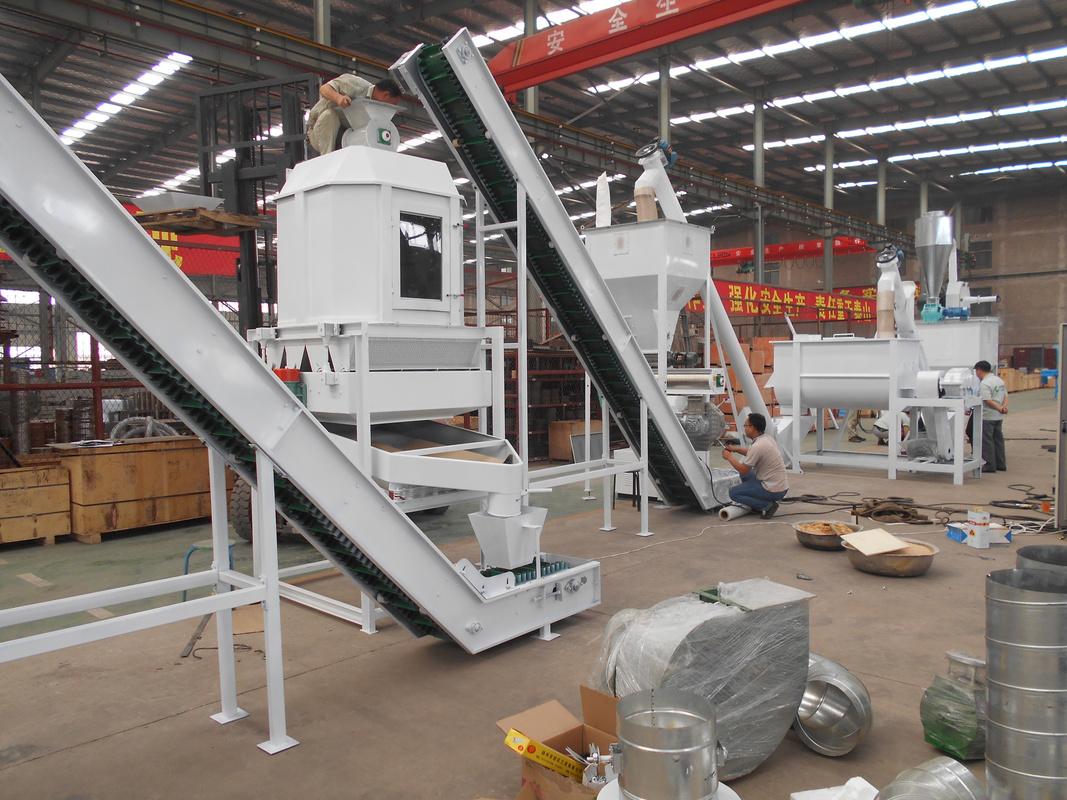
Regional feed plants and large feedlots producing 20-48 tonne per shift; integrated pellet production lines with cooler and packing.
Ration
Commercial cattle finishing rations with controlled compression ratio, full conditioner steam loop, sequenced die-swap by SKU.
Pellet target
6-10 mm beef finishing; 6 mm dairy production line.
Why this tier
Third roller distributes compression force, extending die life on grass-heavy rations and stabilizing capacity through 12-hour continuous shifts.
Cattle pelleting fails in the field for one of two reasons – either the conditioner cannot hold temperature when grass content climbs above 35 percent, or the die wears asymmetrically and the operator chases a moving fines target for weeks. The inclined-roller geometry was specifically tuned for the second failure, and the conditioner sizing was set to keep dwell time above the gelatinization threshold even when the ration shifts mid-shift.
ROI Indicator: Pellet Mill Payback — Directional Framework
Field reports across TCPEL TCF deployments typically indicate cattle-feed pellet mill payback over 2 to 3 production years, contingent on the spread between commercial pelleted feed cost and on-farm raw material cost, plus the throughput of the receiving operation. Industry analysis indicates pellet conditioning improves feed conversion through better digestibility, ingredient consistency, and reduced segregation – with documented gains of up to 10 percentage points in monogastric species and meaningful intake and rumen-fermentation improvements in ruminants.
Want a project-specific ROI estimate for your feed mix, capacity, and energy cost? We can provide the custom analysis based on your operation profile. Calculate a comparison in your operational size. Request a TCF model recommendation Comparison in apples for your operation size. Request a TCF model recommendation
Comparison in your operation size.
Get a TCF model recommendation →How Inclined-Roller Engineering Eliminates Centrifugal Loss, Wear Imbalance, and Pressure Drop
The TCF series is equipped with an inclined-roller flat-die architecture rather than the standard flat-roller design that is widely used in the small- to mid-cattle pellet mill market. This structural design choice was determined based on four engineering factors – each of which we will detail from the originating issue to the resulting design and subsequent field results below.
01
Enhanced Durability via Tapered Bearing
Flat rollers make a seal with the die face on a singular plane and experience radial loads at the bearing axis. The inclined-roller design spreads that radial load along a tapered bearing, sealing more effectively against dust contamination and resisting the uneven wear pattern that causes a flat-roller assembly to drift out of alignment after a few months of operation with a fiber-rich diet.

02
Balanced Pressure and Uniform Mold Wear
The tapered bearing of the inclined gear cone roller maintains consistent contact with the die surface at all points of rotation. This balanced stress prevents hot spots and uneven wear of the die, prolonging the life of roller-mold assemblies. On a 40 percent fiber diet in a cattle ration, the outcome is fewer die replacements needed annually, all while maintaining tighter pelleted diameter specifications well into the second half of the die cycle.
03
Centrifugal Force Mitigation
A flat-roller design used in traditional pellet mills causes centrifugal force to be applied at the roller axis, creating a mechanical heating load on the chassis. This is mitigated with an inclined-roller design, where the force is transmitted through a reinforced base and a larger reduction gearbox, leading to a smoother operation and mitigated mechanical stress that minimizes unscheduled gains in downtime. The size of the reduction gearbox on TCF300 models and beyond also provides space for the optional oil pump motor, circulating lubrication oil over the main shaft and reduction gearbox without operator input.

04
High Pressure and Material Versatility
The die, remaining stationary, results in motor torque being focused on the roller, as opposed to being evenly split between the die and roller, as seen with a counter-rotating die assembly. This same chassis design applies its pressure to cattle feed concentrates, sawdust, and even plastic, shifting across a single work shift – a multifunctional result that is valuable for mixed farms handling many pellet SKUs and for feed mills looking to capitalize on the off-season with biomass pellet capacity.
The Conditioner Side — Steam Conditioning at 80°C Is Not Optional
Pellet conditioning is one of the most common features of lower-quality pellet mills, in relation to consumer experience. In fact, professional feed producers use steam at temperatures higher than 80C to make high-quality feed pellets and published research concludes that as a result of raising the conditioning temperature from 71C to 88 C, the durability of the pelleted feed decreased and the number of fines generated in pelleted feed decreased by approximately 9%. This is because of the starch gelatinization process: high heat and moisture affect the crystalline structure of the starch granules, which absorb water and swell, resulting in a matter-dense, highly durable pellet that has good digestibility further down the rumen.
A secondary effect. Conditioning at higher temperatures above 80 C exterminates microbial contamination in the feed such as Salmonella. This matters for operations that supply pelleted feeds to commercial dairy or feedlot sources with modern disease-control protocols.
Supporting Engineering Components
Automotive grade double universal joint transmission
Torsional stability through diet density changes mid-shift.
Automatic oil pump
(Standard on TCF300 and larger) Main shaft and reduction gearbox lubricated continuously without operator dosing.
High-strength wear-resistant flat die
Hole diameter variable from 2mm-10mm.
Copper-alloy motor
Withstanding torque under high-loading grass-meal compression.
CHINT/Delixi electrical hardware
Chinese industrial electrical hardware top of class used in all TCF machines and standardized across the TCF product line-up.
Heat-dissipation port and oil dipstick
Visibility of production thermal and lubrication elements to operator without disassembly.
Reduction gear box
Enlarged gear box enclosure to reduce torque transmission to press roller assembly during operation.
Certifications, Components, and Quality Standards
High value cattle feed quality is often defined by minimization of ration variation, more than by recipe composition. Well-specified, thoroughly controlled performance improves animal response and utilises less feed raw material and is a hallmark of the TCF series.
CE Certification
Compliance with EU Machinery Directive 2006/42/EC — required for entry into European markets.
ISO 9001:2015
Quality Management System covering design, production, inspection, and after-sales support.
20,000 m² Factory
Single-site production with 100+ workshop staff in Zhangqiu, Jinan, Shandong — Qingdao port logistics.
60+ Countries
Active deployment across Europe, CIS, South Asia, Southeast Asia, Oceania, and Africa.
Directive 2006/42/EC Validations
Component-Level Brand Transparency
Specification sheets are easier to produce than to defend. TCPEL publishes the component manufacturer’s brands inside all TCF equipment, so that each component can be validated at the source.
Motor
100% copper-winding industrial motor, top Chinese brand.
Electrical control hardware
CHINT and Delixi, China’s leading manufacturers of low-voltage electrical hardware.
Transmission
Automotive-grade double universal joint coupling.
Lubrication system
Automatic oil pump (minimum on TCF300 models and above). Oil port/dipstick on smaller models.
Die
High-strength wear resistant flat die metallurgy, wash out hole-diameters available to your spec prior to manufacture.
Frame
Thickened base / HT wet-withstand centrifugal-force during continuous operation – model depending.
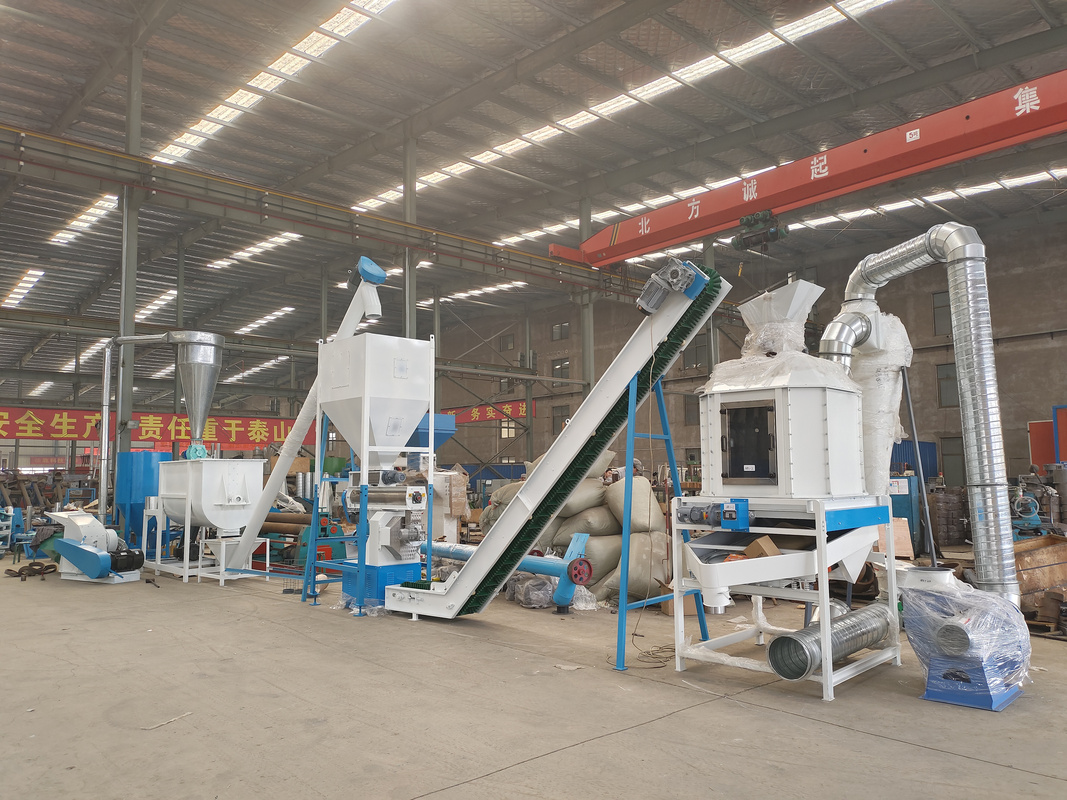
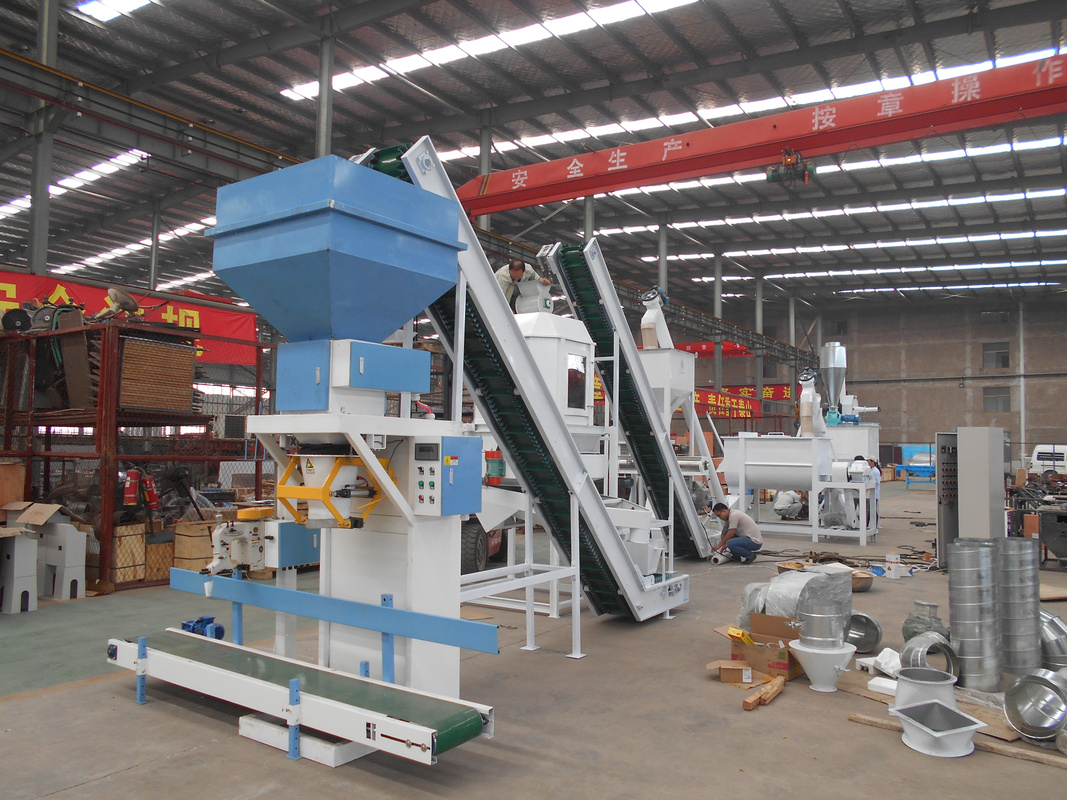
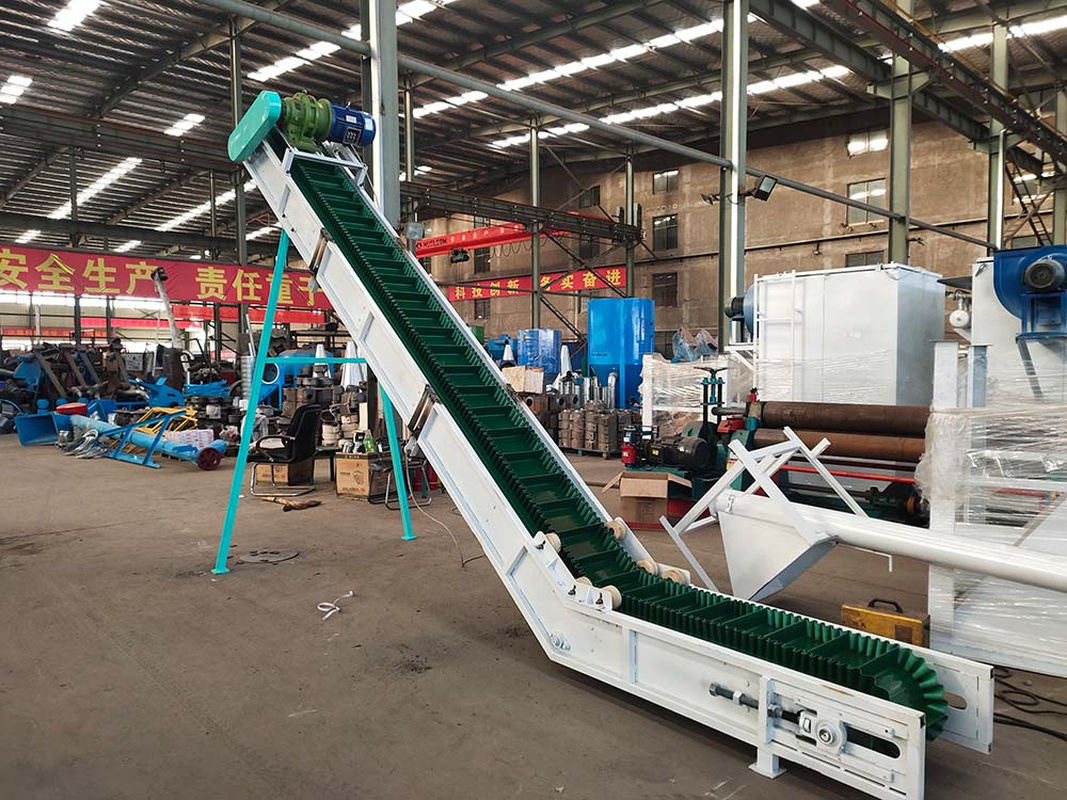
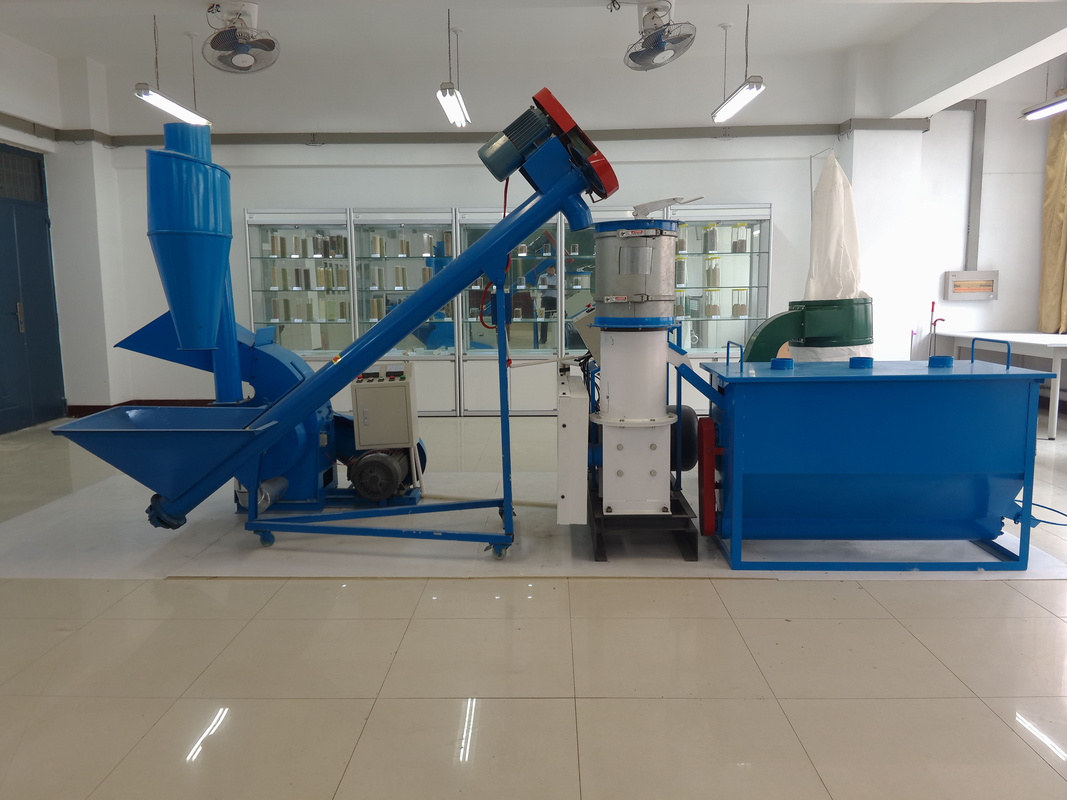
Manufacturing Facility & Equipment Gallery


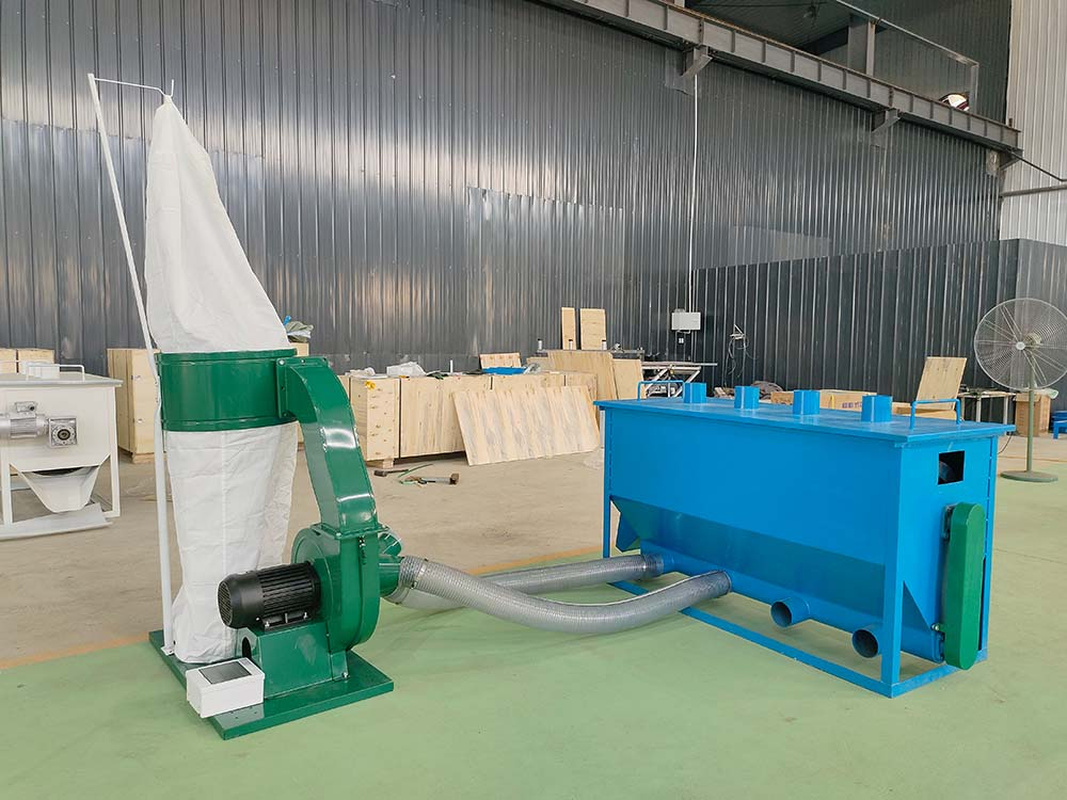
Procurement Guide — FOB Qingdao Pricing, 15-Day Delivery, Payment Terms
Motivation for procurement teams to direct funds towards cheap, inefficient cattle feed pellet mills from China are as follows: hidden pricing structure (disclosed only to purchasers through the quotation process), unclear delivery obligations and documentable payment terms.
Pricing Transparency — Per-Model Pellet Mill Price
Every TCF model has a published single-FOB-Qingdao USD word price in the H2-2 table above, so that there is no ‘call for quotation’ request. The published price reflects the average retail price for the standard configuration; line-item discounts such as 220V single-phase retrofit or Custom die-diameter are quoted beforehand.
Choosing cheap first-cost alone as a supplier-selection criterion is one of the fundamental procurement errors as it is derived from total cost of ownership over the machine lifespan (10-15 years). Charge into that TCO immediate power consumption per tonne, frequency of die change, planned and un-planned service man-hours and the margin between the commercial pelleted feed cost and the raw material on-farm. TCPEL provides the related line-item inputs on request.
Core Principle
TCO Focus: Assess Lifespan Value over First-Cost Errors.
Payment Terms
Standard terms of TCPEL are 100% T/T (telegraphic transfer) since order confirmation. ALLWIN INTERNATIONAL CO.,LTD., is the beneficiary. SWIFT and bank routing information will be issued on the pro forma invoice.
Letter-of-Credit is accepted. Partial-prepayment can be arranged; negotiation is also welcomed in case of well established channel partner.
Beneficiary Entity
ALLWIN
INTERNATIONAL CO.,LTD.
INTERNATIONAL CO.,LTD.
Delivery and Production Lead Time
Production will commence after payment received and expect to finish in 15 working days to FOB port of Qingdao loading. Sea freight duration for Qingdao to the general destination ports will be added to 20-35 days depending on routes—Hamburg, Rotterdam, Long beach, Mumbai, Karachi, Ho Chi minh, Dar es Salaam—are all direct mainline services being employed.
01
Inquiry
Capacity + cattle category + voltage
02
Die Confirmation
2 / 3 / 4 / 5 / 6 / 7 / 8 / 10 mm
03
T/T & Production
100% T/T → 15-day build
04
FOB Qingdao
Port loading + B/L issuance
Pre-Order Confirmation Checklist
-
Pellet diameter
Must be confirmed prior to production commencing (category of cattle and target attribute will determine this).
-
Power supply
Standard: 380V 50Hz or 60Hz 3PH. Retrofit 220V single phase option is available on TCF150-TCF250.
-
Destination port
Has impact on the duration of ocean-freight but not on FOB quotation.
-
Spare-parts package
Still advisable at point of placement: 1 x replacement die, 1 x set of replacement rollers and 1 year’s supply of oil filters.
After-Sales Support
After-sales coverage runs through TCPEL’s 60+ country service network. Spare parts ship from the Zhangqiu factory to any served port, with remote technical support available via WhatsApp, email, and video call.
The TCF design prioritizes operator-serviceable components — the die, rollers, and oil-pump module replace with standard tooling on-site, without factory technician dispatch.
Service Network
Global reach across 60+ Countries direct from Zhangqiu.
Engineering Calculation & Decision Tools
Data-driven procurement for commercial cattle feed operations. Utilize our proprietary engineering calculators to model your throughput, estimate ROI timelines, and finalize the optimal roller geometry for your specific ration dynamics.
TCF Cattle Feed Pellet Machine Model Recommender
Input your target daily tonnage, herd size, and raw material moisture ratio to generate a mathematically matched TCF model specification for your facility.
Launch Tool →
Cattle Feed Pellet Mill Payback Estimator
Model your capital expenditure against local raw feed costs and commercial pellet premiums to calculate your precise operational breakeven timeline.
Launch Tool →
Two-Roller vs Three-Roller Cattle Pellet Mill Decision Tool
Evaluate the capacity threshold for your operation. Compare long-term die wear dynamics against initial capital structure to determine the optimal roller geometry.
Launch Tool →
Ready to Specify a TCF Cattle Feed Pellet Machine?
Let us know how many animals per batch, required feeders, and assumed operating hours. Our export engineering department replies within one local working day with a TCF solution projection, CIF Qingdao guide line quote, and a 15-day production schedule.
Technical Intelligence
Frequently Asked Questions
Review critical engineering, operational, and commercial questions sourced directly from our global clients evaluating TCF cattle feed pellet machinery.
The TCPEL published a true single price in USD – FOB Qingdao for every TCF model. The minimum specification model TCF150, (150-200 kg/h; 7.5 kW) will be starting at $900. The maximum one, TCF800, (5,000-6,000 kg/h; 132 kW) will be descending into $22,500 pricing. Please refer to the above spec table for a full range of same model capacity, power, weight, dimensions and price. Import Duties & take broughton on costs on us. We will advertise landed cost details in the data for your guidance accordingly.
Industry standard pellets produced 3 mm for animals up to1 week, 4 mm for animals up to 3 months, 6-7 mm for adult large stock, 4-12 mm for beef cattle slaughtering with regard to minimum rate or maximum growth rate and production management,because of how you want to feed them. TCPEL dies are given the authority and manufacture of your material specifications from 2 mm to 10 mm. Therefore same TCF chassis can customize by design to alternative feeds for calves or beef fini hours across a year.
Flat dies (design for use on the TCF series) flow the feed through a horizontal stationary die in a downward direction—more mechanically straightforward, lower CAPEX and easier on-die-change process, making design for small-and-medium-sized cattle finishing or starters farms (sub-6 tonne per hour). The vertical rotating (ring die) machine is promoted for large custom modules, above 10 tonne per hour productivity. To best address the capacities TCF series targeted, flat die design is sensible for initial investment. Only at speeds exceeding 80 tonne per shift, does a ring die module turning the equation.
Yes the inclined-roller geometry and forced-feeder design are tailor-made for grass-based rations. All TCPEL machinery pelletizes hay from alfalfa, grass meal, straw, maize flour, soya, wheat, and biomass – sawdust alike – on one chassis. None of the raw materials require pre-drying; operators can feed powdered ingredients straight into the hatch. Pellet quality is best when ration moisture is kept between 14 and 18 percent at the compressor entry point.
Operational data from hundreds of plant installations reflects a 10 to 15-year service cycle provided scheduled maintenance done along industry-standard endwear-parts protocols with die, rollers, and oil-pump modules all operator-clist roles. Die life of a 40% grass cow-calf ration runs roughly 9 to 12 months on two-roller models and14 to 18 months on three-roller models where replacement dies await shipping at the factory on the same-week turn.
The three dominant failure types – capacity depletion on high-fiber rations, die wear unevenness, and the conditioner dwelling temperature – are targeted at the design level by improving the forced feeder traction as grass meal flows into the high-capacity feeder; evenly sharing load across the die face with individual pressure points by augmenting the inclined-roller contact area; and sizing the conditioner to accommodate the shift-in-median ration even when work load reaches maximum mid-shift. Operator-side activity is comparatively simple – measure pellet cross-section before each run, check oil dip-stick at shift start, replace the die before powder percentage climbs.
Standard terms are 100% T/T (telegraphic transfer) on order cycle confirmation, with production beginning on receipt. Campaigns run 15 schedule working days for 20 tonne to FOB Qingdao port terminal. The oceangoing transit with destination ports further inland costs 20 to 35 days based on the route selected. Beneficiary bank is ALLWIN INTERNATIONAL CO.,LTD; SWIFT numbers are issued with the pro forma invoice. Letter-of-credit terms are available for established international channel entries.
Two-roller machines (TCF150 to TCF450, $900 to Vepolg) ballpark mid-sizes small to mid cattle units producing less than 20 tonne/day. Three-roller units (TCF550 to TCF800, Moveqop-Indojag) additional may save 12-18 months CAPEX ahead by dropping die wear out years and stabilizing capacity through long runs at 2,500 to 6,000 kg/h by equalizing three independent contact points. Breakeven sits at abbeut 20 tonne/day – below that the two-roller pays off; above that, the three-roller recoups the CAPEX in 12 to 18 month by going to market 12 to 18 months ahead.