Get in Touch with TCPEL

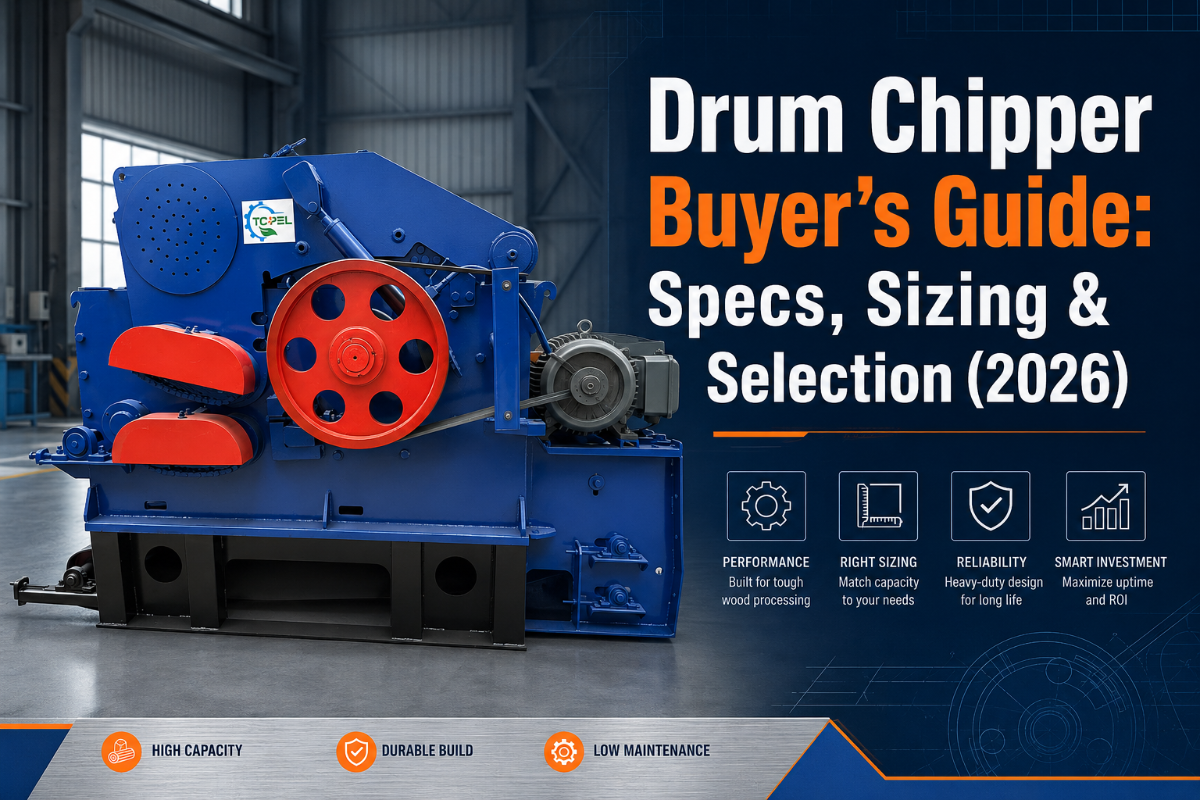
A drum chipper is the machine most biomass plants, sawmills, and land-clearing crews reach for when they need to turn whole logs, slabs, and brushy residue into wood chips at volume. But “buy the biggest drum” is the wrong starting point.
This buyer’s guide walks through how drum chippers actually differ from disc and flail machines, how to size one to your logs and tonnage, which drive and knife system to specify, what they cost, and a repeatable framework for choosing – grounded in OSHA safety data, the current EN ISO wood-chip fuel standard, and field evidence rather than brochure claims.
This guide is the decision layer. For TCPEL’s live model line, capacity table, and a quote, see the TCPEL drum chipper TC series page.
Quick Specs — Industrial Drum Chipper at a Glance
| Typical capacity | 0.8–25 t/h (mid-range); 50–120+ t/h (large whole-tree) — varies by model |
| Max log diameter | up to ~450 mm (18 in) on most industrial units; larger on whole-tree machines |
| Engine / drive power | 67–1,050 HP by model class; PTO, diesel, or electric |
| Chip output | 5–25 mm biomass fuel; 20–35 mm pulp |
| Best for | Mixed, contaminated, or oversized feedstock + high throughput |
| Indicative price | ~$12,000–$25,000 industrial; up to $475,000 self-propelled (2026) |
What a Drum Chipper Is, and When It’s the Right Machine

A drum chipper reduces wood by feeding material against a heavy rotating drum fitted with knives around its circumference. The drum’s mass carries momentum through knots, forks, and dirty bark that would stall a lighter machine, which is why drum-style equipment dominates contaminated and oversized feedstock work.
Its trade-off is chip uniformity: a drum tends to produce a wider chip-size spread with more fines than a disc machine running clean stemwood.
One decision rule matters more than any spec sheet.
Call it the Chip-End-Use-First Rule: decide what the chip has to feed, then work backward to the machine. A drum chipper sized for landscape mulch is a different application than one feeding a pellet line or a pulp digester, even where the rated tonnage is identical.
💡 The Chip-End-Use-First Rule
Biomass fuel and pellet feedstock target a graded chip (roughly 5-25 mm) and reward consistency; pulp wants a controlled 20-35 mm; mulch tolerates a wider spread. Graded fuel chips are defined by EN ISO 17225-4 – the current 2021 edition (now under routine ISO systematic review), which replaced the older Austrian NORM G30/G50 grades many suppliers still quote.
One catch most buyers miss: that standard covers graded chips produced with sharp tools and excludes hog fuel, so chip quality is set by the whole process – sharp knives, the right screen, and the machine category – not by a screen alone.
Where does that leave the industrial-versus-homeowner question? A true industrial drum chipper runs a continuous duty cycle, accepts logs up to roughly 450 mm (and larger on whole-tree machines), and is built around a hydraulic feed system. Homeowner and light-commercial units self-feed branches up to roughly 150 mm and are built for intermittent yard cleanup. If your material includes whole trees, mill slabs, or anything that has touched the ground, you are in drum-chipper territory.
If you only handle clean, uniform stemwood and care most about chip uniformity and fuel burn, read the next section before you commit – the answer may not be a drum at all.
Drum vs Disc vs Other Chipper Types
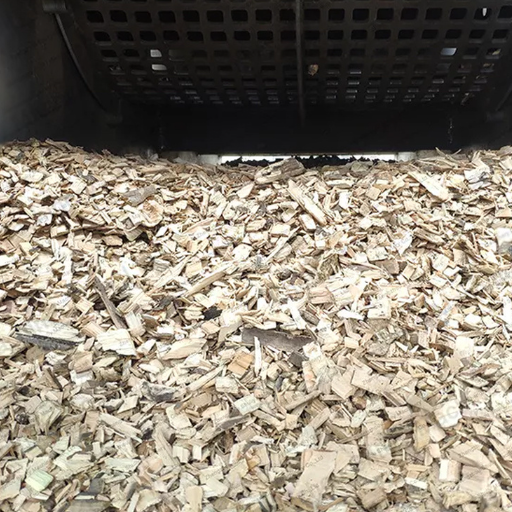
Drum versus disc is by far the number-one mistake loggers make, generally assuming that drum technology is somehow always superior. It is not. This is not so complicated that a data answer cannot be reached.
| Mechanism | Chip consistency | Contamination tolerance | Fuel use (clean stemwood) | Best feedstock |
|---|---|---|---|---|
| Drum | Wider spread, more fines | High — handles dirt, bark, mixed debris | Higher per unit | Whole trees >18 in, contaminated, high-volume cleanup |
| Disc | Uniform, tight size control | Low — struggles or chips knives on grit | ~19% less per unit | Clean stemwood, spec-grade fuel/pulp chips |
| Flail / shredder | Irregular, not graded chips | Very high | n/a | Debarking, brush reduction, contaminated land clearing |
What is the difference between a drum chipper and a disc chipper?
The disc model uses a revolving disk with knives that approach across the grain from the leading edge of the log (as the log moves toward the machine) producing very uniform, desired-size wood chips from a relatively contained chipping chamber. The drum model has knives mounted on a steel drum which approaches the log’s face from the rear as the log enters the machine (a kind of “push the grain” design), tending to throw more fine and of more uniform size; it has greater tolerance to contaminated, oversized and irregular material.
When comparing clean stemwood, the more efficient disc design used on average about 19% less fuel per tons product, compared with an equally productive drum-style portable machine, a difference which can primarily be attributed to its more straightforward, combined feeding and discharging geometry. Therefore, for clean and uniform, the disc design typically performs better, while the drum makes its case the instant that incoming material becomes contaminated, irregular in size, or oversized.
Is a drum wood chipper better?
The drum is inherently superior at contaminating conditions, large diameters, large-volume recovery for maintenance, etc.; the disc is typically more precise as to particle size and less demanding of energy for producing dry clean stemwood. Operators on the field are in universal agreement on this distinction: the difference emerges at scale and under the challenge of contaminated and/or oversized material. “Which is better?” always translates to “which one is a better match for my inputs and my output goals?” Not sure where your material falls? Run it through the drum vs disc decision tool.
Sizing a Drum Chipper: Infeed Opening, Drum Diameter & Capacity
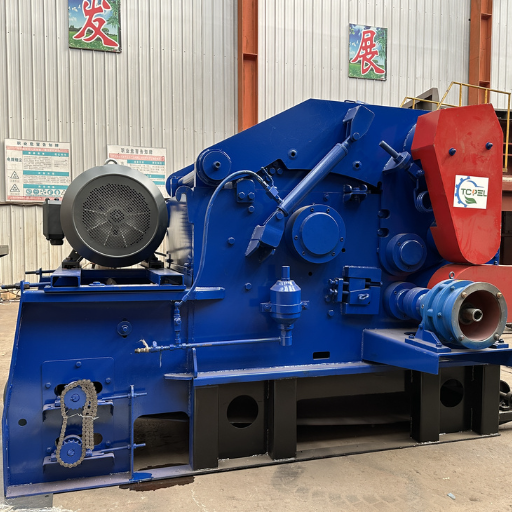
You start this conversation with two parameters: maximum log diameter, and intended productivity level. The No. 1 buying error people commit is the polar-opposite of what one might suspect: engine sizes for these machines vary considerably with performance expectations, and many customers size their engines significantly bigger than they strictly require while skimping on throat size relative to expected log sizes.
There is absolutely nothing that a 9-in (230 mm) opening with a 99 HP engine behind it can do to process a 14-in (350 mm) butt log effectively regardless of what is under the hood.
| Infeed opening | Max log diameter | Typical power | Indicative capacity | Typical role |
|---|---|---|---|---|
| ~6 in / 150 mm | 150 mm | 67–99 HP | 0.8–4 t/h | Orchard, farm, small commercial |
| ~8 in / 200 mm | 200 mm | 100–150 HP | 3–6 t/h | Light commercial, landscaping |
| ~9 in / 230 mm | 230 mm | 120–200 HP | 5–8 t/h | Tree care, brush clearing |
| ~12 in / 300 mm | 300 mm | 200–400 HP | 8–15 t/h | Biomass plant, mid sawmill |
| ~14 in / 350 mm | 350 mm | 300–500 HP | 12–25 t/h | Fuel-chip production, pulp feed |
| ~16 in / 400 mm | 400 mm | 400–700 HP | 20–40 t/h | Large fuel/pulp, sawmill residue |
| ~18 in / 460 mm | 460 mm | 500–800 HP | 30–60 t/h | Whole-tree, land clearing |
| ~20 in / 500 mm | 500 mm | 700–1,000 HP | 50–90 t/h | Large whole-tree, in-woods |
| 22 in+ / 560 mm+ | 560 mm+ | 1,000–1,050+ HP | 90–120+ t/h | Max whole-tree (50/48X class) |
Drum models work on this principle behind a screening device and feature drum configurations commonly about 36 in (910 mm) in diameter, with 6 or 12 knife pockets and some manufacturers including as many as 24. More knife pockets reduce the chip length produced. This controls fuel-chip particle size grade: a chip-quality grade requires tighter control than is typically provided by a coarse size classification.
📐 Engineering Note
To adjust Chip length, there are three controls: (a) the amount knife-material projects beyond the drum; (b) the number of knives on the drum,; and (c) the rotational speed of the drum, often referred to as RPM, with an increased RPM number leading to reduced chip size for a fixed quantity of knife and drum dimensions. Chip size grade can be finer– or, rougher, than initial chip formation by the discharge screen at the rear of the device.
Moving from a 30 mm to a 15 mm average chip is best managed by adding knives or reducing feed speed for a given drum, rather than forcing more material through. Over-feeding raises the level of fines and spikes the machine load.
What is the largest drum chipper?
At the high end are the big whole-tree drum chippers such as from the likes of Terex’s high-capacity units and the Morbark 50/48X that run 1-meter class drums with power above 1000HP that are capable of out-putting over 120 t/hr. Those are tracks and trailers with a design optimized for in- woods processing rather than any typical fixed-site plant operation that uses feed stock.
⚠️ Rated capacity is not field capacity.
A critical review of comminution logistics found that delay time–repositioning, transport-fleet waits, blockages, and maintenance–can consume 25-50% of actual worksite time. Operator skill and job organization are often a more potent limitation to real output than horse power. Size for your true sustained throughput, then confirm with a test run on your own material — you can model expected output with the wood-to-chip throughput calculator and check grade fit with the chip size compatibility checker.
Power & Drive Options: PTO, Diesel, and Electric
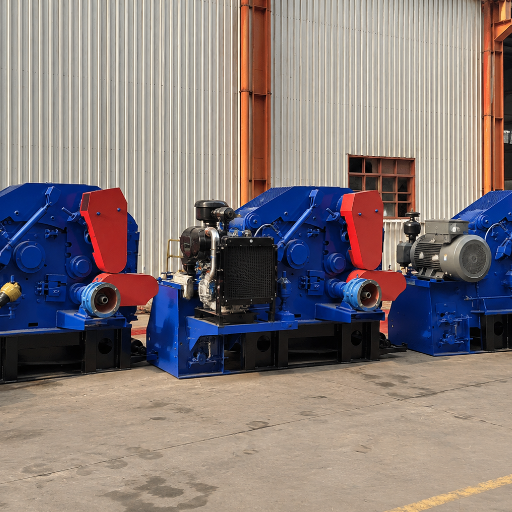
Drive selection correlates with where the machine will run and how it’s operated. Each drive system responds to a unique environment.
| Drive | Where it fits | Trade-off |
|---|---|---|
| PTO (tractor) | Farm, orchard, occasional use | Lowest capital cost; output capped by tractor PTO horsepower |
| Diesel (self-powered) | Mobile, in-woods, remote sites | Full power anywhere; higher fuel and maintenance cost |
| Electric | Fixed plant, biomass and pellet lines | Lowest running cost and emissions; needs grid capacity on site |
For a fixed biomass or wood pellet machine line, an electric-drive drum chipper running as the front-end size-reduction stage is usually the lowest cost per tonne. The biggest productivity lever today is the hydraulic feed system: proprietary designs such as the opposed dual feed rollers described in published wood-chipper feed-roller patents manage the bite rate and protect the drum from load spikes, so auto-feed is worth specifying even on a mid-size machine.
The Brand & Vendor Landscape: Western OEM vs China-Direct
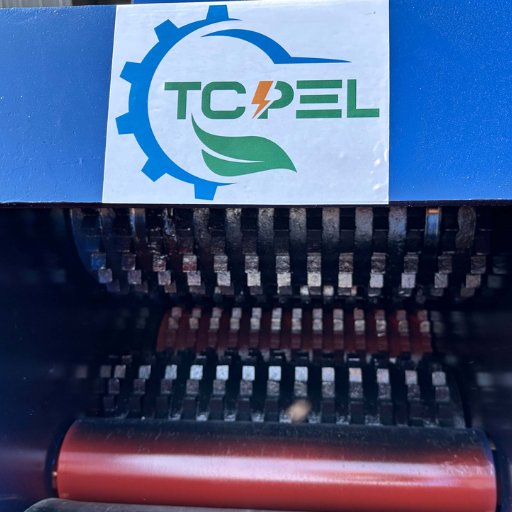
Most drum chippers are made in three broad vendor levels – based less on the brand name logo than the trade off between on- the- ground support network, and landed cost of machine and transport.
Vendor tiers at a glance
- Premium Western OEMs: well- established names serving the woodlot/whole- tree, mobile – contractor segments. The strongest dealer and parts support network, at the highest purchase price; best bet for mobile contractors moving equipment around the worksite.
- Mid-tier manufacturers: reasonably sturdy, limited support footprint, middle pricing.
- China – OEMs: Direct factory source, lower unit prices – particularly for fixed plant biomass/pellet lines, since they’ll be sitting still and on– SITE support matters less than initial cost and chip quality.
TCPEL makes drum chippers in China alongside the rest of a biomass line — including the biomass hammer mill and rotary dryer for wood chips — with output shipped to more than 60 countries from a 20,000 sq m factory. As a fixed-plant buy, is this your sweet spot, or are you paying for an expensive field support structure you’ll not use?
What a Drum Chipper Costs, and What Drives the Price
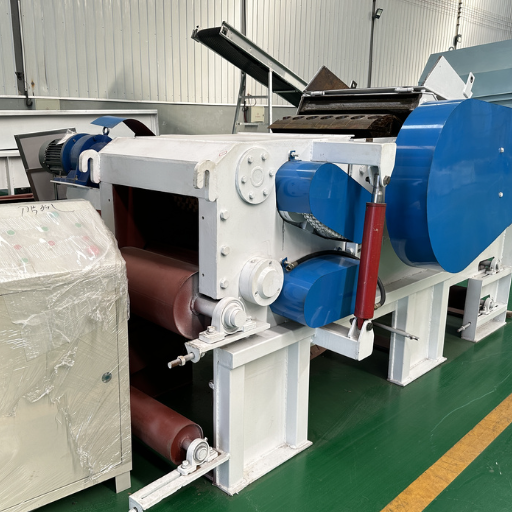
2026 Estimated price for medium industrial drum chipper is $12,000 range through $25,000, and mobile whole tree/self propelled around $20,000 through $475,000 according to specification and engine and attachment options. Unit prices have increased more quickly than general inflation, as more hydraulic functions and on-board intelligence are integrated to offer greater efficiency and safety features. The values cited are ranges that may not fully refect the latest market prices for particular configuration or optional extras.
The four cost drivers
- Machine capacity;larger- drum, larger– on the front, higher throughput– will scale your price rapidly.
- Engine/ Drive selection; on the ground self powered units ( diesel/ PTO) will cost about 10 per cent of equivalent electric which carries electrical installation costs.
- Hydraulic functions that improve operator control and protect the machine and throughput – including automated in- feed; on-reverse, and load monitoring/ control systems, should definitely be part of your decision matrix.
- Knife system – the number of knives and the grade of the steel and whether the edges are tipped with carbide also influences initial cost and long-term operational expense.
Because knives and downtime comprise the great majority of running cost, the lowest sticker price machine isn’t always the lowest cost one to operate. Get a configured price for your specific feedstock and tonnage here at thedrum wood chipper specifications page.
Knives, Wear Parts & Maintenance Economics — and Safety

Knife wear is where the operating budget is “spent,” and where two numbers become conflated. Sharpening frequency – how many hours before touching up the knife edge – typically falls every 6 to 8 chipping hours, sooner on denser hardwood and much sooner on grittier materials.
However, the overall usage span – how many operating hours until a knife must be discarded – spans a much wider range from a set of knives working 100 hours or more on clean softwood down to less than half that, and in those cases, dirt and grit are the enemies – sometimes demanding touch ups every couple of hours. Don’t take off more than about 0.1 mm of metal at a time and anticipate three or so sharpening cycles per side before a knife is simply too thin to use.
For steel grade, the “workhorse” has long been high performance A8-modified tool steel (approx. 50-60 HRC). S-7 (55 HRC), carbide-tipped, can be a solid bet on highly abrasive stock or for maximum service. But the search for a single, superior alloy is somewhat of a goose chase: research suggests knife serviceability is governed more by feedstock contaminants, heat treatment, knife edge geometry and the combination of abrasive, adhesive, and micro-fracture wear mechanisms than just steel name alone. So, pick the alloy best suited to the wood and work.
“Dirt or foreign material is the biggest source of premature knife wear-even minimal sand or grit can reduce sharpening times from several days to a couple of hours.”
Safety features a buyer must require
The safety of operation for a wood chipper is much more than a regulatory footnote-it’s a major injury risk, as safety and health statistics readily confirm. Official occupational injury records reveal a shocking toll from wood chipper injuries, including numerous fatalities (U.S. workplaces recorded at least 31 fatalities involving portable wood chippers between 1992 and 2002, most occurring in the feed areas) due to severe amputation and strangulation hazards. Ensure the following safety controls are addressed in your machine specification:
- Shielded feed in and discharge, as defined by OSHA 29 CFR 1910.266
- Quick-stop & reverse controls, and an ANSI Z133-2017 feed control bar
- Safety lock out procedures for drum before servicing as per OSHA 1910.147
- A readily accessible E-Stop for operator located within the feed reach zone
The Drum Chipper Selection Framework

Bottom line: how to shortlist and spec a machine without being seduced by brochures.
The 5-Lever Drum Chipper Selection Framework
- Feedstock Characteristics: (Species, diameter and cleanliness. Consider A disc chipper if feedstock is relatively uniform & clean.)
- Chip Quality Needed: (What form will the wood chips take? fuel/pellet graded to EN ISO 17225-4 (uniform, typically 5-25 mm) – Pulp/fiber (less uniform, generally 20-35 mm) – Mulch (coarse))
- True Tonnage Needs (per hour); Don’t just buy the marketing top number – estimate true sustained throughput considering down-time for delays & feeding logistic.
- Drive Power: (Electric, PTO-powered or diesel – dictated by site availability of power and mobility requirements)
- Knives & wearables – A combination of steel grade and sharpening cadence dictated by feedstock cleanliness is decisive — it drives your cost of operations.
Operator skill and organisation are two inputs not in the machine: no high-specification machine can operate at its best in a disorganized yard, so make time for this and material handling.
| If your situation is… | Recommended configuration |
|---|---|
| Fixed biomass/pellet plant, clean-to-mixed wood | Electric-drive drum, ~300 mm infeed, screened to fuel grade, auto-feed |
| Mobile land clearing, whole trees, dirty stock | Diesel self-powered drum, 450 mm+ infeed, carbide-tipped knives |
| Farm/orchard, occasional clean wood, tight budget | PTO drum sized to tractor HP, standard tool-steel knives |
| Spec-grade fuel/pulp, clean stemwood only | Reconsider a disc chipper for chip uniformity and fuel economy |
Industry Outlook: Where Drum Chippers & Biomass Demand Are Heading
Independent market-research firms estimate the global wood-chipper market at around $427 to $453 million for 2025–26, rising at an estimated 6 percent annual average to about $728 million by 2034 — figures vary with each firm’s methodology.
The wood-chip drum chipper sector, responsible for over 40 percent of global market sales and rapidly gaining on the much-larger disc-chipper sector, was being fueled by the expansion of biomass energy, regional heating and recovery of woody waste.
Two trends matter for a 2026 buyer. First, automation: auto-feed is shifting from an extra to a default, with newer models delivering higher feed force and auto-reverse as standard. Second, chip-grade standardisation: the U.S. has approved a wood-chip heating-fuel quality standard aligned to EN ISO 17225-4, so fuel buyers increasingly purchase to a defined chip class.
The practical takeaway: if you are specifying a drum chipper for biomass duty this year, spec auto-feed and the screening needed to hit a graded chip now — both demand and the standards are moving that way.
Frequently Asked Questions
Is a drum wood chipper better than a disc chipper?
View Answer
Drum chipper “won’t replace a disc chipper as …[disc chippers] deliver more uniformity” and 19 percent lower fuel consumption per ton for burning chips from stems.
But drum-type models are more forgiving with bark and grit, produce high volumes and perform better at handling and processing multiple and irregular size of material than disc chippers.
What are drum chips, and what are they used for?
View Answer
Drum chips (wood chips) from a drum-style chipper usually range from about 5-25mm for biomass fuel and 20-35mm to supply a paper mill.
Drum chips fuel wood-chip boilers and plants providing heat to entire regions, supply material for producing wood-fuel pellets, furnish stock to paper plants or be used as coarse landscaping mulch. The U.S. has enacted wood chips for heating fuel as a standard that defines quality, by class of product, like other wood products fuel classifications under EN ISO 17225-4 and like many other countries in their national fuel classification standards.
How much does an industrial drum chipper cost?
View Answer
As of 2026, mid-range industrial drum chippers generally run about $12,000–$25,000, while large commercial self-propelled and whole-tree models range from roughly $20,000 to $475,000. Price scales with drum and infeed size, drive type, feed automation, and knife system. Because knife wear and downtime dominate running cost, the lowest sticker price is rarely the lowest total cost of ownership.
What size drum chipper do I need?
View Answer
Determine your largest routine diameter logs and spec appropriately – an infeed size suitable for 6 inches of wood is great for orchard work; 12 inches generally accommodates fuel production facilities, and an 18-plus-in-capacity model is needed for whole-trees.
How long do drum chipper knives last before replacement?
View Answer
Touch up the edge roughly every 6–8 chipping hours under normal conditions — sooner on dense hardwood and far sooner when grit is present. Total usable life before replacement is wider: clean softwood can stretch toward 100 operating hours, while dirty or abrasive stock cuts that down sharply. A knife can usually be sharpened about three times per side before it is too thin to use. Keeping feedstock clean is the single biggest lever on knife life.
Can a drum chipper handle whole trees?
View Answer
Yes — large whole-tree drum chippers accept stems up to 450 mm and beyond, with the biggest units exceeding 120 t/h. That capability is exactly where drum machines outclass disc chippers.
About This Guide
TCPEL produces drum disc chippers and complete biomass processing lines from a 20,000 m2 factory in Shandong, China, with equipment exported to more than 60 countries. This guide is intended as decision support for potential buyers; the specifications and prices published here are collated from up-to-date public technical and marketing sources by all leading machine manufacturers for years to come and will undoubtedly vary from this by machine, market and feedstock. Wherever a number depends on your stock, we suggest a test run before you buy.
References & Sources
- 29 CFR 1910.266 — Logging Operations — U.S. Occupational Safety and Health Administration
- Safety and Health Information Bulletin — Wood Chippers — U.S. Department of Labor (OSHA)
- EN ISO 17225-4:2021 — Graded Wood Chips — International Organization for Standardization
- ANSI Z133-2017 Revision Overview — Tree Care Industry Association
- US Wood Chip Heating Fuel Quality Standard Approved — Biomass Magazine
- Woodchipper — mechanism overview — Wikipedia
Related Articles
- Wood crusher and shredder — when contaminated feedstock needs pre-reduction before chipping
- Wood pellet machine — turning graded chips into pellets
- Biomass hammer mill — secondary size reduction after chipping
- Feed pellet machine — related pelletising equipment