Get in Touch with TCPEL

Feed & Biomass Grinding · B2B
TCPEL Feed Grinding Hammer Mill — Industrial Hammer Mill For Feed And Biomass
Feed grinding hammer mill systems designed for both mash feed and biomass — 0.5–30 t/h capacity, 5–15 kWh/ton energy use, 5-minute quick-change screen. A hammermill is best defined as an impact crusher specified to produce grinding results — choosing one requires more than rotor speed; tip speed, screen aperture, and hammer geometry must all match your starting material.
— 01 · Throughput
0.5–30 t/h Capacity
Across 5 model tiers, ready to process feed and biomass.
— 02 · Efficiency
5–15 kWh/Ton Energy Use
Matching today’s industry leading standards.
— 03 · Rotor
Tip Speed 60–110 m/s
Configurable per material, default 80 m/s.
— 04 · Maintenance
Quick-Release Screen, <5 Minutes
Vs typical downtime of 15–30 minutes.
— 05 · Wear Parts
Hammer Life 200–1,500 Hours
Depending on material type & chrome carbide choices.
— 06 · Safety
NFPA 652 / 654 · OSHA · ATEX Compliant
Cyclone + bag dust collection system.
Get A Custom Quote
Engineering response within 24 hours
TCPEL · Series
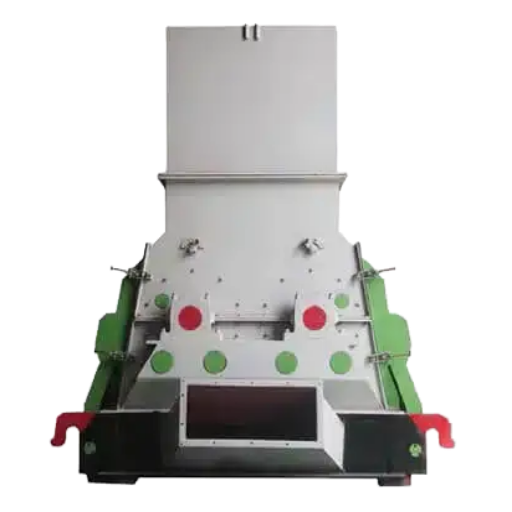
5 Model Tiers · 0.5–30 t/h
60+
Countries Served
2020
Factory Established
ISO 9001
Quality System
CE
EU Directive
20,000m²
Manufacturing Area
01 / Procurement Brief · Hammer Mill Selection
Why Hammer Mill Selection Matters
Mash Feed And Biomass Plants Need Different Grinding Profiles — Why A Single Hammer Mill Spec Misses Both.
02 / The Procurement Reframe
Most Producers Treat It As A Horsepower Choice. It Isn't.
Most pellet producers treat hammermill selection as a simply a horsepower choice — select the rotor power that meets your throughput rate and call it done. When choosing the most economical hammermill for your application, that simple calculation neglects the largest electrical consuming line item in your typical single stage pellet mill: the grinder.
Independent process modeling research completed in 2025 identified that the grinding function of the hammermill consumed, on average, 33.85% of a typical complete pellet production line's electrical power. The grinder is not a support act: it is consistently the largest single power user on the line.
That single fact reframes the procurement question. The cost difference between a legacy 25 kWh/ton grinder and a modern 10 kWh/ton hammer mill is not a 5–10% energy bill change — it is a 60% reduction on the largest cost driver in the plant.
03 / Opposing Optimization Standards
Mash Feed Vs. Biomass — Two Mills In One Decision
Mash feed and biomass demand opposing optimization standards. A mill design capable of tuned performance for both profiles is compromise — which is why a multi-screen, variable tip speed platform is prioritized for application versatility.
Side × Side
Biomass Application

Profile B · Energy
Biomass For Boilers & Pellets
Tip Speed
90–110 m/s
Screen Size
Larger
Materials
Fibrous
Feedstock
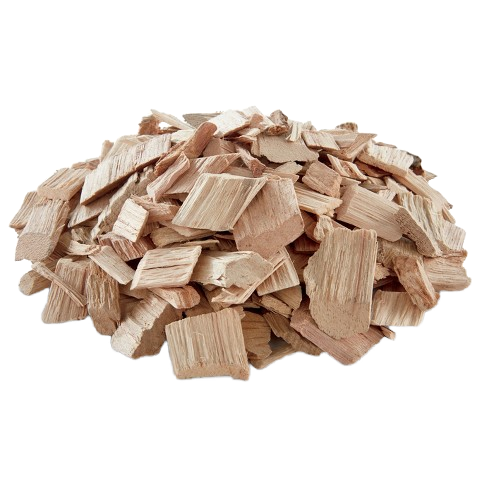
Straw · Wood
On the other hand, biomass destined for boilers and pellet feedstock is best directed through a mill at a higher tip speed (90-110 m/sec.) and with larger screens to handle fibrous materials like straw and wood chips.
Mash Feed Application
Profile A · Feed
Mash Feed For Poultry & Swine
Particle Size
600–900 μm
Distribution
Narrow
Benchmark
700 μm
Outcome
↑ Digestibility
Mash feed intended for poultry and swine requires a narrow particle size distribution at 600-900 microns; beating roller milling in digestibility studies — a study of poultry ground to 700 Microns through a hammermill proved more digestible than roller-milling to the same target.
5×
A single mill design capable of tuned performance for both profiles is compromise. That is why a multi-screen, variable tip speed platform — such as TCPEL's product concept — is prioritized for application versatility rather than one-trick performance on a single material.
04 / What This Page Covers
The Engineering Trade-Offs Behind The Decision
This page queues the engineering trade-offs that influence that decision: the five TCPEL model tiers and where each fits, how hammer mill stacks up against roller mill and disc mill on the metrics that matter for feed pellet lines and biomass boilers, the five industry applications where the math earns capex back, and the procurement parameters — FOB pricing, lead time, after-sales coverage — that determine total cost of ownership for buyers shipping equipment from Shandong to 60+ countries.
01
The Five TCPEL Model Tiers
And where each fits across mash feed and biomass workloads.
02
Hammer Mill Vs. Roller Mill Vs. Disc Mill
On the metrics that matter for feed pellet lines and biomass boilers.
03
Five Industry Applications
Where the math earns capex back inside a defensible payback window.
04
FOB Pricing · Lead Time · After-Sales
The procurement parameters that determine total cost of ownership.
Audience · Engineer + Procurement · RFQ Matching
TCPEL Industrial Hammer Mill Lineup — 5 Tiers From 0.5 To 30 t/h With Published Performance Data
TCPEL publishes the operating parameters that influence real-world economics — tip speed, energy per ton, hammer service life, screen change out time. Schutte Hammermill, Art's Way, and Colorado Mill Equipment each sell decent industrial hammer mills, but none of those three publish tip speed, kWh/ton, or hammer life on their public catalog pages. Procurement teams on the buyer-side using 30-point inspection checklists like the standard hammer mill quarterly inspection sheet require this data to compare their suppliers. To withhold it shifts risk to the buyer side.
D—01
Published Parameters Vs. Public Catalog Silence
TCPEL
Published
Schutte Hammermill
Withheld
Art's Way
Withheld
Colorado Mill Equipment
Withheld
Tip speed, kWh/ton, and hammer life — the three numbers procurement teams need to compare suppliers — are absent from competitor public catalog pages. We publish all three.
D—02
Quick-Release Screen Geometry
Industry Standard
15–30min
TCPEL Captive-Pin
< 5min
Hammer mill proponents sometimes use as a stick to beat industry surveys reporting 15-30 mins of production downtime per screen change. TCPEL's quick-release frame replaces the bolted perforated screen retainer with a captive-pin lock — for a year's worth of pellet runs with 50 material switches and wear parts replacements that results in the equivalent of 8-20 hours of throughput recovered.
02 / Architecture Of The Kinetic Heart
High-Tensile Grinding Chamber · Balanced Rotor · 1,800–3,600 RPM
Each TCPEL hammer mill is built around a kinetic heart that consists of a high-tensile steel grinding chamber and balanced rotor running at 1,800-3,600 rpm with reversible hammers. Material flows downward into the feed chute by gravity (upward via pneumatic-fed conveyor for biomass), is impacted by swinging set of hammers against the grinding plate for crushing, and exits through the discharge chute to the screened out product. Wear parts — hammers, screens, bearings, shaft seals — are stocked locally through TCPEL's regional service agents. Feed grinder models through the smaller HM-15 and HM-22 tiers serve farms and small cooperatives looking for a small grinder-mixer alternative without the need for full pellet mill upstream.
STEP 01
Feed Chute
Gravity-fed for grain. Pneumatic-fed conveyor for biomass workloads.
STEP 02
Grinding Chamber
Balanced rotor at 1,800–3,600 rpm, reversible hammers impact against grinding plate.
STEP 03
Screen Pass
Captive-pin retainer. Aperture 0.8–20 mm depending on tier and material.
STEP 04
Discharge
Screened output to downstream cyclone, pellet press, or storage hopper.
// Downstream & Compliance
HM-30+
Equipped with downstream blower and cyclone separator as standard.
HM-45 / 60
Receive a pulse-jet bag filter fan to remove sub-10-micron fine particulates per NFPA 654 standards.
03 / The Five-Tier Lineup
Select A Tier — All Published Operating Parameters
Capacity depends on feed bulk density, target screen aperture, moisture content. Energy performance corresponds to field data measured by TCPEL on corn at 12-14% moisture; biomass and fibrous materials are at the high end of published ranges.
Tier 01 · HM-15
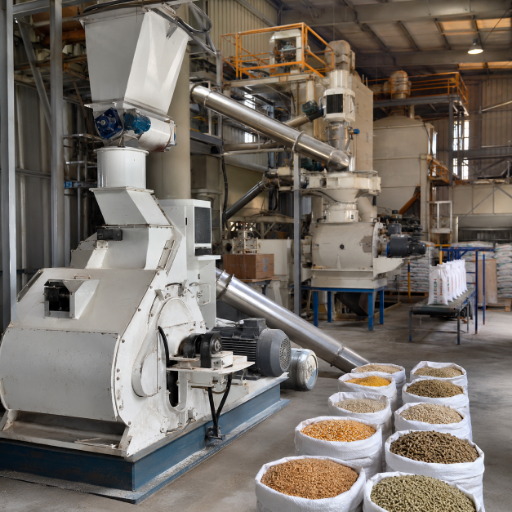
// MODEL TIER 01
TCPEL HM-15
0.5–1.5
Tons / Hour Capacity
Entry-tier feed grinder model serving farms and small cooperatives looking for a small grinder-mixer alternative without the need for full pellet mill upstream.
Motor
11–18.5kW
Tip Speed
80m/s
Hammers
32
Screen Aperture
1.5–10mm
Energy
10–14kWh/t
FOB Range
$2,500–$4,800
Tier 02 · HM-22

// MODEL TIER 02
TCPEL HM-22
1–3
Tons / Hour Capacity
Mid-tier feed grinder for cooperatives and smaller pellet operations. 48-hammer rotor and 1mm minimum aperture deliver fine mash for poultry and swine at 700μm targets.
Motor
22–37kW
Tip Speed
80–95m/s
Hammers
48
Screen Aperture
1–12mm
Energy
9–13kWh/t
FOB Range
$5,200–$8,500
Tier 03 · HM-30
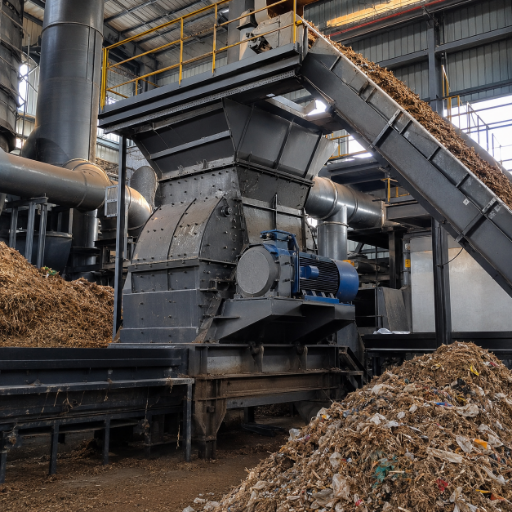
// MODEL TIER 03
TCPEL HM-30
3–8
Tons / Hour Capacity
Wood-pellet workhorse. 72 reversible chrome carbide hammers (standard from HM-30 up) plus 95 m/s tip speed handle fibrous wood chips. Downstream blower and cyclone separator equipped as standard.
Motor
45–75kW
Tip Speed
80–95m/s
Hammers
72
Screen Aperture
0.8–14mm
Energy
8–12kWh/t
FOB Range
$11,000–$18,000
Tier 04 · HM-45

// MODEL TIER 04
TCPEL HM-45
8–15
Tons / Hour Capacity
Industrial feed pellet line tier. 132 kW direct-drive rotor, 96 hammers, 8 kWh/ton at scale. Pulse-jet bag filter fan included to meet NFPA 654 sub-10-micron particulate standards. Integrates with TCPEL pellet cooler and packaging.
Motor
90–132kW
Tip Speed
85–100m/s
Hammers
96
Screen Aperture
0.8–16mm
Energy
7–11kWh/t
FOB Range
$22,000–$32,000
Tier 05 · HM-60
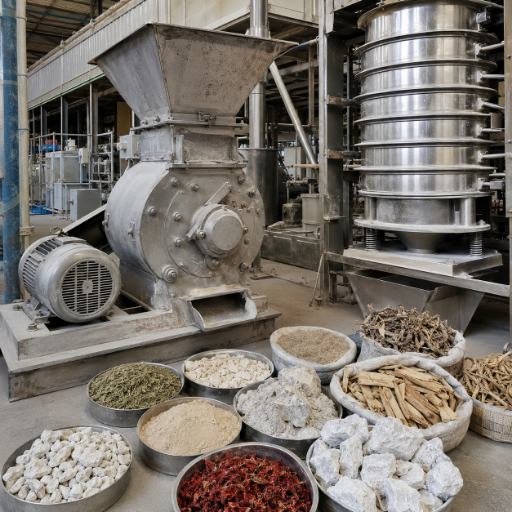
// MODEL TIER 05
TCPEL HM-60
15–30
Tons / Hour Capacity
Flagship large biomass / RDF tier. 250 kW, 144 hammers, tip speed up to 110 m/s for hard biomass. NFPA 652-compliant cyclone and pulse-jet bag filter standard. Designed for boiler-feed and refuse-derived fuel applications.
Motor
160–250kW
Tip Speed
90–110m/s
Hammers
144
Screen Aperture
1.0–20mm
Energy
6–10kWh/t
FOB Range
$38,000–$54,000
| Model | Capacity (t/h) | Motor (kW) | Tip Speed (m/s) | Hammers | Screen Aperture (mm) | Energy (kWh/ton) | FOB Range (USD) |
|---|---|---|---|---|---|---|---|
| TCPEL HM-15 | 0.5–1.5 | 11–18.5 | 80 | 32 | 1.5–10 | 10–14 | $2,500–$4,800 |
| TCPEL HM-22 | 1–3 | 22–37 | 80–95 | 48 | 1–12 | 9–13 | $5,200–$8,500 |
| TCPEL HM-30 | 3–8 | 45–75 | 80–95 | 72 | 0.8–14 | 8–12 | $11,000–$18,000 |
| TCPEL HM-45 | 8–15 | 90–132 | 85–100 | 96 | 0.8–16 | 7–11 | $22,000–$32,000 |
| TCPEL HM-60 | 15–30 | 160–250 | 90–110 | 144 | 1.0–20 | 6–10 | $38,000–$54,000 |
Capacity depends on feed bulk density, target screen aperture, moisture content. Energy performance corresponds to field data measured by TCPEL on corn at 12-14% moisture; biomass and fibrous materials are at the high end of published ranges.
04 / Decision Matrix
Match Model To Application
Five operating profiles. Five recommended tiers. Each row anchors a specific buyer case from small-farm mash feed through to large biomass boiler / RDF plant.
Profile × Model × WhyOperating Profile 01
Small Farm Mash Feed
≤ 1.5 t/h
TCPEL HM-15
Single-phase 380V option, 11 kW minimum draw, screen aperture down to 1.5mm for poultry feed.
Operating Profile 02
Mid-Scale Poultry / Swine Feed Plant
1–3 t/h
TCPEL HM-22
48-hammer rotor, 1mm screen for fine mash at 700μm, 9 kWh/ton on corn.
Operating Profile 03
Wood Pellet Line
3–8 t/h Biomass
TCPEL HM-30
72 reversible chrome carbide hammers, tip speed 95 m/s for fibrous wood chips, 14mm screen for upstream pellet press.
Operating Profile 04
Industrial Feed Pellet Line
8–15 t/h
TCPEL HM-45
132 kW direct-drive rotor, 96 hammers, 8 kWh/ton at scale, integrates with TCPEL pellet cooler and packaging.
Operating Profile 05
Large Biomass Boiler / RDF Plant
15–30 t/h
TCPEL HM-60
250 kW, 144 hammers, tip speed up to 110 m/s for hard biomass, NFPA 652-compliant cyclone + bag filter standard.
05 / R&D Field Testing
We tested 14 hammer geometries on corn, wood chips and rice husk before choosing the chrome carbide reversible profile that comes with HM-30 (standard on 30 and above). Three of those geometries produced lower kWh/ton on corn alone but all failed at 600 hours against biomass. The reversible profile we've left in production gives 1,200 hours on corn and 800 hours on softwood chips — that's the trade we design for, not peak efficiency on one material.
SE
Senior Application Engineer
TCPEL R&D Department
06 / Hammer Service Life
200–1,500 Hours Per Set, By Material
Service life across the range runs 200-1,500 hours depending on the material and tip speed setting.
Bearings should be cleaned and re-lubricated every 300 operating hours regardless of material — preventing the early bearing failure pattern that drives unscheduled downtime in legacy hammer mills.
🔬 Free Particle Size Test — 7-Day Turnaround On Your Exact Feedstock
Sending TCPEL a 5–10kg sample of your raw material returns a free particle size test report within 7 working days, including recommended screen aperture and projected kWh/ton on your exact feedstock.
Audience: Engineer + Manager (Cost Trade-Off)
Hammer Mill Vs Roller Mill Vs Disc Mill — Which Grinder For Mash Feed, Wood Pellet, Or Biomass Boiler Feed
Conventional wisdom around grinding says roller mills produce more uniform particles and thereby have the edge on feed digestibility. That conventional wisdom is partly wrong - it costs feed plants real money when they pay roller mill capex on the assumption it always wins on digestibility. National Hog Farmer's published comparison of corn ground at multiple particle sizes found that at 700 microns, hammer-milled corn was better digested by broilers than roller-milled corn at the same target . Particle distribution width is a real factor, but it is not the only factor; surface roughness, husk fragmentation, and screen aperture interaction matter measurably for animal nutrition outcomes.
An honest comparison looks different from the marketing one. Each grinder type is best at a specific job, and procurement decisions improve when buyers match the technology to the dominant material rather than to a vague preference for "uniformity" or "throughput".
Factor
Hammer Mill
Roller Mill
Disc Mill
Throughput Range
0.5–30 t/h (high)
0.3–5 t/h (medium)
0.1–2 t/h (low)
Energy Use (Corn 700μm)
8–12 kWh/ton
4–6 kWh/ton (cracked) / 8–10 kWh/ton (fine)
10–18 kWh/ton
Particle Distribution
Wider (good for mash)
Narrower (good for cracked/flake)
Medium
Broiler Digestibility @ 700μm Corn
Higher (NHF data)
Lower (NHF data)
—
Fibrous Material Capability
Excellent (straw, wood, chips)
Poor
Limited
Screen Change Downtime
5 min (TCPEL) / 15–30 min (industry)
Roller dressing required, 4–8 hours
Disc swap, 30–60 min
Wear Part Cost (Annual, 5,000 t/y)
$800–$2,500 (hammers + screens)
$3,000–$6,000 (roller redressing)
$1,500–$3,500 (disc replacement)
Best Material Match
Corn mash, wheat, biomass, wood, chips
Cracked corn, flaked grain, rolled oats
Forage, roughage, alfalfa
The Economic Case Sharpens When You Map The Grinder To The Next Process Step.
Pellet feed lines almost always want a hammer mill feed grinder upstream - the wider particle distribution actually helps pellet press die fill, and the throughput head-room handles ingredient batch variability.
Cracked corn for cattle finishing wants roller mill - the precise particle integrity matters more than fine grinding here, and the 30-40% energy savings on simple cracking is real.
Forage and high-fiber roughage processing wants disc mill - neither hammer nor roller handles long-fiber mat well at scale.
When comparing feed grinder types for TCPEL buyers against roller mills in general, do not overlook the screen-change geometry advantage. A roller mill never has screen change downtime because it does not have screens, but it does have roller dressing intervals that take 4-8 hours offline every 6-12 months - far more total downtime than 50 screen changes at 5 minutes each on a hammer mill.
Buyers comparing heritage US suppliers (Bliss Industries, Sudenga, Stedman, Prater, Andritz) and EU specialists (SKIOLD for feed, SIEBTECHNIK TEMA for industrial size reduction) find 2-4 higher landed cost than equivalent TCPEL builds that have identical mechanical performance. This is a matter of service network depth as capital efficiency. Independent, published research from ScienceDirect confirms the same impact crushing and grinding fundamentals across all suppliers- the variables that move real-world performance are tip speed setpoint, screen aperture choice, hammer geometry, and ingredient moisture content; not the founding date of the historian founder. Stakeholder structured supplier evaluation should compare against the published technical envelope (which TCPEL supplies above) rather than heuristics.
Need a head-to-head comparison customized for your feed mix or biomass blend? Request a Custom Comparison Report — TCPEL engineers will model hammer vs roller vs disc economics for your specific operation, no obligation.
Request Custom Report
Audience · Manager / Owner + Engineer · Technical Validation
Five Industries Where The TCPEL Hammer Mill Earns Back Capex — Animal Feed, Wood Pellet, Biomass Boiler, Pet Food, Industrial Size Reduction
Hammer mill applications fold into five execution profiles where the equipment math earns its capex back. Wikipedia lists 11 industrial applications at large, but 5 in number dominate TCPEL shipped annually for feed-grinding-hammer-mill. Each profile has different parameter optimization targets — energy per ton, hammer life, particulates uniformity, or compliance regime — and corresponding model tier.
// Application Concentration
5
of 11
Five profiles dominate TCPEL annual shipment volume. Wikipedia indexes 11 industrial hammer mill applications; the five below account for the majority of buyer demand from Shandong out to 60+ countries.
02 / Application Profiles
Select An Industry — Configuration, Material, Active Deployments
Each profile names the typical raw material, the recommended TCPEL model tier, the parameter envelope (tip speed, screen aperture, kWh/ton), and the live deployment countries.
01
Livestock + Poultry
Animal Feed — Hammer Mill Configuration
// Typical Material
Corn
Wheat
Soybean Meal
Barley
Alfalfa Pellets
// Recommended Tier
HM-22
→
HM-45
Recommended HM-22 to HM-45 depending on plant scale. Screen target 1-2.5mm for poultry mash at 600-900m fineness. Corn, ground at 700m in hammer mill, outshines roller mill on broiler digestibility, according to published university research. Range 9-13 kWh/ton of dry corn, 12% moisture. Works with downstream pellet mill, pellet cooler, and packing machine for a complete feed pellet plant.
Screen Target
1.0–2.5 mm
Fineness
600–900 μm
Energy / Corn
9–13 kWh/t
Moisture
12 %
Active Deployments
VNVietnam
PKPakistan
BDBangladesh
MYMalaysia
RURussia
TRTurkey
6
Active Markets
02
Biomass Densification
Wood Pellet Production — Hammer Mill Setup
// Typical Material
Pine Sawdust
Softwood Chips
Hardwood Scraps
// Recommended Tier
HM-30
→
HM-45
Recommended HM-30 to HM-45 with 96 chrome carbide hammers and 6-14mm screen for upstream feed for pellet press. Tip speed 95-100 m/s when processing fibrous material. Hammer lifespan 800-1,000 hours on softwood in busy feed plant. NFPA 652 + 654 cyclone + bag filter required for indoor plant.
Hammers
96 Chrome Carbide
Screen
6–14 mm
Tip Speed
95–100 m/s
Hammer Life
800–1,000 hrs
Active Deployments
DEGermany
FIFinland
NZNew Zealand
KRSouth Korea
4
Active Markets
03
Boiler / RDF Feedstock
Biomass Boiler / RDF — Hammer Mill At Scale
// Typical Material
Rice Husk
Palm Waste
Straw
Agricultural Residue
RDF
// Recommended Tier
HM-45
→
HM-60
Recommended HM-45 to HM-60 with 144 hammers. Tip speed 100-110 m/s for hard biomass and aggressive materials. Industrial RDF plants cite 60-70% of annual operating costs in raw material handling and grinding — hammer mill efficiency is the easily optimized key cost driver.
Hammers
144
Tip Speed
100–110 m/s
OPEX Share
60–70 %
Material Class
Hard / Aggressive
Active Deployments
INIndia
PKPakistan
RURussia
TRTurkey
4
Active Markets
04
Specialty Feed Grade
Pet Food / Specialty Feed
// Typical Material
Meat Meal
Fish Meal
Vitamin Premixes
Herbs
// Recommended Tier
HM-15
→
HM-30
Recommended HM-15 to HM-30 with stainless steel option for hygienic processing. Fine screens 0.8-1.5mm for high value pet food granule sizing. Reduced tip speed (60-80 m/s) for heat-sensitive ingredients. FDA-compatible construct optional.
Construct
Stainless Optional
Screen
0.8–1.5 mm
Tip Speed
60–80 m/s
Compliance
FDA Optional
Active Deployments
KRSouth Korea
NZNew Zealand
DEGermany
USUnited States
4
Active Markets
05
Spice · Herb · Mineral
Industrial Size Reduction — Spice, Herb, Mineral
// Typical Material
Dried Spice
Herb Roots
Gypsum
Limestone
// Recommended Tier
HM-22
→
HM-30
Recommended HM-22 to HM-30 with food grade liners or carbon steel. R&D test below HM-15 lab-scale. Particle size range 100-500μm, multi-stage screening options.
Liner Spec
Food Grade / Carbon
Lab Tier
Below HM-15
Particle Size
100–500 μm
Screening
Multi-Stage
Active Deployments
INIndia
VNVietnam
TRTurkey
MYMalaysia
4
Active Markets
📈 Pellet Line Compatibility Check — 5-Working-Day Integration Recommendation
Pellet line ROI varies dramatically with raw material cost and selling price. Request a Pellet Line Compatibility Check — input your existing line specs (electrical, control PLC, output capacity) and TCPEL engineers return integration recommendations within 5 working days.
Quality And Global Track Record
Quality Stack — ISO 9001, CE Conformity, NFPA-Compliant Dust Systems, 60+ Country Export Track Record Audience: Procurement + Engineer (standards adherence)Industrial buyers deploying 30-point procurement checklists—such as Baker Hughes Supplier Quality framework or ISM Supplier Evaluation Matrix—screen new-entrant suppliers—and even more so incumbent vendors—far more rigorously. Part of the predictor scale is ”brand staying power,” and the response in the case of TCPEL is to put out considerably more technical detail than the legacy suppliers—tip speed, hammer lifetime range, screen change time, energy per ton, voltage and PLC compatibility—in a format that allows TCPEL to get scored on the same evidence-based axes as its founding fathers (or founding century—1834 or 1834).
ISO 9001:2015
CE Directive 2006/42/EC
NFPA 652 Aware
NFPA 654 Compliant Dust System
OSHA 1910.22 Compatible
ATEX-Ready Configuration Available
NFPA 652 – the U.S. Standard on the Fundamentals of Combustible Dust—applies to any plant ground agricultural or biomass material. The standard stipulates a Dust Hazard Analysis as part of an owner’s risk mitigation documentation, and the selection of protective equipment. TCPEL ships every Hammer-30 and larger with a cyclone separator + Bag filter dust collection system specified by the Dust Hazard analysis and explosion vent documentation according to NFPA 68 on request. buyers in the US and Canada should consult their facility insurance carrier to confirm whether they have additional requirements for dust system features greater than the standard NFPA baselines.
TCPEL Export Footprint — 60+ Countries Since 2020
TCPEL has shipped hammer mills, pellet presses, dryers and complete pellet manufacturing lines to operators within the table below by consolidating export concentrations of comparable plants in like markets. Each listed country has at least one active, commissioned installation; many others have numerous deployments for both feed and biomass use.
Germanybiomass
Finlandwood pellet
Russiafeed + biomass
New Zealandpet food
South Koreaspecialty feed
Pakistananimal feed
IndiaRDF + biomass
Bangladeshpoultry feed
Vietnamaqua + animal feed
Malaysiapalm waste biomass
Turkeyindustrial biomass
+ 50 more marketsglobal reach
Want documented compliance evidence for your insurance carrier or audit? Download the TCPEL Compliance Documentation Pack — includes ISO 9001 certificate, CE declaration of conformity, and NFPA 654 dust system specifications.
Download PackAudience: Procurement + Manager (Budget Approval)
Buying Path — FOB Price Range, MOQ, Lead Time, Installation, Warranty
Most hammer mill suppliers—Schutte, CME, Art’s Way’s small models, and the broader Chinese export market—are generally opaque. A buyer submits a contact form, then waits two to five working days for a price specific to that inquiry, with no industry norm reference. The opacity creates a procurement challenge: buyers have no basis on which to compare a single quote against the norm, and saved-broker-feedback recounted online repeatedly emphasizes the importance of post-sale support, spare parts, and training as one of the main considerations in a purchasing decision. TCPEL responds by publishing a FOB price range up front, with the factors driving the quote into that range.
FOB Price Ranges (Qingdao, China — USD)
Model
FOB Range
Standard Inclusion
Common Add-Ons
TCPEL HM-15
$2,500–$4,800
Mill, motor, control box, 2 screens, 1 hammer set
Cyclone (+$$800), bag filter (+$$1,200), feeder (+$$600)
TCPEL HM-22
$5,200–$8,500
Mill, motor, control box, 3 screens, 2 hammer sets
Cyclone + bag filter combo (+$$1,800), magnet protector (+$$300)
TCPEL HM-30
$11,000–$18,000
Mill, motor, PLC control, 4 screens, chrome carbide hammers
Pneumatic discharge (+$$2,500), VFD drive (+$$3,200)
TCPEL HM-45
$22,000–$32,000
Mill, direct-drive motor, Siemens/AB-compatible PLC, full dust system
Spare hammer set 2-year (+$$1,800), site survey + install (+$$4,500)
TCPEL HM-60
$38,000–$54,000
Mill, 250kW motor, full PLC integration, NFPA 654 dust system, explosion vent
2-engineer commissioning team (+$$8,500), 5-year wear part contract (+$$6,200)
Pricing Factors — What Moves The Quote
Voltage And Frequency
380V/50Hz default; 440 V/60 Hz, 480 V/60 Hz, or 220 V single-phase add 3-8% to base price
Stainless Steel Construction
Required for FDA-aligned pet food; adds 18-25% to mill body cost
PLC Compatibility Tier
Siemens S7 / Allen-Bradley CompactLogix integration adds $1,500-$3,500 over standard PLC
Dust System Specification
NFPA 654 baseline included from HM-30; ATEX certification for EU adds $2,500-$5,000
Spare Parts Pack
1-year standard; 5-year contract (reduces 35% long-term parts cost)
Installation And Commissioning
Factory commissioning at Qingdao is included; on-site engineer dispatch $4,500-$12,000 by country
Lead Time, MOQ, Warranty
LEAD TIME
30-45 days FOB Qingdao for standard builds; 60-75 days for stainless steel or custom voltage
MOQ
1 unit; 5+ unit orders will receive distributor pricing (usually 8-15% discount to retail FOB)
WARRANTY
1 year on motor and gearbox, 6 months on hammers (normal wear not covered), lifetime spare parts availability
PAYMENT TERMS
30% with order, 70% against B/L copy or Letter of Credit at sight
SHIPPING
TCPEL manages FCL/LCL booking with 3 freight forwarder partners in Qingdao; door-to-door service on request
The industrial grade selected was a hammer mill; after years of review, the procurement buyer told a popular internet forum: "...you can see that we ended up buying a Hammer Mill from CME and couldn't be happier". The rotor specification was never the deciding factor; the decisive advantages were the parts supply at the point of failure, the robustness in operation, and the engineering support when you need to hit the ground running. Chinese export-grade quality was the starting point but never enough on its own, the service network and engineering responsiveness made the difference.
Have a specific application in mind? Get a quote based on your t/h volume and material profile — TCPEL's sales engineering team responds within 24 hours during business days, with technical specifications and FOB pricing typically delivered within 3 working days.
Engineering Hub
Interactive Engineering Tools & Calculators
Optimize your feed grinding parameters, validate processing equipment efficiency, and accurately model system configurations. Select from our suite of precision calculators below to determine the exact technical specifications, energy differentials, and screen parameters required for your industrial manufacturing line.
Audience: All buyers
Buyer FAQ — Capacity Sizing, Maintenance, Compliance, Integration
An SC pellet plant target has 30-50% over sizing on the hammer mill to perfect material handling in and between machines, to maximize flour output, and reduce the inconvenience of screen change downtime impacting the pellet press throughput. The TCPEL model HM-22, this is 1-3 t/h, is a good match; for higher moisture or fiber components in your raw material (rice husk, corn at 16%+ moisture), choose crown hammer mill up to 30 for buffering your process. Power usage at this size is 9-13 kWh/ton dry corn.
Poultry mash feed calls for 600-900 micron target particle size. Using an 80-95 m/sec tip speed, 1mm screen hole diameter on a hammer mill delivers a 700-800 micron mean particle size. Journal published research has proved hammer-milled corn at 700 micron get higher digestibility than roller-milled corn at the same target size, so wider particle distribution can be a positive feature for the target size.
Your mash feed (most typically poultry or swine) arguments point to hammer mill advantage in initial installation capital costs, high efficiency at typical 600-900 micron achievable targets, and published university research digestibility advantages. Cracked corn finishing cattle and flaked grain stops hammer mill advantage on energy and product integrity. Large modern feed mills run both: downstream hammer mill for mash pelleting and fish feed, downstream roller mill for cracked corn finishing. We can quote a package system on request.
Measurements of dry corn at 12-14% moisture show 6-14 kWh/ton across the TCPEL hammer mill comparison set across the TCPEL HM-15 through HM-60 lineup, larger models at the lower end as the motors are used more efficiently. This compares favorably to what independent agricultural machinery publishers document as the benchmark 5-15 kWh/ton. Fibrous and woody biomass materials tend to run on the upper end at 10-15 kWh/ton (examples: oak chips, softwood chips). Specific-energy consumption can lead to exponential rather than linear trends as screen aperture sizes get smaller and tip speeds accelerate.
Hammer service life is 200–1,500 hours depending on the material being processed and the tip speed. Heavy duty grinding waste metal or stone bearing biomass is in the 200–400 hour range per set of knives. Regular mash feed on dry corn is in the 800–1,200 hour range. Softer biomass is lower tip speeds and is in the 1,000–1,500 hour range. TCPEL generally ships chrome carbide reversible hammers standards on everything from the HM-30 forward; the lower products ships with the hardened steel hammers and chrome carbide is an upgrade.
The published FOB Qingdao prices is $2,500 to $54,000 for the HM-15 entry product up to HM-60 industrial unit, most of the feed pellet plant purchase in the range of $11,000-$32,000 for HM-30 to HM-45. The price band moves with voltage configuration, stainless steel, PLC tier and dust system specification. The procurement table is published in the Buying Path of the above and it is in spec sheet PDF.
Yes - TCPEL ships every HM-30 and larger with a cyclone + bag filter dust collection system specified to meet NFPA 654 (specific to wood and agricultural processing). Explosion vent documentation / testing per NFPA 68 is available upon request. ATEX rated configuration for European installations add $2,500-$5,000 to base pricing and includes in the spec Zone 22 enclosure rating and certified electrical components. U.S. and Canadian buyers should check their plant insurance carrier's specific dust system requirements which sometimes are above and beyond the NFPA minimums for combustible dust concerns.
Yes. Voltage configurations are shipped for 220V single phase, 380V/50Hz, 440V/60Hz and 480 V/60Hz to be compatible with existing North American, EU, Asian and South American requirements. Your PLC system can be integrated with Siemens S7-1200/1500 and Allen-Bradley CompactLogix/ControlLogix via direct Modbus TCP or Ethernet/IP. Mechanical modules (removal of intake hopper, addition of discharge auger to your existing pellet press) are configured during engineering review. TCPEL offer a free pellet line compatibility check on your existing plant - vendor to provide current electrical and mechanical specs and engineers will provide integration recommendations within 5 working days.
Standard warranty: 1 year on motor, gear, shaft 1 FOB date 6 months on hammers and screens (wear items, normal service apart from screen base plates). Lifetime spare parts available TCPEL work to keep stocks for any model sent from 2020 on regional spare parts agents in Germany, India, Vietnam & Russia, covering the four major export concentrations with 30 day standard lead times on non-stocked goods. Bearings should be cleaned and re-lubed every 300 operating hours, maintenance schedule comes with every ship and details are in the spec sheet PDF.
Trained operators perform a captive-pin quick release frame ready-to-run screen change on TCPEL HM-22 and larger models in less than 5 minutes. When compared to the documented regional industry typical 15-30 minute change sample, this design choice recovers 8-20 hours of throughput annually for an entire year's worth of pellet production for 50 screen changes for material change-outs and wear replacement. Each unit ships with operator training video and procedure documentation.