Get in Touch with TCPEL

Wood Pellet Machine
Wood Pellet Machine — Industrial Pellet Mill Manufacturer | 100 kg/h to 4 t/h
17 models. Two engineering platforms – flat die and vertical ring die. Full USD FOB transparency from $4,000 to $42,200. Built and shipped from a 20,000m² Shandong factory to 60+ countries since 2020.
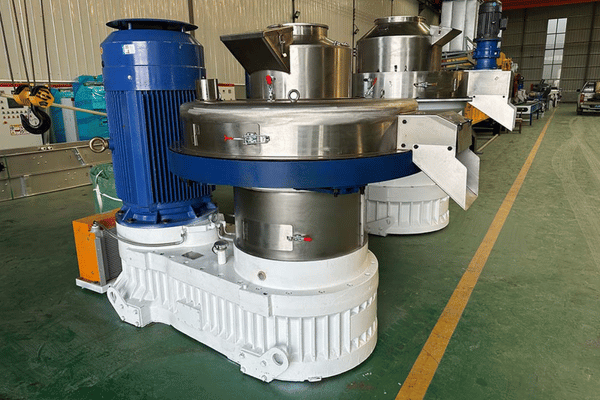
17
Models in production
100 kg/h–4 t/h
Output range
60+
Export countries
15 days
Lead time after deposit
2 years
Warranty + 24h support
Why Pellet Producers Struggle to Match Capacity, Price, and Raw Material Flexibility
Wood pellet machine buyers encounter three issues repeatedly across the global market. Capacity gaps cause operators to either overpay for a single class of machine or combine undersized units. Pricing transparency is absent from most OEM quotes, meaning the true landed cost is unknown until the final quotation.
The three structural buyer pains we hear weekly:
1
A mismatch between machine size and project scope hurts profit plans – small-mill providers price-out at below 1.4 t/h, and industrial CPM standard poducers begin at 3 t/h, skipping the 1-3 t/h range which many regional buyers are using as a basis for scale.
2
Lack of pricing transparency slows the budgeting process – five out of six top SERP competitors publish either incomplete small-mill pricing or none at all for industrial-tier units, so buyers must go through three rounds of quotations to estimate the deal.
3
Plant-utilization surprises in material-flexibility – flat die mills rated for “wood pellets” cannot handle EFB or palm shell without change in die formula, yet most datasheets do not list this limitation.
The global wood pellet market is estimated at between USD 17.25 billion (2025) and an anticipated USD 26 billion by 2030 (Mordor Intelligence). While demand is rising, densification capacity is constrained by die availability and quality assurance – not raw material stockpiling.
TCPEL’s Direct Solution
TCPEL addresses those three challenges with a 17-model line ranging from 100 kg/h to 4 t/h, published USD FOB price on every SKU, and validated die formulas for sawdust, EFB, palm shell, olive waste, rice husk, cotton stalk, and bamboo. We manufacture at one Shandong plant of 20,000m² and deliver from Qingdao port. As a OEM and direct supplier, we match one production line of equipment for all renewable-energy processing machines: wood pellet machines, drum chippers, hammer mill units, rotary driers, pellet coolers, and packers under one quote.
How a Wood Pellet Machine Works — Flat Die vs Vertical Ring Die Engineering
A pellet machine compresses biomass (typically 8-15% moisture content) using a perforated die and roller assembly. As the rollers spin, friction heats the biomass and activates the hygroscopic lignin binder within wood. The adjacent die holes shape the material into suitably dimensioned pellets.
Three steps inside every pellet mill
01
Feed and meter
A screw conveyor or gravity hopper feeds dried, sized biomass into the pellet-makin chamber at controlled pressure (and where applicable, mash diesel with a certain HW%).
02
Compress and extrude
The die roller runs on the bearing surface of the die, pressing the material through the die holes. The quality of the die hole size/ratio determines the pellet density.
03
Cut and discharge
Discreet knives turn the extrusions to pellet length (up to 40 mm). The excess pushes the pellet into a cooler where it is moistened or cooled.
Before any wood pellet mill you often will see a hammer mill for size reduction, and for some farm-scale flat die mills a rotary hay dryer. The mill can sometimes be PTO-powered using a tractor instead of a three-phase line.
Engineering trade-offs
Understanding the core differences between Flat Die and Vertical Ring Die orientations is critical for matching equipment to production scale and operational capacity.
Why die material decides your maintenance cost
Die is the single largest wear part. Cheapo dies cheat you – you are swapping out at every shift change. TCPEL spells out 20CrMnTi alloy steel. carburized and quenched to 58-62 surface hardness on HRC, substantiated by independent metallurgical refs.
This yields typical life of 1,000-1,500 hours per side on heat-treat shelf, versus 300-500 hours typical on usage-flat dies on pellet die specifier guidance. We offer both ends of the spectrum because customers have a right to know what “dust in the dike” actually depends on.
Dimension
Flat Die (TCZL200–TCZL650)
Vertical Ring Die (TCZL560–TCZL850B)
Capacity band
100–1,400 kg/h
1–4 t/h
Motor power
11–110 kW
90–280 kW
Die orientation
Horizontal stationary; rollers rotate above
Vertical fixed; rollers rotate on inside surface
Heat dissipation
Passive (air)
Built-in cooling + independent cooling motor
Best for
Small farms, workshops, regional producers
Continuous 24-hour industrial output
Indicative price
$4,000–$12,200
$16,300–$42,200
TCPEL Wood Pellet Machine Range — 17 Models from 100 kg/h to 4 t/h
Our portfolio breaks down into four families. Models cover only one family per page so engineers can dig into feature and performance specs without side scrolling.

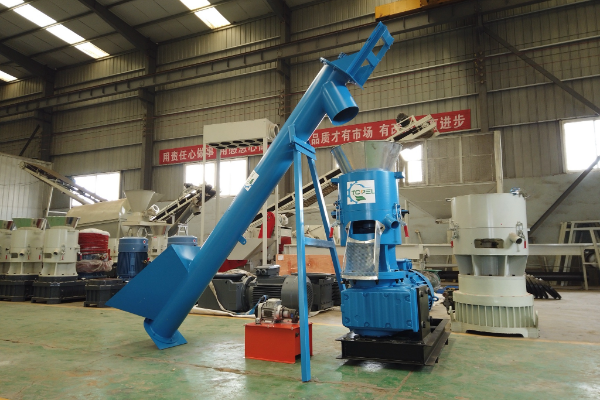
Flat Die Pellet Mill
9 models, 100-1,400 kg/h., 11-110 kW. Gearbox speed transmission, entry-priced, suitable for first-time operators or small farms.
View Flat Die models →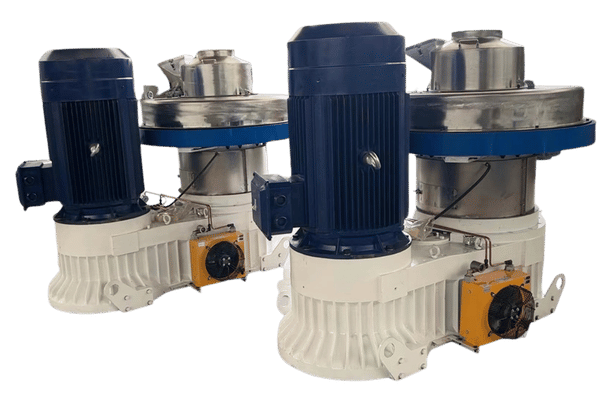
Vertical Ring Die Pellet Mill
6 models, 1-4t/h, 90-280 kW. Cast construction, auto-oil alarm feed system, independent cooling motor for 24/7 operation.
View Vertical Ring Die models →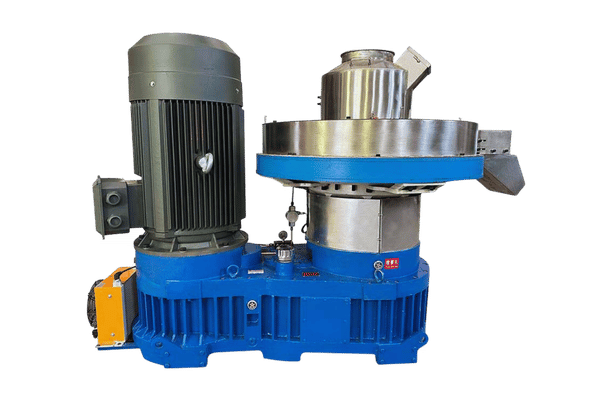
Biomass Pellet Machine
Validated designs for sawdust, EFB, oil shell, olive waste, rice husk, sea-saw, cotton stalk, bamboo, others. Material differences described with dies formula.
Biomass-specific configurations →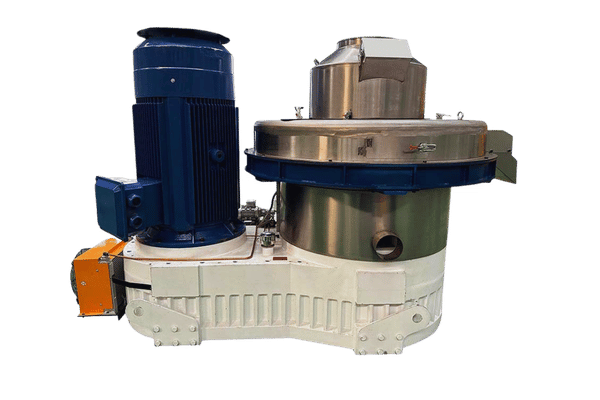
Small Pellet Machine for Home Use
Typical design for sawdust, EFB, olive waste, oil shell, grain, stalk, rice husk. Dies formula specific for each material type.
Home-use machines →Complete 17-SKU Specification Matrix
Decision Matrix — Which model fits your operation?
| Your Use Case | Recommended Model | Why |
|---|---|---|
| Home heating, hobby pellet making | TCZL200 (11 kW, $4,000) | Lowest entry; 100 kg/h covers one heating season |
| Small farm, 500-1,000 kg/h output | TCZL400 or TCZL450 | Mid-flat-die; sweet spot on $/kg-of-output |
| Regional commercial start-up | TCZL650 (110 kW, $12,200) | Top flat die before stepping into ring die capex |
| Industrial >1.5 t/h continuous | TCZL560A or TCZL700 | Cast body + cooling motor for 24-hour duty |
| Pellet plant export project | TCZL850 or TCZL850B | Up to 4 t/h, maximum die surface area |
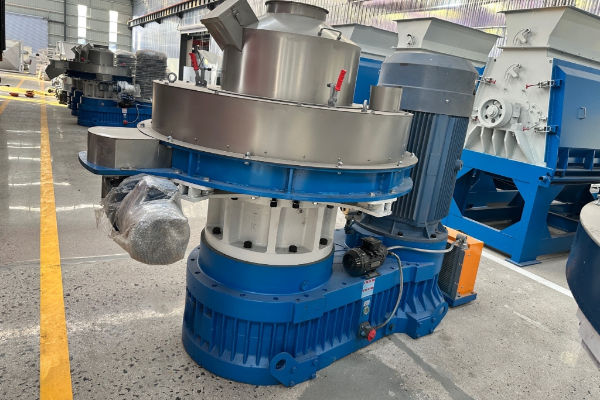
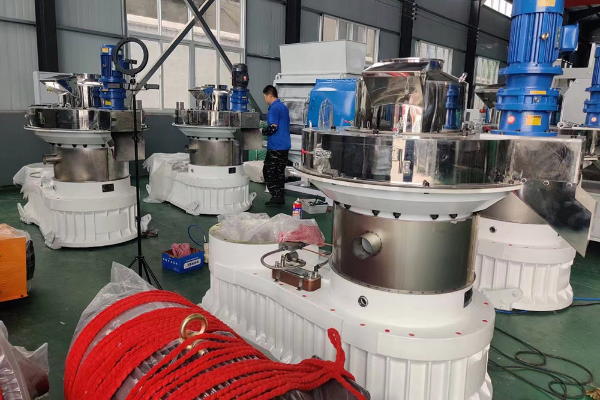
Wood Pellet Machine Factory
Advanced Manufacturing & Equipment Processing



×
![Factory Full View]()
TCPEL vs PelletMasters vs USA Pellet Mill vs GEMCO vs CPM — 5-Vendor Reference Matrix
Entry-level TCZL200, 11 kW, 100 kg/hr, $4,000, FOB Jeddah. For hobbyists, off-grid heating, case-limited small farms.
Naming conventions vary across vendors
Published quoto-ship matrix for non-user cross compare by naming conventions. Buyers report comparison hours as the single biggest hidden cost in procurement, not machinery.
| Vendor | Origin | Capacity band | Die material | Public USD pricing | Continuous-duty rating |
|---|---|---|---|---|---|
| TCPEL | Shandong, CN | 100 kg/h – 4 t/h | 20CrMnTi, HRC 58-62 | Full 17-SKU $4K–$42.2K | 24 h with cooling motor |
| PelletMasters | USA | Small flat die only | Not disclosed | Demo specials only | Not specified |
| USA Pellet Mill | Miami, FL | Small flat die (MKFD) | Not disclosed | $1,864–$2,783 small only | Not specified |
| GEMCO Energy | Henan, CN | 50–800 kg/h small mills | Not disclosed | Quote-only | Not specified |
| CPM (USA) | USA | Industrial only | Hardened alloy | Quote-only | 24 h industrial |
| Buskirk Engineering | USA | Custom flat die | Not disclosed | Quote-only | Custom-spec |
Pellet Production Cost & ROI — Worked Example for a 1 t/h TCPEL Line
Worked Example — TCZL560 (90 kW, 1–1.5 t/h, $16,300 FOB)
Only one company (TCPEL) publishes estimates in USD for this broad 100 kg/h to 4t/h service domain. PelletMasters and CPM have the strongest established US brands but with holds on publishes machine service pricing.
- Machine cost (FOB Qingdao)
- $16,300
- Energy use per ton
- 30–80 kWh
- Sawdust raw input
- $25–$40/t
- US pellet selling price
- $241.78/t
- Net margin (industry)
- 8–18%
- Payback (typical)
- 1.5–4 yrs
What the numbers tell engineering managers
Historical industry data shows payback of 1.5 to 4 years on medium-scale biomass pellet investments, net margin of 8-18%, depending on costs of raw material and application-end price. Contract price illustrated below derives from industry published data, not ingrained engineering practice.
Variable feedstock cost can shift profit by six percentage points relative margin on rawstone cost by $15 / ton. Standard production changes.
Efficiency differences across machine families can reach factor of five in power consumption per quantity biomass (29.91 to 150 kWh per ton, 2026 studies, published sources); Industrial vertical ring die sits at the lower end of the power-use scale.
Standards & Compliance — ENplus, ISO 17225-2, PFI, CE 2006/42/EC
Pellet quality controls what you can sell, where you can ship, and at which price level. Our TCPEL lines are designed to produce at ENplus A1 specification given the correct downstream cooling and raw material specifications.
ENplus A1
Premium residential≤0.5% ash · 3,900–4,800 kcal/kg · 6–8 mm diameter
ENplus A2
Medium commercial≤1.2% ash · EN 14961-2 compliant
ENplus B
Utility / industrialHigher ash tolerance; power plants
ISO 17225-2:2021
Global wood pellet gradeHierarchical classification by origin
CE 2006/42/EC
Machinery DirectiveEU safety conformity for industrial mills
MD NTS2307072S
TCPEL factory certificationIndependent NTS audit on file
Standards-to-output mapping
| Standard | Key thresholds | Authority | End market |
|---|---|---|---|
| ENplus A1 | ≤0.5% ash · 3,900–4,800 kcal/kg · ≤0.02% Cl · 6–8 mm | European Pellet Council | Residential stove · premium heating |
| ENplus A2 | ≤1.2% ash · EN 14961-2 base | European Pellet Council | Commercial boiler · district heat |
| ISO 17225-2 | Origin/source classification | ISO TC 238 | Global trade reference |
| PFI Standard | US Premium/Standard/Utility tiers | Pellet Fuels Institute | North American residential |
| CE 2006/42/EC | Machinery safety directive | European Commission | EU import qualification |
Procurement Guide — USD Pricing, MOQ, Delivery, Payment
Response to procurement questionnaire: all our standard configuration quoting applies below, custom dies and higher voltage options are quoted on case by case basis.
Entry Tier
$4,000
■TCZL200 · 100 kg/h · 11 kW
■Hobby / home heating
■Single-phase compatible
■15-day delivery
Small Commercial
$7,100
■TCZL450 · 600–800 kg/h · 55 kW
■Regional producers
■3-phase 380V/440V
■Gearbox transmission
Mid-Industrial
$19,200
■TCZL560A · 1.5–2 t/h · 132 kW
■24-hour duty
■Independent cooling motor
■Automatic oil-alarm system
Large Industrial
$42,200
■TCZL850B · 4 t/h · 280 kW
■Pellet plant export
■Cast body heat-treated
■Maximum die surface
Standard procurement terms
Pricing basis
FOB Qingdao port, USD, publicly listed (17 SKUs)
Payment terms
30% T/T deposit · 70% T/T balance before shipment
Lead time
15 working days after deposit confirmation
MOQ
1 unit (any model)
Complete set includes
Screw Feeding Conveyor · Main Pellet Machine · Control Cabinet · Lubricate Oil Pump · Assemble Tools
Warranty
2 years on all main components
Engineering support
24-hour response by WhatsApp / email
Spare parts SLA
5 working days via international courier
Origin certification
MD certificate NTS2307072S on file
Equipment line covered
Wood pellet mill, hammer mill, rotary dryer, pellet cooler, packing machine (one supplier, one production line)
“We keep a die stock for every model we buy. When the operator reports die wear in month 18, the courier shows up within five days with a replacement. That is a multi-week response for 24-hour operation, or a shut down for up to 30 days. “
Wood Pellet Machine Professional Calculation Tools
Capacity Sizing
Calculate capacity and power requirements based on your raw materials to quickly determine the optimal equipment specifications.
Access Sizing ToolROI Calculator
Evaluate your commercial ROI by inputting material and operation costs to calculate per-ton profit margins and payback periods.
Access ROI CalculatorFAQ — Buyer Questions Before You Quote
Is it worth it to make your own wood pellets?
Most busy plant economics make pellet production viable within 1.5 to 4.0 years if the raw material is within 50 miles of the plant of operation (sawdust, palm EFB, or agricultural waste). Industry margins of 8-18% are published by industry investment guides for 2026. Long-haul logistics kill the economics when sourcing raw material from more than a hundred miles away.
What’s the difference between a flat die and a ring die pellet mill?
A flat die mill has a horizontally fixed die and a roller head which rotates above. Cheaper and simpler than its ring die equivalent, a flat die mill suits output ranges from 100 kilogrammes per hour to 1.4 tonnes per hour. A vertical ring die mill has a) circular vertical fixed die with b) rollers rotating within, designed for 1 tonne per hour and above, with built-in cooling for 24/7 operation.
Flat dies are lauded for low capital investment and large maintenance cycles, whereas ring dies are lauded for large throughput, flat die pellet volume remains very high, and the mixture of abrasive and high-velocity material with heat makes large 24 hour duty cycles possible.
What raw materials can a TCPEL pellet machine handle?
Our vertical ring die line for pellet has been proven with wood, sawdust, rice husk, EFB (empty fruit bunch), palm shell, olive waste, fruit straw, bamboo, peanut shell, and beech. Flat die line handles sawdust, grass, straw, ground nut shell, corn straw and similar high-ash agricultural waste.
Die formula change is implemented when switching between woody and nonwoody feedstock – the die supplied to you will match the declared primary input material.
How long does a TCPEL pellet mill die last?
On our 20CrMnTi alloy steel dies, the die, as-cast, carburized, and hardened, reaches HRC 58-62, and that has an industrial lifespan of 1,000 to 1,500 hours per face.
To be clear, the industry standard rough treatment for flat dies is 300-500 hours per face – by heat treating them we get the indicative 3 gap. We publish the metallurgical specification for all dies so you can get some peace of mind before buying.
How much does an industrial wood pellet machine cost?
The published, fully public, fully transparent for FOB Qingdao TCPEL pricing looks like the 17 SKU table above, from $4,000 (TCZL200, 100 kilogrammes per hour) through to $42,200 (TCZL850B, 4 tonnes per hour). Industrial sized machines (1 tonne per hour plus) start at $16,300 for the TCZL560.
Most other competitors will quote on case by case basis. We publish by SKUs because we want those comparison shoppers, not buyers who push for a premium for opacity of the process.
What is the energy consumption per ton of pellets?
Published literature indicates specific energy consumption values of 29.91 to 150 kWh/ton for different class of pellet machines, with industrial vertical ring die machines operating towards the lower end of the spectrum (roughly 30-80 kWh/ton). Smaller flat die units and biomass with higher coefficient of friction (e.g. forest derived feedstocks) tend to run at the upper spectrum of the energy range.
Is biomass pellet business profitable?
Industry literature from 2026 investment guides indicates net profit margins of 8-18% on medium-scale biomass pellet plants on the lower end, with payback periods of 1.5-4 years.
Industry final price: cost drivers include: raw material cost (the largest variable), the current local electricity tariff, end-market end tier (residential premium, vs industrial utility category), and the current CER accreditation level (ENplus A1, versus out of specification cases).
How long does delivery take from China?
Industry delivery: Trans-oceanic (Qingdao port to your address): 25-45 days depending on travel lane. In-country: 60-75 days (door-to-door standard configuration, 15 working days after a 30% deposits clears at our factory). International express for water-cooled spare parts: ~5 working days. We usually do not offer air freight for full machines due to dimensional weight considerations.
Industry variable: air freight is readily available for spare parts within 2-5 working days. We usually do not include air freight for full machines due to dimensional weight considerations.