Get in Touch with TCPEL

Flat Die Pellet Mill
TCPEL Flat Die Pellet Mill — 9-Model Industrial Ladder (11–110 kW, 100–1,400 kg/h)
An industrial gearbox for a flat die pellet mill helps produce 1-1,400 kg/h biomass and livestock feed when three numbers come together: an industrial gearbox that maintains 90-110 RPM under load, a die-and-roller set appropriate for your raw material, and a cost that pays for itself within 24 months. That series ranges from 11 kW / 100 kg/h ($4,000 FOB Qingdao) for workshop pilot lines, to 110 k W / 1,400 kg/h ($12,200) for small commercial pellet mills – manufactured at our 20,000 m2 Shandong plant and shipped to over 60 countries since 2020.
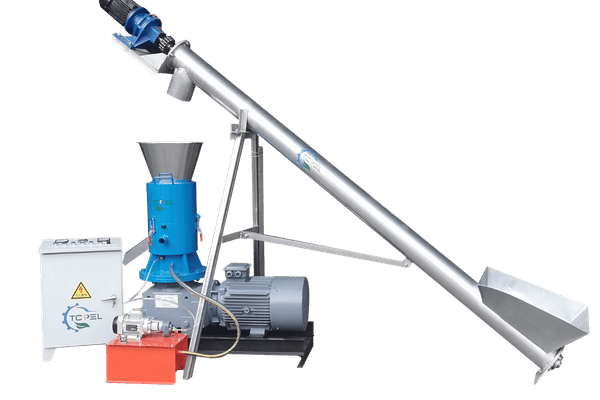
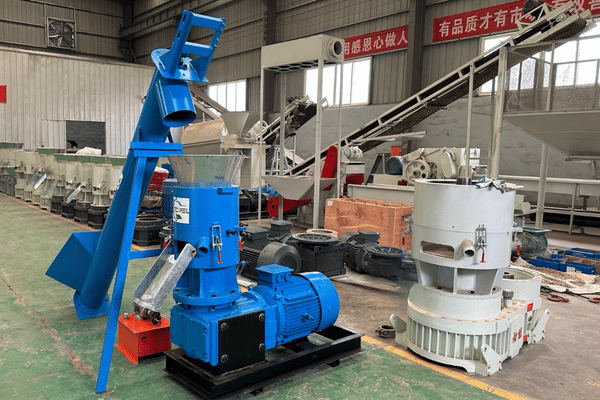
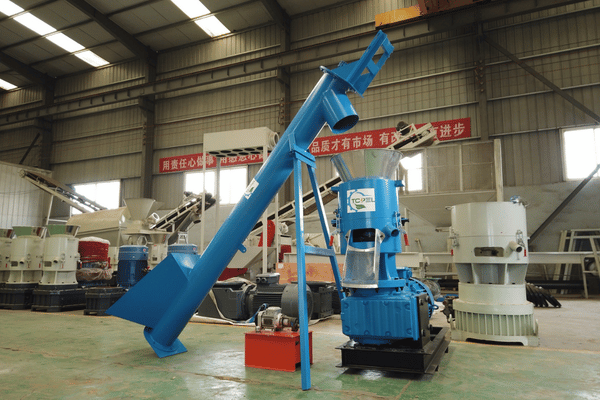
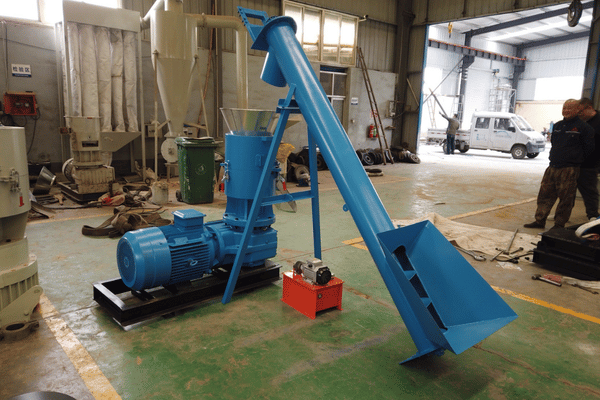
Our complete package ships with screw feeder, control box, lubricating pump, and assembly kit – not just the bare mill.
Request 9-Model FOB Quote
11–110 kW
Drive Power Range
100–1,400 kg/h
Wood Pellet Capacity
$4,000–$12,200
FOB Qingdao Price
15 days
Delivery After Deposit
60+ countries
Delivered Since 2020
ISO 17225-2
Bulk Density Compliant
Why Flat Die Pellet Mills Get Picked for 1–1,400 kg/h Production
Decision makers are commonly sawmill owners with access to sawdust, farm owners with access to feed grain, or processing plant owners with access to seasonal straw and stover. They all face the same three constraints: variable feedstock quality, a limited capital budget relative to $20,000, and the ability to recover that budget from waste streams on land already owned.
A flat die pellet mill crushes sawdust, straw, grasses, ground nut shells, or corn stover through a stationary or rotating flat steel die into 6-8 mm cylindrical pellets–the same feed form that power pellet stoves and husbandry supply houses worldwide. The geometry is ten decades old in industry age: CPM’s first pellet mill, built in the 1930s, was a flat die. The industry later moved to ring die from 5 metric per hour on up to the functionality of today’s pellet manufacturing plants. Flat die never left the 0.1-1.5 metric per hour category–mechanical simplicity allows superior results.
The Real Pain Point Behind Most Failed Small Pellet Mills
“The cottage.com pellet discussion board post screen name asks over and over: ‘I bought a small mill, it pushed sawdust once, then the die cooled and pellets fell apart.’ How dainty! On closer review, frequently he is actually describing a mill without its industrial gearbox–a PTO or direct drive, consumer grade, mill. An industry old-timer precisified the root of it with: ‘If you can’t get the hot enough then you have to use a binder. That is the main issue with small pellet mills.'”
The Mechanics of Success
It is not magic; it is mechanics. Putting steady RPM to the screw, as well as steady torque to that RPM, prevents the die interior temperature from declining below 65 C and maintains temperatures above 125 C every bit as close as three miles. Reduce RPM under load – as a tractor PTO does when the clutch is disengaged – and it stagnates six degrees shy of lignin softening temperature. That demands an industrial gearbox scaled to sustain 90-110 RPM at variable load. Every TCZL in our series uses one.
The TCZL Industrial Ladder — 9 Models, Specs & FOB Qingdao Prices
TCZL series is designed as a continuous capacity, continuous-price ladder, not a three-tier set. That keeps sawdust operations up to 400 kg/h seasonal load from over-buying at 800 kg/h, and avoids cooping a 600 kg/h feed mill into ordering the (equally priced) 300 kg/h underperformance.
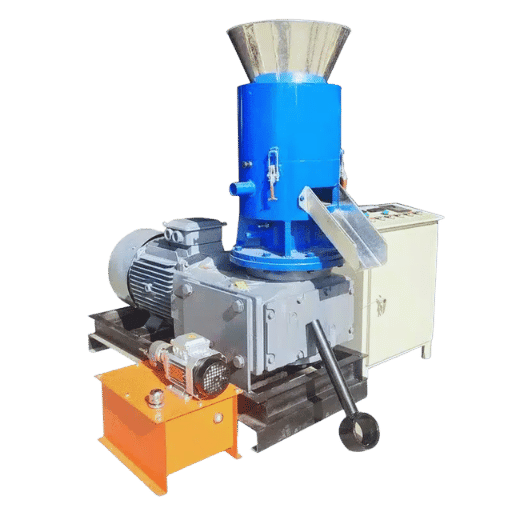
| Model | Power (kW) | Capacity (kg/h) | Weight (kg) | Dimension (mm) | FOB Qingdao |
|---|---|---|---|---|---|
| TCZL200 | 11 | 100 | 500 | 1,080 × 490 × 1,090 | $4,000 |
| TCZL250 | 15 | 100–200 | 600 | 1,120 × 440 × 1,060 | $4,400 |
| TCZL300 | 22 | 200–300 | 800 | 1,230 × 630 × 1,030 | $4,800 |
| TCZL350 | 30 | 300–400 | 850 | 1,380 × 630 × 1,280 | $5,500 |
| TCZL400 | 37 | 400–500 | 1,200 | 1,380 × 680 × 1,300 | $5,900 |
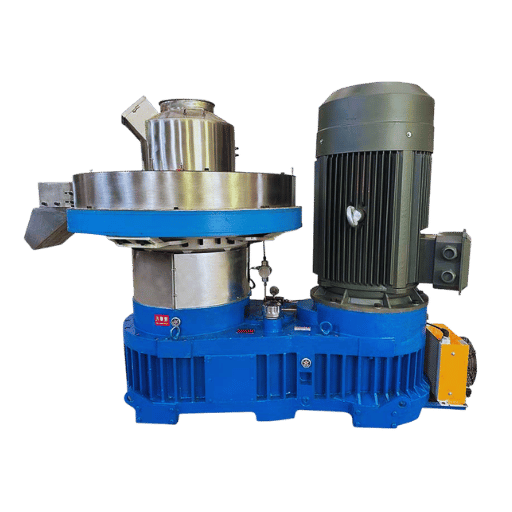
| Model | Power (kW) | Capacity (kg/h) | Weight (kg) | Dimension (mm) | FOB Qingdao |
|---|---|---|---|---|---|
| TCZL450 | 55 | 600–800 | 1,600 | 1,480 × 730 × 1,380 | $7,100 |
| TCZL550-75 | 75 | 800–1,000 | 2,200 | 1,580 × 730 × 1,480 | $10,100 |
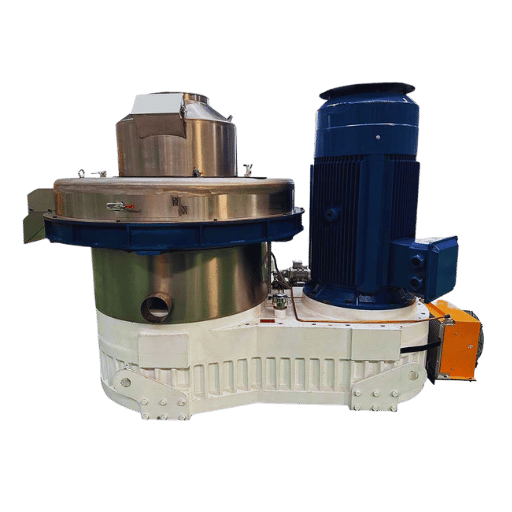
| Model | Power (kW) | Capacity (kg/h) | Weight (kg) | Dimension (mm) | FOB Qingdao |
|---|---|---|---|---|---|
| TCZL550-90 | 90 | 1,000–1,200 | 2,800 | 2,000 × 1,000 × 1,800 | $11,000 |
| TCZL650 | 110 | 1,200–1,400 | 3,200 | 2,000 × 1,000 × 1,800 | $12,200 |
Complete prices are FOB China’s cost, applicable for at least one, two- or three-set orders. The listed range of capacity for each model is the reported softwood sawdust output at 12% moisture, subject to variation with other feedstocks.
What “Complete Set” Means at TCPEL
Three sell “pellet mill price” but are silent about the quantity delivered. Our nine-model complete set follows this listing:
- Screw conveyor feeding gravity input from either your sawdust pile or wood feed hopper
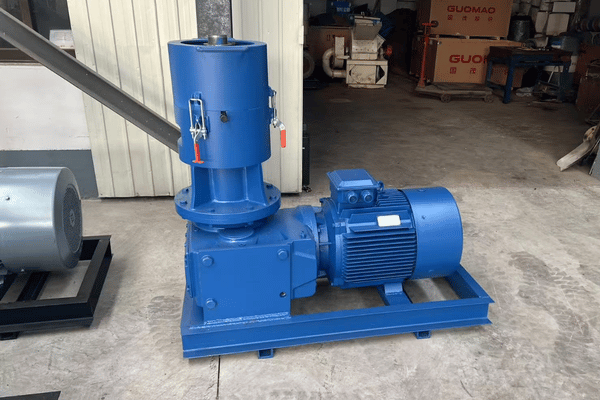
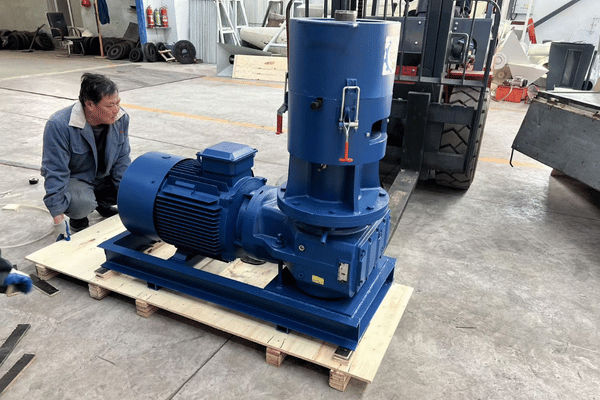
- Main pellet machine — the gearbox-driven flat-die unit itself
- 270V three phase or 125V single-phase electrical control box wired and ready to plug into your grid
- Lube oil feed and return to gearbox and roller bearings
- Assembly tool kit (jigs, t-handle n.39MM ER sized for the model)
How a Flat Die Pellet Mill Works — Industrial Gearbox, Die & Roller Geometry

A flat die pellet mill features four critical moving parts and one stationary component that determines whether the machine payoff justifies its investment: the die. Material is dropped from the hopper into a horizontal pressing chamber, where it encounters two or three roller assemblies turning against the flat steel die.
The pressure and greater of friction-including-length height creates the flat hole, usually 6-8 mm in diameter; the heat advances the lignin in the woods or the starch in the feed grain; the strands wear through the die on the lower side; and (not shown) a knife cuts the strands to length as they drop onto the cooling tray.
The 80–150 RPM Window Nobody Talks About
Most industry participants feel that 80-150 RPM is the ideal working speed for a flat die / ring die pellet mill, and that optimization between 90-110 RPM is easiest to achieve for production-grade equipment. That range is not implemented unthinkingly: excessively slow die speed translates to a proto – over-compressed, over-heated unbonded brittle pellet – result, while excessively fast die speed means the die never attains softening temperature and produces a proto – under-bonded crumbling pellet – result.
Anything sustaining the pellet mill’s RPM faster than the headline kW rating the decision impacts. A plant’s helical or worm gearbox is a 10-20x multiplier of the electric motor torque; it tolerates the load variability feedstock produces and maintains the roller-die engagement continuously. A rear-axle differential drive common in cheap imports was designed to fix an unrelated problem (vehicle wheel rotation), needs lighter bearings, and slips under sustained pelleting load.
| Dimension | Industrial Gearbox (TCZL) | Rear-Axle Differential | PTO Direct Drive |
|---|---|---|---|
| RPM under load | 90–110 (stable) | 60–200 (variable) | 540 PTO → geared down (variable) |
| Torque multiplier | 10–20x | 3–4x | Tractor-dependent |
| Bearing class | Heavy industrial | Automotive grade | Tractor PTO shaft |
| Continuous-duty rating | Yes (24/7 capable) | No (designed for intermittent) | Tractor-limited (typically 4–8 h/day) |
| Lubrication | Automatic pump, oil bath | Manual top-up | Tractor lubrication system |
| Field service life | 10,000+ hours typical | 2,000–4,000 hours | 1,500–3,000 hours (PTO wear) |
| Die temperature stability | Holds 75–90°C | Drops below softening point | Drops on clutch engagement |
| Common failure mode | Gear backlash after 8–12K hrs (rebuildable) | Bearing seizure under load | PTO shaft shearing / yoke wear |
| Capital cost premium | +20–30% vs differential | Baseline | Cheapest unit, expensive tractor |
“We tested two TCZL400 builds in 2023- one with an industrial worm gearbox and one with a durable helical transplant. The helical build maintained 105 RPM at the same feed rate, while the worm build limped along at 88 RPM due to the hardwood load. That RPM differential resulted in a 9C die-temperature gap, the range that defines regular-sounding pellets versus Fido’s-bury-the-weed pellets.”
Flat Die vs Ring Die — The Question Most Buyers Ask First
The flat-die-versus-ring-die divide can be tracked down through online searches for “how does a pellet mill work,” and the consensus is clear: flat die for 0.1-1.5 t/h range, ring die for second ceiling 3 t/h range- with the 1.5-3 t/h range as a credible either-or that hinges feedstock makeup and investing capital.
The design rationale is infrastructure-centric, not consumption-centered. A flat die has lower bearing pressure (longer die life on small batches), tolerates more feedstock variability (the rollers can hangover a stone without binding), and costs 4-10 less to produce and replace than a ring die with similar throughput. The operating cost advantage multiplies on smaller-to-medium scale. At high tonnage a ring die uniformly compresses the feedstock but requires tight moisture windows (12-1%), pre-dried feed stock, and stable throughput to prevent gradual pellet quality degradation.
The counter-intuitive to that which flat-die sellers don’t often disclose and ring-die literature actively obscures: a flat die can be reversed and run from either side, allowing 1,200-1,600 effective hours of use per die in consistent operation. A ring die wears on the inside and must be replaced entirely at end-of-life. When amortized on the 5-year cycle for a 500 kg/h flat-die, the per-ton die cost often ends up 30-50% lower than on a similar ring die line.
6-Material Matrix — Sawdust, Straw, Grass, Shells, Stover, Hay × Die Compression Ratios
The TCZL series accepts six categories of biomass materials and ground feed grain, but no single die geometry pellets all six biomass materials well. Compression ratio (the ratio of die channel length to channel diameter) is the variable that decides whether a feedstock comes out as a clean 6 mm cylindrical pellet or as a powdery extrusion that fails ISO 17831-1. The matrix below reflects TCPEL’s internal feedstock testing between 2022 and 2025, plus published industry compression-ratio data for biomass densification.
| Feedstock | Optimal Die Channel | Compression Ratio | Moisture Window | Conditioning Temp | Target PDI (ISO 17831-1) |
|---|---|---|---|---|---|
| Softwood Sawdust (pine, spruce) | 6 mm, 8 mm | 5:1 to 6:1 | 10–14% | 75–85°C | ≥97.5% |
| Hardwood Sawdust (oak, beech, maple) | 6 mm only | 4:1 to 5:1 | 11–13% | 80–90°C | ≥96% |
| Wheat / Rice Straw | 8 mm | 5:1 to 6:1 | 13–16% | 70–80°C | ≥92% |
| Grass / Hay (alfalfa, timothy) | 8 mm | 5:1 | 11±1% | 65–75°C | ≥90% |
| Peanut / Ground Nut Shell | 6 mm, 8 mm | 6:1 | 9–12% | 80°C | ≥95% |
| Corn Stover | 8 mm | 5:1 | 13–15% | 70–80°C | ≥88% |
* PDI = Pellet Durability Index per the ISO 17831-1 Tumbler test. Bulk density 600–750 kg/m³ under ISO 17225-2. Moisture measured before conditioning, by oven-drying method.
The Softwood Counter-Intuition
Most buyers assume hardwood pellets are inherently better — denser, higher heat, more premium. Both Biomass Magazine’s “Raw Material Rationale” reporting and forum data from r/PelletStoveTalk contradict that assumption: softwood (especially pine and spruce) runs through the mill more easily because the higher resin and lower lignin density let the die heat up faster, and the resulting pellets typically burn with less ash and throw more heat than equivalent hardwood pellets. If your supply leans toward softwood sawdust, you are working with the easier feedstock, not the inferior one.
What Compression Ratio Means in Procurement Terms
A die with too-low compression ratio (channels too short) lets material slip through without binding — pellets crumble in the cooling tray. A die with too-high compression ratio (channels too long) builds up back-pressure, the motor draws excess current, and the die wears out earlier than it should. Every TCZL ships with one die installed at the compression ratio matched to the buyer’s primary feedstock. Spare dies in alternate compression ratios are stocked at our Shandong facility and ship within 7–10 days.
TCZL vs Buskirk · Amandus Kahl · Pellet Masters — Where the Numbers Land
Market Positioning Overview
Three flat die pellet mill brands consistently appear on a procurement team’s comparison shortlist: Buskirk Engineering (US-made, 3-model range), Amandus Kahl (German-engineered, plant-scale), and Pellet Masters (US distributor, single-phase specialty). Each plays in a different position on the price-throughput-scope grid. TCZL fits between the three by offering a 9-rung ladder at published FOB prices — which none of the three publishes.
Technical & Commercial Data Matrix
| Dimension | TCPEL TCZL (9 models) | Buskirk Engineering | Amandus Kahl | Pellet Masters |
|---|---|---|---|---|
| Model count | 9 (11–110 kW) | 3 (PM810, 1230, 1850) | Plant-scale only | Multiple, single-phase USP |
| Published price | $4,000–$12,200 FOB | Discuss with engineers | Contact for quote | Partial (specials only) |
| Capacity range | 100–1,400 kg/h | 200–2,000 kg/h (estimated) | 2,000–15,000 kg/h | 30–300 kg/h |
| Single-phase option | Yes (TCZL200–250) | No | No | Specialty USP |
| Three-phase industrial | Yes (TCZL300–650) | Yes | Yes | Limited |
| Drive type | Industrial gearbox (90–110 RPM) | High-torque / low-RPM (unspecified) | Eco Roll technology | Belt + gearbox (small) |
| Complete set ships with | Screw feeder + cabinet + pump + tools | Mill only (ancillary separate) | Turnkey (premium) | Mill + die set |
| Stated delivery | 15 days after deposit | Project-based | Project-based | In-stock varies |
| Payment | 30% T/T + 70% T/T | Project-based | Project-based | Credit card / wire |
| Export footprint | 60+ countries | “Global impact” (no list) | Global plant scale | North America focus |
Procurement Summary
TCPEL is the only one of four publishing FOB price for all models in the ladder, with full operating set packed for each on-board, and with 15day delivery accurately quoted in writing.
From Sawmill to 60+ Countries — Customer Outcomes & Delivery Evidence
More predictable buying discontent in procurement of cross-border pellet mills than price is the fear that a Chinese mill is delivered, with no real after-sales support, no details of spare-parts how to deliver them, outside of China, and no identifiable customers in his country to lean on. The following 11 countries are where confirmed operation of a specified customer contact reference for a shipped TCZL (or more) between 2020 and 2025.
Named Delivery Regions (2020–2025)
Germany Finland Russia New Zealand South Korea Pakistan India Bangladesh Vietnam Malaysia Turkey – also 49 other Countries with 1-3 units shipped via Distributors and direct Orders. Customer references names are available under NDAs at the request of qualified buyers.
11
Countries Named
60+
Total Countries Delivered
100+
Workshop Staff
20,000 m²
Factory Floor (Shandong)
Three Customer Outcome Patterns

Pattern A- Sawmill flip-the-waste case
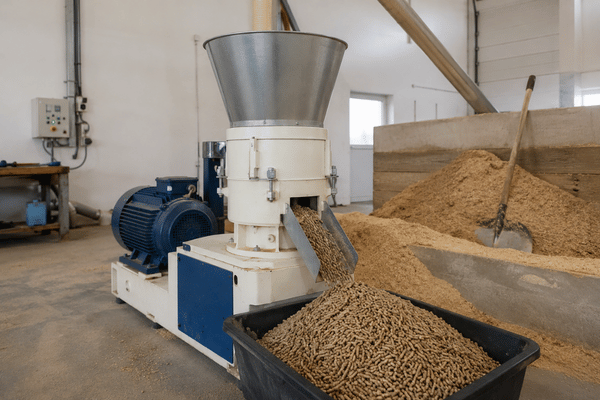
A mid-sized hardwood lumber mill in Vietnam was paying ~US$250 per truckload for sawdust flip-the-waste disposal in 2022. A $5,900 FOB Qingdao + shipping+ duties, processing sawdust line will be an input 480~500 kg/h of the biomass pellet, sold into regional ceramic kilns at the local pellet retail price range. Pellet sales will show the mill capital paid off in the first 14 operating months according to the customer’s own records.
Pattern B- Small commercial pellet producer
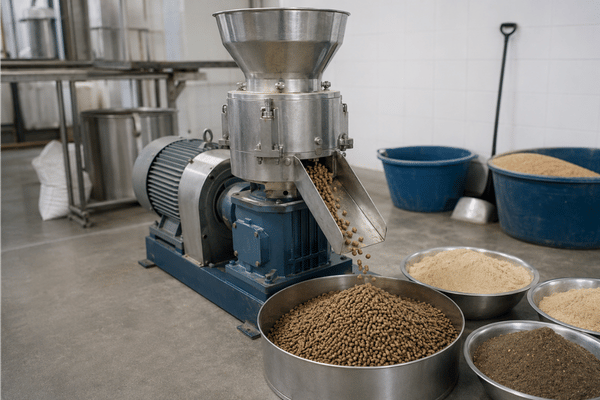
A Pakistani business entrepreneur set up a 600~800 kg/h commercial pellet line with a 55 kW (approximately) TCZL450. The customer needed a chipper machine, since the smart industrial decisions would be a ring die installation (~1,000 kW, significantly more capital, 3.5 times at project capacitor), have a simple operating margin (net minus fixed costs per kg treated), and required a power source suitable for the local electric grid, choosing the TCZL450. Operating margins of 200 kg/h and project capital payback occurred within the second operating year.
Pattern C- Aqua-feed for fish farm
A New Zealand aquaculturer who uses a 30kW (approximately) TCZL350 produces 300~400 kg/h of a pelletized feed of fish meal, soy, and local grain. The operator is balancing the costs of self-pelletizing the feed versus buying bagged commercial feed, when in-house labor costs are equal to the retail margin (at around 50 ton of annual feed production).
Pellet Plant Economics — TCO per Ton & 2-Year Payback Worksheet
Small commercial pellet plant economics are simple in structure, operator-specific numbers. 3 inputs decide whether the mill fires half of its invested capital off within 18-36 months: cost-per-ton, $/ton at either retail or wholesale prices, and operating hours per year. Existing numbers on the industry are well known; the operator-specific multiplier is inside your own electricity price, labor rate, and neighboring pellet marketplaces.
TCZL400 (37 kW, 400–500 kg/h) Cost-Per-Ton Breakdown
Silver Tier · Industry-Calibrated Estimate
| Cost Component | Per Ton (USD) | Source / Basis |
|---|---|---|
| Electricity (45–120 kWh/t × $0.12/kWh average) |
$
|
Industry guide for flat die at the higher end of kWh/t range |
| Maintenance (lubricants, bearing service) |
$
|
Deloitte Consulting estimate as cited in industry references |
| Die replacement amortized (1,200–1,600 hr life, both sides flipped) |
$
|
Calculated from flat die service life vs hardwood feedstock |
| Labor (1 operator at part-time) |
$
|
Industry feasibility studies |
| Equipment depreciation (15-year useful life) |
$
|
AURI 5 t/h baseline normalized to TCZL400 scale |
| Total cost per ton |
$36.00
|
Operator-specific within this range |
Wholesale-Sale Margin and Payback
In the US, wholesale biomass pellet prices are roughly $180-280/ton, retail bagged at $280-400/ton in typical regional markets in 2024-25. Deducting $24-48/ton cost-per-ton numbers above, the gross profit margin is achieved by industry at $150-250/ton wholesale, $230-350 retail.
Running a 8 hours per day 200 days per year 450 kg/h 720 ton/year A TCZL400 would have a gross profit margin of roughly $108,000/year (conservatively 150 $/ton), but a more optimistic 250 $/ton closer to $180,000. Either calculation you can count on recovering the $5,900 FOB the associated prices of shipping, duty, and ancillary installation inside the $3,000-$5,000 region in 12-18 operating months.
Caveat read first: these numbers are industry-calibrated estimates, not a guarantee of your ROI. Your elekricity rate, labor cost, raw-material cost (zero if you have your own sawdust source), local pellet price, operating uptime all shift the payback from these estimates by mo’ns. The worksheet above gives you the shape of the math; the specific math needs your inputs. We publish an interactive TCO calculator below that lets you swap in your own numbers for every row of this calculation.
Buying Guide — FOB Qingdao Pricing, 15-Day Delivery, Service Terms
The purchase process for a TCZL pellet mill is published in plain steps because the procurring buyer is asking several vendors for quotes and needs a straightforward purchase process overview in one place. Here is what a TCPEL order looks like from actual confirmed order to the finished product at your port.
1
Pricing Basis
All prices are FOB Qingdao, China while the mill is loaded onto the vessel at Qingdao portand title passes at port Qingdao. Ocean freight, cargo insurance, delivery at the destination port and import duty to your facility are the buyer’s responsibility (we can facilitate introductions for freight forwarder services upon request).
Individual orders ship at the published FOB price. Price discounts start at 3+ units within a single purchase order. Custom voltages (415V/50Hz for Australia/Africa, 220V single phase for residential markets) will keep the same FOB price with an additional lead-time of 5-7 days.
2
Payment Terms
30% down T/T payment on order confirmation – this validates the production slot and completes raw material pre-purchase.
70% balance T/T prior to shipping – payable upon receipt of photos pre-shipment and the confirmed packing list.
L/C terms available for orders above $30,000 end customer term on a case-by-case basis. We accept no credit card payment for industrial (plant-class) orders at this time.
3
Delivery Window
15 days from down payment to Qingdao loading for standard configurations. 3-5 added days for a custom voltage or die diameter other than 6 mm / 8 mm.
Transit times to typical destinations: 25-35 days to USA West Coast, 30-40 days to Europe, 18-25 days to South East Asia, 35-45 days to South America.
Customer customs clearance is understood to be buyer’s responsibility, but we provide all necessary HS codes, packing list and commercial invoice templates 5 days prior to shipping.
4
What Ships
All parts listed below ship as a complete operating line, not partial components that you would then need to complete locally. The complete line includes the screw feeding conveyor, the main pellet machine with the installed die, the control cabinet wired to your specified voltage, the automatic lubricating oil pump, and thetools needed to assemble the line. Wear parts in alternate compression ratios (knives and rollers) ship at additional cost at request.
5
After-Sales
Complete service includes lifetime technical support by email or WhatsApp, 12 month parts warranty (excluding wear items: die, knives, rollers), and spare parts shipment within 7-10 days from order. For designated zone markets with a service partner (currently Russia, Germany, Russia, Vietnam, Malaysia, Turkey and Pakistan), onsite service visits are an extra charge.
Flat Die Pellet Mill Engineering Tools
Capacity Power Matching
Calculate the optimal motor power required for your specific production capacity. Ensure stable extrusion efficiency without overloading the equipment.
Use ToolSix Material Compatibility Matrix
Check the physical suitability of different biomass materials for flat die processing. Quickly verify moisture content and compression ratio parameters.
Use Tool2 Year Payback Worksheet
Evaluate the financial return on investment (ROI) for your pellet mill project. Estimate daily running costs, material expenses, and long-term profit margins.
Use ToolFrequently Asked Questions — Cost, ROI, Trust & Manufacturer Verification
On economics, it works when you have a raw material at near-zero cost (your own sawdust, your own straw, or waste-stream feedstock from a neighbor) and you have an assured offtake in a 200 mile delivery zone. At prevailing industry cost per ton of $24-$48 (electricity, maintenance, die, labor, depreciation) and wholesale margins of $150-$250 per ton, a TCZL400 chipping 700+ tons/yr can recoup its $5,900 capital over a period of 12-18 operating months. The numbers don’t add up if you are purchasing sawdust at retail, operating for under 100 days per year, or selling into a market flooded with $200/ton imported pellets.
So yes, at the 500-1,200 kg/h scale that the TCZL450-550 line addresses, the average operator clears $80,000-$180,000 a 600-1,000 ton/yr gross margin on1000 tons/yr+ throughput, with regional pellet tariffs on the mean end of the range. Profitability diminishes at below 200 kg/h continuous operation (labor-per-ton calculations break down) and intensifies above 2 t/h (excess ring die capital efficiency becomes a factor in recouping its high capital costs). For flat die pellet production, the 0.3-1.5 t/h range is where profitability maximizes.
TCPEL flat die pellet mill prices are listed on this page: FOB Qingdao prices vary from $4,000 (TCZL200, 11 kw, 100kg/h) to $12,200 (TCZL650, 110 kw, 1,200-1,400kg/h), and every rung on the ladder is priced in black-and-white. Understand that industry-wide comparable US-made flat die pellet mills (Buskirk Engineering, Pellet Masters) will once again vary from $8,000 for sub-200kg/h units to $40,000+ for 1 t/h capacities – the price differential is due to differences in manufacturing labor and overhead, not quality.
The TCZL300 (22 kW, 200-300 kg/h, $5,500) is exactly within the volume band for a batch process typical small-hardwood-sawmill sawdust output. If your supply of sawdust is nearer to 400 kg/h or you are running on a mixed hardwood and softwood, then move up to a TCZL350 (30 k W, 300400 kg/h, $5,500) – the $700 leap is well worth it for the extra room it provides which ensures the mill is not operated continuously at maximum capacity (which will reduce die life). The TCZL350 is a preferable rung if operating seasonally with fluctuations in feed rate.
Any qualified buyer should do 4 simple practical verification steps we recommend: (1) ask for the business license from manufacturer firm and their bank account name, it should match the legal entity on the quotation (we ship only through ALLWIN INTERNATIONAL CO., LTD, TCPEL transactions); (2) ask for a video call to the factory floor during local business hours, watch the production line live; (3) ask for named customer references in your country and contact 1-2 of them; (4) ask for 3rd-party pre-shipment inspection fee (SGS, BV or Intertek), the cost should be paid by buyer, we welcome this and pay the inspection-arrangement coordination fee.
Yes – the 60+ countries we ship to have named installation in Germany, Finland, Russia, New Zealand, Pakistan, India, Bangladesh, Vietnam, Malaysia, South Korea, and Turkey. For USA / Canada / EU / Australia, we deliver FOB Qingdao with ocean freight and destination customs paid by the buyer. We supply HS codes, certificates of origin, and CE-conformation papers for EU, and can provide destination-country specifications (240V single phase, 415V three phase, 460V industrial).
Running in normal commercial use, a flat die is used 1,200-1,600 work hours on a single face, flipping the die afterwards to extend that use another 1,200-1,600 work hours per die. Hardwood feedstock and high silica content feedstock (rice husk, peanut shell) will cut die life down by 20-40%. Rollers are generally good for 6,000-10,000 work hours in a normal milling operation, with observed maximum bearing life in the 20,000 hour range, though regular bearing service is recommended. The gearbox is rated for 10,000 + work hours, and is remanufacturable.
Hard and Soft and Pec Feedstock (fast growing softwood sawdust (pine, spruce), hardwood sawdust (oak, beech, maple), wheat and rice straw, grass and hay (alfalfa, timothy), peanut and ground nut shells, corn stover (fast growing softwood sawdust (pine, spruce), hardwood sawdust (oak, beech, maple), wheat and rice straw, grass and hay (alfalfa, timothy), peanut and ground nut shells, corn stover), grain crops, and animal feed pelleting (cattle, horse, poultry, fish), using the same die compression ratio. Beech and oak sawdust and other hard commodity test substrates can be airfreighted to our facility for testing if desired; earlier in this page the 6-material matrix lists the 4-5-6 die channel, compression ratio, moisture window, and target PDI for each initial feedstock.
to give some industry benchmarks, warm China/hardwood pellets three years ago averaged 80-120 kWh/ton, with the wider 45-120 kWh/ton range of ring die (generally lowest compression ratios) to high-compression flat die in hardwood (generally highest compression ratios). Those two numbers, translated to the US average industrial electricity rate of US$0.12/kWh, average $5-$15 per ton, or scaled linearly to your local electricity rate.
The Chinese flat die pellet mill industry appears to have fifty or so exporters of small-business size shapes, most of which provide no published price lists, give freight and capital equipment demands as a quote on demand, and all of which lack a published name list of typical verified customer references for the buyer to check before wiring a deposit. What TCPEL offers distinctly from the crowd can be verified before wiring: published FOB prices on every model on the 9-rung ladder (no rush to get a quote on demand), complete shipment with screw feeder, classifier cabinet, pump, and tools included (not just a bare mill), and a list of 11 potential customer references in 8+ countries known to us under NDA available to get the buyer interested. Our 20,000 square meter mid-eastern China Shandong factory is locatable in Google before you wire a deposit, so we recommend the canny buyer double check any Chinese supplier before wiring.