Get in Touch with TCPEL

Wood Pellet Production Line — TCPEL Turnkey Biomass Plant 0.5–10 t/h
Finding the right wood working pellet plant, is not just including one pellet mill. Large-scale pellet production requires to oversee six stage of processes (chip,crush, dry, pelletize, cool, pack) to make sure you delivery one ton an hour to the warehouse,with the right moisture,ash, hard grain properties your customers expect.
Since 2020, TCPEL has commissioned 60+ countries of complete wood pellet line systems including biomass pellet production from 0.5 to 10 tph.
Capacity Range
0.5 – 10 t/h
4 Configuration Tiers
$35K – $520K FOB
6-Stage Integration
Chip → Crush → Dry → Pellet → Cool → Pack
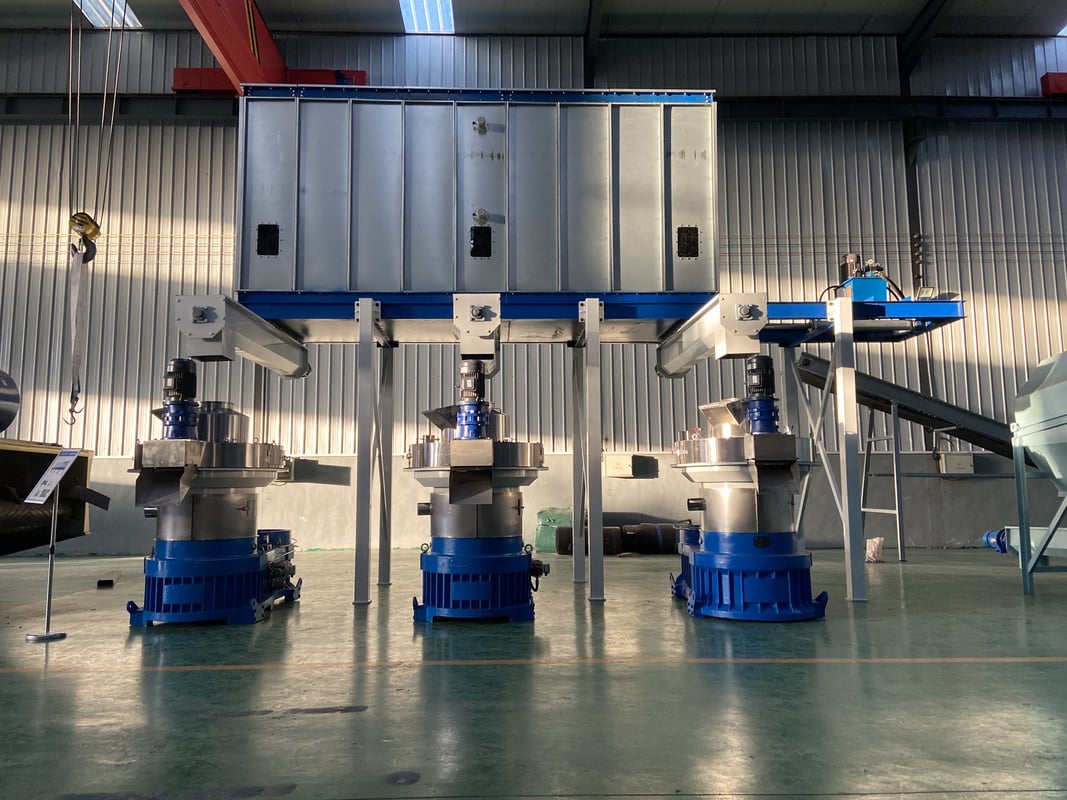
Choosing a Wood Pellet Production Line — What Buyers Get Wrong
Most novice marketers ask this purchase “which pellet mill to buy?” Serious entrepreneurs and mill owners are conscientious about solving upstream debacle. The cost of ISO 17225-2 grades A1 and A2 is secured within the first 18 months. Pellet mill is only one of six integrated stages, upstreaming and chipping, crushing, drying decisions predestinate.
Industry knows better. “Inadequate grinding/poor mixing, you’ll never get pellets to work, the quality won’t be right, your production will be erratic and you’ll never make money,” says one popular misstep in pellet plant set-up discussion.
The Three Buyer Mistakes We See Most
01
Purchasing a 2 t/h pellet mill without accounting for the upstream hammer mill, dryer and downstream cooler bottleneck (as well as the rest of the system) reduced the production capacity by 30-50 %.
02
Any wood waste assumed to be used as feedstock. Fluctuation in softening temperature of lignin as result of moisture content above 15%. Ash content above 0.7% disqualified pellet to be traded on ENplus A1 residential markets.
03
Treating procurement as one transaction. Component level FOB pricing, container loadability, on-site commissioning and 5-day spare parts SLA shift the entire project economics by 8-15%.
A wood pellet production line is a steady state process: starting with raw biomass at one end and finished ENplus-grade fuel pellets or animal bedding pellets or industrial boiler pellets at the other. Since lignin is the natural binder in wood: it melts or softens at elevated temperature (130-150C) and pressure, the production line requires not hotmelt adhesive additives but must receive raw material which is a particular particle size and moisture content.
Here we give detail on how TCPEL specifies woodyard pellet lines from 0.5 to 10 mton/hr, the unit cost for each main assembly, standards referenced, and how 60 country export success results in faster commissioning for your project.
TCPEL Wood Pellet Production Line — 4 Configuration Tiers
All sections of TCPEL groups laid out in four levels of capacity against each section, the price which is published for all FOB Qingdao USD. Under each level we add on the component layup and define best working buyer profile.
01
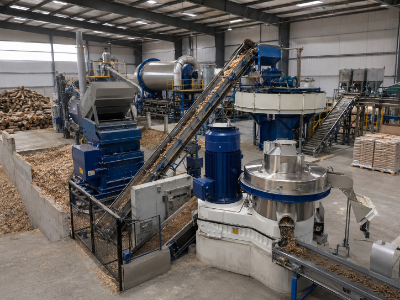
Tier 1 · Pilot / Small Commercial
$35,000 – $55,000
Capacity: 0.3 – 0.5 t/h
Power: ~80–110 kW
Power: ~80–110 kW
Komponenter: 216 flishogger, minihogger, en enkeltkjør en-passangs roterende tørker TCG1.0, en 400/450 flat die pelletsmåmill, en skelifolkoldere 1.2, BZ80 pakkegrate.
Fits: First time pellet entrepreneurs; sawmill side streams; off grid heating co-operatives, agriculture wastes pilot.
02
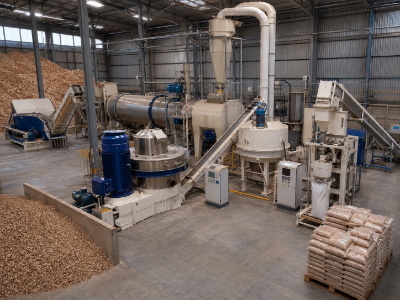
Tier 2 · Mid-Scale
$80,000 – $140,000
Capacity: 1 – 2 t/h
Power: ~250–360 kW
Power: ~250–360 kW
Single stage: TC218 drum chipper + hammer mill 132-185 kW class + TCSG10 / TCSG20 triple-pass rotary dryer + TCZL560 / TCZL560A vertical ring die pellet mill + SKLN1.5 / SKLN2.5 cooler + BZ80 packer.
Tournés en: pelletiseurs régionaux, fourniruses marchandes de litières, installation ENplus catégorie B, unités de 50 T P.D. de pâte à bois.
03
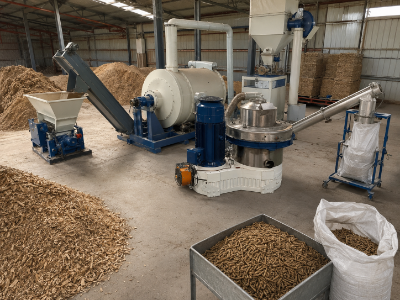
Tier 3 · Industrial
$180,000 – $280,000
Capacity: 3 – 5 t/h
Power: ~480–700 kW
Power: ~480–700 kW
The components: TC2110/TC2113 chipper + TC1400 multi-material crusher + TCSG30/ TCSG40 dryer + TCZL700/ TCZL850/ TCZL850A ring die + SKLN4/ SKLN6 cooler + single BZ80 packers.
Suites: For EU-exported oriented units, for ENplus A2/A1 quality target, for sale to industrial boiler fuel providers.
04
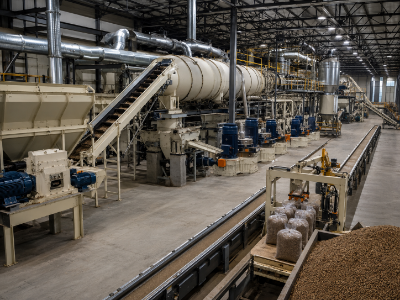
Tier 4 · Large Industrial
$320,000 – $520,000
Capacity: 6 – 10 t/h
Power: ~750–1,100 kW
Power: ~750–1,100 kW
Chips: TC2113D/ TC4 113 chipper + Heavy multi-materials grinder + TCSG50/ TCSG60 triple-pass hot air dryer + multiple pieces of TCZL850B in paralles + SKLN6 cooler + bagging automated line.
Suites: Utility size biomass co-firing suppliers, multi-shift export producers, dedicated wood pellet production facilities.
4-Tier Decision Matrix — Which Configuration Matches Your Project
| Decision Factor | Tier 1 Pilot | Tier 2 Mid | Tier 3 Industrial | Tier 4 Large |
|---|---|---|---|---|
| Output (kg / hour) | 300 – 500 | 1,000 – 2,000 | 3,000 – 5,000 | 6,000 – 10,000 |
| Annual output | 1,800 – 3,000 t | 6,000 – 12,000 t | 18,000 – 30,000 t | 36,000 – 60,000 t |
| Workshop floor area | ~150 m² | ~350 m² | ~800 m² | 1,500 m²+ |
| Operators per shift | 2 | 3 | 4 – 5 | 5 – 7 |
| Pellet quality target | Local / B-class | ENplus B / A2 | ENplus A2 / A1 | ENplus A1 / Industrial I1 |
| Typical buyer | Entrepreneur, sawmill | Regional fuel supplier | EU-export producer | Utility co-firing |
| FOB Qingdao USD | $35K – $55K | $80K – $140K | $180K – $280K | $320K – $520K |
Tier prices above are FOB Qingdao computed from the 11-SKU pellet machine quotation table plus standard 6-piece component lineup from the published TCPEL list. Final price varies greatly based on electrical scheme… We disclose the 4-tier framework freely because comparing a $35,000 to a $520,000 capital buy against quote-blind landing pages best waste weeks of buyer time.
Need a tier-by-tier cost breakdown including freight to your port?
Try the Capacity Sizing Tool →Inside the Line — 6-Stage Equipment Specifications
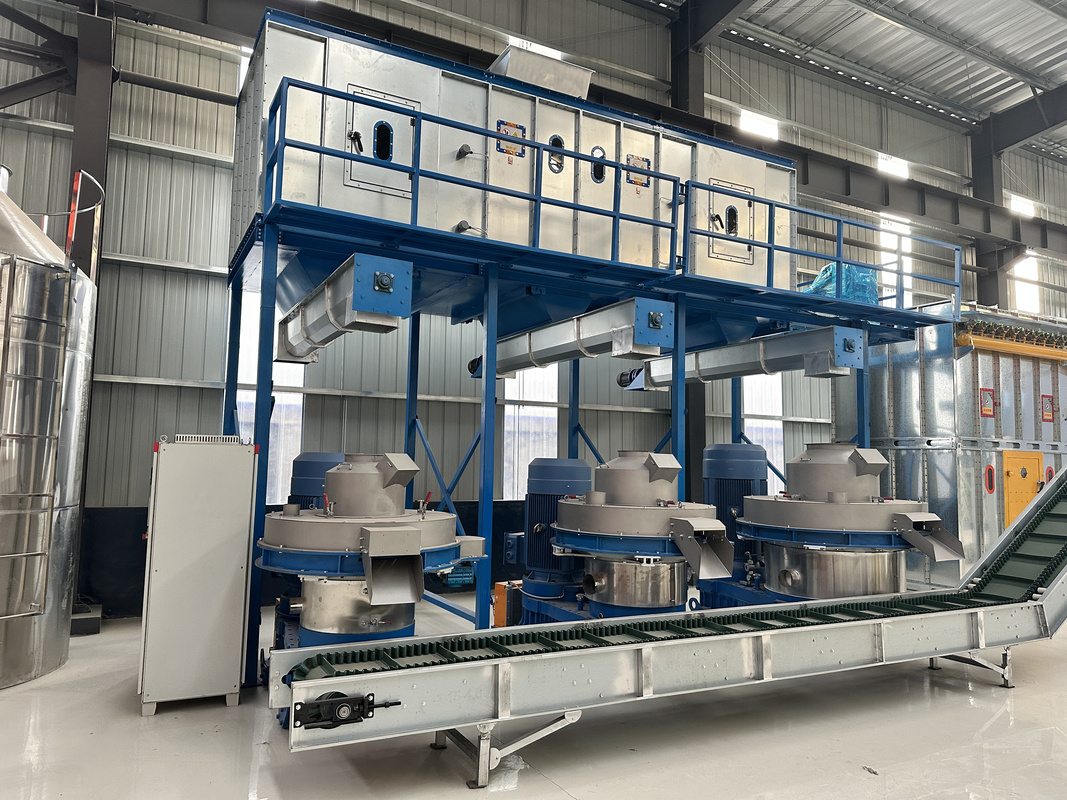
A TCPEL wood pellet production line is composed of six seamlessly-integrated stages. Each station has its own equipment family/ capacity tier/ selection parameters. The tables below over the full slate of 51 fully-featured TCPEL SKUs for drum chippers, hammer mills, hot air dryers, pelletizers, coolers, and scales.
1 Stage 1 · Drum Chipper (TC216 – TC2116)
First of the input addressing stages, drum chippers convert whole logs/ large branches into 30-50 mm wood chips. Our drum chippers range from 3 t/h to 60 t/h outputs across 8 SKUs, rotor diameters are 600 mm to 1,600 mm.
| Model | Main Motor (kW) | Capacity (t/h) | Max Log Dia (mm) | Chip Size (mm) | Machine Size (mm) |
|---|---|---|---|---|---|
| TC216 | 55 | 3 – 5 | 230 | 30 – 50 | 1800×1900×1210 |
| TC217 | 75 | 5 – 7 | 230 | 30 – 50 | 2600×2150×1400 |
| TC218 | 110 | 6 – 10 | 300 | 30 – 50 | 2200×2150×1500 |
| TC2110 | 160 / 185 | 12 – 15 | 400 | 30 – 50 | 3150×2799×1497 |
| TC2113 | 200 / 220 | 16 – 20 | 400 | 30 – 50 | 3670×2517×2050 |
| TC2113D | 250 | 20 – 30 | 450 | 30 – 50 | 4080×3000×2050 |
| TC4113 | 315 / 450 | 35 – 50 | 450 | 30 – 50 | 3550×2300×1900 |
| TC2116 | 400 / 600 / 710 | 30 – 60 | 600 | 30 – 50 | 4500×3100×2600 |
The high-grade K12 knives use alloy particle steel for the top knives with H12 bottom knives to match the rotor configuration. Feedrollers turn at 35 m/min versus rotor speed for a constant pressure fed speed control. For mixed feedstock including pallets or nail-saturated scrap wood, use the TC1400 multi-material crusher after the drum chipper.
2 Stage 2 · Hammer Mill & Multi-Material Crusher
High-efficiency steel castings use a C12HH fragment roller with the rotor directly driven at 3,000 r/min. Two discharging points lift throughput up to 15% per kW versus traditional single.
The multi-material crusher (TC1260-TC1600 series) allows logs, branches, straw or reed stalks including steel fastenings to be crushed prior to pelletizing, when paired with the hammer mill. It has output range from 14 – 40 t/h.
| Model | Main Power (kW) | Capacity (t/h) | Input Size (mm) | Weight (t) |
|---|---|---|---|---|
| TC1260-500 | 160 | 14 – 16 | 1260 × 500 | 14.5 |
| TC1400-500 | 200 | 18 – 20 | 1400 × 500 | 18.6 |
| TC1400-700 | 250 | 25 | 1400 × 700 | 24 |
| TC1400-1000 | 315 | 30 – 40 | 1400 × 1000 | 26 |
| TC1600-800 | 355 | 40 | 1600 × 800 | 33 |
High-energy chain plate feeder clamps down to high manganese construction alloy ZGMn13-4. Speed adjusts automatically based on main motor exerted load so the feed acceleration won’t frighten the rotor. Hydraulic drive systems on TC1400 and bigger allow for rapid cutter and screen removal during longer-maintenance alterations.
3 Stage 3 · Rotary Dryer (TCG Single-Pass & TCSG Triple-Pass)
We show the energy required for a single pass drum dryer (the largest single energy user in a pelleting line) for several moisture contents, by capacity. From the lowest, a GSOS manual method hot air heater, to the highest, cubic dryers, studies show the modern drum dryer mines energy consumption down by factors of 2.5-3.
Single-Pass Rotary Dryer (TCG0.8 – TCG2.2):
| Model | Internal Dia (mm) | Length (mm) | Power (kW) | Fan (kW) | Evaporation (t/h) |
|---|---|---|---|---|---|
| TCG0.8×10m | 800 | 10,000 | 4 | 11 | 0.07 – 0.15 |
| TCG1.2×10m | 1,200 | 10,000 | 5.5 | 15 | 0.25 – 0.35 |
| TCG1.6×22m | 1,600 | 22,000 | 11 | 37 | 0.8 – 1.2 |
| TCG2.0×22m | 2,000 | 22,000 | 45 | 45 | 1 – 1.8 |
| TCG2.2×22m | 2,200 | 22,000 | 72 | 75 | 1.2 – 2.2 |
Triple-Pass Rotary Dryer (TCSG10 – TCSG60):
| Model | Drum (mm) | Capacity (t/h) | Evaporation (kg/h) | Fan (kW) |
|---|---|---|---|---|
| TCSG10 | Φ2000 × 5,840 | 1 | 700 | 15 |
| TCSG20 | Φ2300 × 7,340 | 2 | 1,400 | 22 |
| TCSG30 | Φ2400 × 10,460 | 3 | 2,100 | 45 |
| TCSG40 | Φ2800 × 10,460 | 4 | 2,800 | 55 |
| TCSG50 | Φ2950 × 12,420 | 5 | 3,500 | 75 |
| TCSG60 | Φ3300 × 12,420 | 6 | 4,200 | 90 |
Dryer: Each system ships with feed screw conveyor, kiln head, kiln tail, 2 cyclones, dust collector silo, air locks, wind pipes, electric cabinet. Triple pass versions use 25-35% less energy than single pass at the same throughput because the highest temperature air flows 3X through the material bed.
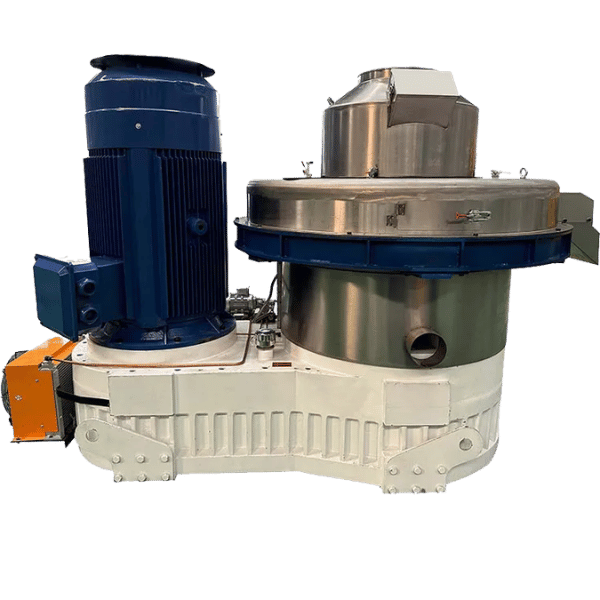
4 Stage 4 · Pellet Mill (TCZL Flat Die + Vertical Ring Die)
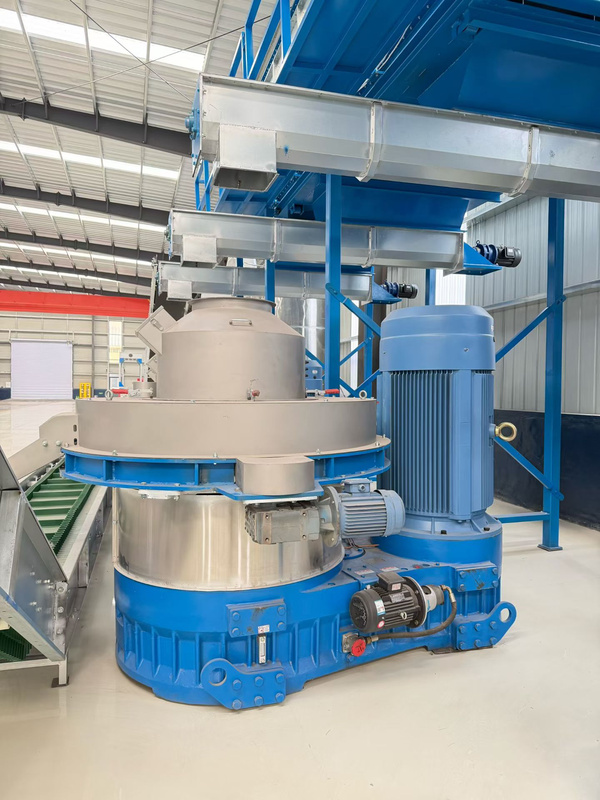
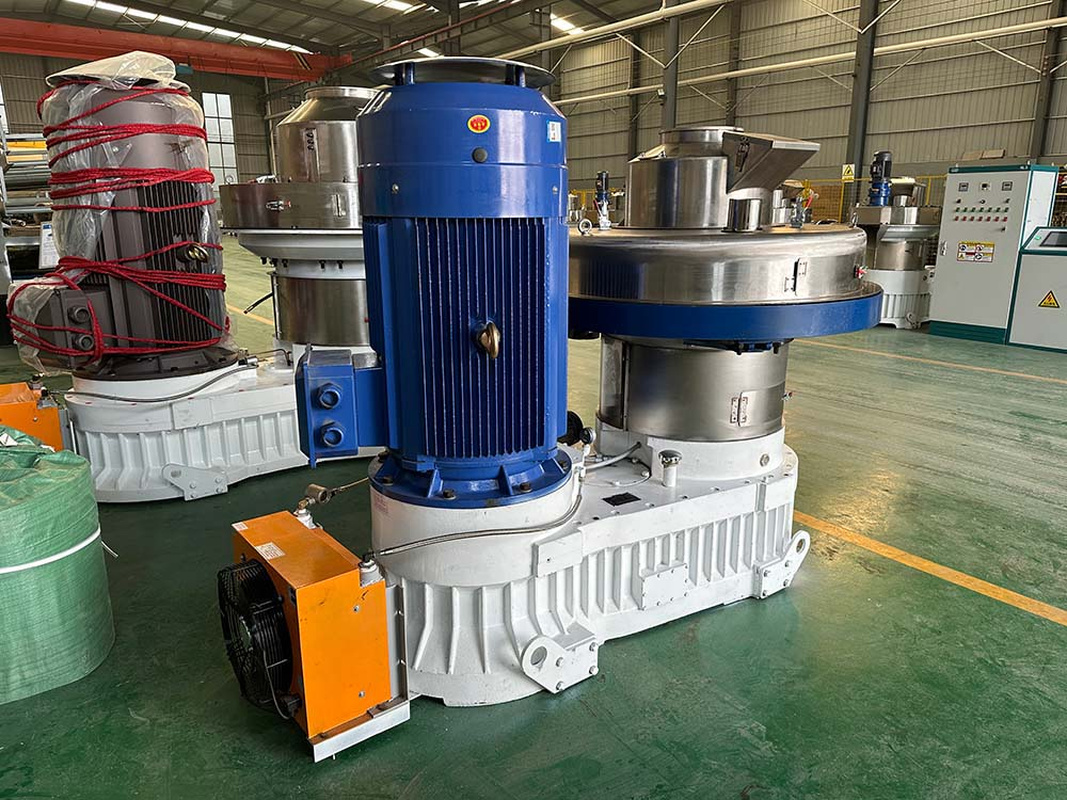
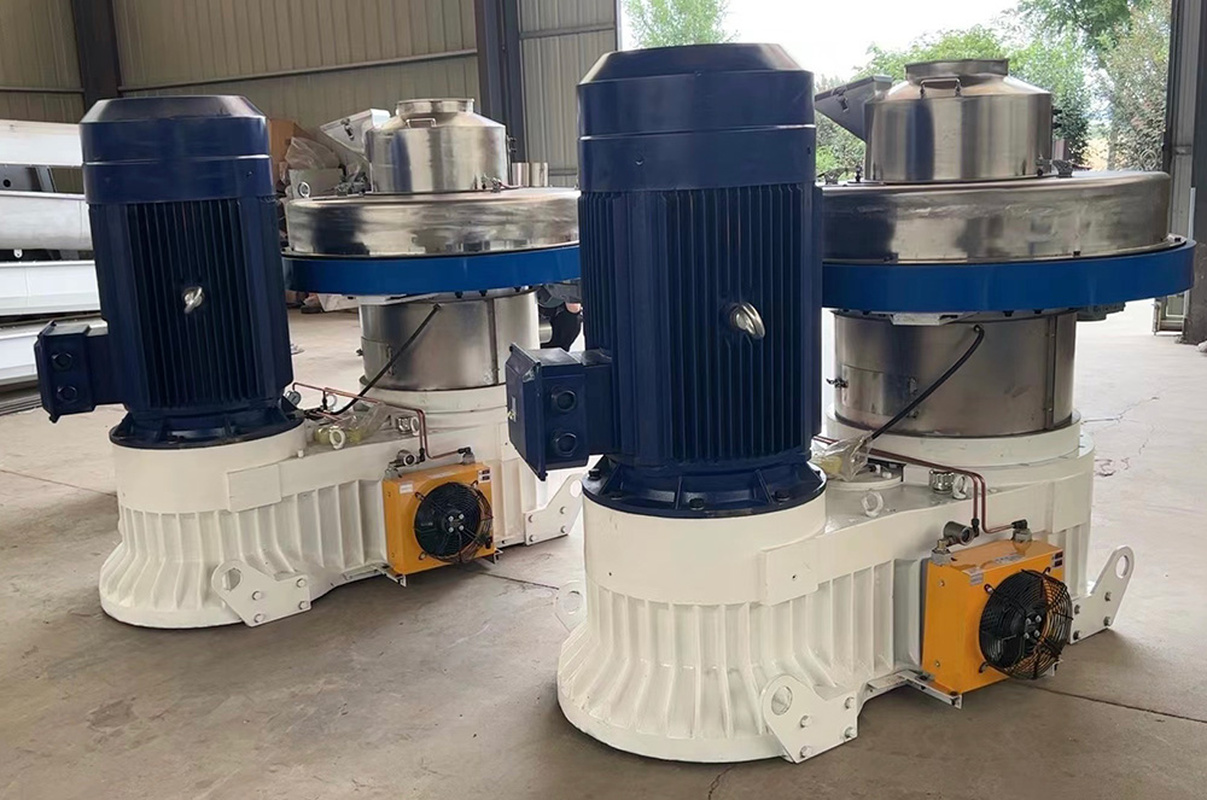
Stage 4 is the critical point in the line. We manufacture 2 pellet mill configurations: flat die for light-to-medium throughput (100 kg/hr up to 1.4 t/hr) and the industry ideal – vertical ring die for higher throughput (1-4 t/hr).
Flat Die (TCZL200 – TCZL650):
| Model | Power (kW) | Capacity (kg/h) | FOB Qingdao USD |
|---|---|---|---|
| TCZL200 | 11 | 100 | $4,000 |
| TCZL300 | 22 | 200 – 300 | $4,800 |
| TCZL400 | 37 | 400 – 500 | $5,900 |
| TCZL450 | 55 | 600 – 800 | $7,100 |
| TCZL550 (90 kW) | 90 | 1,000 – 1,200 | $11,000 |
| TCZL650 | 110 | 1,200 – 1,400 | $12,200 |
Vertical Ring Die (TCZL560 – TCZL850B):
| Model | Power (kW) | Capacity (t/h) | Weight (t) | FOB Qingdao USD |
|---|---|---|---|---|
| TCZL560 | 90 | 1 – 1.5 | 4.8 | $16,300 |
| TCZL560A | 132 | 1.5 – 2 | 5.5 | $19,200 |
| TCZL700 | 160 | 2 – 2.5 | 6.8 | $24,600 |
| TCZL850 | 220 | 2.5 – 3 | 8.8 | $37,800 |
| TCZL850A | 250 | 3.5 | 10.5 | $39,800 |
| TCZL850B | 280 | 4 | 11 | $42,200 |
Vertical ring die mills are made with German alloy steel cast body for heat treated durability. Die material 20CrMnTi alloy steel, 1,000-1,500 hours service life in mixed-biomass operation.
Pellet diameter options: 6mm, 8mm, 10mm or 12mm. Length variable. Integrated cooling with independent cooling motor provides best protection for bearings during long shifts; our lubrication system uses gear oil with auto oil-pressure alarm that helps optimize maintenance time.
On die service life: 1,000-1,500 hours of use in TCPEL plant use average, while European brands tout 2,000-3,000 hours+. What’s the point? The total-in-one ton-die-equivalent-cost comparison makes our platform more economical over the life of a plant not running 24/7 on hard hickory.
“On a team of 14 alloy formulations, we chose 20CrMnTi for our vertical ring die and purposely limited service life: over 60 countries, 40+ customers have told us price and logistics matter more to them than peak commercial hours per die.”
5 Stage 5 · Counter-Flow Pellet Cooler (SKLN1.2 – SKLN6)
Pellets exit the die at 60-80 C, 13-15% moisture. Without secondary cooling surface moisture and excess embedded moisture migrates back into pellets and results in mildew after a few weeks. TCPEL cooler drops pellet temperature to above ambient + 5 C and moisture content by minimum 3.8% points.
| Model | Power (kW) | Output (t/h) | Capacity (CBM) | Fan (kW) | FOB Qingdao USD |
|---|---|---|---|---|---|
| SKLN1.2 | 1.1 + 1.5 | 0.5 – 0.8 | 1.2 | 5.5 | $6,200 |
| SKLN1.5 | 1.5 + 0.25 | 1 – 2 | 1.5 | 7.5 | $6,800 |
| SKLN2.5 | 2.2 + 0.55 | 2 – 3 | 2.5 | 11 | $7,300 |
| SKLN4 | 3 + 0.7 | 3 – 4 | 4 | 18.5 | $7,900 |
| SKLN6 | 4 + 0.7 | 6 – 10 | 6 | 22 | $8,500 |
Counter-flow design means hot pellets drop down and cool air rises up – heat transfer efficiency is optimized because the coolest air contacts the hottest pellet bed the longest. Vibrating screen installed with counter-current cooler separates small fines from pellets into the pellet line so nothing goes to waste.
6 Stage 6 · Pellet Packing Machine (BZ80)
BZ80 bagging scale accepts bag formats 15 kg – 50 kg, 200-300 BPM, weighing accuracy of 0.2%. Product contact areas are 304 stainless steel; control cabinet is blind sealed for dust environments of pellet warehouse.
Range
15 – 50 kg/bag (25 kg for residence, 50kg for industry)
Speed
200 – 300 bags per hour
Accuracy
±0.2% with automatic out-of-tolerance correction
Compressed air
0.4 – 0.6 MPa at 1 m³/h
Optional
automatic photoelectric sewing-thread cutting for labor savings
Footprint
1,200 × 1,000 × 2,200 mm
For first-installation industrial 24/7 plants at Tier 3 or Tier 4 throughput levels, we utilize 2 BZ80s simultaneously when coupling bag and jumbo bag (1000 kg) discharge.
TCPEL vs Other Brands — Cross-Vendor Reference Matrix
From our perspective, the OEMs that engineers and procurement buyers shortlist to compare a wood pellet line to include 3-5 vendors. Because OEM naming conventions and series codes differ, ours below cross-maps the line’s TCPEL TCZL series to four popular brands across six key decision points.
Our matrix is a first step to equal comparison, not a competitive peer-to-peer benchmark. OEMs have unique nomenclature and deliver-modify ships keep coming on line, so always have current model codes confirmed by each vendor’s RFQ team.
| Factor | TCPEL (TCZL) | RICHI | GEMCO (ABC Machinery) | BIOPELLETMACHINE | Bioenergy / Andritz tier |
|---|---|---|---|---|---|
| Capacity range | 0.5 – 10 t/h | 1 – 20 t/h | 50 kg/h – 30 t/h | 0.5 – 20 t/h | 5 – 40 t/h |
| Pellet mill die | 20CrMnTi 1,000–1,500 hr | Alloy steel (life not published) | Alloy steel (life not published) | Alloy steel (life not published) | Premium alloy 2,000–3,000 hr |
| Standards cited on LP | CE 2006/42/EC, EN 60204-1, ISO 9001, ISO 17225-2, ENplus, PFI | Generic “CE certified” | Generic “CE certified” | None numbered | EN ISO 17225-2, REDII verified |
| Pricing transparency | Open 4-tier USD $35K–$520K | RFQ only | RFQ only | RFQ only | RFQ only |
| Warranty | 2-year on main machines | 1-year published | 1-year published | 2-year on main machines | 2-year standard |
| Service SLA | 24-hour engineer + 5-day spare parts air shipment | Online support, no SLA published | Online + on-site (no SLA) | Online + on-site training | Global service network |
Our approach across the matrix is deliberate. Our Tier 4-part buying strategy does not compete on peak die hours versus Andritz / Bioenergy industrial-tier units – those buyers run 24/7 softwood plantations where 2,000+ die hours make sense.
We compete on familiar, transparent pricing; multi-category standard certification profile depth; and a 5-day spare parts SLA, against 60 nations of archive-based after-sales data. For Tier 1, 2, and most Tier 3 dies purchasers, it lowers total project risk more effectively than European premium OEMs or no-SLA industrial budget OEMs.
Customer Outcomes — Capacity, Materials, Real Deployments
Since 2020, TCPEL has supplied systems to 60+ nations, with installed bases in Germany, Finland, Russia, New Zealand, South Korea, Pakistan, India, Bangladesh, Vietnam, Malaysia, Turkey. The global spread matters since pellet plant cost economics change by raw feedstock cost, power tariff, and finished pellet ex works price.
Three typical projects show that one 6-stage architecture can efficiently serve very different markets:
VN
Vietnam, 2 T/HR ENplus B-class fuel line (2024)
Configuration: Tier 2 configuration, TC218 chips, TCSG20 triple-pass dryer, TCZL560A vertical ring die.
Feedstock: acacia plantation residues, 35-40% incoming moisture.
Out-take: 6mm fuel pellets to South Korean utility-export profile.
DE
Germany, 3 T/HR ENplus A2 industrial bedding line (2024)
Configuration: Tier 3 configuration, low-ash input with several proprietary features. TCSG30 dryer, TCZL700 ring die, dual BZ80 packer.
End-market: farm-powered equestrian bedding, ENplus certified household heating.
PK
Pakistan, 5 T/HR mixed-biomass line (2023)
Configuration: Tier 3, TC1400-700 multi-granulate crusher, for infrequent pallet input. TCSG40 dryer, TCZL850 ring die.
Output: divided between farming OEM boiler fuel and Middle East export.
Wood Pellet Production Line — Gold-Tier ROI Reference Framework
Economics for 1-2 T/HR wood pellet plant in 2026 are documented in external financial analysis. Per-ton figures below combine Deloitte EU pellet plant research and published US 2026 financial model.
$125/t
Daily operating cost
(EU avg, Deloitte cited)
$945K
Equipment CAPEX
(US 2026 model)
12–18 mo
Typical payback
(industry benchmark)
$300+/t
EU bulk pellet price
(Bioenergy Europe 2025)
Per-Ton costs from EU pellet plant research ($10 labor + $10 energy + $5 maintenance + $5 repair + $2.50 transport = $32.50 direct, plus $92.50 indirect overhead) published on bestpelletplant.com. CAPEX to break-even numbers are from US 2026 financial model (financialmodelslab.com). Our Tier 2 TCPEL configuration at FOB-US$80K-140K is well below the equipment-cost part of the US benchmark at US$945K, leaving space for freight, installation, and working capital.
Premarket macro context reinforces need for capacity growth through 2030. Bioenergy Europe’s 2025 Pellets statistical report found global production in 2024 at 48.3m tonnes with total consumption exceeding 45m tonnes.
USDA Foreign Agricultural Service projects EU 2025 production at 20.5 million tonnes- up from 19.9 million in 2024- driven by European Commission REDII mandates and Member State heating-sector decarbonization incentives Independent market research projects the world wood pellet market will grow from $8.4 billion in 2022 to $12.4 billion by 2030 at 5.8% CAGR.
For TCPEL buyers in Asia and Africa, the export math also favors investment timing. EU bulk pellet pricing of $300+ per ton against Southeast Asian production costs in the $130-180/ton range leaves margin for sea freight and customs while remaining competitive versus North American suppliers shipping the same product across the Atlantic.
Want a country-specific ROI estimate for your raw material cost and target market?
Request Tier-Specific Quote →Standards, Certifications & Compliance
Wood pellet production line equipment must comply with machinery safety standards in the importing country and pelletize into a fuel-quality grade classification that is recognized by the domestic market. We ship two levels of compliance documentation: component-level certifications for the control hardware, and process-design file to support ISO 17225-2 quality grade.
Component Certifications (TCPEL)
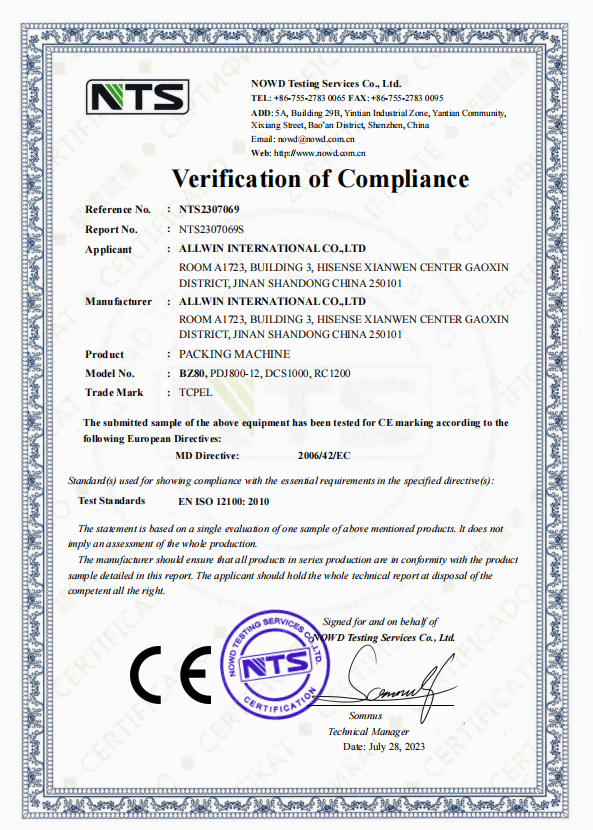
NTS2307069S
Pellet Packing Machine
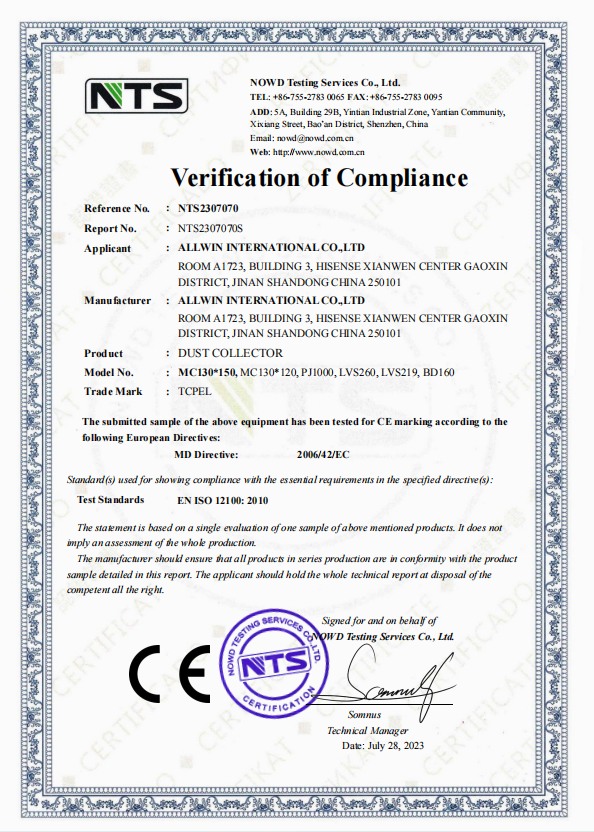
NTS2307070S
Dust Collector
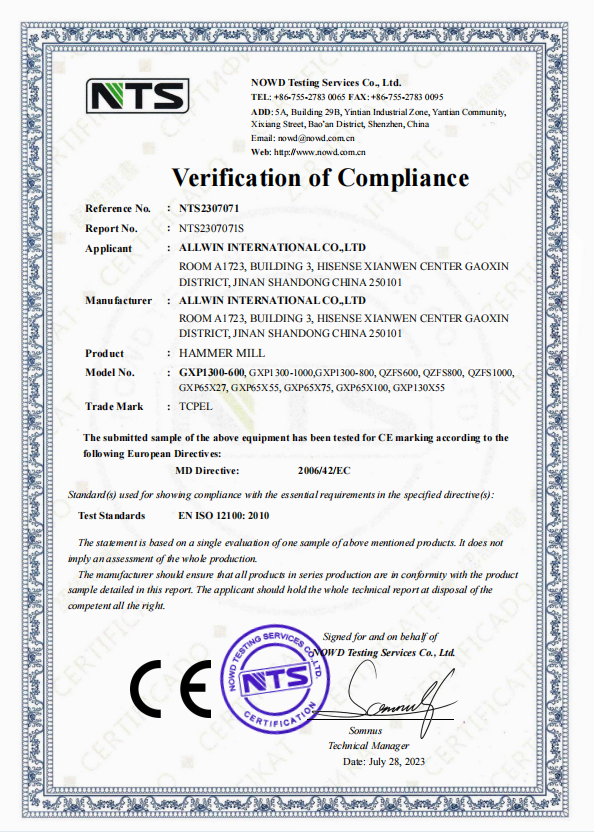
NTS2307071S
Hammer Mill / Crusher
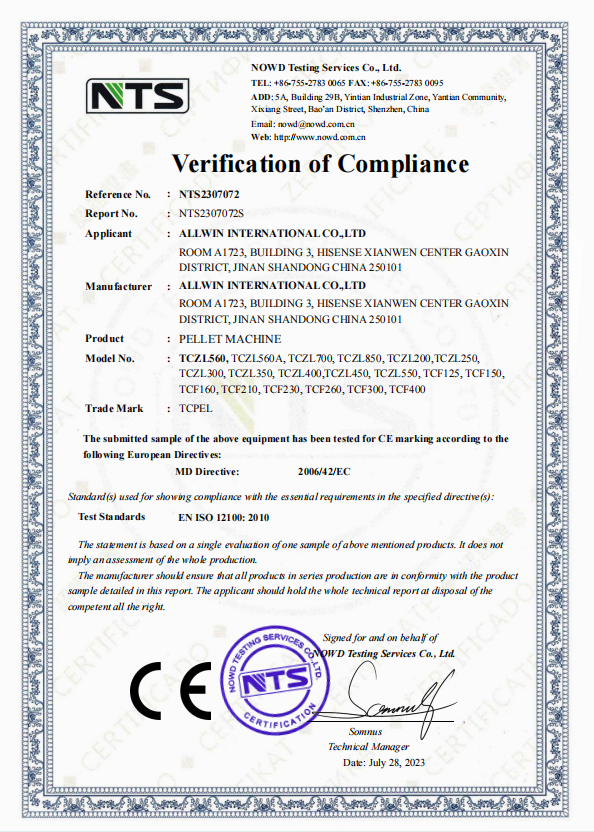
NTS2307072S
Pellet Machine
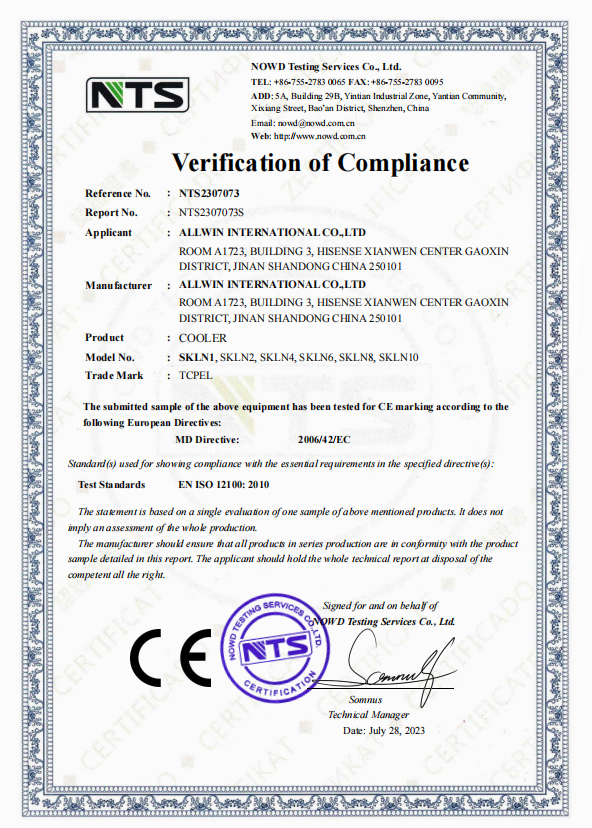
NTS2307073S
Pellet Cooler
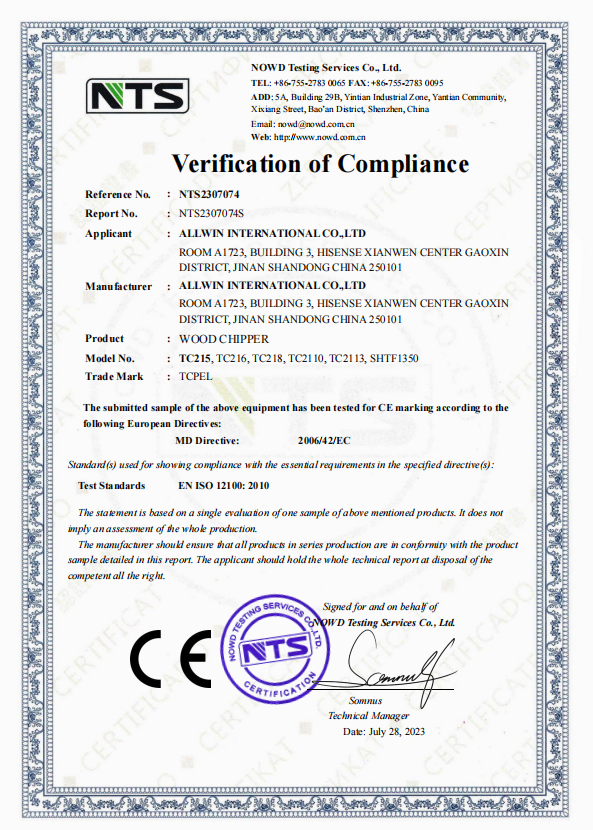
NTS2307074S
Drum Chipper
Standards Referenced in TCPEL Engineering
CE Machinery Directive 2006/42/EC – EU machinery safety reference compliance applied across feedstock handling, mechanization controls, emergency-stop system integration, and electrical control architecture.
EN 60204-1 Electrical Equipment of Machines – Low-voltage safety standard for the power, control, and protection circuits in TCPEL control cabinets.
ISO 9001 Quality Management – TCPEL operates a ISO 9001 quality system across raw material processing, in-line checks, and final inspection prior to FOB Qingdao delivery.
ISO 17225-2:2021 A1: Code for non-industrial wood pellet fuel-quality class A1. Defines fuel-quality classes A1, A2, B for non-industrial use and I1, I2, I3 for industrial use. ENplus A1 meets ISO 17225-2 A1 with additional process audit performance standards.
ISO 17831-1 Mechanical Durability – Test procedure for pellet durability; A1 quality class requires 97.5% by mass durability after 3.15 mm sieve separation.
ENplus/Bioenergy Europe – European voluntary scheme proven to be broadly successful in EU retail heating markets; TCPEL lines configured to meet ENplus B2, A2, or A1 standard depending on feedstock and operator process discipline.
Pellet Fuels Institute (PFI) Standard – North American residential and commercial wood pellet specification, cited often by TCPEL buyers exporting to US and Canadian markets.
×
![Certificate Large View]()
Procurement Guide — Pricing, Payment, Delivery, Installation
A wood pellet production line from first firm delivery to first commission can take 4 to 16 weeks. The procurement decisions presented below are those that most often trip up first time buyers.
01
Pricing & Quotation
Four published USD tiers from $35K to $520K FOB Qingdao for complete systems (see H2_2 Decision Matrix above). Customized configurations as dual pellet coolers, parallel cooler, or PLC upgrade push out base tier cost by 8-18%.
Quote for each price tier type within 3 working days after receipt of RFQ.
02
Payment Terms
Terms are standard 30% T/T (by wire transfer) upon receipt of PO; balance 70% T/T due at departure time. Letters of Credit (L/Cs) sight payment accepted for Tier 3 and Tier 4 projects above $200,000.
For repeat customers within 60-country export base, milestone-based payment schedules are subject to negotiation.
03
Delivery & Logistics
Tier 1 and Tier 2 lines ship within 15 working days of deposit. Industrial lines Tier 3,4 average 30-45 working days for fabrication and FAT.
FOB Qingdao, China – buyers to book their own sea freight or air freight with project specification. Loading patten of 40′ and 45′ are pre-engineered for per floor of each tier.
04
Installation & After-Sales
On-site commissioning available worldwide; TCPEL field engineers perform starting up and commissioning at buyer site and train operators. Flexible remote PLC monitoring for all Tier 3 and Tier 4 lines is possible.
Service SLA: 24 hr engineer response on technical incidents, 5 day spare parts air freight on critical wearing components (dies, rollers, hammers, bearings). 2 year warranty on main machines.
Our own 20,000 m factory in Zhangqiu, Jinan, Shandong employs more than 100 workshop staff and an archive of past shop support records covering each line made and shipped since 2020. From this archive our shop support team can quickly procure a customer’s exact configuration (including die hole pattern, dryer CCAs, PLC firmware version etc.) within 1-2 minutes of each service request—the sorts of info that can make or break a 5-day spare parts SLA from delivering a 5-day repair in the field.
Got a delivery time line or payment structure constraint?
Request Tier-Specific Quote →Manufacturing Facility & Workshop
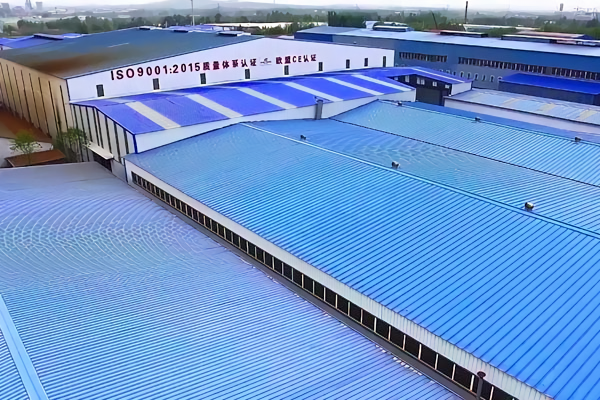
Precision engineering at scale. Tour our state-of-the-art production environments where TCPEL wood pellet line equipment is fabricated, assembled, and quality-tested before global dispatch.


×
![Enlarged View]()
Wood Pellet Plant Engineering & Financial Tools
Leverage our data-driven calculators to define your equipment tier, map out workshop footprint requirements, and estimate your project’s Return on Investment (ROI) before requesting a formal quotation.
01
Wood Pellet Line Capacity Sizing Tool
Accurately calculate your required machinery tier, total power consumption, and workshop floor area based on your target hourly output and raw material profile.
Launch Sizing Tool
02
Wood Pellet Plant TCO and Payback Estimator
Model your Total Cost of Ownership (TCO). Input regional labor, energy, and feedstock costs against EU bulk pellet prices to estimate your break-even point and payback timeline.
Launch ROI Estimator
Wood Pellet Production Line — Frequently Asked Questions
FAQ
A wood pellet manufacturing line is an integrated 6-step process of manufacturing densified fuel or bedding pellet from raw biomass material, e.g. sawdust, wood chips, logs or agricultural waste residues. Six process steps are involved in the production of biomass pellet: chipping, hammer-mill crushing, rotary drying, pelletizing on ring-die or flat-die, counter-flow cooling and bagging with weight-bish. We export complete biomass pellet lines of 0.5 tph to 10 tph capacity.
Alternative feedstocks such as rice husk, coconut shell, palm fiber, palm kernel shells, EFB, corn straw, wheat straw, peanut shell and bamboo are common. High silica content (rice husk) will tend to accelerate die wear, whereas low lignin (straw) may need a binder additive. The hammer mill screen and the pellet mill die are designed for the specified feed at this stage.
Flat die pellet mills are suitable for capacities less than 1.4 t/h, single shift process and entrepreneurs beginning their first plant. Vertical ring die units suitable for continuous industrial operation from 1 to 4 t/h per unit with longer die life, greater throughput, and integrated cooling motor protection. TCPEL Tier 1 lines are with the TCZL flat die, Tier 2 and above is with the vertical ring die.
Tier 1 lines start at $35,000 FOB Qingdao; Tier 4 large industrial lines start at $520,000 FOB Qingdao. Our 4-tier matrix above publishes the full range with capacity, components, and buyer fit. Final price depends on electric config, automation, scale of customisation.
Tier 1,2 lines ships in 15 working days on receipt of deposit. Tier 3,4 industrial lines in 30-45 working days fabrication, Factory Acceptance Test. Sea freight from Qingdao adds 3-6 weeks depending on destination port; our field engineers commissioning on site takes 7-14 days after arrival.
Industry benchmark 1-2 t/h pellet plant in 12-18 months in work schedules measured against typical regional pellet prices and raw material costs. Data points: EU bulk pellet price 300+ USD/tonne (Bioenergy Europe 2025), daily operational cost about 125 USD/tonne in a Deloitte EU pellet plant research, 2026 US financial model from financialmodelslab.com showing 2 month payback on 945K USD CAPEX equipment module paired with 2.9 M USD/year revenue projection. Payback timeline fluctuates greatly by feedstock cost and end-Market.
All Tier 3,4 lines ship with PLC central control as standard, remote monitoring of dryer temp, pellet mill amperage, cooler discharge temp, pack scales operation accuracy; Tier 1,2 ship manually by default; PLC upgrade add about 8-12% to base tier price.