Hubungi TCPEL

Diperbarui Juli 2026 · Diulas oleh tim teknis TCPEL
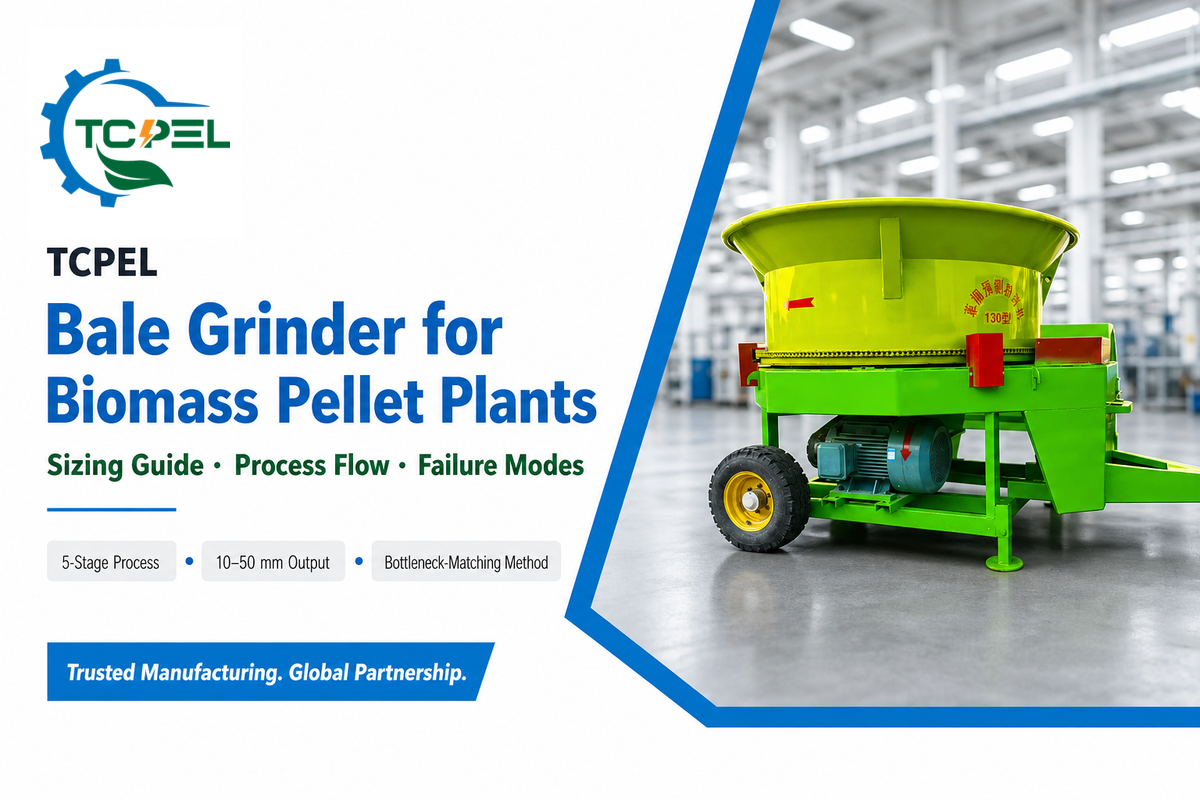
A penggiling bale untuk tanaman pelet biomassa adalah langkah pertama dalam mengubah jerami, batang jagung atau rumput menjadi input seragam pabrik hammer dan mesin press pelet dapat memproses. Jika diremehkan terhadap sisa lini pabrik pelet, itu menjadi kemacetan yang menyebabkan jamming, keausan roller dan downtime yang tidak terjadwal di hilir, perbedaan antara pabrik yang secara andal mengubah residu baled menjadi bahan bakar biomassa terbarukan dan yang melawan ujung depannya sendiri setiap shift.
Sebuah penggiling bale untuk tanaman pelet biomassa adalah tahap pengurangan ukuran pertama yang mengubah bal jerami yang ditekan menjadi bahan baku seragam pabrik hammer dan pengepres pelet benar-benar dapat menangani. Lewati, atau ukuran salah terhadap sisa garis, dan itu menjadi apa yang membuat pabrik pelet baru baik tidak pernah memenuhi output yang dinilai atau melawan dirinya sendiri setiap shift.
Poin Utama
- Sebagian besar kekurangan ukuran disebabkan oleh tekanan harga yang mengikis margin keamanan, dibandingkan pembeli yang meminta mesin berukuran besar untuk berjaga-jaga.
- Tahap 1 dari 5 adalah penggiling bale: penggiling → penyangga/silo → pabrik hammer → pengering → pabrik pelet.
- Penggiling bale disc-shear industri dan penggiling bak yang digerakkan PTO pertanian adalah kelas peralatan berbeda yang dibangun untuk pekerjaan yang berbeda جميناء istilah pencarian tumpang tindih, mesin tidak.
- Jenis bahan baku mengubah matematika ukuran: kepadatan massal jerami gandum mentah dapat bervariasi dari sekitar 24 kg/m³ hingga 266 kg/m³ tergantung pada kadar air.
- NFPA 660, yang diterbitkan pada bulan Desember 2024, kini mengatur standar debu yang mudah terbakar untuk fasilitas biomassa yang diberi makan bale, menggantikan pembagian sebelumnya antara NFPA 61/664.
Spesifikasi Singkat
| Posisi proses | Tahap 1 dari 5, hulu buffer/silo, pabrik hammer, pengering, pabrik pelet |
| Output pra-parut yang khas | 10 – 50 mm, memberi makan pabrik hammer yang disaring menjadi kira-kira 4 ̓6 mm untuk pembuatan pelet |
| Dua kategori mesin | Industri stasioner disc-shear vs pertanian PTO-driven mobile tub grinder |
| Bahan baku yang dibahas di sini | Jerami padi, jerami gandum, batang jagung, rumput dan bal tanaman energi |
Apa Itu Penggiling Bale? Penghancur Cakram Industri vs. Penggiling Bak Pertanian
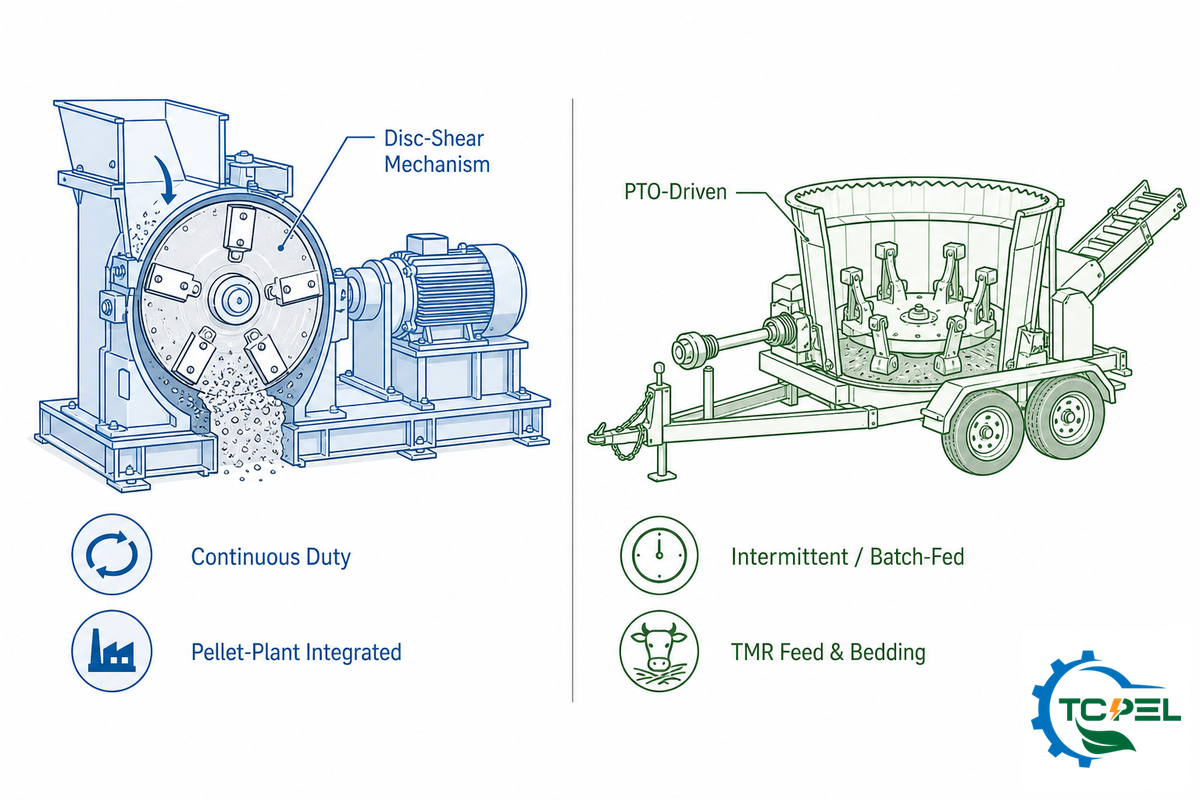
Sebuah “bale grinder” menjelaskan dua jenis peralatan khusus yang berbeda, dan menggabungkannya akan menunda jadwal pengadaan. Penggiling bale disc-shear industri yang stasioner dirancang untuk dimasukkan ke dalam pabrik pelet biomassa commercial atau jalur proses pabrik pakan, menggunakan cakram geser berkekuatan tinggi untuk mengubah bahan baku terkompresi — jerami baled — menjadi fraksi yang konsisten dan mengalir bebas yang siap untuk penggilingan hammer di hilir.
Pemrosesan bale dengan cara ini adalah langkah yang berbeda dari apa pun yang dibuat untuk dilakukan oleh alat yang dipasang di traktor, dan ini adalah titik masuk ke jalur produksi pelet biomassa penuh.
Ada juga penggiling bak pertanian atau prosesor bale, yang merupakan sistem seluler yang digerakkan oleh PTO yang dimaksudkan untuk memotong jerami atau bal jerami untuk mempersiapkannya untuk pencampuran TMR sapi atau tempat tidur gudang commercial. Yang terakhir biasanya ditarik oleh traktor dan dioperasikan sebentar-sebentar.
Perbedaan ini penting secara mekanis, bukan hanya semantik. Satu paten AS untuk peralatan pemrosesan biomassa menggambarkan satu kategori dalam kelompok ini sebagai “kereta pencukur-pencukur,” yang memiliki langkah pencacahan diikuti dengan pemotong pisau berputar yang memecah ukuran bahan baku biomassa mentah sebelum masuk ke konversi hilir yang lebih dekat dalam arsitektur ke kategori penggiling cakram industri daripada penggiling bak traktor yang ditarik. Jangan bingung antara mesin dengan drum atau chipper kayu cakram, yang menggunakan pisau berkecepatan tinggi yang bekerja melawan landasan stasioner untuk membuat serpihan seragam dari kayu gelondongan dan cabang yang bersih, bukan bahan pertanian yang dibal atau aliran limbah kayu umum. Mesin chipper memproses kayu pohon utuh, bukan bal residu ag, dan TCPEL memproduksinya dalam lini produk terpisah khusus untuk menghindari kebingungan ini — setiap kategori memiliki siklus tugas dan harapan hidup layanannya sendiri yang dibangun di sekitar bahan yang dirancang untuk ditangani.
| Jenis Peralatan | Mekanisme | Ukuran Output Khas | Bahan Baku Paling Cocok | Siklus Tugas |
|---|---|---|---|---|
| Penggiling bale cakram industri | Geser (bilah yang dipasang pada cakram) | 10͕50 mm | Jerami baled, batang jagung, rumput | Berkelanjutan, terintegrasi ke dalam jalur proses tetap |
| Penggiling bak pertanian (PTO) | Dampak (hammer/flail dalam bak berputar) | Variabel, pakan/kelas tempat tidur | Bal jerami dan jerami untuk ternak | Intermiten, diberi makan secara batch, mobile |
| Twin-shaft shredder | Geser/robek torsi tinggi berkecepatan rendah | 20͕100 mm, kasar | Biomassa campuran atau kotor, palet dipaku, bal bulat utuh | Pengurangan berkelanjutan, front-end/primer |
| Shredder poros tunggal | Memotong layar | 10 – 40 mm, layar-dikendalikan | Pemotongan yang lebih bersih, aliran limbah yang konsisten | Berkelanjutan, tugas sedang |
| Chipper kayu drum | Pisau berkecepatan tinggi vs. landasan | 10͕30 mm, seragam | Bersihkan batang kayu, dahan, kayu seluruh pohon | Kontinyu |
| Pemotong kayu cakram | Pisau berkecepatan tinggi vs. landasan | 10͕30 mm, seragam | Bersihkan kayu gelondongan, kayu kelas pembuatan kertas | Kontinyu |
| Hammer mill | Dampak | 1 Σ8 mm, distribusi partikel terluas dari grup | Bahan yang sudah terkelupas atau tercabik-cabik, hanya tahap sekunder | Terus menerus, selalu sekunder |
| Rotary shear crumbler | Geser | Distribusi partikel kelompok yang paling ketat (diuji pada brangkasan jagung) | Residu pertanian terfraksinasi | Berkelanjutan, skala penelitian/produksi |
| Pabrik pisau | Cutting | Ukuran pada spesifikasi pada penarikan energi terendah kelompok (uji brangkasan jagung) | Fraksi brangkasan jagung | Kontinyu |
Jika proses Anda adalah proses pelet biomassa yang diberi pakan terus menerus, TCPEL's TCSC industri bale grinder line mencakup kategori “disc-shear” yang berlaku. Throughput tingkat model dan spesifikasi FOB tercantum di halaman itu. Berikut ini berkaitan dengan pertanyaan yang lebih besar yang tidak ditangani halaman itu: yaitu integrasi ke dalam garis yang mengelilinginya dan bagaimana mengukur komponen yang dimaksud dengan tepat.
💡 Kiat Profesional
Setiap hit pencarian atau spesifikasi yang menggunakan istilah “poros PTO”, “pin geser”, atau “halangan penarik” menunjukkan produk yang dimaksud termasuk dalam kategori “ag” — bahwa informasi dapat menjadi konteks yang berguna, tetapi tidak boleh digunakan sebagai perbandingan spesifikasi dengan penggiling bale proses industri.
Aliran Proses 5 Tahap, Dimana Penggiling Bale Cocok di Pabrik Pelet Biomassa
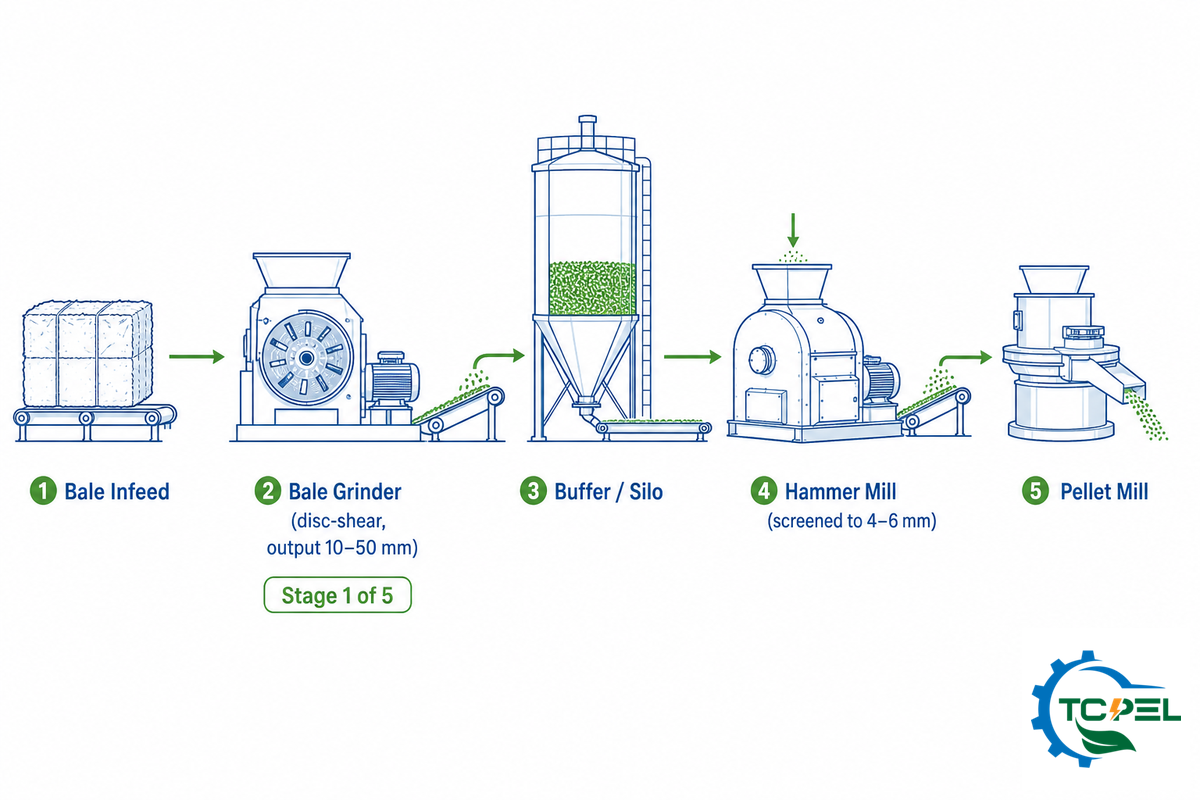
Bagaimana Anda Mengintegrasikan Penggiling Bale Ke Pabrik Pelet atau Garis Briket?
Lima elemen membentuk garis proses dasar untuk commerscial biomassa pelet tanaman: penggiling bale, buffer atau surge bin, pabrik hammer, pengering, dan unit pelletizing itu sendiri, diikuti oleh pendingin pelet dan mesin pengepakan pelet. Sementara sempit, peran penggiling sangat penting — itu harus memecah bale yang berbentuk tidak beraturan, sering terjerat menjadi ukuran yang jauh lebih kecil dan lebih seragam yang mengalir secara konsisten ke tahap-tahap setelahnya.
Dapatkan setiap tahap lini produksi pelet biomassa lengkap berbaris dengan benar dan produksi bahan bakar biomassa dari bal mentah menjadi proses yang berulang daripada improvisasi harian — “packer” di ujung jauh hanya tas apa ujung depan sudah mendapat benar.
A tinjauan sejawat terhadap penyimpanan bioenergi dan sistem pra-pemrosesan mencakup rantai penanganan yang sama ini dalam istilah yang lebih umum: tantangan fisik dan mekanis bertambah pada setiap handoff antar tahapan, itulah sebabnya setiap keluaran tahapan harus sesuai dengan toleransi masukan tahap berikutnya, bukan hanya lembar spesifikasinya sendiri.
Antara penggiling dan pabrik hammer duduk buffer atau surge bin, mudah dirancang di sekitar ketika biaya utama, dan sulit ditoleransi ketika sedang beroperasi. Tujuannya adalah untuk accommodate perilaku makan intermiten dari penggiling bale (sulit untuk mendapatkan mesin lain untuk beroperasi pada tingkat throughput yang stabil dan kadar air ketika sedang diberi makan batch bal diskrit), dan memberikan umpan terus menerus ke hilir, biasanya terus menerus-umpan, pengering dan pabrik hammer. Misalnya, pertimbangkan pengering yang menerima bahan pada 25 ton per jam dan panggilan desain pabrik untuk persediaan 8 jam maksimum. Dalam hal ini buffer harus memiliki kapasitas untuk setidaknya 25 × 8 = 200 ton, angka yang ingin Anda sesuaikan agar sesuai dengan jadwal shift operasional Anda sendiri dan penilaian risiko, tetapi metode itu sendiri, target jam buffer × throughput rate, transfer langsung ke skala apa pun.
Kontrol yang efektif atas kadar air benar-benar bermuara pada penggiling di hulu; pengeringan yang efisien (biasanya rotari udara panas atau pengering flash) hanya akan membawa material ke target yang konsisten dari kadar air rendah — angka common yang cukup untuk produksi pelet kayu adalah antara 10-15 persen, pada dasar basah — asalkan apa yang datang ke sana memiliki penampang partikel yang cukup seragam (target Anda di sini adalah fraksi kelas serbuk gergaji yang pada akhirnya akan membawa barang-barang mmer pabrik Anda akan membuang ke dalamnya segala sesuatu dari batu-batu besar ke debu dan Anda berakhir dengan kulit yang terbakar di atas interior lembab yang diterjemahkan ke cetakan lengket atau tekan lunak mati pada tekan pelet kayu — kualitas granulasi di ujung jalur produksi pelet jejak langsung kembali ke bagaimana konsisten penggiling melakukan tugasnya di depan. Pengamatan lain yang layak dipertimbangkan secara serius dari operator industri yang dikenal berasal dari Jason Kessler, pendiri perusahaan KESC yang berspesialisasi dalam pabrik pelet terintegrasi, bahwa ia telah berulang kali berbicara menentang penataan pabrik pelet sebagai urutan “pulau” (tanah) yang tidak terhubung
“Industri pelet kayu secara historis mengembangkan proyek menggunakan filosofi ‘pulau’: pulau pengering, pulau kering hammermilling, pulau pelet, halaman kayu, dan sebagainya... Ini sering menghasilkan operasi berombak yang dirancang di sekitar serangkaian keberhasilan kecil, dalam industri yang dinilai pada satu hal: pelet selesai keluar pintu.”
Dan justru itu penggiling bale, itu bukan pembelian mandiri, tetapi langkah yang menentukan ritme untuk setiap pulau lainnya.
📐 Catatan Teknik
Layar bahan pelet umumnya dijalankan pada 4-6mm; penggiling bale dirancang untuk mengeluarkan bahan untuk memberi makan ke pabrik hammer yang memiliki kehalusan yang cukup (idealnya dalam kisaran 20-40mm tetapi sehalus 10-50mm berguna) bahwa itu tidak dipaksa untuk melakukan pengurangan kasar dan halus dalam satu langkah. Sebagai aturan praktis, jika Anda hammer mill amp load berayun sekitar 20-30% dalam keadaan normal pelaku pertama akan terlalu besar atau terlalu bervariasi dari output dari penggiling.
Mode Kegagalan Saat Seluruh Bal Melewati Pra-Pencacahan
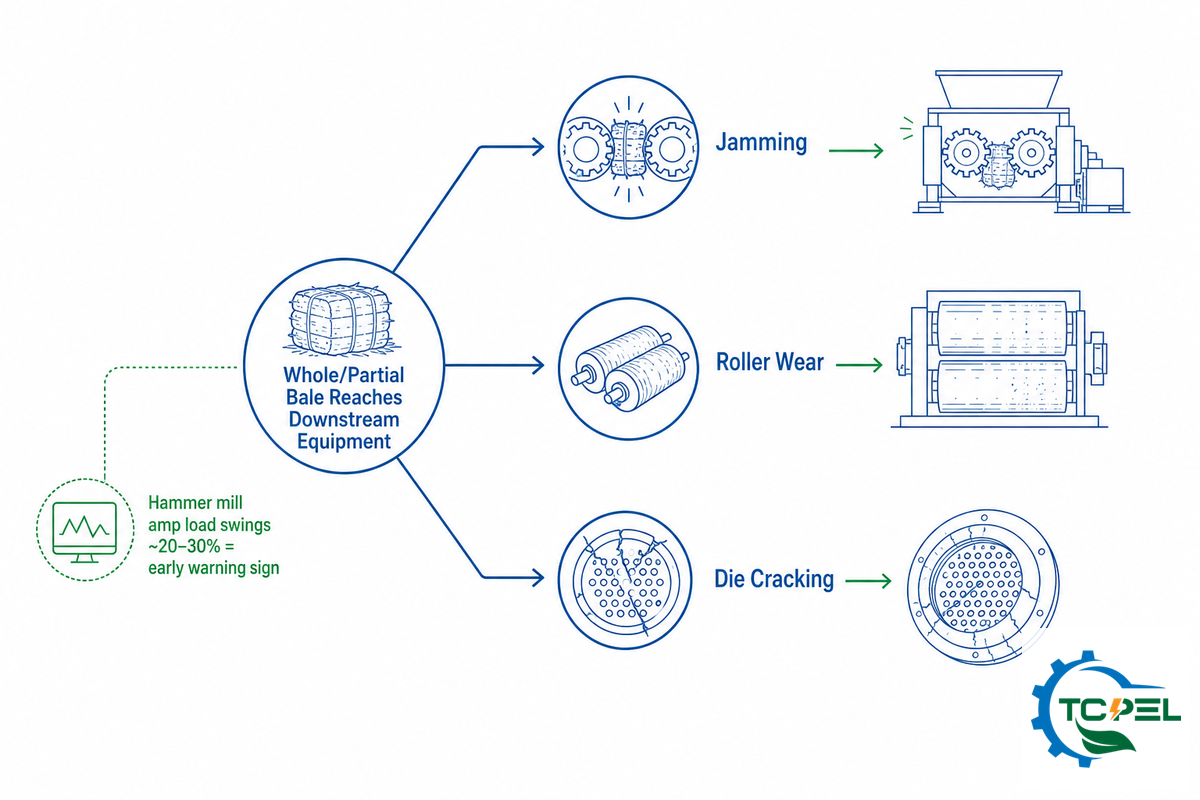
Hilangkan langkah pra-pencacahan atau meremehkan ukurannya, dan mode kegagalan bersifat fisik, bukan filosofis. Melemparkan seluruh bal atau sebagian di pabrik hammer atau mesin press pelet mengarah ke bagasi pada infeed, pemuatan rol yang tidak seimbang, dan-dalam kasus press-die pelet retak karena produk yang terlalu besar telah memaksa dirinya melalui cetakan berukuran untuk bahan yang jauh lebih seragam. Deskripsi Kessler tentang penyumbatan pada tanaman baru menunjukkan jenis kegagalan yang terkait dan kurang terlihat: di atas kertas, bahan pra-pencacahan dan chip mikro mungkin terlihat cukup mirip (ukuran partikel, kepadatan massal, dan kadar air) tetapi ketika menangani, bahan pra-pencacahan “dapat bersarang bersama” dan menyebabkan bagasi pelepasan dan saluran di mana microchip yang lebih halus tidak akan.
Ini adalah kegagalan penanganan material dan bukan kegagalan penggilingan, meskipun hal ini akan disebabkan oleh peralatan penggilingan — dan setiap jam yang dihabiskan untuk membersihkan selai saluran adalah satu jam waktu aktif yang hilang sehingga pabrik tidak dapat kembali lagi.
Jenis kegagalan kedua: debu yang mudah terbakar. Ini bukan masalah tindakan pencegahan umum; ada standar khusus yang baru-baru ini diperbarui yang mengaturnya secara langsung. Pada Desember 2024, NFPA menerbitkan NFPA 660, Standar untuk Debu Mudah Terbakar dan Padatan Partikulat, yang mengkonsolidasikan standar NFPA sebelumnya yang mencakup berbagai kategori debu, termasuk yang khusus untuk pertanian (NFPA 61), kayu (NFPA 664), dan standar bahaya debu gabungan (NFPA 652) menjadi satu dokumen, dengan persyaratan khusus industri pertanian dan makanan di Bab 21 dan persyaratan khusus industri-biomassa di Bab 24. NFPA 660 mengharuskan setiap fasilitas yang menangani debu yang mudah terbakar untuk melakukan Analisis Bahaya Debu (DHA) — penilaian teknik yang meninjau “segi lima ledakan”: bahan bakar, oksigen, dispersi, penahanan, dan pengapian. Analisis ini harus ditinjau dan diperbarui setidaknya setiap lima tahun, atau setiap kali tingkat produksi, kadar air, atau peralatan berubah secara material.
“Partikel kayu halus yang diperlukan untuk produksi pelet berperilaku seperti bensin dalam bentuk debu. Mereka sangat mudah terbakar, mudah tersebar dan mampu mencapai konsentrasi ledakan ketika tersuspensi di udara... Sebagian besar debu kayu yang digunakan dalam produksi pelet berada dalam rentang ledakan yang terdokumentasi dengan baik. Debu kayu halus dan kering biasanya diklasifikasikan sebagai ST1 di bawah standar NFPA, yang berarti memiliki nilai Kst antara 1 dan 200 bar·m/s.”
Panduan teknis OSHA sendiri telah lama mengakui debu yang mudah terbakar sebagai topik inspeksi prioritas tinggi, dan penyelidikan Dewan Keamanan Kimia AS terhadap ledakan debu biji-bijian Penggilingan Didion pada tahun 2017 adalah contoh yang terdokumentasi dengan baik tentang konsekuensi dari mengizinkan akumulasi debu dan sumber pengapian di fasilitas pertanian. Penggiling bale yang memproduksi bahan pertanian kering dan berukuran halus berada langsung dalam lingkup kelas kegagalan ini. Oleh karena itu, perancang fasilitas yang berfokus di sekitar penggiling bale harus memasukkan DHA kontemporer sebagai masukan penting untuk merancang, bukan hanya kotak centang peraturan — dan yang mencakup ukuran setiap pengumpul debu di saluran ke denda aktual yang memuat generator menghasilkan, bukan angka katalog generik.
Bagaimana Geser-Type Disc Mill Defibration Sebenarnya Bekerja
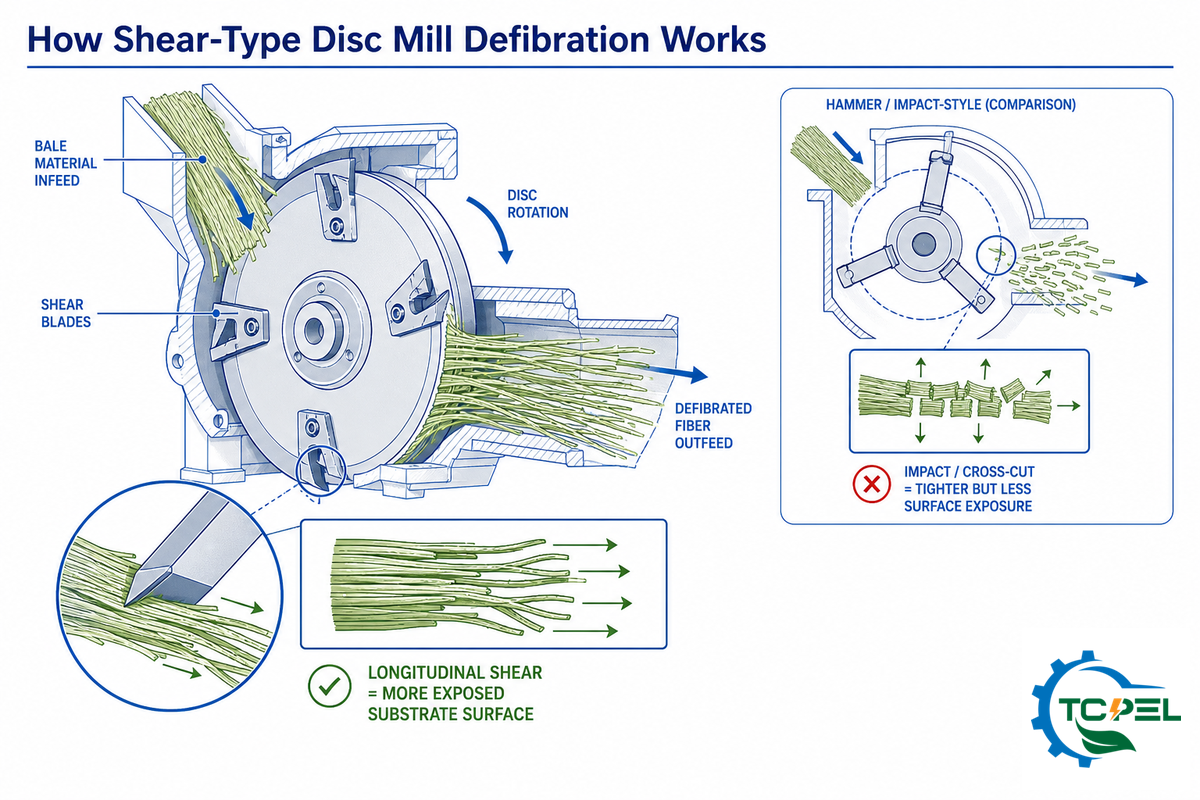
Cara kerja mesin tidak menjadi masalah hanya pada tingkat akademis – penting apa yang keluar dari ujung belakang. Biomassa lignoselulosa mengalami pra-perawatan mekanis melalui proses pemotongan, geser, kompresi, sobek dan pecah, menurut a tinjauan metode pretreatment mekanis untuk biomassa lignoselulosa. Mekanisme dominan dalam mesin yang diberikan secara langsung membentuk sifat fisik material di hilir.
Sebuah dikutip secara luas studi tentang ketegaran biomassa lignoselulosa menunjukkan bahwa pengurangan ukuran partikel meningkatkan akses ke selulosa di dalam serat tanaman melalui jalur enzimatik atau termal; dengan mengurangi ukuran, seseorang secara harfiah “membedah” struktur yang tahan terhadap kerusakan. Terpisah penelitian tentang reduksi ukuran partikel dan hidrolisis enzimatik telah menunjukkan bahwa peningkatan hasil yang berarti untuk proses padatan tinggi terjadi ketika biomassa lignoselulosa diperkecil ukurannya menjadi 2,5mm atau kurang. Prinsip-prinsip ini tidak hanya berlaku untuk pembuatan pelet dan diterapkan secara luas pada biomassa lignoselulosa, mulai dari kayu biomassa dan residu pertanian hingga bahan baku produksi biofuel secara umum. Namun, prinsip-prinsip ini menjelaskan mengapa, dalam banyak kasus, pemotongan bahan biomassa di sepanjang butiran serat menghasilkan fraksi yang lebih seragam dan lebih mudah diproses dibandingkan dengan membenturkan bahan dan memecahnya.
Perbedaan itu dimainkan secara langsung dalam uji perbandingan pada brangkasan jagung yang dilakukan di Fasilitas Pengguna Nasional Biomassa Feedstock Laboratorium Nasional Idaho yang menguji bahan yang sama pada rotary shear crumbler, pabrik pisau, pabrik hammer, dan mesin penghancur. Hasilnya: “pabrik hammer memiliki distribusi ukuran partikel terluas sementara rotary shear crumbler memiliki yang paling ketat,” dengan pabrik pisau paling cocok dengan rentang ukuran partikel target dan konsumsi energi terendah untuk bahan baku spesifik itu. Dalam bahasa sederhana: mekanisme dampak (pabrik hammer) memberikan hasil yang paling tidak konsisten, mekanisme geser menawarkan kontrol yang lebih ketat. Itu adalah hasil infrastruktur penelitian nyata, bukan klaim vendor, dan itu adalah salah satu dari sedikit potongan yang diterbitkan yang membandingkan pilihan mekanisme secara langsung daripada hanya menegaskannya. Mendapatkan kesalahan ini bukan hanya masalah teoritis: karena pabrik tipe dampak menghasilkan penyebaran partikel yang lebih luas, mereka menyerahkan pengering hilir dan menekan umpan yang lebih tidak konsisten daripada mekanisme tipe geser yang bekerja pada bahan baku yang sama. Dalam praktiknya, TCPEL membangun garis TCSC-nya di sekitar mekanisme geser untuk alasan ini.
Satu hal yang perlu ditekankan secara langsung: data yang paling mudah tersedia tentang keausan yang didorong oleh silika dan abu untuk penggilingan biomassa berkaitan dengan tahap penggilingan akhir dari pabrik hammer, tidak secara khusus langkah pembukaan bale sebelumnya ini. Keausan yang lebih rendah pada mekanisme geser (memotong serat, tidak mengikis permukaan) versus mekanisme dampak adalah harapan yang masuk akal mengingat mekanika yang mendasarinya, tetapi tingkat keausan independen dan dipublikasikan yang spesifik belum tersedia untuk tahap pra-penghancur saja. Pertimbangkan bahwa inferensi mekanistik.
Keanekaragaman Bahan Baku, Mengapa Jerami Padi, Jerami Gandum, Tangkai Jagung, dan Bal Rumput Tidak Dapat Dipertukarkan
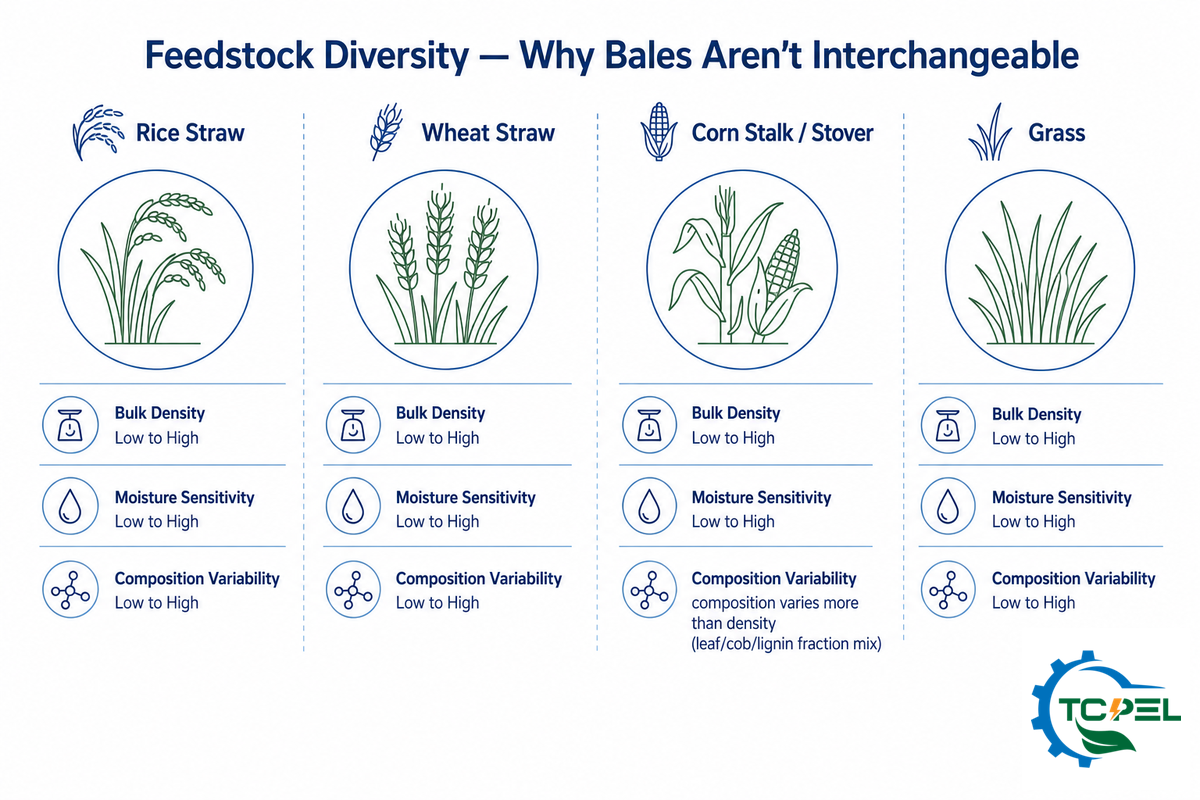
Apa Jenis Biomassa yang Dapat Diproses Bale Grinder, Jerami Padi, Tangkai Jagung, Gandum?
Penggiling bale yang dibuat untuk jerami umumnya dapat menangani lebih banyak bahan organik baled, apakah itu limbah pertanian seperti jerami padi, jerami gandum, dan batang jagung, atau bal tanaman energi seperti miscanthus dan residu tebu baled. Tapi “dapat menangani” dan “proses dengan cara yang persis sama” adalah klaim yang cukup berbeda: kepadatan dan kelembaban cukup bervariasi dalam setiap bahan baku untuk mengubah ukuran matematika, terlepas dari apakah produk akhir adalah ukuran standar atau pelet kecil.
Sebuah diterbitkan studi jerami gandum basah dan kering serta kepadatan curah switchgrass melaporkannya di berbagai sangat luas, sebagian besar sebagai fungsi dari kadar air-sekitar 24-266 kg/m³ sebagai kelembaban bervariasi (meningkatkan kelembaban, kepadatan yang lebih tinggi); sebuah studi yang berbeda dari varietas gandum tertentu menghasilkan kepadatan 97,5-177,2 kg/m³ di 5-8% kelembaban. Variabilitas itu semua hilang ketika Anda pelletize bahan baku-a studi komparatif kepadatan pelet ditemukan pelet jerami gandum memiliki kepadatan curah tertinggi (495,8 kg/m³) dari empat jenis biomassa yang diuji, tetapi bahan baku Anda yang diberi bal tidak akan memiliki tingkat homogenitas seperti saat masuk. Bale yang dipanen di lapangan dengan kelembaban 20% akan diproses sangat berbeda dari yang disimpan di dalam ruangan di bawah atap dengan kadar air 12%, meskipun membawa kepadatan curah resmi yang sama di atas kertas.
Tangkai jagung menimbulkan sumbu variabilitas kedua di luar kelembapan: komposisi, faktor a Tinjauan Departemen Energi AS terhadap variabilitas biomassa lignoselulosa memperlakukan sebagai pusat perencanaan pengurangan ukuran. Stover jagung φ tangkai, daun, tongkol dan sekam ¡totals beberapa 144 juta ton kering per tahun di AS, dan database Laboratorium Nasional Idaho menunjukkan variasi komposisi: persentase daun dari 6% ke 36% dari total massa, persentase tongkol dari 9% ke 34%, dan persentase lignin dari 11,5% ke 24%. Variasi ini cukup besar sehingga dua truk muatan stover mungkin berperilaku sangat berbeda. Penelitian tentang pre-blending stover untuk komposisi yang ditargetkan – satu kertas menunjukkan bahwa pencampuran 40% tongkol, 30% daun, 15% tangkai dan 15% hus dapat meningkatkan karbohidrat total sebesar 8% dan menurunkan total abu sebesar 66%, menghasilkan pelet akhir dengan kira-kira 500 kg/³ kepadatan tanaman ayunan dengan kelembaban yang berbeda dengan satu kali lipat yang mungkin menekan kepadatan tanaman pelet yang berbeda. Bale line check up bale TSC197198T menunjukkan manfaat garis ketahanan tunggal untuk produk penggiling pakan tunggal. garis non won, tetapi garis pakan tunggal won tidak memerlukan satu bidang yang tidak akan menghasilkan sampel yang berbeda: sampel yang berbeda dari panen yang berbeda, atau sampel yang berbeda dari satu kali lipat kepadatan tanaman yang berbeda, atau sampel yang berbeda, atau bale bale bale bale bale bale bale bale bale ballerestrough in calling balling balling balling balling balling balling balling balling balling balling balling balling balling balling balling balling balling balling balling balling balling balling balling balling balling balling ballet, atau ballet in coin ballet in calibration ballet in calibration balling ballet in calibration balling balling balling balling balling balling balling balling balling balling balling balling balling balling balling balling balling balling balling balling balling balling balling balling balling balling balling balling balling balling balling balling ballet in firstock that in firstock that in firstock that one in first coins in first acc in firstock in first acc in first time, atau calibrity in first acc in first calibration balling balling balling balling balling balling balling balling balling balling balling balling balling balling balling balling balling balling balling balling balling balling balles one in first acc in first acc, or in first acc, or in first time, underes in first calling b.
| Bahan baku | Rentang kepadatan curah mentah | Penggerak variabilitas primer |
|---|---|---|
| Jerami gandum (mentah) | ~24φ266 kg/m³ (moisture-dependent); ~97.5̂177.2 kg/m³ di 5ƒ8% moisture | Kandungan kelembaban |
| Switchgrass (mentah) | ~49ج266 kg/m³ (tergantung kelembaban) | Kandungan kelembaban |
| Brangkasan jagung | Komposisi bervariasi lebih dari kepadatan: daun 6 –36%, tongkol 9 ʂ34%, lignin 11.5 –24% | Campuran pecahan (rasio daun/tongkol/tangkai/sekam) |
| Jerami gandum (pelet) | 495,8 kg/m³ (tertinggi dari 4 jenis biomassa dalam studi yang dikutip) | N/A — pasca-pemrosesan, kepadatan stabil |
Mengukur Penggiling Bale ke Throughput Tanaman Asli Anda, Bukan Maksimumnya Sendiri
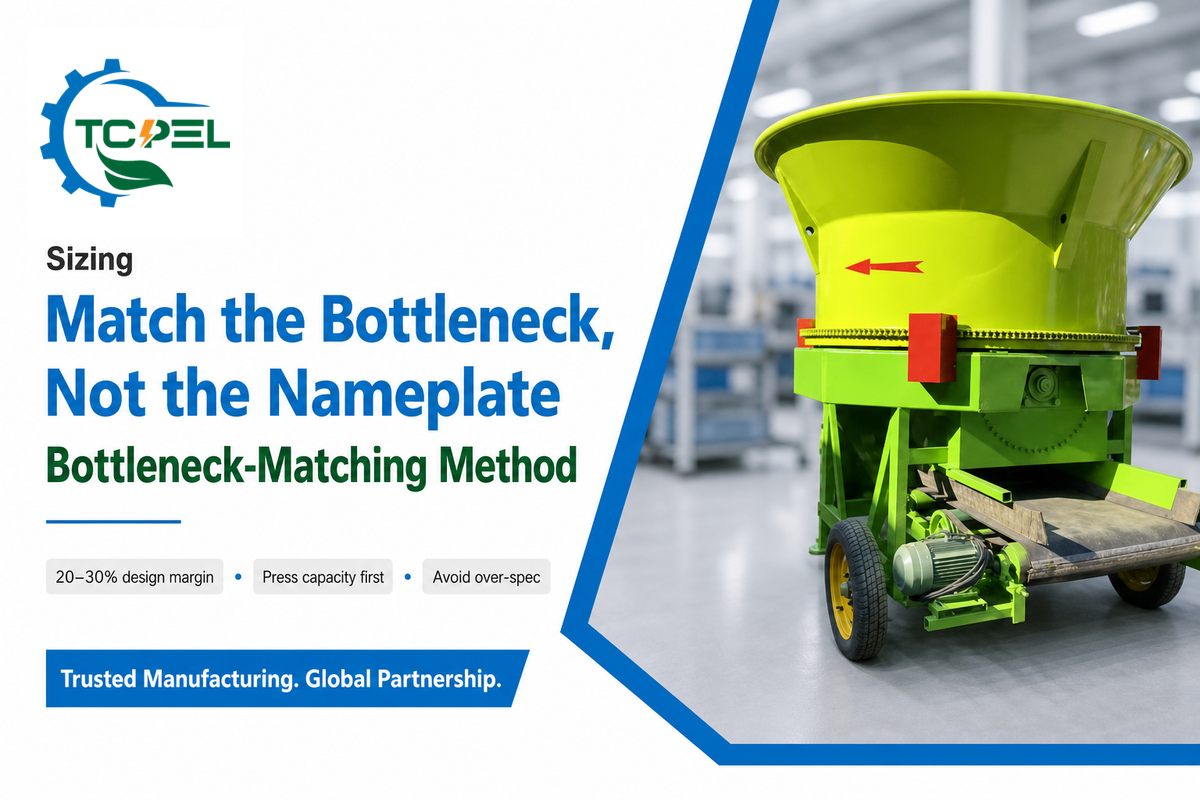
Ini adalah temuan penelitian yang paling relevan untuk menentukan penggiling bale: Faktor dunia nyata paling signifikan yang mengarah pada kemacetan aliran proses bukanlah kehati-hatian pembeli dan peralatan yang terlalu menentukan, tetapi sebaliknya. Ketika diminta untuk menunjukkan dengan tepat sumber kemacetan aliran proses di fasilitas baru, tanggapan Jason Kessler KESCO berpusat pada harga:
“Sangat mudah bagi produsen untuk bertanya mengapa produsen tidak lebih konservatif dalam ukuran peralatan mereka, jawaban singkatnya adalah harga. Sebagian besar keputusan pembelian pabrik pelet dibuat berdasarkan harga... Biaya terbesar untuk pabrik pelet tidak memproduksi pelet pada tingkat desain, kualitas atau dalam jangka waktu yang memenuhi kontrak commitments mereka. Menetapkan faktor keamanan desain dengan klien adalah salah satu cara paling efektif untuk menghilangkan potensi kemacetan sambil mengelola harapan harga sistem.”
Intinya, masalahnya bukan pembeli yang secara tidak sengaja membeli lebih banyak penggiling bale “untuk berjaga-jaga”; itu adalah bahwa proses penawaran kompetitif secara sistematis mengikis margin keamanan aktual pabrik demi harga yang lebih rendah pada kutipan. Pendekatannya, Metode Pencocokan Bottleneck, adalah untuk mengukur penggiling bale berdasarkan titik tersedak sebenarnya dari garis Ɲ biasanya pabrik hammer atau pengering · · · · · · · · · · · · · · · · · · · · · · · · · · · · · · · · · · · · · · · · · · · · · · · · · · · · · · · · · · · · · · · · · · · · · · · · · · · · · · · · · · · · · · · · · · · · · · · · · · · · · · · · · · · · · · · · · · · · · · · · · · · · · · · · · · · · · · · · · · · · · · · · · · · · · · · · · · · · · · · · · · · · · · · · · · · · · · · · · · · · · · · · · · · · · · · · · · · · · · · · · · · · · · · · · · · · · · · · · · · · · · · · · · · · · · · · · · · · R · R · · · · · · · · · · · · · · · · · · · · · · · · · · · · · · · · · · · · · · · · · · · · · · · · · · · R · · · R · R · · · · R · · · R · · · · R · · · · R · R · · · · · · · · · · R · R · · · R · · · · · · ·.
Contoh Kerja: Ukuran Penggiling Bale Terhadap Pabrik Pelet 1 t/h
- Fokus pada batasan Anda yang sebenarnya, bukan penggiling. Misalnya, asumsikan mesin press pelet Anda diberi peringkat 1,0 t/h untuk produk akhir.
- Menerapkan faktor keamanan di hulu. Ini praktik common untuk integrator untuk merancang peralatan pencacahan dan pengumpanan dengan buffer 20% hingga 30% di atas kapasitas pers hilir ◎ , untuk pers 1.0 t/h, penggiling bale dan sistem pengumpanan Anda harus memasok sekitar 1.2 hingga 1.3 t/h ke buffer, daripada 1.0 t/h yang persis cocok dengan pers.
- Ukuran buffer / surge bin Σ Anda perlu mengukurnya untuk jam cakupan Anda, bukan waktu siklus penggiling Anda. Dengan menggunakan metode “target-jam × throughput”, jika Anda ingin sekitar 30 menit cakupan dengan output penggiling 1,2 t/h, ukuran bin Anda akan menjadi sekitar 0,6 ton ¡ ¡ ¡ · · · · · · · · · · · · · · · · · · · · · · · · · · · · · · · · · · · · · · · · · · · · · · · · · · · · · · · · · · · · · · · · · · · · · · · · · · · · · · · · · · · · · · · · · · · · · · · · · · T P88 T menjadi jalur produksi dengan kebutuhan buffer 8-jam, Anda akan membutuhkan sekitar 200 ton penyimpanan silo.
- Verifikasi bahwa layar dan pengering pabrik hammer Anda dapat menangani output maksimum penggiling, bukan hanya rata-ratanya. Jika penggiling Anda menghasilkan rata-rata 1,2 t/h, tetapi selama bale padat Anda melonjak ke 2 t/h, penggiling kemungkinan akan menyumbat pabrik hammer yang Anda ukur berdasarkan throughput rata-rata.
Catatan: Angka margin desain 20-30% yang disajikan di atas adalah aturan praktis yang diikuti oleh sebagian besar integrator, bukan standar teknik yang dipublikasikan. Anggap ini sebagai pedoman untuk diskusi dengan pemasok peralatan Anda, daripada aturan yang keras dan cepat.
Untuk throughput model tertentu dan data FOB (setelah menentukan target hambatan Anda), konsultasikan dengan TCPEL Spesifikasi disc-crusher TCSC, yang mencakup throughput dalam kisaran 2-12 t/h di tiga ukuran bingkai.
Protokol Kesiapan Bale 4-Point Sebelum Anda Memberi Makan Penggiling
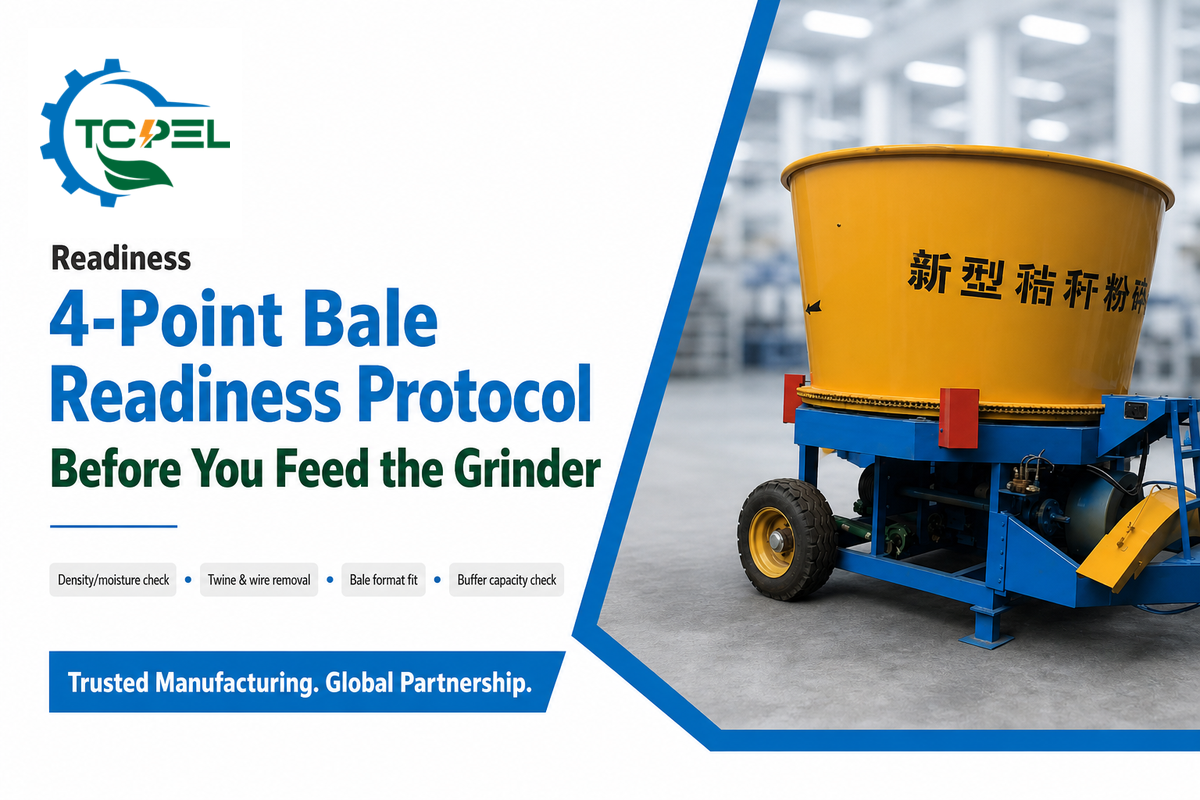
Sebagian besar masalah penggiling yang tidak perlu bukan kesalahan mesin, tetapi bahan yang dimasukkan ke dalamnya — motor penggerak langsung dan gearbox yang ditentukan dengan baik masih akan macet di bale yang buruk. Berikut adalah empat pemeriksaan untuk dijalankan di umpan, sebelum setiap pemuatan bale, yang menangkap sebagian besar masalah potensial sebelum mereka menyebabkan kemacetan atau kegagalan peralatan yang terkait dengan aktivasi detektor logam. Berjalan melalui mereka membutuhkan beberapa detik ekstra dan menjaga seluruh garis dalam pengoperasian yang mudah alih-alih mode pemadam kebakaran:
- Densitas dan kelembaban spot check. Karena kerapatan curah jerami mentah dapat sangat bervariasi berdasarkan kelembaban, periksa kerapatan arus terhadap kalibrasi terakhir yang diketahui dari bale yang baik sebelum Anda memberikannya ke penggiling Anda. Bal bendera ini akan berperilaku tak terduga ketika Anda memasukkannya ke dalam penggiling.
- Penghapusan benang, kawat, dan bungkus jaring. Baling twine dan net wrap yang tidak diinginkan adalah salah satu penyebab utama pembungkus rotor dan poros, sedangkan kawat baling menimbulkan ancaman langsung terhadap bilah dan berpotensi menjadi sumber penyalaan dalam kondisi yang sama Panduan debu OSHA yang mudah terbakar meliputi.
- Kompatibilitas format bale. Pastikan untuk memverifikasi dimensi bale bulat vs persegi dan pastikan mereka sesuai dengan asupan pengenal maksimum penggiling Anda. Mesin Anda, misalnya, dapat ditentukan untuk ukuran bale bulat tertentu namun mungkin tidak menangani bale persegi yang sedikit lebih besar, yang dapat menyebabkan penyumbatan pada infeed.
- Pementasan dan pemeriksaan penyangga. Pastikan bin penyangga mengikuti penggiling memiliki kapasitas yang cukup untuk menangani pembuangan bale yang akan datang; langkah ini sering mencegah banyak masalah sebelum terjadi. Memberi makan buffer yang sudah penuh adalah kesalahan yang sangat common dan benar-benar dapat dihindari.
Prospek Industri, Pergeseran Menuju Pabrik Pelet Multi-Feedstock
Mengandalkan satu bahan baku mewakili risiko pasokan dan harga, dan risiko itu sekarang mudah terlihat dalam desain pabrik pelet baru. Dua perspektif independen mengkonfirmasi pergeseran ini. Pertama, analisis industri terbaru dari tren peralatan penggilingan 2026 melaporkan gerakan yang “secara tegas menuju desain pabrik multi-bahan baku yang mampu memproses residu kayu, sedotan pertanian, dan tanaman energi.” Kedua, Jason Kessler dari KESCO mengamati sehubungan dengan proyek pelet kayu saat ini bahwa “pencacahan chip hijau sedang dimasukkan ke dalam sebagian besar tanaman pelet kayu baru,” menambahkan tahap pra-pencacahan yang meningkatkan fleksibilitas input. Ketika dua entitas dengan sudut pandang yang berbeda (analisis tren) dan integrator sistem (keduanya secara independen menyoroti tren yang sama, sinyalnya menjadi lebih kuat. A Tinjauan Departemen Energi AS terhadap variabilitas bahan baku biomassa memberikan pergeseran itu landasan teknis: ayunan komposisi yang terdokumentasi dalam kategori bahan baku tunggal persis seperti yang dibangun oleh garis multi-bahan baku yang mampu menyerap. Apapun penggunaan akhir — pelet yang terikat untuk boiler perumahan, pembangkit listrik industri, atau ekspor sebagai bahan bakar terbarukan — produksi bahan bakar yang dimulai dengan penggiling bale fleksibel diposisikan lebih baik daripada garis yang terkunci pada satu tanaman.
Ini menyiratkan pelajaran praktis untuk memilih penggiling bale pada tahun 2026: pabrik yang dirancang di sekitar bahan baku tunggal mengasumsikan bahwa input tidak akan berubah selama masa pakai peralatan. Karena komposisi bahkan dari satu jenis bahan baku dapat sangat bervariasi моный, kandungan lignin dalam brangkasan jagung saja dapat berkisar dari 11.5% hingga 24%, tergantung pada sumbernya (tanaman) yang dapat menerima jerami, tangkai, dan bal rumput tanpa modifikasi adalah keuntungan, terlepas dari apakah itu benar-benar melakukannya. Meskipun volume pasar pelet biomassa global diperkirakan akan terus meningkat hingga tahun 2030-an menurut sebagian besar proyeksi, dorongan sebenarnya untuk membangun kapasitas multi-feedstock adalah keinginan untuk mengelola risiko sisi pasokan, tidak hanya untuk memenuhi pertumbuhan pasar.
Perspektif Kami
Panduan ini berfokus pada sistem dan pertanyaan ukuran yang kami lihat muncul berulang kali setelah pabrik telah memutuskan penggiling bale industri, di mana ia berada di garis, bagaimana variabilitas bahan baku mengubah matematika ukuran, dan mengapa harga-vs-keamanan-faktor ketegangan dalam akun Jason Kessler tentang sejarah proyek KESCO cocok dengan apa yang muncul di seluruh literatur preprocessing yang lebih luas. TCPEL membangun perangkat keras disc-crusher yang dijelaskan dalam tabel perbandingan di atas; metodologi proses-aliran dan ukuran di sini dimaksudkan untuk berguna apakah atau tidak bahwa perangkat keras adalah yang akhirnya Anda tentukan.
Pertanyaan yang Sering Diajukan
Q: Apa itu penggiling bale, dan apa bedanya dengan penghancur bale atau prosesor bale?
Lihat Jawaban
Dalam praktiknya, istilah penggiling bale, penghancur bale, dan prosesor bale sangat tumpang tindih dan sering digunakan secara bergantian oleh produsen, yang merupakan bagian dari mengapa hasil pencarian untuk istilah ini sangat beragam. Perbedaan yang lebih berguna daripada namanya adalah kategori peralatan: mesin industri stasioner dan tugas berkelanjutan yang dibangun ke dalam jalur proses pabrik pelet biomassa versus mesin mobile yang digerakkan oleh PTO yang dibangun untuk pakan ternak di peternakan atau persiapan tempat tidur. Baik menggiling atau merobek bal; mereka ditentukan, dibeli, dan dioperasikan oleh pembeli yang sama sekali berbeda untuk pekerjaan yang sama sekali berbeda.
Q: Apa komponen utama dari sistem shredder biomassa atau penggiling bale?
Lihat Jawaban
Sistem penggiling bale industri jarang hanya penggiling itu sendiri. Front-end lengkapnya biasanya mencakup sistem infeed bale (konveyor apron atau pendorong hidrolik untuk bal bulat dan potongan berat), unit penggiling atau penghancur itu sendiri, magnet overband atau drum untuk pemisahan logam i1TP96Biasa saja setelah dibuang, konveyor sabuk ke tempat penyangga, dan tempat penyangga lonjakan atau live-bottom yang memisahkan siklus penggiling dari umpan stabil yang dibutuhkan pengering dan pabrik hammer di hilir. Peralatan ekstraksi debu dan ventilasi ledakan juga merupakan bagian dari sistem yang sesuai mengingat klasifikasi debu-mudah dari bahan pertanian kering di bawah NFPA 660.
T: Mengapa penggiling bale menghasilkan ukuran partikel yang tidak rata, dan bagaimana itu tetap?
Lihat Jawaban
Ukuran partikel yang tidak merata dari penggiling bale paling sering merupakan gejala ketidakkonsistenan pakan, bukan cacat pada mesin. Bal yang bervariasi dalam kelembaban dan kepadatan (seperti yang ditunjukkan pada tabel bahan baku di atas, kepadatan jerami gandum mentah saja dapat berkisar kira-kira 24 ¡266 kg/m³) akan merobek secara berbeda bahkan melalui rotor yang identik. Pisau yang aus atau hammers memperluas distribusi ukuran partikel dari waktu ke waktu terlepas dari bahan baku, itulah sebabnya mekanisme tipe geser — diukur dalam pengujian komparatif untuk menahan distribusi ukuran partikel yang lebih ketat daripada mekanisme tipe dampak pada bahan yang sama — layak dipahami pada tahap spesifikasi, bukan hanya tahap pemeliharaan. Pengadaan bale yang konsisten, pemeriksaan kepadatan/kelembaban pra-umpan, dan jadwal penggantian pisau-aus yang terdokumentasi mengatasi sebagian besar penyimpangan.
T: Dapatkah pabrik pelet biomassa berjalan tanpa tahap pra-pencacahan khusus?
Lihat Jawaban
Secara teknis ya, beberapa operasi yang sangat kecil memberi makan bahan yang longgar atau pra-pecah langsung ke pabrik hammer, tetapi untuk pabrik yang diberi makan bale ini adalah mode kegagalan yang diketahui, bukan jalan pintas desain. Memberi makan bal yang rusak seluruhnya atau sebagian langsung ke pabrik hammer atau pers pelet menyebabkan jamming, pemuatan rol yang tidak merata, dan retak mati dari material yang terlalu besar memaksa jalannya melalui cetakan halus.
Q: Apa jenis bal biomassa yang dapat diproses oleh penggiling bale?
Lihat Jawaban
Penggiling bale industri yang dinilai untuk residu pertanian biasanya menangani jerami padi, jerami gandum, batang jagung, dan rumput atau bal tanaman energi dalam format bulat atau persegi. Bal batang jagung cenderung berjalan lebih padat dan lebih bervariasi dalam komposisi daripada jerami dan sering membutuhkan ukuran bingkai yang lebih besar untuk throughput yang setara.
T: Bagaimana saya tahu jika penggiling bale saya berukuran kecil untuk garis pelet saya?
Lihat Jawaban
Berulang hammer mill ampere ayunan, sering buffer-bin alarm kosong, atau pola pabrik pelet cavitating selama permintaan puncak adalah tanda-tanda peringatan praktis. Per Metode Bottleneck-Matching di atas, membandingkan throughput nyata disampaikan penggiling Anda — tidak peringkat papan nama — terhadap kapasitas dinilai pabrik pelet Anda ditambah margin; kesenjangan di bawah kira-kira 10 ¡15% layak ditinjau sebelum menjadi penghentian berulang.
Q: Apakah kelembaban bale mempengaruhi kinerja penggiling bale?
Lihat Jawaban
Ya, secara terukur. Jerami gandum mentah dan kepadatan curah switchgrass telah diukur naik dari kira-kira 24 kg/m³ menuju 266 kg/m³ saat kadar air meningkat, dan bahwa ayunan kepadatan mengubah perilaku umpan, throughput, dan beban pengeringan hilir. Bales yang bersumber pada kelembaban yang tidak konsisten adalah salah satu alasan paling common penggiling berukuran benar masih menghasilkan output yang tidak konsisten.
Referensi & Sumber
- Manual Teknis OSHA, Bagian IV: Bab 6, Debu Mudah TerbakarU.S. Occupational Safety and Health Administration
- Debu Konsolidasi: NFPA 660, Standar Debu Mudah Terbakar dan Padatan PartikulatNational Fire Protection Association
- Didion Milling Factual Investigative UpdateBadan Investigasi Keamanan dan Bahaya Bahan Kimia AS
- Memahami Dampak Variabilitas Biomassa Lignoselulosa terhadap Pengurangan UkuranDepartemen Energi AS, Kantor Informasi Ilmiah dan Teknis
- Biomassa Lignoselulosa: Memahami Kebencian dan Memprediksi HidrolisisInstitut Kesehatan Nasional, PubMed Central
- Tantangan Saat Ini di Co1TP96Memproduksi Biofuel Secara Komersial dari Biomassa LignoselulosaInstitut Kesehatan Nasional, PubMed Central
- Review Sistem Penyimpanan Bioenergi untuk Pengawetan dan Preproses BiomassaInstitut Kesehatan Nasional, PubMed Central
- Perlakuan Awal Mekanis Biomassa Lignoselulosa Menuju Valorisasi Enzimatik/FermentatifSainsLangsung
- Dampak Pengurangan Ukuran Partikel pada Hidrolisis Enzimatik Gravitasi TinggiSN Ilmu Terapan / Springer
- Kepadatan Massal Jerami Gandum Basah dan Kering dan Partikel SwitchgrassTeknik Terapan di bidang Pertanian / FAO AGRIS
- Sifat Fisik Pelet Terbuat dari Tangkai Sorgum, Cerek Jagung, Jerami Gandum, dan Batang Biru BesarSainsLangsung
- Meningkatkan Kualitas Pelet: Teknik Preprocessing Canggih untuk Bangkai JagungMajalah Biomassa (Zachary P. Smith, Laboratorium Nasional Idaho)
- Lima Pertanyaan dengan KESCOBiomass Magazine
- Dari Reaktif ke Proaktif: Analisis Bahaya Debu Memperkuat Keamanan di Pabrik PeletMajalah Biomassa (Alysha Yinger, RoboVent)
- ISO 17225-1:2021, Biofuel Padat, Spesifikasi Bahan Bakar dan KelasInternational Organization for Standardization
- CA2902255C, Biomassa PengolahanGoogle Patents
Artikel Terkait
- Biomassa Hammer Mill: Panduan Berbasis Bahan Baku untuk Menggiling Jerami, Sekam, Bagasse & Kayutahap selanjutnya di hilir penggiling bale
- Feed Grinding Hammer Mill: Panduan Ukuran Partikel untuk Produsen Pakan Ternak
- Mesin Pelet Biomassa: Panduan Rekayasa Lengkapdimana bahan berakhir setelah pengeringan
- TCPEL Rotary Dryertahap 4 dari alur proses yang dijelaskan di atas
- TCPEL Drum Chipperstahap pengurangan ukuran yang setara untuk kayu utuh yang bersih, bukan residu yang dibal
- Ikhtisar Peralatan Biomassa TCPEL