Hubungi TCPEL

Spesifikasi Singkat: Sekilas tentang Mesin Pelet Flat Die
| Kapasitas produksi umum | 40–1.100 kg/h (rumahan hingga komersial kecil) |
| Rentang motor | 7,5–90 kW (listrik); tersedia opsi diesel/PTO/bensin |
| Diameter lubang die | Umumnya Φ2–Φ12 mm; Φ6 mm untuk kayu / Φ4 mm untuk pakan |
| Rasio kompresi (kayu) | 1:4 hingga 1:7 (lebih rendah untuk kayu keras, lebih tinggi untuk kayu lunak) |
| Energi per ton | ~85 kWh/ton pelet jadi (lini skala menengah) |
| Rentang kadar air bahan | 10–18% (rentang ideal 10–15% tanpa bahan pengikat) |
| Standar mutu | ISO 17225-2:2021 (A1/A2/B); ENplus / PFI / DINplus |
Apa Itu Mesin Pelet Flat Die?
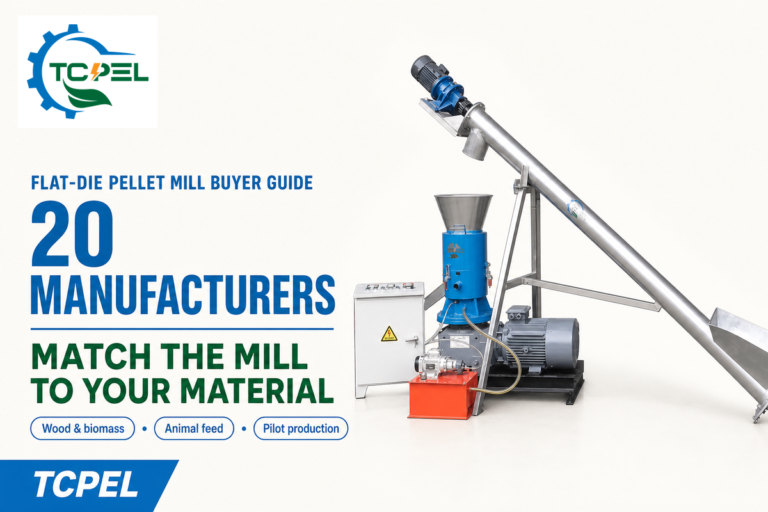
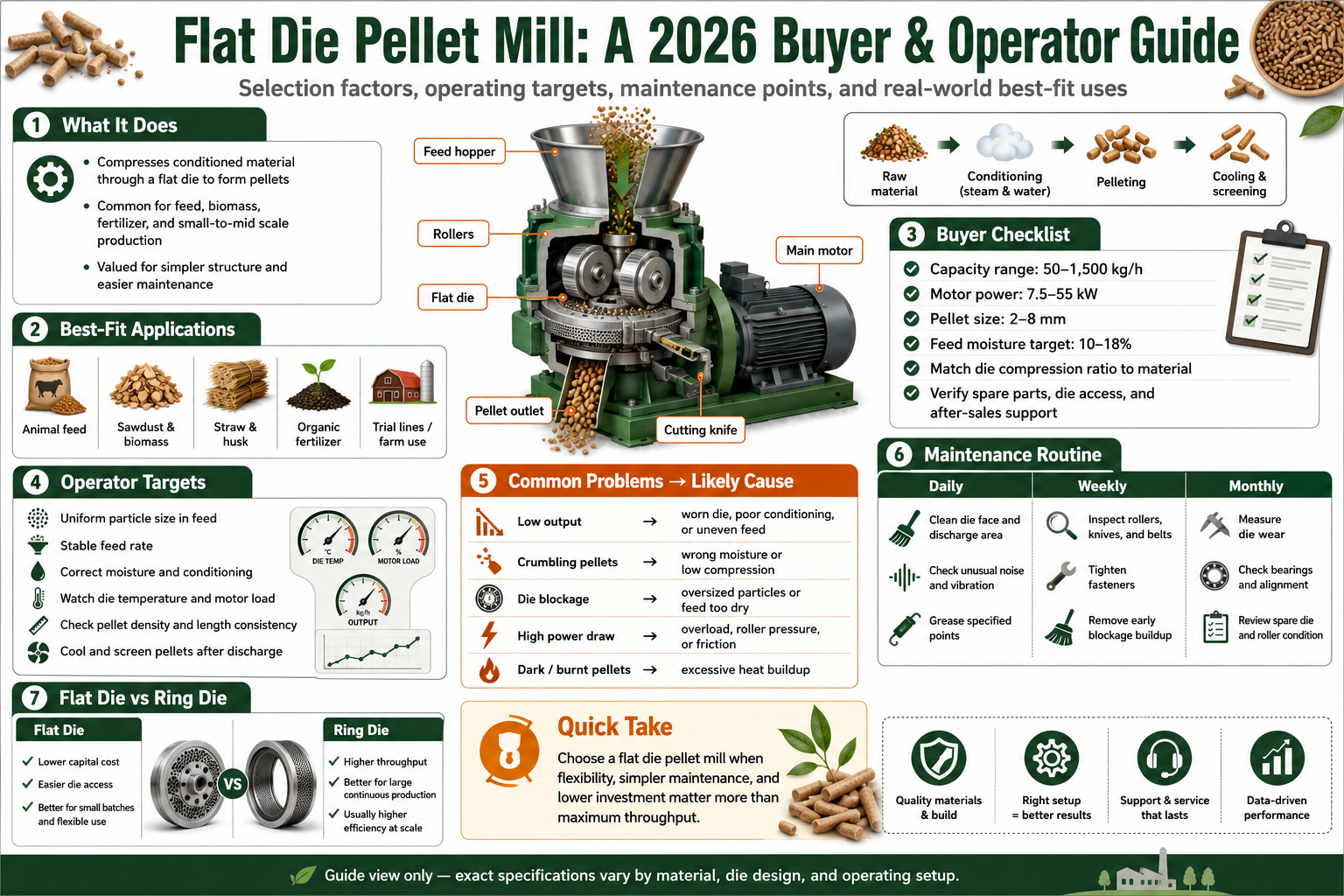
 Mesin pelet flat die adalah mesin pelet dengan die bundar dan datar yang diposisikan secara horizontal, sementara roller menekan biomassa olahan melewati lubang-lubang pada pelat die. Flat die memiliki sejumlah lubang untuk mengolah bahan bakar; secara mekanis, terdapat dua konfigurasi yang digunakan untuk mengubah biomassa menjadi pelet, yaitu die atau roller berputar mengelilingi komponen lainnya. Gesekan bahan saat melewati lubang die menghasilkan panas yang memadai (70-90 C di dalam ruang mesin pelet), sehingga lignin meleleh dan melunak untuk menghasilkan keluaran yang seragam. Selanjutnya, sebuah pisau memotong untaian yang keluar secara kontinu sesuai panjang yang diinginkan.
Itulah prinsip dasarnya. Tanpa injeksi uap, tanpa kompresi dua tahap, dan tanpa sirkulasi ulang bahan panas – kesederhanaan ini membuat format flat die sangat sesuai untuk produksi mikro. Sebaliknya, pada mesin ring die, die berbentuk silinder dipasang vertikal dengan roller bergerak di dalamnya dan bahan didorong keluar secara sentrifugal, sehingga kapasitas produksinya lebih tinggi dengan konsekuensi kebutuhan modal dan perawatan yang juga lebih besar.
Saat ini, ada tiga varian yang mendominasi pasar:
Mesin pelet flat die adalah mesin pelet dengan die bundar dan datar yang diposisikan secara horizontal, sementara roller menekan biomassa olahan melewati lubang-lubang pada pelat die. Flat die memiliki sejumlah lubang untuk mengolah bahan bakar; secara mekanis, terdapat dua konfigurasi yang digunakan untuk mengubah biomassa menjadi pelet, yaitu die atau roller berputar mengelilingi komponen lainnya. Gesekan bahan saat melewati lubang die menghasilkan panas yang memadai (70-90 C di dalam ruang mesin pelet), sehingga lignin meleleh dan melunak untuk menghasilkan keluaran yang seragam. Selanjutnya, sebuah pisau memotong untaian yang keluar secara kontinu sesuai panjang yang diinginkan.
Itulah prinsip dasarnya. Tanpa injeksi uap, tanpa kompresi dua tahap, dan tanpa sirkulasi ulang bahan panas – kesederhanaan ini membuat format flat die sangat sesuai untuk produksi mikro. Sebaliknya, pada mesin ring die, die berbentuk silinder dipasang vertikal dengan roller bergerak di dalamnya dan bahan didorong keluar secara sentrifugal, sehingga kapasitas produksinya lebih tinggi dengan konsekuensi kebutuhan modal dan perawatan yang juga lebih besar.
Saat ini, ada tiga varian yang mendominasi pasar:
- ✔ Mesin pelet flat die listrik cocok untuk bengkel, lini produksi dalam ruangan, dan lokasi mana pun yang memiliki pasokan listrik 3 fase stabil. Varian ini paling mudah dioperasikan dan paling senyap.
- ✔ Mesin pelet flat die diesel cocok untuk lokasi pedesaan dan operasi di luar jaringan listrik. Unit ini mandiri, tetapi memerlukan pengelolaan pasokan bahan bakar dan gas buang.
- ✔ Mesin pelet flat die PTO merupakan unit yang dipasang di lahan pertanian dan memperoleh tenaga dari poros PTO traktor. Tidak ada biaya bahan bakar atau listrik terpisah ketika traktor sudah beroperasi.
Mesin Pelet Flat Die vs Ring Die: Kapan Masing-Masing Lebih Unggul
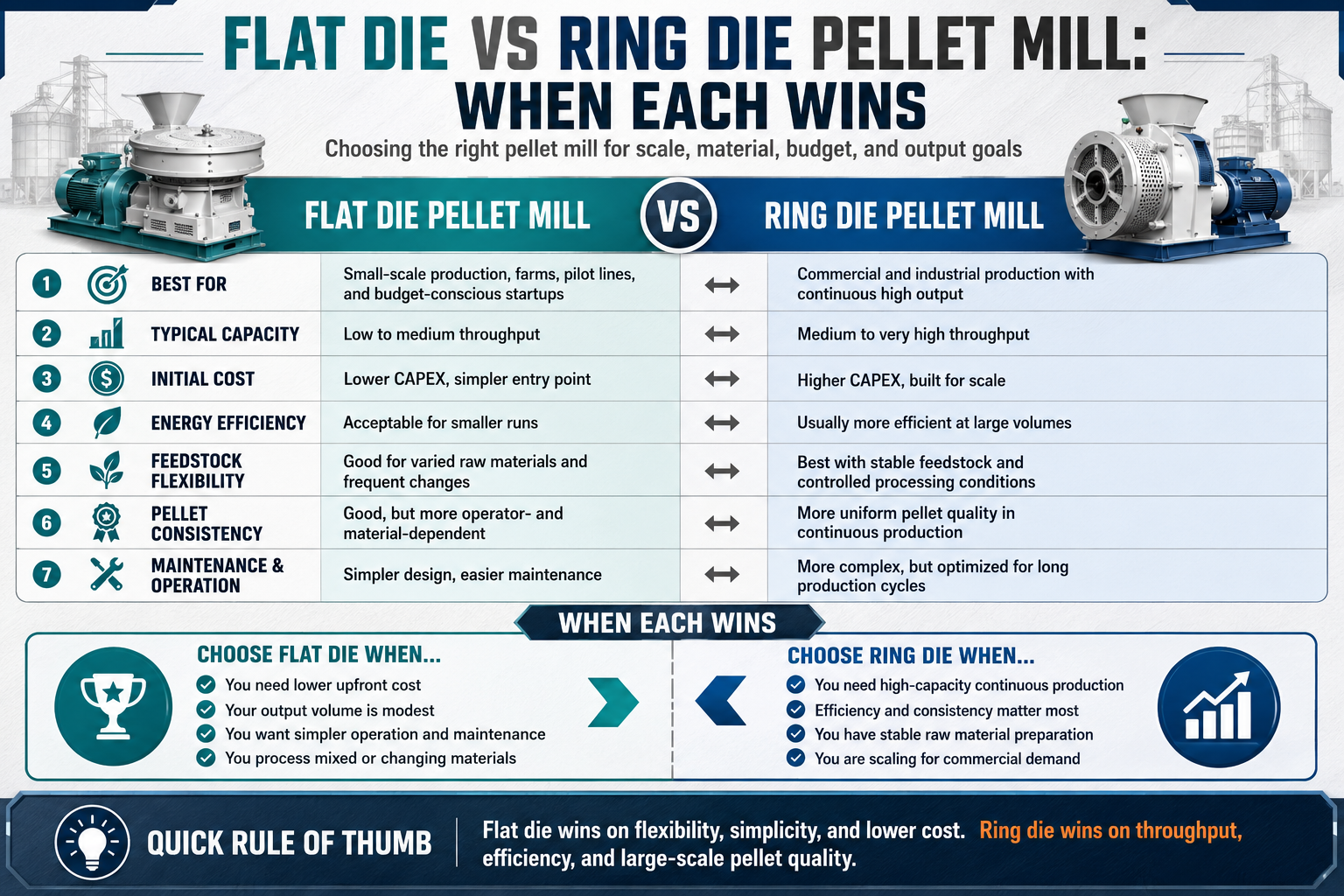 Perbandingan flat die dengan ring die merupakan keputusan penting pertama bagi setiap pembeli. Jawaban singkatnya: flat die unggul di bawah 1 ton per jam, sedangkan ring die unggul di atasnya. Jawaban yang lebih berguna memerlukan penilaian terhadap empat aspek yang membedakan kedua mesin tersebut, yaitu biaya modal, efisiensi energi, keausan die, dan kemampuan menangani berbagai bahan.
Apa perbedaan antara mesin pelet flat die dan ring die?
Keduanya memampatkan biomassa yang telah digiling melalui lubang die dengan gaya mekanis dari roller. Perbedaannya terletak pada geometri. Pada mesin flat die, die berbentuk lingkaran dipasang mendatar seperti piringan hitam di atas pemutar; roller memberikan tekanan ke bawah melalui lubang-lubang pada die. Sebaliknya, pada mesin ring die, die berbentuk silinder vertikal dan roller berputar di dalam silinder tersebut; distribusi bahan secara sentrifugal dan putaran mendorong bahan keluar melalui lubang radial pada die. Pengumpanan mandiri melalui lubang radial membuat mesin ring die menghasilkan kapasitas produksi sekitar tiga hingga empat kali lebih tinggi per unit daya motor dibandingkan flat die yang setara, dengan konsekuensi biaya modal yang lebih tinggi, perawatan yang lebih rumit, dan proses pembelajaran yang lebih sulit saat mengganti bahan. Kedua format dinilai berdasarkan spesifikasi pelet kayu ISO 17225-2:2021 yang sama, sehingga pemilihannya murni didasarkan pada keekonomian kapasitas produksi, bukan mutu keluaran. Di kalangan pemasok industri, kapasitas mesin ring die umumnya berkisar antara 300 hingga 4.000 kg/h, sedangkan flat die berkisar antara 40 hingga 1.100 kg/h.| Aspek | Mesin Pelet Flat Die | Mesin Pelet Ring Die |
|---|---|---|
| Rentang kapasitas produksi | 40–1.100 kg/h | 300–4.000+ kg/h |
| Pengumpanan | Pengumpanan gravitasi ke bagian atas die | Distribusi sentrifugal di dalam die |
| Biaya modal (USD, indikatif Mei 2026) | $1,500–$45,000 | $25,000–$250,000+ |
| Energi per ton | ~85 kWh/ton (lini kecil) | ~55–75 kWh/ton (industri) |
| Fleksibilitas bahan | Tinggi — pergantian bahan berlangsung cepat | Sedang — penggantian die lebih berat |
| Kerumitan perawatan | Rendah — die terlihat dan roller mudah dijangkau | Lebih tinggi — rongga tertutup |
| Paling sesuai untuk | Lini percontohan, peternakan, bengkel, R&D | Pabrik pelet industri, volume mutu ekspor |
Aturan pemilihan: flat die vs ring die
- Target produksi di bawah 1 t/h dan anggaran di bawah $50K → flat die hampir selalu lebih unggul.
- memerlukan ring die untuk kapasitas produksi 1-4 t/h dengan sertifikasi ENplus / PFI
- Pergantian bahan baku secara terus-menerus (pakan hari Senin, pelet kayu hari Rabu, pupuk hayati hari Jumat) – Flat die, penggantian die mudah;
- Produksi industri bermutu ekspor dengan satu ring die – penghematan energi menjadi signifikan dalam satu tahun.
Geometri Die: Diameter Lubang, Rasio Kompresi & Masa Pakai
Die mesin pelet adalah JANTUNG mesin pelet Anda; 2 hal menentukan kualitas bentuk pelet dan lamanya masa pakai die: diameter lubang DAN rasio kompresi. Jika pasangan yang dipilih tidak sesuai dengan bahan, mesin hanya akan menghasilkan debu dan serpihan rapuh (tekanan pada bahan tidak memadai), atau lubang akan tertutup oleh bahan yang meleleh dan motor akan macet. Hal ini berlaku untuk die pelet portabel berukuran kecil maupun die mesin pelet industri berukuran besar – hanya skalanya yang berbeda. Diameter lubang menentukan diameter pelet. Φ6 mm dan Φ8 mm merupakan ukuran utama untuk pelet kayu yang digunakan pada tungku rumah tangga; Φ4 mm paling banyak digunakan untuk pakan ternak karena ayam dan ternak kecil memerlukan pelet yang lebih kecil; Φ10–12 mm sesuai untuk beberapa aplikasi bahan bakar industri dan pupuk organik. Praktik industri umumnya menggunakan die dengan satu diameter lubang dan mengganti pelat die ketika ukuran pelet diubah.
📐 Catatan Teknis: rasio kompresi
Rasio kompresi = panjang lubang dibagi diameter lubang; diameter 6 mm x panjang 36 mm = rasio kompresi 6.1; rasio ini memengaruhi besarnya gesekan yang dialami bahan di dalam lubang die; bahan yang lebih keras mungkin memerlukan rasio lebih rendah, bukan lebih tinggi, meskipun secara intuitif hal itu terdengar tidak masuk akal. Ketika bahannya lebih keras, hambatan sudah ada sejak awal dan penambahan kompresi membuat roller tersendat serta berpotensi merusak die.
| Bahan | Ø lubang (mm) | Rasio kompresi | Catatan |
|---|---|---|---|
| Kayu lunak (pinus, cedar) | 6 atau 8 | 1:6 hingga 1:7 | Lignin tinggi; mudah mengalir; formulasi pelet rumah tangga standar |
| Kayu keras (oak, maple, beech) | 6 atau 8 | 1:4 hingga 1:5 | Bahan baku lebih padat; rasio lebih rendah mencegah mesin macet |
| Serbuk gergaji / serutan kayu | 6 | 1:5 hingga 1:6 | Ukuran partikel harus diturunkan hingga di bawah 5 mm sebelum peletisasi |
| Pakan ternak (jagung, bungkil kedelai) | 3 atau 4 | 1:8 hingga 1:12 | Campuran renggang; rasio tinggi menghasilkan pemadatan yang tepat |
| Jerami / rumput kering / rumput | 6 atau 8 | 1:6 hingga 1:8 | Lignin rendah; pengondisian bahan dengan uap sering diperlukan pada skala besar |
Perbandingan 4 Sumber Daya: Kartu Skor Pemilihan 4 Sistem Penggerak
 Mesin pelet dengan flat die tersedia dengan empat pilihan daya: motor listrik, diesel, PTO traktor, dan bensin. Meskipun tampak seperti perbandingan yang setara, ini bukan sekadar pemilihan fitur – pertimbangan utamanya adalah infrastruktur kelistrikan. Infrastruktur apa yang sudah tersedia di peternakan, dan bagaimana perbandingan antara biaya tambahan pemasangan dengan biaya pemindahan mesin?
| Sistem penggerak | kW umum | Biaya bahan bakar per ton | Modal (USD, Mei 2026) | Penggunaan paling sesuai |
|---|---|---|---|---|
| Listrik | 7.5 – 90 | Paling rendah jika tarif jaringan murah; meningkat mengikuti tarif industri | $2,000 – $30,000 | Bengkel dalam ruangan, jaringan 3 fase, sif berkelanjutan |
| Diesel | 11 – 30 (kW mesin) | Lebih tinggi; mengikuti harga diesel | $3,500 – $9,000 | Lokasi di luar jaringan listrik, semiportabel, dan pedesaan |
| PTO | 15 – 30 (PTO traktor) | Tidak memerlukan bahan bakar tambahan; traktor sudah tersedia di lokasi | $2.500 – $7.000 (mesin pelet saja) | Peternakan dengan traktor aktif; penggunaan portabel ringan |
| Bensin | 6 – 12 | Paling tinggi per kWh; hanya sesuai untuk produksi singkat | $1,500 – $3,500 | Proyek sangat kecil, produksi satu kelompok secara sesekali |
💡 Tips Profesional
Meskipun mesin PTO tampak paling murah pada lembar spesifikasi, pilihan ini hanya masuk akal jika traktor sudah berada di peternakan untuk menjalankan fungsi utamanya. Traktor 30 kW yang beroperasi enam jam setiap hari untuk menggerakkan mesin pelet menghabiskan diesel kurang lebih sebanyak mesin pelet diesel mandiri dengan daya kW yang setara. Penghematan PTO yang sebenarnya berasal dari tidak perlunya menghadirkan jaringan listrik 3 fase ke lokasi pedesaan — biaya perluasan jaringannya dapat mencapai $5.000–$15.000 per kilometer.
Bahan yang Dapat (dan Tidak Dapat) Anda Olah Menjadi Pelet
Kesalahan terbesar yang dilakukan pengguna baru adalah tidak menyadari bahwa mesin pelet flat die tidak dapat diisi dengan sembarang biomassa yang muat di corong pengumpan. Mesin ini memang tidak dirancang untuk menangani beragam karakteristik bahan baku seperti yang dapat diproses sistem lain. Kadar air, kandungan lignin, dan ukuran partikel harus berada dalam rentang operasi yang sempit – dan pada skala kecil hingga menengah, flat die memiliki toleransi terhadap variasi yang lebih rendah dibandingkan pabrik ring die dengan pengondisian bahan menggunakan uap.Dapatkah mesin pelet flat die menghasilkan pelet kayu keras dan kayu lunak?
Ya, dengan dua penyesuaian. Pertama, rasio kompresi die berbeda (1:4 hingga 1:5 untuk kayu keras, 1:6 hingga 1:7 untuk kayu lunak, lihat tabel geometri die di atas). Kedua, kayu keras sering memberikan hasil lebih baik dengan target kadar air bahan yang sedikit lebih rendah, sekitar 10–12%, karena serat yang lebih padat menahan lebih sedikit air sebelum suhu ekstrusi meningkat melampaui rentang pelunakan lignin. Banyak operator kecil menggunakan die tetap Φ6 mm dengan rasio 1:5 dan menerima pelet kayu lunak yang sedikit lebih renggang agar tidak perlu memelihara dua die. Ini merupakan kompromi yang wajar jika indeks ketahanan pelet (PDI) untuk aplikasi Anda mengizinkannya.| Bahan | Target kadar air | Lignin / bahan pengikat | Prapengolahan |
|---|---|---|---|
| Serbuk gergaji pinus / spruce | 10–13% | 25–35% lignin; tanpa bahan pengikat | Giling hingga <5 mm; keringkan jika berasal dari penggergajian kayu segar |
| Kayu ek / mapel / beech | 10–12% | 18–25% lignin; tanpa bahan pengikat | Giling hingga <4 mm; periksa kadar air dua kali setiap sif |
| Jerami gandum / jagung | 12–15% | Rendah; pertimbangkan 1–3% molase atau pati | Olah dengan hammer mill hingga panjang serat <6 mm |
| Alfalfa / rumput kering | 13–16% | Memiliki daya ikat alami dari protein | Potong dan hancurkan; pengondisian bahan dengan panas lebih disarankan |
| Pakan ternak (jagung + kedelai) | 12–14% | Pati berfungsi sebagai bahan pengikat alami | Campurkan bahan berbentuk mash; upayakan ukuran partikel yang seragam |
| Pakan ikan (pelet tenggelam) | 14–16% | Sering dikondisikan dengan uap untuk jenis pelet terapung | Pelet pakan ikan memerlukan keseragaman partikel yang lebih ketat dan lubang die lebih kecil (Φ2–Φ3 mm) untuk benih ikan; ekstruder khusus terkadang lebih disarankan untuk pakan terapung |
| Sekam padi | 10–12% | Kandungan silika tinggi; mempercepat keausan die | Terima pengurangan masa pakai die sebesar ~50% |
| Bambu | 10–13% | Dapat diolah | Lakukan penggilingan awal secara intensif (sangat berserat) |
| Pupuk organik (kotoran ternak) | 15–20% | Sering memerlukan bahan pengikat berupa pati atau bentonit | Keringkan terlebih dahulu hingga mencapai target kadar air; granulometri sangat penting |
📐 Catatan Teknis: Rentang Ideal Kadar Air 15%
Bahan yang umumnya tidak kami rekomendasikan untuk flat die: serbuk gergaji basah (kadar air di atas 30%, harus dikeringkan terlebih dahulu); serpihan kayu utuh (memerlukan hammer mill di tahap hulu); limbah yang terkontaminasi plastik (meleleh pada die dan merusak bantalan roller); kotoran ternak basah (harus dikeringkan sebagian sebelum peletisasi). Untuk melihat bagan kompatibilitas yang lebih lengkap dan sesuai dengan model flat die TCPEL tertentu, lihat daftar kompatibilitas bahan di halaman mesin flat die TCPEL.
Idealnya, jika Anda mengolah banyak jenis tanaman berkayu dengan sistem flat die, kadar air harus berada dalam rentang 10%-15% – anggaplah ini sebagai Rentang Ideal Kadar Air 15%. Kadar air di atas 18% menyebabkan bahan lengket pada dinding die dan menyumbat lubang die. Jika kurang dari 8%, bubuk tidak dapat menyatu karena setelah dipanaskan oleh gesekan hingga melewati suhu transisi kaca ligninnya (- 140 C), bahan tersebut tidak memiliki daya kohesi yang diperlukan untuk membentuk pelet dengan benar. Ada satu pengecualian: Sebuah studi 2016 di National Library of medicine menunjukkan bahwa residu pertanian dengan kadar air lebih tinggi (melampaui tingkat yang biasanya dapat diterima) dapat dibuat menjadi pelet yang kuat menggunakan bahan pengikat (dalam kasus ini, pati jagung) dengan energi motor yang lebih rendah. Jika kondisi ini sesuai dengan operasi harian Anda, gunakan bahan pengikat berbiaya rendah dan investasi tersebut akan kembali melalui penghematan energi motor.
Penentuan Kapasitas Produksi: Tingkat Kapasitas 50/200/500
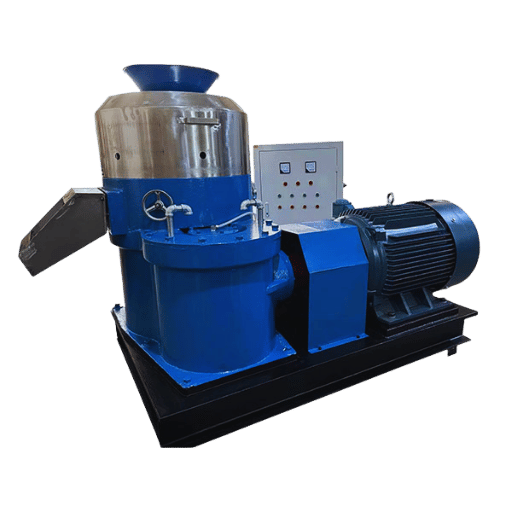 Mesin pelet flat die terbagi menjadi 3 kelompok kapasitas yang praktis. Dalam setiap kelompok, pemasok dapat menggunakan penamaan model yang berbeda, tetapi aspek teknis dan pertanyaan keputusan pembeli selanjutnya sangat serupa. Mari kita sebut kelompok tersebut sebagai Tingkat Kapasitas 50/200/500:
50–150 kg/h
Tingkat 1: Rumahan & percontohan
Ukuran motor 7.5 hingga 15 kW. Ukuran die 150 hingga 200 mm. Dapat dioperasikan oleh satu operator. Berat mesin sekitar 300 hingga 700 kg. Penggunaan umum – pemanas rumah, produksi pelet, produksi pakan skala hobi, pelet pupuk untuk pertanian kecil, atau percontohan untuk mengevaluasi bahan baru.
200–400 kg/h
Tingkat 2: Komersial kecil
Motor 22-30 kW. Die 200-300mm dengan rentang berat 750-1,250Kg. Produksi bengkel untuk dijual kepada penjual tungku lokal, peternakan yang lebih besar di wilayah tersebut untuk memberi pakan ternak, serta koperasi untuk mengolah limbah anggotanya agar dapat dimanfaatkan kembali di lahan.
500–1.000+ kg/h
Tingkat 3: Industri kecil
Motor 45-90 kW. Cetakan tekan 350-550 mm. 1.500 kg+ Batas terluar area penggunaan flat die, tempat mesin ring die mulai lebih masuk akal secara ekonomi. Biasanya digunakan pada lini skala kecil (misalnya dengan hammer mill, mesin pengering, mesin pendingin pelet, dan mesin pengemas sebagai lini produksi pelet lengkap).
Mesin Pelet Rakitan Sendiri: Kapan Rencana DIY Masuk Akal (dan Kapan Tidak)
 Rencana gratis untuk membuat mesin pelet sendiri beredar di berbagai forum pertanian dan situs hobi. Rencana ini menarik bagi orang-orang yang terdorong untuk membuat sendiri troli las atau dudukan gergaji pita karena alasan biaya, kendali, dan kepuasan menggunakan mesin yang benar-benar mereka pahami. Untuk mesin pelet, penilaian jujur kami tidak sepenuhnya positif maupun negatif.
✔ Kapan DIY masuk akal
- Kapasitas produksi di bawah 50 kg/h untuk penggunaan sesekali (pakan ayam, pelet mulsa kebun)
- Anda memiliki mesin bubut logam, memahami teknik pengelasan, dan memiliki tungku perlakuan panas.
- Bahannya mudah diolah – bukan biomassa abrasif seperti tepung jagung atau campuran pakan lunak.
- Mesin pelet dibuat sebagai proyek pembelajaran, bukan pusat laba
⚠ Kapan mesin buatan pabrik lebih unggul
- Fabrikasi merupakan tahap tersulit – forum masinis menyebutkan bahwa baja D-2 “sulit ditangani selama penggilingan” dan menyarankan “selesaikan semua pekerjaan sebelum perlakuan panas, lalu giling die yang telah dikeraskan secukupnya hanya untuk meratakannya”
- Mengebor 300+ lubang bertoleransi ketat pada pelat die yang telah dikeraskan memerlukan waktu berhari-hari
- Penyelarasan bantalan pada rakitan roller tidak menoleransi kesalahan – ketidakselarasan sebesar 0,5 mm menyebabkan kepadatan pelet tidak merata dan memperpendek masa pakai die
- Semua unit yang dijual atau digunakan secara komersial memerlukan sertifikasi CE, UL, atau sertifikasi keselamatan listrik setempat – unit DIY tidak dapat memperolehnya
Cara Membuat Pelet: Proses 5 Langkah
 Baik Anda melakukan peletisasi serbuk gergaji pinus untuk tungku kayu, alfalfa untuk kambing, maupun sekam padi untuk bahan bakar boiler, alur prosesnya terdiri dari lima langkah yang sama. Jika salah satu langkah dilewati atau dipersingkat, mutu pelet akan menurun.
Bagaimana cara mengolah limbah pertanian menjadi pelet bahan bakar?
Ada 5 langkah yang perlu diterapkan. Limbah pertanian, batang jagung, jerami gandum, sekam padi, dan ampas tebu memerlukan perhatian lebih pada langkah 1 dan 2 (pengeringan dan penggilingan) karena material yang dikumpulkan dari lahan memiliki kadar air dan panjang serat yang bervariasi. Penambahan bahan pengikat pada langkah 3 (biasanya pati jagung sebanyak 1–3%) meningkatkan ketahanan pelet biomassa berlignin rendah; penelitian U.S. National Library of Medicine tahun 2016 menunjukkan bahwa cara ini dapat meningkatkan ketahanan pelet sekaligus menurunkan konsumsi energi motor.- Keringkan. Biomassa mentah yang berasal dari hutan, pabrik, atau lahan biasanya memiliki kadar air 25-55%. Gunakan mesin rotary dryer atau area penjemuran untuk menurunkannya menjadi 12-18% sebelum penggilingan. Pengeringan setelah penggilingan memboroskan energi karena partikel yang lebih kecil mengering lebih cepat daripada kemampuan mesin pengering membuang panas.
- Giling. Gunakan hammer mill untuk memperkecil ukuran partikel kayu hingga di bawah 5 mm, kayu keras hingga di bawah 4 mm, dan panjang serat jerami hingga di bawah 6 mm. Partikel yang lebih besar dapat membentuk sumbatan di dalam lubang cetakan tekan dan menyebabkan kemacetan; partikel yang lebih halus memboroskan energi hammer mill dan menyebabkan panas berlebih pada peralatan hilir.
- Kondisikan. Sesuaikan kadar air ke kisaran optimal 10-15% (15-18% untuk residu pertanian berlignin rendah). Jika material terlalu kering, semprotkan kabut air halus dan biarkan kadar airnya merata selama 20-30 menit. Jika terlalu basah, campurkan material kering atau angin-anginkan. Tambahkan bahan pengikat jika diperlukan (1-3% molase atau pati untuk jerami, rumput kering, dan pupuk kandang).
- Lakukan peletisasi. Masukkan bahan dengan laju stabil yang menjaga motor pada 70–85% dari beban nominal. Dengarkan suara motor, suara denging yang meninggi menandakan kemacetan akan segera terjadi, sedangkan suara geraman rendah dan berat menandakan pasokan bahan berlebihan. Suhu cetakan tekan mencapai 70–95°C saat kondisi stabil; dalam 10 menit pertama penyalaan dingin, pelet yang dihasilkan masih rapuh sementara cetakan tekan memanas.
- Dinginkan & saring. Pelet baru keluar dari cetakan tekan pada suhu 80–95°C dan kadar air 13–17%; pelet masih cukup lunak untuk diremukkan dengan tangan. Dinginkan hingga mencapai suhu sekitar menggunakan mesin pendingin pelet aliran berlawanan selama 8–15 menit, lalu saring partikel halus (biasanya 1–4% dari kapasitas produksi). Pelet akhir harus memiliki kadar air 10–12%, keras, dan tahan lama.
Membeli Mesin Pelet Tipe Flat Die: Tingkat Harga & Verifikasi Pemasok
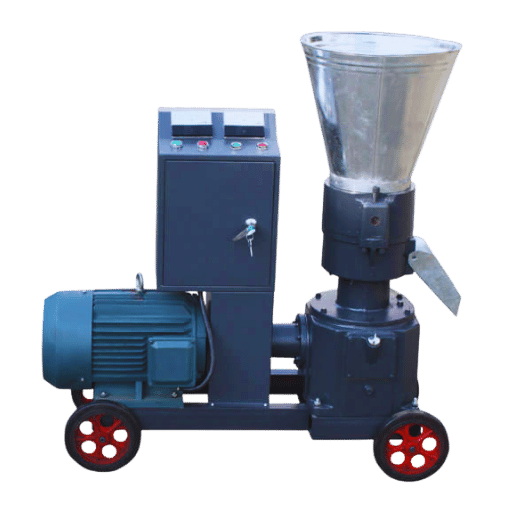 Harga mesin pelet flat die tidak transparan karena bergantung pada pilihan merek motor, paduan cetakan tekan, kualitas rangka, ketentuan pengiriman, dan layanan purnajual. Sebagai panduan tolok ukur semata untuk tingkat harga eks pabrik di Tiongkok pada Mei 2026 (negara asal semua mesin impor berukuran kecil hingga menengah): 3 tingkat di atas secara umum sesuai dengan
| Tingkat | Kapasitas produksi | Perkiraan harga (USD, Mei 2026) | Pola MOQ |
|---|---|---|---|
| Pemula (Tingkat 1) | 50–150 kg/jam | $1,500–$4,000 | 1 unit; banyak pemasok menyediakan stok |
| Menengah (Tingkat 2) | 200–400 kg/jam | $4,000–$12,000 | 1 unit; waktu tunggu 2–4 minggu jika dibuat khusus |
| Industri (Tingkat 3) | 500–1.000+ kg/jam | $12,000–$45,000 | 1 unit; waktu tunggu 4–8 minggu; paket lini dapat dinegosiasikan |
Harga tersebut merupakan kisaran indikatif dari pemasok per Mei 2026 dan mungkin tidak mencerminkan kondisi pasar saat ini, mintalah penawaran harga tertulis bertanggal dalam 30 hari terakhir sebelum melakukan pemesanan. Biaya pengiriman, bea masuk, dan pemasangan tidak termasuk.
Daftar Periksa Verifikasi Pemasok (8 poin)
Jika Anda ingin membandingkan spesifikasi mesin pelet tipe flat die TCPEL dengan daftar periksa ini, halaman produk kami mencantumkan pilihan motor, diameter cetakan tekan, ketersediaan MTC, dan cakupan dukungan purnajual untuk pasar ekspor yang kami layani.
- Sertifikat Uji Material (MTC) untuk paduan cetakan tekan, 20CrMnTi atau yang setara, dengan kekerasan HRC 55–60
- Sertifikat merek motor & faktor daya merek motor ternama dengan spesifikasi kW + RPM yang terdokumentasi
- Penandaan CE, UL, atau keselamatan listrik setempat sebagaimana diwajibkan di negara Anda
- Ketersediaan cetakan tekan cadangan pastikan pemasok menyediakan stok cetakan tekan Φ4 / Φ6 / Φ8 beserta waktu pengirimannya
- Waktu tunggu secara tertulis, serta klausul penalti untuk keterlambatan besar
- Kontak purnajual di zona waktu Anda, dengan tanggapan melalui WhatsApp / WeChat / email dalam 24 jam selama jam kerja
- Pelanggan referensi di negara atau wilayah Anda, setidaknya dua pihak yang dapat Anda hubungi secara langsung
- Ketentuan pembayaran jangan pernah membayar 100% di muka; uang muka 30%, lalu 70% sebelum pengiriman atau setelah dokumen diterima merupakan standar industri
Perawatan, Keausan Cetakan Tekan & Indeks Ketahanan Pelet (PDI)
 Indikator objektif untuk kualitas pelet adalah Indeks Ketahanan Pelet (PDI), dan pembeli komersial di Eropa, Amerika Utara, serta semakin banyak di Asia secara khusus memintanya. Prosedur PDI ditetapkan dalam berbagai standar resmi, dengan ISO 17831-1:2015 sebagai standar terbaru di Eropa, sedangkan pengujiannya menggunakan perangkat standar seperti alat uji portabel Holmen NHP100, yang meniup sampel terukur dengan udara bertekanan 70 mBar selama satu menit, lalu menghitung jumlah pelet utuh yang tersisa.
Pelet kayu premium ENplus A1 harus mencapai PDI minimal 98% sesuai ISO 17831-1. Dalam praktiknya, mesin pelet tipe flat die dengan pengondisian yang baik, menggunakan kayu lunak bersih dan kadar air yang tepat, akan mencapai PDI 96–98%. Nilai di bawah 90% menandakan keausan cetakan tekan, kadar air di luar kisaran, atau ukuran partikel yang terlalu kasar. Ditinjau oleh tim teknis TCPEL, Mei 2026Tiga skema sertifikasi mendominasi pasar pelet kayu, dan ketiganya TIDAK dapat saling menggantikan. ENplus (dikelola oleh European Pellet Council) memimpin pasar pemanas Uni Eropa dan kini mencakup pedagang serta pelacakan emisi di seluruh rantai pasok; PFI (Pellet Fuels Institute) merupakan standar perumahan Amerika Serikat dengan kelas Premium / Standard / Utility; DINplus merupakan varian ENplus dari Jerman. Ketiganya mengacu pada ISO 17225-2:2021, yaitu spesifikasi internasional untuk pelet kayu, yang menaikkan batas ketahanan abrasi Kelas A1 menjadi 98%, menurunkan kadar abu Kelas A2 dari 1,5% menjadi 1,2%, dan menambahkan perilaku pelelehan abu sebagai parameter normatif. Jika Anda menjual ke beberapa wilayah, rencanakan untuk memenuhi lebih dari satu skema.
| Tugas perawatan | Interval | Alasan |
|---|---|---|
| Pemeriksaan visual lubang cetakan tekan | Setiap 50 jam | Mendeteksi lubang yang berubah oval dan keausan tidak merata sebelum kualitas pelet menurun |
| Pelumasan bantalan roller | Setiap 100 jam | Gunakan gemuk suhu tinggi; bantalan yang kekurangan gemuk akan macet dan cepat macet |
| Rotasi / pembalikan cetakan tekan | Setiap 400 jam (jika simetris) | Menggandakan masa pakai efektif cetakan tekan dengan meratakan pola keausan |
| Sampel uji PDI | Setiap giliran kerja atau setiap satu kelompok produksi | Mendeteksi penyimpangan kualitas sebelum produk sampai ke pelanggan |
| Penggantian cetakan tekan | 800–1.500 jam untuk kayu lunak; 300–500 jam untuk sekam padi | Lubang berubah oval, kompresi menurun, dan energi per ton meningkat |
⚠️ Penting: tiga jenis kegagalan yang perlu didiagnosis
Tidak ada pelet sama sekali – material masuk, tetapi hanya serbuk yang keluar dari bagian bawah cetakan tekan. Penyebab: kadar air terlalu rendah, atau rasio kompresi cetakan tekan terlalu rendah untuk material tersebut. Solusi: Semprotkan kabut air dalam jumlah banyak, diamkan di tempat selama 20 menit, lalu coba kembali. Jika tidak ada perbaikan, ganti dengan cetakan tekan yang lebih agresif.
374) Pelet lunak/rapuh Pelet terbentuk, tetapi kemudian hancur. Penyebab: Kadar air terlalu tinggi, hasil penggilingan terlalu kasar, suhu cetakan tekan belum mencapai suhu kerja. Solusi: keringkan hingga tingkat 2-3 %, periksa ukuran saringan mesin, panaskan mesin selama setidaknya 10 menit sebelum melakukan evaluasi.
Panas berlebih & amp; motor macet – Mesin melambat dan berhenti dengan sendirinya. Gejala:Laju pemasukan terlalu cepat, bahan pakan terlalu kering (gesekan lebih tinggi),lubang cetakan tekan tersumbat sebagian. Perbaikan:Kurangi laju pemasukan sebesar 30%, pantau kadar air, dan jalankan siklus pembersihan menggunakan material dengan densitas curah rendah.
Prospek Industri 2026: Arah Perkembangan Pasar Mesin Pelet Biomassa
Berikut dua hal yang terjadi pada 2026 yang akan mengubah jadwal pembelian Anda jika membeli atau mengganti mesin pelet tipe flat die. Pertama, regulasi. EU Renewable Energy Directive III (RED III) mencapai tanggal kepatuhan wajib pada 1 Januari 2026. Fasilitas biomassa yang menjual ke pasar Uni Eropa harus memenuhi kriteria keberlanjutan dan penghematan gas rumah kaca yang diperketat pada tanggal tersebut; skema sertifikasi yang disetujui oleh European Commission merupakan jalur praktisnya. Klausul pengecualian mempertahankan fasilitas lama di bawah aturan RED II hingga 31 Desember 2030, tetapi pelaku baru dan setiap fasilitas yang tidak memperoleh pengecualian harus segera memenuhi persyaratan. Jika Anda memasok pelet ke Eropa, proses sertifikasi harus dimulai sekarang, bukan setelah tenggat waktu. Kedua, teknologi. Pelet kayu tertorefaksi, yaitu biomassa yang dipanaskan hingga 250–300°C dalam atmosfer inert sebelum peletisasi, sedang beralih dari tahap penelitian ke skala industri. NTPC India membuka fasilitas pelet tertorefaksi berskala besar pertama di negara tersebut di Talwandi Sabo pada April 2025, dengan mandat nasional yang menargetkan 50 juta ton per tahun. Secara global, pelet tertorefaksi diperkirakan mewakili 15% dari volume segmen premium pada 2025, sedangkan proses terintegrasi torefaksi-densifikasi menargetkan penggantian batu bara secara langsung untuk pembangkit listrik. Data USDA Foreign Agricultural Service menunjukkan bahwa konsumsi pelet Uni Eropa diperkirakan pulih pada 2025 setelah menurun pada 2023–2024, didorong oleh pulihnya permintaan rumah tangga dan industri secara bersamaan. Khusus untuk pembelian peralatan tipe flat die, sebagian besar lini modern masih melakukan peletisasi konvensional, tetapi pemasok ke pasar ekspor semakin sering menyertakan tahap torefaksi terintegrasi saat menerima pesanan lini baru. Aktivitas paten pada aspek geometri cetakan tekan dalam proses peletisasi itu sendiri telah mendatar selama sekitar 2 hingga 3 tahun terakhir, dengan sebagian besar kegiatan R&D beralih ke proses torefaksi di bagian awal dan pengendalian proses di bagian akhir.💡 Kiat Profesional — waktu pengadaan
Jika merencanakan pembangunan lini untuk 2026 – mulailah proses pemilihan pemasok Anda (Q1), lalu lakukan pemesanan (Q2) agar jauh mendahului perlambatan selama liburan musim panas dan peralatan sudah berada di lokasi jauh sebelum musim pemanasan pada musim gugur. Permintaan pelet kayu Amerika Utara diperkirakan tumbuh dengan CAGR 4,9% hingga 2035 – dengan demikian, pemesanan pada 2026 memastikan 10+ tahun pertumbuhan permintaan.
Pertanyaan yang Sering Diajukan
T: Bagaimana cara mencegah mesin pelet saya macet?
Lihat Jawaban
Kayu harus dipertahankan pada kadar air antara 10-15 %, dimasukkan pada beban antara 70-85 % dari kapasitas motor, dan digiling hingga di bawah 5 mm sebelum dimasukkan ke mesin pres pelet. Panaskan terlebih dahulu cetakan tekan Anda selama beberapa menit sebelum menilai kualitas akhir pelet dan pantau beban motor dengan saksama – suara denging motor yang semakin meninggi akibat beban berlebih merupakan tanda yang sangat jelas bahwa motor harus dimatikan dan disetel ulang untuk mencegahnya terbakar.
T: Apakah saya perlu menambahkan bahan pengikat ke bahan baku?
Lihat Jawaban
Umumnya tidak, jika menggunakan kayu (kayu keras atau kayu lunak), karena lignin alami akan aktif akibat panas cetakan tekan dan berfungsi sebagai bahan pengikat. Penambahan 1-3% pati biji-bijian atau molase sangat meningkatkan keutuhan pelet pada biomassa yang kurang tahan dan lebih berserat seperti rumput, rumput kering, jerami, dan pupuk kandang organik, sebagaimana ditunjukkan oleh artikel U.S. National Library of Medicine pada April 2016 yang memperlihatkan penurunan konsumsi daya motor saat peletisasi menggunakan bahan pengikat pati jagung dibandingkan dengan pengolahan batang jagung secara normal.
T: Bagaimana cara merawat mesin pelet listrik tipe flat die?
Lihat Jawaban
Lakukan pemeriksaan visual pada cetakan tekan setiap 50 jam penggunaan; lumasi bantalan roller dengan gemuk yang sesuai setiap 100 jam pengoperasian; balikkan cetakan tekan setelah sekitar 400 jam untuk memastikan laju keausan yang merata, dan ambil sampel kualitas dari cetakan tekan pelet setidaknya sekali setiap giliran kerja. Perkiraan masa pakai efektif cetakan tekan kayu berkisar dari 300-500 jam untuk beberapa bahan pakan abrasif, 800-1.500 jam untuk kayu lunak dan pertahankan tingkat pelumasan yang memadai pada unit roda gigi reduksi serta dengarkan getaran abnormal saat mempercepat putaran mesin.
T: Mengapa pelet saya tidak terbentuk dengan baik?
Lihat Jawaban
Pembentukan pelet memiliki tiga jenis kegagalan. Pertama, tidak ada pelet — hanya serbuk yang keluar dari cetakan tekan: kadar air terlalu rendah atau rasio kompresi tidak sesuai. Kedua, pelet langsung hancur: kadar air terlalu tinggi, cetakan tekan belum mencapai suhu operasi, atau ukuran partikel terlalu kasar. Ketiga, motor bekerja berat lalu macet: laju pemasukan terlalu tinggi atau lubang cetakan tekan tersumbat sebagian. Urutan diagnosis selalu (1) periksa kadar air dengan alat ukur, (2) pastikan ukuran saringan hammer mill, (3) pastikan cetakan tekan telah mencapai 70–95°C, dan baru setelah itu periksa keausan mekanis. Sebagian besar keluhan mengenai “pelet gagal” disebabkan oleh persiapan material, bukan oleh mesin itu sendiri.
T: Berapa kapasitas produksi umum mesin pelet kayu listrik tipe flat die?
Lihat Jawaban
Umumnya, pabrik pelet kayu listrik tipe flat die akan beroperasi pada laju berikut, bergantung pada daya motor. Mesin kecil 7,5 kW akan menghasilkan sekitar 100 – 150 kg/jam; mesin berukuran menengah 22 kW akan memproses sekitar 250-300 kg/jam dan mesin pres pelet komersial besar 90 kW akan mencapai lebih dari 700-900 kg per jam untuk kayu. Kapasitas Pelet Pakan harus dianggap sekitar dua kali lipat Kapasitas Pelet Kayu pada sebuah mesin.
T: Dapatkah saya mengubah ukuran pelet dengan mesin yang sama?
Lihat Jawaban
Ya — ganti pelat cetakan tekan. Sebagian besar mesin dapat menggunakan cetakan tekan Φ2 hingga Φ12 mm pada rangka yang sama; sediakan waktu 30–60 menit untuk setiap penggantian.
Referensi & Sumber
- ISO 17225-2:2021, Bahan bakar nabati padat, spesifikasi dan kelas bahan bakar, Bagian 2: Pelet kayu berkelasInternational Organization for Standardization
- Metode untuk Memproduksi Pelet Tahan Lama dengan Konsumsi Energi Lebih Rendah Menggunakan Batang Jagung Berkadar Air Tinggi dan Bahan Pengikat Pati Jagung dalam Mesin Pelet Tipe Flat DieU.S. National Library of Medicine / NCBI
- Penggunaan empat mesin pelet tipe flat die dengan kapasitas berbeda untuk memperoleh pelet terbaik dari limbah tongkol jagungBioResources / North Carolina State University
- Penilaian Sifat Fisik dan Energetik Pelet Bahan Bakar yang Dibuat dari Biomassa Limbah SageUniversity of Warmia and Mazury (via PMC NCBI)
- Dokumen kriteria keberlanjutan EU RED III (Renewable Energy Directive III)Sustainable Biomass Program
- Laporan Tahunan Pelet Kayu Uni Eropa 2025USDA Foreign Agricultural Service GAIN
- Skema Mutu ENplusEuropean Pellet Council
- USPTO US20080290548A1, Cetakan tekan mesin pelet dan proses peletisasiUnited States Patent and Trademark Office
- Perbandingan Spesifikasi & Metode PeletBiomass Magazine
- Alat Uji Ketahanan Pelet Holmen NHP100 (sesuai ISO 17831-1)TEKPRO Limited
Tentang Panduan Mesin Pelet Tipe Flat Die Ini
Artikel ini ditinjau oleh teknisi TCPEL di Jinan, Shandong, tempat mesin pelet tipe flat die diproduksi sejak 2020 dan diekspor ke >60 negara. Nilai rasio kompresi, kisaran kadar air yang dapat diterapkan, serta kisaran kapasitas produksi kami (50, 200, 500 kg/jam) merupakan kondisi operasi yang kami lihat digunakan pelanggan di lapangan – divalidasi oleh ISO 17225-2:2021, makalah penelitian batang jagung PMC NCBI, serta praktik sertifikasi standar pelet ENplus / DINplus / PFI saat ini.
Rekomendasi kami diperbarui ketika standar utama baru diterbitkan atau telemetri pelanggan menunjukkan perubahan pada kondisi operasi yang direkomendasikan.Artikel Terkait
- Solusi Mesin Pelet Tipe Flat Die TCPELlini produk lengkap, pilihan listrik / diesel / PTO
- Mesin pelet tipe ring die untuk lini produksi industri (segera hadir)
- Penentuan kapasitas mesin pendingin pelet dan desain aliran berlawanan (segera hadir)
- Hammer mill di bagian awal lini produksi pelet, target ukuran partikel (segera hadir)
- Penyesuaian mesin rotary dryer untuk bahan baku biomassa (segera hadir)
Memerlukan mesin pelet tipe flat die dengan spesifikasi yang sesuai untuk material dan kapasitas produksi Anda?
Beri tahu kami jenis bahan baku, target kapasitas produksi, dan infrastruktur listrik Anda, lalu kami akan menanggapi dalam 1 hari kerja dengan ukuran motor yang diperlukan, geometri cetakan tekan, dan proposal tertulis.
Minta Penawaran Harga Mesin Pelet Tipe Flat Die →