Hubungi TCPEL

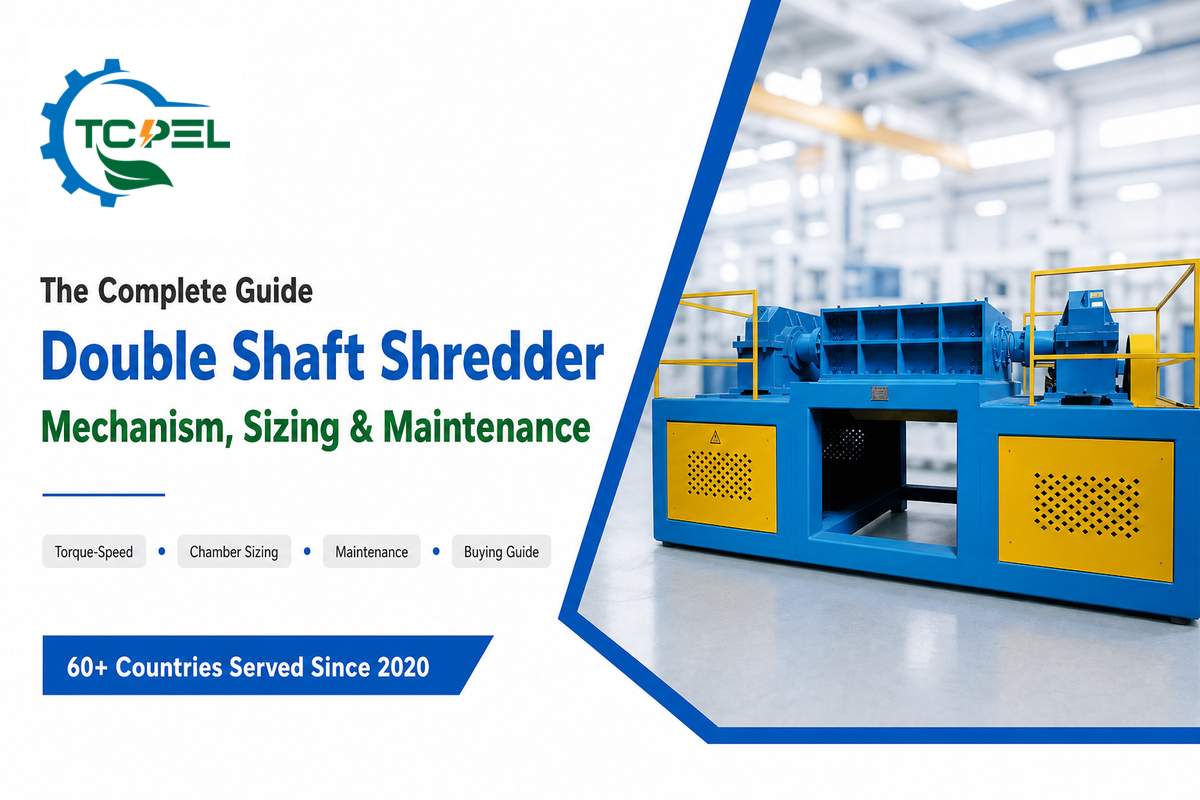
Mesin shredder dua poros adalah mesin industri untuk pengecilan ukuran yang mencabik bahan di antara dua poros pemotong berkecepatan rendah yang berputar berlawanan arah dengan torsi tinggi, alih-alih mengirisnya pada kecepatan tinggi seperti granulator atau mesin pencacah kayu. Mesin ini dirancang untuk mencacah bahan terkontaminasi dan berukuran besar yang akan langsung menghentikan mesin shredder berkemampuan lebih rendah.
Satu pilihan rekayasa tersebut menjelaskan hampir semua hal lain tentang mesin ini—mengapa mesin mampu menghadapi logam asing yang akan menghancurkan pemotong berkecepatan lebih tinggi, mengapa hasilnya menyerupai potongan tidak beraturan alih-alih pelet seragam, dan mengapa memilih jumlah poros yang salah merupakan kesalahan pembelian #1 untuk kategori peralatan ini. Katalog pemasok menggunakan istilah secara longgar: mesin shredder poros ganda, unit shredder dua poros, mesin shredder limbah, dan peralatan pencacahan umum sering digunakan secara bergantian dalam lini produk yang sama, jadi sebaiknya periksa mekanismenya, bukan hanya labelnya, sebelum Anda meminta penawaran harga.
💡 Ringkasnya
Mesin shredder dua poros berputar pada kisaran 5-45 RPM, dengan dua poros pemotong yang berputar berlawanan arah untuk menghasilkan potongan kasar, bukan partikel halus. Mesin ini ideal untuk aplikasi dengan bahan terkontaminasi, berukuran besar, dan campuran—logam, limbah elektronik, cacahan ban, plastik, kayu—yang akan membuat pemotong poros tunggal berkecepatan tinggi macet. Memilih desain mesin yang keliru jauh lebih umum daripada memilih model mesin tertentu yang salah; kebanyakan orang menganggap jumlah poros yang lebih banyak selalu menghasilkan mesin yang lebih baik, padahal masing-masing dari tiga arsitektur (poros tunggal, dua poros, dan empat poros) dirancang untuk menyelesaikan jenis masalah yang berbeda.
Spesifikasi Singkat
| Kecepatan poros | sekitar 5–45 RPM (tergantung model) |
| Mekanisme pemotongan | pencabikan/pengguntingan berkecepatan rendah dan bertorsi tinggi (bukan pengirisan berkecepatan tinggi) |
| Bahan bilah | baja perkakas keluarga D2/SKD-11, HRC 55–62 |
| Hasil tipikal | potongan kasar dan tidak beraturan (tanpa saringan, tidak seperti unit poros tunggal) |
| Daya motor | sekitar 15–200+ kW per poros, tergantung model, umumnya memiliki rating untuk operasi 24 jam terus-menerus |
| Paling sesuai untuk | aliran limbah terkontaminasi, berukuran besar, atau campuran—logam, ban, limbah elektronik, plastik, kayu/palet |
Apa Itu Mesin Shredder Dua Poros? (Dan Apa Perbedaannya dengan Mesin Poros Tunggal atau Empat Poros?)
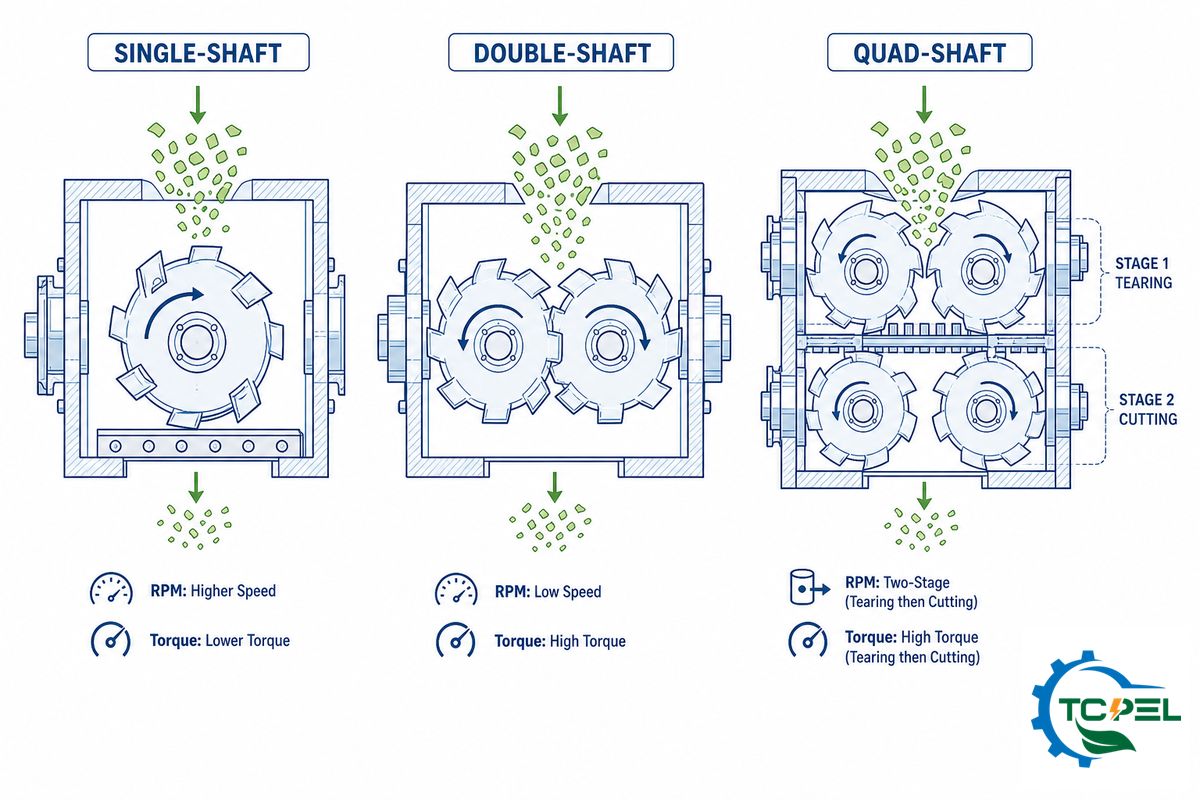
Mesin shredder dua poros (terkadang disebut shredder poros ganda atau poros kembar) terdiri dari dua poros paralel yang dilengkapi cakram pemotong berkait atau saling bertautan dan berputar perlahan ke arah satu sama lain. Bahan yang dimasukkan ke ruang pemotongan dicengkeram dari arah berlawanan dan dicabik dengan torsi tinggi, bukan diiris, menggunakan mekanisme yang sama seperti yang dijelaskan dalam paten mesin shredder industri US20050242221A1.
Dua porosnya yang berputar berlawanan arah, masing-masing dilengkapi beberapa pemotong, menyediakan permukaan pencacahan yang luas untuk mengecilkan bahan keras dan terkontaminasi secara efisien. Namun, mekanisme dua poros ini hanya merupakan salah satu bagian dari kemampuan mesin, dan jumlah poros sangat memengaruhi bahan yang mampu ditanganinya; dalam hal inilah pembeli paling sering melakukan kesalahan. “Tidak ada satu mesin yang sempurna untuk semua aplikasi,” kata David Wilson dari SSI Shredding Systems dalam majalah Recycling Today. Tiga desain yang tersedia di pasar sebenarnya ditujukan untuk aplikasi yang secara mendasar berbeda, bukan sekadar variasi tugas yang sama pada tingkat harga berbeda.
“Persyaratan aplikasi khusus pelanggan harus diidentifikasi dengan jelas sebelum mengevaluasi jenis mesin shredder apa pun… pembeli sebaiknya bersikap waspada mengingat beragamnya jenis peralatan yang tersedia dan kemampuannya yang tampak nyaris tanpa batas.”
Berikut pengaruh sebenarnya dari jumlah poros menurut panduan peralatan independen: Mesin shredder poros tunggal beroperasi jauh lebih cepat daripada model lain, sering kali pada 80-110 RPM. Kecepatan tinggi ini memanfaatkan pemotong kecil yang dapat diganti pada setiap poros untuk mendorong bahan ke landasan tetap, lalu mengalirkan kembali potongan yang terlalu besar ke ruang pemotongan sampai dapat melewati saringan penentu ukuran. Saringan penentu ukuran inilah yang membuat desain poros tunggal unik: mesin tersebut menghasilkan partikel yang benar-benar seragam. Namun, presisi harus dibayar dengan ketahanan yang lebih rendah; pemotong poros tunggal rentan rusak akibat paku atau bongkahan logam, sedangkan benda abrasif seperti lapisan belakang karpet dapat menyebabkan keausan yang cepat.
Mesin shredder dua poros mengorbankan keseragaman ukuran tersebut demi ketangguhan. Karena tidak memiliki saringan penentu ukuran, mesin ini mengeluarkan potongan dengan panjang bervariasi (dari beberapa inci hingga beberapa kaki, tergantung bahannya), tetapi cakram pemotongnya yang besar dan berkecepatan rendah serta logika pembalikan poros otomatis terintegrasi memastikan mesin terus bekerja sekalipun terdapat benda asing atau kontaminan yang akan membuat mesin poros tunggal berhenti total. Mesin shredder empat poros bukan sekadar “mesin dua poros yang lebih kuat”—mesin ini memadukan tahap pencabikan primer dua poros yang tangguh dengan saringan sehingga Anda memperoleh ketahanan terhadap benturan sekaligus kendali ukuran hasil, tetapi dengan biaya dan kompleksitas yang jauh lebih tinggi. Mesin ini ideal untuk mengolah bahan yang sangat tercampur dan kotor menjadi hasil yang cukup seragam; limbah elektronik dan limbah medis biasanya diproses dengan cara ini.
| Faktor | Poros Tunggal | Dua Poros | Empat Poros |
|---|---|---|---|
| Kecepatan tipikal | 80–110 RPM | sekitar 5–45 RPM | kecepatan rendah, dua tahap |
| Kendali hasil | seragam, ukuran ditentukan saringan | potongan tidak beraturan, tanpa saringan | seragam, ukuran ditentukan saringan |
| Toleransi terhadap kontaminan | rendah—logam/pasir kasar berisiko merusak pemotong | tinggi—pembalikan otomatis mengatasi kemacetan | tinggi, dengan kendali ukuran |
| Bahan paling sesuai | plastik bersih, busa, serat, kertas | logam, ban, palet, limbah campuran/berukuran besar | limbah elektronik, limbah medis, aliran bahan yang sangat tercampur |
| Biaya/kompleksitas relatif | lebih rendah | sedang | tertinggi |
Ukuran model menerapkan prinsip yang sama dalam skala lebih kecil. Mesin shredder dua poros ringkas atau mini menggunakan konsep kecepatan rendah dan torsi tinggi yang sama, tetapi dengan lebar lebih kecil dan rating daya lebih rendah untuk operasi yang tidak memerlukan kapasitas produksi skala industri. Jika kebutuhan utama Anda adalah ukuran partikel hasil dan bahan bakunya relatif bersih, mesin dua poros mungkin bukan yang Anda cari (yang tepat adalah mesin poros tunggal atau empat poros). Sebaliknya, jika Anda harus menangani muatan berukuran besar, limbah perkotaan campuran, atau sedikit besi bekas, ketahanan mesin dua poros terhadap perlakuan beratlah yang Anda beli.
Bagian Dalam Mesin, Bilah, Poros, serta Rekayasa Torsi-Kecepatan di Balik Pemotongan
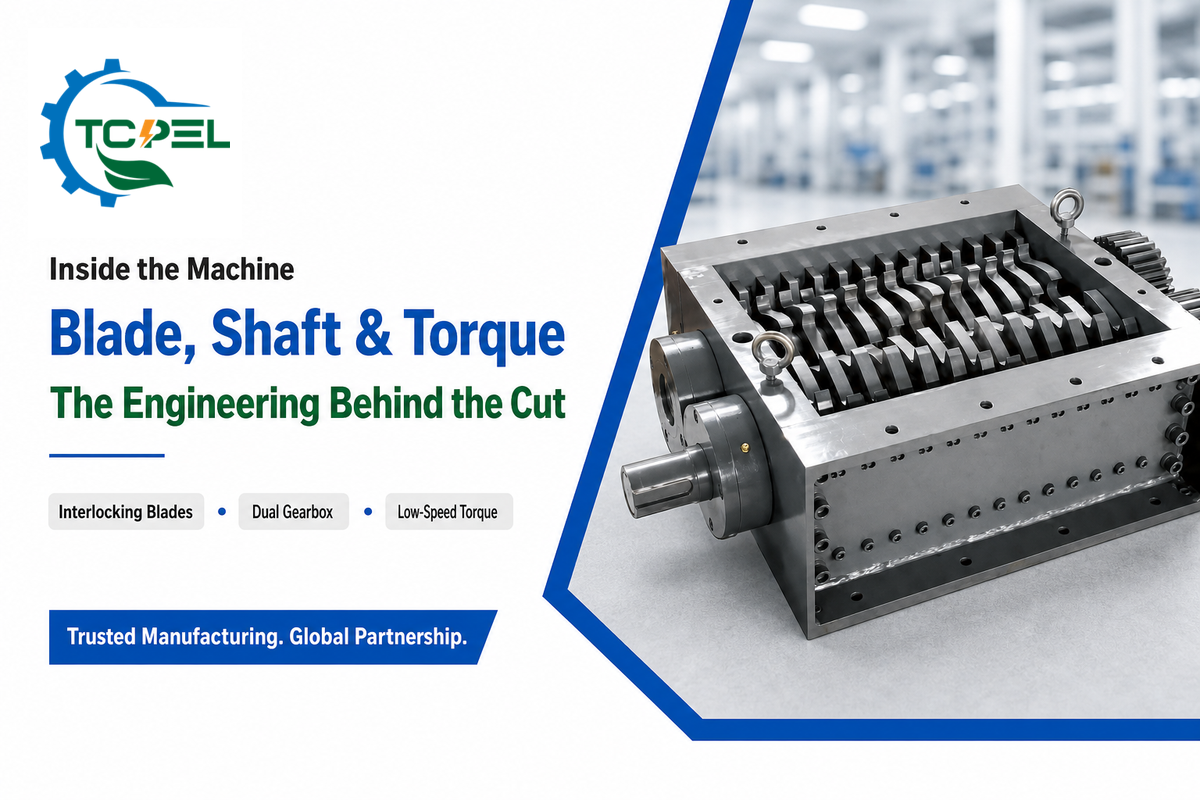
Proses berkecepatan rendah dan bertorsi tinggi ini bukanlah suatu kompromi, melainkan menerapkan prinsip fisika yang berbeda dari pencacahan dan granulasi pada sistem cepat berkecepatan tinggi, serta selaras dengan mekanisme pengecilan ukuran yang dijelaskan dalam penelitian pengecilan ukuran biomassa DOE/Argonne. Perry’s Chemical Engineers’ Handbook mendefinisikan pemotong berkecepatan tinggi sebagai perangkat yang beroperasi pada kisaran 500-3.500 RPM, yakni metode yang mengandalkan pemotongan bersih. Dengan kecepatan dua tingkat besaran lebih rendah, kedua poros mesin shredder dua poros saling berinteraksi dan memberikan torsi tinggi secara berkelanjutan sehingga mampu mencengkeram dan mencabik bahan secara efektif, alih-alih mencoba mengirisnya dengan sisi bilah yang tajam. Inilah sebabnya mesin dua poros dapat mencabik besi beton atau tutup drum baja tanpa mengalami kerusakan bilah seperti yang akan dialami pemotong berkecepatan tinggi. Mekanisme pencabikan berkecepatan rendah yang sama juga bekerja jauh lebih senyap daripada pemotongan berkecepatan tinggi; tingkat kebisingan rendah merupakan hasil alami mekanisme tersebut, bukan fitur desain terpisah yang ditambahkan kemudian.
📐 Catatan Rekayasa
Jenis bilah sama pentingnya dengan arsitektur mesin. Cakram pemotong, yang terkadang disebut bilah geser, biasanya dibuat dari baja perkakas yang diberi perlakuan panas dalam kisaran baja D2/SKD11 dan dikeraskan hingga antara HRC 55 dan 62 (kisaran yang telah diverifikasi oleh berbagai produsen bilah), serta dipilih untuk masa pakai panjang di seluruh area pemotongan, bukan semata-mata berdasarkan tingkat kekerasannya. Kekerasan yang lebih tinggi (sekitar 58-60 HRC) umumnya dapat dicapai melalui perlakuan panas dan mampu memperpanjang masa pakai cakram sebesar 20-30% tanpa membuat bilah rentan retak atau gompal saat menerima beban benturan. Poros paling sering menggunakan pasak (berbentuk heksagonal atau bentuk tidak bulat lainnya), bukan berbentuk bulat polos, agar cakram tidak bergeser dari kesejajaran saat poros menerima torsi melawan bahan ketika terjadi kemacetan, yang merupakan risiko pada poros bulat polos tanpa pasak. Ketebalan cakram biasanya berkisar dari 20 mm hingga 40 mm, dengan mesin yang lebih besar dan untuk pekerjaan lebih berat menggunakan ketebalan pada batas atas kisaran tersebut.
Bagaimana Sistem Pembalikan Otomatis Mencegah Kemacetan?
Pada sebagian besar mesin shredder dua poros, PLC memantau arus motor secara waktu nyata. Jika potongan bahan yang rentan menyebabkan kemacetan menarik arus hingga melampaui batas yang diizinkan, pengendali membalik putaran poros untuk mengeluarkan dan melepaskan beban, kemudian melanjutkan pencacahan ke arah maju tanpa campur tangan operator atau membuat pemutus arus terpicu.
Logika pembalikan tersebut menangani gumpalan akar yang kusut, sekumpulan palet yang diikat sabuk, atau bal yang diikat kabel dengan cara yang sama secara otomatis. Logika yang tampak sangat sederhana ini berperan besar dalam kemampuan “menangani apa saja” yang menjadi ciri mesin dua poros—tanpanya, setiap kemacetan mengharuskan mesin dihentikan dan dibersihkan secara manual.
Di sini, sekali lagi, manfaat dua poros yang digerakkan secara terpisah terlihat jelas: karena setiap poros memiliki unit roda gigi reduksi dan rangkaian sistem penggerak sendiri, satu poros dapat merespons kemacetan lokal tanpa membuat poros lainnya kehilangan tenaga, dan unit roda gigi reduksi yang perlu diperbaiki tidak membuat seluruh mesin berhenti beroperasi. Dudukan bilah untuk pekerjaan berat, yang sering menggunakan rumah tipe belah dan dapat dibuka untuk memberikan akses langsung ke ruang pemotongan, memungkinkan penggantian cakram pemotong yang rusak dengan pekerjaan lebih ringan daripada melepas seluruh poros; waktunya dihitung dalam jam, bukan hari.
Bahan yang Dapat (dan Tidak Dapat) Dicacah Mesin Shredder Dua Poros
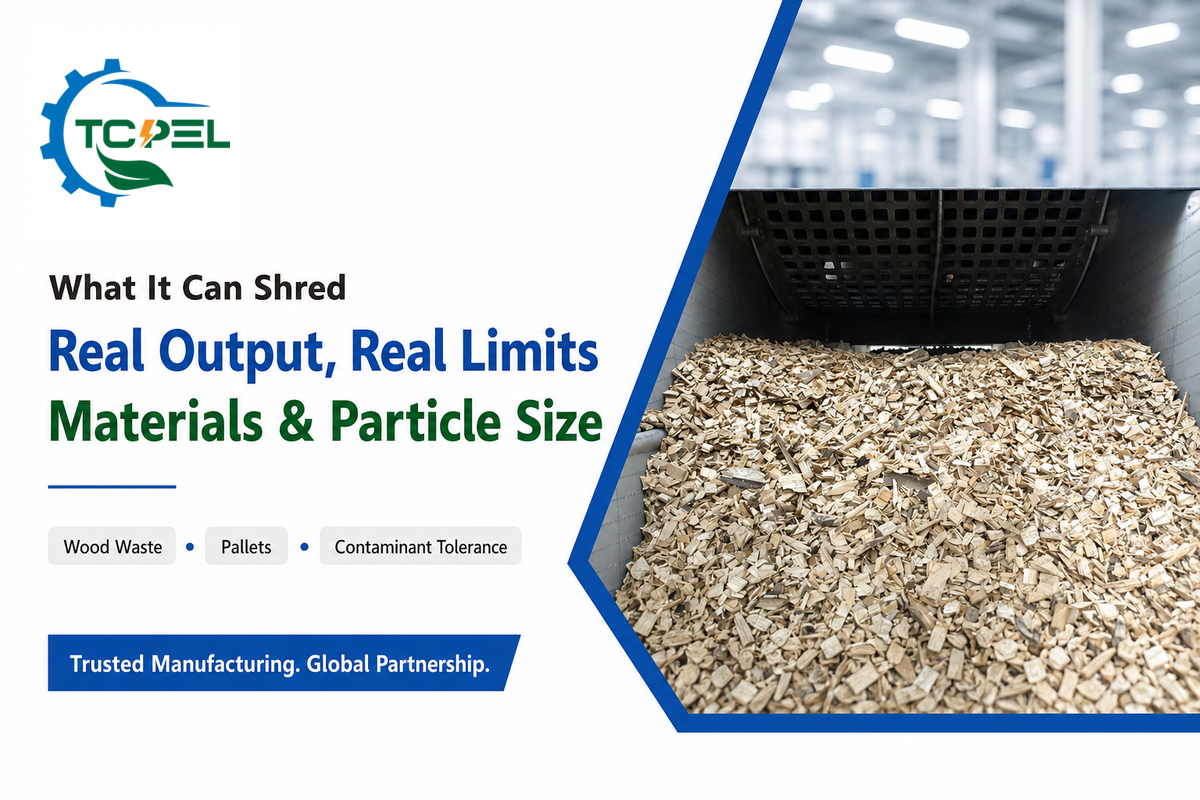
Mesin shredder dua poros digunakan untuk beragam aliran limbah industri, bukan hanya satu aplikasi, dengan ban, besi bekas, limbah elektronik, limbah padat perkotaan campuran, plastik, serta limbah kayu atau palet sebagai bahan baku yang umum—cakupannya lebih luas daripada yang biasanya diiklankan oleh satu produsen mesin. Kesamaannya terletak pada kondisi bahan baku, bukan jenis bahannya: arsitektur ini mencacah bahan berukuran besar, tidak beraturan, dan terkontaminasi, sehingga digunakan dalam begitu banyak operasi daur ulang limbah.
Beragam bahan tersebut juga mencakup aliran limbah berbahaya—drum, IBC, dan bahan sulit lainnya—serta komponen plastik besar dan barang berukuran besar lainnya yang secara fisik tidak dapat diterima mesin lebih kecil, sehingga peralatan ini banyak digunakan di fasilitas daur ulang berkapasitas tinggi dan lokasi pengolahan sampah menjadi energi maupun di pabrik biomassa.
| Jenis Bahan | Kontaminasi yang Perlu Diantisipasi | Tahap Hilir Tipikal |
|---|---|---|
| Ban | sabuk/kawat baja tertanam | pemulihan remah karet, bahan bakar turunan ban |
| Besi bekas & drum baja | sambungan las, pelapis, sisa isi | pemulihan dan pengepresan logam menjadi bal |
| Limbah elektronik (WEEE) | papan sirkuit, campuran plastik/logam | pemulihan tembaga dan logam mulia |
| Limbah padat perkotaan (MSW) | campuran bahan inert, pasir kasar | persiapan pengolahan sampah menjadi energi atau pengalihan dari TPA |
| Plastik & film | label, tutup, campuran jenis resin | penggilingan ulang dan peletisasi |
| Palet kayu (berpaku) | paku, staples, kawat pengikat | pemisahan magnetis, bahan baku hammer mill |
| Biomassa/limbah kayu bersih | kulit kayu, sisa tanah | penentuan ukuran dengan hammer mill untuk bahan baku pelet |
| Puing konstruksi & pembongkaran | besi beton, pecahan beton | aliran bahan daur ulang yang telah dipilah |
| Limbah tekstil/karet | campuran berbagai serat, karet berikat | pemulihan serat atau remah karet |
✔ Keunggulan
- Mampu menangani logam tertanam, paku, dan kawat pengikat tanpa kerusakan fatal
- Menangani bentuk bahan baku yang besar dan tidak beraturan, yang akan menyumbat mesin dengan sistem pemasukan bersaringan
- Pembalikan otomatis mengatasi kemacetan tanpa campur tangan operator
- Cakram pemotong besar berkecepatan rendah sering beroperasi selama bertahun-tahun dalam aplikasi nonabrasif
⚠ Keterbatasan
- Tidak memiliki saringan penentu ukuran—hasilnya berupa potongan tidak beraturan, bukan partikel seragam
- Kurang sesuai untuk bahan yang sangat basah, lengket, atau berserat panjang dan mudah melilit poros
- Bukan peralatan yang tepat untuk pekerjaan yang memerlukan kendali ketat atas ukuran partikel
- Bahan baku yang sangat abrasif seperti pasir atau pasir kasar dapat mengikis komponen bilah meskipun menggunakan poros untuk pekerjaan berat
Berdasarkan volumenya, aplikasi terbesar untuk kelompok peralatan ini adalah ban dan besi bekas, disusul penggunaan untuk kayu dan biomassa yang mendominasi materi penjualan banyak produsen. Khusus untuk limbah kayu dan daur ulang palet, konfigurasi yang sering dipilih adalah mesin shredder dua poros yang dipadukan dengan separator magnetis linear—konfigurasi mesin shredder palet—yang sering digunakan untuk memproses palet penuh paku; lihat mesin penghancur palet dari TCPEL untuk variasi yang dirancang khusus bagi aplikasi ini. Jika tujuannya adalah pengecilan awal biomassa sebelum masuk ke mesin pelet, bahan yang dihasilkan memerlukan penentuan ukuran lebih lanjut di tahap hilir, kemungkinan besar melalui hammer mill biomassa, karena potongan yang dihasilkan mesin dua poros tidak cukup kecil untuk langsung menjalani peletisasi.
Cara Menentukan Kapasitas Mesin Shredder Dua Poros (Kapasitas Produksi, Lebar Ruang, Daya Motor)
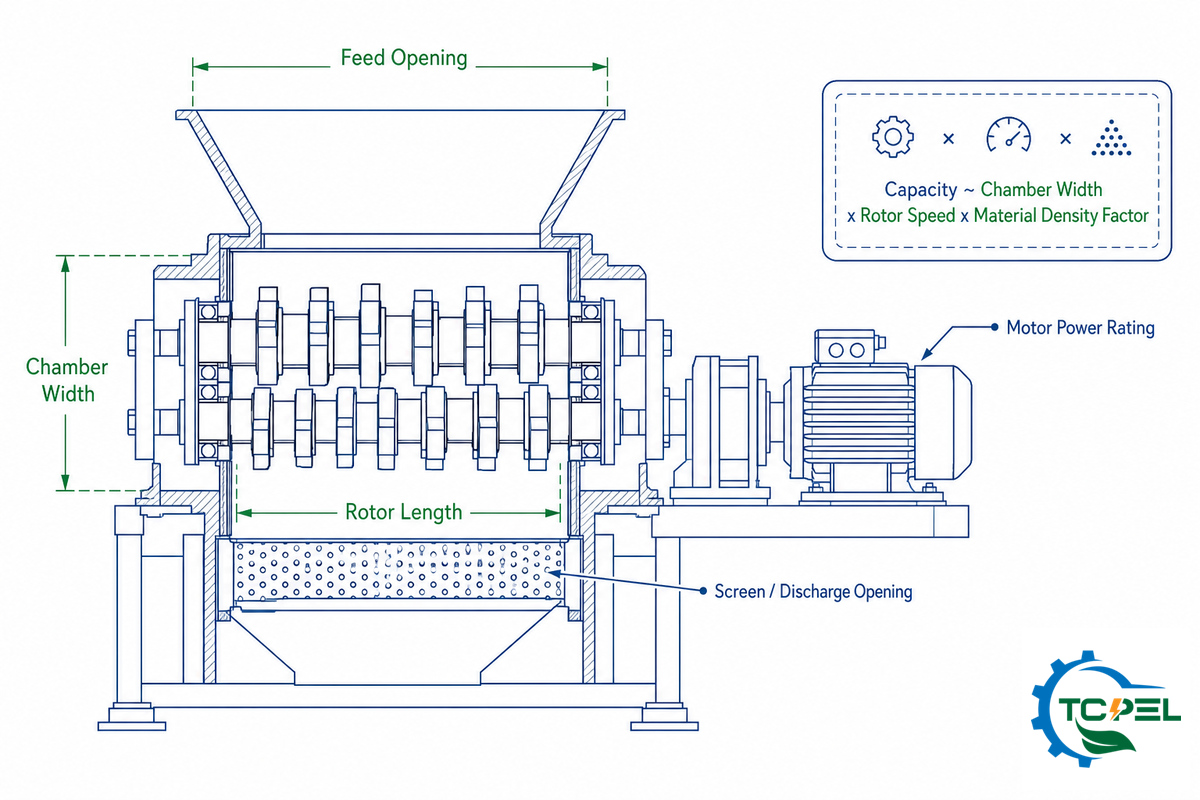
Dalam kategori peralatan ini, kesalahan penentuan kapasitas mengikuti pola yang mudah diperkirakan: pembeli biasanya menetapkan “ukuran partikel” seperti pada mesin dengan sistem pemasukan bersaringan, tanpa memahami bahwa lebar potongan yang dihasilkan mesin shredder dua poros tanpa saringan bukanlah ukuran partikel tiga dimensi yang sebenarnya. Seperti ditulis David Wilson dalam artikel SSI Shredding Systems untuk Recycling Today, jika Anda “menetapkan hasil 50 milimeter, pastikan potongan bahan selebar 50 milimeter memang tidak dapat diterima.” Kedua spesifikasi tersebut tidak setara, dan penambahan saringan di kemudian hari untuk memenuhi spesifikasi ukuran partikel yang sebenarnya akan sepenuhnya mengubah perhitungan kapasitas karena saringan berdampak negatif pada kapasitas produksi dan cenderung tersumbat oleh bahan yang tidak dapat dicacah.
Aturan Kapasitas Produksi Berdasarkan Lebar Ruang
💡 Cara cepat menentukan kapasitas
Kapasitas produksi aktual umumnya meningkat secara linear seiring bertambahnya lebar ruang dan kecepatan poros pada setiap tingkat densitas bahan tertentu. Ruang yang lebih lebar dan kecepatan yang lebih tinggi meningkatkan kapasitas produksi maksimum teoretis dalam ton per jam. Pelat nama motor tidak menunjukkan kapasitas produksi maksimum; faktor seperti densitas curah bahan dan kadar air merupakan batasan yang jauh lebih signifikan. Kinerja sering kali 10-25% lebih rendah daripada kapasitas produksi maksimum teoretis akibat berbagai faktor seperti konsistensi pemasukan bahan, dan analisis rekayasa pengolahan sampah menjadi energi dari U.S. EPA sendiri dengan jelas menyatakan bahwa hubungan antara kapasitas pabrik terukur dan aktual “tidak selalu jelas.” Selalu gunakan tonase pada lembar spesifikasi sebagai batas atas perencanaan, bukan sebagai angka untuk menyusun anggaran.
Berikut contoh penerapannya: Misalkan Anda perlu memproses 4 ton per jam palet kayu campuran. Anggaplah pemasok menawarkan model berkapasitas 4-8 ton per jam dengan ruang selebar 1000 milimeter. Dengan mempertimbangkan penurunan kapasitas sebesar 10-25%, hasil berkelanjutan tipikal yang dapat Anda harapkan setelah memperhitungkan variasi bahan baku, kadar air, dan pengoperasian oleh manusia adalah 3-3,6 ton per jam pada batas bawah kisaran tersebut. Dalam skenario ini, untuk memastikan kapasitas produksi sebesar 4 ton per jam, Anda harus memilih ukuran satu tingkat lebih besar—bukan batas minimum dari kisaran kapasitas terukur. Sejauh ini, inilah penyebab paling umum munculnya keluhan “mesin saya tidak mencapai angka yang dijanjikan” dan merupakan kesalahan perencanaan, bukan kekurangan peralatan.
Perawatan dan Jenis Kegagalan yang Benar-Benar Menghentikan Mesin Ini
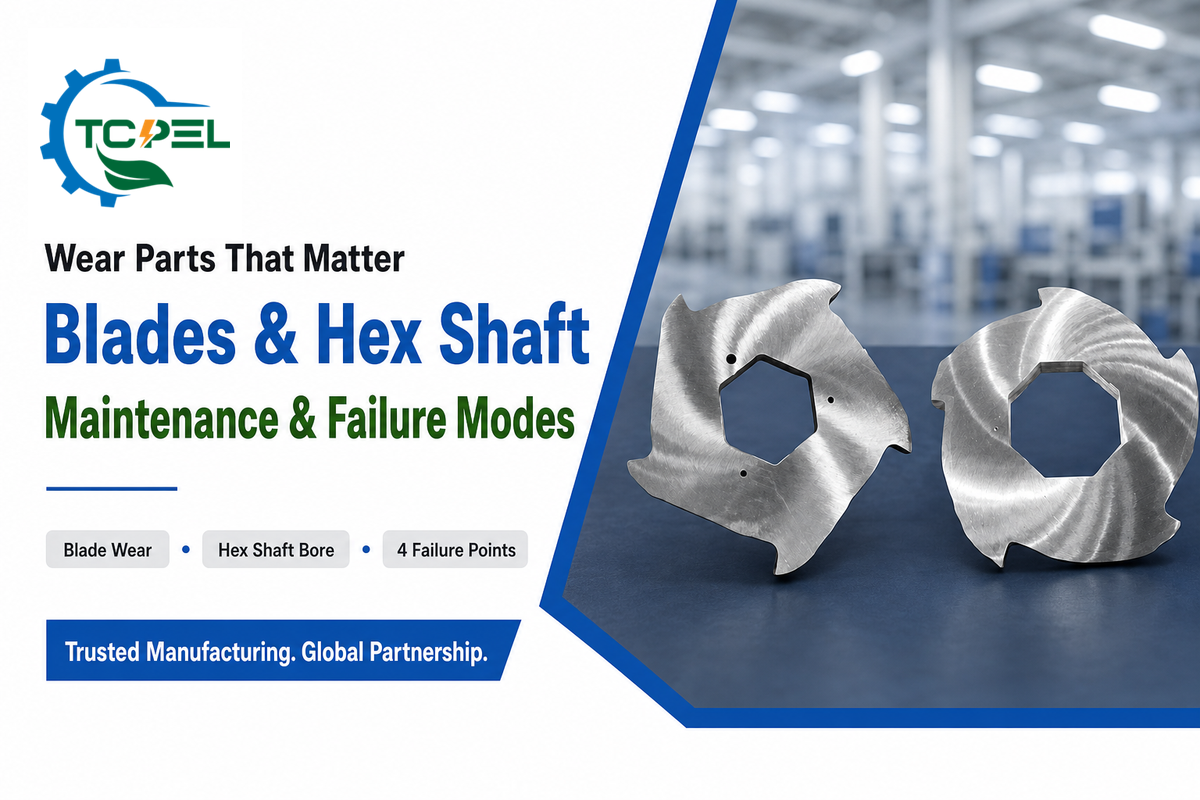
Pada mesin shredder dua poros, keausan cakram pemotong jauh lebih berkaitan dengan kontaminan dalam bahan baku daripada dengan kekerasan bahan yang diproses. Tepi pemotong dapat mengalami keausan lebih rendah saat mengolah kayu keras dan plastik bersih dibandingkan bahan yang lebih lunak tetapi mengandung tanah, pasir, atau pengencang, karena kontaminan mengikis tepi lebih cepat daripada kekerasan murni bahan. Hal ini menjelaskan mengapa penyaringan awal atau pemisahan magnetis terintegrasi sama pentingnya dengan spesifikasi bilah untuk aliran limbah palet daur ulang atau limbah pembongkaran.
Kerangka 4 Poin Kegagalan Mesin Shredder Dua Poros
⚠️ Akar penyebab dan pencegahan
- Keausan bilah akibat kontaminasi—keausan akibat pasir kasar, pasir, dan logam tertanam terjadi lebih cepat daripada keausan akibat bahan keras yang bersih. Strategi mitigasi mencakup penggunaan penyaringan awal jika memungkinkan dan separator magnetis segaris pada konveyor keluaran.
- Ketidaksejajaran poros akibat penanganan kemacetan berulang—terjadi karena kemacetan harus ditangani berulang kali; desain poros bulat tanpa pasak yang dijelaskan dalam dokumen paten pemotong/spacer seperti US5580009A sangat rentan menyebabkan masing-masing cakram pemotong kehilangan kesejajaran selama pembalikan bertorsi tinggi yang berulang. Langkah mitigasi: Gunakan geometri poros heksagonal atau berpasak dan lakukan pemeriksaan kesejajaran secara berkala.
- Penurunan kondisi bantalan dan unit roda gigi reduksi akibat beban kejut berkelanjutan—fitur pembalikan otomatis yang sama untuk mengatasi kemacetan memberikan tekanan berulang pada bantalan dan gigi unit roda gigi reduksi. Faktor mitigasi: lakukan pelumasan rutin dan pemeriksaan oli unit roda gigi reduksi sebagai tindakan pencegahan, bukan prosedur yang baru dilakukan setelah terjadi kerusakan.
- Kemacetan akibat kesalahan operator yang salah didiagnosis sebagai kegagalan peralatan—kemacetan yang sebenarnya disebabkan operator, bukan kerusakan mesin, termasuk pemasukan bahan berlebihan, bahan basah, atau peringatan interlock yang diabaikan, merupakan penyebab sebagian besar kejadian kemacetan di seluruh industri. Menganggap setiap kemacetan sebagai kegagalan mekanis akan menunda penanganan masalah sebenarnya, yang umumnya berupa kedisiplinan dalam memasukkan bahan. Menurut panduan pemecahan masalah mesin shredder industri, sebagian besar masalah kemacetan berasal dari kesalahan manusia, bukan kerusakan pada mesin itu sendiri.
Untuk bahan nonabrasif, cakram pemotong besar berkecepatan rendah sering dilaporkan dapat beroperasi selama bertahun-tahun sebelum salah satu unit pada poros penyangga perlu diganti; untuk bahan baku abrasif atau terkontaminasi, bilah yang sama mungkin memerlukan penanganan dalam hitungan bulan. Tidak ada satu angka “ganti setiap N jam” yang berlaku untuk semua bahan baku; jawaban paling jujur adalah masa pakai bilah ditentukan oleh tingkat kontaminasi, dan pemeriksaan visual saat penghentian terjadwal lebih dapat diandalkan daripada interval waktu apa pun.
Standar Keselamatan dan Kepatuhan yang Harus Dituntut Pembeli Mesin Shredder
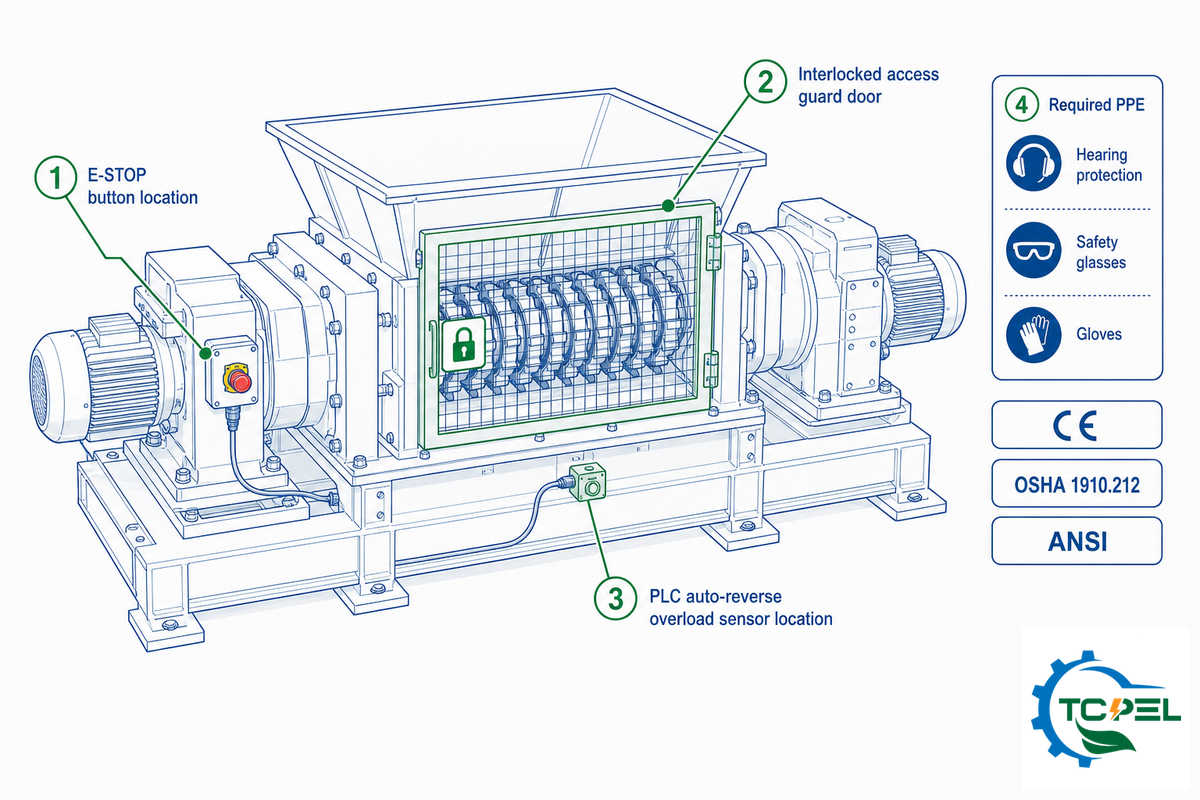
Perlu ditegaskan secara sederhana: tidak ada standar federal AS yang diterbitkan secara khusus untuk mesin shredder industri dua poros. Dalam praktiknya, satu-satunya ketentuan yang mengatur mesin ini adalah persyaratan umum OSHA mengenai pelindung mesin dalam 29 CFR 1910.212, yang menetapkan “satu atau beberapa metode pelindung mesin yang secara efektif akan melindungi operator dari bahaya pada titik pengoperasian” — ketentuan umum yang berlaku bagi mesin shredder, dan bahkan hampir semua peralatan pencacahan industri, bukan pedoman praktik khusus yang secara eksplisit disusun untuk mesin shredder. Banyak hal dapat disimpulkan dari kelompok peralatan sejenis: misalnya, buletin keselamatan OSHA tentang Bahaya Mesin Pencacah Kayu mengutip persyaratan ANSI Z133.1 mengenai penghentian darurat dan interlock keselamatan pada peralatan pencacah, sedangkan 1910.261 mewajibkan penghentian darurat yang mengaktifkan pengereman memadai pada peralatan mesin kertas. Tidak satu pun ketentuan di atas ditulis khusus untuk mesin shredder, tetapi semuanya mencerminkan konsensus industri: tombol penghentian darurat yang mudah dijangkau serta mekanisme pengereman/pembalikan ber-interlock yang bekerja otomatis saat terjadi beban berlebih, alih-alih menunggu mesin dihentikan secara fisik.
Untuk setiap mesin yang akan dijual di Uni Eropa, tanda kesesuaian CE dengan Direktif Permesinan (2006/42/EC) telah menjadi standar dasar, tetapi ketentuan ini sedang dalam masa transisi: Peraturan Permesinan Uni Eropa 2023/1230 yang baru akan menggantikan Direktif tersebut dan mengubah kepatuhan keselamatan mesin dari direktif menjadi peraturan yang berlaku langsung dan seragam di seluruh EU. Pernyataan kesesuaian tersebut akan mencantumkan apakah pemasok mematuhi Direktif atau Peraturan, sehingga dalam waktu dekat setiap pelanggan yang membeli mesin untuk digunakan di EU harus siap menanyakannya secara spesifik, bukan berasumsi bahwa direktif lama masih berlaku.
💡 Daftar Periksa Kepatuhan
- ✔ Sirkuit penghentian darurat yang mudah dijangkau, telah diuji dan didokumentasikan
- ✔ Pelindung ber-interlock pada akses hopper dan pintu perawatan
- • perlindungan otomatis terhadap beban berlebih/kemacetan yang membalikkan putaran tanpa memerlukan reset manual
- • untuk impor ke EU: Pernyataan Kesesuaian terkini yang mencantumkan Direktif 2006/42/EC atau Peraturan 2023/1230
Membeli Mesin Shredder Dua Poros, Baru vs Bekas, serta Pertanyaan RFQ untuk Membedakan Pemasok Nyata dari Penjual Bermodal Brosur
Lembar spesifikasi pemasok jarang mencantumkan fitur mesin shredder yang identik secara berdampingan. Agar penawaran dari berbagai pemasok dapat dibandingkan secara efektif, ajukan rangkaian pertanyaan yang sama kepada semua pemasok dengan satuan yang sama, mencakup pengoperasian bertorsi tinggi, kapasitas bak pengumpan, dan proses pencacahan itu sendiri, lalu jadikan kesediaan pemasok untuk memproses bahan Anda yang sebenarnya sebagai prioritas utama — disiplin “pembeli harus waspada” yang juga direkomendasikan David Wilson untuk seluruh kategori peralatan ini.
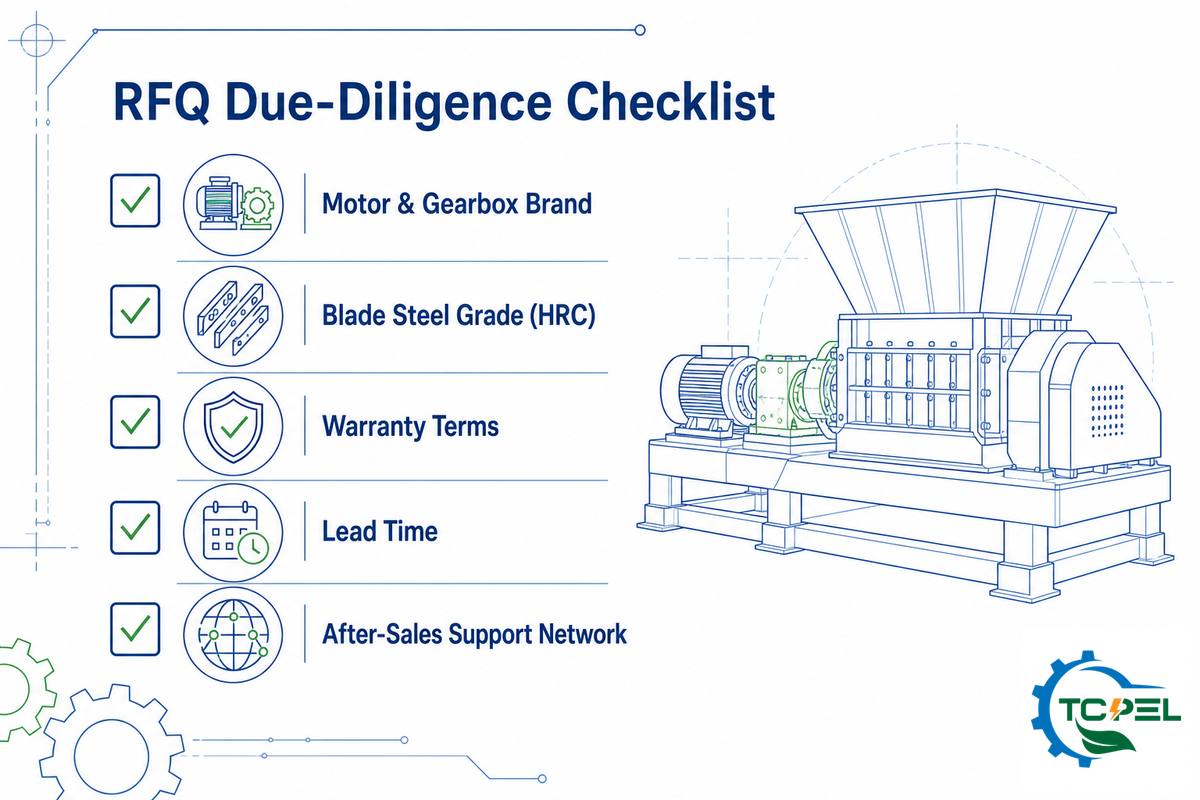
Daftar Periksa Uji Tuntas RFQ
- • ukuran partikel keluaran dalam mm -dan mintalah penjelasan apakah yang dimaksud adalah ukuran partikel sebenarnya (bergantung pada saringan) atau lebar potongan (tanpa saringan)
- • Kapasitas produksi terukur berdasarkan kadar air dan densitas bahan Anda yang sebenarnya, bukan angka lembar spesifikasi dalam kondisi terbaik
- • Daya motor terpasang dan konfigurasi sistem penggerak (listrik, hidraulik, atau hibrida)
- Jadwal penggantian komponen aus dan spesifikasi bahan pisau (paduan, kekerasan)
- Dokumentasi kepatuhan CE atau yang setara, serta kerangka peraturan yang menjadi dasar sertifikasinya
- Waktu tunggu untuk konfigurasi standar vs khusus
- Apakah pemasok akan melakukan pengujian dengan bahan baku Anda yang sebenarnya sebelum Anda menerbitkan PO
Mengenai mesin baru vs bekas: menelusuri mesin shredder dua poros bekas yang dijual, atau bahkan daftar penjualan mesin shredder satu poros bekas, dapat menjadi cara yang layak untuk memperoleh peralatan dalam kategori ini dengan harga murah, tetapi prioritas pemeriksaannya bersifat khusus. Keausan pisau dan bantalan adalah dua komponen biaya termahal yang baru diketahui setelah pembelian – mintalah hasil pengukuran keausan, bukan sekadar jaminan visual bahwa mesin “dalam kondisi baik”. Pastikan sistem pembalikan otomatis/beban berlebih masih berfungsi dengan benar saat dibebani, karena mesin bekas dengan interlock keselamatan yang dinonaktifkan atau dilewati merupakan risiko, bukan penawaran menguntungkan. Periksa juga apakah pelindung keselamatan dan dokumen kepatuhan diserahkan bersama mesin – mesin shredder bekas tanpa Pernyataan Kesesuaian sering kali membutuhkan biaya untuk memulihkan kepatuhan pelindung dan dokumennya yang lebih besar daripada nilai potongan harganya.
Jika aplikasi utama Anda adalah pengecilan ukuran tahap awal biomassa atau limbah kayu sebelum masuk ke lini produksi pelet, mesin shredder dua poros MS Series dari TCPEL mencakup tujuh model dengan rentang kapasitas 0,5-20 t/h, yang dirancang khusus untuk penggunaan tersebut dengan pisau paduan dan fitur pembalikan otomatis sebagaimana dijelaskan di atas.
Mengapa Mesin Shredder Tumbuh Lebih Cepat daripada Peralatan Daur Ulang Lainnya
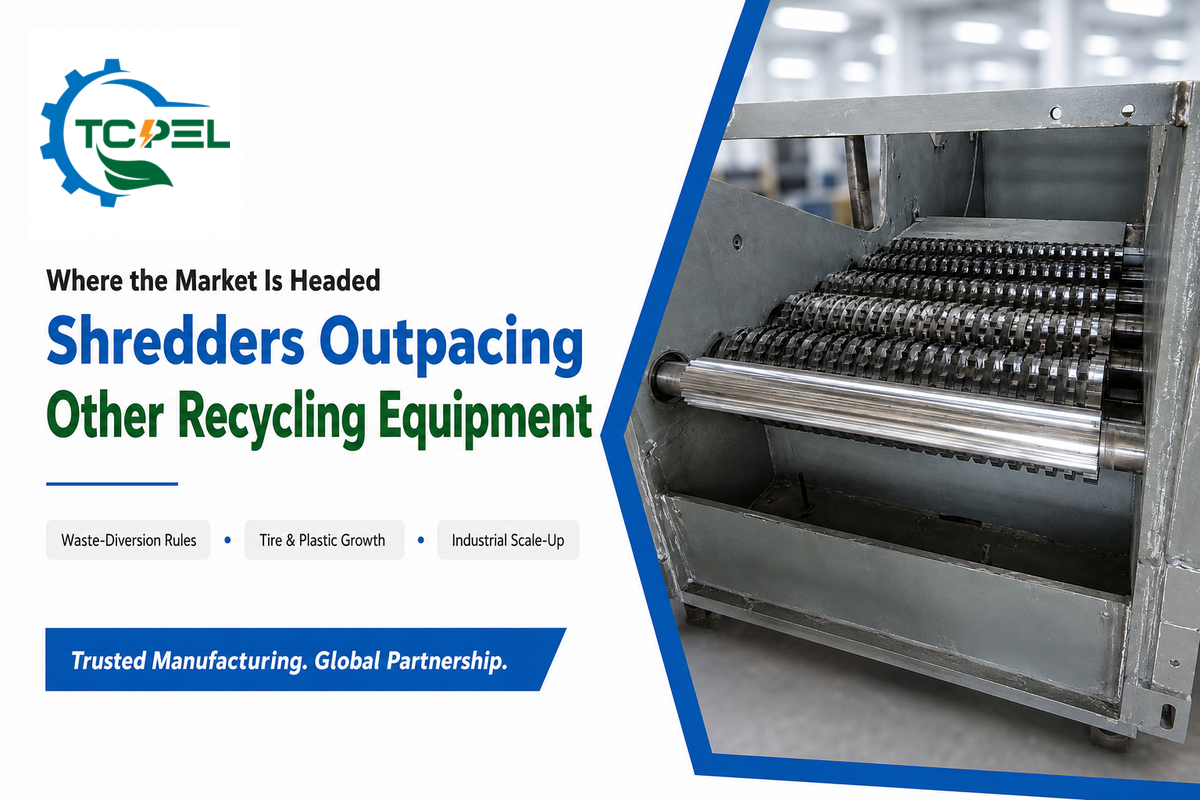
Tekanan permintaan di balik kategori peralatan ini berasal dari regulasi, bukan sekadar siklus pasar. Di AS, Sasaran Daur Ulang Nasional EPA menargetkan tingkat daur ulang nasional sebesar 50% pada 2030, dengan puing konstruksi dan pembongkaran secara eksplisit menjadi bagian pengukuran tersebut — sasaran yang hanya dapat tercapai jika lebih banyak aliran limbah C&D dan limbah campuran dicacah serta dipilah alih-alih dibuang ke tempat pembuangan akhir.
Ditinjau dari segmen pasar, mesin shredder dilaporkan sebagai peralatan daur ulang dengan pertumbuhan tercepat, melampaui mesin baler yang masih menguasai pangsa pasar total lebih besar tetapi tumbuh lebih lambat. Beberapa analis industri mengaitkannya dengan faktor pendorong yang sama: kewajiban pengalihan limbah serta meningkatnya volume aliran limbah plastik dan logam secara khusus lebih mendukung peralatan pengecilan ukuran awal daripada hanya peralatan pemilahan atau pemadatan bal (konteks latar belakang saja, angkanya berbeda-beda antar-sumber: estimasi pasar peralatan daur ulang untuk 2025 berkisar sekitar $31-35 miliar dengan proyeksi CAGR di kisaran pertengahan satu digit hingga awal 2030s).
Keserbagunaan yang sama, yaitu mesin yang dapat menangani segala hal mulai dari ban hingga limbah elektronik, menjadi alasan solusi pencacahan dua poros terus digunakan dalam berbagai aplikasi umum tersebut. Ini bukan hanya kisah pertumbuhan, tetapi juga umur pakai: mesin shredder yang spesifikasinya dipilih dengan tepat untuk aliran limbah terkait dapat terus beroperasi sebagai peralatan utama selama satu dekade atau lebih dalam pencacahan industri berkelanjutan.
Bagi pembeli yang merencanakan pembelian pada 2026: jika fasilitas Anda menambahkan lini daur ulang C&D, limbah elektronik, atau ban untuk memenuhi persyaratan pengalihan limbah yang akan berlaku, waktu tunggu mesin shredder dua poros menjadi variabel perencanaan yang nyata – peluncuran produk baru dari beberapa produsen dalam periode 2025-2026 (termasuk unit dua poros berdaya 125 tenaga kuda dari Amos Manufacturing dan B2060T dari Badger) menunjukkan bahwa buku pesanan sedang aktif di seluruh industri, sehingga hal ini patut dipertimbangkan ketika menentukan seberapa jauh sebelumnya Anda meminta penawaran harga, bukan langsung berasumsi bahwa waktu tunggunya singkat.
Pertanyaan yang Sering Diajukan
T: Apa perbedaan antara mesin shredder dua poros dan mesin shredder satu poros?
Tampilkan Jawaban
Arsitektur mesin shredder dua poros ini menggunakan dua poros yang berputar berlawanan arah dan dilengkapi pisau yang saling mengunci atau berbentuk kait, sehingga bahan disobek di antara dua rangkaian rotor pada sekitar 5-45 RPM. Sebaliknya, desain satu poros menggunakan satu rotor yang berputar melawan pisau landasan tetap atau saringan, sehingga memberikan kendali lebih besar atas ukuran partikel akhir tetapi kurang mampu menangani bahan berukuran terlalu besar, campuran, atau terkontaminasi. Dalam praktiknya, mesin dua poros menangani bahan yang lebih besar dan lebih kotor sebagai alat pengecil ukuran tahap awal; unit satu poros sering digunakan sebagai tahap sekunder untuk mengendalikan ukuran.
T: Bahan apa saja yang dapat diproses oleh mesin shredder dua poros?
Lihat Jawaban
Mesin shredder dua poros dibuat untuk menangani bahan yang keras, berukuran besar, atau terkontaminasi seperti logam bekas dan drum baja, ban, plastik dan film, limbah elektronik (WEEE), limbah padat perkotaan, serta limbah kayu seperti palet dan biomassa. Proses penyobekan berkecepatan rendah dan bertorsi tinggi jauh lebih mampu menangani logam yang tertanam, kadar air yang bervariasi, dan bentuk tidak beraturan dibandingkan mesin shredder pemotong berkecepatan tinggi, meskipun mesin ini tidak cocok untuk bahan yang sangat basah, lengket, atau berserat panjang yang dapat melilit poros alih-alih terpotong dengan bersih.
T: Berapa harga mesin shredder dua poros?
Tampilkan Jawaban
Tidak ada satu harga mesin shredder dua poros yang dapat langsung dikutip dari tabel — harganya bervariasi berdasarkan kelas ukuran peralatan (lebar ruang pencacahan dan ukuran motor), jenis pisau yang dipilih, fitur tambahan seperti separator magnetik atau pengumpanan hidraulik, serta kebutuhan akan pelindung keselamatan yang memenuhi ketentuan CE. Karena perbedaan jenis bahan dan kapasitas produksi yang diperlukan, pemasok biasanya memberikan harga melalui RFQ, bukan daftar harga publik. Usahakan memperoleh perincian setiap komponen biaya dari masing-masing pemasok agar penawaran benar-benar dapat dibandingkan dan bukan sekadar biaya total.
T: Seberapa sering pisau perlu diganti?
Buka Jawaban
Umur pakai pisau terutama ditentukan oleh kontaminasi, bukan kekerasan: plastik atau kayu bersih dapat diproses selama bertahun-tahun sebelum pisau perlu diputar posisinya, sedangkan palet yang dipenuhi paku atau material bekas berpasir akan cepat memperpendek interval tersebut.
T: Apakah mesin shredder dua poros dapat menangani bahan basah atau berkadar air tinggi?
Perluas Jawaban
Ya, tetapi tidak dalam jumlah tanpa batas. Meskipun proses penyobekan berkecepatan rendah tidak terlalu terpengaruh oleh kadar air seperti mesin shredder pemotong berkecepatan tinggi, bahan baku yang sangat lengket atau jenuh air tetap dapat menyumbat ruang pencacahan. Selalu tanyakan kepada pemasok tingkat kadar air yang mereka gunakan untuk menentukan kapasitas produksi yang disebutkan.
T: Fitur keselamatan apa yang harus saya perhatikan?
Lihat Detail
Setidaknya mesin harus dilengkapi tombol penghentian darurat, pelindung ber-interlock pada bukaan pengumpanan dan akses perawatan, serta fungsi pembalikan otomatis/beban berlebih untuk mencegah motor macet dan melindungi poros. Jika mesin diekspor ke Eropa, verifikasikan dokumentasi kepatuhannya terhadap Direktif Permesinan atau Peraturan Permesinan yang lebih baru.
T: Baru vs bekas, apa yang harus saya periksa pada mesin bekas?
Baca Jawaban
Biaya terutama dipengaruhi oleh keausan pisau dan bantalan (dua komponen habis pakai terbesar), tetapi juga oleh jam kerja motor dan unit roda gigi reduksi, apakah fungsi pembalikan otomatis/beban berlebih masih bekerja, dan yang terpenting, apakah mesin masih mematuhi direktif yang sesuai serta memiliki pelindung dan dokumentasi yang sah. Mesin shredder bekas yang lebih murah dengan rangkaian pisau aus dan kepatuhan yang sudah tidak berlaku akan segera menimbulkan biaya penggantian komponen dan retrofit keselamatan yang lebih besar.
Dapatkan Rekomendasi Penentuan Kapasitas →
Jika hasil yang diinginkan adalah pengecilan ukuran tahap awal biomassa atau limbah kayu, teknisi kami dapat menentukan spesifikasi mesin shredder dua poros MS Series yang sesuai dengan kebutuhan bahan baku dan kapasitas produksi Anda.
Mengapa Kami Menulis Artikel Ini
TCPEL memproduksi mesin shredder dua poros sebagai bagian dari lini terpadu untuk pengecilan ukuran awal dan peletisasi biomassa, yang juga mencakup mesin pencacah kayu tipe drum, hammer mill, dan mesin pelet. Artikel ini disusun untuk membantu pembeli memilih jumlah poros, menentukan kapasitas, dan mempertimbangkan faktor perawatan bagi kategori peralatan ini, bukan hanya jajaran MS Series kami, karena pemilihan mesin shredder yang keliru akan menimbulkan biaya waktu henti lebih besar daripada selisih harga pembelian. Ditinjau oleh ALLWIN INTERNATIONAL CO., LTD (TCPEL).
Referensi & Sumber
- 29 CFR 1910.212, Persyaratan Umum untuk Semua Mesin — Administrasi Keselamatan dan Kesehatan Kerja AS
- Bahaya Mesin Pencacah Kayu (Buletin Informasi Keselamatan dan Kesehatan) — OSHA AS
- 29 CFR 1910.261, Pabrik Pulp, Kertas, dan Karton — OSHA AS
- Direktif 2006/42/EC, Direktif Permesinan — EU-OSHA
- Analisis Rekayasa dan Ekonomi Sistem Pengolahan Limbah Menjadi Energi — Badan Perlindungan Lingkungan AS
- US20050242221A1, Mesin Shredder Industri Dua Poros — USPTO / Google Patents
- Dasar-Dasar Pemilihan Mesin Shredder — David Wilson, Recycling Today
Artikel Terkait
- Mesin Penghancur Kayu vs Mesin Shredder Kayu vs Mesin Pencacah Kayu, perbandingan kategori lengkap
- Hammer Mill Biomassa: Panduan Penggilingan untuk Pelet Berdasarkan Bahan Baku
- Mesin Hammer Mill Pakan, panduan ukuran partikel dan energi penggilingan
- Mesin Pencacah Kayu Tipe Drum Industri, TC Series untuk lini biomassa