Entre em Contato com a TCPEL

Especificações rápidas: secador rotativo de tripla passagem típico
| Configuração dos tambores | 3 cilindros concêntricos/encaixados (interno → intermediário → externo) |
| Fluxo de gás | Cocorrente, com percurso externo-interno-externo; velocidade do ar geralmente indicada em torno de 0,5–2,5 m/s |
| Teor de umidade na entrada | Biomassa leve geralmente com 50–63% (base úmida) |
| Teor de umidade na saída | ~10–15% para peletização |
| Faixa de capacidade | ~2,6–115 t/h (dependendo do modelo) |
| Temperatura máxima do gás na entrada | ~700–750 °C (aquecimento direto) |
| Materiais mais adequados | Serragem, maravalha de madeira, cavacos de madeira e biomassa leve |
Os valores são faixas típicas; os números exatos dependem do material, da capacidade de processamento e da fonte de calor. Antes de fechar a compra, peça ao fornecedor um teste de secagem com sua própria matéria-prima.
O que é um secador rotativo de tripla passagem?
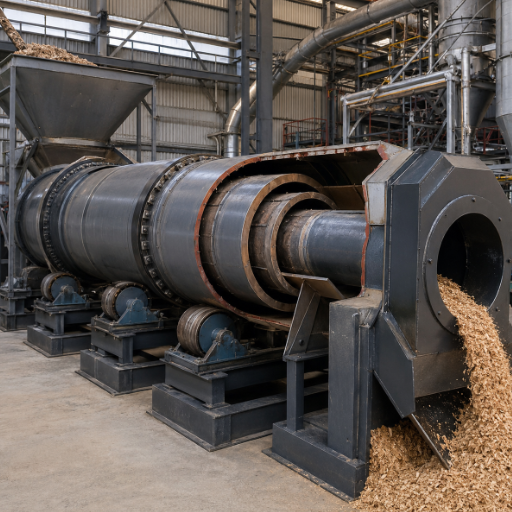 Um secador rotativo de tripla passagem é um secador de tambor rotativo formado por três tambores de diâmetros diferentes, encaixados um dentro do outro e girando como um único conjunto. O material úmido e o gás quente entram juntos e percorrem um trajeto externo-interno-externo: avançam pelo tambor interno, retornam pelo tambor intermediário e voltam a avançar pelo tambor externo antes da descarga. Como o gás atravessa o material três vezes dentro de uma única carcaça, o equipamento também é vendido como secador de três tambores, secador de tambor de tripla passagem ou secador rotativo de 3 passagens.
O objetivo de toda essa configuração concêntrica é aumentar o contato. As aletas elevadoras no interior de cada tambor levantam o material e o fazem cair em cascata através do fluxo de gás quente, enquanto as três passagens proporcionam aproximadamente três vezes o comprimento de contato da secagem rotativa convencional para a mesma área ocupada. Essa ideia central — que chamamos de trajeto externo-interno-externo do gás — determina todas as vantagens práticas da máquina: sua instalação compacta, seu comportamento energético e, como veremos, suas limitações de manutenção. Para entender a posição desse secador entre as demais tecnologias de secagem, consulte nossa visão geral dos tipos de secador rotativo.
Um secador rotativo de tripla passagem é um secador de tambor rotativo formado por três tambores de diâmetros diferentes, encaixados um dentro do outro e girando como um único conjunto. O material úmido e o gás quente entram juntos e percorrem um trajeto externo-interno-externo: avançam pelo tambor interno, retornam pelo tambor intermediário e voltam a avançar pelo tambor externo antes da descarga. Como o gás atravessa o material três vezes dentro de uma única carcaça, o equipamento também é vendido como secador de três tambores, secador de tambor de tripla passagem ou secador rotativo de 3 passagens.
O objetivo de toda essa configuração concêntrica é aumentar o contato. As aletas elevadoras no interior de cada tambor levantam o material e o fazem cair em cascata através do fluxo de gás quente, enquanto as três passagens proporcionam aproximadamente três vezes o comprimento de contato da secagem rotativa convencional para a mesma área ocupada. Essa ideia central — que chamamos de trajeto externo-interno-externo do gás — determina todas as vantagens práticas da máquina: sua instalação compacta, seu comportamento energético e, como veremos, suas limitações de manutenção. Para entender a posição desse secador entre as demais tecnologias de secagem, consulte nossa visão geral dos tipos de secador rotativo.
Como funciona o trajeto do fluxo de ar na tripla passagem
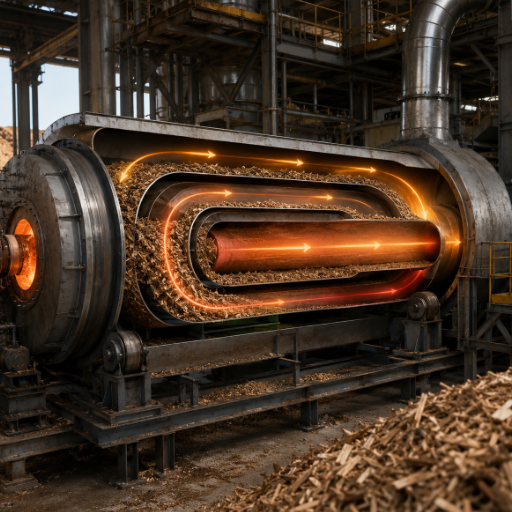 O gás quente proveniente de uma fornalha ou aquecedor de ar é aspirado através do secador por um ventilador de tiragem induzida. O material úmido entra primeiro no tambor mais interno, onde passa pela pré-secagem mais rápida em contato com o gás mais quente. Conforme o conjunto gira, as aletas elevadoras levantam o material e o fazem cair em cascata através do gás como uma cortina, etapa em que ocorre a maior parte da transferência de calor e umidade.
O que diferencia a versão de três passagens é o comportamento do gás entre os tambores. Cada tambor sucessivo possui uma seção transversal maior; portanto, à medida que o gás se expande do tambor interno para o externo, sua velocidade muda ao longo das passagens. O fluxo cocorrente — com gás e material seguindo na mesma direção — é o padrão para biomassa, pois mantém o gás mais quente afastado do pó mais seco e mais inflamável na extremidade de descarga .
O gás quente proveniente de uma fornalha ou aquecedor de ar é aspirado através do secador por um ventilador de tiragem induzida. O material úmido entra primeiro no tambor mais interno, onde passa pela pré-secagem mais rápida em contato com o gás mais quente. Conforme o conjunto gira, as aletas elevadoras levantam o material e o fazem cair em cascata através do gás como uma cortina, etapa em que ocorre a maior parte da transferência de calor e umidade.
O que diferencia a versão de três passagens é o comportamento do gás entre os tambores. Cada tambor sucessivo possui uma seção transversal maior; portanto, à medida que o gás se expande do tambor interno para o externo, sua velocidade muda ao longo das passagens. O fluxo cocorrente — com gás e material seguindo na mesma direção — é o padrão para biomassa, pois mantém o gás mais quente afastado do pó mais seco e mais inflamável na extremidade de descarga .
Como funciona um secador rotativo de tripla passagem?
Em resumo: o material é transportado pelo gás através de três tambores concêntricos, enquanto as aletas o levantam e o fazem cair em cascata. A passagem interna realiza a evaporação mais intensa, a passagem intermediária continua a secagem enquanto o material inverte a direção e a passagem externa conclui o processo antes da descarga. Uma modelagem revisada por pares do movimento de partículas de madeira em um secador rotativo de tripla passagem com fluxo cocorrente mostra que o tempo de residência das partículas é determinado pela geometria do tambor, pela velocidade de rotação e pelo arraste do gás — os mesmos três parâmetros que o fornecedor ajusta para atingir o teor de umidade desejado. Para aplicações com biomassa, a velocidade do ar em secadores rotativos é geralmente indicada na faixa de 0,5–2,5 m/s.
📐 Nota de engenharia
O principal parâmetro de projeto é o tempo de retenção, não apenas o comprimento do tambor. Uma retenção mais longa significa maior evaporação por passagem, mas também uma máquina maior. Como as três passagens concentram o comprimento de contato em uma única área de instalação, um secador de tripla passagem alcança um tempo de retenção útil com uma carcaça muito mais curta do que um único tambor longo — e esse é o verdadeiro motivo da economia de espaço.
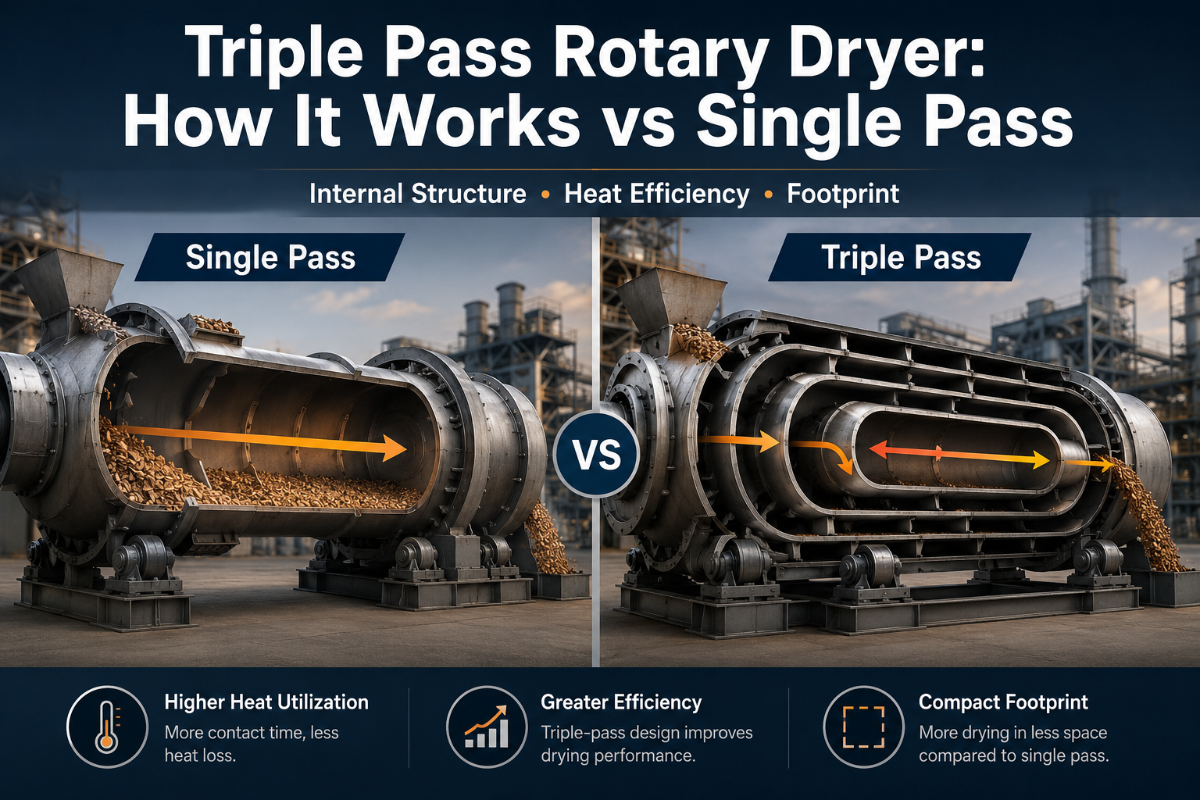
Tripla passagem vs. passagem simples: quando cada opção é superior
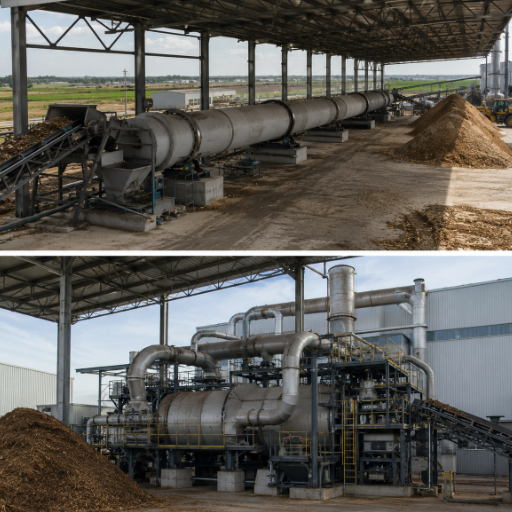 Essa é a dúvida que a maioria dos compradores realmente traz, e a resposta honesta é que a tripla passagem não é simplesmente “melhor”. Um secador de tripla passagem é uma máquina para aplicações mais leves, otimizada para a secagem compacta e energeticamente eficiente de materiais leves. Um secador de passagem simples é formado por um único tambor de paredes espessas, construído para suportar durante décadas aplicações abrasivas, materiais grosseiros e grandes capacidades de produção. Eles resolvem problemas diferentes.
| Fator | Tripla passagem | Passagem simples |
|---|---|---|
| Espaço ocupado (comprimento) | ~20–35% do comprimento de um equipamento de passagem simples para aplicações semelhantes (segundo fornecedores) | Tambor único e longo; maior espaço ocupado |
| Carcaça do tambor/durabilidade | Carcaças mais leves; menor vida útil sob condições severas | Construção robusta; reputação de “durar décadas” |
| Transporte do material | Exige alta velocidade do ar + ventilador de tiragem induzida maior | Gravidade em um tambor inclinado |
| Granulometria mais adequada | Fina, uniforme e com bom escoamento | Grosseira, >1 polegada e variável |
| Material abrasivo | Baixa adequação — as aletas se desgastam rapidamente | Tolera melhor a abrasão |
| Custo de reparos de grande porte | 3–5× o custo de reparar um único tambor (o tambor interno precisa ser retirado primeiro) | Acesso direto; custo menor |
| Vida útil | Menor sob condições severas (carcaças mais leves) | Décadas; reputação de equipamento “robusto” |
| Material mais adequado | Serragem, cavacos, biomassa leve e minerais com <20–40 mm | Material grosseiro, abrasivo, denso e em grande volume |
| Custo de capital | Investimento inicial maior e custo operacional menor | Investimento inicial menor |
Qual é a diferença entre um secador rotativo de passagem simples e um de tripla passagem?
A principal diferença está na quantidade de tambores e no tipo de aplicação. Um secador de passagem simples conduz o material uma vez por um único tambor pesado, usando a gravidade; um secador de tripla passagem o conduz três vezes por tambores mais leves e concêntricos, usando o fluxo de ar. A regra prática — que chamamos de ponto de transição entre passagem simples e tripla — é esta: escolha a tripla passagem quando o material for fino, não abrasivo, tiver bom escoamento e o espaço disponível ou o custo do combustível for importante; escolha a passagem simples quando o material for grosseiro ou abrasivo, ou quando você processar volumes muito elevados e precisar de uma máquina capaz de suportar décadas de desgaste sem dificuldade. Para conhecer a família mais ampla de equipamentos diretos, indiretos e com tubos de vapor, consulte nosso guia sobre o secador rotativo industrial.⚠️ Erro comum
Os compradores buscam economia de combustível e se esquecem do tempo gasto com manutenção. Para acessar o tambor intermediário de uma máquina com três tambores, primeiro é necessário retirar o tambor interno — a troca de um rolamento pode se transformar em um serviço de vários dias que exige uma equipe de içamento. Instaladores relatam com frequência que um grande reparo em um secador de tripla passagem custa várias vezes mais do que o mesmo serviço em um secador de tambor único — normalmente são citados valores de três a cinco vezes maiores —, o que pode eliminar a economia de combustível que justificou a compra.
Eficiência térmica e economia de energia
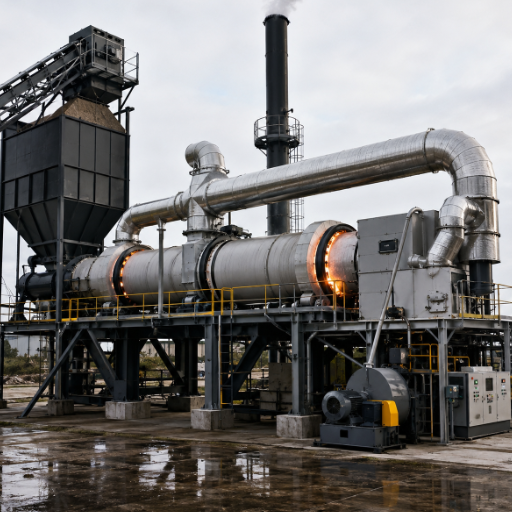 A secagem é a etapa que mais consome energia em toda a cadeia de produção de pellets, por isso esta seção merece números concretos, não argumentos de marketing. Comecemos pela física: evaporar água exige cerca de 2,26 MJ por quilograma de água removida (o calor latente de vaporização). Essa única constante define o limite mínimo do seu gasto com combustível.
Na prática, medições publicadas situam o consumo dos secadores rotativos de aquecimento direto em aproximadamente 4,0–6,0 MJ por kg de água evaporada, enquanto os sistemas indiretos ficam mais próximos de 2,8–3,6 MJ/kg. A diferença entre o limite mínimo de calor latente de 2,26 MJ/kg e o consumo real de 4–6 MJ/kg mostra quanta energia nunca chega à água — ela sai na forma de gases de exaustão quentes, calor sensível nos sólidos e radiação. Essa diferença também explica por que a eficiência de “>70%” anunciada em alguns catálogos deve ser analisada com cautela: normalmente, ela descreve a retenção de calor proporcionada pelo isolamento próprio da carcaça, e não o consumo de combustível do sistema completo.
A secagem é a etapa que mais consome energia em toda a cadeia de produção de pellets, por isso esta seção merece números concretos, não argumentos de marketing. Comecemos pela física: evaporar água exige cerca de 2,26 MJ por quilograma de água removida (o calor latente de vaporização). Essa única constante define o limite mínimo do seu gasto com combustível.
Na prática, medições publicadas situam o consumo dos secadores rotativos de aquecimento direto em aproximadamente 4,0–6,0 MJ por kg de água evaporada, enquanto os sistemas indiretos ficam mais próximos de 2,8–3,6 MJ/kg. A diferença entre o limite mínimo de calor latente de 2,26 MJ/kg e o consumo real de 4–6 MJ/kg mostra quanta energia nunca chega à água — ela sai na forma de gases de exaustão quentes, calor sensível nos sólidos e radiação. Essa diferença também explica por que a eficiência de “>70%” anunciada em alguns catálogos deve ser analisada com cautela: normalmente, ela descreve a retenção de calor proporcionada pelo isolamento próprio da carcaça, e não o consumo de combustível do sistema completo.
“A área ocupada compacta é real, mas a economia que importa está no queimador. Dimensione o secador com base na carga real de água — quilogramas de água por hora, não apenas toneladas de produto —, e o cálculo do combustível determinará se será de uma ou três passagens muito antes de a planta baixa entrar em questão.”A verdadeira vantagem do projeto de três passagens está no volume. Com 50% de teor de umidade na entrada, uma fábrica de pellets queima aproximadamente 25–30% do combustível apenas para secar a matéria-prima antes que qualquer parte dele realize trabalho útil. A disposição concêntrica das passagens permite obter mais contato por metro quadrado, e a combinação do secador com a recuperação de calor residual — usando a condensação dos gases de combustão para pré-aquecer o ar de secagem — pode reduzir o consumo anual de energia em até 41%, muitas vezes com prazo de retorno do investimento inferior a dois anos .
Materiais que seca melhor: foco em biomassa
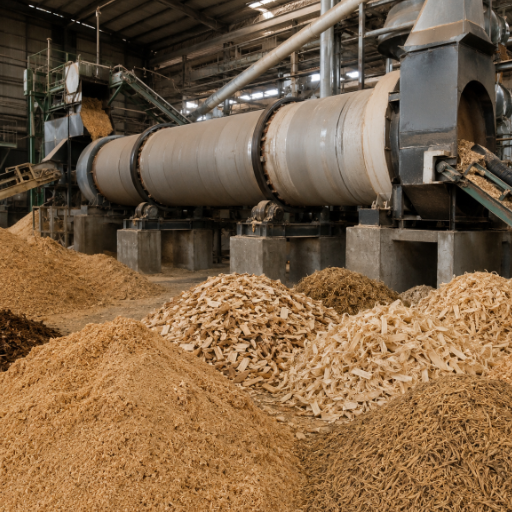 Os secadores rotativos de tripla passagem foram desenvolvidos para biomassas leves e com bom escoamento, e é nessa aplicação que continuam apresentando seu melhor desempenho. Serragem, maravalha de madeira, cavacos de madeira, casca de arroz, palha e bagaço são bem transportados pelo fluxo de ar e toleram a alta velocidade do ar exigida pelo projeto. Essas também são as matérias-primas destinadas com maior frequência a uma prensa peletizadora, razão pela qual o secador e a peletizadora de biomassa costumam ser especificados em conjunto.
Que teor de umidade um secador rotativo de tripla passagem consegue atingir?
A maior parte da biomassa chega úmida — geralmente com teor de umidade de 50–63% em base úmida —, e o objetivo após a secagem depende da etapa seguinte. Muitas linhas secam a matéria-prima até aproximadamente 10–15% para a alimentação da prensa, enquanto algumas operações de produção de pellets avançam até cerca de 5–7% para o produto acabado; as normas para pellets de madeira classificados conforme a ISO 17225-2 limitam o teor de umidade dos pellets a cerca de 10%. Um secador de tripla passagem corretamente dimensionado atinge a faixa especificada em uma única operação contínua. A uniformidade da matéria-prima é mais importante do que o número anunciado. A mistura de espécies, os contaminantes e os finos abaixo de 0,5 mm secam de modo irregular, o que provoca secagem excessiva das partículas menores e aumenta tanto o pó quanto o risco de incêndio — um dos principais riscos operacionais destacados nas orientações de segurança do setor de pellets de madeira. A granulometria uniforme produzida por um moinho de martelos para biomassa torna a secagem muito mais homogênea e facilita consideravelmente o controle do pó.Além da biomassa: areia, minerais e agregados
Os secadores de tripla passagem não se limitam à madeira. O mesmo projeto de tambores concêntricos seca areia amarela, areia de sílica, escória, argila, gesso e pellets de fertilizante, geralmente com granulometria inferior a 20–40 mm. Na secagem de minerais, o fluxo de ar de alta velocidade e múltiplas passagens demonstra sua capacidade de processar grandes volumes em uma área reduzida. Há, porém, uma ressalva importante, a mesma apresentada na tabela comparativa: abrasão. Pesquisas tribológicas identificam a granulometria, a forma e a dureza das partículas como as propriedades que determinam o desgaste abrasivo, e minerais pontiagudos ou vidro reciclado desgastam as aletas internas e os pontos de transferência mais rapidamente nos componentes internos mais leves de uma máquina de tripla passagem do que em um único tambor pesado. Os registros industriais publicados reforçam essa conclusão. A secagem documentada de concentrados minerais — por exemplo, um secador de concentrado de zinco e chumbo estudado com 22,2 m de comprimento e 3,9 m de diâmetro — utiliza secadores rotativos longos, cocorrentes e semelhantes aos de passagem simples, não unidades compactas de tripla passagem, e ainda enfrenta a formação de incrustações e o consumo de combustível. Como regra prática: minerais granulares e não abrasivos processados em volume moderado são adequados para a tripla passagem; aplicações com minerais pontiagudos, abrasivos ou em volumes muito elevados tendem a exigir a passagem simples, na qual a durabilidade é mais importante do que a instalação compacta.Como dimensionar e selecionar um secador de tripla passagem
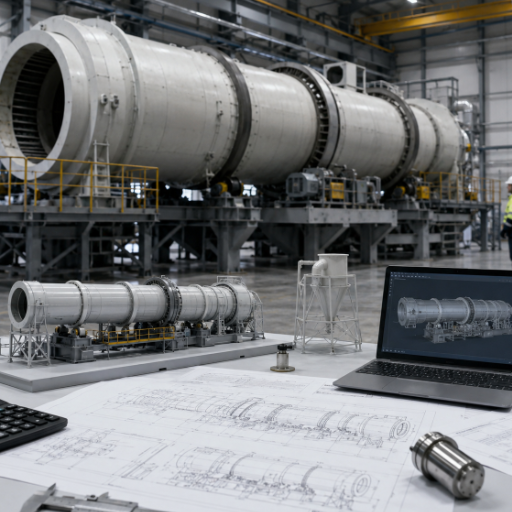 O dimensionamento começa pela água, não pelas toneladas. Calcule quantos quilogramas de água por hora precisam ser removidos (capacidade de processamento × redução do teor de umidade), multiplique pelo calor latente e acrescente as perdas do sistema; o resultado é a carga térmica que determina o tamanho do tambor e a potência do queimador. Em seguida, aplique o que chamamos de teste de adequação da tripla passagem em 4 verificações antes de solicitar uma cotação a qualquer fornecedor.
Teste de adequação da tripla passagem em 4 verificações
Responda honestamente a essas quatro perguntas, e a escolha entre passagem simples e tripla normalmente se tornará evidente, assim como um tamanho de tambor realista. O fornecedor que solicita esses quatro dados antes de apresentar uma cotação está dimensionando seu secador; aquele que fornece o preço com base apenas no número do modelo está simplesmente vendendo um tambor. Conheça toda a linha de peletizadoras de madeira se o secador fizer parte de uma fábrica de pellets maior.
- Material: é fino, não abrasivo e tem bom escoamento? → a tripla passagem é adequada. É grosseiro ou abrasivo? → passagem simples.
- Variação do teor de umidade: % na entrada e objetivo na saída — isso determina a carga de água e a carga térmica.
- Capacidade de processamento: toneladas/hora de produto, convertidas em kg/hora de água removida.
- Fonte de calor: fornalha de biomassa, ar quente ou calor residual? — isso determina aquecimento direto vs. indireto e o custo do combustível.
Onde se encaixa em uma linha de produção de pellets
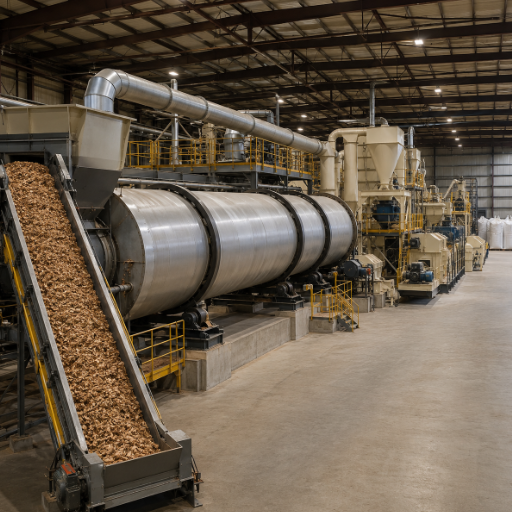 Um secador de tripla passagem raramente trabalha sozinho. Em uma fábrica de pellets de biomassa, ele ocupa o meio da cadeia, recebendo a matéria-prima úmida e com granulometria adequada e fornecendo o material seco à prensa. A sequência usual é: picagem, moagem, secagem, peletização, resfriamento e ensacamento.
- ✔ O picador de tambor reduz toras e costaneiras a cavacos de madeira.
- ✔ O triturador de madeira ou moinho de martelos reduz a granulometria até obter uma alimentação uniforme.
- ✔ O secador rotativo de tripla passagem reduz o teor de umidade até a faixa de ~10–15% necessária para a peletização.
- ✔ A peletizadora, o resfriador de pellets e o sistema de ensacamento concluem a linha.
Perspectivas do setor: secagem de biomassa orientada pela eficiência
O impulso por trás de secadores melhores vem do próprio mercado de pellets, estimado por empresas de pesquisa de mercado em dezenas de bilhões de dólares e com crescimento de aproximadamente 7% ao ano — os números exatos variam muito conforme a definição de “pellet de madeira” ou “pellet de biomassa” —, enquanto o Japão e a Coreia do Sul ampliam mais rapidamente a cocombustão de biomassa. Como o calor utilizado na etapa de secagem domina o consumo de energia da cadeia de produção de pellets, cada ganho de eficiência no secador repercute diretamente nos resultados financeiros. Quatro mudanças merecem atenção ao longo de 2025–2026. Primeiro, a recuperação de calor residual está deixando de ser opcional para se tornar esperada — recuperar o calor dos gases de combustão para pré-aquecer o ar de secagem pode reduzir o consumo anual de energia em até 41%. Segundo, as regras sobre poeira combustível estão ficando mais rigorosas: a NFPA 664 e a nova norma consolidada NFPA 660 exigem um controle de pó mais rigoroso, e algumas seguradoras começaram a excluir da cobertura os secadores rotativos instalados em fábricas de produtos de madeira. Terceiro, as regras de cadeia de custódia da REDIII da UE estão redefinindo quais matérias-primas são elegíveis. A quarta mudança é aquela que os compradores subestimam: emissões e incêndios. Os secadores rotativos foram originalmente construídos para minerais não fibrosos, e a secagem de biomassa fibrosa introduz um risco real de incêndio, além de implicações no licenciamento de emissões atmosféricas — ao processar madeira resinosa recém-cortada, um secador pode se aproximar do limite de 100 toneladas/ano de VOC do Título V e muitas vezes representa a maior fonte individual de emissões de uma fábrica de pellets. É também por isso que alternativas com menor concentração de oxigênio, como a secagem com vapor superaquecido, que apresenta consumo de energia muito menor, estão ganhando atenção em grandes fábricas. Nada disso desqualifica um secador de tripla passagem; apenas significa que as barreiras de segurança e o licenciamento devem fazer parte da decisão de seleção, e não ser considerados posteriormente. A medida prática para um comprador em 2026 é concreta: especifique carcaças com isolamento próprio e uma opção de recuperação de calor residual, confirme se a configuração do secador e do sistema de despoeiramento atende aos limites atuais da NFPA e verifique as exigências de licenciamento relacionadas a VOC/HAP antes de assinar.Perguntas frequentes
P: Quanto um secador rotativo de tripla passagem pode reduzir o teor de umidade em uma operação?
Ver resposta
Um secador de tripla passagem corretamente dimensionado reduz o teor de umidade da biomassa leve de uma faixa típica de 50–63% na entrada para os 10–15% necessários à peletização, em uma única operação contínua. A redução exata depende da temperatura do gás, do tempo de retenção e da capacidade de processamento, portanto a mesma máquina pode ser ajustada para uma variação menor ou maior do teor de umidade alterando-se a taxa de alimentação e a regulagem do queimador.
P: Um secador rotativo de tripla passagem é mais eficiente do que um secador de passagem simples?
Ver resposta
Para biomassas leves e finas, ele geralmente apresenta custos operacionais menores, pois as passagens concêntricas concentram maior contato de secagem em uma área reduzida e utilizam um fluxo de ar de menor temperatura e maior velocidade. Contudo, as alegações de “eficiência” superior a 70% normalmente descrevem a retenção de calor, não o consumo de combustível do sistema completo, no qual grande parte da energia ainda é perdida nos gases de exaustão e como calor sensível. A passagem simples ainda pode apresentar menor custo total quando os reparos e a durabilidade são considerados.
P: Para quais materiais o secador rotativo de tripla passagem é mais indicado?
Ver resposta
Materiais leves, não abrasivos, com bom escoamento e granulometria razoavelmente uniforme: serragem, maravalha de madeira, cavacos de madeira, casca de arroz, palha e bagaço, além de minerais granulares, como areia, escória e gesso, com menos de aproximadamente 20–40 mm. Materiais pontiagudos, abrasivos ou muito grosseiros são pouco adequados, pois desgastam as aletas internas e favorecem o uso de um secador de passagem simples.
P: Quanto espaço um secador rotativo de tripla passagem requer?
Ver resposta
Muito menos do que um secador de passagem simples para a mesma aplicação. Os fornecedores informam comprimentos de tambor equivalentes a aproximadamente 20–35% do comprimento de uma máquina equivalente de tambor único, pois as três passagens ficam dentro de uma única carcaça.
P: Um secador rotativo de tripla passagem pode secar areia ou minerais?
Ver resposta
Sim — areia amarela, sílica, escória, argila e gesso são aplicações comuns. Apenas fique atento à abrasão: minerais pontiagudos desgastam as aletas mais rapidamente do que em um tambor de passagem simples mais pesado.
P: Um secador de tripla passagem exige mais manutenção do que um de passagem simples?
Ver resposta
A limpeza e a inspeção de rotina são semelhantes, mas os reparos de grande porte são mais difíceis e caros. Para acessar o tambor intermediário ou interno, é necessário desmontar parcialmente o conjunto concêntrico, portanto um reparo de rolamento ou aleta que seria simples em um único tambor pode custar de três a cinco vezes mais em uma máquina com três tambores. Adequar o secador a um material não abrasivo é a melhor forma de reduzir a frequência desses reparos.
Sobre este guia
Este guia foi elaborado pela equipe de engenharia da TCPEL (ALLWIN INTERNATIONAL CO., LTD), fabricante de equipamentos para secagem e peletização de biomassa sediada em Shandong e com exportações para mais de 60 países. Os dados sobre energia e normas apresentados aqui foram obtidos de pesquisas públicas e das fontes ISO/NFPA citadas abaixo; as alegações específicas de fornecedores sobre eficiência e espaço ocupado são identificadas como tais, em vez de serem apresentadas como fatos independentes.
Referências e fontes
- Relatório sobre tecnologia de secagem de biomassa — National Renewable Energy Laboratory (NREL)
- Simulação do movimento de partículas de madeira em um secador rotativo de tripla passagem com fluxo concorrente — Drying Technology, Vol. 32 (Taylor & Francis)
- Modelagem da secagem de forragem em secadores rotativos de tambor de passagem única e tripla — ASABE
- Secadores indiretos para secagem de biomassa — comparação das características experimentais — ChemEngineering (MDPI)
- Análise energética de secadores de madeira integrados a unidades de recuperação de calor — Energy (ScienceDirect)
- Pellets de madeira classificados (ISO 17225-2) — Natural Resources Canada
- NFPA 664: prevenção de incêndios e explosões — Canadian Biomass Magazine
- Operação mais segura de secadores rotativos de tambor — Wood Pellet Association of Canada (WPAC)
- Projeto de aletas e distribuição de partículas em tambores rotativos (esferas de vidro e areia de quartzo) — Granular Matter (Springer)
- Desgaste abrasivo causado por partículas de areia: efeitos do tamanho, formato e dureza — Tribology Transactions (Taylor & Francis)