Dapatkan di Touch dengan TCPEL
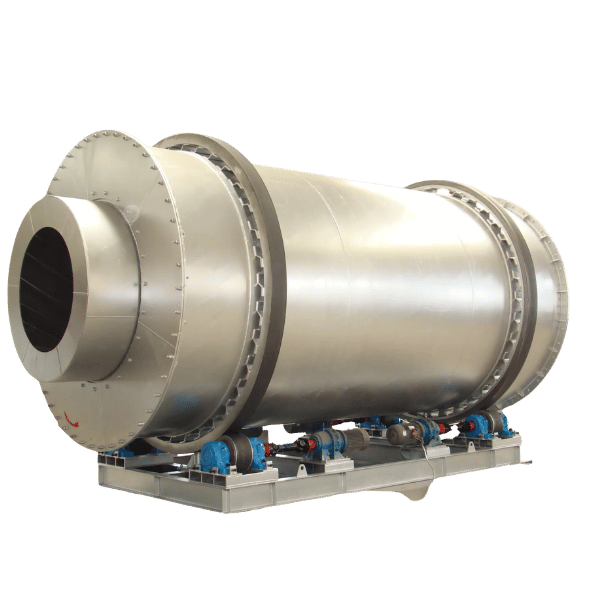
TCPEL Triple Pass Rotary Dryer — Sistem Pengeringan Biomassa (Kapasitas 1-6 T/H)
Pengering drum putar industri yang dibangun khusus untuk pabrik pelet. Memiliki enam model yang mampu menurunkan serbuk gergaji dan kelembaban serpihan kayu dari 50% ke 15% dalam satu lintasan melalui φ sehingga menghilangkan kebutuhan untuk predryer terpisah.
Didirikan 2020
ISO 9001:2015
Ekspor ke 60+ negara
Pabrik: 20.000 m², Shandong
Ditandai CE (Petunjuk Mesin 2006/42/EC)
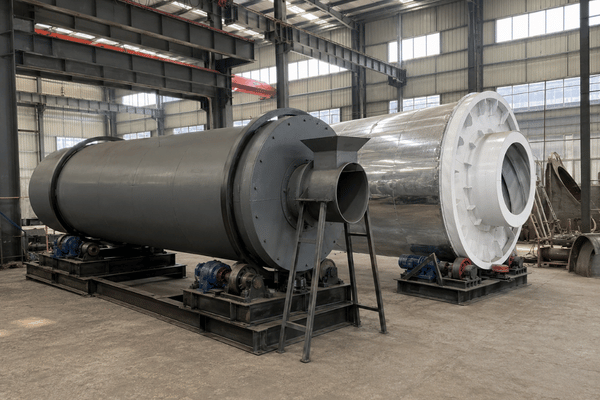
Mengapa Biomassa Basah Membebani Tanaman Pelet Keuntungan — Dan Bagaimana Pengering Triple-Pass Memperbaikinya
Pengering rotary triple pass menghilangkan kelembaban bebas setelah dewatering. Ini adalah perangkat kompleks yang terdiri dari tiga drum konsentris yang menerima campuran udara panas dan panas-gas dari satu pasokan pusat. Pengering rotary terus mengeringkan biomassa ketika dikirim dalam beban di ujung pertama dan juga terus menerus memberikan biomassa kering di ujung kedua, untuk pelletizing. Serbuk gergaji dan serpihan kayu yang masuk pada kelembaban 50% tidak dapat dikompresi menjadi pelet yang stabil karena pers mati macet, kadar abu meningkat dan indeks kualitas pelet tidak lulus nilai ISO 17225.
Pengeringan menyumbang sebagian besar dari semua biaya operasional dalam setiap operasi pembuatan pelet biomassa. Biomassa basah dan energi untuk pengeringan dapat menyumbang sekitar 10-15% dari total penerimaan pabrik biomassa Թ biaya variabel tertinggi tunggal selain dari membeli serat mentah. Jika sistem dipilih berdasarkan harga dan dioperasikan secara tidak efisien, margin EBITDA dari setiap pabrik biomassa yang menguntungkan dapat dihapus.

Tiga Poin Sakit yang Kita Dengar Dari Produsen Pelet
Kelembaban tinggi, biaya termal tinggi.
Pengeringan 1 kg air dari biomassa membutuhkan kira-kira 3.2 Модер 3.6 MJ energi panas, menurut peer-review studi tidak langsung-pengering. Pelletizing di 50 % inlet, dibutuhkan ~ 410 kg air per ton basah pakan.
Kendala jejak.
Pengering single-pass pada throughput setara menempati sekitar 2,8 hingga 3,3 kali luas lantai mesin triple-pass, karena triple-pass bersarang tiga silinder di dalam satu cangkang. Sebagian besar toko pelet dan fabrikasi tidak dapat melepaskan jejak itu.
Kelembaban akhir yang tidak konsisten.
Jika kelembaban outlet bervariasi lebih dari ± 2%, kurva kompresi tekan mati melayang dan kepadatan pelet menjadi off-spec. Menghasilkan ditolak atau pers dijalankan pada kecepatan yang lebih rendah untuk mengimbangi.
Seri TCSG mengatasi ketiga masalah ini dengan drum tiga lintasan koaksial, pemisah siklon terintegrasi dan pengumpul debu, dan ukuran kipas untuk beban penguapan setiap model. Hasil: pengurangan kelembaban 50% hingga 15% dalam satu lintasan, pada jejak yang cocok di dalam sebagian besar bangunan pabrik pelet yang ada tanpa perkuatan struktural.
Jika Anda mengevaluasi pengering untuk bijih mineral berat, pasir pengecoran di atas 40 ukuran partikel mm, atau pengeringan farmasi khusus, pengering single-pass atau tidak langsung biasanya akan melayani Anda lebih baik. Lihat Triple Pass vs Single Pass untuk logika seleksi yang jujur.
TCPEL TCSG Series — 6 Model dari 1 T/H ke 6 T/H
Spesifikasi Rotary Drum Dryer — TCSG10 hingga TCSG60
Seri TCSG dengan enam tingkatan throughput. Semua model berbagi desain drum pengering triple-pass yang sama dalam rentang beban untuk beban penguapan terukur mereka. Pelanggan biasanya mengukur pengering untuk pers pelet hilir untuk memiliki kapasitas cadangan 15-20% untuk menangani lonjakan kelembaban dalam bahan baku.
| Model | Kapasitas (T/H) | Evap Air (kg/h) | Gendang (mm) | Kipas (kW) | Total Daya (kW) |
|---|---|---|---|---|---|
| TCSG10 | 1 | 700 | Φ2000×5840 | 15 | 32 |
| TCSG20 | 2 | 1,400 | Φ2300×7340 | 22 | 42 |
| TCSG30 | 3 | 2,100 | Φ2400×10460 | 45 | 70 |
| TCSG40 | 4 | 2,800 | Φ2800×10460 | 55 | 80 |
| TCSG50 | 5 | 3,500 | Φ2950×12420 | 75 | 109 |
| TCSG60 | 6 | 4,200 | Φ3300×12420 | 90 | 124 |
Setiap konfigurasi TCSG dikirimkan dengan konveyor sekrup umpan, kepala kiln umpan, empat set poros-tarik-bantalan, dua pemisah siklon, satu silo pengumpul debu, ekor kiln pelepasan, katup putar kunci udara, pipa angin, dan kabinet listrik lengkap. Spesifikasi dasar mendukung kelembaban inlet 50% dan kelembaban outlet 15% di seluruh lineup penuh.
Matriks Keputusan — Material Pencocokan ke Model
| Bahan baku | Ukuran Partikel Khas | Tingkat yang Direkomendasikan1TP96 | Catatan |
|---|---|---|---|
| Serbuk gergaji kayu | <10 mm | TCSG10̂TCSG60 | Pakan ideal; kapasitas penuh |
| Chip kayu | 10͕25 mm | TCSG20̂TCSG60 | Pra-layar recommended |
| Alfalfa / sisa pertanian | <30 mm | TCSG10̂TCSG50 | Periksa kelas debu |
| Sekam padi, kulit kacang | <15 mm | TCSG20̂TCSG60 | Silika tinggi → monitor keausan siklon |
| Bagasse / serat tebu | 10͕40 mm | TCSG30͕TCSG60 | Kepadatan cahaya → verifikasi retensi |
| Partikel > 40 mm | — | Tidak recommended | Gunakan pengering single-pass atau pra-cabik hingga <40 mm. |
TCSG10 / TCSG20
Pengering biomassa kompak untuk bengkel pilek kayu kecil dan aliran percontohan.
- 1͕2 T/H keluaran
- 32 ̓42 kW total power
- Lantai: ~8×16 m
- Lead time: 35φ45 hari
TCSG30 / TCSG40
Pengering drum putar Jarak Menengah untuk produsen pelet mapan yang memerlukan peningkatan kapasitas.
- 3͕4 T/H keluaran
- 70 Σ80 kW total daya
- Lantai: ~10×20 m
- Lead time: 45φ55 hari
TCSG50 / TCSG60
Pengering triple pass skala industri untuk jalur pembuatan pelet berorientasi ekspor.
- 5͕6 T/H keluaran
- 109ج124 kW total daya
- Lantai: ~10×24 m
- Lead time: 55φ65 hari
Instalasi Onsite dan Commissioning
TCPEL kapal setiap pengering sebagai modul pra-rakitan: tubuh drum, bingkai dukungan, tumpukan siklon, kolektor debu, pleno kipas, dan kabinet kontrol. Kami onsite kru membongkar, tempat yayasan, menghubungkan ducting dan listrik, kemudian commissions TCSG10 ke TCSG40 dalam 7 sampai 10 hari kerja dan TCSG50/TCSG60 dalam 10 sampai 14 hari kerja. Kami menawarkan 1 insinyur pengawas di situs selama commissioning bersama dengan garis dukungan teknis jarak jauh.
Butuh model recommendation untuk bahan baku spesifik Anda?
Kirimkan kami spesifikasi materi dan throughput target Anda →Triple Pass vs Single Pass Rotary Dryer — Perbandingan Jujur
Pemilihan Rotary Dryer Industri: Ketika Triple-Pass Menang, Ketika Single-Pass Menang
Perdebatan industri-pengering tentang mesin triple-pass versus single-pass adalah otentik, dan yang paling gencar cenderung mendukung posisi terpolarisasi. FEECO International, operator pro-single-pass yang sering dikutip, menggambarkan run-time yang lebih pendek, bahaya penyumbatan yang lebih besar, dan konsumsi energi yang dihasilkan kipas yang lebih tinggi sebagai kelemahan dari mesin triple-pass. Itu adalahues mungkin bertahan untuk beberapa aplikasi — dan menjadi polisi tidur bagi orang lain.
Jawaban yang benar akan bervariasi berdasarkan 3 faktor: Pertama, ukuran partikel umpan Anda, kedua, kisaran yang didominasi kelembaban, dan ketiga, luas lantai aktual Anda tersedia. Di bawah ini adalah perbandingan dimensi terukur tanpa kata sifat pemasaran yang mewah.
| Dimension | Triple-Pass | Single-Pass |
|---|---|---|
| Jejak lantai per T/H | ~3͕4 m² per T/H | ~9͕12 m² per T/H |
| Panjang drum | 30 Σ 3 5% dari single-pass yang setara | Dasar (100%) |
| Kehidupan pelayanan (drum shell) | ~8ج12 tahun tipikal | ~15ج25 tahun tipikal |
| Kekuatan kipas ID (per kg/h air) | Lebih tinggi (pengangkutan pneumatik) | Lebih rendah (bantuan gravitasi) |
| Ukuran partikel maksimum | <40 mm | Hingga 150 mm dengan penerbangan khusus |
| Biaya modal (per T/H) | Lower (single drum shell) | Higher (over sized shell + foundation) |
| Ideal feedstock | Light, high-moisture biomass: sawdust, wood chips, alfalfa, bagasse | Heavy, abrasive, large-particle: sand, ore, slag |
When Triple-Pass Wins
Choose triple-pass if all four are true:
- Feedstock is light biomass (sawdust, wood chips, agricultural residue)
- Particle size less than 40mm (should be even less than that if pre-shredder is used)
- Inlet moisture is above target (40-55%) outlet is under target at 12-18%
- Limited plant floor area (urban, retrofitted building, or modular design)
This is exactly this kind of profile you will find on most of the wood-pellet & biomass-pellet production companies—that is why TCPEL was dedicated to this specific market segment with the TCSG series.
When Single-Pass Wins
Choose single-pass instead if any are true:
- Feedstock particle size is greater than 40 mm. Pre-shredding of the feedstock is not cost-effective and is available off-site
- It has an abrasive material (sand, slag, mineral ore) which may be required to have 20+ years of drum life…
- Unconstrained floor area whereas capital cost is replaced by longevity
- Drying duty is an intermittent duty while clogging recovery time is of key importance.
For any of those applications, contact us anyway – although we are not known for our single pass dryers, we manufacture them and will not ignore your request, we will tell you the truth.
Energy & ROI — What Drying 1 Ton of Biomass Actually Costs
Drying is the most significantvariable variable cost in a biomass pellet plant. It is the area where the margins can be best improved. Known samples of peer-reviewed research report indirect biomass dryer mid-range thermal energy consumption of 3.2-3.6MJ/kgH2O for wood-based feed-stocks. Direct rotary dryers, such as the TCSG series, operate at the lower part of this range when properly optimised and fired with biomass waste heat.
Energy Demand by Model (Thermal + Electrical)
Below is the typical energy envelope for each TCSG model drying wood sawdust from 50% to 15% moisture. Thermal demand uses the MDPI benchmark of 3.4 MJ per kg water evaporated (mid-band). Electrical demand sums the installed motor power.
| Model | Evap Air (kg/h) | Thermal (MJ/h) | Electrical (kW) | Electricity per ton dry product |
|---|---|---|---|---|
| TCSG10 | 700 | ~2,380 | 32 | ~32 kWh/ton |
| TCSG20 | 1,400 | ~4,760 | 42 | ~21 kWh/ton |
| TCSG30 | 2,100 | ~7,140 | 70 | ~23 kWh/ton |
| TCSG40 | 2,800 | ~9,520 | 80 | ~20 kWh/ton |
| TCSG50 | 3,500 | ~11,900 | 109 | ~22 kWh/ton |
| TCSG60 | 4,200 | ~14,280 | 124 | ~21 kWh/ton |
Industry financial models and pellet plant operators have identified that drying energy generally comprises 10-15% of pellet plant revenue. Proper operation of the dryer by pre-sorting feed, pre-measuring moisture and running at proper feed rates will generally result in the dryer siting closer to that 10% mark, while over sizing or operating intermittently will sit closer to 15%.
Payback Framework — Three Levers That Drive It
A true payback calculation needs to include plant-specific revenues, electricity pricing structures and sales price for pellets. Rather than publishing one big life-of-project number for every market, we think most of our pellet plant customers use this model.
Throughput.
bigger models mean lower kWh-per-ton values (TCSG40 @≈ 20 kWh/ton versus TCSG10 @≈ 32 kWh/ton). Capital cost premium of one step-up in model size range is typically economically survivable within 18-30 months of operation with >6,000 hours a year operation.
Heat source.
Pellets plants that fire their dryer with waste biomass derived heat (fines, bark, off-spec pellet) rather than NG or coal, cut their effective drying energy costs 60-85 percent with typical fuel cost differentials.
Demand variance control.
moisture probes in feedstock combined with a closed-loop discharge moisture measurement can significantly reduce over-drying losses. Industry directives suggest a reduction of 2-4 perfentage points in over-drying yields 5-10% savings in overall drying energy.
Industry-wide, wood pellet plant operators have reported a payback on total project costs of 15-30 months, with the dryer component generally having a 10-20 month payback when correctly configured.
Three Pellet-Plant Configurations (Anonymised)
Asia Tenggara
Wood Sawdust
Model:
TCSG40
Bahan baku:
Mixed hardwood sawdust,
48% inlet moisture
48% inlet moisture
Operating:
16 h/day, 280 days/year
Outcome: 19,000+ tons dry product per year, supplying a regional pellet trader.
South Asia
Residu Pertanian
Model:
TCSG30
Bahan baku:
Rice husk + sawdust blend,
42% inlet moisture
42% inlet moisture
Operating:
20 h/day, 320 days/year
Outcome: 18,000+ tons dry, feeding a 2.5 T/H pellet press line.
Eastern Europe
Bagasse
Model:
TCSG60
Bahan baku:
Sugarcane bagasse,
52% inlet moisture
52% inlet moisture
Operating:
22 h/day, 300 days/year
Outcome: 28,000+ tons dry, exporting to EU pellet market.
Want a payback estimate for your plant?
Send your operating hours and electricity rate →Quality, Certifications & Global Footprint
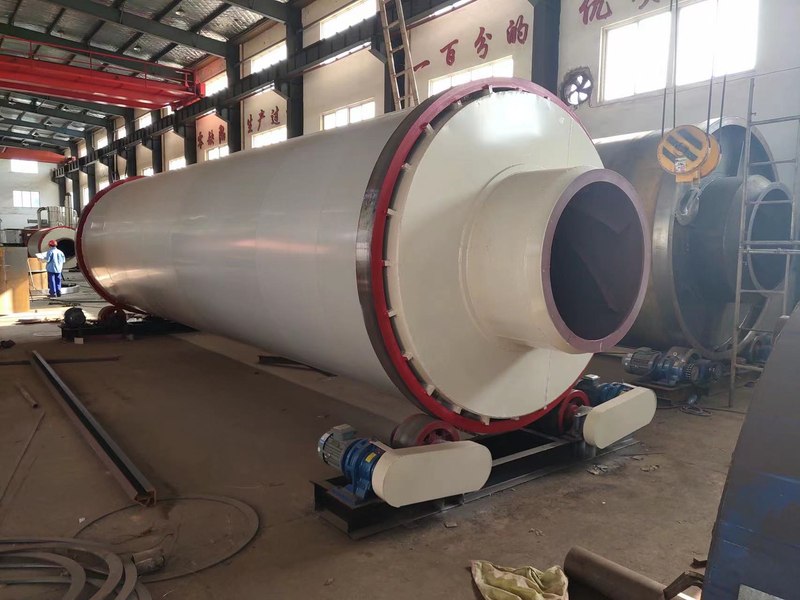
TCPEL is a professional industrial dryer manufacturer operating from a 20,000 sq m plant in Zhangqiu District, Jinan, Shandong Province, China. Our facility employs an excess of 100 highly skilled workers in our workshop, with dedicated station for welding manufacturing, machining for shafts and drum flanges, and a pneumatic assembly for drum-shelled that are 3.3m, 7.2m, 12.4m, 20 m in diameter. All TCSG is shop-tested before transportation.
CE
Machinery Directive
2006/42/EC
2006/42/EC
ISO 9001
Manajemen Mutu
:2015
:2015
60+
Export
Countries
Countries
100+
Workshop
Staff
Staff
20.000 m²
Factory Floor
Area
Area
5 yrs+
Operating
since 2020
since 2020
MD Certificate NTS2307069S
MD Certificate NTS2307070S
MD Certificate NTS2307071S
MD Certificate NTS2307072S
MD Certificate NTS2307073S
MD Certificate NTS2307074S
Where TCSG Dryers Are Operating
Our primary export markets include Germany, Finland, Russia, New Zealand, South Korea, India, Bangladesh, Vietnam, Malaysia, Turkey and more than 50 other counties across the region. The typical market installation pattern for the product is a mid-tier biomass pellet mill to regional fuel and bedding distributors.
Dryer Safety — What We Build In
Biomass dryer fires & explosions are caused by too much oxygen and too many fines. All TCSG units come with sealed feed and discharge air-locks, a high-efficiency cyclone separator, and a dust-collector silo for reduced fugitive dust. For wet biomass in regulated markets (US, EU), adding a spark detection-and-suppression system is standard practice; we work with the customer-selected safety vendor during start-up.
Quality Control — Three Hard Gates Before Shipment
Raw materials inbound check
We have weld inspection process to ensure that drum shell steel is for grade and thickness, bolts and spindles are accompanied by mill test certificates to accompany order documentation.
Acceptance inspection
We apply visual inspection and dielectric dye-penetrant to critical weld seams. Concurrently; drumshell trueness measured by laser then re-measured after stress relief.
Testing before shipping
When a drum is complete, our team spins the drum in our shop, running the fans, the air-lock and the electrical controls. We log vibration levels as well as record amperage if all motors.
Procurement Guide — Pricing, Lead Time, Payment & After-Sales
Rotary Drum Dryer Price Range by Capacity
TCPEL ships direct from the factory, providing pricing consistency across markets. Cost of final delivery depends on model, optional features (PLC level, dust-collection sizing), packing for sea freight, and local port. The following table shows the typical ex-works investment for each model in 2026 USD.
| Model | Kapasitas | Approx. Ex-Works Range (USD) | Typical Inclusions |
|---|---|---|---|
| TCSG10 | 1 T/H | $30,000 – $50,000 | Standard configuration |
| TCSG20 | 2 T/H | $45,000 – $70,000 | Standard + upgraded fan |
| TCSG30 | 3 T/H | $65,000 – $95,000 | Standard + larger cyclone |
| TCSG40 | 4 T/H | $85,000 – $130,000 | Standard + extended drum life kit |
| TCSG50 | 5 T/H | $115,000 – $175,000 | Heavy-duty drive train |
| TCSG60 | 6 T/H | $150,000 – $220,000 | Heavy-duty + automated controls |
Investment for the three model options in 2026USD.
Lead Time
- TCSG10 / TCSG20: 35–45 days from deposit to ex-works
- TCSG30 / TCSG40: 45–55 days from deposit to ex-works
- TCSG50 / TCSG60: 55–65 days from deposit to ex-works
This cost range is driven by three decision points: fan choice (standard or high-efficiency), automation level (manual or PLC with HMI), and dust-collection sizing for the customer’s emission requirements. Please send us the feedstock specification and emission target for a precise quotation, with a binding quote in one business day.
Ketentuan Pembayaran
Cost of shipping to the destination port by sea freight varies from 18 to 55 days. We work with the buyer’s forwarder or can arrange shipping ourselves on FOB Qingdao, CIF, or DAP terms.
Standard: 30% T/T deposit at order, 70% T/T balance after successful pre-shipment inspection
For orders exceeding USD 100,000, we accept Irrevocable Letter of Credit (LC) at sight.
After-Sales Commitment
Repeat customers (third order and beyond) can negotiate Open Account (OA) payment terms.
Garansi
12-month mechanical parts warranty from date of commissioning. 24-month warranty on electric cabinet, excluding consumables.
Suku cadang
We guarantee a lifetime supply of spare parts; common wear parts (bearings, seal kits, lifting flight repair plates) are shipped within 7-14 days of order placement.
Remote support
Engineering support via email and WhatsApp, with a one-business-day response time.
On-site service
Worldwide availability on a per-trip expense basis; travel and accommodations paid for by buyer.
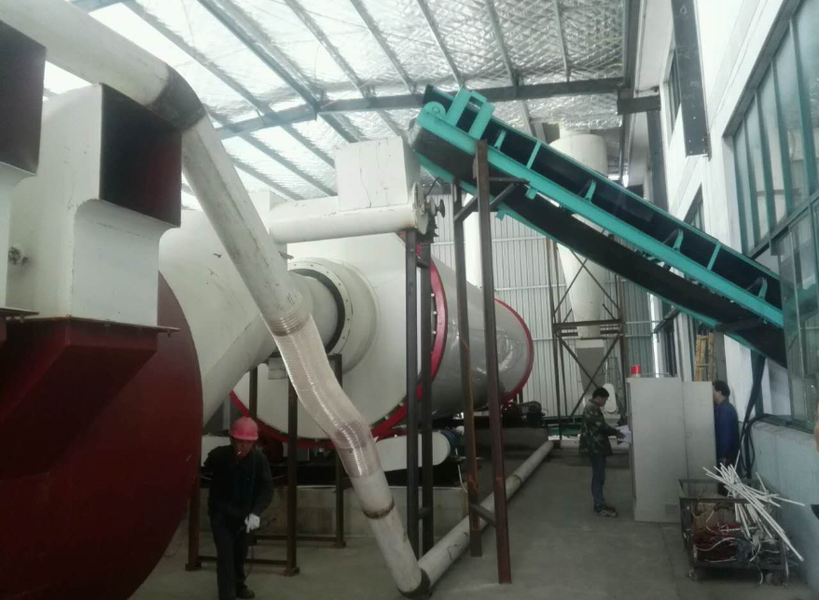
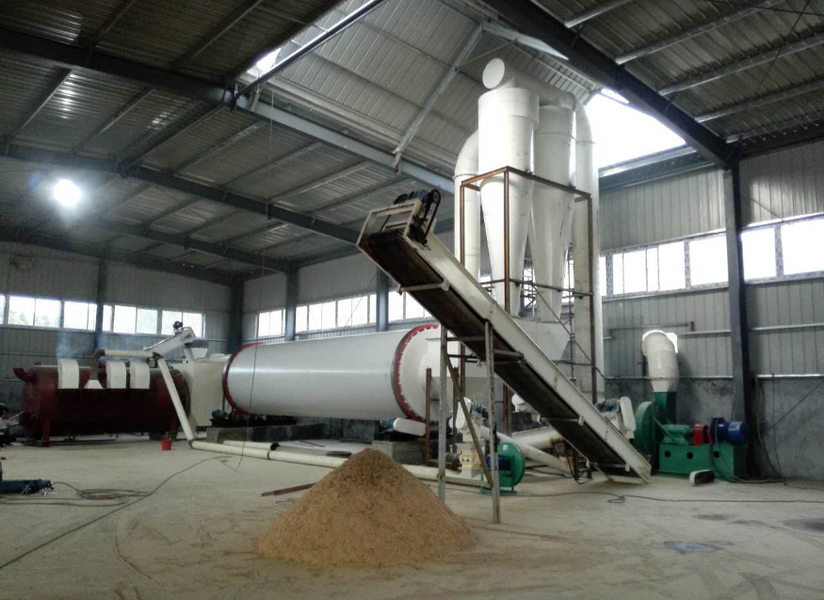
TCPEL Manufacturing Facility & Workshop Gallery



×
![Tampilan Diperbesar]()
Engineering & Decision Tools
Leverage our specialized calculators and decision matrices to determine the optimal rotary dryer configuration, estimate energy costs, and ensure maximum ROI for your biomass facility.
Kalkulator Ukuran Pengering Biomassa
Input your raw material type, target throughput, and inlet/outlet moisture levels to calculate the exact drum capacity and evaporation load required for your plant.
Kalkulator Peluncuran
Biomassa Pengering Estimator Biaya Energi
Project your thermal and electrical energy consumption based on local utility rates. Compare costs between different heat sources to maximize EBITDA margins.
Estimate Costs
Single Pass vs Triple Pass Decision Tool
Not sure which architecture suits your facility? Evaluate your feedstock constraints, floor footprint limits, and abrasiveness to determine the ideal dryer format.
Start Evaluation
Pertanyaan yang Sering Diajukan
Apa itu pengering rotary triple pass?
Minimum order quantity: one unit. No pre-stock piling of finished generic dryers – each TCSG ships configured to the buyer’s feedstock and emission profile.
Bahan apa yang bisa dikeringkan, dan pada kisaran kelembaban apa?
Pengering rotary triple pass terdiri dari tiga silinder drum konsentris bersarang (yang kedua memiliki diameter lebih kecil dari yang pertama, yang ketiga memiliki diameter lebih kecil dari yang kedua). Biomassa basah mentah memasuki drum paling dalam; gas panas mengupas kelembaban dari biomassa pada lintasan pertama, kemudian melewati ke luar ke tengah kemudian lintasan luar untuk memastikan pengurangan kelembaban bahkan ke tingkat outlet target. Dengan kira-kira setengah ruang lantai pengering drum tunggal itu menyelesaikan waktu tinggal mesin single pass yang panjang.
Bagaimana perbandingannya dengan pengering single-pass?
Pengering triple-pass hemat biaya untuk biomassa ringan dengan ukuran partikel bahan baku di bawah 40 mm. Pengering single-pass biasanya menawarkan umur drum-shell yang lebih lama, toleransi partikel yang lebih besar, dan energi kipas yang lebih rendah pada kapasitas yang setara. Jika bahan baku Anda mengandung pasir, pasir, atau mineral abrasif, atau ukuran partikel melebihi 40 mm, mesin single-pass adalah panggilan yang tepat.
Berapa harga pengering triple pass TCSG?
Perkiraan investasi ex-works berjalan dari USD30.000 untuk TCSG10 (1T/H) ke USD220.000 untuk TCSG60 (6T/H). Akurasi tunduk pada pemilihan kipas, tingkat otomatisasi dan ukuran debu-koleksi, dan tabel harga penuh di atas —kirimkan kami spesifikasi bahan baku Anda dan kami akan mengembalikan penawaran yang mengikat dalam satu hari kerja.
Berapa lead time pengiriman yang khas?
Perhatikan bahwa produksi berjalan 35-65 hari dari deposit tergantung pada ukuran. Angkutan laut menambahkan 18-55 tergantung pada pelabuhan tujuan. Untuk pembeli yang menyetor di Q1 awal, kami biasanya menyediakan pelabuhan Asia SE akhir-Q1 dan pelabuhan Eropa/Amerika Utara pertengahan-Q2.
Bisakah Anda menyesuaikan kapasitas di luar TCSG60 (6 T/H)?
Ya —as dari 2026 kami merekayasa tata letak twin-drum untuk proyek lebih dari 6T/H (dua TCSG60s berbagi sistem umpan dan pelepasan common) atau merekayasa badan drum khusus hingga 380014000mm. Waktu tunggu pada pembuatan khusus adalah 75-90 hari. Kirimkan kepada kami throughput dan bahan baku yang dimaksudkan dan kami akan memberi harga keduanya.
What’s the energy consumption per ton of biomass?
Permintaan daya listrik berkisar di 20-32 kWh/ton dari band produk kering untuk seri TCSG; unit terbesar cenderung menuju low end dengan skala ekonomi. Permintaan termal sangat konsisten sekitar 3.4MJ per kilogram air yang diuapkan; misalnya, hapus kelembaban 50-15% dalam ukuran TCSG40 untuk serbuk gergaji mengharapkan sekitar 9.500MJ/jam beban termal (lihat tabel energi di atas untuk rincian pada model individu).
Sertifikasi apa yang dimiliki TCPEL, dan apakah Anda mengirim secara global?
jika diperlukan kami mengirimkan mesin dengan tanda CE (Machinery Directive 2006/42/EC) dan memegang sertifikasi sistem manajemen mutu ISO 9001:2015. Kami telah mengirim ke 60+ negara, termasuk di UE (Jerman, Finlandia), sebagian besar CIS (Rusia), Asia Selatan (India, Pakistan, Bangladesh), Asia Tenggara (Vietnam, Malaysia), dan Asia-Pasifik (Selandia Baru, Korea Selatan). Standar keamanan atau impor khusus negara apa pun (UL AS, AS Australia dll.) tersedia berdasarkan permintaan sebagai bagian dari kutipan proyek.
Trending sekarang