Póngase en contacto con TCPEL

Línea de producción de pellets de alimento balanceado
Línea de producción de pellets de alimento balanceado: 11 modelos de rodillos inclinados de 150 kg/h a 6 Ton/h | Fabricante TCPEL
Líneas completas llave en mano para producir alimento balanceado peletizado para aves, animales de granja y acuicultura: líneas de procesamiento de alimento balanceado a pequeña escala industrial. Precios de lista FOB Qingdao y pruebas CE / MD, matriz prémium de 20CrMnTi para aves, animales de granja y acuicultura, en operación en más de 60 mercados desde 2020.
Solicitar cotización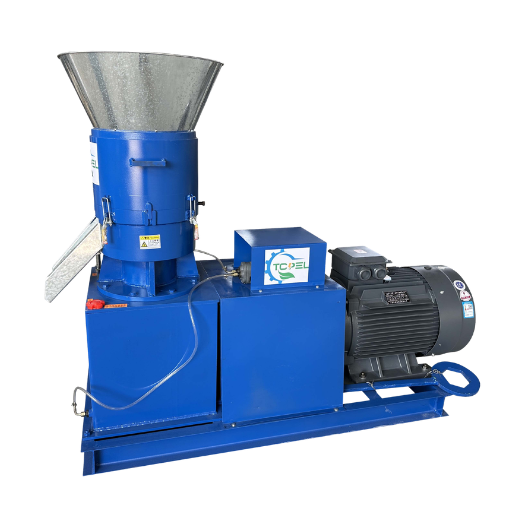
Resumen de la solución: línea de producción de pellets de alimento balanceado TCPEL
Intervalo de capacidad
150 kg/h – 6 ton/h
Modelos disponibles
11 (TCF150 → TCF800)
Material de la matriz de peletizado
20CrMnTi HRC 58-62
Vida útil de la matriz de peletizado
1,800 – 2,500 horas
Diámetro del pellet
2 mm – 10 mm
Precio FOB Qingdao
$11K – $185K (4 niveles)
Construcción de una planta de alimento balanceado peletizado en 2026: por qué las líneas de rodillos inclinados producen más que las configuraciones de rodillos planos
Los compradores internacionales de equipos para producir alimento balanceado peletizado parecen observar las mismas tres pérdidas de producción cada año. Los operadores encuentran matrices destrozadas entre las existencias después de 18 meses, patrones de desgaste irregulares que reducen los intervalos óptimos de producción y un gruñido en la caja de engranajes que indica falta de mantenimiento antes de que falle el equipo. En todos los casos, estas pérdidas pueden atribuirse a una sencilla decisión de diseño: la forma en que los rodillos entran en contacto con la matriz de peletizado.
Una peletizadora de rodillos planos concentra la fuerza centrífuga en la superficie de la matriz de peletizado, por lo que el equilibrio EQOS cede rápidamente ante el desgaste desigual. En el análisis de tres líneas sobre fallas prematuras de matrices anulares de 2025, el desgaste desigual ocupa el primer lugar, junto con las grietas, el apelmazamiento del alimento y la reducción de la producción. Ese único síntoma de falla explica por qué las matrices deben cambiarse en 12-14 meses cuando la vida útil de diseño indicada en el catálogo es de 24 meses.
Problema de producción
Desgaste desigual de la matriz, primero en el perímetro
La fuerza centrífuga de los rodillos planos concentra ingeniosamente la carga en el anillo exterior de la matriz y agota prematuramente material sano de esta.
Problema operativo
Obstrucción con materias primas húmedas
La eliminación extrema de finos y el exceso de humedad perjudican la capacidad de los orificios para permitir el deslizamiento durante el calor del verano.
Problema de capital
Vida útil desperdiciada de una matriz prémium
Las matrices de 20CrMnTi soportan 1,800-2,500 horas, mientras que las de rodillos planos soportan 1,200 con una carga equilibrada y una alimentación equivalente, debido al exceso de carga centrífuga.
Con una interfaz rediseñada entre rodillos y matriz en 2022, TCPEL descubrió que la configuración de rodillos inclinados puede abordar todo ese conjunto de modos de falla. La superficie cónica del rodillo permanece en contacto en toda la zona de peletización. Los rodillos cónicos incorporan rodamientos guía cónicos que admiten conjuntamente las cargas radiales y axiales, minimizan la tensión centrífuga sobre el anillo de la matriz y proporcionan una presión equilibrada en toda la zona de peletización.
Resultado en el entorno de fabricación:
Desgaste predecible de la matriz; temperatura máxima del aceite; los operadores obtienen la vida útil exacta de 1,800-2,500 horas prevista para el diseño de 20CrMnTi; la operación de grado alimentario tolera materias primas con alta humedad sin requerir deshidratación previa. Los proveedores pueden cotizar en USD FOB Qingdao; los pedidos pueden especificar el tipo de matriz, el voltaje y las opciones de variación.
Línea de producción de pellets de alimento balanceado TCPEL: 11 modelos de 150 kg/h a 6 Ton/h
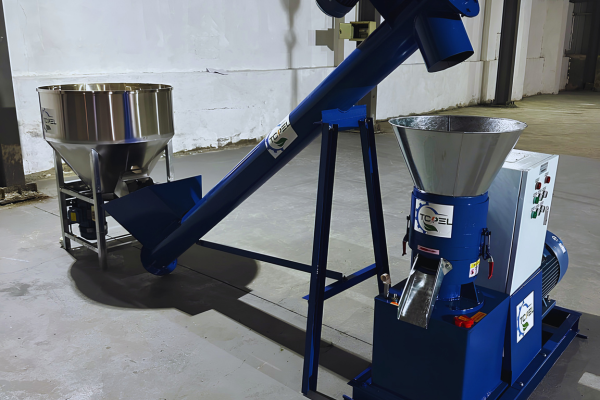
La serie TCF fabrica toda la línea de producción de pellets de alimento para animales. El diseño de rodillos inclinados inhabilita 11 modelos del proveedor de líneas de producción para cubrir toda la escala de aplicaciones comerciales de alimento balanceado: desde 200 kg/h [440 lb/h] para el TCF150 hasta 6 t/h [13,220 lb/h] para los modelos TCF800. Los cabezales operativos de 2 rodillos de los TCF150-TCF450 [150 kg/h – 2.5 t/h] manejan cargas pesadas de hasta 9 t/h; los cabezales de tres rodillos de los TCF550-TCF800 [2.5 t/h – 6 t/h] permiten una mayor capacidad de procesamiento mediante zonas de compresión adicionales.
Tabla completa de especificaciones TCF, verificada con el catálogo de ingeniería de TCPEL
| Modelo | Capacidad de producción | Potencia | Energía específica* | Rodillo | Peso | Dimensiones (mm) | USD FOB Qingdao |
|---|---|---|---|---|---|---|---|
| TCF150 | 150–200 kg/h | 7.5 kW | ~38–50 kWh/t | 2 incl. | 190 kg | 1220×620×840 | $900 |
| TCF200 | 300–400 kg/h | 11 kW | ~28–37 kWh/t | 2 incl. | 270 kg | 1420×670×1100 | $1,600 |
| TCF250 | 600–800 kg/h | 15 kW | ~19–25 kWh/t | 2 incl. | 480 kg | 1660×740×1220 | $2,400 |
| TCF300 | 800–1,000 kg/h | 22 kW | ~22–28 kWh/t | 2 incl. | 650 kg | 1830×880×1560 | $2,700 |
| TCF350 | 1,000–1,200 kg/h | 30 kW | ~25–30 kWh/t | 2 incl. | 750 kg | 1960×920×1680 | $3,600 |
| TCF400 | 1,400–2,000 kg/h | 37 kW | ~19–26 kWh/t | 2 incl. | 900 kg | 2550×980×1600 | $4,300 |
| TCF450 | 2,000–2,500 kg/h | 45 kW | ~18–23 kWh/t | 2 incl. | 1,500 kg | 2780×1100×1700 | $6,300 |
| TCF550 | 2,500–3,500 kg/h | 75 kW | ~21–30 kWh/t | 3 incl. | 1,800 kg | 2900×1300×1900 | $9,500 |
| TCF650 | 3,000–4,000 kg/h | 90 kW | ~22–30 kWh/t | 3 incl. | 2,100 kg | 2950×1500×2000 | $14,500 |
| TCF700 | 4,000–5,000 kg/h | 110 kW | ~22–28 kWh/t | 3 incl. | 2,500 kg | 3000×1600×2100 | $18,800 |
| TCF800 | 5,000–6,000 kg/h | 132 kW | ~22–26 kWh/t | 3 incl. | 2,900 kg | 3150×1800×2200 | $22,500 |
* El consumo de energía específica se estimó a partir de la relación entre la potencia nominal [sesenta Hz] y la capacidad nominal [US], y coincide con las pruebas publicadas del sector sobre energía de peletización, situadas entre 4 y 40 kWh/t. La lista de precios FOB Qingdao es meramente indicativa; el pedido final depende del tipo de matriz, de 60 Hz o 50 Hz y de las opciones.
Matriz de decisión: elija según la producción diaria × el patrón de turnos × el tipo de animal
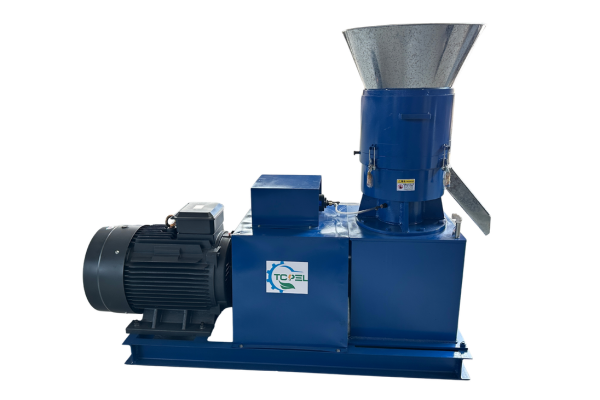
Categoría mini
TCF150 – TCF200 · 150–400 kg/h
- Granjas familiares / por contrato
- Un turno, producción ≤2 t/día
- Aves, conejos y ganado menor
- Punto de entrada con baja inversión de capital
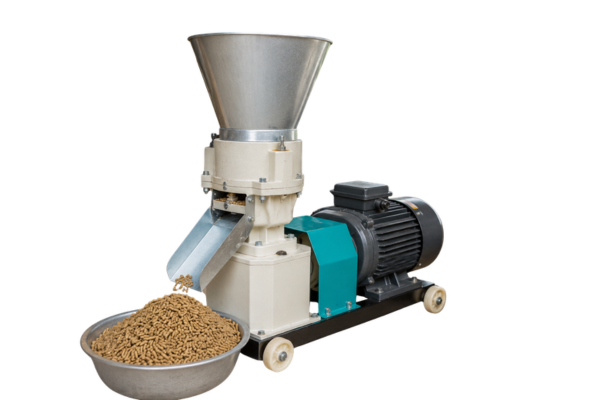
Categoría pequeña
TCF250 – TCF350 · 600–1,200 kg/h
- Cooperativas / plantas de alimento balanceado para pymes
- Dos turnos, producción de 5–10 t/día
- Formulación para varias especies
- Categoría más popular para plantas nuevas
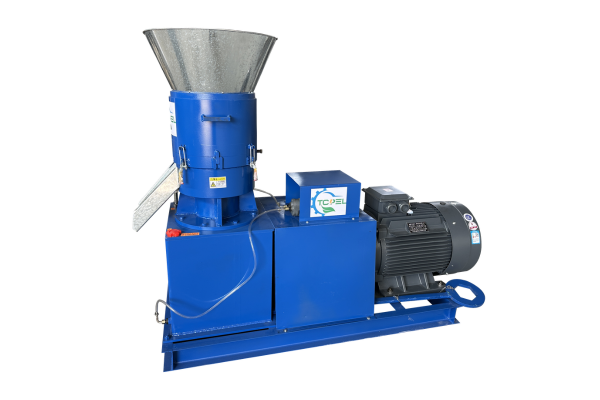
Categoría mediana
TCF400 – TCF450 · 1,400–2,500 kg/h
- Marcas comerciales de alimento balanceado
- Dos/tres turnos, 15–25 t/día
- Bomba de aceite automática desde el TCF300+
- Punto óptimo para mercados de exportación
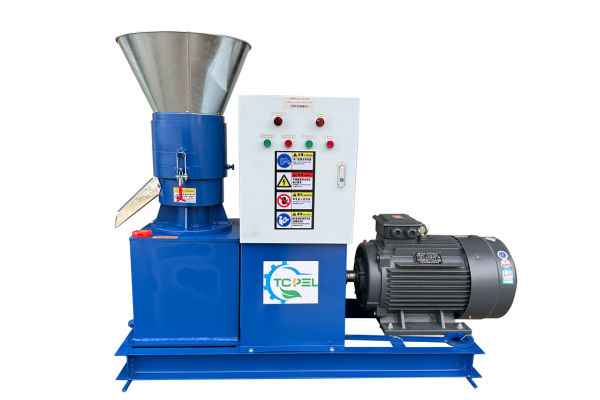
Categoría grande
TCF550 – TCF800 · 2,500–6,000 kg/h
- Escala industrial / municipal
- Tres turnos, 50–80 t/día
- Cabezales de 3 rodillos, 75–132 kW
- Enfriador de contraflujo SKLN6 compatible
El cálculo para el comprador es sencillo: tome su producción diaria media en toneladas / día y añada un margen de inactividad del 20% para sus horas de trabajo / día respecto de la capacidad mínima de su modelo. Por ejemplo, una planta de alimento para pollos de engorde de 12 t/día que opera 2 turnos / día de 8 horas seleccionará el TCF400 (1,400-2,000 kg/h), no el TCF450, porque el tiempo real de actividad se acerca más al 80-85% que al 100%.
Acceda a la calculadora de dimensionamiento de plantas TCPEL: ingrese la producción diaria, el programa de turnos y el tipo de animal, y obtenga un modelo en 30 segundos.
Solicitar cotización detallada (ventana emergente)Los 8 componentes de una línea TCPEL de alimento balanceado peletizado
Una línea llave en mano para producir alimento balanceado peletizado es un producto personalizado, no una sola unidad. Es un tren de proceso en el que cada unidad recibe material de la anterior, por lo que la menor tasa de alimentación determina la capacidad de producción efectiva. TCPEL desarrolla directamente en sus propios talleres ocho de los componentes según las especificaciones de nuestras nueve peletizadoras TCF principales, la primera unidad de ese tren.
1

Molino de martillos
Accionamiento directo a 3,000 r/min · MD-NTS2307071S
Entrega cereales, legumbres y paja de pasto a la unidad peletizadora en una forma lista para usarse como ingrediente de peletización. La placa de descarga ampliable por ambos lados produce un cono de producto de gran volumen hacia la cámara de peletización. Úselo con un ciclón y un respiradero con filtro de mangas para contener los aerosoles de polvo.
2
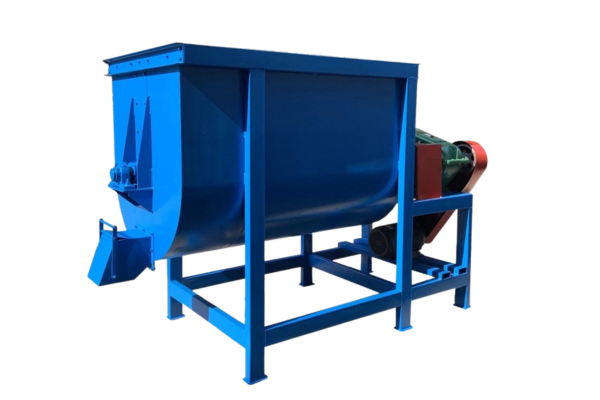
Mezcladora
Opciones de paletas de doble eje / cintas
Garantiza la uniformidad de los pellets. Las boquillas atomizadoras incorporan ingredientes líquidos (ácidos grasos, melaza y mezclas vitamínicas) durante el ciclo de mezcla. Hay mezcladoras de paletas de uno, dos y tres ejes, así como mezcladoras de cintas.
3
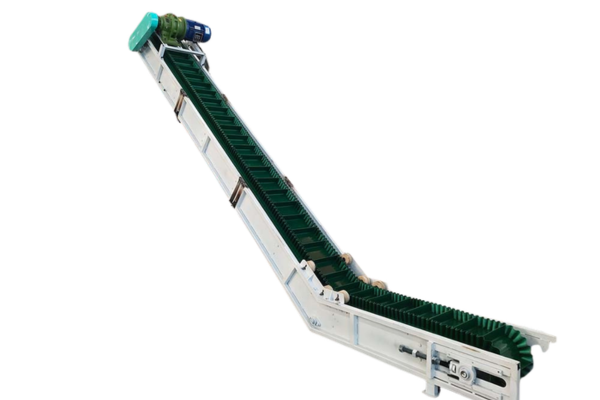
Transportador de tornillo / banda
Opciones de tornillo sinfín y banda con deflectores
Alimenta la peletizadora MC6610. Superficies de contacto de acero inoxidable; resistentes a la corrosión provocada por cultivos y formulaciones húmedos.
4

Peletizadora (serie TCF)
11 modelos · MD-NTS2307072S
La base de la línea. Portamatriz de rodillos inclinados; matriz de acero para herramientas cementada superficialmente (superficie HRC 58-62, núcleo HRC 33-48); devanado del motor de cobre al 100%; sistema de transmisión con doble junta universal para una alineación axial perfecta.
5
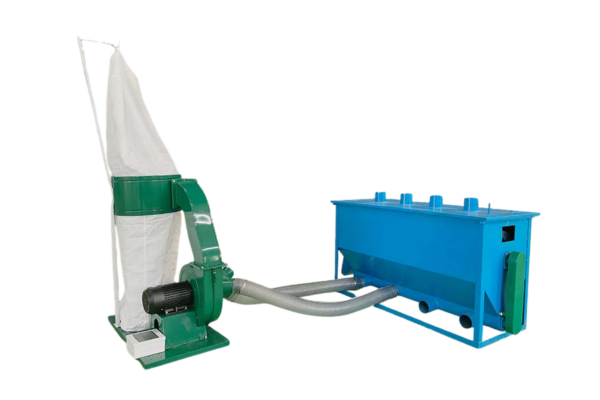
Enfriador de contraflujo
5 modelos · MD-NTS2307073S
Los pellets se transportan desde la parte superior de la peletizadora hacia abajo, mientras el aire ambiente circula desde abajo hacia arriba. La temperatura del pellet enfriado se mantiene como máximo a plus-5C respecto de la temperatura ambiente y la reducción del punto de rocío es del 3.8%. El separador vibratorio elimina el polvo y los finos antes del dimensionamiento posterior en la línea.
6
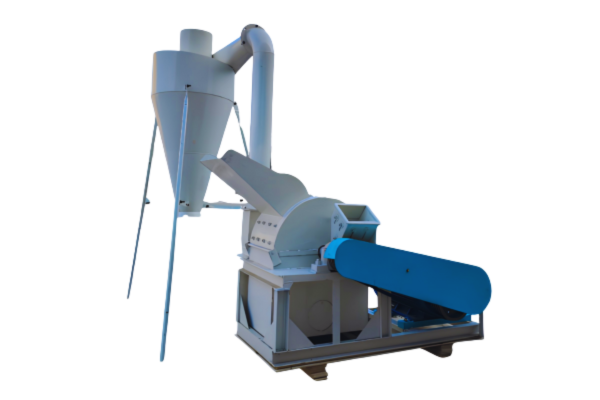
Desmenuzador (opcional)
De rodillos, con dos o tres rodillos
Necesario en las dietas de patos y patitos cuando se desmenuzan hasta alcanzar el tamaño usado para pollos de engorde con soya. Permite dimensionar alimento para crías o alevines de lubina sin volver a peletizar.
7
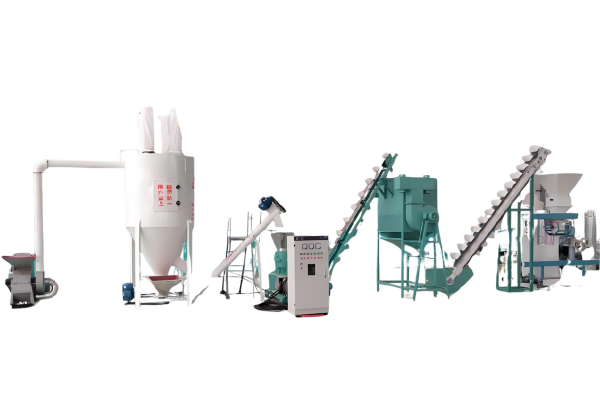
Criba vibratoria
Tamiz rotativo de clasificación
La criba de dos niveles separa el material sobredimensionado, el de tamaño objetivo y los finos. Los fragmentos de cualquier tamaño se separan de los pellets con el tamaño objetivo y se controlan para equilibrar la energía de los pellets y del alimento balanceado. El material vuelve a la mezcladora según sea necesario, mientras los pellets con el tamaño objetivo avanzan hacia el ensacado. Recupera hasta el 95% de los fragmentos como producto vendible.
8
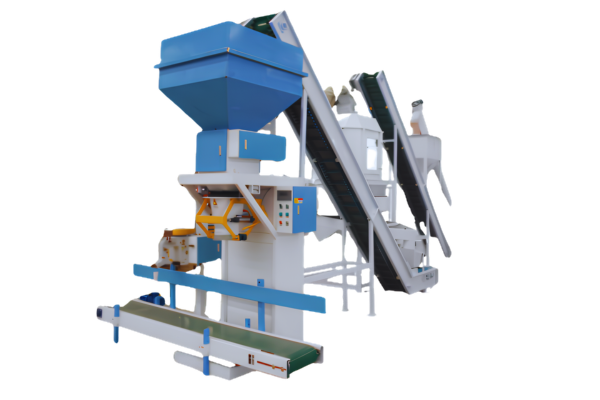
Ensacadora (BZ80)
Sacos de 15–50 kg · MD-NTS2307069S
Celdas de carga de estado sólido y controles con microprocesador basados en PLC. Precisión de pesaje de hasta 0.2%, con caudales posibles de 200-300 sacos / hora. Cortador automático de hilo opcional.
Controles integrados y PLC
Componentes de gestión eléctrica basados en PLC de CHINT y Delixi, dos destacados proveedores chinos de equipos eléctricos. El cableado se aloja en un gabinete [de control] sellado y personalizado, protegido contra la intemperie y las salpicaduras, con un subpanel que facilita el mantenimiento y la alimentación del PLC, y diseñado también para entornos con mucho polvo. Hay controles automatizados totalmente integrados para operar durante 24 horas.
“Probamos tres geometrías de rodillos en el TCF300 antes de decidirnos por el diseño inclinado con rodamientos cónicos. La variante de rodillos planos agotó una matriz de 20CrMnTi en aproximadamente 1,400 horas con la misma mezcla de alimento; la geometría inclinada elevó esa cifra a 2,100 horas en el mismo banco de pruebas. Esa es la única configuración que enviamos a los clientes.”
— Equipo de ingeniería de TCPEL, taller de I+D, Jinan
TCPEL frente a equipos importados (ANDRITZ / Bühler / CPM) y nacionales de bajo costo: comparación honesta
Una buena comparación entre proveedores para este mercado es poco común, así que aquí está. ANDRITZ, Bühler y CPM son líderes claros de la categoría importada, con décadas de experiencia acreditada en sistemas de matriz anular de 3-80 t/h y un excelente historial de servicio al cliente. En la categoría nacional de precio más bajo, es posible que el historial no sea tan sólido después del segundo año y que no se incluyan la especificación metalúrgica ni el alcance de la garantía que ofrecen los tres fabricantes mencionados. TCPEL sí los ofrece.
| Aspecto | Categoría importada (ANDRITZ / Bühler / CPM) | TCPEL con rodillos inclinados | Equipo nacional de bajo costo |
|---|---|---|---|
| Correspondencia de capacidad | 3–80 t/h | 0.15–6 t/h (11 modelos) | 0.1–3 t/h (normalmente 4–5 modelos) |
| Energía específica | ~18–24 kWh/t (grande); no declarada para equipos pequeños | ~18–28 kWh/t (mediano-grande) | ~30–50 kWh/t (rara vez declarada) |
| Material de la matriz de peletizado | Chrome Plus / X46Cr13 / material propio | 20CrMnTi cementado superficialmente, HRC 58-62 | A menudo GCr15 sin especificar (HRC 50-55) |
| Vida útil de la matriz de peletizado | 2,000–3,000 h (matrices prémium) | 1,800–2,500 h | Normalmente 800–1,200 h |
| Inversión de capital (categoría mediana) | $120K–$400K+ | $48K–$95K | $20K–$45K |
| Plazo de entrega | 16–32 semanas desde fábrica | 15 días laborables + transporte marítimo | 15–30 días laborables (variable) |
| Garantía (componentes principales) | 12–24 meses | 12 meses + existencias de repuestos en Qingdao | Normalmente 3–6 meses |
Las cifras por sí solas no son lo que cuenta. El sistema que elija depende en gran medida de cuál de estos factores priorice para su operación: la menor energía específica con un tamaño determinado, el plazo de entrega más rápido, una metalurgia transparente o el menor costo de entrada.
Elija un equipo importado si…
Su línea opera a >10 t/h durante tres turnos al día y cada día de inactividad de cada componente cuesta >$5,000, mientras su equipo de ingeniería ha incluido en las especificaciones de compra los requisitos de capacitación de cada marca de componentes.
Elija TCPEL si…
Busca una línea de 0.5-6 t/h; prefiere una metalurgia de alta calidad para la matriz (20CrMnTi); desea conocer de antemano las especificaciones detalladas de la marca del motor (CHINT/Delixi) para planificar y prefiere un plazo de producción de 15 días en vez de esperar 4 meses.
Elija una opción de bajo costo si…
Su límite de inversión de capital es inferior a $30K, su objetivo de producción es inferior a 1 t/h y acepta que los costos de reemplazo de la matriz y fallas del motor durante los años 1-3 sean superiores al ahorro inicial.
Solicite una cotización comparativa personalizada: indique su objetivo de producción diaria y la combinación del alimento, y reciba en 24 horas una comparación por partidas del valor de estos equipos TCEPL frente a las importaciones indirectas.
Solicitar comparaciónProceso de producción: de la materia prima a los pellets ensacados
El proceso de fabricación de alimento balanceado peletizado consiste en convertir cuidadosamente ingredientes sueltos en polvo en pellets uniformes, densos, estériles y almacenables. A lo largo de estas ocho etapas se consigue una cualidad deseada en cada una: tamaño de partícula, uniformidad de la formulación, densidad, inocuidad microbiana, contenido de humedad, dimensiones finales del pellet y dimensiones del envase final.
Detalle del proceso etapa por etapa
1
Recepción y molienda de materias primas
Los lotes de las siguientes materias primas llegan a granel o en sacos de 25~50 kg: maíz, trigo, harina de soya, harina de pescado, torta de colza y pajas forrajeras. Se introducen en un molino de martillos cuyo tamaño de malla se ajusta a las especificaciones del alimento balanceado peletizado (menos de 2.5 mm para alimento de pollos y menos de 1 mm para alimento acuícola). Un cribado excesivo (= tamaño de partícula superior al requerido) reduce la digestibilidad y una molienda demasiado gruesa puede debilitar las propiedades del pellet.
2
Dosificación y mezcla
La mezcladora integra los ingredientes molidos con la premezcla vitamínica, el bicarbonato de calcio y el polvo de piedra según la fórmula publicada para el animal objetivo. La fórmula publicada por RICHI para pollos de engorde es un ejemplo de variación: harina de soya 53%; harina de semilla de algodón 18%; torta de colza 4.1%; harina proteica de maíz 8%; DDGS 4%; bicarbonato de calcio 4%; polvo de piedra 4%. Los aditivos líquidos se incorporan por aspersión durante el intervalo óptimo de mezcla.
3
Acondicionamiento
El operador inyecta vapor directo para elevar la temperatura de la mezcla a 75-90C en el acondicionador situado justo encima de la peletizadora. El calor ablanda los aglutinantes, gelatiniza el almidón y elimina cualquier patógeno. Consulte los artículos revisados por pares sobre pasteurización/control de Salmonella y comprobará que la temperatura de acondicionamiento es el punto crítico de control para reducir los patógenos en el alimento balanceado. El acondicionamiento reduce los patógenos, pero no esteriliza el material.
4
Peletización
La mezcla acondicionada se introduce en la cámara de la peletizadora. Los rodillos inclinados comprimen radialmente la mezcla a través de los orificios de la matriz de 20CrMnTi. Los pellets se extruyen a 80-90c y con un contenido de humedad del 15-17%, y se cortan a la longitud requerida mediante una cuchilla ajustable.
5
Enfriamiento por contraflujo
El pellet caliente cae desde la extrusora y desciende por el enfriador. El aire ambiente entra por debajo. La geometría de contraflujo reduce la temperatura del pellet hasta situarla dentro de +5 C respecto del ambiente y la humedad en al menos 3.8%. El pellet enfriado alcanza la madurez estructural suficiente para soportar el cribado, el ensacado y el transporte marítimo.
6
Desmenuzado (opcional)
Los desmenuzadores de rodillos se utilizan para reducir pellets grandes al tamaño requerido para pollitos, alevines o crías. Los desmenuzadores funcionan únicamente cuando la formulación requiere un tamaño de pellet inferior al orificio más pequeño de la matriz.
7
Cribado y clasificación
Una criba rotativa de dos niveles separa los terrones sobredimensionados, los pellets con el tamaño objetivo y los finos en los sistemas de acabado final. Los terrones sobredimensionados vuelven al desmenuzador; los finos regresan a la mezcladora; los pellets con el tamaño objetivo avanzan al ensacado.
8
Ensacado
La báscula ensacadora BZ80 llena sacos de 15-50 kg a 200-300 papeles/segundo con una precisión de pesaje del 0.2%. Los cabezales de costura con corte de hilo opcionales cierran automáticamente la boca del saco y evitan el esfuerzo físico del trabajo manual.
Alimento flotante frente a alimento de hundimiento para peces: dos arquitecturas de producción
Los clientes de acuicultura afrontan una decisión crucial al principio del ciclo de compra de alimento para peces: el alimento flotante (para tilapia, bagre, koi y las etapas de engorde del camarón en una piscifactoría comercial típica) requiere una extrusora de alimento para peces en lugar de una peletizadora por prensado. El alimento de hundimiento para peces (para carpa, especies de fondo, alevines juveniles y cangrejos) funciona con la peletizadora estándar de matriz anular TCF: el mismo esquema de procesamiento del alimento balanceado peletizado usado para aves y ganado bovino.
Una línea de producción de alimento flotante para peces opera la extrusora a 110-130 C con inyección de vapor a alta presión. La alta temperatura y presión expanden la masa, y el aire atrapado permite que el pellet terminado flote durante 12-24 horas después de llegar a la superficie del agua. La densidad del alimento flotante para peces varía entre 350-450 g/L, frente a 600-700 g/L para los pellets prensados de hundimiento; una línea comercial de máquinas para alimento de peces con una producción de 100 kg/h o más puede alcanzar varias toneladas por hora.
TCPEL ofrece proyectos de líneas de procesamiento de alimento para peces compuestos por una extrusora de doble tornillo, el secador de triple paso TCSG para reducir la humedad por debajo del 10% y asegurar la estabilidad durante el almacenamiento, el molino de martillos ultrafino para cumplir las especificaciones de tamaño de partícula fino exigidas en los alimentos acuícolas y la fabricación de alimento para peces, y los módulos genéricos de mezcladora + enfriador + ensacado. La capacidad abarca desde plantas piloto de fabricación de alimento peletizado para peces de 100 kg/h hasta plantas de fabricación de alimento para peces y líneas de producción para piscifactorías comerciales de 6 t/h; personalice la configuración según la especie objetivo y su ciclo.
Arquitectura para alimento flotante de peces
Extrusora + secador + enfriador
Extrusora de doble tornillo + secador de triple paso TCSG + enfriador de contraflujo + ensacadora. Se utiliza para tilapia, bagre, camarones en crecimiento y koi ornamentales.
Arquitectura para alimento de hundimiento para peces
Peletizadora TCF de matriz anular
Peletizadora TCF estándar + enfriador SKLN + desmenuzador. Se utiliza para carpas, especies que se alimentan en el fondo, alevines juveniles y alimento para cangrejos.
La densidad del pellet y el tiempo de flotación son los dos factores de producción que determinan la configuración de cualquier línea de procesamiento de alimento para peces. Los fabricantes que producen ambos formatos suelen instalar dos sublíneas simultáneas a partir de la misma estructura TCPEL: una basada en extrusión para el producto flotante y otra basada en una matriz anular para el producto de hundimiento, que comparten el molino de martillos y la mezcladora de las etapas iniciales, creando así una sinergia de capital.
Tamaño del pellet según la etapa del animal: referencia de producción
| Animal y etapa | Diámetro recomendado del pellet | Tipo de alimento |
|---|---|---|
| Pollito (≤10 días) | 1.5 mm o polvo | Iniciador (se prefieren alimentos en polvo) |
| Pollo mediano (10–30 días) | 2.5–3.0 mm | Pellet de crecimiento |
| Pollo grande / de engorde (30–45 días) | 3.5–4.0 mm | Pellet de finalización |
| Gallina ponedora | Se prefiere el alimento en polvo | Fórmula personalizada |
| Ganado bovino / lechero | 6.0–8.0 mm | Pellet de ración total mezclada |
| Oveja / cabra | 4.0–6.0 mm | Pellet concentrado |
| Alimento flotante para peces (extruido) | 2.5–6.0 mm | Tilapia, bagre y camarón en crecimiento |
| Alimento de hundimiento para peces (prensado) | 2.0–4.0 mm | Carpa y acuicultura con alimento de hundimiento |
Producción real de clientes: 3 configuraciones de proyectos TCPEL
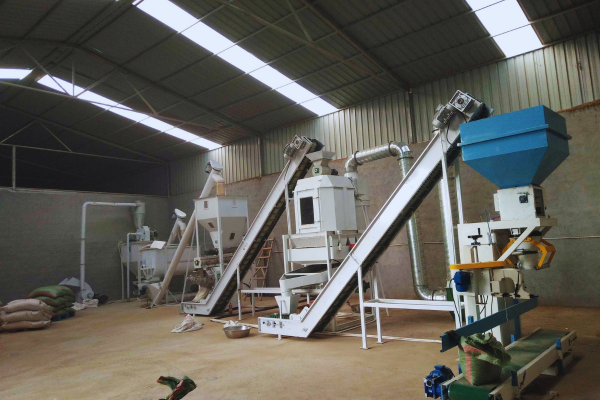
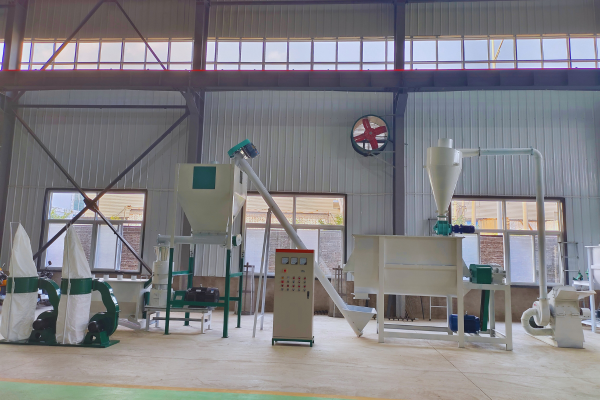
Desde 2020, TCPEL ha exportado líneas de producción de pellets de alimento balanceado a más de 60 países, con líneas activas instaladas en el subcontinente, el Sudeste Asiático, África, Europa y las islas del Pacífico. Tres imágenes de configuraciones de líneas de muestra ilustran líneas principales de la serie TCF construidas y entregadas por TCPEL para distintos niveles de producción.
Bangladés: línea de alimento para aves de 1 t/h
Esta configuración responde al aumento de la demanda nacional de alimento balanceado. En Bangladés, el consumo de alimento balanceado y residuos alcanzó 6.7 millones de MT en el MY 2024/25.
Peletizadora
TCF300 · 22 kW · 800–1,000 kg/h
Equipos auxiliares
Molino de martillos + mezcladora de doble eje + enfriador SKLN2.5 + ensacadora BZ80
Tamaños del pellet
2.5 mm para pollos de engorde / 3.0 mm para gallinas ponedoras
Rango de inversión
$28,000 – $34,000 FOB Qingdao (línea completa)
Plazo de entrega
15 días laborables de producción + ~25 días de transporte marítimo hasta Chittagong
Pakistán — línea de alimento para ganado bovino de 500 kg/h
Grupo de granjas lecheras cooperativas, centrado en pellets para ganado bovino elaborados con pasto y paja.
Peletizadora
TCF250 · 15 kW · 600–800 kg/h
Equipos auxiliares
Molino de martillos + mezcladora de cinta + enfriador SKLN1.5 + estación de ensacado manual
Tamaños del pellet
Pellet de pasto y maíz de 6.0 mm para ganado bovino
Rango de inversión
$22,000 – $26,500 FOB Qingdao
Plazo de entrega
15 días laborables + ~30 días de transporte marítimo hasta Karachi
Malasia — línea de alimento flotante para peces (extruido)
Acuicultura de tilapia / bagre, que requiere alimento flotante. La demanda acuícola se reconoce en El estado mundial de la pesca y la acuicultura 2024 de la FAO.
Equipos principales
Extrusora de doble tornillo + secador de triple paso TCSG20 · 2 t/h
Equipos auxiliares
Molino de martillos ultrafino + mezcladora + enfriador + ensacadora BZ80
Tamaños del pellet
Alimento flotante para peces de 2.5–6.0 mm
Rango de inversión
$72,000 – $95,000 FOB Qingdao
Plazo de entrega
20 días laborables de producción + ~14 días de transporte marítimo hasta Port Klang
Presencia internacional — 60+ países desde 2020
🇩🇪 Alemania
🇫🇮 Finlandia
🇷🇺 Rusia
🇳🇿 Nueva Zelanda
🇰🇷 Corea del Sur
🇵🇰 Pakistán
🇮🇳 India
🇧🇩 Bangladés
🇻🇳 Vietnam
🇲🇾 Malasia
🇹🇷 Turquía
+ 49 más
Plata — marco de TCO
TCO de sustitución de matrices: 20CrMnTi frente a GCr15 estándar
La matriz premium de 20CrMnTi ofrece una vida útil considerablemente mayor, de 1,800-2,500 horas, frente a las 1,200-1,800 horas de la matriz estándar de GCr15. En una línea de gama media que funciona 16 horas al día, la pequeña inversión adicional que permite realizar un cambio de matriz menos al año genera un ahorro recurrente de aproximadamente $1,200 a $3,500 anuales en una operación con una TCF400. Los resultados de campo demuestran que la metalurgia premium de la matriz justifica su costo durante los primeros 8-12 meses.
Análisis de TCO basado en datos del sector sobre los beneficios de la vida útil de las matrices con distintos niveles de inversión inicial. El ahorro exacto depende del tamaño de los lotes de alimento balanceado, la humedad y el esquema de turnos; solicite un análisis de TCO personalizado para su operación.
Certificaciones y cumplimiento — qué está documentado y qué significa
Cada pedido de maquinaria de exportación de TCPEL incluye el marcado CE y la emisión de la certificación china de la Directiva de Maquinaria (MD). Se emiten seis números distintos de certificación MD para cada conjunto de equipos de la línea solicitado. El marcado CE cumple la Directiva de Máquinas 2006/42/EC de la UE, cuya transición al Reglamento (EU) 2023/1230 comienza el 1 de enero de 2027.
Guía de compras — precios, plazo de entrega, pago y servicio posventa
TCPEL publica precios de referencia en USD FOB Qingdao para cada modelo de peletizadora de alimento balanceado y enfriador SKLN, algo sin precedentes en el sector. Los precios de lista son referencias orientativas; la aprobación de su cotización estará sujeta a factores como las especificaciones de la matriz, los voltajes de accionamiento, la compatibilidad con la norma eléctrica del país de destino y las funciones incluidas.
Referencia de precios en 4 niveles — líneas completas de producción de alimento balanceado peletizado
Línea mini
150–400 kg/h · TCF150–200
$11,200 – $15,500
Peletizadora + enfriador básico + molino de martillos pequeño + mezcladora manual
Granja familiar / escala piloto
Referencia en USD FOB Qingdao
Línea pequeña
600–1,200 kg/h · TCF250–350
$24,500 – $32,000
Peletizadora + enfriador SKLN1.5/2.5 + molino de martillos + mezcladora de cinta
Planta de alimento balanceado de una pyme / cooperativa
Nivel más solicitado por nuevos compradores internacionales
Línea mediana
1,400–2,500 kg/h · TCF400–450
$48,000 – $72,000
Peletizadora + enfriador SKLN4 + secador + ensacadora BZ80
Planta comercial de alimento balanceado de marca propia
Opción disponible de bomba de aceite automática y PLC
Línea grande
2,500–6,000 kg/h · TCF550–800
$95,000 – $185,000
Peletizadora + SKLN6 + secador de triple paso TCSG + interfaz PLC con automatización completa
Escala industrial / municipal
Cabezal peletizador de 3 rodillos para compresión de alta capacidad de procesamiento
Los precios indicados se basan en la cotización de peletizadoras de alimento balanceado TCPEL y en las listas de precios de accesorios. La cotización variará según las características de los materiales del alimento balanceado, las funciones seleccionadas y el Incoterm de envío.
Plazo de entrega, condiciones de pago y servicio posventa — compromisos estándar de TCPEL
Etapa de compra
Norma de TCPEL
Notas
Respuesta a la solicitud de cotización
En un plazo de 24 horas de un día laborable
Cuestionario de configuración respondido el mismo día
Confirmación del pedido
30% de anticipo por T/T
L/C disponible para pedidos ≥ $50K
Plazo de producción
15 días laborables (una peletizadora) / 20–25 días (línea completa)
Comienza al recibirse el anticipo
Pago previo al envío
70% de saldo por T/T antes de la carga
Se comparten fotografías de la inspección antes de la carga
Envío (FOB Qingdao)
Transporte marítimo hasta el puerto del comprador
CIF/CFR disponible previa solicitud
Garantía (piezas principales)
12 meses desde la fecha del BL
Cobertura para motor, caja reductora y gabinete eléctrico
Disponibilidad de repuestos
Despacho desde existencias en Qingdao en 3 días
Matrices de peletizado, rodillos y rodamientos disponibles en inventario local
Asistencia para la instalación
Asistencia remota (por video) estándar; servicio en sitio disponible
Los honorarios del ingeniero en sitio + el viaje se cotizan por separado
Calculadoras de ingeniería e inversión
Utilice nuestras herramientas propias de ingeniería para proyectar con precisión el alcance de su proyecto. Estas calculadoras proporcionan a los gerentes de compras e ingenieros de planta estimaciones instantáneas basadas en datos para el dimensionamiento de la planta, los gastos operativos y la inversión de capital inicial antes de solicitar una cotización formal.
Calculadora de dimensionamiento de plantas
Determine la superficie exacta, los requisitos estructurales y la carga eléctrica según su capacidad objetivo diaria de alimento balanceado.
Resultados del análisis
- Superficie mínima del taller en metros cuadrados
- Carga eléctrica total estimada en KW
- Altura libre de techo requerida
- Volumen de almacenamiento de materia prima
Calculadora de TCO de matrices de peletizado
Compare el costo total de propiedad de las matrices de aleación estándar con el de las matrices premium de 20CrMnTi con geometrías cementadas.
Resultados del análisis
- Vida útil prevista en horas
- Frecuencia anual de sustitución
- Costo por tonelada de alimento balanceado procesado
- Proyección del impacto financiero del tiempo de inactividad
Capacidad frente a inversión
Calcule la inversión inicial estimada en CapEx necesaria para líneas completas de alimento balanceado peletizado llave en mano según la capacidad de procesamiento prevista.
Resultados del análisis
- Precio de referencia FOB de los equipos
- Opciones adicionales por nivel de automatización
- Volumen estimado de los contenedores de envío
- Estimación del plazo del ROI
Preguntas frecuentes
Edición para la toma de decisiones del comprador
Los precios orientativos en USD FOB Qingdao de las líneas TCPEL van desde $11,200 (mini, 150-400 kg/h) hasta $185,000 (grande, 2,500-6,000 kg/h). La mayoría de los nuevos compradores internacionales elige el nivel pequeño ($24,500-$32,000) o mediano ($48,000-$72,000). El precio final refleja el tipo de matriz de peletizado, el voltaje, el código eléctrico del país de destino y la configuración de opciones; solicite una propuesta desglosada.
El maíz, el trigo, la harina de soya, la torta de colza, la harina de semilla de algodón, la harina de pescado, la paja de pasto, la alfalfa, las cáscaras de maní, la cascarilla de arroz y el aserrín son compatibles con la peletizadora TCF. Mediante una fórmula adecuada y la configuración del diámetro del pellet, la línea admite las principales formulaciones de alimento peletizado para obtener: prepellets para aves; prepellets para ganado bovino; concentrado para ganado; pellets acuícolas sumergibles y flotantes. Los ingredientes húmedos (>14% de humedad) se procesan con la configuración de rodillos inclinados sin secado previo y son aptos para la mayoría de las aplicaciones avícolas y ganaderas.
Defina la capacidad objetivo diaria en toneladas y divídala entre las horas de trabajo asignadas a un turno; elija un modelo cuyo límite inferior de capacidad pueda proporcionar esa producción con un margen de inactividad del 20%. Una planta para pollos de engorde de 12 t/d que trabaja en dos turnos de 8 h necesita una capacidad sostenida de aproximadamente 1,000 kg/h, por lo que la TCF400 es adecuada (capacidad nominal de 1,400-2,000 kg/h). Nuestra calculadora de dimensionamiento de plantas genera una recomendación en 30 s.
Al igual que las peletizadoras de matriz anular TCF, las prensas de matriz anular reciben el material radialmente desde adentro hacia afuera y utilizan rodillos que recorren la circunferencia interior del anillo de la matriz. Las prensas de matriz plana funcionan de arriba hacia abajo mediante una placa de matriz horizontal y ofrecen rangos de capacidad nominal comparativamente menores. Para una capacidad de producción comercial superior a 500 kg/h, las prensas de matriz anular son prácticamente la única opción porque generan la mayor producción por kW y ofrecen los intervalos más prolongados entre cambios de matriz gracias a las matrices de 20CrMnTi cementadas.
No directamente. La configuración principal de una planta de procesamiento de alimento flotante para peces requiere una extrusora combinada con un secador para reducir la humedad por debajo del 10%, de modo que el alimento se mantenga estable durante el almacenamiento. El alimento sumergible para peces y el alimento para ganado se procesan mediante prensas estándar de matriz anular, como las de la serie TCF. Cuando un comprador produce ambos tipos, suele operar dos sublíneas paralelas: el secador de triple paso TCSG se integra en el proceso de extrusión; la prensa TCF atiende la línea para ganado.
En TCPEL, el plazo de producción es de 15 días laborables para una línea con una prensa peletizadora TCF o de 20-25 días laborables para la línea de producción completa, una vez acreditado el anticipo del 30% por T/T. El transporte marítimo desde Qingdao tarda entre 14-35 días, según el puerto de destino. Una planta destinada a Bangladés llega aproximadamente 45-55 días después de recibirse el anticipo; una destinada a Nueva Zelanda, en 50-65 días.
El servicio estándar incluye asistencia remota para la instalación mediante guías en video y PDF. El envío de un ingeniero al sitio está disponible para cualquier destino. Los honorarios del ingeniero y el traslado internacional se cotizan según el país y las características específicas del proyecto. Muchos clientes de TCPEL instalan su línea a distancia con dos o tres sesiones por video; enviar un ingeniero al sitio es una opción razonable para inversionistas primerizos o plantas con una capacidad superior a 2 t/h.
Cada máquina TCPEL sale de nuestras instalaciones con el marcado CE conforme a la Directiva de Máquinas 2006/42/EC de la UE; (transformada en el Reglamento 2023/1230 en enero de 2027)3. Se incluyen seis documentos MD para el conjunto de equipos exportado desde China: MD-NTS2307069S (ensacado), 070S (colector de polvo), 071S (molino de martillos), 072S (peletizadora), 073S (enfriador), 074S (astilladora de madera). El paquete completo de documentos/notas de cumplimiento de los equipos —Declaración CE de Conformidad + copias de los documentos MD— está disponible previa solicitud con cada pedido.
Trending now