Hubungi TCPEL

Diperbarui Juni 2026 · Ditinjau oleh tim teknis TCPEL.
Mesin penghancur palet adalah mesin industri yang mengecilkan palet kayu utuh menjadi potongan kayu kecil yang dapat digunakan kembali melalui proses pencacahan, penggilingan, atau pemotongan. Mesin ini mengubah masalah yang perlahan menumpuk di sudut setiap area gudang, yakni tumpukan palet kayu rusak yang terus bertambah, menjadi biaya pembuangan rutin atau aliran material yang dapat dimanfaatkan kembali. Namun, ada satu persoalan: pembeli jarang kesulitan memutuskan apakah palet perlu dihancurkan; mereka kesulitan menentukan mesin yang harus dibeli, nilai nyata hasil cacahannya, dan seberapa cepat investasi tersebut kembali. Kebingungan semakin parah karena pemasok menggunakan istilah “crusher”, “shredder”, “grinder”, dan “chipper” secara bergantian, padahal perilaku mesin-mesin tersebut sangat berbeda saat menangani palet yang dipenuhi paku. Apa pun sebutan mesinnya, tugasnya sama: mencacah palet dan limbah kayu lainnya menjadi fraksi kayu cacah yang dapat Anda gunakan kembali, jual, atau angkut dengan volume yang jauh lebih kecil daripada semula. Panduan ini menjelaskan perbedaan istilah tersebut, menguraikan cara kerja mesinnya, dan, yang hampir tidak pernah dibahas di halaman produk, memetakan pemanfaatan palet kayu yang telah dihancurkan, mulai dari mulsa lanskap hingga bahan bakar biomassa bersih.
Spesifikasi Ringkas: Penghancuran & Pencacahan Palet
| Kelas mesin | Mesin shredder satu poros, mesin shredder dua poros, mesin penggiling (palu/impak), mesin pencacah kayu |
| Kapasitas produksi | Kisaran industri ~5–30 t/h (bergantung pada model) |
| Ukuran partikel keluaran | ~20–60 mm (cacahan kasar) hingga 2–20 mm (gilingan halus) |
| Daya sistem penggerak | ~15–330 kW, bergantung pada ukuran dan laju pemasukan |
| Penanganan paku | Rotor tahan logam + magnet overband untuk memisahkan baja |
| Pengurangan volume | ~60–80% (faktor utama biaya pengangkutan) |
| Kisaran harga | ~$500 (kecil) hingga $100.000+ (lini industri) |
| Hasil umum | Pengurangan volume, mulsa, alas ternak, bahan bakar biomassa bersih |
Mesin Penghancur vs Shredder vs Penggiling vs Pencacah Palet: Apa Perbedaannya?
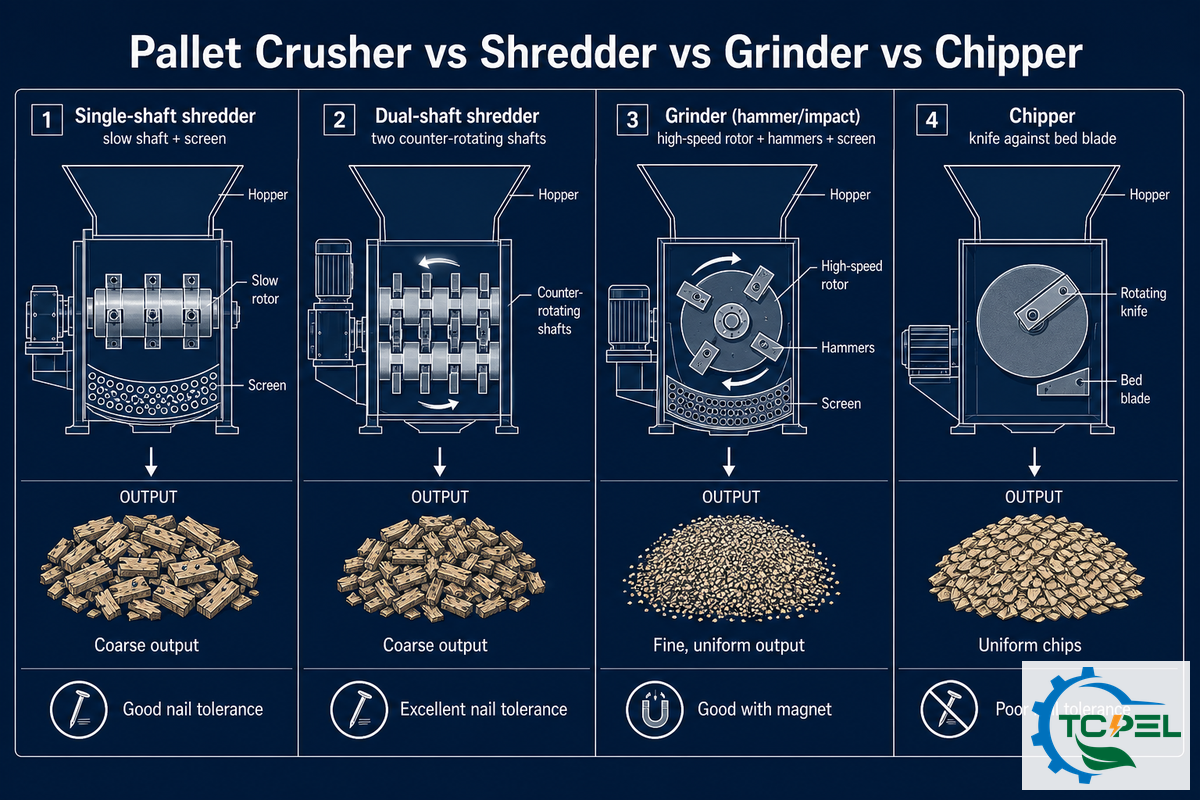
Crusher, shredder, grinder, dan chipper merujuk pada 4 mekanisme pengecilan ukuran yang berbeda, bukan mesin yang dapat saling menggantikan. Mesin shredder merobek palet menggunakan poros berkecepatan rendah dengan torsi tinggi; mesin penggiling menghantamkannya ke saringan untuk menghasilkan keluaran yang lebih halus dan seragam; sedangkan mesin pencacah kayu mengiris kayu bersih, tetapi tidak mampu bertahan terhadap paku. “Mesin penghancur palet” hanyalah istilah umum yang digunakan pembeli untuk semua mesin tersebut.
Secara mekanis, mesin shredder palet menggunakan 1 atau 2 poros yang berputar lambat (sekitar 50–120 rpm) dan dilengkapi pisau berkait untuk merobek palet dengan torsi tinggi. Mesin penggiling (sering kali berupa hammer mill atau mesin penghancur impak) memutar rotor dengan kecepatan tinggi sehingga palu menghantam kayu ke saringan sampai potongannya dapat melewati saringan, dan mekanisme inilah yang menghasilkan keluaran lebih halus dan seragam. Mesin pencacah palet menempati sisi pengolahan kayu bersih dalam kelompok peralatan pencacahan ini, sedangkan mesin shredder industri tugas berat berada di sisi pengurangan volume; semuanya dibuat untuk menghancurkan palet berbahan kayu (dan terkadang plastik). Dalam praktiknya, mesin shredder palet kayu atau mesin penggiling adalah mesin yang sebenarnya dibutuhkan oleh sebagian besar pembeli.
Pohon Keputusan untuk 4 Mesin Pengecil Ukuran Palet
| Mesin | Mekanisme | Keluaran | Toleransi terhadap paku | Paling sesuai jika tujuan Anda adalah |
|---|---|---|---|---|
| Mesin shredder satu poros | Poros berkecepatan rendah + saringan | Kasar, cukup seragam | Baik | Ukuran serpihan terkendali untuk digunakan kembali pada tahap berikutnya |
| Mesin shredder dua poros | 2 poros yang berputar berlawanan arah, torsi tinggi | Kasar, tidak beraturan | Sangat baik | Pengurangan volume murni untuk palet campuran yang banyak mengandung paku |
| Mesin penggiling (palu/impak) | Rotor berkecepatan tinggi + palu + saringan | Halus, seragam | Baik (dengan magnet) | Mulsa / alas ternak / bahan baku biomassa |
| Mesin pencacah kayu | Pisau bergerak melawan pisau landasan | Serpihan kayu seragam | Buruk | Hanya kayu bersih tanpa paku |
Karakteristik perilaku mesin dihimpun dari literatur peralatan pengolahan kayu industri.
Jika Anda hanya mengingat satu aturan, ingatlah ini: mesin shredder dipilih untuk palet karena tahan terhadap logam; mesin penggiling dipilih ketika keluarannya harus seragam. Mesin pencacah kayu berkecepatan tinggi akan menghasilkan serpihan kayu yang indah lalu merusak pisaunya saat pertama kali bertemu sekumpulan paku. Bagi sebagian besar fasilitas, pertanyaan awal yang jujur adalah apakah Anda memerlukan pengurangan volume bahan mentah atau produk berukuran yang dapat dijual, dan satu jawaban itu mempersempit pilihan empat arah menjadi satu. Perbedaan antara an mesin penghancur palet industri dan grinder tipe hammer menjadi jauh lebih jelas setelah Anda mengetahui keluaran yang akan dijual.
✔ Penghancuran di lokasi
- Pengurangan volume ~60–80% sebelum pengangkutan
- Keluaran dapat menghasilkan pendapatan sebagai mulsa, alas ternak, atau bahan bakar
- Menghilangkan tumpukan palet yang merusak pemandangan dan berisiko menyebabkan kebakaran
⚠ Pengangkutan oleh pihak ketiga
- Tanpa pengeluaran modal, tetapi ada biaya tetap setiap kali diangkut
- Tidak ada nilai produk sampingan yang diperoleh
- Biaya meningkat seiring volume, setiap tahun
Di Dalam Ruang Pemotongan: Cara Kerja Mesin Penghancur Palet
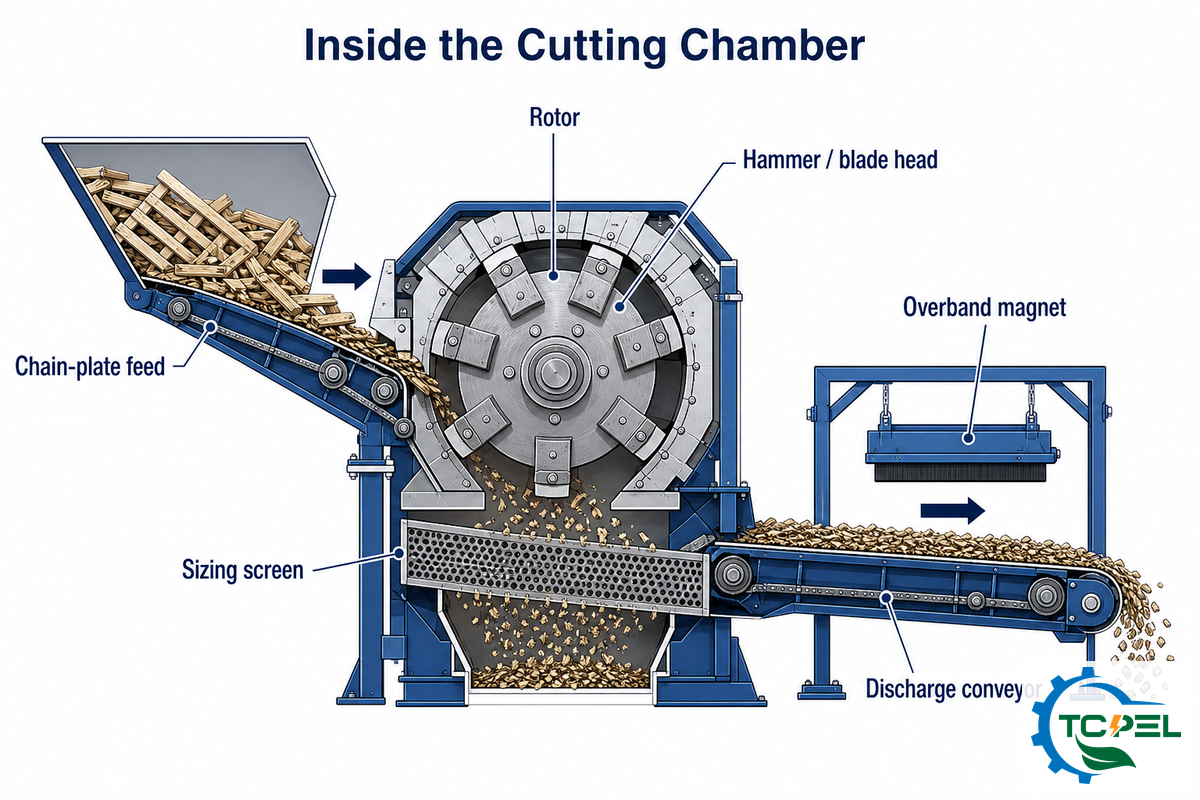
Terlepas dari nama mereknya, mesin penghancur palet terdiri atas 4 bagian: hopper pemasukan atau konveyor rantai yang menangani papan kayu berukuran besar, ruang pemotongan yang menampung rotor atau poros beserta pisau putarnya, saringan penentu ukuran, dan sabuk konveyor pembuangan, terkadang berupa konveyor ulir, yang sering kali beroperasi di bawah magnet overband. Pada mesin shredder berkecepatan rendah, palet dijatuhkan ke poros yang berputar berlawanan arah, lalu pisaunya mencengkeram dan merobek papan; torsi, bukan kecepatan, yang melakukan pekerjaan, dan itulah sebabnya paku serta sekrup dapat melewatinya dengan hanya menyebabkan keausan pisau secara bertahap. Pada mesin penggiling tipe palu, rotor berkecepatan tinggi melontarkan palu ke kayu, dan hanya pecahan yang lebih kecil daripada lubang saringan yang dapat keluar, sedangkan semua pecahan yang lebih besar terus bersirkulasi dalam semacam proses penggilingan bertahap hingga ukurannya mengecil. Jika menerima material yang telah dicacah dari mesin shredder di tahap sebelumnya, mesin penggiling yang sama dapat beroperasi lebih cepat dan mengalami lebih sedikit keausan. Paten AS yang telah diberikan untuk ruang pengecil ukuran kayu (US10507469B2) menjelaskan geometri yang sama: pisau landasan tetap menghasilkan aksi pemotongan terus-menerus saat bersentuhan dengan pisau bergerak.
📐 Catatan Teknik
Mesin shredder berkecepatan rendah dan bertorsi tinggi biasanya menjalankan porosnya pada sekitar 50–120 rpm, dengan poros paduan berat yang diberi perlakuan panas dan bantalan berukuran besar. Kompromi desainnya jelas: kecepatan lebih rendah dan torsi lebih tinggi memberikan toleransi terhadap paku dan menghasilkan serpihan yang lebih kasar; jika Anda memerlukan partikel halus dan seragam untuk mulsa atau pelet bahan bakar, Anda harus menggunakan mesin penggiling berkecepatan lebih tinggi serta separator magnetik sebelum peralatan hilir. Sesuaikan kelas rpm/torsi dengan keluaran yang hendak Anda jual, bukan dengan angka kapasitas produksi utama pada lembar spesifikasi.
Masalah Paku: Menghancurkan Palet yang Penuh Logam
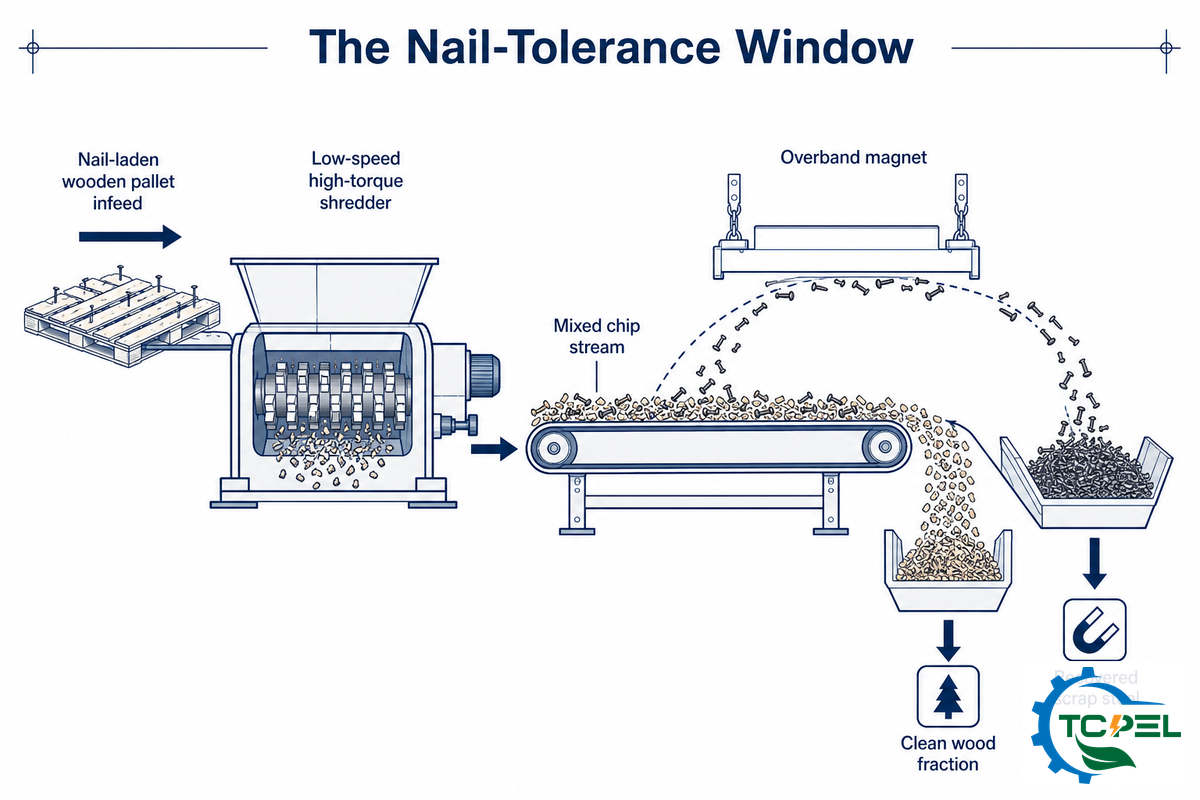
Inilah persoalan yang membuat pembelian mesin yang salah berakhir gagal. Palet kayu standar memiliki puluhan paku atau sekrup, dan mesin yang mengabaikannya akan cepat rusak, karena pencacahan kayu dan logam bukanlah kombinasi yang cocok kecuali mesin memang dibuat untuk menanganinya. Solusi yang andal harus bersifat mekanis dan tidak dapat diabaikan: pilih mesin shredder berkecepatan rendah dan bertorsi tinggi atau mesin penggiling yang diperkuat, lalu pasang magnet overband atau magnet drum, yaitu perangkat pemisah sederhana, pada konveyor pembuangan untuk menarik baja yang telah terlepas dari aliran serpihan kayu. Mesin shredder palet dengan magnet mengubah logam yang dipisahkan menjadi sumber pendapatan dari besi tua, bukan kontaminan, dan mesin penghancur palet rakitan mandiri yang ringkih justru tidak mampu melakukan hal ini. Memasukkan palet berpaku dengan cara ini mengubah limbah palet yang terkontaminasi menjadi fraksi kayu bersih dan fraksi baja yang dapat dijual.
| Kelas mesin | Toleransi terhadap paku | Pemisahan logam | Dampak keausan |
|---|---|---|---|
| Mesin shredder dua poros berkecepatan rendah | Sangat baik | Magnet overband di tahap berikutnya | Keausan pisau secara bertahap dan terkendali |
| Mesin shredder satu poros | Baik | Magnet + saringan | Sedang; servis pisau/saringan secara berkala |
| Mesin penggiling palu/impak | Baik (palu yang dikeraskan) | Magnet wajib digunakan sebelum pemanfaatan kembali | Keausan palu/saringan; dapat direkondisi |
| Mesin pencacah kayu berkecepatan tinggi | Buruk | Tidak dirancang untuk menanganinya | Parah — pisau rusak saat pertama kali menghantam paku |
Dapatkah mesin penghancur palet menangani paku dan komponen logam?
Ya, asalkan Anda memilih kelas yang tepat. Mesin shredder berkecepatan rendah dan mesin penggiling yang diperkuat dibuat untuk menghancurkan palet “beserta seluruh pakunya,” karena torsi tinggi dan porosnya yang kokoh menyerap benturan yang dapat merusak pisau mesin pencacah kayu berkecepatan tinggi. Paku tersebut tidak dihancurkan; paku dilepaskan dari kayu lalu ditarik keluar oleh separator magnetik pada sabuk pembuangan, sehingga menghasilkan fraksi kayu bersih dan fraksi besi tua yang dapat dijual.
Hal yang tidak boleh Anda lakukan adalah memasukkan palet yang penuh paku ke mesin yang dirancang untuk kayu bersih dan berharap semuanya akan baik-baik saja.
Skenario. Sebuah produsen furnitur skala menengah mulai mengecilkan ukuran palet bekasnya menggunakan mesin pencacah cakram berkecepatan tinggi yang sudah dimiliki untuk mengolah potongan sisa. Dalam hitungan minggu, pisaunya gompal dan catatan perawatan dipenuhi penggantian pisau yang tidak direncanakan, akibat kerusakan yang ditimbulkan oleh paku yang tidak pernah sepenuhnya disingkirkan oleh kru. Mengalihkan aliran palet ke mesin shredder berkecepatan rendah dengan magnet pembuangan menghentikan kerusakan pisau, menghasilkan 1 wadah besi tua setiap minggu, dan mengubah biaya perbaikan yang tidak menentu menjadi jadwal penggantian komponen aus yang dapat diprediksi. Pelajaran tegas yang terus diulang para praktisi adalah: mesin termurah yang sudah Anda miliki akan menjadi mesin paling mahal jika sejak awal tidak dirancang untuk menghancurkan logam.
Menentukan Kapasitas Mesin Penghancur Palet Sesuai Volume Anda
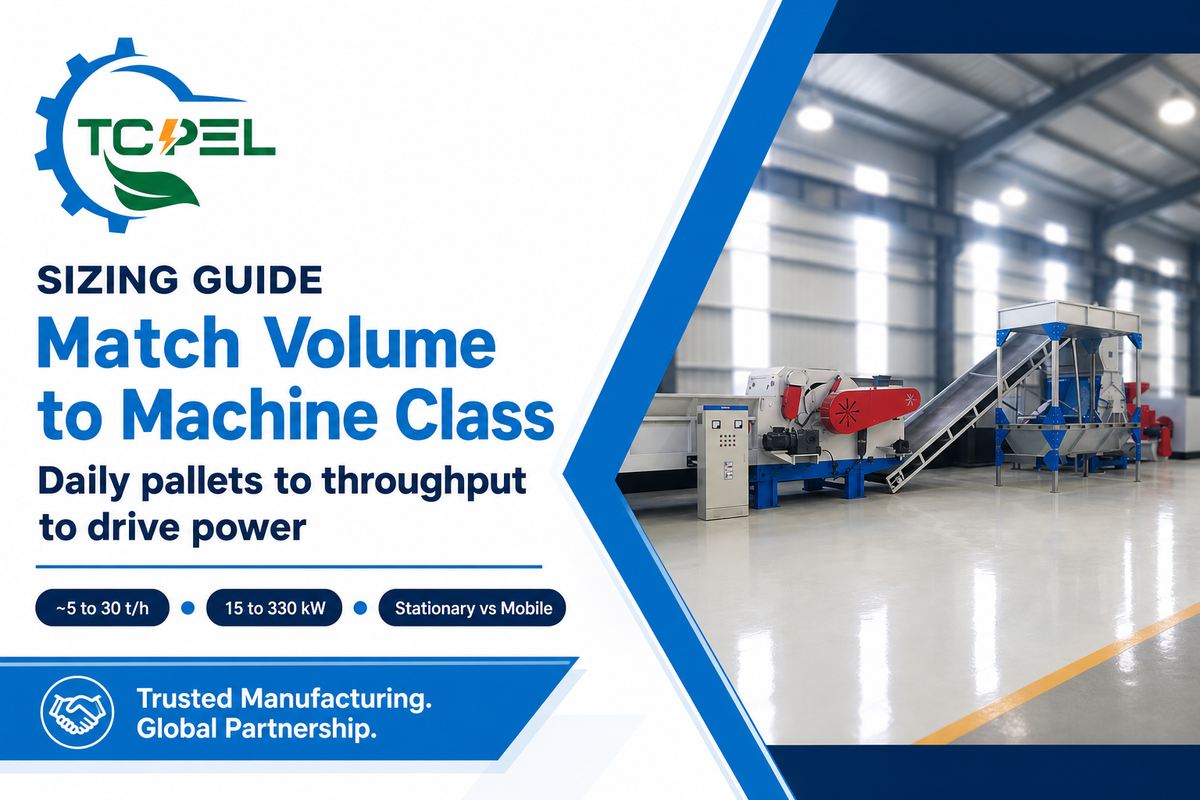
Baik pemasok menyebutnya mesin penghancur palet kayu, mesin peremuk palet, maupun peralatan penggiling palet, penentuan kapasitas dimulai dari angka yang dapat diperkirakan sebagian besar pembeli dalam waktu 5 menit: jumlah palet per hari. Mesin shredder dan penggiling kayu industri biasanya memproses sekitar 5 hingga 30 ton per jam, dengan angka aktual yang sangat dipengaruhi kondisi palet, kandungan paku, dan tingkat kehalusan keluaran yang Anda inginkan. Karena berat rata-rata palet kayu sekitar 30–65 lb (sekitar 14–30 kg), Anda dapat mengonversi jumlah palet harian menjadi tonase per jam untuk menentukan kelas mesin yang dibutuhkan.
💡 Contoh perhitungan: dari jumlah palet ke ukuran motor
Misalnya, Anda membuang 300 palet per hari dengan berat masing-masing ~20 kg. Artinya, 300 × 20 kg = 6.000 kg ≈ 6 t/hari. Selama 1 sif 8 jam, 6 ÷ 8 = 0,75 t/h, tetapi pemasukan material sebenarnya tidak merata, jadi tentukan kapasitas berdasarkan beban puncak, bukan nilai rata-rata. Terapkan faktor puncak ~2× dan Anda akan merancang mesin untuk sekitar ~1,5 t/h. Angka tersebut mengarah pada mesin shredder satu poros yang ringkas dalam rentang daya bawah (sekitar 30–55 kW), bukan lini 300 kW yang dirancang untuk perusahaan daur ulang regional. Membeli berdasarkan nilai rata-rata merupakan kesalahan klasik yang mahal, karena mesin yang terlalu kecil akan terus beroperasi pada beban penuh dan mengalami panas berlebih; mesin yang terlalu besar membuat Anda membayar kapasitas yang menganggur.
| Palet harian | Perkiraan kapasitas produksi | Kelas mesin | Daya sistem penggerak | Keluaran terbaik yang umum |
|---|---|---|---|---|
| Di bawah 50 | <0.4 t/h | Mesin shredder satu poros kecil | ~15–30 kW | Pengurangan volume |
| 50–150 | 0,4–1 t/h | Mesin shredder satu poros ringkas | ~30–45 kW | Mulsa / alas ternak |
| 150–300 | 1–1,5 t/h | Mesin shredder satu poros | ~45–75 kW | Mulsa / alas ternak |
| 300–600 | 1,5–3 t/h | Mesin shredder dua poros | ~75–110 kW | Pengecilan ukuran material campuran / banyak mengandung paku |
| 600–1,000 | 3–6 t/h | Mesin shredder dua poros + mesin penggiling | ~110–160 kW | Alas ternak / bahan baku biomassa |
| 1,000–2,000 | 6–12 t/h | Lini mesin penggiling | ~160–250 kW | Bahan baku biomassa |
| Di atas 2.000 | 12–30 t/h | Lini mesin penggiling tugas berat | ~250–330 kW | Bahan baku skala perusahaan daur ulang |
| Beberapa lokasi / layanan | Bervariasi | Mesin shredder bergerak (digerakkan mesin) | Diesel / PTO | Layanan pengecilan ukuran di lokasi |
| Aliran material terkontaminasi / campuran | Bervariasi | Dua poros + magnet overband | Berdasarkan volume | Hanya pengurangan volume |
Kisaran disusun berdasarkan data kapasitas produksi industri (5–30 t/h) dan daya sistem penggerak yang dipublikasikan; gunakan sebagai titik awal, bukan sebagai pengganti nilai kapasitas dari pemasok.
Apakah biaya mesin penghancur palet bergerak sepadan?
Shredder palet bergerak (dipasang pada trailer atau skid) hanya layak dengan harga premiumnya dalam dua situasi: ketika Anda memproses palet di lebih dari satu lokasi, atau ketika Anda menjual layanan pengurangan di lokasi. Untuk satu gudang tetap, mesin shredder stasioner hampir selalu lebih unggul dalam harga per ton karena Anda tidak membayar sasis, mesin penggerak, dan kesiapan jalan yang tidak akan pernah digunakan.
Apa pun pilihan Anda, rencanakan penanganan material, yakni cara palet utuh mencapai saluran masuk dan cara keluaran meninggalkan mesin, sebelum memilih model mesin shredder palet industri. Pertanyaan penentunya bukan “apakah mesin bergerak lebih baik”, melainkan “apakah material saya yang berpindah, atau saya yang mendatanginya?” Jika palet menumpuk di 1 area, belilah mesin stasioner dan gunakan penghematannya untuk magnet serta konveyor yang lebih baik.
Dari Mulsa hingga Bahan Bakar Biomassa: Pemanfaatan Palet yang Dihancurkan
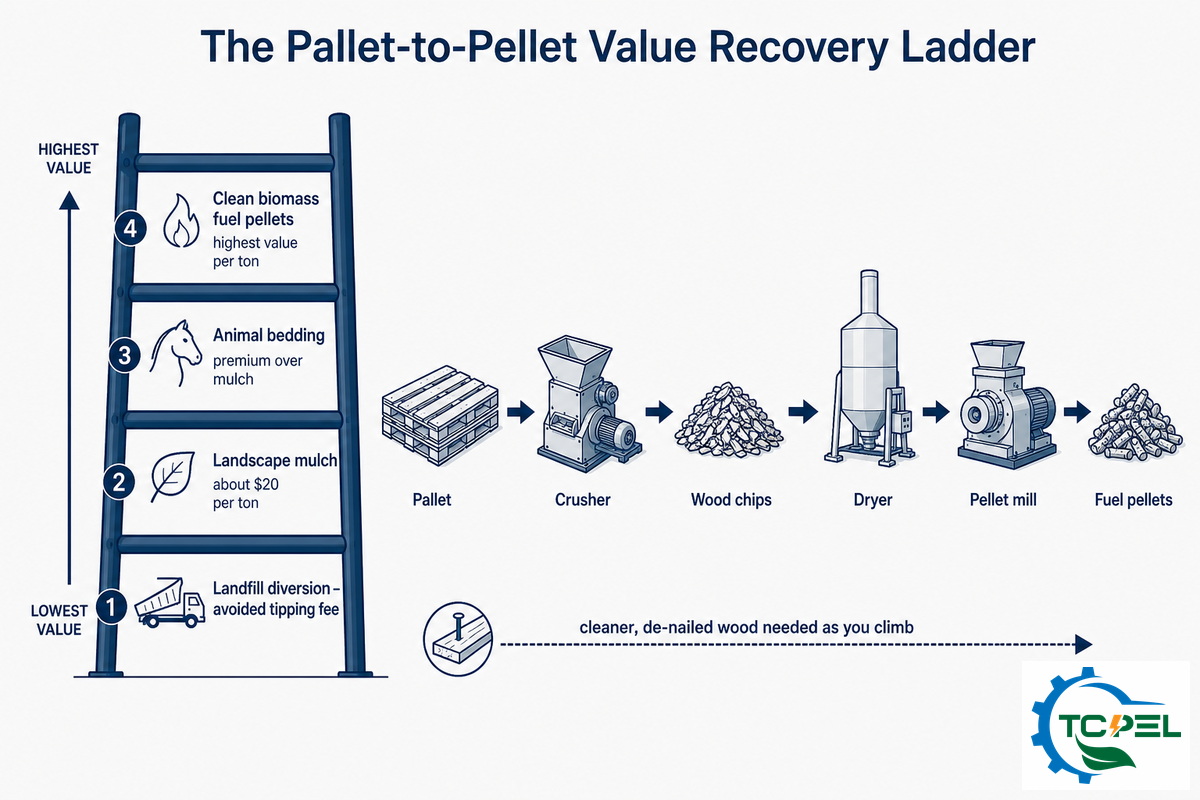
Di sinilah sebagian besar halaman produk berhenti, padahal perhitungan ekonomi yang sebenarnya baru dimulai. Kayu palet yang dihancurkan bukan hanya 1 produk; nilainya meningkat secara bertahap, dan setiap tingkat membutuhkan kayu yang lebih bersih serta sedikit lebih banyak pemrosesan. U.S. Department of Energy menyatakan bahwa kayu perkotaan dan kayu kemasan merupakan “tantangan pembuangan sekaligus sumber potensial untuk produksi bahan baku,” dan peneliti unit muatan Virginia Tech menemukan bahwa partikel palet bersih yang telah dicacah memiliki kadar air dan abu rendah dengan nilai kalor bersih yang relatif tinggi, atau dalam istilah mereka, “bahan bakar industri yang sangat baik.” Catatan penting yang juga dikonfirmasi oleh U.S. Energy Information Administration adalah bahwa industri pelet kayu komersial terutama menggunakan residu penggergajian, bukan palet bekas, sehingga kayu palet layak digunakan sebagai bahan bakar di lokasi dan bahan baku sekunder, bukan sebagai tulang punggung pasar pelet.
Tangga Pemulihan Nilai dari Palet menjadi Pelet
- Hanya pengalihan dari tempat pembuangan akhircacahan kasar, pengurangan volume ~60–80%. Nilai = biaya pembuangan yang dapat dihindari, tidak lebih. Membutuhkan kayu bersih paling sedikit.
- Mulsa lanskaphasil gilingan seragam dari kayu bersih tanpa perlakuan. Sebuah program kehutanan negara bagian melaporkan bahwa limbah kayu dijual dengan harga sekitar $20 per ton sebagai mulsa atau alas ternak.
- Alas ternakhasil gilingan halus dengan sedikit debu; dapat dijual dengan harga lebih tinggi daripada mulsa jika terdapat pasar peternakan di sekitar lokasi.
- Bahan bakar biomassa bersihpartikel atau pelet yang dikeringkan dan ditentukan ukurannya dari kayu tanpa paku dan tanpa perlakuan. Nilai per ton paling tinggi, tetapi persyaratan kebersihannya juga paling ketat.
Tangga tersebut merupakan inti seluruh strateginya: mesin penghancur palet dasar memperoleh nilai dari tingkat terbawah sejak hari pertama, lalu Anda hanya naik sejauh yang dimungkinkan oleh kebersihan kayu dan pasar setempat. Untuk mencapai tingkat teratas, serpihan yang telah dihancurkan biasanya melewati mesin pengering dan mesin pencetak pelet, yaitu rangkaian peralatan yang juga dibuat TCPEL bagi produsen biomassa, mulai dari penggilingan halus dengan hammer mill hingga mesin pelet tipe flat die atau mesin pelet tipe ring die berkapasitas lebih tinggi. Intinya bukan bahwa setiap tempat pengolahan harus membuat pelet; mengetahui seluruh tingkatan tersebut akan memberi tahu Anda secara tepat kapasitas mesin yang perlu dibeli sekarang dan peralatan yang perlu ditambahkan nanti.
Skenario. Sebuah gudang logistik pihak ketiga menghasilkan sekitar 200 palet per minggu. Pengangkutan oleh pihak ketiga dikenai biaya tetap mingguan tanpa menghasilkan pengembalian apa pun. Setelah memasang mesin shredder satu poros dengan magnet, operasional tersebut mempertahankan 2 tingkat terbawah: volumenya dialihkan dari bak sampah dan hasil gilingan bersihnya dijual ke kandang kuda terdekat sebagai alas ternak. Besi tua dari magnet menutup sebagian anggaran komponen aus. Tim tersebut sengaja melewatkan tingkat bahan bakar, karena aliran palet mereka mengandung terlalu banyak papan ekspor bercap panas dengan lapisan yang tidak diketahui sehingga tidak dapat menjamin produk bahan bakar yang bersih, maka mereka menjual material yang dapat dipastikan bersih dan mengalihkan sisanya dari tempat pembuangan akhir.
Perhitungan Ekonomi: Penghematan Biaya Pembuangan dan Pengembalian Investasi
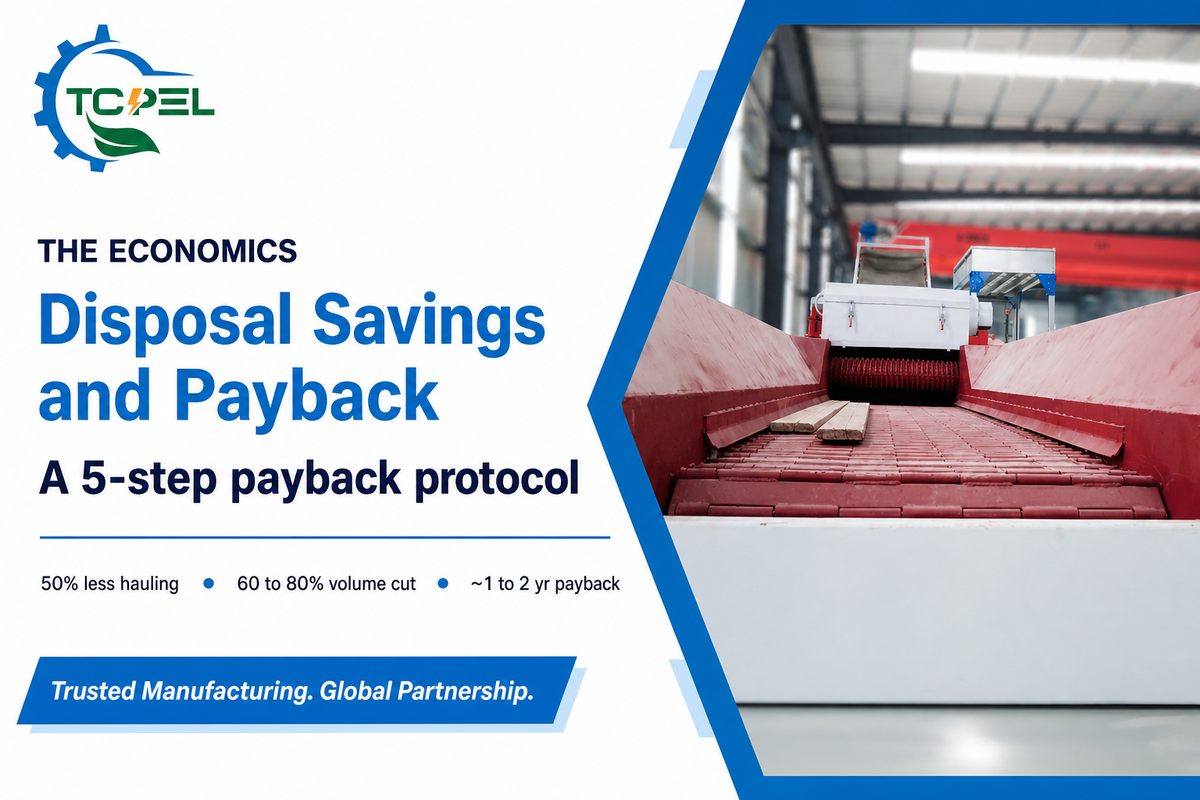
Mesin penghancur palet mengembalikan nilai investasinya dengan menghapus biaya pembuangan limbah rutin, lalu menambahkan sedikit aliran pendapatan, suatu pengembalian investasi yang diremehkan sebagian besar pembeli karena mereka hanya memperhitungkan mesin, bukan biaya pengangkutan yang dihilangkannya. Panduan peralatan independen memperkirakan bahwa pengecilan ukuran di lokasi dapat mengurangi frekuensi pengangkutan sekitar 50% dan volume curah sebesar 60–80%, dengan fasilitas melaporkan penghematan tahunan “hingga puluhan ribu dolar.” Program yang lebih besar mencapai angka lebih tinggi: 1 program daur ulang palet terkelola mencatat gabungan penghematan biaya pembuangan dan pembelian lebih dari $2 juta per tahun. Anda tidak perlu membuat model dalam skala tersebut untuk mengambil keputusan, Anda hanya memerlukan 5 baris.
Protokol Pengembalian Biaya Pembuangan dalam 5 Langkah
- Biaya pembuangan saat ini / tahunjumlah pengambilan atau pengangkutan per bulan × biaya, ditambah biaya pembuangan di tempat pembuangan akhir.
- Modal + pemasanganmesin, magnet, konveyor, kelistrikan.
- Biaya operasional / tahunlistrik, komponen aus, dan tenaga kerja untuk memasukkan material.
- Nilai yang diperoleh kembali / tahunpengangkutan yang dapat dihindari + penjualan produk sampingan (mulsa/alas ternak/bahan bakar) + besi tua.
- Pengembalian investasi (bulan) = Modal ÷ ((Langkah 1 + nilai yang diperoleh kembali pada Langkah 4) − biaya operasional pada Langkah 3) ÷ 12.
💡 Contoh perhitungan pengembalian investasi
Misalkan sebuah pabrik membayar 2 kali pengangkutan bak sampah per minggu dengan biaya masing-masing $250, atau sekitar $26,000/tahun (Langkah 1). Pemasangan lini mesin shredder ringkas menelan biaya ~$45.000 (Langkah 2). Biaya listrik, komponen aus, dan tenaga kerja paruh sif mencapai ~$9,000/tahun (Langkah 3). Mesin tersebut mengalihkan volume dan menjual hasil gilingan bersih beserta besi tua senilai ~$6,000/tahun (Langkah 4). Pengembalian investasi = $45.000 ÷ (($26.000 + $6.000) − $9.000) = $45.000 ÷ $23.000 ≈ 1.95 tahun. Masukkan biaya pengangkutan Anda sendiri dan 5 baris yang sama akan memberikan angka yang dapat dipertanggungjawabkan kepada bagian pengadaan.
Bagaimana mesin penghancur palet mengurangi biaya pembuangan?
Melalui 3 cara yang saling melengkapi. Pertama, volume: pencacahan mengurangi 60–80% volume curah, sehingga bak sampah yang sama dapat menampung jauh lebih banyak kayu dan Anda membayar lebih sedikit pengangkutan. Kedua, pengalihan: kayu yang telah dikecilkan ukurannya dapat dijual atau digunakan kembali alih-alih dibuang ke tempat pembuangan akhir, sehingga mengurangi biaya pembuangan yang, sebagaimana dinyatakan oleh Department of Energy, terus meningkat seiring berkurangnya kapasitas tempat pembuangan akhir.
Ketiga, pemulihan: magnet mengubah paku yang sebelumnya menjadi kontaminan menjadi sumber pendapatan kecil dari besi tua. Faktor tunggal yang dampaknya paling besar hampir selalu berupa frekuensi pengangkutan, karena biaya tersebut terus bertambah setiap minggu selama Anda tidak melakukan apa pun.
Mengoperasikan dan Merawat Mesin Penghancur Palet
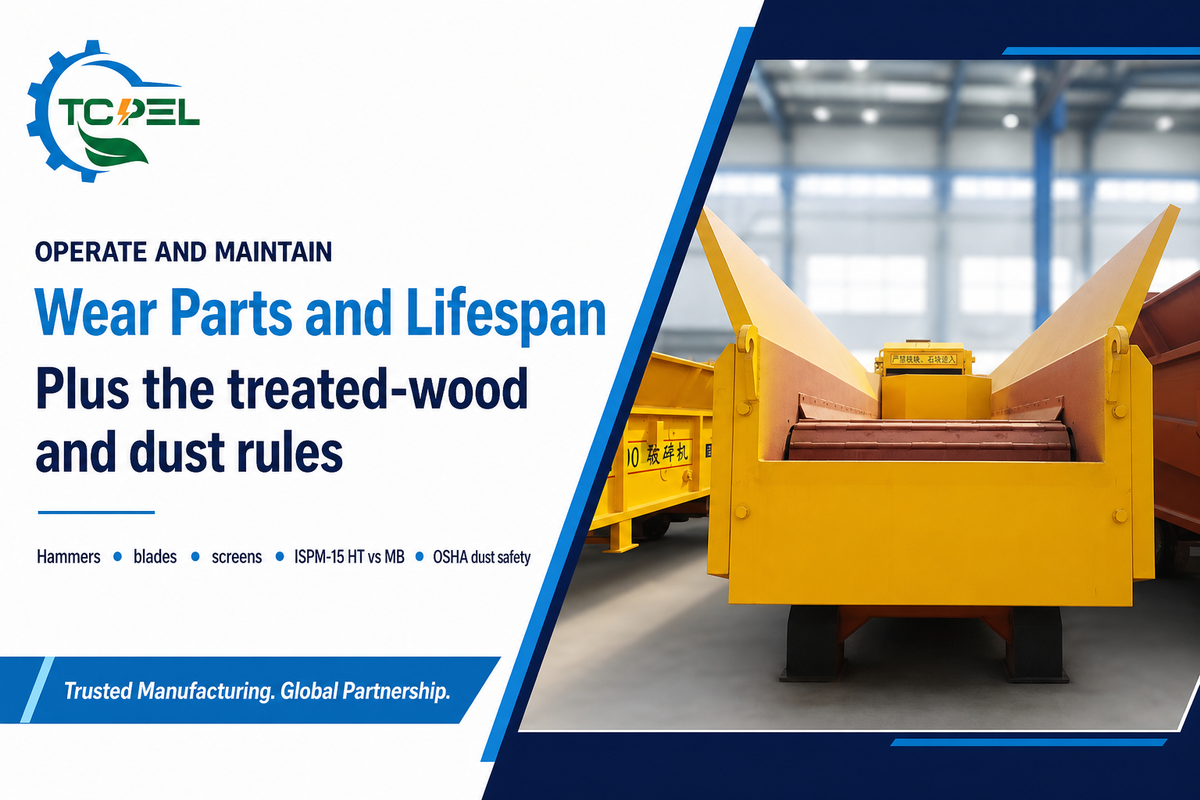
Mesin penghancur palet yang sesuai dengan kebutuhan merupakan aset berumur panjang; faktor yang memperpendek masa pakainya adalah paku dari sisi beban mekanis dan kontaminasi dari sisi kimia. Perawatan rutin berfokus pada komponen aus, pisau pemotong atau palu, saringan, dan bantalan, yang diperiksa secara terjadwal dan direkondisi alih-alih diganti seluruhnya. Namun, ada satu aturan yang melindungi mesin sekaligus pasar bagi hasil produksi Anda, yaitu menentukan palet mana yang boleh dimasukkan ke mesin.
⚠️ Palet yang diberi perlakuan dan terkontaminasi: batas mutlak
Tidak semua palet dapat diolah menjadi mulsa atau bahan bakar. Palet lama mungkin diberi perlakuan dengan arsenik berkrom (CCA); U.S. EPA menyatakan bahwa kayu yang diberi perlakuan CCA “tidak boleh digunakan kembali untuk produk seperti mulsa” dan tidak boleh dibakar karena asap serta abunya mengandung bahan kimia beracun. Bagi perusahaan, EPA mencatat bahwa limbah kayu yang diberi perlakuan mungkin memerlukan penetapan sebagai limbah berbahaya berdasarkan RCRA. Palet ekspor memiliki tanda ISPM-15, tetapi cap tersebut hanya menyatakan perlakuan panas (HT) untuk membasmi hama pada suhu inti 56 °C selama minimal 30 menit; ini merupakan tindakan fitosanitari, bukan jaminan bahwa papan bebas dari cat, pelapis, atau kontaminasi. Periksa keberadaan cat, noda bahan kimia, dan cap yang tidak dikenal sebelum palet dimasukkan ke aliran produksi mulsa atau bahan bakar.
📐 Catatan Rekayasa — pelindung mesin dan debu mudah terbakar
Penghancuran palet menimbulkan dua risiko EHS yang perlu diantisipasi sejak hari pertama dalam perancangan. Poros yang berputar, palu, dan titik jepit memerlukan pelindung mesin di area operasi. Selain itu, debu kayu halus terbukti menimbulkan bahaya ledakan: U.S. OSHA menggolongkan debu mudah terbakar sebagai “partikel halus yang menimbulkan bahaya ledakan saat tersuspensi di udara,” dan pengolahan kayu termasuk salah satu industri yang paling terdampak. Tentukan spesifikasi sistem penangkap debu, pengikatan dan pembumian listrik, serta tata graha bersama mesin penghancur, bukan setelah insiden pertama terjadi.
Seberapa sering mesin penghancur palet memerlukan perawatan, dan berapa lama masa pakainya?
Perlakukan mesin ini seperti mesin industri bertorsi tinggi lainnya: lakukan pemeriksaan visual setiap hari, pelumasan terjadwal, dan pemeriksaan komponen aus pada interval yang ditentukan berdasarkan kapasitas produksi serta kondisi palet Anda. Pisau pemotong, palu, dan saringan merupakan komponen habis pakai yang dirancang agar dapat direkondisi; bantalan dan poros pada mesin berkonstruksi kokoh yang sesuai dengan kebutuhan dapat digunakan selama bertahun-tahun.
Cara tercepat untuk memperpendek masa pakai tersebut adalah mengoperasikan mesin terus-menerus pada kapasitas maksimum karena kapasitasnya terlalu kecil untuk volume yang diproses, sehingga semuanya kembali pada pentingnya menentukan kapasitas yang tepat sejak awal.
Prospek Industri: Alasan Penghancuran Palet di Lokasi Terus Berkembang
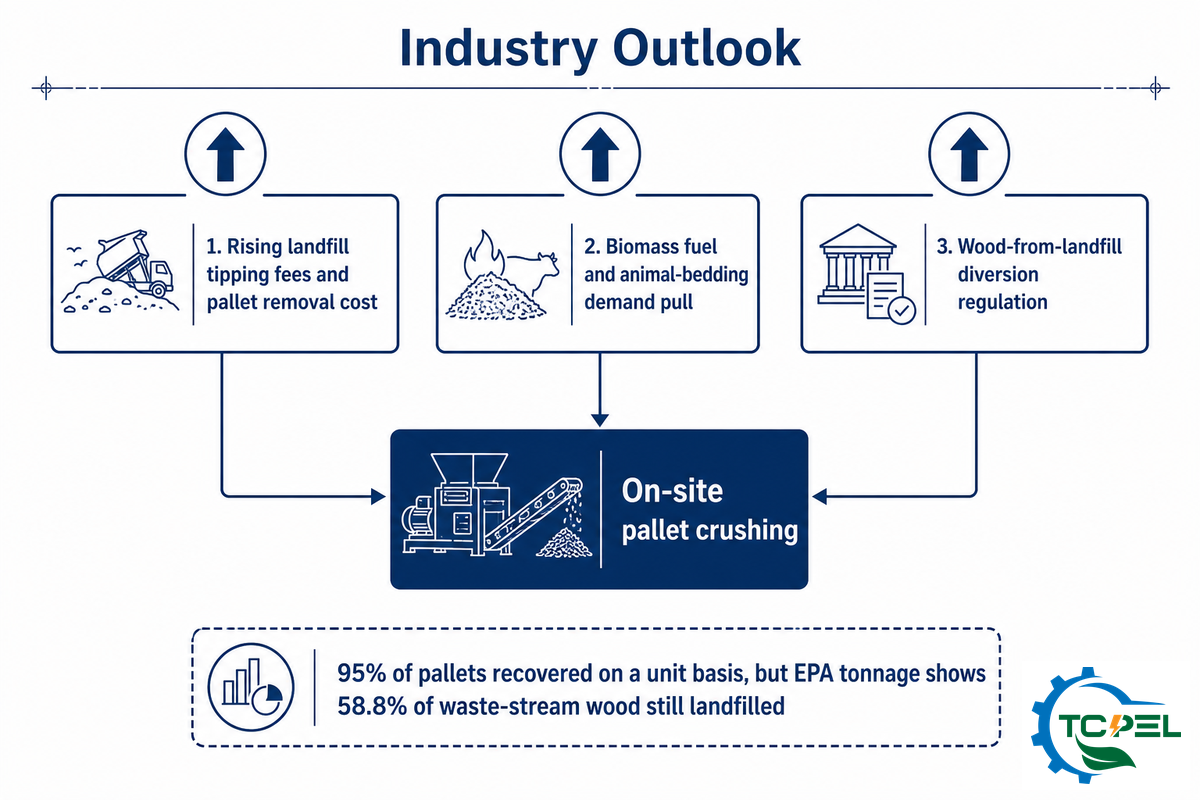
Pendorong penghancuran palet di lokasi bukanlah tajuk tentang besarnya pasar, melainkan tekanan biaya dan kepatuhan yang meningkat setiap tahun. U.S. Department of Energy menyebut “berkurangnya kapasitas tempat pembuangan akhir dan meningkatnya biaya pembuangan” sebagai tekanan struktural bagi pihak yang mengangkut limbah, dan tekanan inilah yang memperbaiki perhitungan periode pengembalian investasi mesin penghancur, terlepas dari jumlah orang yang mencari mesin tersebut. Pada saat yang sama, permintaan akan bahan baku kayu bersih untuk alas ternak, mulsa, dan bahan bakar biomassa meningkatkan nilai kayu palet hasil pemulihan, alih-alih membiarkannya terkubur. Karena itu, mesin shredder tugas berat dan mesin shredder daur ulang kini tidak hanya digunakan oleh perusahaan khusus daur ulang, tetapi juga di gudang serta pabrik yang sejak awal menghasilkan limbah palet dan peti kayu.
Penelitian bersama National Wooden Pallet & Container Association dan USDA Forest Service menemukan bahwa sekitar 95% palet kayu dipulihkan menjadi material yang dapat digunakan, bukan dibuang ke tempat pembuangan akhir, sehingga bagi sebagian besar operasi, pertanyaannya bukan lagi apakah palet perlu dialihkan dari pembuangan, melainkan tingkat nilai mana yang akan diperoleh.
Ringkasan studi penghindaran pembuangan ke tempat pembuangan akhir yang dipimpin oleh Laszlo Horvath, PhD, Center for Packaging and Unit Load Design, Virginia Tech
Angka 95% tersebut perlu dicermati karena data aliran material U.S. EPA memberikan gambaran yang saling melengkapi. Jika dihitung berdasarkan unit palet, tingkat pemulihannya sangat tinggi karena sebagian besar palet diperbaiki dan digunakan kembali sehingga tidak pernah masuk ke aliran limbah. Namun, jika dihitung berdasarkan tonase kemasan kayu yang masuk ke limbah padat perkotaan, EPA memperkirakan bahwa pada 2018 sekitar 11,5 juta ton dihasilkan, sekitar 3,1 juta ton didaur ulang (terutama dicacah menjadi mulsa atau alas ternak), dan sekitar 58,8% masih dibuang ke tempat pembuangan akhir. Kedua angka tersebut benar; masing-masing menjawab pertanyaan yang berbeda. Kesimpulan praktis bagi pembeli adalah bahwa tonase yang dibuang ke tempat pembuangan akhir, bukan unit yang telah dipulihkan, merupakan nilai di lokasi yang belum Anda peroleh. Dukungan regulasi juga mulai terbentuk: pada 2026, industri palet kayu berhasil mendapatkan pengecualian bagi palet kayu dari aturan baru California mengenai tanggung jawab produsen yang diperluas, yang menandakan bahwa kebijakan semakin memperlakukan palet sebagai material yang dapat dipulihkan, bukan limbah sekali pakai. Jika tumpukan palet Anda terus bertambah dan tagihan pengangkutan meningkat, alasan untuk segera bertindak cukup sederhana: selisih biayanya semakin besar setiap kuartal selama Anda menunggu.
Pertanyaan yang Sering Diajukan
T: Berapa harga mesin penghancur palet?
Lihat Jawaban
Rentang harganya sangat lebar — mulai dari sekitar $500 untuk unit kecil hingga jauh di atas $100.000 untuk lini industri lengkap dengan konveyor pemasukan dan pengeluaran serta pemisahan magnetik. Nilainya ditentukan oleh kapasitas produksi, daya sistem penggerak, kualitas konstruksi, dan penambahan peralatan hilir seperti magnet atau saringan. Angka yang lebih berguna bukanlah harga beli, melainkan periode pengembalian investasi: lini ringkas yang menghapus biaya pengangkutan berulang sering kali mengembalikan investasi dalam waktu sekitar satu hingga dua tahun, dan hal ini jauh lebih penting daripada angka harga yang ditonjolkan.
T: Apa perbedaan antara mesin penghancur palet dan mesin shredder palet?
Lihat Jawaban
“Mesin penghancur palet” merupakan istilah pencarian umum; “shredder” adalah salah satu mekanisme khusus dalam kategori tersebut. Mesin shredder menggunakan poros berkecepatan rendah dan bertorsi tinggi untuk mencabik palet serta mampu menangani paku dengan baik, sedangkan mesin penggiling menggunakan rotor berkecepatan tinggi dan saringan untuk menghasilkan material yang lebih halus dan seragam bagi mulsa atau bahan bakar. Saat pemasok menyebut “mesin penghancur,” tanyakan mekanisme yang dimaksud dan ukuran material yang dihasilkannya — jawaban tersebut, bukan labelnya, menentukan apakah mesin itu sesuai dengan pekerjaan Anda.
T: Berapa lama masa pakai mesin penghancur palet?
Lihat Jawaban
Mesin berkonstruksi kokoh dengan kapasitas yang ditentukan secara tepat dapat bertahan selama bertahun-tahun karena rangka, poros, dan bantalannya dirancang untuk tugas industri berkelanjutan. Komponen habis pakai — pisau pemotong atau palu, saringan, dan seal — dirancang untuk diperiksa secara terjadwal dan direkondisi, bukan digunakan hingga rusak. Faktor terbesar yang memperpendek masa pakai adalah kapasitas yang terus-menerus terlalu kecil: mesin yang dipaksa beroperasi pada kapasitas maksimum akan mengalami panas berlebih, tersumbat, dan aus jauh lebih cepat daripada mesin yang sesuai dengan volume harian.
T: Bisakah daur ulang palet dengan mesin penghancur benar-benar menghasilkan uang?
Lihat Jawaban
“Keuntungan” pertama dan paling pasti berasal dari biaya yang tidak lagi Anda keluarkan: mesin penghancur mengurangi frekuensi pengangkutan dan biaya pembuangan, yang bagi banyak fasilitas mencapai puluhan ribu dolar per tahun. Selain itu, hasil produksinya dapat dijual — hasil gilingan bersih sebagai mulsa lanskap (sebuah program kehutanan negara bagian mencantumkan harga sekitar $20 per ton) atau alas ternak, sedangkan paku yang dipisahkan oleh magnet dapat dijual sebagai besi tua. Untuk mencapai tingkat bernilai tertinggi, yaitu bahan bakar biomassa bersih, diperlukan kayu yang lebih kering, bebas paku, dan tidak diberi perlakuan, serta biasanya mesin pelet, sehingga sebagian besar operasi terlebih dahulu memperoleh penghematan biaya dan nilai dari mulsa atau alas ternak, lalu menambahkan produksi bahan bakar hanya jika aliran bahan kayunya terbukti bersih. Jawaban yang jujur adalah bahwa penghematan hampir pasti diperoleh dan pendapatannya nyata, tetapi bergantung pada volume serta kondisi pasar.
T: Industri apa yang paling banyak menggunakan mesin penghancur palet?
Lihat Jawaban
Semua operasi yang menerima barang di atas palet dan menumpuk palet rusak: gudang dan pusat distribusi, pabrik manufaktur, fasilitas daur ulang, penggergajian kayu, serta pemasok kebutuhan lanskap atau pertanian yang dapat memanfaatkan hasil produksinya. Untuk proses daur ulang tersebut, pengecilan ukuran di lokasi merupakan pengelolaan limbah yang lebih baik daripada mengangkut palet utuh ke tempat lain.
T: Apakah mesin penghancur palet juga dapat mengolah palet plastik?
Lihat Jawaban
Banyak mesin shredder berkecepatan rendah dapat menangani palet kayu maupun plastik, tetapi aliran hasil produksinya harus dipisahkan karena memiliki pasar hilir yang berbeda — kayu diolah menjadi mulsa, alas ternak, atau bahan bakar, sedangkan hasil gilingan plastik didaur ulang menjadi polimer. Jika Anda mengolah berbagai jenis palet, pastikan mesin tersebut memiliki spesifikasi untuk plastik dan rencanakan penyortiran; jangan berasumsi bahwa satu tumpukan hasil cacahan dapat memenuhi kebutuhan kedua pasar.
T: Apakah saya harus melepaskan paku sebelum penghancuran?
Lihat Jawaban
Tidak — asalkan Anda memilih mesin yang dirancang untuk menanganinya. Mesin shredder berkecepatan rendah dan mesin penggiling yang diperkuat dapat mengolah palet beserta pakunya, kemudian magnet memisahkan logam dari hasil produksi. Sebaliknya, mesin pencacah kayu berkecepatan tinggi memerlukan kayu bersih.
Alasan Kami Menulis Panduan Ini
TCPEL memproduksi seluruh rangkaian peralatan dari kayu hingga pelet, termasuk mesin penghancur, hammer mill, mesin pengering, dan mesin pelet, sehingga kami memandang penghancuran palet bukan sebagai pekerjaan pembuangan, melainkan tahap pertama dalam lini pemulihan nilai. Panduan ini mencerminkan sudut pandang tersebut: tujuannya adalah membantu Anda membeli mesin dengan kapasitas yang tepat untuk tingkat nilai yang benar-benar dapat Anda capai saat ini. Ditinjau oleh tim teknis TCPEL.
Artikel Terkait
- Panduan Hammer Mill Kayu, penggilingan halus cacahan palet untuk mulsa dan pelet
- Mesin Pelet Tipe Flat Die, mengolah serpihan kayu bersih menjadi pelet bahan bakar biomassa
- Mesin Pelet Tipe Ring Die Vertikal, peletisasi berkapasitas lebih tinggi untuk kayu hasil pemulihan
- Panduan Mesin Pelet Pakan Ternak, penjelasan proses peletisasi
Referensi & Sumber
- Wadah dan Kemasan: Data Khusus Produk U.S. Environmental Protection Agency (data produksi, daur ulang, dan pembuangan akhir kemasan kayu 2018)
- Arsenik Berkrom (CCA) U.S. Environmental Protection Agency (penggunaan kembali dan pembuangan kayu yang diberi perlakuan)
- Material Kemasan Kayu ISPM-15 USDA Animal and Plant Health Inspection Service
- Laporan Bahan Baku Limbah Padat Perkotaan U.S. Department of Energy, Bioenergy Technologies Office
- Debu Mudah Terbakar (OSHA 3371) U.S. Occupational Safety and Health Administration
- Penjelasan Biomassa U.S. Energy Information Administration
- Sifat Palet Kayu yang Dicacah Center for Packaging and Unit Load Design, Virginia Tech
- Bahan Baku Biomassa Kayu Indiana Department of Natural Resources, Division of Forestry