Liên hệ với TCPEL

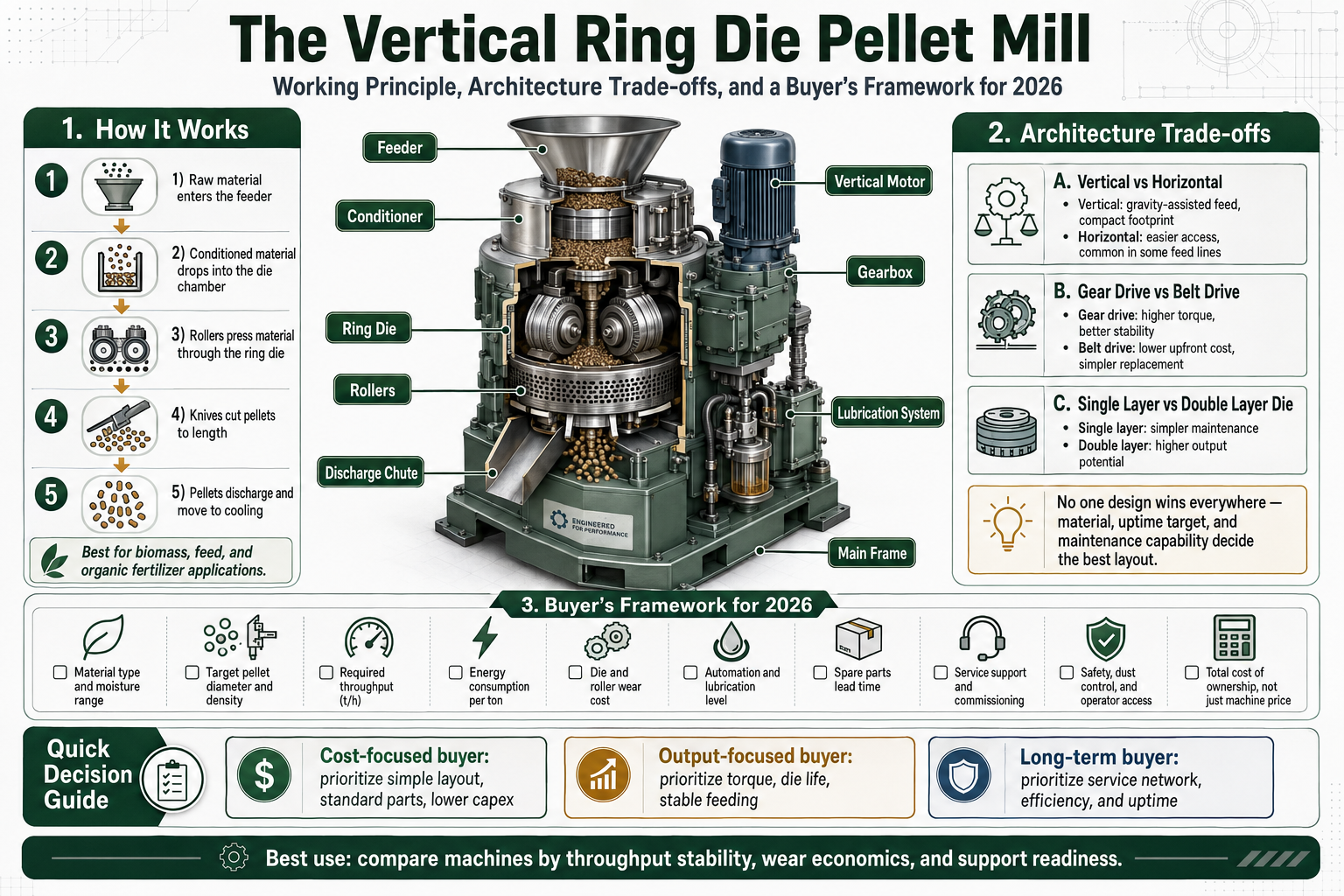
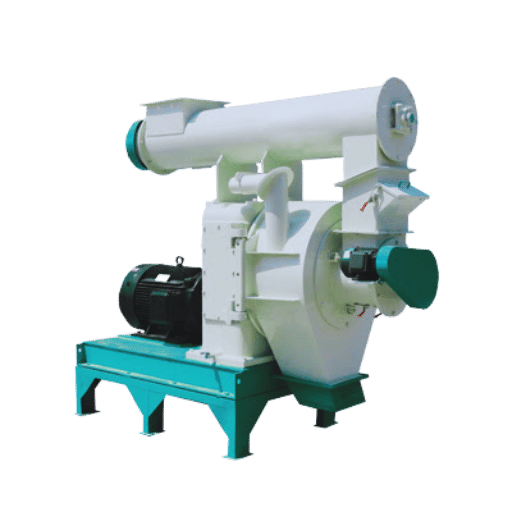
Thông số nhanh: Máy ép viên khuôn vòng trục đứng (mức điển hình trong ngành)
| Dải năng suất | 0,8 – 4 t/h (dải công nghiệp điển hình) |
| Động cơ chính | 55 – 280 kW + động cơ phụ cho dao cắt, cấp liệu và bôi trơn |
| Tuổi thọ khuôn vòng | 1.000 – 1.500 giờ mỗi bộ (mức điển hình do nhà cung cấp công bố, phụ thuộc vào nguyên liệu đầu vào) |
| Đường kính viên nén | 6, 8, 10, 12 mm (phù hợp với các cấp đường kính D06 và D08 trong ISO 17225-2:2021) |
| Tốc độ rôto (trục đứng) | ~75 rpm với mô-men xoắn cao |
| Khoảng độ ẩm tối ưu của nguyên liệu đầu vào | Tối ưu ở 10 – 15%; có thể đạt 10 – 18% nhưng làm giảm tuổi thọ khuôn ép |
| Khoảng giá FOB | ~USD 16.000 – 45.000 (FOB Trung Quốc; thay đổi theo dải năng suất và vật liệu khuôn ép) |
Tôi có thể mua máy ở đâu?
Để xem thông số cụ thể của dòng TCZL và giá FOB hiện tại của TCPEL, hãy truy cập trang sản phẩm máy ép viên khuôn vòng trục đứng TCZL.Máy ép viên khuôn vòng trục đứng là gì?
 Máy ép viên khuôn vòng trục đứng hoạt động như thế nào?
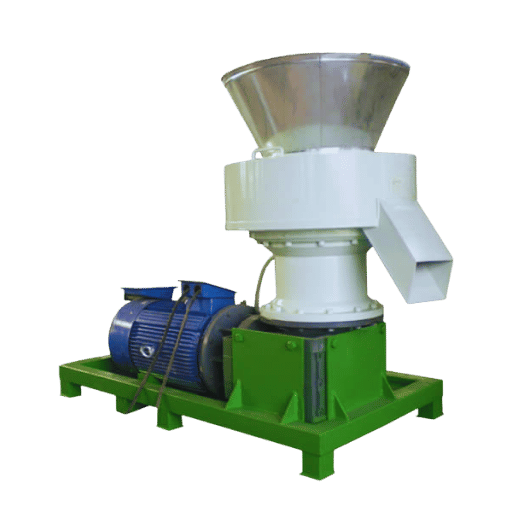
Giải thích về kỹ thuật: Máy ép viên khuôn vòng trục đứng là thiết bị ép nguyên liệu sinh khối hoặc thức ăn chăn nuôi đã nghiền qua các lỗ hướng tâm của khuôn vòng đặt theo phương đứng, bằng một hoặc nhiều con lăn ép chuyển động áp sát bề mặt trong của khuôn ép. Viên nén thoát ra ở mặt ngoài khuôn ép và được dao cắt cố định cắt theo chiều dài. Thuật ngữ “trục đứng” chỉ hướng của trục tâm khuôn ép – hướng lên trên – nhờ đó nguyên liệu rơi vào vùng nén bằng trọng lực thay vì được đẩy bằng áp lực theo phương ngang.
Vậy máy này khác các phương án khác như thế nào?
Trong nhóm thiết bị sản xuất viên nén, máy nằm giữa hai thái cực. Ở một phía, máy ép viên khuôn phẳng sử dụng khuôn phẳng nằm ngang và một con lăn ép nguyên liệu xuống dưới – đơn giản hơn, rẻ hơn nhưng năng suất bị giới hạn ở khoảng 0,5 t/h. Ở phía còn lại, các máy ép viên nén gỗ khuôn vòng trục ngang cỡ lớn quay khuôn ép ở tốc độ cao quanh các con lăn cố định – được chế tạo để đạt sản lượng nhiên liệu sinh khối công nghiệp từ 5 đến 10+ t/h.
Máy ép viên nén gỗ khuôn vòng trục đứng đảm nhiệm phân khúc năng suất trung bình: 0.8 đến 4 t/h, thường phù hợp với nhà máy sinh khối phục vụ thị trường nhiên liệu khu vực, cơ sở chế biến EFB từ dầu cọ hoặc hoạt động sản xuất viên thức ăn chăn nuôi quy mô vừa.
Lợi ích là gì?
Cấu hình này khẳng định được vị trí nhờ một ưu thế cụ thể ngay từ cách bố trí thiết bị. Theo phân tích so sánh của Best Pellet Plant, cơ chế phân phối bằng trọng lực giúp kết cấu trục đứng nén đồng đều hơn, trong khi nguyên liệu của máy khuôn vòng trục ngang được cấp theo phương nghiêng ngang nên thường phân bố không đều trên bề mặt khuôn ép. Đặc điểm vật lý duy nhất đó tác động đến mọi đánh đổi khác được trình bày dưới đây.
Máy ép viên khuôn vòng trục đứng hoạt động như thế nào?
Giải thích về kỹ thuật: Máy ép viên khuôn vòng trục đứng là thiết bị ép nguyên liệu sinh khối hoặc thức ăn chăn nuôi đã nghiền qua các lỗ hướng tâm của khuôn vòng đặt theo phương đứng, bằng một hoặc nhiều con lăn ép chuyển động áp sát bề mặt trong của khuôn ép. Viên nén thoát ra ở mặt ngoài khuôn ép và được dao cắt cố định cắt theo chiều dài. Thuật ngữ “trục đứng” chỉ hướng của trục tâm khuôn ép – hướng lên trên – nhờ đó nguyên liệu rơi vào vùng nén bằng trọng lực thay vì được đẩy bằng áp lực theo phương ngang.
Vậy máy này khác các phương án khác như thế nào?
Trong nhóm thiết bị sản xuất viên nén, máy nằm giữa hai thái cực. Ở một phía, máy ép viên khuôn phẳng sử dụng khuôn phẳng nằm ngang và một con lăn ép nguyên liệu xuống dưới – đơn giản hơn, rẻ hơn nhưng năng suất bị giới hạn ở khoảng 0,5 t/h. Ở phía còn lại, các máy ép viên nén gỗ khuôn vòng trục ngang cỡ lớn quay khuôn ép ở tốc độ cao quanh các con lăn cố định – được chế tạo để đạt sản lượng nhiên liệu sinh khối công nghiệp từ 5 đến 10+ t/h.
Máy ép viên nén gỗ khuôn vòng trục đứng đảm nhiệm phân khúc năng suất trung bình: 0.8 đến 4 t/h, thường phù hợp với nhà máy sinh khối phục vụ thị trường nhiên liệu khu vực, cơ sở chế biến EFB từ dầu cọ hoặc hoạt động sản xuất viên thức ăn chăn nuôi quy mô vừa.
Lợi ích là gì?
Cấu hình này khẳng định được vị trí nhờ một ưu thế cụ thể ngay từ cách bố trí thiết bị. Theo phân tích so sánh của Best Pellet Plant, cơ chế phân phối bằng trọng lực giúp kết cấu trục đứng nén đồng đều hơn, trong khi nguyên liệu của máy khuôn vòng trục ngang được cấp theo phương nghiêng ngang nên thường phân bố không đều trên bề mặt khuôn ép. Đặc điểm vật lý duy nhất đó tác động đến mọi đánh đổi khác được trình bày dưới đây.
Máy ép viên khuôn vòng trục đứng hoạt động như thế nào? (Cơ chế từng bước)
 Bên trong máy có gì?
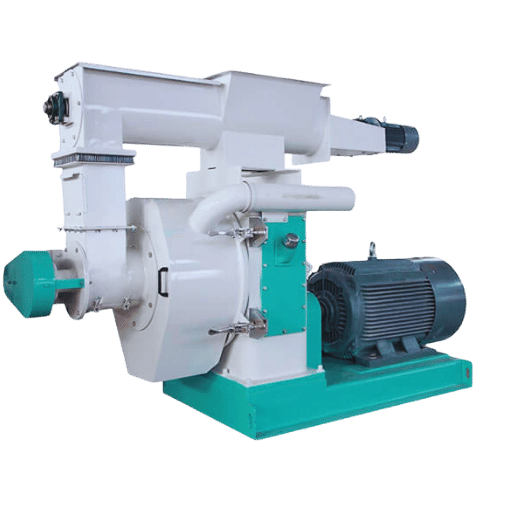
Xét về cơ chế, đây là quy trình gồm sáu công đoạn: điều hòa phối liệu, phân phối, nén, cắt và làm mát. Phần lớn đơn vị vận hành coi bốn công đoạn ở giữa là “máy ép viên” thực tế và lắp bộ điều hòa phối liệu cùng máy làm nguội viên nén thành các thiết bị riêng; công việc thực sự diễn ra bên trong vỏ khuôn ép.
Bên trong máy có gì?
Xét về cơ chế, đây là quy trình gồm sáu công đoạn: điều hòa phối liệu, phân phối, nén, cắt và làm mát. Phần lớn đơn vị vận hành coi bốn công đoạn ở giữa là “máy ép viên” thực tế và lắp bộ điều hòa phối liệu cùng máy làm nguội viên nén thành các thiết bị riêng; công việc thực sự diễn ra bên trong vỏ khuôn ép.
Máy ép viên khuôn vòng trục đứng tạo viên nén gỗ như thế nào?
Máy ép viên khuôn vòng trục đứng hoạt động như thế nào. Bên trong vỏ khuôn ép, sinh khối đã nghiền rơi từ trên xuống khoang bên trong của khuôn vòng trục đứng. Khi các con lăn ép quay áp sát thành trong khuôn ép, chúng ép nguyên liệu vào các lỗ hướng tâm xuyên qua khuôn vòng bằng thép. Áp suất và ma sát ly tâm bên trong các lỗ khuôn làm nóng và nóng chảy lignin trong gỗ trước khi lignin tái kết dính khi viên nén đã nén thoát ra khỏi mặt ngoài khuôn ép. Các dao cắt cố định tạo viên nén có chiều dài xác định, sau đó viên nén thành phẩm rơi vào máy làm nguội viên nén. Trong toàn bộ quá trình này, hệ thống bôi trơn tuần hoàn quanh ổ bi của con lăn. Dòng vật liệu diễn ra liên tục: nguyên liệu đầu vào đi vào một đầu, trong khi dòng viên nén thành phẩm liên tục đi ra ở đầu kia của máy ép viên. Hình học của các lỗ hướng tâm. Trang Wikipedia về máy ép viên giải thích vấn đề này rõ nhất: Trên khuôn vòng có các lỗ hướng tâm phân bố khắp khuôn ép. Nguyên liệu dạng bột được đưa vào bên trong khuôn ép và được bộ rải phân phối đều. Sau đó, hai con lăn ép bột qua các lỗ khuôn. Hai dao cắt được sử dụng để cắt rời viên nén khỏi mặt ngoài khuôn ép. Chính kết cấu hai con lăn ép từ trong ra ngoài này tạo nên sự khác biệt giữa máy sử dụng khuôn vòng với máy ép viên khuôn phẳng và máy đùn trục vít ngang. Vai trò của lignin và độ ẩm trong quá trình kết dính Điều mà mô tả trong sách giáo khoa bỏ sót là vai trò của cả độ ẩm lẫn lignin trong cơ chế hóa học tạo liên kết. Sợi gỗ có độ ẩm từ 10 đến 15% khi được ép qua khuôn có tỷ số nén khoảng 1:5 hoặc 1:6 sẽ tạo nhiệt độ cục bộ đủ làm nóng chảy lignin nhưng không đẩy ra quá nhiều độ ẩm khiến viên nén mất khả năng kết dính. Độ ẩm quá thấp tạo ra viên nén giòn, độ nén kém và dễ vỡ vụn khi vận chuyển. Độ ẩm quá cao khiến hơi nước giãn nở bên trong khuôn ép, tạo áp suất quá mức và làm tắc các lỗ khuôn (một hiện tượng mà đơn vị vận hành đã quá quen thuộc,). Mức độ ẩm phù hợp đối với gỗ cứng còn khắt khe hơn vì lignin trong loại gỗ này khó phân rã hơn và cần áp suất cao hơn.
📐 Ghi chú kỹ thuật: Khe hở khuôn ép-con lăn
Khe hở khuôn ép-con lăn. Khe hở rất nhỏ (khe hở khuôn ép-con lăn) giữa bề mặt con lăn ép và thành trong khuôn ép nằm trong khoảng 0,1-0.3mm. Nếu khe quá rộng, nguyên liệu chỉ trượt qua con lăn mà không đi vào các lỗ khuôn (làm giảm năng suất và chất lượng viên nén). Nếu khe quá hẹp, con lăn ép sẽ cọ vào bề mặt khuôn ép, khiến cả con lăn và khuôn ép nhanh chóng bị mòn. Trên máy khuôn vòng trục đứng, cơ cấu điều chỉnh con lăn (dùng để đặt khe hở) cho phép dịch chuyển cụm bánh ép thay vì phải tháo khuôn ép.
Khuôn vòng trục đứng và trục ngang: Các đánh đổi về kết cấu
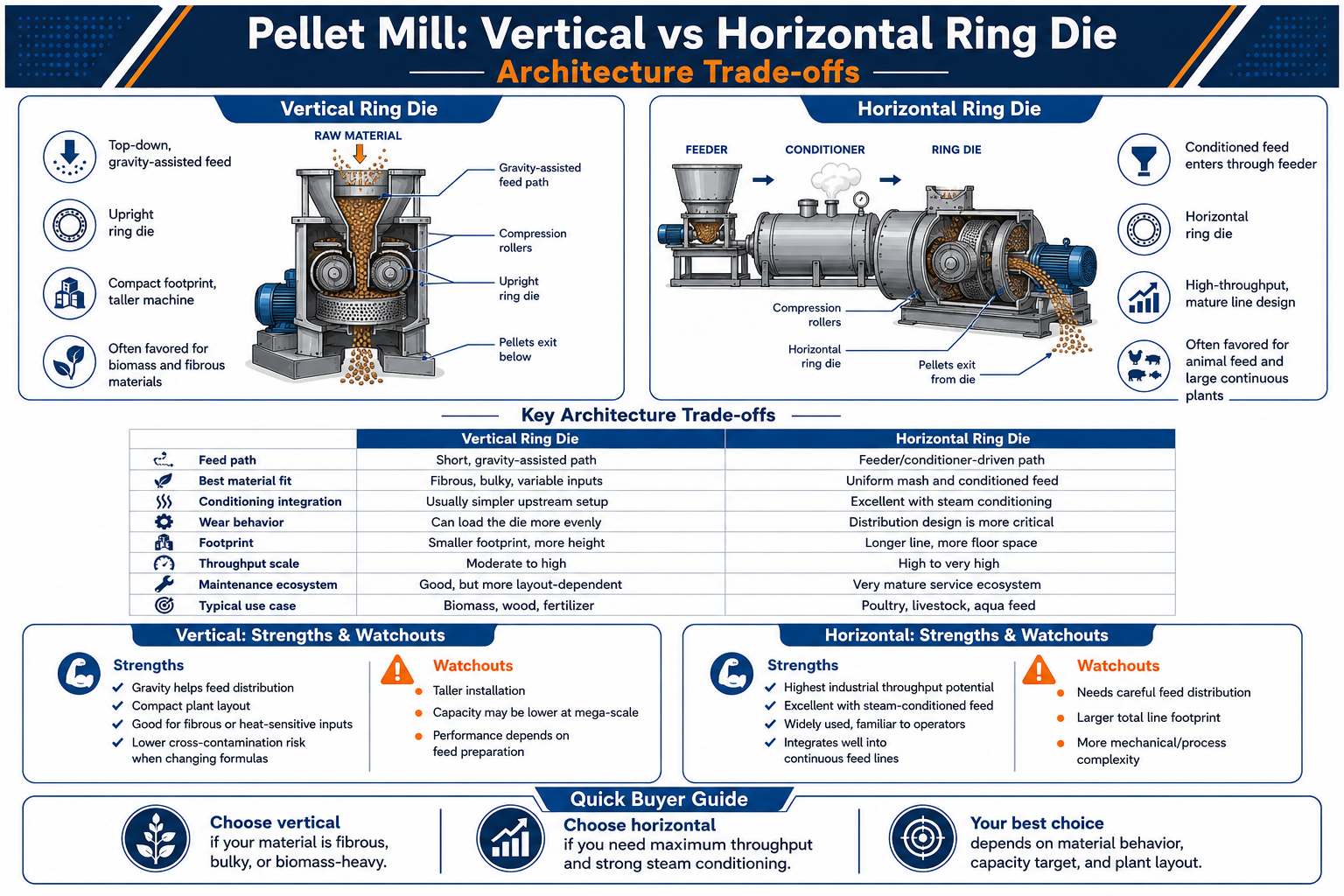 Tại sao máy ép viên khuôn vòng có hai hướng bố trí. Cả máy ép viên khuôn vòng trục đứng lẫn trục ngang đều đẩy nguyên liệu qua các lỗ hướng tâm của khuôn ép trung tâm. Khác biệt hình học duy nhất là hướng của trục khuôn ép, nhưng đáng tiếc điều này lại tạo ra những hệ quả đáng kể khi vận hành, như minh họa trong bảng so sánh dưới đây dựa trên thông tin trên mạng và bảng thông số của một số nhà sản xuất (Best Pellet Plant đã được trích dẫn ở trên.)
Máy ép viên khuôn vòng trục đứng và trục ngang khác nhau như thế nào?
Câu trả lời đầy đủ là phần giải thích ngắn vẫn đúng trong phần lớn trường hợp, nhưng có những khác biệt đáng kể cần lưu ý. Máy khuôn vòng trục đứng cấp nhiều nguyên liệu hơn bằng trọng lực (rơi tự do thẳng xuống khuôn ép), quay chậm hơn, tạo viên nén đồng đều hơn nhiều và dễ bảo trì hơn đáng kể. Máy dùng rôto để ép hoặc đẩy nguyên liệu xuống khuôn vòng với mô-men xoắn cao hơn. Đây rõ ràng là loại máy dễ cấp nguyên liệu qua nhất và có khuôn ép đơn giản hơn.| Tiêu chí | Khuôn vòng trục đứng | Khuôn vòng trục ngang |
|---|---|---|
| Phân phối nguyên liệu | Cấp liệu bằng trọng lực; phân bố đều trên bề mặt khuôn ép | Cấp liệu theo phương nghiêng ngang; có xu hướng phân bố không đều |
| Cấu hình rôto | Khuôn ép cố định, bánh ép quay | Khuôn ép quay, bánh ép cố định |
| Tốc độ rôto điển hình | ~75 rpm với mô-men xoắn cao | 200+ rpm với mô-men xoắn thấp hơn |
| Độ đồng đều của viên nén | Theo báo cáo, chiều dài “về cơ bản là bằng nhau” và mức nghiền vụn tối thiểu (tỷ lệ tạo viên ~99% do nhà cung cấp công bố) | Tốc độ quay cao có xu hướng tạo chiều dài không đều và làm viên nén bị bở phấn |
| Nguyên liệu đầu vào phù hợp nhất | Vật liệu khó kết dính: trấu, mùn cưa gỗ cứng, xơ cọ | Vật liệu ướt, dính: hỗn hợp thức ăn có độ ẩm cao, viên thức ăn chăn nuôi |
| Kết cấu khuôn ép | Thường có hai lớp; có thể thay một phần khuôn ép | Thường có một lớp; phải tháo toàn bộ để thay tấm khuôn |
| Điều chỉnh khe hở | Điều chỉnh vị trí bánh ép tại chỗ | Đặt lại vị trí hoặc thay tấm khuôn |
“Nếu chỉ ép mùn cưa gỗ, quý khách nên chọn cấu hình khuôn vòng trục đứng. Mùn cưa – kể cả mùn cưa gỗ cứng – cần lực nén cao hơn sinh khối sợi mềm, còn hệ thống trục đứng kết hợp hộp giảm tốc hạng nặng sẽ duy trì mô-men xoắn ổn định trên bề mặt khuôn ép. Cấu hình trục ngang có tốc độ rpm cao gấp ba lần, nhưng không thể tạo lực nén trên từng viên nén tương đương.” — Góc nhìn của người làm trong ngành, tổng hợp từ hướng dẫn vận hành do các nhà sản xuất máy móc sản xuất viên nén sinh khối Trung Quốc công bố(Mặc dù chúng tôi chưa xác minh độc lập tỷ lệ tạo viên 99 phần trăm mà người bán tuyên bố đối với cấu hình trục đứng và đưa vào bảo hành hiệu suất, xu hướng này chắc chắn là đúng-các hệ thống tốc độ thấp được cấp liệu thẳng đứng bằng trọng lực tạo ra viên nén đồng đều hơn các hệ thống tốc độ cao cấp liệu theo lực ly tâm-với sự nhấn mạnh thích đáng vào cụm từ “tỷ lệ được tuyên bố.”)
Khuôn vòng, khuôn phẳng hay trục ngang: Cây quyết định cho 3 kiểu kết cấu
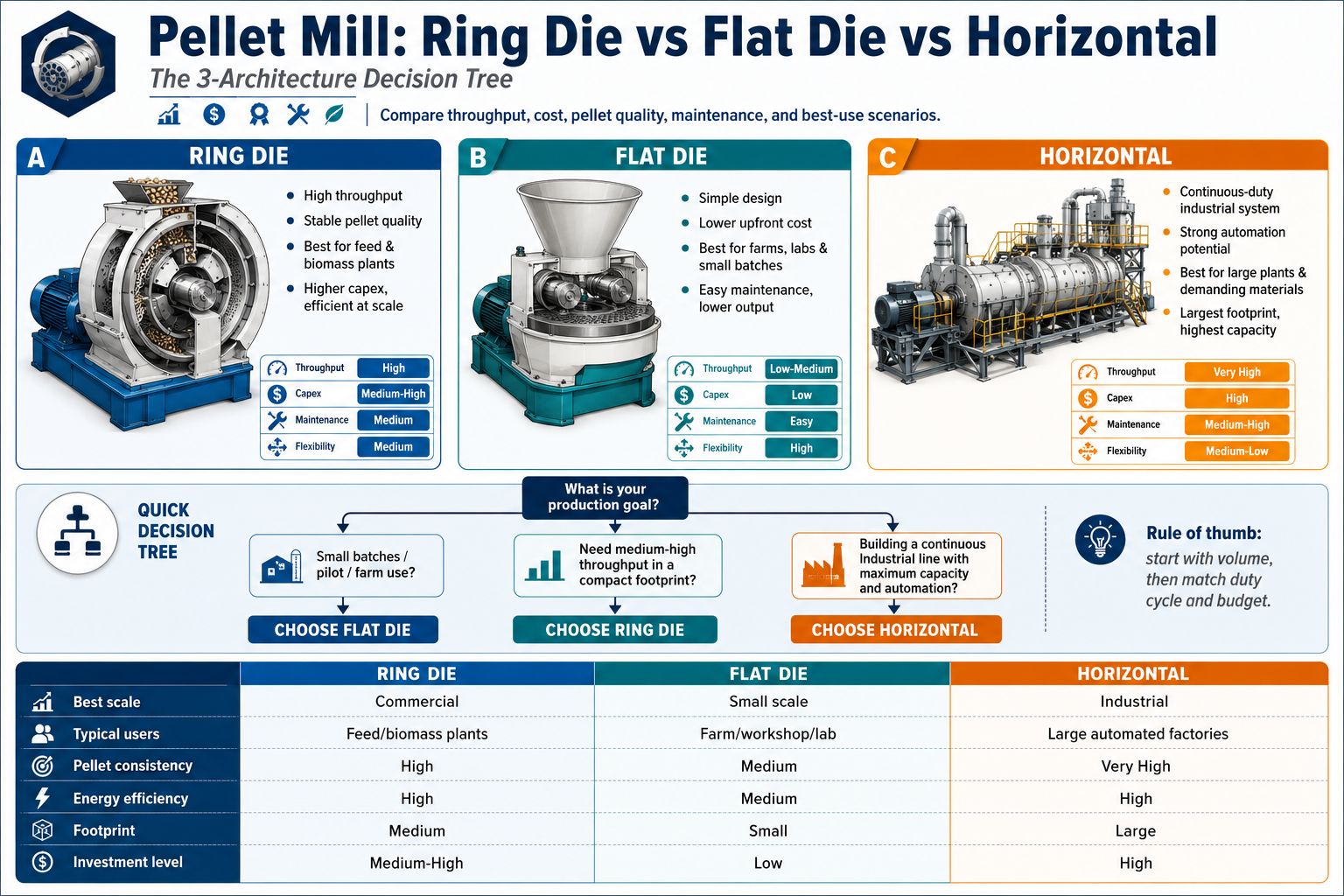 “Đây có phải là máy phù hợp không” Câu hỏi dành cho phần lớn người đang cân nhắc mua máy khuôn vòng trục đứng thực ra còn xuất hiện trước đó. Trên thực tế, phần lớn câu chuyện “chúng tôi đã mua nhầm máy” mà chúng tôi tiếp nhận đều bắt đầu khi khách hàng nhờ chọn máy khuôn vòng trục đứng “tốt nhất” mà chưa hỏi ngay từ đầu liệu máy khuôn vòng có phù hợp hay không. Cây quyết định sau đây phác họa ba phương án thực tế:
Thiết kế khuôn phẳng và khuôn vòng có thực sự khác nhau không?
Xét về cơ khí thì có – và mức chênh lệch tăng theo năng suất xử lý. Khuôn phẳng sử dụng một con lăn ép nguyên liệu xuống qua các lỗ trên một tấm phẳng, với dao cắt ở mép dưới để cắt viên nén. Khuôn vòng sử dụng hai hoặc nhiều con lăn ép nguyên liệu ra ngoài qua một loạt lỗ trên vòng khuôn, với dao cắt để cắt rời các đầu cứng của viên nén. Thiết kế khuôn phẳng đơn giản nhất, dễ bảo trì nhất và có chi phí đầu tư thấp nhất, nhưng giới hạn năng suất xử lý thực tế nhanh chóng xuất hiện do cơ chế nén một lượt bằng một con lăn. Nhiều con lăn và nhiều hàng lỗ của thiết kế khuôn vòng là yếu tố khiến loại kết cấu này trở thành lựa chọn ưu tiên cho mọi hoạt động phải vận hành theo ca 16hr với năng suất nhiều tấn/giờ.
Cây quyết định cho 3 kiểu kết cấu: trục đứng, trục ngang và khuôn phẳng
Các vùng chuyển tiếp có ý nghĩa đáng kể. Khi duy trì từ 1-2 t/h trở lên, khuôn vòng bắt đầu vượt khuôn phẳng về mức hao mòn trên mỗi viên nén, nhưng ngưỡng cụ thể phụ thuộc vào chu kỳ làm việc, độ mài mòn của nguyên liệu đầu vào và cách quý khách muốn khấu hao chi phí đầu tư ban đầu. Vấn đề này sẽ được đề cập lại trong phần TCO.
- Cần duy trì năng suất xử lý dưới 0,5 t/h?Hãy chọn máy ép viên khuôn phẳng một con lăn. Chi phí đầu tư thấp hơn, dễ bảo dưỡng hơn. Theo chúng tôi, máy này thực sự hợp lý khi sản lượng chưa đủ để biện minh cho một thiết bị đắt hơn và khó bảo dưỡng hơn, và phần lớn trang trại cùng cơ sở thử nghiệm có lẽ thuộc nhóm này.
- Mục tiêu của quý khách là 0,5- 3 t/h và vận hành tối thiểu 12 + giờ mỗi ngày. Hãy chọn trục đứng. Cơ chế cấp liệu bằng trọng lực cùng mô-men xoắn cao và tốc độ rpm thấp giúp một máy có thể đạt vùng năng suất mà khuôn phẳng bắt đầu bị cọ mòn, còn khuôn vòng trục đứng lại trở nên quá mức cần thiết – và gây lãng phí vốn
- > Năng suất xử lý mục tiêu từ 3 t/h trở lên hoặc nguyên liệu dính?Khi đó hãy sử dụng khuôn vòng trục ngang. Có thể đạt năng suất cao 10+ t/h bằng nhiều máy chạy song song và điều khiển theo mức tải thay đổi. Khi vật liệu dính được văng theo phương ngang, vấn đề vệ sinh ít nghiêm trọng hơn nhiều so với yêu cầu bảo trì cao gặp ở máy trục đứng xử lý vật liệu dính.
Ma trận lựa chọn máy ép viên theo 4 biến số
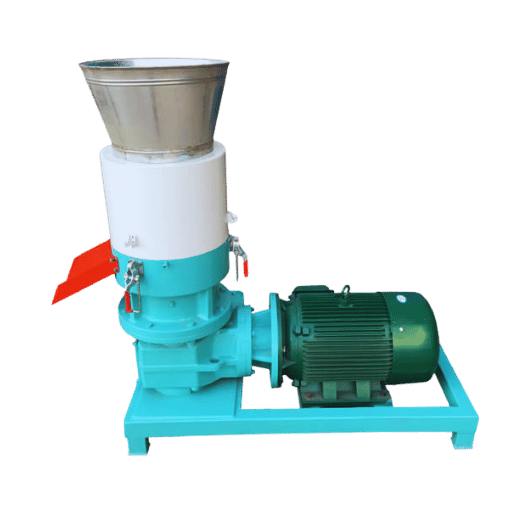 Quyết định không chỉ là chọn một máy khuôn vòng trục đứng, mà là chọn một máy khuôn vòng trục đứng cụ thể. Có bốn yếu tố quan trọng, không chỉ là số t/h quý khách muốn mua – nhưng quý khách sẽ ngạc nhiên khi biết rất ít nhà cung cấp hỏi thêm ngoài năng suất! Những thông tin thiết yếu gồm năng suất, khối lượng riêng của nguyên liệu, khoảng độ ẩm thông thường và số giờ vận hành liên tục mỗi ngày.
Làm thế nào để chọn đúng model máy ép viên?
Với từng yếu tố, hãy xác định hoạt động của quý khách thuộc nhóm nào rồi tham khảo ma trận sau để xác định nhóm cấu hình model được đề xuất. Xin lưu ý rằng ma trận này cung cấp điểm khởi đầu phù hợp cho việc đánh giá; trước khi cam kết mua, mọi cấu hình mới cần được thử nghiệm bằng chính nguyên liệu đầu vào của khách hàng tại cơ sở thử máy của nhà sản xuất.| Biến số | Dải A — Nhẹ | Dải B — Trung bình | Dải C — Nặng |
|---|---|---|---|
| Năng suất mục tiêu | 0,5 – 1,2 t/h | 1,2 – 2,5 t/h | 2,5 – 4 t/h |
| Khối lượng riêng của nguyên liệu đầu vào | Sợi nhẹ (trấu, EFB) | Hỗn hợp (mùn cưa gỗ mềm, rơm) | Đặc (gỗ cứng, tre, vỏ đậu phộng) |
| Khoảng độ ẩm | Được kiểm soát ở 10 – 13% | Thông thường ở 12 – 15% | Biến động trong khoảng 12 – 18% |
| Số giờ vận hành liên tục/ngày | < 12 h | 12 – 18 h | 18 – 24 h |
| Dải công suất động cơ đề xuất | 55 – 90 kW | 110 – 160 kW | 200 – 280 kW |
“Mọi người nói về điều gì? Năng suất! Đó là thông số họ đưa ra đầu tiên, nhưng thương vụ sẽ đổ vỡ khi quý khách phát hiện họ đang đưa mùn cưa gỗ cứng qua một máy được quy định cho viên nén gỗ thông,” nhà sản xuất máy ép viên giải thích. “Họ có thể thấy sản lượng giảm dần trong một tháng, mức hao mòn không như dự kiến và chẳng bao lâu sau sẽ phàn nàn rằng nhà chế tạo đã bán nhầm máy cho họ.” — Góc nhìn kỹ thuật thực địa, tổng hợp từ thực tế chạy thử và đưa nhà máy sản xuất viên nén vào vận hành
Nguyên liệu đầu vào và độ ẩm: Đầu vào quyết định đầu ra
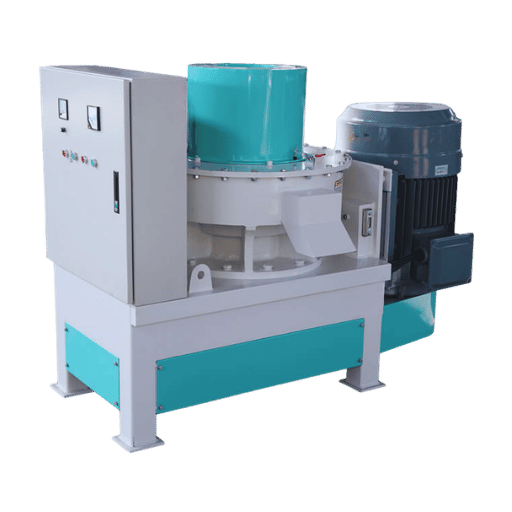 Đối với máy ép viên, các thuộc tính chất lượng của nguyên liệu đầu vào quyết định gần như mọi yếu tố khác – tức mọi yếu tố có thể thay đổi giữa các bao trong kho nguyên liệu. Mức mòn khuôn ép, sản lượng và chất lượng viên nén không cố định mà chịu sự chi phối của nguyên liệu, với những thuộc tính như loài cây, phân bố kích thước hạt sau khi nghiền, độ ẩm và việc các mảnh kim loại có lọt qua bộ tách đá ở công đoạn phía trước máy ép viên rồi phá hỏng khuôn ép đắt tiền hay không.
Độ ẩm lý tưởng của nguyên liệu là bao nhiêu?
Khoảng độ ẩm vận hành thường được chấp nhận là 10-15%. Độ ẩm ở các mức này giúp bôi trơn tốt bên trong khuôn ép và làm mềm lignin mà không khiến lignin thất thoát quá nhiều. Tuy nhiên, khoảng này có thể mở rộng đến 10-18% ở đầu trên, nơi ma sát tiếp tục làm tăng nhiệt độ. Nếu độ ẩm vào hệ thống nhiều hơn, hơi nước dư bị giữ trong khuôn ép sẽ gây hư hỏng. Dưới 10%, mọi mức sấy quá khô đều gây giòn và phát sinh bụi. Độ ẩm quá cao, chẳng hạn trên 18%, sẽ làm tắc các lỗ khuôn và khiến năng suất xử lý giảm nhanh.| Nguyên liệu đầu vào | Khoảng độ ẩm tối ưu | Tỷ số nén của khuôn ép điển hình | Ghi chú |
|---|---|---|---|
| Mùn cưa và dăm bào gỗ mềm (thông, linh sam) | 10 – 14% | ~1:5 | Mốc cơ sở dễ xử lý nhất; hàm lượng lignin cao giúp tự kết dính |
| Mùn cưa gỗ cứng (sồi, bạch đàn) | 11 – 15% | ~1:6 | Cần lực nén cao hơn; phù hợp với kết cấu trục đứng |
| Trấu | 10 – 13% | ~1:4 | Hàm lượng silica gây mài mòn; khuôn ép sẽ mòn nhanh hơn |
| Rơm lúa mì / lúa mạch | 12 – 15% | ~1:5 | Khối lượng riêng xốp thấp; tiền xử lý tăng mật độ sẽ hữu ích |
| Xơ cọ / EFB | 12 – 16% | ~1:5 | Nhiều xơ; xử lý điều hòa bằng hơi nước mang lại lợi ích |
| Bụi tre | 11 – 15% | ~1:6 | Hàm lượng silica cao; tải ép tương đương gỗ cứng |
| Vỏ đậu phộng / thân cây bông | 10 – 14% | ~1:5 | Thêm chất kết dính nếu hàm lượng lignin không đủ |
| Bã mía | 12 – 16% | ~1:5 | Cần đề phòng đường dư bị cacbon hóa |
⚠ Quan trọng: không thể bỏ qua công đoạn làm sạch sơ bộ
Nguyên nhân hàng đầu khiến khuôn ép hỏng sớm là tạp chất trong mùn cưa – đinh, ghim và mảnh sắt tạp lẫn vào từ khâu thu gom tại xưởng cưa. Bộ tách từ và bẫy đá đặt trước máy nghiền búa không phải là phụ kiện có thể coi là “tùy chọn,” mà là yếu tố tạo nên khác biệt giữa tuổi thọ khuôn ép 1.200 giờ và 200 giờ. Đá cũng gây tác động nghiêm trọng tương tự đối với độ mòn của cả con lăn và khuôn ép.
Vận hành, bảo trì và 6 lỗi thực địa thường gặp nhất
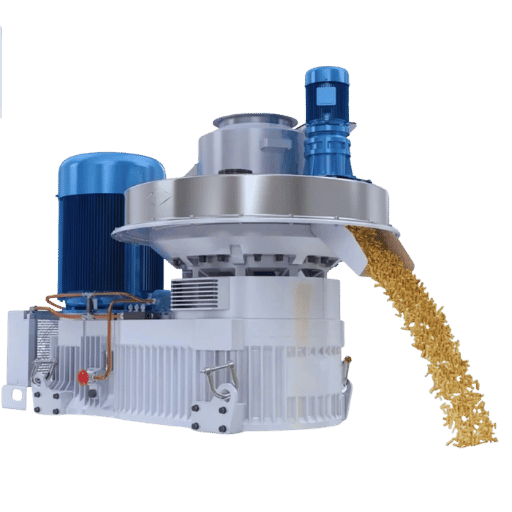 Trong quá trình vận hành, chỉ có quy trình bảo trì thực tế tại hiện trường mới có thể kéo dài tuổi thọ của khuôn ép và con lăn đến giới hạn trên của khoảng điển hình 1.000-1.500 giờ hoặc rút ngắn xuống còn một phần ba. Hình minh họa ngoài cùng bên phải trình bày các thông lệ phổ biến trong ngành khuôn ép trục đứng và con lăn, với giả định máy vận hành một hoặc hai ca.
| Chu kỳ | Công việc |
|---|---|
| Hằng ngày | Kiểm tra trực quan bề mặt khuôn ép để phát hiện hiện tượng chai bóng; kiểm tra mức dầu bôi trơn; xác nhận độ ổn định của tốc độ cấp liệu; lắng nghe tiếng ồn bất thường từ ổ bi hoặc ổ lăn |
| Hằng tuần | Đo khe hở giữa khuôn ép và con lăn; kiểm tra độ mòn của dao cắt; kiểm tra độ căng dây đai; vệ sinh bộ tách từ |
| Hằng tháng | Thay dầu bôi trơn; kiểm tra tình trạng ổ bi hoặc ổ lăn; xác nhận dòng điện của động cơ khi có tải; vệ sinh kỹ bộ điều hòa phối liệu |
| Hằng quý | Đo độ mòn khuôn ép bằng dưỡng; kiểm tra bề mặt con lăn (khoét lại miệng côn của các lỗ bị mòn nếu còn nông, thay thế nếu đã sâu); thay dầu hộp giảm tốc; kiểm tra toàn diện động cơ |
| Triệu chứng | Nguyên nhân có thể | Cách khắc phục tại hiện trường |
|---|---|---|
| Năng suất đầu ra giảm 30%+ | Khuôn ép bị chai bóng do nguyên liệu quá khô hoặc tỷ số nén của khuôn ép không phù hợp | Chạy một mẻ làm sạch bằng cát và dầu; xác nhận độ ẩm đạt thông số quy định; xem xét lại tỷ số nén của khuôn ép nếu sự cố vẫn tiếp diễn |
| Viên nén mềm bị vỡ vụn trong quá trình xử lý | Độ ẩm quá thấp; lignin không mềm hóa đủ | Bổ sung nước tại cửa vào của bộ điều hòa phối liệu để đưa độ ẩm nguyên liệu lên 12-14%; kiểm tra lại độ bền viên nén |
| Rãnh khuôn bị tắc, năng suất xử lý sụt nghiêm trọng | Độ ẩm nguyên liệu trên 18%; hơi nước giãn nở trong các rãnh | Dừng sản xuất; sấy sơ bộ nguyên liệu đầu vào; vệ sinh khuôn ép trước khi khởi động lại |
| Ổ bi hoặc ổ lăn của con lăn hỏng khi chịu tải | Dầu bôi trơn bị nhiễm bẩn do vỏ khuôn ép rò rỉ; hoặc ổ bi hoặc ổ lăn bị mỏi khi hết tuổi thọ | Thay ổ bi hoặc ổ lăn; làm kín lại vỏ máy; xác nhận áp suất của hệ thống bôi trơn |
| Dòng điện động cơ tăng vọt, aptomat nhảy | Có dị vật trong khuôn ép; hoặc viên nén mắc kẹt tại họng xả liệu | Tắt nguồn; kiểm tra bên trong khuôn ép; loại bỏ vật cản; xác nhận bộ tách từ ở công đoạn phía trước còn nguyên vẹn |
| Rung động bất thường khi khởi động | Con lăn mất cân bằng do mòn không đều; hoặc bu lông móng máy bị lỏng | Kiểm tra độ đồng đều của bề mặt con lăn; siết bu lông móng máy đúng mô-men quy định; cân bằng lại hoặc thay con lăn khi cần |
Tổng chi phí sở hữu: Không chỉ là giá niêm yết
Máy ép viên khuôn vòng trục đứng của Trung Quốc thuộc phân khúc 1 t/h-4 t/h có giá từ USD 16.000-45.000 FOB. Con số đó mới chỉ là… một nửa câu chuyện. Còn nửa kia là gì? Chi phí vận hành trong năm năm bao gồm điện năng, thay khuôn ép, thay con lăn, chất bôi trơn, ổ bi hoặc ổ lăn và thời gian dừng máy ngoài kế hoạch. Mô hình TCO dưới đây trình bày góc nhìn khái quát về một nhà máy ép viên có năng suất 1,5 t/h, vận hành khoảng 16 giờ/ngày trong thời hạn năm năm.| Hạng mục chi phí | Ước tính trong 5 năm (USD) | Ghi chú |
|---|---|---|
| Chi phí đầu tư máy (FOB) | ~25,000 | Máy ép viên khuôn vòng trục đứng 1,5 t/h thuộc phân khúc trung bình |
| Vận chuyển + nhập khẩu + lắp đặt | ~5,000 | Container 40′, vận chuyển đến địa điểm trong khu vực |
| Điện năng (5 năm × 16 giờ × 300 ngày × 120 kW × USD 0.10/kWh) | ~144,000 | Hạng mục chi phí lớn nhất; chênh lệch rất nhiều theo khu vực |
| Thay khuôn ép (5 bộ × USD 1.500) | ~7,500 | Giả định tuổi thọ trung bình 1.200 giờ × ~24.000 giờ vận hành |
| Thay con lăn (10 bộ × USD 600) | ~6,000 | Con lăn mòn với tốc độ bằng khoảng một nửa khuôn ép |
| Chất bôi trơn + ổ bi hoặc ổ lăn + dao cắt | ~5,000 | Tổng vật tư tiêu hao |
| Chi phí dừng máy ngoài kế hoạch (ước tính tổn thất sản lượng 5%) | ~15,000 | Biến động rất lớn; giả định doanh thu cơ sở từ viên nén là USD 60/tấn |
| Tổng TCO trong 5 năm | ~207,500 | Chi phí đầu tư chiếm ~14% TCO trong 5 năm; năng lượng chiếm ~70% |
Ngưỡng chuyển đổi về hiệu quả kinh tế của độ mòn khuôn vòng
Để xem thông số kỹ thuật và mức giá FOB dự kiến hiện hành cho năm 2026 của model TCZL dùng trong ví dụ này, hãy truy cập trang sản phẩm tại:
Quan niệm mua sắm truyền thống cho rằng năng suất của khuôn vòng luôn cao hơn khuôn phẳng, vì vậy khi chưa chắc chắn thì mặc định chọn máy lớn. Hiệu quả kinh tế thực tế của độ mòn lại cho thấy một câu chuyện khác. Khi năng suất ổn định dưới khoảng 1,8 t/h, chi phí mòn khuôn trên mỗi tấn sản phẩm từ máy khuôn vòng có thể cao hơn máy khuôn phẳng, bởi diện tích bề mặt lớn hơn của khuôn vòng tất nhiên vẫn bị mòn theo thời gian gần như không phụ thuộc vào mức tải của từng rãnh khuôn; chỉ khi máy vận hành trên 1,8 t/h thì chi phí mòn trên mỗi tấn của khuôn vòng mới thấp hơn.
Đây là hướng dẫn mang tính định hướng, không phải ranh giới chính xác và bất biến; điểm giao này thay đổi phần nào theo mức biến động của nguyên liệu đầu vào (trấu đẩy ngưỡng lên cao hơn, gỗ mềm kéo ngưỡng xuống thấp hơn) và đặc điểm vận hành (vận hành 24/7 có lợi cho khuôn vòng). Tuy nhiên, xét trên bình diện chung, mua máy ép viên khuôn vòng trục đứng cho dự án 0,8 t/h có thể không phải lựa chọn phù hợp. Máy khuôn phẳng sẽ mang lại tổng chi phí sở hữu tốt hơn, dù tài liệu giới thiệu của loại máy này không bắt mắt bằng.
Triển vọng ngành năm 2026: Hai thị trường pháp lý đi theo hai hướng
 Đến năm 2026, thị trường cung ứng thiết bị sản xuất viên nén sinh khối phân chia thành hai khối pháp lý: một khối siết chặt quy định và hạ ngưỡng quy mô nhà máy thuộc phạm vi điều chỉnh, còn khối kia chuyển hướng ngược lại và loại bỏ chính sách ưu đãi chủ chốt dành cho các nhà máy này. Châu Âu nhìn chung vẫn duy trì hỗ trợ đối với điện sinh khối tái tạo, đồng thời áp dụng các hạn chế pháp lý mới nhằm vào những cơ sở có quy mô nhỏ hơn. Tại Hoa Kỳ, nhiều nhà đầu tư đã bất ngờ khi chính quyền công bố thay đổi chính sách vào năm 2025, theo đó phần lớn các nhà máy điện sinh khối mới không còn đủ điều kiện hưởng những ưu đãi thuế liên bang chủ chốt dành cho điện tái tạo.
Cách tiếp cận của từng khối ảnh hưởng đến thời điểm mua sắm thiết bị của khách hàng.
Liên minh châu Âu: các quy định chặt chẽ hơn áp dụng cho cả những nhà máy nhỏ hơn. Chỉ thị EU/2023/2413 — được gọi là RED III — có hiệu lực từ ngày 21 tháng Năm năm 2025. Chỉ thị này siết chặt các quy định về tính bền vững đối với sinh khối tại 27 quốc gia thành viên và hạ ngưỡng công suất lắp đặt áp dụng biện pháp kiểm soát tăng cường xuống khoảng hai phần ba.
Các yêu cầu mới về tính bền vững theo RED III sẽ áp dụng cho những cơ sở có công suất nhiệt lớn hơn hoặc bằng 7,5 MW (trước đây là đầu vào nhiệt 20 MW) tại các nhà máy nhiệt và đồng phát nhiệt điện. Trợ cấp tài chính cho nguồn điện mới được sản xuất từ năng lượng thu được qua việc sử dụng gỗ và gỗ tròn khai thác từ rừng, hoặc từ hoạt động khai thác gỗ hay các sản phẩm phụ được dùng làm nguồn năng lượng đầu vào chính. Các quốc gia thành viên sẽ cấm hỗ trợ tài chính cho năng lượng có nguồn gốc từ một số tài nguyên cụ thể (bao gồm gỗ xẻ, gỗ bóc veneer, gốc cây và gỗ cấp công nghiệp), đồng thời xác định những khu vực cấm có ý nghĩa thiết yếu đối với đa dạng sinh học, vùng đất than bùn hoặc trữ lượng carbon.
Luật này quy định một số trường hợp miễn trừ: các cơ sở hiện có chịu sự điều chỉnh của RED II chưa phải tuân thủ cho đến cuối năm 2030; hồ sơ về tính bền vững không bắt buộc đối với những cơ sở dưới ngưỡng 20 MW trước đây. Đối với khách hàng cung cấp sinh khối cho châu Âu, tác động đến hoạt động thu mua là nhà cung cấp sẽ phải xây dựng chuỗi cung ứng bền vững có chứng nhận và đáp ứng yêu cầu về hồ sơ phù hợp ISO 17225-2 ngay cả với những nhà máy có quy mô nhỏ hơn nhiều.
Hoa Kỳ: các ưu đãi liên bang dành cho điện sinh khối bị thu hẹp. Điện sản xuất từ sinh khối phần lớn không còn được chính sách thuế liên bang Hoa Kỳ ưu ái sau phán quyết cuối cùng gần đây của IRS rằng nguồn điện này sẽ không đủ điều kiện hưởng tín dụng Sản xuất điện sạch (45Y) hoặc tín dụng Đầu tư điện sạch (48E) mới, trung lập về công nghệ.
Trong một thời gian, nhiều người đã cho rằng cách xử lý này sắp được áp dụng, nhưng các quy định cuối cùng — được ban hành ngày 15 tháng Một năm 2025 — thực sự gây khá nhiều bất ngờ cho nhà đầu tư. Nhiều bên góp ý đã đề nghị Bộ Tài chính Hoa Kỳ cho phép điện từ các cơ sở phát điện sử dụng nhiên liệu sinh khối đáp ứng các ngưỡng về tỷ lệ phát thải được quy định trong những quy tắc cuối cùng của IRS, với lập luận rằng cần áp dụng các công nghệ sạch phù hợp và có thể áp dụng, bao gồm công nghệ đốt và khí hóa. Tuy nhiên, trong phiên bản cuối cùng, các cơ quan này đã bác bỏ quan điểm đó.
Các cơ quan này cho rằng những công nghệ năng lượng sạch (cơ sở đốt và khí hóa) được viện dẫn là phù hợp với các ứng dụng sinh khối không đáp ứng các nguyên tắc LCA [đánh giá vòng đời] đối với điện sạch do Bộ Tài chính áp dụng. Khi ưu đãi thuế liên bang chủ chốt không còn được áp dụng, các chính sách cấp tiểu bang như tiêu chuẩn danh mục năng lượng tái tạo hoặc chứng chỉ nhiệt tái tạo vẫn là những hướng khả thi để khuyến khích phát triển các dự án phát điện tái tạo mới từ sinh khối tại Hoa Kỳ, nhưng ưu đãi nổi bật nhất đã không còn.
Hệ quả đối với hoạt động mua sắm trong năm 2026. Đối với khách hàng công nghiệp sử dụng nhiệt tại châu Âu, lý do đầu tư công suất máy ép viên khuôn vòng trục đứng mới vẫn có sức thuyết phục, nhưng gánh nặng hồ sơ về tính bền vững đã tăng đáng kể theo RED III; cần đưa chi phí tuân thủ vào kế hoạch mua sắm. Đối với khách hàng sử dụng điện tại Hoa Kỳ, ưu đãi thuế 45Y vốn là cơ sở của phần lớn các nghiên cứu khả thi nay đã không còn; cần đánh giá lại hiệu quả kinh tế trước khi cam kết chi phí đầu tư. Tại các thị trường châu Á và châu Phi, cả hai cơ chế đều không áp dụng trực tiếp, và nhu cầu thiết bị sản xuất viên nén tiếp tục phụ thuộc vào giá nhiên liệu tại địa phương cùng nguồn cung trên thị trường thức ăn chăn nuôi thay vì chính sách ưu đãi dành cho điện. Đối với khách hàng mua sắm thiết bị trong năm 2026: nếu hợp đồng tiêu thụ của quý khách đã được chốt, hãy chốt mức giá FOB hiện tại ngay từ bây giờ. Hãy hoãn cam kết nếu phương án kinh doanh của quý khách dựa trên cách diễn giải về sinh khối theo ưu đãi 45Y của Hoa Kỳ, vốn đã không được giữ lại trong quy định cuối cùng của IRS.
Đến năm 2026, thị trường cung ứng thiết bị sản xuất viên nén sinh khối phân chia thành hai khối pháp lý: một khối siết chặt quy định và hạ ngưỡng quy mô nhà máy thuộc phạm vi điều chỉnh, còn khối kia chuyển hướng ngược lại và loại bỏ chính sách ưu đãi chủ chốt dành cho các nhà máy này. Châu Âu nhìn chung vẫn duy trì hỗ trợ đối với điện sinh khối tái tạo, đồng thời áp dụng các hạn chế pháp lý mới nhằm vào những cơ sở có quy mô nhỏ hơn. Tại Hoa Kỳ, nhiều nhà đầu tư đã bất ngờ khi chính quyền công bố thay đổi chính sách vào năm 2025, theo đó phần lớn các nhà máy điện sinh khối mới không còn đủ điều kiện hưởng những ưu đãi thuế liên bang chủ chốt dành cho điện tái tạo.
Cách tiếp cận của từng khối ảnh hưởng đến thời điểm mua sắm thiết bị của khách hàng.
Liên minh châu Âu: các quy định chặt chẽ hơn áp dụng cho cả những nhà máy nhỏ hơn. Chỉ thị EU/2023/2413 — được gọi là RED III — có hiệu lực từ ngày 21 tháng Năm năm 2025. Chỉ thị này siết chặt các quy định về tính bền vững đối với sinh khối tại 27 quốc gia thành viên và hạ ngưỡng công suất lắp đặt áp dụng biện pháp kiểm soát tăng cường xuống khoảng hai phần ba.
Các yêu cầu mới về tính bền vững theo RED III sẽ áp dụng cho những cơ sở có công suất nhiệt lớn hơn hoặc bằng 7,5 MW (trước đây là đầu vào nhiệt 20 MW) tại các nhà máy nhiệt và đồng phát nhiệt điện. Trợ cấp tài chính cho nguồn điện mới được sản xuất từ năng lượng thu được qua việc sử dụng gỗ và gỗ tròn khai thác từ rừng, hoặc từ hoạt động khai thác gỗ hay các sản phẩm phụ được dùng làm nguồn năng lượng đầu vào chính. Các quốc gia thành viên sẽ cấm hỗ trợ tài chính cho năng lượng có nguồn gốc từ một số tài nguyên cụ thể (bao gồm gỗ xẻ, gỗ bóc veneer, gốc cây và gỗ cấp công nghiệp), đồng thời xác định những khu vực cấm có ý nghĩa thiết yếu đối với đa dạng sinh học, vùng đất than bùn hoặc trữ lượng carbon.
Luật này quy định một số trường hợp miễn trừ: các cơ sở hiện có chịu sự điều chỉnh của RED II chưa phải tuân thủ cho đến cuối năm 2030; hồ sơ về tính bền vững không bắt buộc đối với những cơ sở dưới ngưỡng 20 MW trước đây. Đối với khách hàng cung cấp sinh khối cho châu Âu, tác động đến hoạt động thu mua là nhà cung cấp sẽ phải xây dựng chuỗi cung ứng bền vững có chứng nhận và đáp ứng yêu cầu về hồ sơ phù hợp ISO 17225-2 ngay cả với những nhà máy có quy mô nhỏ hơn nhiều.
Hoa Kỳ: các ưu đãi liên bang dành cho điện sinh khối bị thu hẹp. Điện sản xuất từ sinh khối phần lớn không còn được chính sách thuế liên bang Hoa Kỳ ưu ái sau phán quyết cuối cùng gần đây của IRS rằng nguồn điện này sẽ không đủ điều kiện hưởng tín dụng Sản xuất điện sạch (45Y) hoặc tín dụng Đầu tư điện sạch (48E) mới, trung lập về công nghệ.
Trong một thời gian, nhiều người đã cho rằng cách xử lý này sắp được áp dụng, nhưng các quy định cuối cùng — được ban hành ngày 15 tháng Một năm 2025 — thực sự gây khá nhiều bất ngờ cho nhà đầu tư. Nhiều bên góp ý đã đề nghị Bộ Tài chính Hoa Kỳ cho phép điện từ các cơ sở phát điện sử dụng nhiên liệu sinh khối đáp ứng các ngưỡng về tỷ lệ phát thải được quy định trong những quy tắc cuối cùng của IRS, với lập luận rằng cần áp dụng các công nghệ sạch phù hợp và có thể áp dụng, bao gồm công nghệ đốt và khí hóa. Tuy nhiên, trong phiên bản cuối cùng, các cơ quan này đã bác bỏ quan điểm đó.
Các cơ quan này cho rằng những công nghệ năng lượng sạch (cơ sở đốt và khí hóa) được viện dẫn là phù hợp với các ứng dụng sinh khối không đáp ứng các nguyên tắc LCA [đánh giá vòng đời] đối với điện sạch do Bộ Tài chính áp dụng. Khi ưu đãi thuế liên bang chủ chốt không còn được áp dụng, các chính sách cấp tiểu bang như tiêu chuẩn danh mục năng lượng tái tạo hoặc chứng chỉ nhiệt tái tạo vẫn là những hướng khả thi để khuyến khích phát triển các dự án phát điện tái tạo mới từ sinh khối tại Hoa Kỳ, nhưng ưu đãi nổi bật nhất đã không còn.
Hệ quả đối với hoạt động mua sắm trong năm 2026. Đối với khách hàng công nghiệp sử dụng nhiệt tại châu Âu, lý do đầu tư công suất máy ép viên khuôn vòng trục đứng mới vẫn có sức thuyết phục, nhưng gánh nặng hồ sơ về tính bền vững đã tăng đáng kể theo RED III; cần đưa chi phí tuân thủ vào kế hoạch mua sắm. Đối với khách hàng sử dụng điện tại Hoa Kỳ, ưu đãi thuế 45Y vốn là cơ sở của phần lớn các nghiên cứu khả thi nay đã không còn; cần đánh giá lại hiệu quả kinh tế trước khi cam kết chi phí đầu tư. Tại các thị trường châu Á và châu Phi, cả hai cơ chế đều không áp dụng trực tiếp, và nhu cầu thiết bị sản xuất viên nén tiếp tục phụ thuộc vào giá nhiên liệu tại địa phương cùng nguồn cung trên thị trường thức ăn chăn nuôi thay vì chính sách ưu đãi dành cho điện. Đối với khách hàng mua sắm thiết bị trong năm 2026: nếu hợp đồng tiêu thụ của quý khách đã được chốt, hãy chốt mức giá FOB hiện tại ngay từ bây giờ. Hãy hoãn cam kết nếu phương án kinh doanh của quý khách dựa trên cách diễn giải về sinh khối theo ưu đãi 45Y của Hoa Kỳ, vốn đã không được giữ lại trong quy định cuối cùng của IRS.
Câu hỏi thường gặp về máy ép viên khuôn vòng trục đứng
Câu hỏi 1: Máy ép viên khuôn vòng trục đứng là gì?
Xem câu trả lời
Máy ép viên khuôn vòng trục đứng sử dụng các con lăn ép chạy trên bề mặt trong của khuôn vòng đặt theo phương đứng để ép nguyên liệu tạo viên vào các rãnh hướng tâm trên thành khuôn. Nguyên liệu đi vào khuôn ép nhờ trọng lực, giúp nạp liệu đồng đều và tạo ra viên nén có chiều dài cùng mật độ ổn định hơn so với máy bố trí theo phương ngang. Năng suất đầu ra của hầu hết ứng dụng công nghiệp nằm trong khoảng 0.8 đến 4 t/h.
Câu hỏi 2: Máy này khác máy ép viên khuôn phẳng như thế nào?
Xem câu trả lời
Máy ép khuôn phẳng là loại đơn giản và có chi phí thấp nhất, sử dụng một con lăn ép lên tấm khuôn phẳng để đạt năng suất ~0,5 t/h, trong khi máy khuôn vòng có thể dễ dàng nâng quy mô lên 4 t/h (trục đứng) và 10+ t/h (trục ngang). Máy ép khuôn phẳng phù hợp với mức sản lượng thấp nhất và trường hợp không chấp nhận thời gian dừng máy ép, còn máy khuôn vòng mang lại hiệu quả kinh tế theo quy mô tốt hơn khi năng suất vượt 1,8 t/h, bất kể cách bố trí máy ép (trục đứng hay trục ngang).
Câu hỏi 3: Máy ép viên khuôn vòng trục đứng có thể xử lý những vật liệu nào?
Xem câu trả lời
Máy ép viên khuôn vòng trục đứng chủ yếu xử lý phế liệu gỗ (mùn cưa từ gỗ mềm và gỗ cứng), trấu, rơm lúa mì hoặc lúa mạch, xơ cọ và buồng quả rỗng, bã mía, vỏ lạc cùng các phụ phẩm nông nghiệp khác. Máy cũng có thể dùng để ép viên thức ăn chăn nuôi, mặc dù nguyên liệu có độ ẩm cao và tính kết dính thường được xử lý hiệu quả hơn bằng máy ép khuôn vòng trục ngang hoặc máy khuôn phẳng. Các yếu tố chính quyết định mức độ phù hợp của máy ép viên thường là độ cứng và kích thước nguyên liệu, trong đó máy nghiền búa và sàng ở công đoạn phía trước tạo ra nguyên liệu đầu vào có kích thước phù hợp cho bộ tiền điều hòa phối liệu.
Câu hỏi 4: Tuổi thọ sử dụng điển hình của một bộ khuôn vòng là bao lâu?
Xem câu trả lời
Trong các ứng dụng công nghiệp xử lý sinh khối, thời gian vận hành giữa hai lần phục hồi khuôn vòng để sản xuất viên nén nằm trong khoảng 1.000 đến 1.500 giờ. Đây là khoảng được ngành công nghiệp chấp nhận rộng rãi khi ép viên từ nguyên liệu sạch, với độ ẩm phù hợp (10-15%) và tỷ số nén của khuôn ép tương thích với loại cùng kích thước nguyên liệu. Máy vận hành mà không có bộ tách từ và thiết bị giữ đá sẽ chỉ đạt tuổi thọ khuôn ép 200-400 giờ do đá gây rỗ bề mặt khuôn, trong khi máy ép các vật liệu cứng hơn như một số loại nguyên liệu thức ăn chăn nuôi có thể chỉ đạt giới hạn dưới của khoảng này. Việc đo độ mòn khuôn vòng hằng quý sẽ giúp tránh suy giảm năng suất đầu ra khi các đường dẫn nguyên liệu bị mòn theo thời gian.
Câu hỏi 5: Máy có thể sản xuất những kích thước viên nén nào?
Xem câu trả lời
Các kích thước 6, 8, 10, 12 mm được sử dụng rộng rãi và được quy đổi trực tiếp sang cấp phân loại D06 và D08 dành cho viên nén gỗ (ISO 17225-2:2021).
Câu hỏi 6: Tôi có cần chạy thử công đoạn nghiền trước khi sản xuất không?
Xem câu trả lời
Có. Một đợt chạy thử ngắn công đoạn nghiền/ép viên bằng chính nguyên liệu đầu vào sẽ dùng cho các đợt sản xuất sau này, được thực hiện trước khi khởi động, sẽ phát hiện ngay các sai lệch về tỷ số nén của khuôn ép trước khi việc khắc phục trở nên tốn kém. Nếu bỏ qua, ngày vận hành sản xuất đầu tiên sẽ cho quý khách thấy hậu quả bằng mức lợi nhuận thấp hơn.
Câu hỏi 7: Dịch vụ hỗ trợ sau bán hàng và cung cấp phụ tùng thay thế có sẵn trên toàn cầu không?
Xem câu trả lời
Tất cả các nhà sản xuất máy ép viên lớn của Trung Quốc — và ở mức độ thấp hơn, ngay cả một số hãng như TCPEL đặt tại một nhà máy ở Sơn Đông, giao hàng đến hơn sáu mươi quốc gia — đều có chương trình hậu mãi, bao gồm hỗ trợ kỹ thuật, khuôn ép và con lăn dự phòng cùng dịch vụ chẩn đoán sự cố từ xa. Trên thực tế, những câu hỏi thiết thực quý khách cần đặt ra với bất kỳ nhà cung cấp máy ép viên tiềm năng nào đều quy về các vấn đề sau: thời gian giao hàng của khuôn ép thay thế, tính từ lúc đặt hàng đến khi được giao tận nhà máy của quý khách; giá khuôn ép dự phòng tính theo tỷ lệ phần trăm giá F.O.B. của máy; và mức độ nhà cung cấp duy trì kho hàng cùng phụ tùng tại khu vực của quý khách trên thế giới. Thời gian giao khuôn ép thay thế từ Trung Quốc dự kiến là 6-10 tuần, trừ khi nhà cung cấp có hàng tồn kho thông qua nhà phân phối địa phương hoặc quý khách sẵn sàng mua một bộ dự phòng để lưu kho tại chỗ.
Trong nhiều trường hợp, chi phí ban đầu để mua một bộ phụ tùng dự phòng lưu tại cơ sở của quý khách (bằng cách đưa hạng mục này vào giá máy ở giai đoạn đàm phán hợp đồng) có thể nhanh chóng được bù lại ngay trong lần đầu tránh được thời gian dừng quy trình nghiêm trọng nhờ thay khuôn nhanh chóng.
Quý khách đã sẵn sàng xác định cấu hình máy ép viên khuôn vòng trục đứng TCZL chưa?
Dòng TCZL của TCPEL gồm 6 model, với năng suất từ 1 đến 4 t/h. Hãy kiểm tra giá FOB hiện tại và xem toàn bộ dữ liệu kỹ thuật cùng danh mục kiểm tra khi mua hàng trên trang sản phẩm này.
Xem dòng TCZL →Về bài phân tích này
Đây là phần giải thích dựa trên các nguồn công khai hiện có về cơ chế của máy ép viên khuôn vòng trục đứng và được đối chiếu với: tiêu chuẩn phân cấp viên nén gỗ ISO 17225-2:2021 cùng môi trường pháp lý được xác định trong RED III và các quy định cuối cùng của IRS về 45Y / 48E. Ví dụ tính toán TCO và Ma trận Lựa chọn 4 Biến số được xây dựng riêng cho bài phân tích này dưới dạng các khung tổng hợp nguyên bản. Các giá trị thông số được trích dẫn trong mục ‘Thông số nhanh’ áp dụng cho model TCZL hiện hành của TCPEL tại thời điểm xuất bản — vui lòng tham khảo trang sản phẩm để biết thông số và giá thực tế.
Hướng dẫn này đã được đội ngũ kỹ thuật của TCPEL thẩm định.Tài liệu tham khảo và nguồn
- ISO 17225-2:2021 — Nhiên liệu sinh học rắn — Yêu cầu kỹ thuật và phân loại nhiên liệu — Phần 2: Viên nén gỗ phân cấp — Tổ chức Tiêu chuẩn hóa Quốc tế
- Chỉ thị (EU) 2023/2413 của Nghị viện châu Âu và Hội đồng Liên minh châu Âu (Chỉ thị Năng lượng Tái tạo III) — Văn phòng Xuất bản của Liên minh châu Âu
- Điều khoản 45Y về ưu đãi Sản xuất điện sạch và Điều khoản 48E về ưu đãi Đầu tư điện sạch — Quy định cuối cùng, 90 FR 4006 — Công báo Liên bang Hoa Kỳ, ngày 15 tháng Một năm 2025
- Triển khai năng lượng sinh học tại Liên minh châu Âu — Báo cáo quốc gia năm 2024 — IEA Bioenergy
- Máy ép viên — Bài viết bách khoa toàn thư (tài liệu tham khảo về cơ chế chung) — Wikipedia
- Sinh khối rừng chịu tác động như thế nào từ RED III — Loạt bài về năng lượng sinh học — Holman Fenwick Willan (phân tích pháp lý thương mại)
Bài viết liên quan
- Hướng dẫn kỹ thuật máy ép viên nén sinh khối — tổng quan rộng hơn về dòng thiết bị và khả năng tương thích với nguyên liệu đầu vào
- Hướng dẫn về máy làm nguội viên nén: Nguyên lý làm nguội ngược dòng (2026) — công đoạn phía sau giúp bảo vệ độ bền viên nén
- Máy ép viên cỡ nhỏ dùng tại nhà: Hướng dẫn mua hàng năm 2026 — phương án thay thế dưới 0,5 t/h được đề cập trong cây quyết định kiến trúc
- Máy ép viên khuôn phẳng (trang sản phẩm TCPEL) — kiến trúc thay thế cho hoạt động dưới 0,5 t/h