Liên hệ với TCPEL


A chicken feed pellet machine takes loose, ground feed and compresses it into firm cylinders your birds can eat with less waste. With bagged feed prices climbing — one University of Guam feed project reported the cost of an imported 50 lb sack more than doubling on the island within a recent year — more farms, from small backyard flocks to mid-sized operations, are pelleting their own poultry feed. This guide walks the whole decision: how the machine works, flat die versus ring die, how big to buy, what pellet size to use, what it costs, and how to actually make a quality feed pellet. The goal is to help you choose well, not to sell you something you cannot use.
Quick Specs: Chicken Feed Pellet Machine
| Dải công suất điển hình | ~100 kg/h (home flat die) to 6+ t/h (commercial ring die) |
| Common drive options | Electric (220V single / 380V three-phase), diesel, gasoline, PTO, manual |
| Poultry pellet diameter | ~2–2.5 mm chicks · 3–4.5 mm growers · 4.5–6 mm layers/broilers |
| Two main die types | Flat die (small/mid scale) · ring die (continuous commercial) |
| Common raw materials | Corn, soybean meal, wheat bran, alfalfa, fish meal, mineral premix |
What a Chicken Feed Pellet Machine Does (and How Pelleting Works)
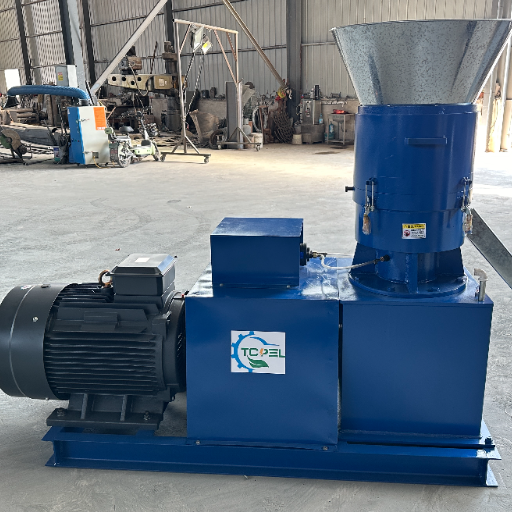
What exactly is a chicken feed pellet machine, and how does it work? The pellet machine, also known as a feed pellet mill, is equipment designed to produce a compressed form of feed from blended, ground grains. It is one part of a feed processing system, and does not function to make up the entire system. For example, one may first grind their grains using a hammer mill, then blend the grains together in a mixer with a protein and vitamin premix before finally introducing it into a pellet machine.
As the mash goes through the holes in a die, rollers force it through, where friction (and commercial added steam) creates heat, softening the grain’s natural binding compounds (starches and protein). It then forms strands as it’s forced out, is cut to size, and solidifies on cooling. It’s that process that results in the distinction between mash (loose ground feed), crumbles (pellets broken apart for small chicks) and pellets (the finished, firm product). The heat of pelleting also partly cooks the feed, a process Phần mở rộng bang Pennsylvania links to better nutrient availability and improved broiler feed conversion.
The principle mechanically is fairly simple but the actual pellet quality doesn’t always follow suit. One of the keepers over on the BackYard Chickens forum said it to me very direct after a few tests:
“Making a good, hard pellet is not as easy as just putting the feed through a pellet mill, despite how easy Chinese TikTok videos make it seem. If the feed is primarily corn and soybean meal you will get a poor pellet.”
This gap, in turn, that is, the distinction between “extruding pellets” and “extruding good pellets”, is the focus of the rest of this guide.
Why Make Your Own Chicken Feed Pellets?
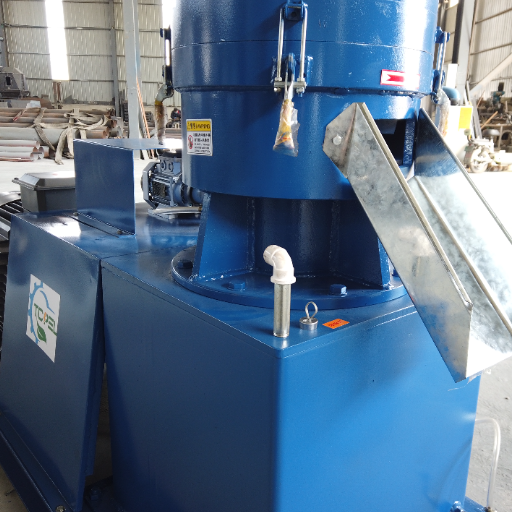
Here’s a truthful fact that most feed pelleting companies and salespeople neglect to mention up front: Pelletizing feed is a cost, not a savings. Here’s the reality, in the words of University of Maryland Extension: “Processing into pellet form or a crumble form, add to the overall cost per ton over mash.” Or, as Colorado State University Extension puts it: “In most cases,mash form is the least expensive to purchase at the feed store.” If you’re aiming to find the lowest price per pound of feed, buying a chicken feed pellet machine isn’t your ticket to getting that cost achieved.
So then, why do farms even buy them? The price per pound isn’t the only figure of interest here.
The Pellet Cost Break-Even Point
The pellet machine pays its cost via three effects (rather than via savings on ingredients):
- Less waste. Birds can’t sort through, and also scatter, a uniform pellet as they will loose mash. The forum keeper above transitioned to pelleting once their hand ground feed showed clear waste and dust.
- Better feed conversion. Peer-reviewed poultry research found pelleted and crumbled feed improved feed conversion ratio (FCR), body weight, egg weight, and eggshell strength vs. mash feed. Feed is the majority of production cost for poultry — broadly 60-70%, with USDA-linked broiler research putting it as high as 67-69% — so improving FCR from 1.8 to 1.6 could cut feed cost by as much as 12%.
- Formulation control -you decide what goes in, good if you grow your own grain or buy in bulk.
Break-even math is Flock Size Dependent For small numbers of backyard birds, homemade feed often comes out the same cost as bag feed-and many homesteader cost comparisons have shown homemade whole grain feed prices about the same per pound as commercial pellets with no overall savings. To break-even you need to buy ingredients in bulk and have enough hungry mouths to go through them before they degrade. A Penn State on-farm pelleting study showed that “the total production costs… [did not include labor] was approximately $88 per ton. When the total labor was added… at a rate of $15/ hr… the production cost was $279 per ton.” Labor, not machinery, is usually the line item from hell.
One more for the truth seekers out there: A pellet machine doesn’t fix a bad feed ration. Pelleting doesn’t magically balance feed. If you short your feed with protein or calcium, it will still be short-it just gets compressed into more bite-sized portions more quickly. Address your nutrition first. Buy the machine last.
Flat Die vs. Ring Die Pellet Mills: The Core Choice

Nearly all commercial chicken feed pellet makers employ one of two primary designs: The Flat Die and The Ring Die. Best understood as different capacity classes as opposed to a hard division line – the UN Food and Agriculture Organization explains actual production capabilities as depending as much on drive motor horsepower as feed properties and friction – there is however a distinct inclination for one to excel in certain applications over another.
| Yếu tố | Flat Die Pellet Mill | Ring Die Pellet Mill |
|---|---|---|
| Sản lượng điển hình | ~100–800 kg/h | ~1–20 t/h |
| Cơ chế | Rollers press down onto a horizontal disc die | Rollers press outward inside a rotating ring die |
| Phù hợp nhất | Home flocks, small farms, intermittent batches | Continuous commercial feed production |
| Relative price | Lower — from a few hundred USD | Higher — gear-driven, multi-layer conditioner |
| Operation | Simple structure, easy to learn and maintain | More complex; needs trained operation |
| Die & roller wear | Wears faster under continuous load; cheap to replace | Longer die life per run; replacement dies cost more |
| Conditioning | Usually none; rely on friction heat | Often a steam conditioner ahead of the die |
| Footprint & install | Compact; plug-in, minimal setup | Larger line; needs a prepared install site |
| Pellet consistency | Good in batches; varies at part-load | High and stable across long continuous runs |
✔ Flat die — advantages
- Low entry cost; simple to operate
- Compact — fits a shed or small barn
- Easy die changes and cleaning
⚠ Flat die — limitations
- Lower throughput; not for all-day runs
- Faster roller/die wear at heavy duty
- Less consistent pellet quality at scale
Rule of Thumb – if you only require occasional production less than approximately one metric ton per hour, you should look at using flat die pellet presses. If you operate a continuously producing commercial line with a geared drive and steam conditioning, then the ring die is worthwhile. Anything between these two criteria, let the required daily production figure not the die architecture dictate your choice.
Sizing and Power: Matching the Machine to Your Flock

Purchasing a unit that is too large is far and away the most common acquisition pitfall-you pay more than you need, and you overcompensate by running the machine at part-load, which can lead to poorer quality feed and excessive wear. To right size, you need to estimate your birds’ daily feed consumption.
What size pellet machine do I need for my flock?
A Mississippi State University Extension figure for a laying hen’s daily feed consumption is about ¼ lb to 1/3 lb depending on season, bird size, and egg laying efficiency. Similarly, the University of Minnesota Extension suggests that 3 lbs of feed is approximately a week’s worth of nutrition for a 6lb laying hen, and she will eat less on warmer days. Understand that these are planning numbers; your hens may consume more and will produce best with full feeders, so adjust these numbers upward as you go to match demand during your peak consumption period.
| Flock size | Approx. feed/day | Practical machine class |
|---|---|---|
| 10–50 birds | ~3–17 lb (1.5–8 kg) | Small flat die, batch run weekly |
| 50–500 birds | ~17–165 lb (8–75 kg) | Flat die, ~100–300 kg/h |
| 500–3,000 birds | ~165 lb–1,000 lb (75–450 kg) | Large flat die or entry ring die, 300 kg/h–1 t/h |
| 3,000+ birds | Over 1,000 lb (450+ kg) | Ring die line, 1 t/h and up |
Then select a drive type based on power access: electric (220V single-phase for smaller machines and 380V three-phase for larger ones), if you have access to the power grid; diesel if you’re working off-grid or for a larger farm operation; gasoline for a portable mill you want to be able to relocate easily; PTO (power take-off) if you’re already using a tractor to power other farm equipment; and only manual for small, home use. Note on efficiency: an engineering study of poultry pelletizers found specific energy consumption fell — from about 185 kJ/kg to 164 kJ/kg — as the feeding rate rose, meaning a machine run near its rated capacity wastes less energy per kilogram than one chronically under-fed. Size to your real demand, and the machine runs cleaner too.
Choosing the Right Die and Pellet Size for Poultry

A critical element of the chicken feed pellet mill machine is the die, which the pellets are forced through to give them shape and hardness. There are two key factors associated with the die: The diameter of the holes and the machine’s compression ratio.
What size pellets should poultry feed be?
Generally, pellet diameter recommendations often correspond to a bird’s age — about 2 to 2.5 mm for chicks (sometimes used in a crumble form), 3 to 4.5 mm for growers, and 4.5 to 6 mm for layers and broiler chickens. Consider these numbers as guidelines rather than stringent regulations. A 2024 research article published in the Journal of Applied Poultry Research indicated that increasing broiler pellet size from 3 to 5 mm didn’t have any negative effects from day 10 to day 34. Keep in mind there are three distinct factors easily confused with each other: hole diameter in the die (which defines pellet width), cut length (pellet length), and pre-pellet grind size (the particle fineness of the grain before pelleting). These can be independently manipulated, and it’s useful to note that the presence of coarser particles that are incorporated into the pellet may aid in gizzard development.
📐 Engineering Note: Compression ratio (L:D)
The compression ratio for a pellet mill is defined as the length of the holes divided by their diameter (L:D ratio). Studies on feed milling indicate that pellet durability improves as the L:D ratio increases; a longer hole allows for more friction and back-pressure to produce a firmer, more durable pellet, although this can result in increased energy consumption and wear on the die. Hardier materials require a lower compression ratio, while less dense and more fibrous mixtures will pellet more effectively with a higher ratio. Many U.S. patents on pellet mill die designs, such as US4380424A và US4111632A, focus on hole shape – like countersinks, reliefs, and tapered grooves – because the die hole itself, rather than the housing, plays a significant role in pellet quality.
If your feed pellets appear soft or crumbly even when you maintain the appropriate moisture level, it’s likely that the die is too thin and isn’t providing enough back-pressure. This information alone can prevent numerous failed batches.
How to Make Chicken Feed Pellets: Formula, Moisture, and Process

Feed pellet production is an ordered process, and skipping a stage will impact the quality of the finished pellets. Below is the typical order of operations:
How do you make chicken feed pellets at home?
- Formulation: Develop a well-balanced ration specific to the bird’s age and purpose. For the precise formula, consult a poultry extension service or a veterinarian; don’t guess.
- Grinding: Reduce grain to a consistent particle size using a hammer mill. Inconsistent or oversized particles will lead to unequal compression and weaken pellets.
- Mixing: Thoroughly blend ground grain with protein ingredients and a mineral/vitamin premix until the mixture is homogenous.
- Correct your moisture. Pellets work best when conditioned about 15-17 percent moisture entering the die but the optimal range will be between 10-18 percent.
- Pellet. Force mashed feed material through the die and the die-roller gap should ideally be in 0.2 – 0.5mm if pellet quality loose or press seizes and stop working.
- Cool and dry. Take the completed pellets down to about 12-13 % in order for them to be stored with no issues on molding.
Moisture is what goes wrong with most home batches: too dry and feed won’t stick together and your product becomes fines rather than pellets. Too wet – i.e. above about 18% -and internal steam blast literally splits the pellets as they exit the die. And as warned by your forum keeper, mixes dominated by corn and soybean meal produce a low-quality pellet – you need fibre, and natural binders help.
Pellet durability can be measured; in the feed industry it’s known as the Pellet Durability Index (PDI) and this is standardised as ASABE S269 (currently S269.5): tumble a 500 g sample in a drum at 50 rpm for 10 minutes and the result is the percentage of intact pellets — in practice, a direct read on how well they survive handling into the feed bin.
📐 Engineering Note: Treat the mill as grain-handling equipment
Feed mills fall under OSHA’s grain handling operations – and dusty conditions create exposure risks like fire/explosion, engulfment, and machine-guarding. Contain dust generated by your grinder and pelletizer. Don’t operate with guards off.
Tuck in clothes, away from augers and rollers. Ensure you have a clean workplace with good ventilation. It’s still an industrial machine, even a tiny one for your backyard.
What a Chicken Feed Pellet Machine Costs

Equipment costs vary hugely and public numbers fluctuate with steel and shipping prices – consider the ones below a Q2 2026 snapshot, not a quote.
| Cấp bậc | Typical price | What you get |
|---|---|---|
| Home / mini | A few hundred USD; flat dies from ~$500 | Small electric or manual flat-die mill |
| Small commercial | ~$900–$5,000 | Single flat-die or entry ring-die mill machine |
| Production line | $5,000–$22,500+ | Mill plus hammer mill, cooler, and packer |
For some grounding in context, University of Guam was in the process of acquiring a TZ-260 pellet machine for $2,290, which was the projected total cost to run a 32-hen feed trial; The TCPEL website featured 11 models of inclined-roller pellet mills priced generally between $900 and $22,500, FOB Qingdao, for output ranges from 150 kg/h to 6 t/h. A more important takeaway from a direct cost analysis has to do with operational costs.The on-farm pelleting study at Penn State measured total cost of pellets in an example case at $88/ton if labor wasn’t accounted for; however, it jumped to $279/ton, if labor was included as $15/hour. A single cost figure can only go so far, your labor, power consumption, and procurement options for ingredients will make and break the cost-benefit analysis.
How to Choose a Chicken Feed Pellet Machine: The 6-Point Fit Test

Use these six checks before making your purchase. Any machine passing all tests will do a job for your business – any failing two or more, look elsewhere.
The 6-Point Pellet Machine Fit Test
- Capacity vs. flock. Does the rated kg/h cover a standard day’s work in a reasonable run? Don’t double it — make it fit.
- Die type vs. scale. A flat die works best for intermittent cycles and small to medium output; a ring die suits large, continuous production.
- Drive vs. power access. Electric if the grid is strong; diesel, gas, or PTO if not. Match the machine to your job site, not just the catalog photo.
- Die material and spares. Is the die hardened, and can you buy replacement dies and rollers? These are wear parts.
- Upstream equipment. Do you also need a hammer mill and mixer? Without them you cannot grind whole grain with a pellet machine alone.
- After-sales and warranty. Lead time, certification (e.g. CE), parts availability, and documentation — especially for imported equipment.
⚠️ Important: know your regulatory line
Making pelleted feed for your flock is easy. Making feed for other people’s animals is another story – the FDA regards most feed mills as regulated facilities under the rules governing animal food and any feed that has been medicated has special licensing and labeling rules.
Consult these guidelines if you’re thinking of selling feed beyond your own backyard flock.
Predictable mistakes are most likely to occur in feed equipment choices.
Buyers tend to go overboard on capacity – called “capacity ego,” or to choose equipment based on initial price but overlooking what kind of parts are available. You also need a chicken feed pellet machine to operate as part of a complete feed production line with grinding and mixing equipment.
Industry Outlook: Where Chicken Feed Pelleting Is Headed
You’ll be living with this decision for years, so market trends matter. Most industry reports on this type of equipment see it going up — one widely-cited estimate has the poultry feed pellet machine market growing from about US$2.3 billion in 2025 toward US$4.5 billion by 2035, roughly 7% per year. Treat any single forecast as a rough guideline, but suppliers broadly agree the market is expanding, with North America among the largest regions. The underlying driver is real demand: USDA data shows global poultry meat production climbing year over year, and more birds means more feed to mill.
Here’s an outlook of what to expect within those three areas that will impact your buying decision. The first shift will involve the greater use of automation, and IoT on some even of the simplest machines — that could include sensors monitoring things such as die load and temperature.
The second is a switch towards energy efficiency on the feed manufacturing equipment — electric driven pellet mills as prices of electricity continue to creep upward and environmental concerns mount. The third is strongest demand will continue be among small and medium sized operations – exactly the type of flat-die and early ring-die machines discussed in this guide.
Given a 2026 purchase, what’s practical?
If your facility is hooked into the electricity grid, choose an electric model that is compatible with ready availability of replacement parts, and supported with solid documentation over lower cost, poorly supported machines. It is a growing sector, so buy equipment that will be supported throughout your years of use.
Câu hỏi thường gặp
Q: Are pelleted feeds actually good for chickens?
Xem Câu Trả Lời
Yes, it’s generally the case. Numerous well-reviewed, peer-reviewed poultry studies indicate that pelleted and crumbled feed offer improved feed efficiency, greater weight gains, and better body and egg shell weights in comparison with mash diets, due to less sorting of ingredients and a more complete intake of all nutrients in each bite. And pellets create less dust, which minimizes respiratory problems among birds.
One study in 2025 indicated that hens on either mash or pellet diets performed equally under optimal, nutrition-balanced conditions, but on that caveat alone,pellets certainly make for a more advantageous form of feed.
Q: Is it cheaper to make your own chicken feed than to buy it?
Xem Câu Trả Lời
Yes, but not without conditions.
Homemade feed does incur production costs greater than commercial mash feed, so a typical small flock might find that their feed cost only approximately approximates a comparable bagged feed price. Economies develop with bulk buying of ingredients, an ample size of flock that can use the ingredients before spoilage occurs, or if they grow their own grains. In data reported from field trials by Penn State, the cost per ton of pelletizing varied from $88 to $279, mainly a reflection of labor costs — so the simple answer of “yes” will vary a great deal by individual circumstance.
Q: What raw materials can a chicken feed pellet machine process?
Xem Câu Trả Lời
A feed pellet machine takes dry mix ingredients- ground grains and protein Meals(mashed up corn, wheat, wheat brans, barley, oats, soybean meal and fish meal, supplemented by alfalfa and a mineral and vitamin premix) and makes pellets out of it. Mainly you need to be sure your material has been ground to the right size powder in advance, and conditioned to the right level of moisture. It compresses it – not grinds up unground whole grain, so hammer mill upstream.
Q: Do I need a hammer mill in addition to the pellet machine?
Xem Câu Trả Lời
Yes mostly. It does crush up the ground mash from the chicken house, so cannot do a whole corn/crop on its own, you need a hammer mill(grinder) and then a mixer blending it with protein powder and premix before roller and then pellet mill, then cooler. Your grains need to be checked consistency morning and night, if too heavy will cause your pellets to be crumbly or uneven.Most folks start out with a combo grinder and pellet, but found it better to go with a separate grinder and pellet option where the volume is bigger. Don’t forget to include the cost of your complete supply chain over just the pellet machine alone, for example a quality but cheap grinder/mill with no other equipment is redundant.
Q: Can one machine make pellets for fish, cattle, and rabbits too?
Xem Câu Trả Lời
Yes — the same pellet machine can press feed for chickens, cattle, pigs, sheep and rabbits; you just fit the die and rollers to the right pellet size for each animal. The one exception is floating fish feed: it needs an extruder, not a standard pelleting machine.
Q: How long does a pellet die last before it needs replacing?
Xem Câu Trả Lời
The die and rollers are wear parts so spend a good proportion of the budget on these, and expect to be replacing them on a regular basis no matter how well you look after them. Heavy use of abrasive ingredients, high compression ratio, running dry as you would expect with a mash feed, all speed up wear. Regular flushing will extend the work life, as will setting the right moisture content. Remember unless the dies are available in the US then the cost of shipping and import taxes to you has to be added to the equippage price, if the seller cannot supply spares in your country it is a waste of money.
Sizing a machine to your flock?
TCPEL manufactures a full range of chicken feed pellet machines from 150 kg/h to 6 t/h, with CE certification and factory-direct support. Compare models and specifications to match your operation.
Why We Wrote This Guide
We build feed pellet machines and complete pellet production lines, so we field the same buyer questions every week — especially flat die versus ring die, and what a machine really saves. This guide deliberately leads with the honest economics, including extension research showing that pelleting adds cost over mash, because a buyer who understands the trade-offs chooses better equipment and stays a customer longer.
Tài liệu tham khảo & Nguồn
- Feeding Pellets for Broiler Performance Improvements enc Phần mở rộng bang Pennsylvania
- Effect of Pellet and Mash Feed Forms on Laying Hen Performance — National Library of Medicine (PMC)
- Dietary Amino Acid Requirements of Broilers (feed cost share data) — USDA NIFA / Auburn University
- Poultry Feeds and Nutrition — Mississippi State University Extension
- Raising Chickens for Eggs (feed consumption) — University of Minnesota Extension
- Feeding the Flock — University of Maryland Extension
- Practical Feeding Methods for Small Poultry Flocks — Colorado State University Extension
- On-Farm Feed Pelleting Economics (production cost per ton) — SARE / Penn State
- Small-Flock Pellet Feed Project (feed price and machine cost) — SARE / University of Guam
- Effect of Grinding and Pellet Dimensions on Broiler Performance — Journal of Applied Poultry Research (2024)
- Feed Pelleting Equipment Overview — Food and Agriculture Organization (FAO)
- US Patent 4,380,424 — Pellet Die — United States Patent and Trademark Office
- On-Farm Production of Pellets: A Case Study (production cost) enc Phần mở rộng bang Pennsylvania
- Evaluating Factors Affecting Pellet Durability (ASABE S269 / PDI) — Kansas State University
- Information About Pet and Animal Feed — U.S. Food and Drug Administration
- Poultry Meat Production Data IST USDA Dịch vụ Nông nghiệp Nước ngoài
Bài viết liên quan
- Chicken feed pellet machine models and specifications — full TCPEL lineup, 150 kg/h to 6 t/h
Reviewed by the TCPEL engineering team. This guide is general information for equipment buyers; consult a poultry extension service or veterinarian for feed formulation specific to your flock.